
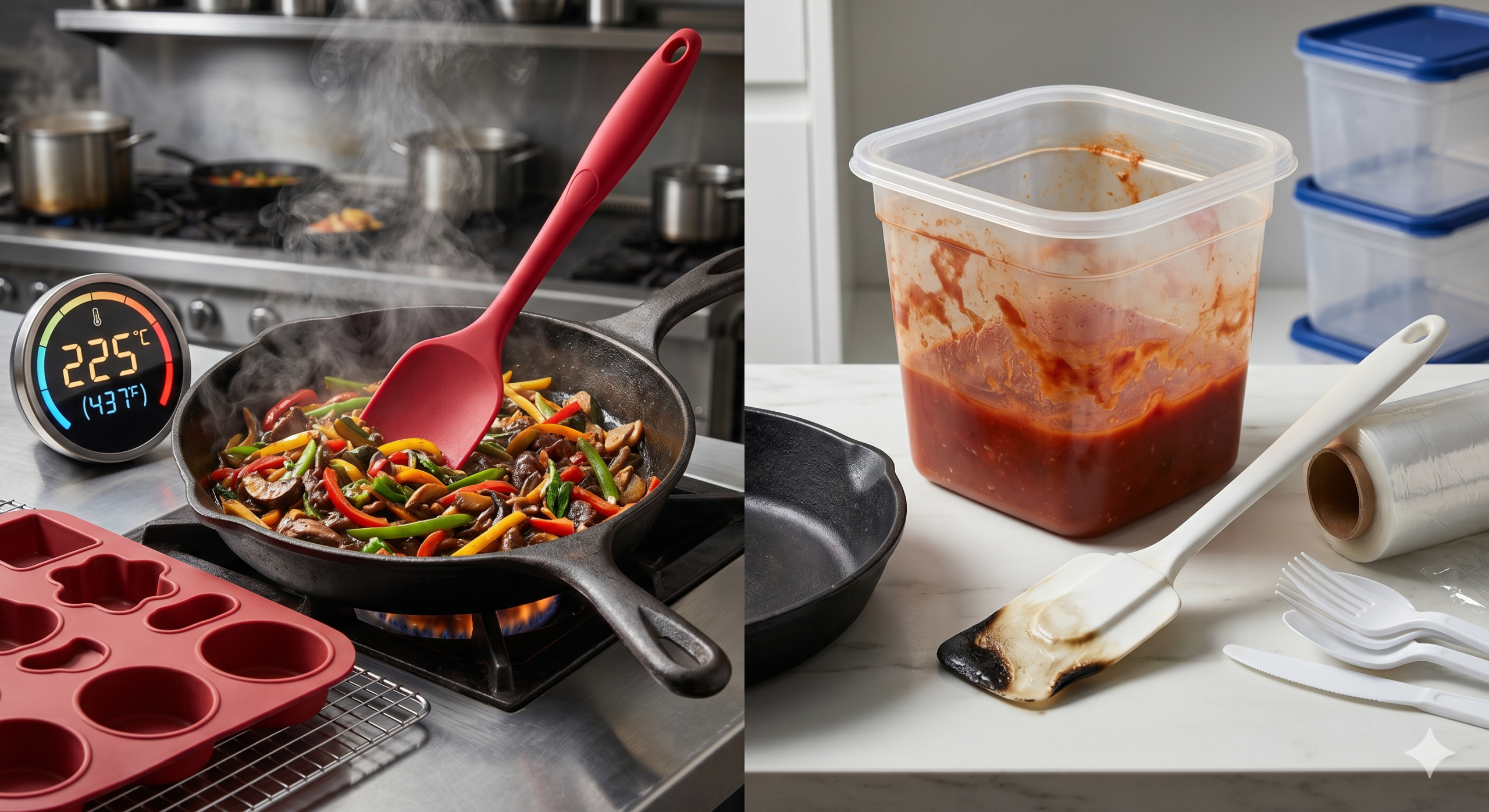
Silicone is the superior choice for high-heat cooking and food safety, while plastic is better suited for low-cost, cold storage applications. You likely face the frustration of plastic spatulas melting against a hot pan or storage containers staining permanently after just one use. This lack of durability leads to constant replacements and the hidden risk of harmful chemicals leaching into your meals. By switching to high-quality Silicone Kitchenware, you gain a heat-resistant, non-toxic, and long-lasting solution that elevates your cooking efficiency and safety.
Why choose Silicone Kitchenware over plastic?
Silicone is chosen for its remarkable flexibility, non-stick properties, and ability to remain stable under extreme temperature fluctuations. Investing in Silicone Kitchenware ensures that your tools do not warp or degrade when exposed to the rigors of a busy professional or home kitchen.
Superior flexibility and ergonomic grip
The material offers a soft-touch finish that is comfortable for long cooking sessions. This flexibility allows spatulas to reach every corner of a bowl without scratching the surface.
- Soft-grip handles reduce hand fatigue.
- Contoured designs for better leverage.
- Non-slip surfaces even when wet.
Can it withstand heavy daily use?
You might be wondering if such a soft material can actually last.
The truth is that high-grade silicone is incredibly resilient to tearing and mechanical stress. Unlike plastic, it does not become brittle over time, making it a staple for high-volume environments.
| Feature | Silicone Benefit | Plastic Limitation |
|---|---|---|
| Grip | High friction/Non-slip | Slippery when greasy |
| Flex | High/Recovers shape | Low/Prone to snapping |
| Texture | Soft/Ergonomic | Hard/Uncomfortable |
Choosing the right material depends on how often you handle the tools.
Key Takeaway: Silicone provides superior ergonomic comfort and physical resilience, significantly reducing the need for frequent tool replacements.
How does heat resistance compare in Silicone Kitchenware?
Silicone outperforms plastic significantly in heat resistance, typically withstanding temperatures up to 230°C (446°F) without melting. High-quality Silicone Kitchenware is designed to thrive in ovens and on stovetops where traditional plastics would simply fail.
Silicone’s high temperature tolerance
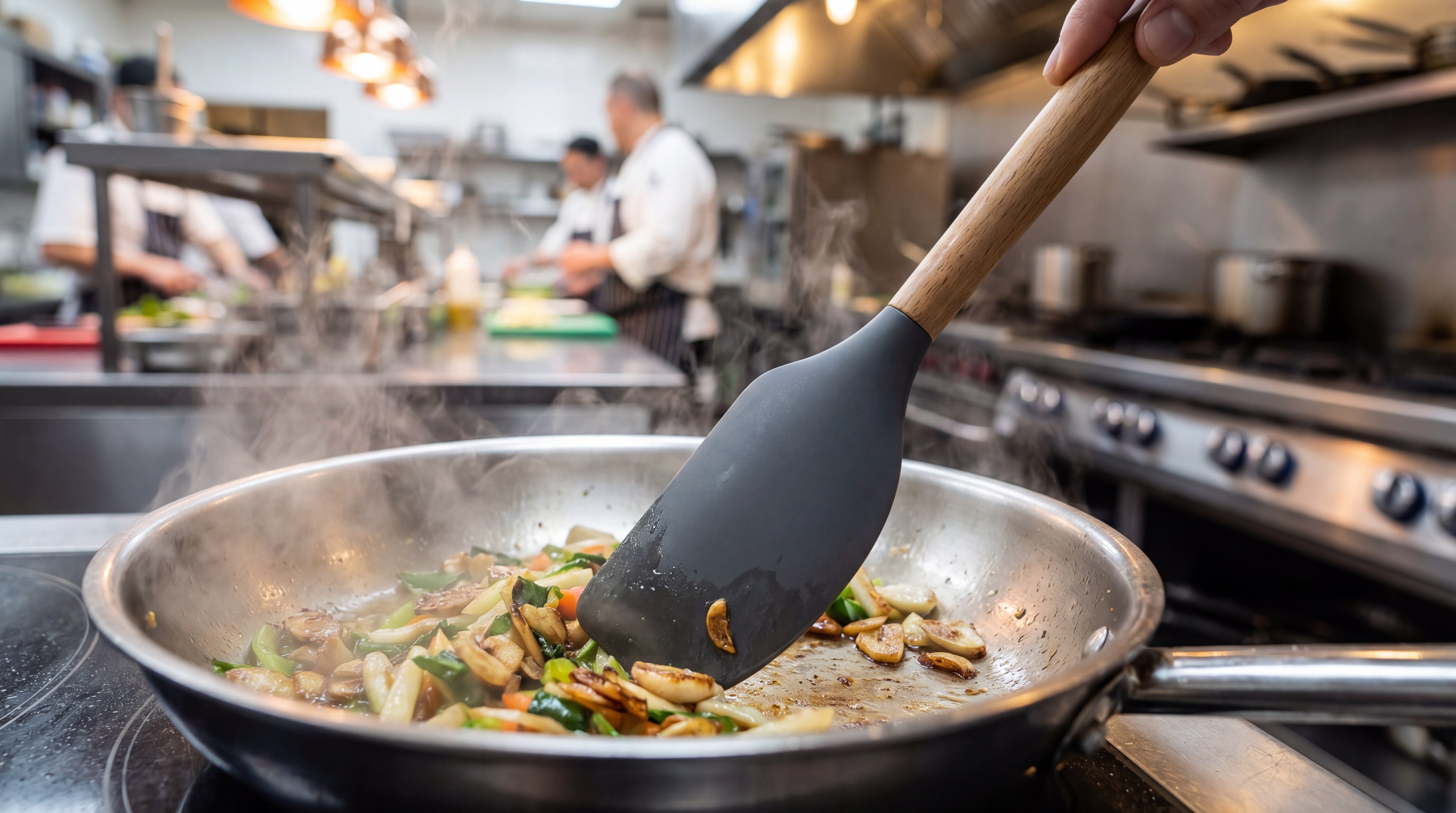
This material maintains its structural integrity whether it is in the freezer or the oven. This makes it the perfect choice for spatulas used in stir-frying or mats used for high-heat roasting.
- Stable up to 230°C.
- Remains flexible at -40°C.
- Does not conduct heat to the handle.
Why does plastic warp under high heat?
The answer lies in the molecular structure of most consumer plastics.
Most plastics used in kitchens have low melting points and can release fumes when they begin to soften. This warping creates gaps in lids and renders utensils useless after a single encounter with a hot pan.
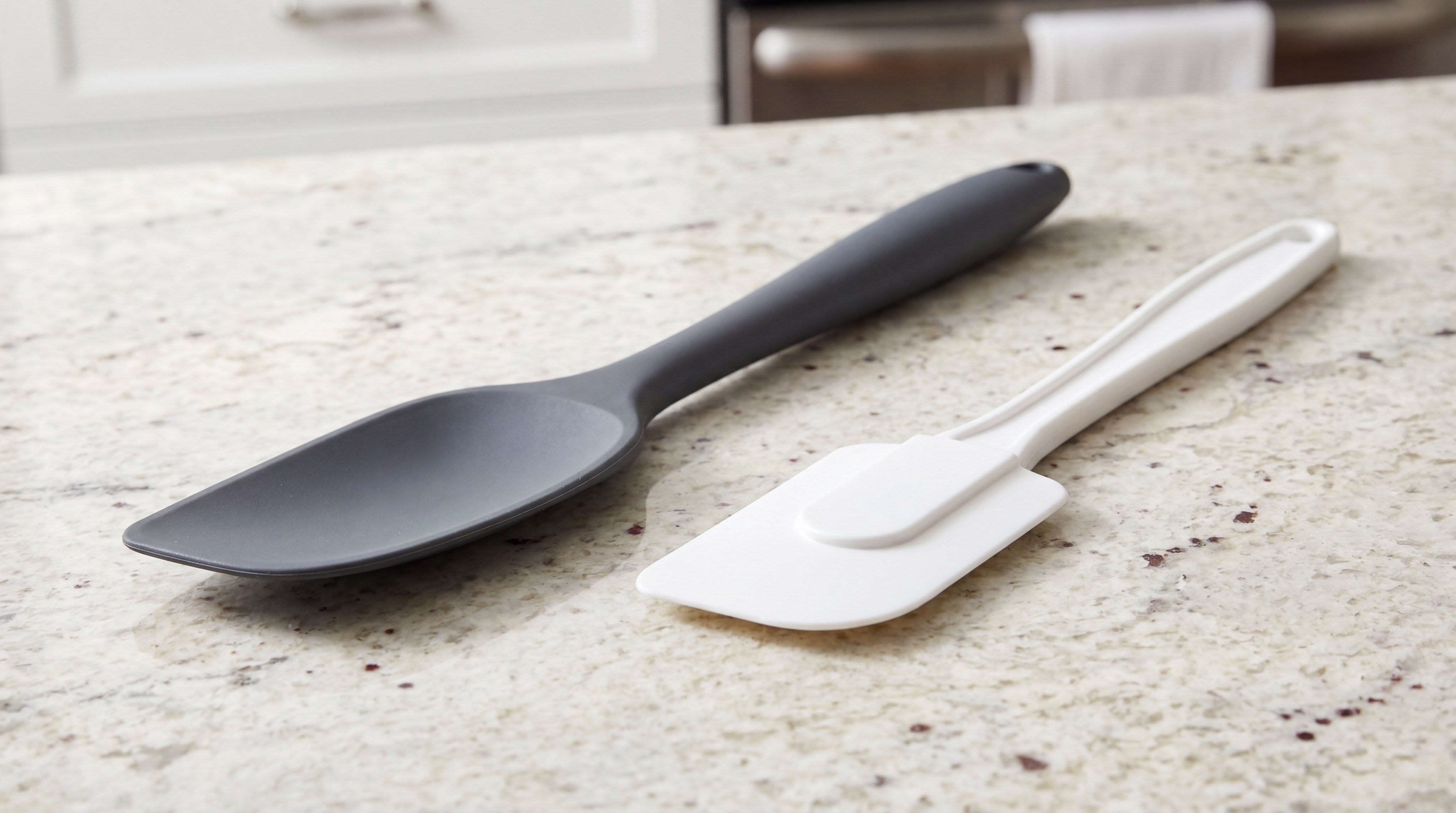
| Temperature Range | Silicone Performance | Plastic Performance |
|---|---|---|
| Below 0°C | Flexible/No cracking | Brittle/Easy break |
| 100°C (Boiling) | Perfectly stable | May soften or warp |
| 200°C+ (Oven) | Safe for long use | Melts or releases toxins |
Comparing thermal stability shows a clear winner for cooking tasks.
Key Takeaway: High heat tolerance prevents tool deformation and chemical off-gassing, ensuring your kitchenware remains safe and functional at any temperature.
Is Silicone Kitchenware safer for your family?
Silicone is considered much safer because it is chemically inert and does not contain BPA, phthalates, or other endocrine disruptors. When you use Silicone Kitchenware, you eliminate the risk of microplastics and chemical leaching that often occurs with aging or heated plastic.
Understanding BPA-free material standards
Food-grade silicone is tested to ensure it does not react with food or liquids. This ensures that the flavor of your meals remains pure and untainted by metallic or plastic aftertastes.
- FDA and LFGB certified options.
- Zero estrogenic activity.
- Hypoallergenic and pore-free.
Is food-grade silicone truly non-toxic?
But wait, is it really better than the latest BPA-free plastics?
Yes, because many “BPA-free” plastics simply substitute BPA with other similar chemicals like BPS. Silicone does not require these plasticizers to be flexible, making it a fundamentally cleaner material choice for food contact.
| Safety Factor | Silicone Status | Plastic Status |
|---|---|---|
| BPA Content | Always 0% | Variable/Often present |
| Leaching | None at high heat | High risk when heated |
| Pore Structure | Closed/Anti-bacterial | Open/Can harbor germs |
Safety should always be the primary concern when selecting food-contact tools.
Key Takeaway: Switching to silicone removes the threat of chemical migration into food, protecting your family and customers from long-term health risks.
Is plastic a budget Silicone Kitchenware alternative?
Plastic remains a popular choice due to its extremely low manufacturing costs and lightweight nature for bulk storage. However, while plastic may seem like a cheaper Silicone Kitchenware alternative initially, its short lifespan often leads to higher long-term expenses.
Low manufacturing and retail costs
Plastics are incredibly cheap to produce in massive quantities via injection molding. For single-use items or temporary storage, the low price point is difficult to beat for many B2B buyers.
- Low raw material costs.
- High-speed production cycles.
- Widely available globally.
Wide variety of aesthetic styles
Think about the sheer variety of colors and finishes available in plastic.
Plastic can be made crystal clear or neon bright, which is why it dominates the market for decorative containers. This aesthetic versatility makes it a favorite for consumer-facing retail products that prioritize look over longevity.
| Cost Element | Plastic (Short-term) | Silicone (Long-term) |
|---|---|---|
| Unit Price | Very Low | Moderate |
| Replacement Frequency | High | Very Low |
| Total 5-Year Cost | High | Low |
While plastic is cheaper upfront, it rarely survives the test of time.
Key Takeaway: Plastic serves budget-conscious needs for cold storage, but the superior durability of silicone offers a better return on investment over time.
Which Silicone Kitchenware material is more durable?
Silicone is significantly more durable because it is resistant to cracking, shattering, and staining over years of heavy use. High-quality Silicone Kitchenware maintains its vibrant color and structural integrity long after plastic has become yellowed, brittle, or scratched.
Resistance to cracking and shattering
Silicone acts as a shock absorber, meaning it won’t break if dropped on a hard kitchen floor. This makes it ideal for high-traffic environments where accidents are common and glass or hard plastic would fail.
- Impact resistant.
- Fatigue resistant (repetitive bending).
- Does not peel or flake.
Why does plastic degrade over time?
The reality is that plastic is susceptible to UV light and chemical stress.
Over time, exposure to dishwashing detergents and heat causes plastic polymers to break down. This results in the “cloudy” look of old containers and the eventual snapping of utensil handles.
| Durability Metric | Silicone | Plastic |
|---|---|---|
| UV Resistance | Excellent | Poor/Fades |
| Impact Strength | High (Flexible) | Low (Brittle) |
| Stain Resistance | High | Low (Porous) |
Durability is the cornerstone of a sustainable and cost-effective kitchen.
Key Takeaway: Choosing silicone ensures that your kitchen tools remain in “like-new” condition for years, saving you money on replacements and reducing waste.
Does Silicone Kitchenware impact the environment?
Silicone has a lower environmental impact than plastic because it is highly reusable and does not shed microplastics into the water supply. Utilizing Silicone Kitchenware helps businesses and households reduce their reliance on single-use plastics that clog landfills for centuries.
Problems with single-use plastic waste
Plastic pollution is a global crisis, and the kitchen is one of the largest sources of this waste. Most plastic utensils end up in the ocean, where they break down into dangerous micro-particles that enter the food chain.
- Plastic takes 400+ years to degrade.
- High carbon footprint in production.
- Contributes to ocean toxicity.
Is silicone a greener alternative?
You might be asking how silicone is any different.
While silicone is not biodegradable, its extreme longevity means one silicone mat can replace thousands of sheets of parchment paper or plastic wrap. Furthermore, silicone can be downcycled into industrial lubricants or playground mulch at specialized facilities.
| Eco-Impact | Silicone | Plastic |
|---|---|---|
| Lifespan | 10+ Years | 1-2 Years |
| Microplastic Shedding | None | High |
| Reusability | Superior | Limited |
Reducing your carbon footprint starts with choosing materials that don’t need constant replacing.
Key Takeaway: Silicone is the more eco-conscious choice for those looking to eliminate single-use waste and prevent microplastic pollution in our ecosystems.
Is Silicone Kitchenware better for professional baking?
Silicone is the gold standard for professional baking due to its natural non-stick surface and precise heat distribution. Professional bakers prefer Silicone Kitchenware for delicate pastries and complex molds because it allows for easy release without the need for excessive greasing.
Benefits of silicone baking mats
These mats provide a perfectly flat, consistent surface that prevents cookies from spreading too much or burning on the bottom. They are a reusable alternative to parchment paper, saving bakeries thousands of dollars annually.
- Even heat distribution.
- Zero-residue release.
- Easy to store (can be rolled).
Why avoid plastic molds in the oven?
It sounds obvious, but the danger is real.
Plastic molds are generally not oven-safe and can melt instantly if they touch a heating element. Even “oven-safe” plastics often have much lower temperature limits than silicone, risking a ruined batch and a damaged oven.
| Baking Task | Silicone Performance | Plastic Performance |
|---|---|---|
| Heat Exposure | Excellent | Dangerous/None |
| Non-Stick | Natural/No oil needed | Requires heavy greasing |
| Intricate Molds | Easy release | High breakage risk |
Professional results require professional-grade materials that can handle the heat.
Key Takeaway: Silicone bakeware improves product consistency and significantly lowers operational costs by eliminating disposable liners and greasing agents.
How to choose Silicone Kitchenware for storage?
When selecting storage, choose silicone for its ability to transition from the freezer to the microwave without any risk of leaching. Premium Silicone Kitchenware often features collapsible designs, saving valuable cabinet space while providing an airtight seal.
Microwave and freezer compatibility
Silicone does not absorb heat in the microwave, meaning the container stays cooler while your food heats up. Unlike plastic, it won’t develop “pitting” or white marks after being used to heat oily or sugary foods.
- Safe for high-wattage microwaves.
- Will not crack in deep-freeze temps.
- Transparent enough to see contents.
Can silicone prevent microplastics?
The reality is that heating food in plastic is the primary cause of microplastic ingestion.
Silicone is a stable polymer that does not shed particles into your food, even when subjected to high-frequency microwave radiation. This makes it the only responsible choice for reheating leftovers.
| Storage Need | Silicone Container | Plastic Container |
|---|---|---|
| Microwave Use | Safe/No Leaching | Risk of Melting/Leaching |
| Space Saving | Collapsible | Rigid/Bulky |
| Odor Retention | Very Low | High |
Modern storage solutions should prioritize both health and kitchen efficiency.
Key Takeaway: Silicone storage containers offer a safer, space-saving alternative that protects the nutritional integrity and flavor of your food.
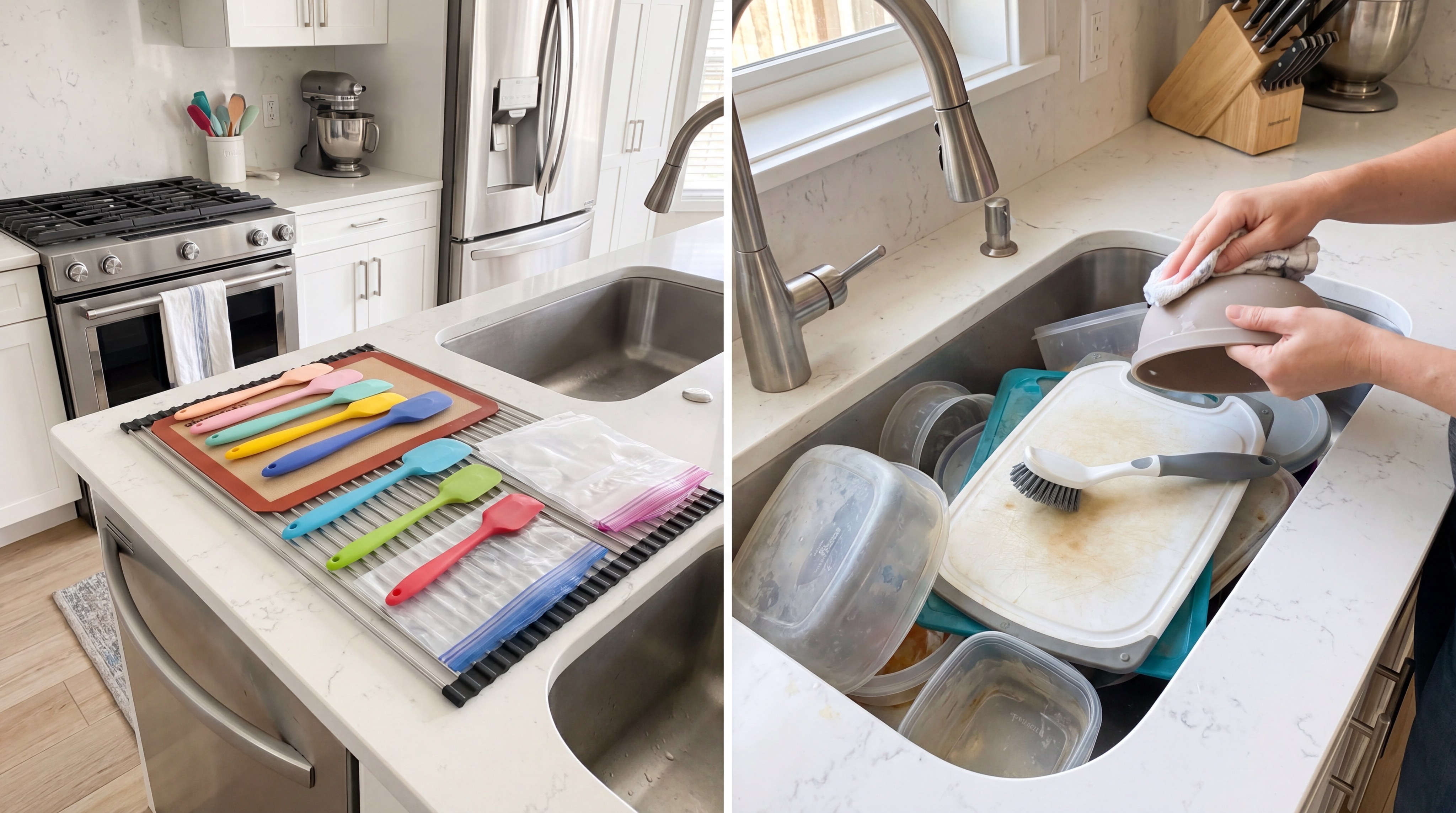
Is Silicone Kitchenware harder to clean than plastic?
Silicone is actually easier to clean because it is dishwasher safe and naturally resistant to the stains and odors that plague plastic. High-quality Silicone Kitchenware can be boiled for sterilization, a cleaning method that would destroy almost any plastic tool.
Dishwasher safety and heat cycles
You can place silicone anywhere in the dishwasher, unlike plastic which often must stay on the top rack to avoid melting. The high-heat drying cycle in a dishwasher actually helps sanitize silicone rather than degrading it.
- Hydrophobic surface repels grease.
- Safe for industrial dishwashers.
- Withstands sanitizing steam.
Removing stubborn odors and stains
Have you ever noticed how plastic smells like onions forever?
Silicone is non-porous, meaning it doesn’t trap food particles or bacteria that cause lingering odors. If it does pick up a scent, a simple soak in vinegar or a quick boil restores it to a neutral state.
| Cleaning Method | Silicone | Plastic |
|---|---|---|
| Dishwasher | All racks safe | Top rack only |
| Boiling Water | Safe/Sterilizes | Destroys material |
| Abrasive Scrubbing | Highly resistant | Scratches easily |
Ease of cleaning is essential for maintaining hygiene standards in any kitchen.
Key Takeaway: Silicone’s resistance to heat and stains makes it a much more hygienic material that is simpler to maintain over its long life.
Why purchase custom Silicone Kitchenware solutions?
Custom solutions allow businesses to tailor the hardness, color, and branding of their tools to meet specific operational requirements. Investing in custom Silicone Kitchenware through a reliable manufacturer ensures you get food-grade quality that matches your brand’s standards perfectly.
Tailored designs for specific kitchen needs
OEM and ODM production allow for the creation of unique tools that solve specific ergonomic or functional problems. Whether you need a specific spatula shape for a signature dish or branded mats, customization provides a competitive edge.
- In-mold logo decoration.
- Custom durometer (hardness) levels.
- Pantone color matching.
How to find a reliable manufacturer?
The secret to success is sourcing from a factory with verified certifications.
Look for partners who offer 100% inspection and use high-purity Liquid Silicone Rubber (LSR). A professional manufacturer like Dongguan Hualin provides the technical support needed to move from a concept to a finished, compliant product.
| Customization Option | Benefit |
| :— | :— | :— |
| Material Grade | FDA/LFGB Compliance |
| Branding | Brand recognition |
| Tooling | Unique functional design |
Custom manufacturing turns standard tools into strategic assets for your business.
Key Takeaway: Custom silicone manufacturing offers the flexibility to create high-performance, branded tools that meet the exact safety and functional needs of your market.
*
Elevate Your Kitchen Standards
Choosing between silicone and plastic is more than a matter of price; it is a choice between long-term safety and short-term convenience. At Dongguan Hualin, we specialize in solving the durability and safety challenges of the modern kitchen. Our expert team provides high-quality OEM/ODM services, ensuring your custom silicone products are non-toxic, heat-resistant, and built to last.
Whether you are looking to develop a new line of professional bakeware or need high-volume supply for food storage, we are here to help. Our commitment to food-grade excellence and rapid prototyping makes us the ideal partner for your B2B needs. Contact us today to discuss your project requirements and let us help you bring premium silicone solutions to your customers.
Frequently Asked Questions
Can I use silicone utensils in a 500-degree oven?
No, most food-grade silicone is rated up to 450°F (232°C). While it is much more heat-resistant than plastic, exposing it to direct flames or temperatures above its rating can cause the material to degrade or smoke.
What’s the best way to remove white mineral deposits from silicone?
A simple soak in a 1:1 mixture of white vinegar and water is the most effective method. These deposits are usually caused by hard water during the dishwashing cycle and do not affect the safety of the tool.
How do I know if my silicone kitchenware contains cheap fillers?
Perform the “pinch test” by twisting a flat surface of the silicone; if white shows through, it likely contains fillers. Pure, high-quality silicone will maintain its color throughout the entire twist or pinch.
Is silicone better than wooden spoons for hygiene?
Yes, silicone is non-porous and does not harbor bacteria or mold like wood can. While wood is traditional, silicone provides a more consistent, dishwasher-safe surface for professional food safety.
How do I know if silicone is truly BPA-free?
Directly check for FDA or LFGB certifications from the manufacturer. Because silicone is not a plastic and does not require plasticizers like bisphenols for flexibility, it is naturally BPA-free by design.