
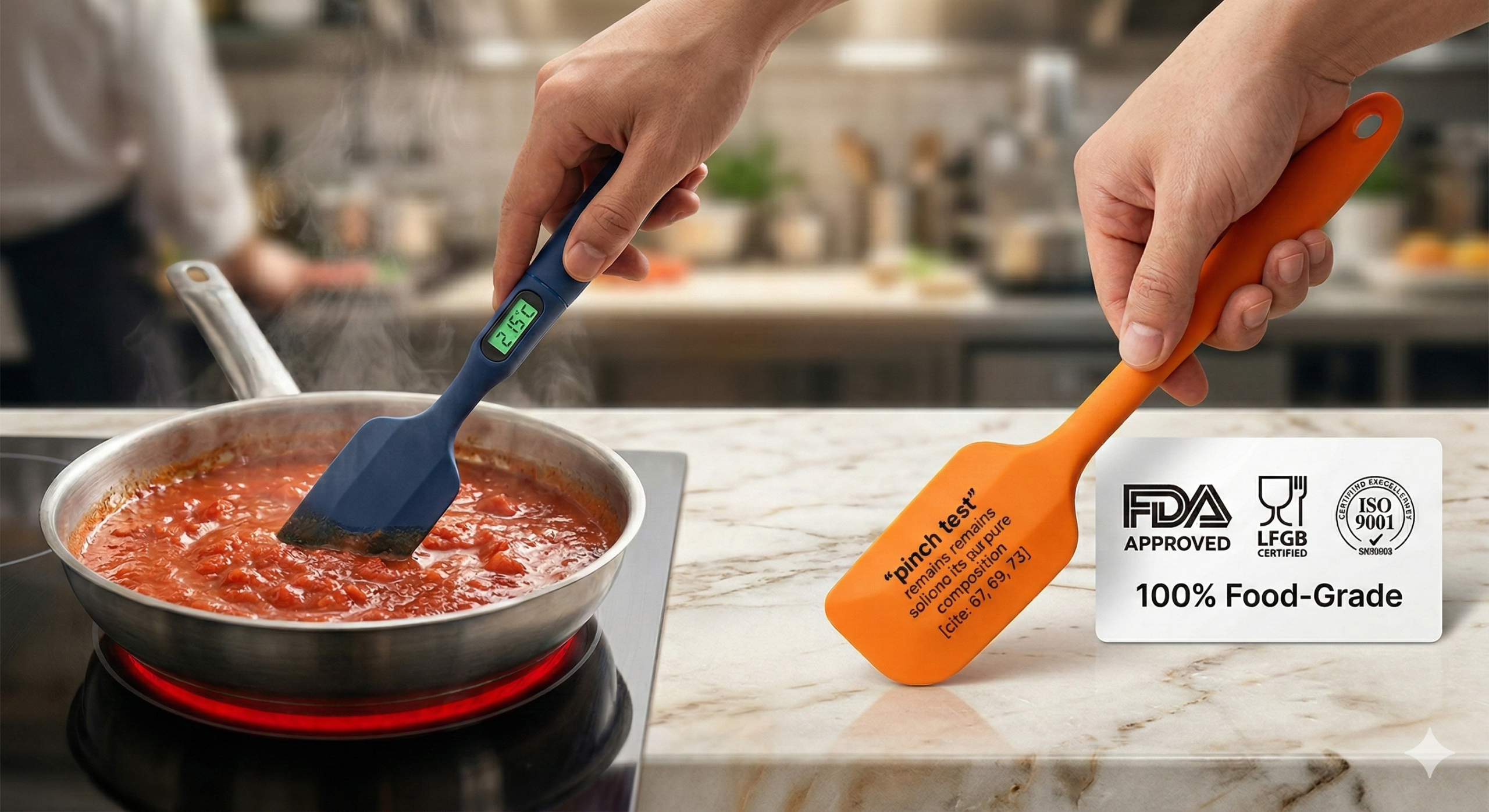
Yes, silicone utensils are entirely safe for modern kitchens provided they are manufactured from high-quality, food-grade materials. Imagine preparing a gourmet meal for your clients or family, only to worry that your spatula is leaching hidden toxins into the pan. You need culinary tools that offer both extreme performance and absolute chemical peace of mind. By sourcing premium components, you can ensure that are silicone utensils safe to cook with is a question met with a resounding yes.
Are silicone utensils safe to cook with for B2B buyers?
Yes, silicone utensils are considered highly safe because they are made from a chemically stable, non-reactive material. These tools do not react with food or beverages, nor do they produce any hazardous fumes when used within recommended temperatures.
When evaluating if are silicone utensils safe to cook with, professionals look for FDA and LFGB compliance. This ensures the material is free from fillers and harmful additives.
Why material stability matters for safety
The primary reason silicone is favored is its inert nature. It does not support microbiological growth and does not corrode like metal or splinter like wood.
But wait, there is more:
- Silicone is BPA-free.
- It is resistant to oxidation.
- The material is hypoallergenic and non-toxic.
Key Takeaway: Choosing certified silicone ensures your kitchen tools maintain their integrity and food safety standards over years of heavy use.
| Feature | Silicone Safety Benefit |
|---|---|
| Chemical Reactivity | Extremely low; does not leach into food |
| Biological Safety | Non-porous; prevents bacterial buildup |
| Compliance | FDA and ISO 9001 certified options available |
The data above indicates that the inherent stability of silicone provides a significant safety advantage over more porous or reactive materials.
What is food-grade silicone actually made of?
Food-grade silicone is a synthetic polymer comprised of silicon, oxygen, carbon, and hydrogen. This specific composition allows the material to remain flexible and durable while being completely non-toxic for food contact.
In the context of the kitchen, you must understand that [are silicone utensils safe to cook with] depends on the purity of these base elements. High-quality manufacturing prevents the inclusion of cheap plastic fillers.
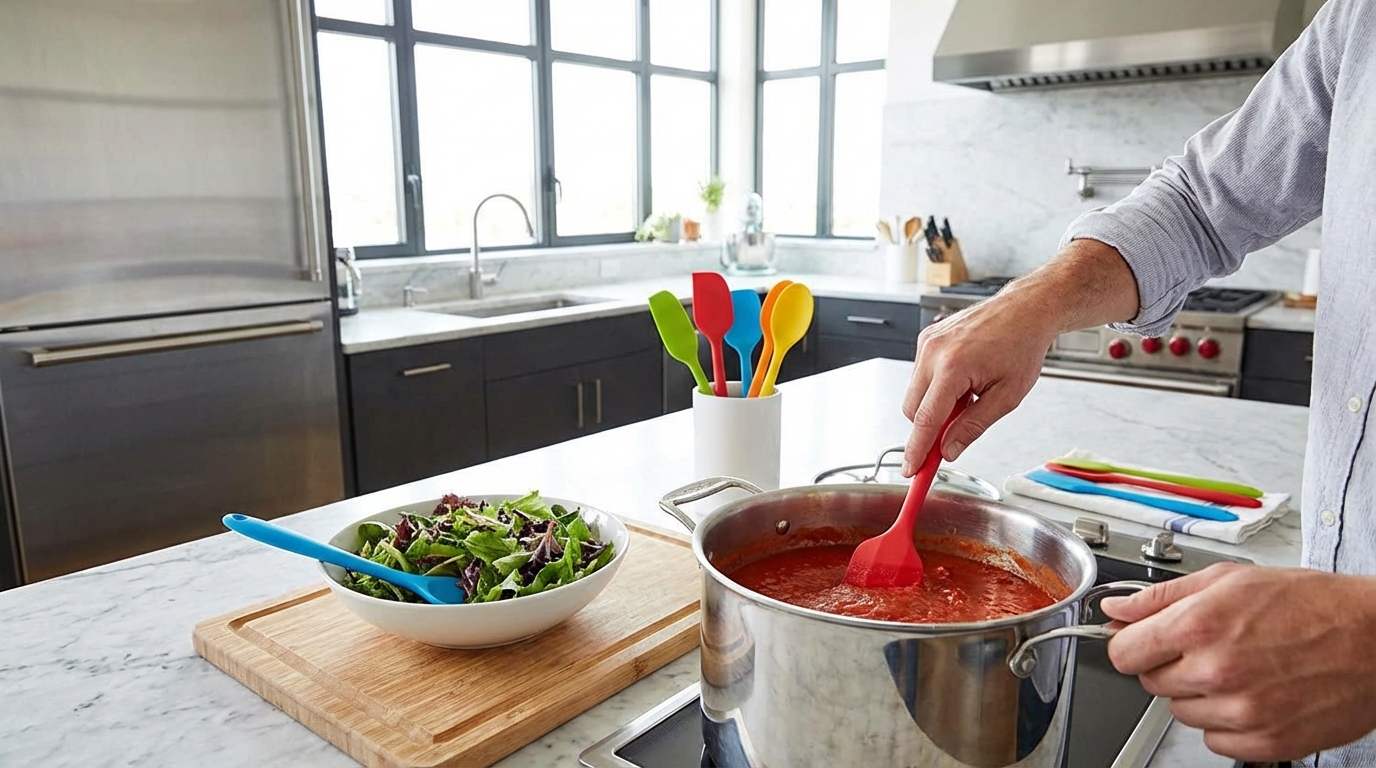
The difference between pure and filled silicone
Pure silicone does not turn white when pinched or twisted. If you see white streaks, the product likely contains chemical fillers that may not be heat-stable.
Here is the deal:
- Pure silicone is derived from silica (sand).
- It undergoes platinum or peroxide curing for stability.
- Medical-grade silicone offers the highest purity level.
Key Takeaway: Checking for “100% Food Grade” labels helps you avoid products that contain potentially hazardous plasticizers or fillers.
| Material Component | Role in Quality |
|---|---|
| Silicon | Provides the structural backbone |
| Oxygen | Enhances thermal resistance |
| Zero Fillers | Ensures no chemical leaching during cooking |
This breakdown reveals that the simplicity of the chemical structure is what actually guarantees the long-term safety of the product.
Can silicone utensils withstand high heat safely?
Yes, professional-grade silicone can typically withstand temperatures ranging from -60°C to 250°C without melting or degrading. This makes them ideal for both freezing and high-heat sautéing.
When you ask if are silicone utensils safe to cook with at high temperatures, the answer lies in its thermal stability. Unlike plastic, silicone does not soften or release odors when it hits a hot pan.
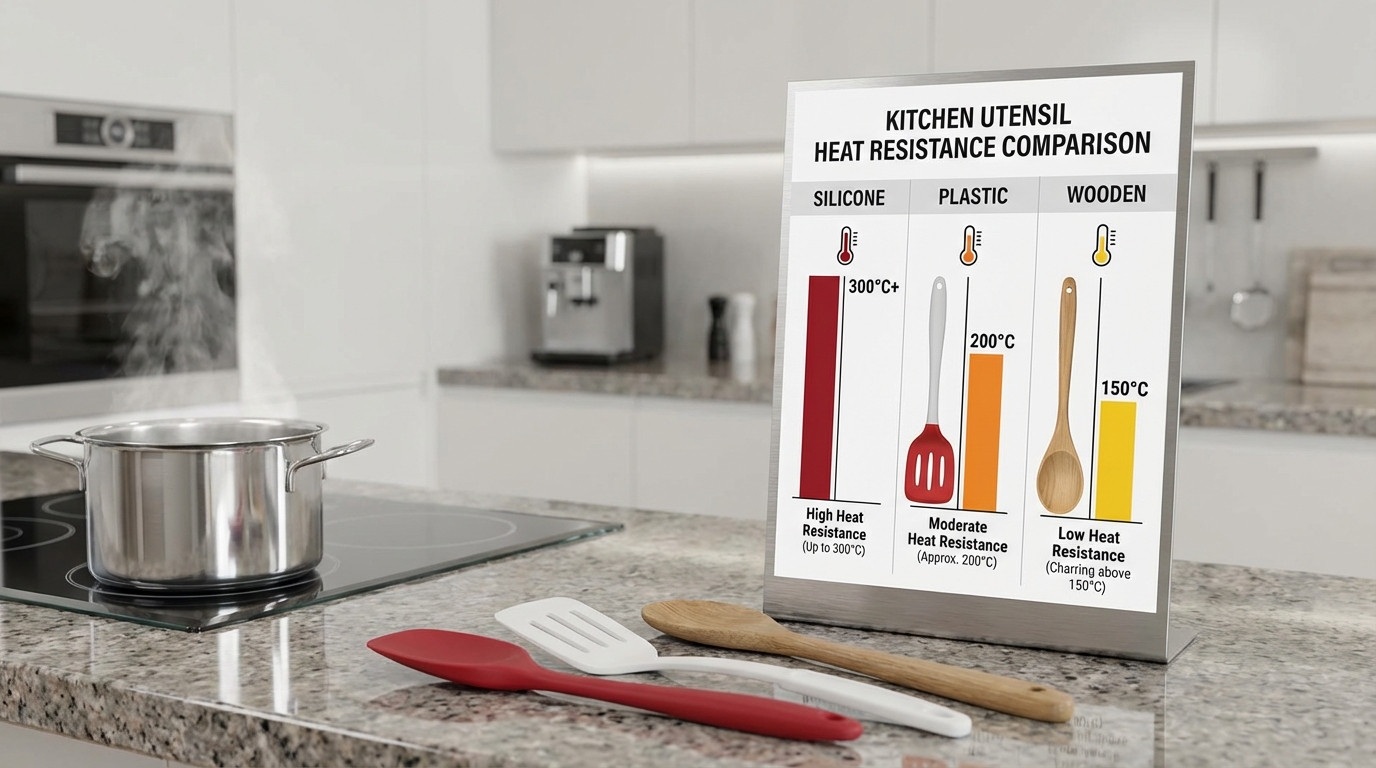
Thermal stability vs. melting points
Most silicone tools are rated for at least 400°F, which is well above the boiling point of water and most oil-based frying. They provide a protective barrier for your non-stick cookware while remaining structural.
But wait, there is more:
- Silicone dissipates heat quickly.
- It will not char like wood.
- It maintains flexibility even after repeated heat cycles.
Key Takeaway: The high heat threshold of silicone makes it one of the most versatile and safe materials for diverse culinary applications.
| Material | Max Safe Temperature | Safety Risk Above Limit |
|---|---|---|
| Silicone | 250°C+ | Structural softening (no toxins) |
| Plastic | 180°C | Melting and chemical leaching |
| Wood | 150°C | Charring and bacterial traps |
The comparison clearly shows that silicone offers the widest safety margin for high-heat cooking environments common in professional kitchens.
Do silicone tools leach harmful chemicals into food?
No, high-quality food-grade silicone does not leach chemicals like BPA, phthalates, or lead into your food. Because it is non-porous, it does not absorb flavors or odors from previous meals.
Scientific studies confirm that [are silicone utensils safe to cook with] because the material is inert at standard cooking temperatures. It effectively prevents the “plastic taste” often associated with cheaper kitchenware.
Avoiding the “filler” trap in manufacturing
The risk of leaching only arises when manufacturers use low-quality fillers to reduce costs. These fillers can break down and release unwanted compounds.
Here is the deal:
- Platinum-cured silicone is the gold standard.
- FDA testing ensures the absence of heavy metals.
- High-purity silicone is used in medical implants for this reason.
Key Takeaway: Investing in certified, reputable silicone brands eliminates the risk of chemical migration during the cooking process.
| Chemical Concern | Silicone Status |
|---|---|
| Bisphenol A (BPA) | 100% Free |
| Phthalates | 100% Free |
| Odor Retention | Negligible |
This summary confirms that the molecular structure of silicone is designed to keep your food pure and free from synthetic contamination.
Is silicone safer than plastic kitchenware?
Yes, silicone is significantly safer than plastic because it does not melt easily and does not contain endocrine disruptors like BPA. It is also more durable, meaning it won’t flake off into your food over time.
When choosing whether are silicone utensils safe to cook with compared to plastic, durability is a key safety factor. Plastic often cracks or warps, creating crevices where bacteria can thrive.

Comparison of long-term material health
Plastic kitchen tools often degrade after just a few months of use, especially when washed in high-temperature dishwashers. Silicone maintains its smooth surface for years.
But wait, there is more:
- Silicone is non-stick without PFOA coatings.
- It does not harbor mold or mildew.
- Silicone tools are often molded as a single piece to prevent bacterial traps.
Key Takeaway: Switching from plastic to silicone reduces your exposure to microplastics and chemical leaching while improving kitchen hygiene.
| Property | Silicone | Plastic |
|---|---|---|
| Heat Resistance | High (Up to 250°C) | Low (Melts easily) |
| Chemical Safety | BPA/Phthalate Free | Often contains additives |
| Durability | Years of use | Months of use |
The superiority of silicone in heat and chemical categories makes it the clear winner for safety-conscious culinary operations.
How do you identify high-quality silicone?
You can identify high-quality silicone by performing the “pinch test” and checking for official safety certifications on the packaging. Genuine silicone will not change color when stressed.
Reliable manufacturers will clearly state if [are silicone utensils safe to cook with] by providing ISO or FDA documentation. This transparency is vital for B2B procurement and consumer safety.
The famous pinch test for quality
If you pinch the silicone and it turns white, it contains plastic fillers. These fillers reduce the heat resistance and safety of the tool.
Here is the deal:
- High-quality silicone stays the same color when twisted.
- It should have a soft, “velvety” feel rather than a greasy one.
- Premium tools often have a heavy, substantial weight.
Key Takeaway: Using simple physical tests and looking for manufacturer transparency ensures you are only using the safest tools.
| Quality Indicator | What to Look For |
|---|---|
| Pinch Test | No white color appears |
| Certification | FDA, LFGB, or ISO marks |
| Texture | Smooth, matte finish |
These indicators allow buyers to quickly distinguish between professional-grade equipment and low-quality substitutes.
Are silicone utensils safe to cook with daily?
Yes, silicone is designed for repeated, daily use in both residential and commercial kitchens. Its resilience to frequent cleaning and thermal shock makes it an incredibly reliable material.
Professional chefs often ask if are silicone utensils safe to cook with during 12-hour shifts. The material’s ability to maintain its shape and safety profile under constant stress is unmatched.
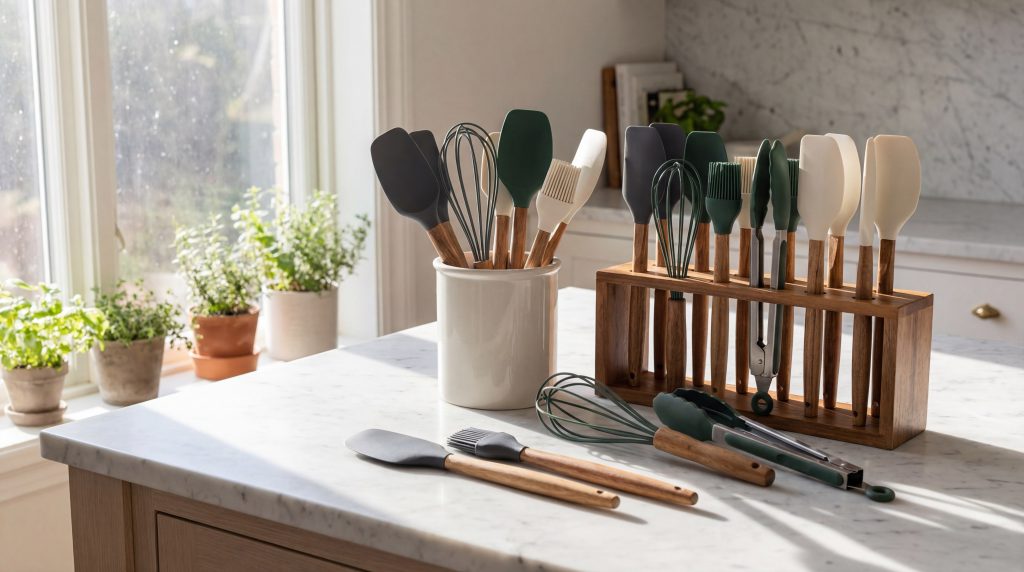
Resilience to wear and tear
Unlike metal, silicone will not scratch expensive pans. Unlike wood, it will not absorb moisture and rot after being left in a sink.
But wait, there is more:
- Silicone is dishwasher safe.
- It resists staining from acidic foods like tomatoes.
- The handles are often ergonomically designed for safety.
Key Takeaway: The longevity and hygiene of silicone make it the most cost-effective and safe choice for high-frequency cooking.
| Daily Use Factor | Silicone Performance |
|---|---|
| Dishwasher Cycles | Withstands 1000+ cycles |
| Acid Resistance | High (Lemon/Tomato safe) |
| Grip Safety | Anti-slip even when wet |
As demonstrated, silicone’s performance in harsh, high-frequency environments confirms its status as a premier safety material.
What are the environmental impacts of silicone?
Silicone is more sustainable than plastic because it is more durable and does not break down into microplastics. While it is not biodegradable, it is recyclable through specialized facilities.
Understanding the full lifecycle helps answer if [are silicone utensils safe to cook with] from an ecological perspective. Using one silicone spatula for ten years is much safer for the planet than using twenty plastic ones.
Durability as a sustainability feature
Because silicone is an inert material, it does not release toxins into the soil or water if it ends up in a landfill. However, its long life is its best eco-feature.
Here is the deal:
- Silicone is made from abundant sand (silica).
- It reduces the need for single-use plastic kitchenware.
- Used silicone can be downcycled into lubricants or playground surfaces.
Key Takeaway: Choosing silicone supports a “buy once, buy well” philosophy that protects both human health and the environment.
| Eco-Factor | Silicone Impact |
|---|---|
| Raw Material | Abundant (Silica/Sand) |
| Microplastic Risk | None |
| Lifespan | 5-10+ Years |
The ecological footprint of silicone is significantly smaller than that of traditional plastics, aligning safety with sustainability.
Are silicone utensils safe to cook with in ovens?
Yes, silicone is oven-safe and frequently used for baking mats, cupcake molds, and roasting tools. It can easily transition from the freezer to a hot oven without cracking.
When baking, knowing are silicone utensils safe to cook with gives you the freedom to create complex recipes. It provides an excellent non-stick surface that requires less oil or butter.
Oven safety and temperature limits
Most oven-safe silicone is rated up to 450°F (232°C). It provides even heat distribution, which prevents the hotspots that can burn food and release smoke.
But wait, there is more:
- Silicone baking mats replace greasy parchment paper.
- It cools down rapidly after being removed from the oven.
- It does not release fumes even at high baking temperatures.
Key Takeaway: Silicone’s thermal versatility makes it a superior material for baking, offering both safety and convenience.
| Application | Safe Temperature |
|---|---|
| Baking/Roasting | Up to 232°C |
| Freezing | Down to -60°C |
| Microwave | Completely Safe |
The wide operational temperature range allows for seamless transitions across different kitchen appliances without safety concerns.
How should you clean silicone utensils safely?
Silicone utensils are extremely easy to clean because they are non-stick and dishwasher safe. You can use standard dish soap and hot water without worrying about damaging the material.
Proper maintenance ensures that [are silicone utensils safe to cook with] remains true for the life of the product. Removing all food residue prevents any chance of bacterial growth on the surface.
Maintaining the non-stick surface
Avoid using abrasive scrubbers or knives on silicone, as these can create small nicks. These nicks could eventually harbor food particles or bacteria.
Here is the deal:
- Soaking in warm soapy water removes most oils.
- Baking soda paste can remove stubborn odors.
- High-temperature dishwasher cycles provide deep sterilization.
Key Takeaway: Simple, consistent cleaning preserves the safety and non-stick properties of your silicone tools for years.
| Cleaning Method | Safety Rating |
|---|---|
| Dishwasher | Excellent (Sterilizes) |
| Hand Wash | Good (Use soft sponge) |
| Abrasive Pads | Poor (Can damage surface) |
By following these simple cleaning guidelines, you maintain the structural and chemical integrity of the tools indefinitely.
Conclusion
Silicone utensils have moved from a kitchen novelty to a professional necessity. By addressing the thermal stability, chemical safety, and environmental impact of these tools, we have uncovered that high-quality silicone is one of the safest materials available today. It protects your health, your cookware, and the environment through its inert nature and extreme durability.
At HuaLin Silicone, we specialize in high-precision, custom LSR and silicone manufacturing for the most demanding industries. Our mission is to provide global partners with stable, certified, and risk-controlled silicone solutions that exceed international safety standards. Whether you need medical-grade components or durable consumer tools, our integrated factory process ensures excellence from mold design to final delivery. To discuss your next project or request a detailed DFM review, contact us today and experience the difference of professional-grade manufacturing.
FAQ
Can I use silicone utensils on an open flame?
No, absolutely not. While silicone is highly heat resistant, direct contact with an open flame or a red-hot heating element will cause the material to degrade and eventually catch fire.
What’s the best way to remove odors from silicone?
Yes, you can easily remove lingering odors by soaking the tool in a mixture of warm water and baking soda or by running it through a high-temperature dishwasher cycle.
How do I know if my silicone spatula is BPA-free?
Yes, you can confirm this by checking the manufacturer’s certification; true food-grade silicone is inherently BPA-free as the chemical is used in plastics (polycarbonate), not silicone rubber.
Can I use sharp knives on silicone baking mats?
No, you should avoid this. Sharp blades can cut the silicone and expose the inner fiberglass mesh (if present), which compromises the safety and integrity of the mat.
How do I know if the silicone is high quality before buying?
Yes, you can perform the “pinch test” by twisting a flat part of the silicone; if it turns white, it contains fillers, whereas pure, high-quality silicone will maintain its color.