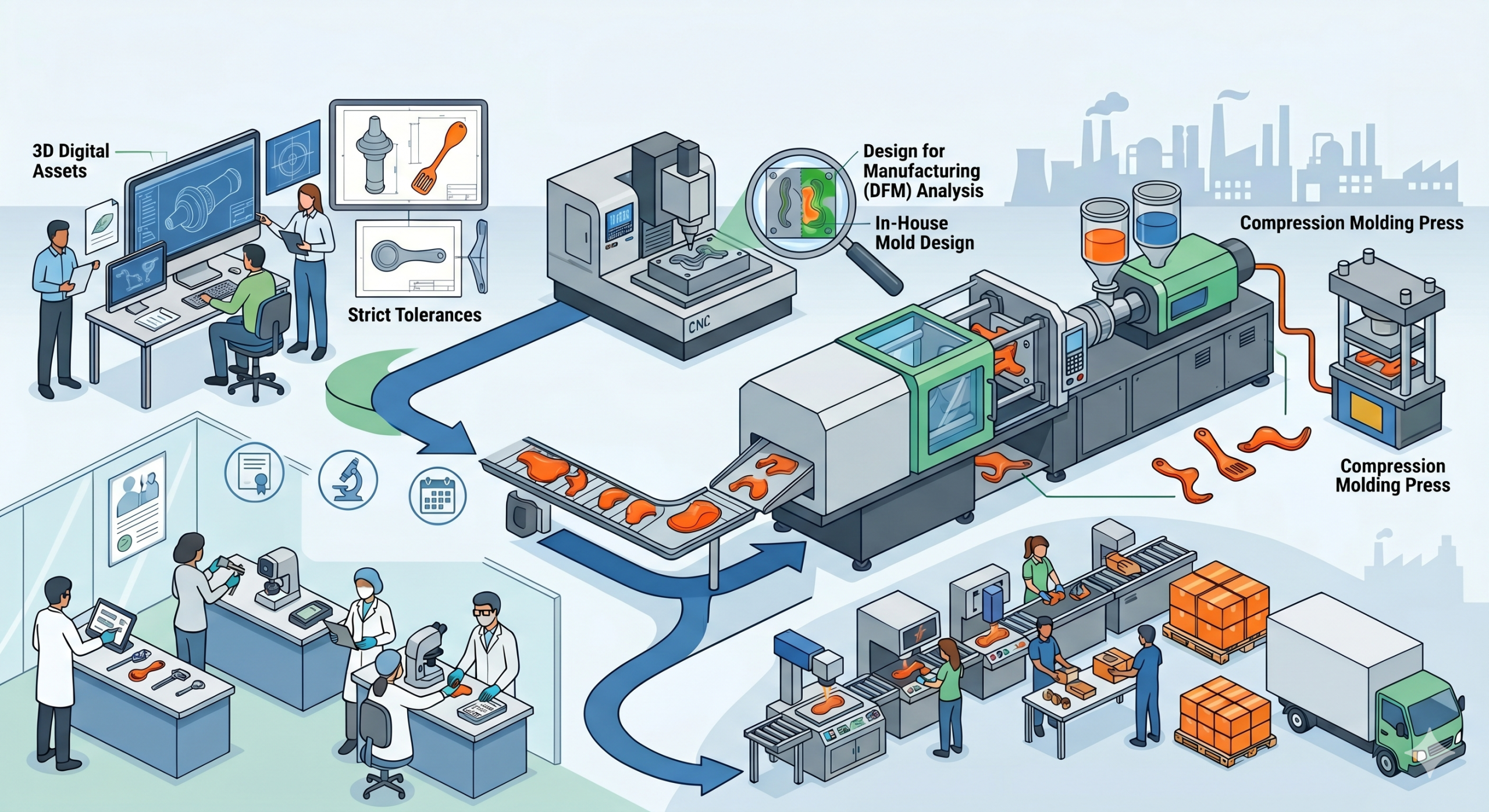
Launching a new silicone product in the USA requires a strategic transition from initial CAD design and material selection to high-precision manufacturing that meets strict regulatory standards. Many businesses struggle with navigating the complexities of sourcing, quality control, and logistical bottlenecks that delay time-to-market. These delays do not just cost money; they erode competitive advantage and can lead to failed product launches in a demanding consumer landscape. By partnering with an expert who understands how to manufacture silicone products, you can streamline your supply chain and ensure superior part quality from day one.
Why should you choose silicone for your new CHINA product?
Silicone is an ideal material for the US market due to its exceptional biocompatibility, thermal stability, and versatility across industries ranging from medical devices to consumer electronics. Learning how to manufacture silicone products correctly allows companies to leverage these unique properties for high-end applications where safety is paramount.
Is silicone the right material for infant and medical care?
Silicone is the gold standard for infant and medical care products because it is hypoallergenic, BPA-free, and resistant to bacterial growth. This makes it the safest choice for products that come into direct contact with skin or food.
Here is the deal:
- It withstands extreme sterilization temperatures.
- It remains flexible and soft for sensitive applications.
- It does not leach harmful chemicals over time.
Understanding the durability of consumer silicone goods
Consumer goods benefit from silicone’s extreme durability and resistance to environmental factors like UV light and ozone. Unlike many plastics, silicone does not become brittle or yellow with age, maintaining its aesthetic appeal for years.
| Feature | Benefit to Consumer |
|---|---|
| High Heat Resistance | Safe for dishwasher and oven use |
| Chemical Stability | Resists staining and odor retention |
| Elasticity | Prevents cracking under mechanical stress |
The data indicates that silicone’s longevity significantly reduces the lifecycle cost for the end user compared to thermoplastic elastomers.
Key Takeaway: Choosing silicone ensures your product meets the high-performance expectations of American consumers while simplifying regulatory compliance for sensitive categories.
How to manufacture silicone products from your initial vision?
Transforming a vision into a physical reality requires defining clear market goals and finding a manufacturing partner whose technical capabilities align with your long-term growth objectives. Understanding how to manufacture silicone products is a collaborative process that starts with identifying the right production volume and target audience.
Defining your target market and production timeline
You must identify your target demographic early to determine the necessary certifications and aesthetic finishes required for a successful launch. A realistic timeline should account for design iterations, mold construction, and pilot runs.
But wait:
- Conduct market research to validate demand.
- Establish a clear “Go-to-Market” date.
- Factor in at least 4-8 weeks for complex tooling.
Why is aligning company values with your partner important?
A manufacturing partnership thrives when both parties share a commitment to quality, sustainability, and transparent communication. This alignment ensures that challenges are met with shared solutions rather than contractual friction.
| Alignment Factor | Impact on Project |
|---|---|
| Sustainability | Reduces carbon footprint of the supply chain |
| Quality Philosophy | Lowers the risk of expensive batch rejections |
| Communication | Accelerates problem-solving during production |
The synergy between a brand’s vision and a manufacturer’s execution is the primary driver of long-term product success.
Key Takeaway: Success begins with a clear roadmap and a partner who views your product launch as a shared mission rather than a simple transaction.
Which CAD file specifications do you need to provide?
To initiate production, you must provide 2D and 3D CAD files that specify exact dimensions, material grades, and critical tolerances required for the mold. Providing precise digital assets is the first technical step in learning how to manufacture silicone products with high repeatability.

The role of 2D and 3D digital drawings in production
3D files are used to CNC-machine the molds, while 2D drawings act as the legal document specifying tolerances and critical-to-quality dimensions. Both are essential for ensuring the manufacturer understands your exact requirements.
Think about this:
- 3D models define the complex geometry.
- 2D prints define the “allowable error” or tolerances.
- Integrated files prevent manual data entry mistakes.
How do tolerances impact your final product quality?
Tolerances determine how well your silicone part will fit into an assembly, which is especially critical for waterproof seals or medical valves. Tighter tolerances often require more expensive tooling but result in a much higher-quality end product.
| Tolerance Level | Typical Application |
|---|---|
| Standard (+/- 0.010″) | General consumer goods and covers |
| Precision (+/- 0.005″) | Medical seals and gaskets |
| Ultra-Precision | High-tech wearable components |
An analysis of failure rates shows that 70% of assembly issues stem from poorly defined tolerances in the initial CAD phase.
Key Takeaway: Investing time in high-quality CAD files reduces the risk of mold rework and ensures your parts function perfectly within their intended assemblies.
How to manufacture silicone products with custom mold tooling?
Custom mold tooling involves creating high-grade steel or aluminum molds designed specifically for your part’s geometry to ensure efficient material flow. Mastering how to manufacture silicone products requires a deep dive into mold design and Design for Manufacturing (DFM) principles to avoid defects.
Designing in-house molds for faster iterations
In-house mold design allows for seamless communication between the designers and the production team, which significantly speeds up the prototyping phase. This integration ensures that any design flaws are caught before the steel is cut.
The truth is:
- In-house designers understand the specific machine limits.
- Changes can be implemented in hours rather than days.
- Tooling maintenance is handled immediately on-site.
Reducing design risks through expert DFM suggestions
Design for Manufacturing (DFM) identifies potential issues like trapped air, thin walls, or difficult-to-degate areas before they cause production delays. Expert feedback at this stage can save thousands of dollars in wasted material and mold modifications.
| DFM Checkpoint | Improvement Strategy |
|---|---|
| Wall Thickness | Ensure uniformity to prevent shrinking |
| Draft Angles | Optimize for easy part ejection |
| Gate Location | Position to hide cosmetic blemishes |
Proactive DFM analysis typically reduces the number of required tool modifications by over 50% during the sampling phase.
Key Takeaway: Superior tooling is the foundation of silicone manufacturing; getting the mold right early ensures a smooth transition to mass production.
What are the benefits of choosing a local Chinese manufacturer?
Opting for a local manufacturer provides benefits such as faster communication, reduced shipping lead times, and better alignment with domestic quality standards. Even when evaluating how to manufacture silicone products, the geographical proximity of your partner significantly impacts your total cost of ownership and speed.
Can local production reduce your overall shipping costs?
Manufacturing locally eliminates international freight charges, customs duties, and the hidden costs of holding high inventory levels to buffer against shipping delays. This allows for a leaner, more responsive supply chain.
Here is the deal:
- Eliminate expensive air-freight for urgent restocks.
- Reduce transit time from weeks to days.
- Lower administrative costs associated with imports.
Environmental impacts and lower carbon footprints
Domestic production significantly reduces the carbon footprint associated with long-distance transportation and excess packaging. Sustainability is increasingly a key purchasing factor for US-based B2B and B2C customers.
| Logistic Metric | Local USA | Overseas |
|---|---|---|
| Transit Time | 1–3 Days | 3–6 Weeks |
| Fuel Consumption | Minimal | High (Maritime/Air) |
| Supply Chain Risk | Low | High |
Reducing transportation distances directly correlates with a more resilient and environmentally responsible business model.
Key Takeaway: Local manufacturing offers a competitive edge by combining logistical speed with a smaller environmental footprint, appealing to modern conscious consumers.
How do you select the right molding process for your needs?
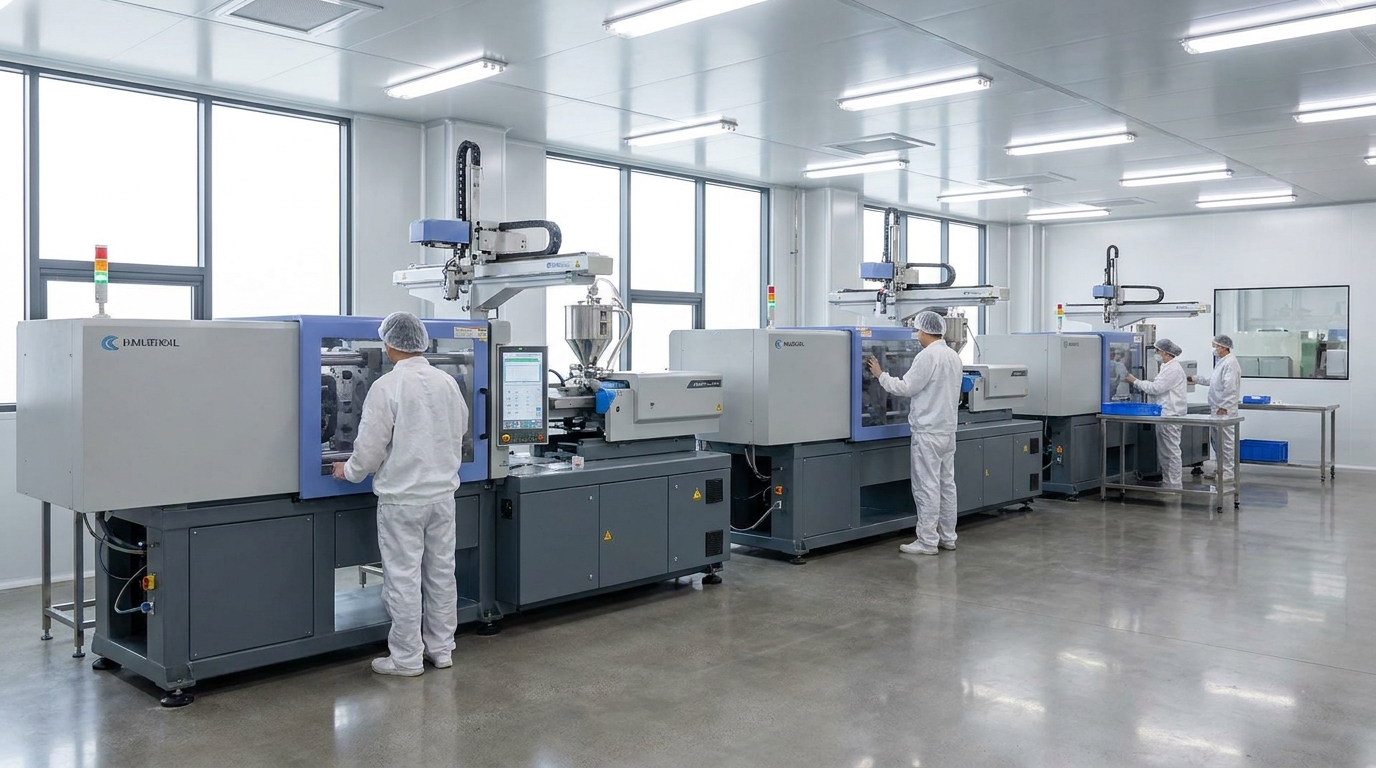
Selecting the right process depends on your part’s complexity, required volume, and the physical properties of the silicone material being used. You must decide between several methods when determining how to manufacture silicone products, including liquid silicone rubber (LSR) injection or compression molding.
Differences between injection, compression, and overmolding
Injection molding is best for high-volume precision parts, while compression molding is cost-effective for simpler, larger geometries. Overmolding allows you to bond silicone directly onto plastic or metal inserts for complex assemblies.
Keep this in mind:
- Injection: High speed, high precision, higher tool cost.
- Compression: Lower tool cost, slower cycle times.
- Overmolding: Eliminates the need for secondary adhesives.
When should you use liquid silicone rubber?
Liquid Silicone Rubber (LSR) is the preferred choice for complex parts that require high precision, rapid cycle times, and excellent thermal stability. It is particularly effective for high-volume automated production runs.
| Process Characteristic | LSR Injection | Compression |
|---|---|---|
| Automation Level | High | Low/Manual |
| Part Complexity | Very High | Simple to Moderate |
| Waste Material | Minimal | High (Flash) |
Strategic process selection is the most significant factor in determining the unit cost and scalability of your new product.
Key Takeaway: Matching the molding process to your specific volume and complexity requirements ensures you don’t overpay for tooling or sacrifice part quality.
Which quality control standards are critical for your launch?
Essential quality control standards include ISO 9001 certification and compliance with FDA or medical-grade requirements to ensure safety. Robust inspection protocols are a non-negotiable part of how to manufacture silicone products for regulated and high-stakes industries.
Implementing a three-stage inspection system
A robust three-stage system involves inspecting incoming raw materials, monitoring the production process in real-time, and conducting a final 100% check on finished goods. This prevents defective parts from ever reaching your warehouse.
You need to know:
- IQC (Incoming) ensures material purity.
- IPQC (In-Process) catches machine drift early.
- OQC (Outgoing) verifies final aesthetics and dimensions.
How to verify compliance with FDA and medical requirements
Compliance verification involves maintaining full material traceability and performing specific tests for biocompatibility or food-safe migration. This documentation is vital for passing audits and protecting your brand from liability.
| Compliance Type | Required Documentation |
|---|---|
| FDA Food Grade | Material safety data sheets (MSDS) |
| Medical Grade | USP Class VI certification |
| Industrial | RoHS and REACH compliance |
The analytical data shows that rigorous documentation reduces legal risk and speeds up the approval process for retail and clinical distribution.
Key Takeaway: Stringent quality control and clear compliance documentation are the best safeguards for your brand’s reputation and consumer safety.
Can your silicone manufacturer scale from prototype to volume?
A versatile manufacturer should offer the ability to produce low-volume prototypes for market testing and then scale to millions of units. Scaling is a primary concern when planning how to manufacture silicone products for a national or global audience.
Starting with low-volume units for market testing
Low-volume production allows you to test the market with real products without committing to massive inventory levels. This “fail-fast” approach helps you refine the product based on actual user feedback.
But wait:
- Test different colors or textures at low risk.
- Validate the supply chain with a pilot launch.
- Use bridge tooling to transition to mass production.
Moving to stable mass production and batch consistency
Once the design is validated, the manufacturer must ensure that the millionth part is identical to the first. This requires automated process controls and stable raw material sourcing to maintain batch-to-batch consistency.
| Phase | Volume Range | Primary Goal |
|---|---|---|
| Prototyping | 1–50 units | Functional validation |
| Pilot Run | 500–5,000 units | Market testing |
| Mass Production | 10k–1M+ units | Cost optimization |
Effective scaling requires a partner who can manage the technical transition from manual pilot runs to fully automated mass production lines.
Key Takeaway: A partner who can scale with you prevents the need for expensive and time-consuming supplier changes as your business grows.
What secondary operations add value to your silicone parts?
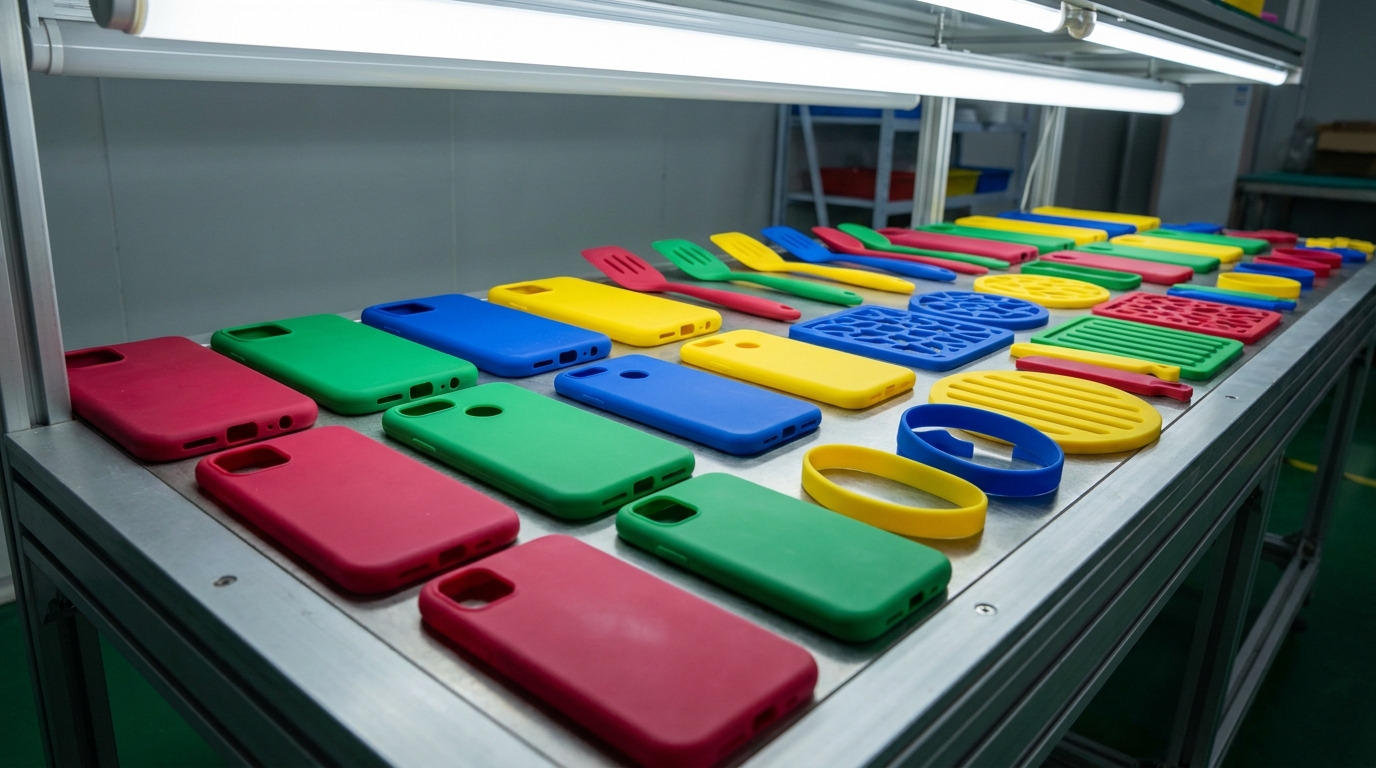
Secondary operations like custom color matching, laser marking, and surface texturing allow you to differentiate your product. These finishing touches are the final stage of how to manufacture silicone products that stand out in a crowded marketplace.
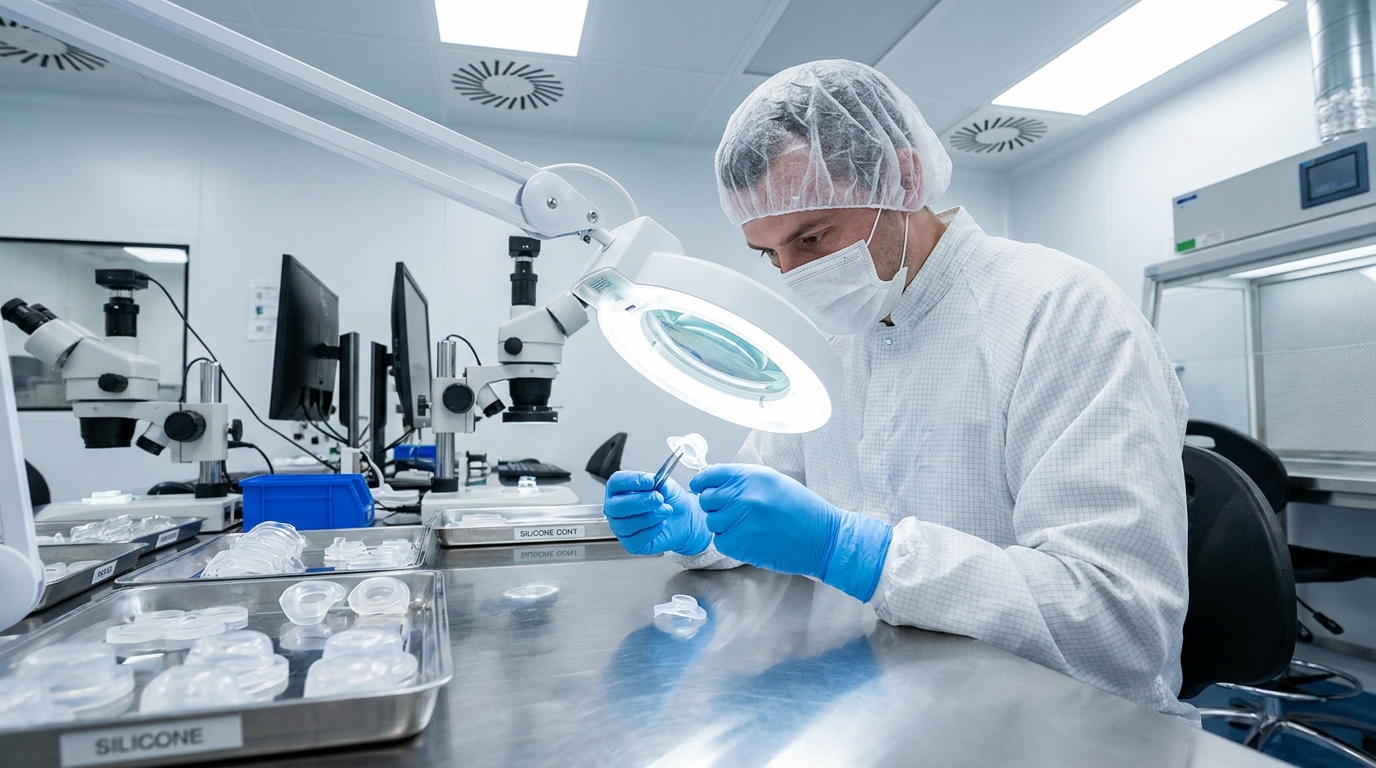
Custom color matching and surface texture options
Custom colors can be matched to specific Pantone references to ensure brand consistency across different materials. Surface textures can be added to the mold to provide a “soft-touch” feel or to improve grip for industrial tools.
The bottom line:
- Use matte finishes to reduce fingerprint visibility.
- Apply high-gloss finishes for medical transparency.
- Custom colors help build a cohesive brand identity.
Exploring adhesive backing and decorative printing
Adding adhesive backings or silk-screened logos transforms a basic silicone part into a finished consumer product. These operations must be performed using specific primers and inks that are chemically compatible with silicone.
| Finishing Operation | Value Added |
|---|---|
| Pad Printing | High-detail branding and instructions |
| Laser Etching | Permanent, wear-resistant marking |
| PSA Adhesives | Simplifies final assembly for the user |
Analytical comparisons show that products with high-quality secondary finishes command a 20-30% price premium in retail environments.
Key Takeaway: Secondary operations are the key to moving beyond “parts” and creating a polished, professional “product” that wins at the point of sale.
How do you manage packaging and fulfillment for your market?
Managing fulfillment effectively involves integrating packaging and logistics services directly into the manufacturing workflow. Efficiency in the final stages of how to manufacture silicone products ensures that your goods reach the end consumer in pristine condition without unnecessary markup.
Streamlining the path from factory to warehouse
Streamlining involves designing the product packaging for efficient palletization and choosing logistics partners who understand the requirements of US retailers. This reduces the time the product spends sitting in transit or at the dock.
Check this out:
- Design packaging to minimize “dead air” space.
- Use barcoding that integrates with your ERP.
- Ship direct-to-retail to cut out middleman costs.
Why choose a partner who offers end-to-end logistics?
An end-to-end partner takes responsibility for the product from the moment the material is poured until it arrives at your customer’s door. This single point of contact eliminates finger-pointing between the manufacturer and the fulfillment house.
| Logistics Step | Benefit of Integration |
|---|---|
| Kitting/Assembly | Reduces total handling touches |
| Custom Labeling | Ensures compliance with retail standards |
| Inventory Tracking | Provides real-time visibility into stock |
Data suggests that consolidated manufacturing and fulfillment can reduce total lead time by as much as 14 days per production cycle.
Key Takeaway: Integrated fulfillment saves time, reduces damage during transit, and allows you to focus on marketing and sales rather than logistics.
*
Frequently Asked Questions
Can I start with a very small order to test my product?
Yes, most high-quality manufacturers offer pilot runs or bridge tooling options specifically designed for market validation and low-volume entry.
What’s the best way to ensure my product is food-safe?
It depends on the material grade, but the best way is to specify FDA-compliant or LFGB-certified silicone and request full material traceability documents from your manufacturer.
How do I know if my design is ready for molding?
It depends on the complexity, but you will know for certain after receiving a professional DFM (Design for Manufacturing) report that highlights potential molding issues.
Can I use the same mold for different colors of silicone?
Yes, molds can be cleaned and purged to allow for different color runs, provided the base silicone material remains the same.
What’s the best process for a waterproof seal?
It depends on the volume, but Liquid Silicone Rubber (LSR) injection molding is generally the best for achieving the tight tolerances and material consistency required for high-performance seals.
*
Launch success is not just about a great idea; it is about the precision of the execution. We have solved the common pitfalls of silicone manufacturing by integrating expert DFM, high-precision molding, and streamlined fulfillment into a single, cohesive workflow. Whether you are navigating complex medical regulations or trying to disrupt the consumer market with a durable new product, we can support your growth from the first prototype to millions of units.
Let us help you bring your vision to life with the quality and speed your brand deserves. To get started on your next project, contact us today for a professional consultation.
Our Vision: To empower innovators through precision engineering and a transparent supply chain, making high-performance silicone products accessible to every industry.