
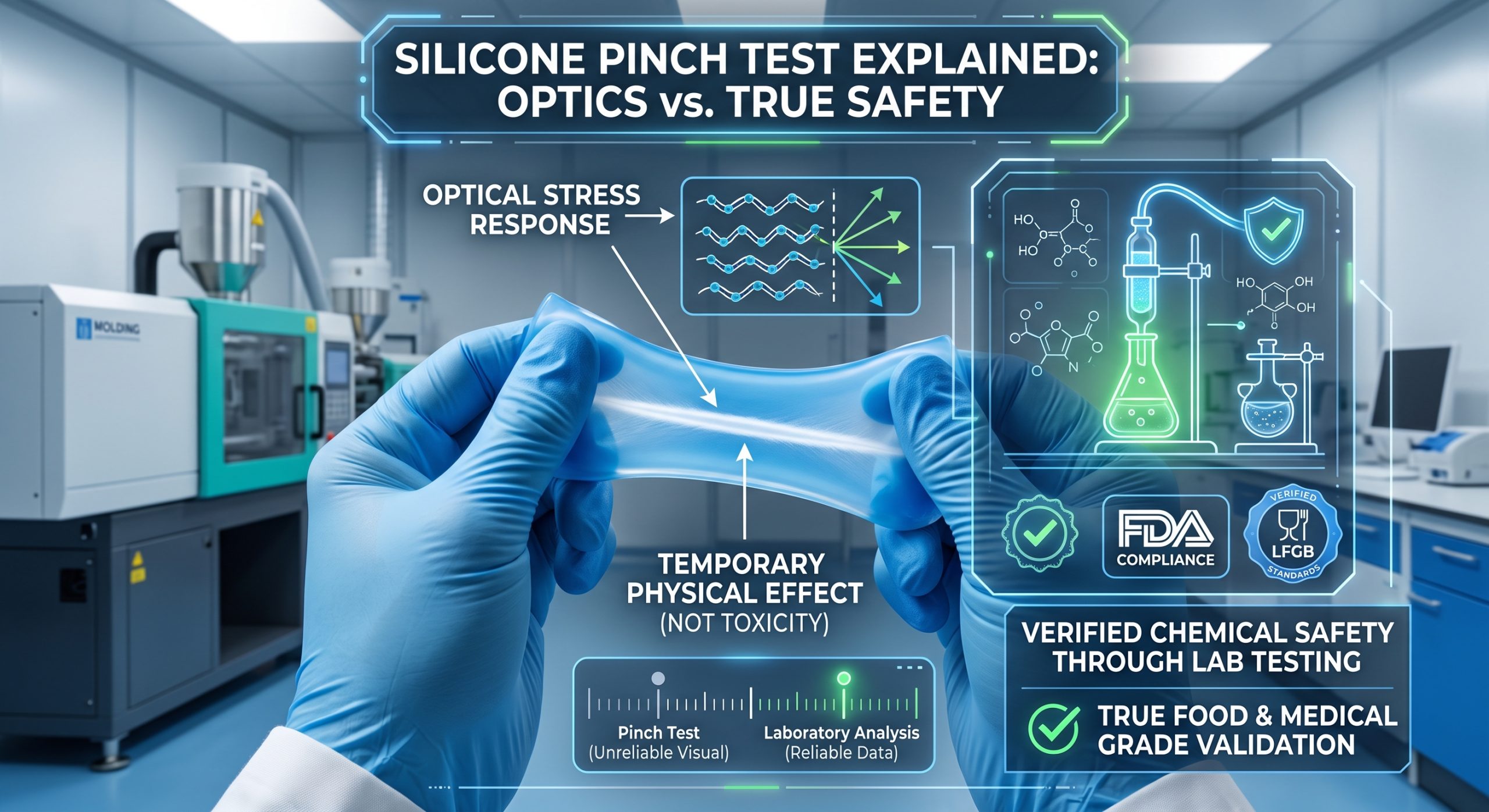
No, a white color change during a silicone pinch test does not automatically mean your silicone products are unsafe, but it does signal the presence of plastic fillers or low-quality materials. Imagine you just received a fresh batch of custom components, and during a routine quality check, you stretch one of the parts and panic as the material instantly turns stark white under stress. This common reaction immediately sparks fears about cheap fillers, compromised safety, and non-compliant manufacturing, threatening to derail your entire product launch. The professional engineering solution lies in understanding that visual stress responses do not dictate chemical safety, and sourcing Silicone Products requires relying on standardized laboratory compliance testing rather than misleading social media trends.
What is the silicone pinch test?
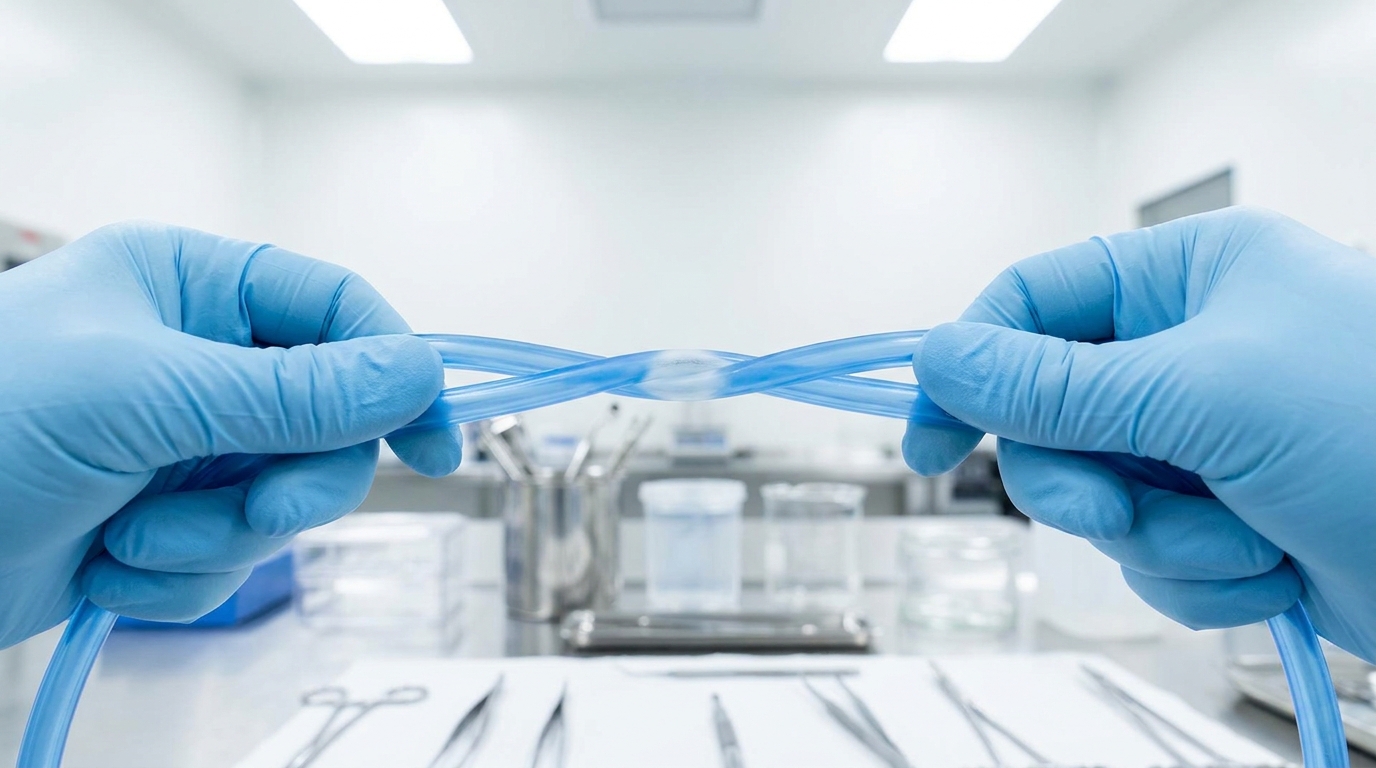
The silicone pinch test is an informal, unscientific visual assessment where a material is stretched or twisted to see if it turns white under stress. When evaluating Silicone Products, many consumers and buyers incorrectly assume this stretch test is a definitive benchmark for material purity. However, this quick visual check is entirely unscientific and has zero basis in actual regulatory frameworks. To safeguard your supply chain, you must look beyond viral social media trends and examine actual polymer science.
Why shouldn’t you rely on this visual test?
You might think stretching a component gives you instant insight into its chemical makeup, but that simply is not true. Here is the kicker: visual stress tests cannot reveal chemical migration, which is the actual scientific metric for material safety.
- It ignores professional laboratory testing standards.
- It fails to account for material thickness.
- It overlooks the physical mechanics of polymer stress.
How did the social media myth start?
Let’s face it: quick visual demonstrations perform exceptionally well on digital platforms and create convincing illusions. You have likely seen video creators claiming that pure materials never change color when pinched, but this is a massive oversimplification of polymer chemistry. These myths confuse optical changes with chemical impurities, creating unnecessary panic for procurement managers.
Think about it: actual materials science requires objective validation, not subjective visual tricks.
Key Takeaway: Relying on informal social media tests instead of laboratory compliance certificates puts your product quality and brand reputation at high risk.
| Feature | Pinch Test | Lab Testing |
|---|---|---|
| Method | Visual stretching | Chemical extraction |
| Reliability | Very Low | Highly Accurate |
| Regulatory Approval | None | FDA / LFGB |
By selecting quantitative extraction tests over qualitative visual pinching, you secure certified safety for your end users.
Why do silicone products turn white?
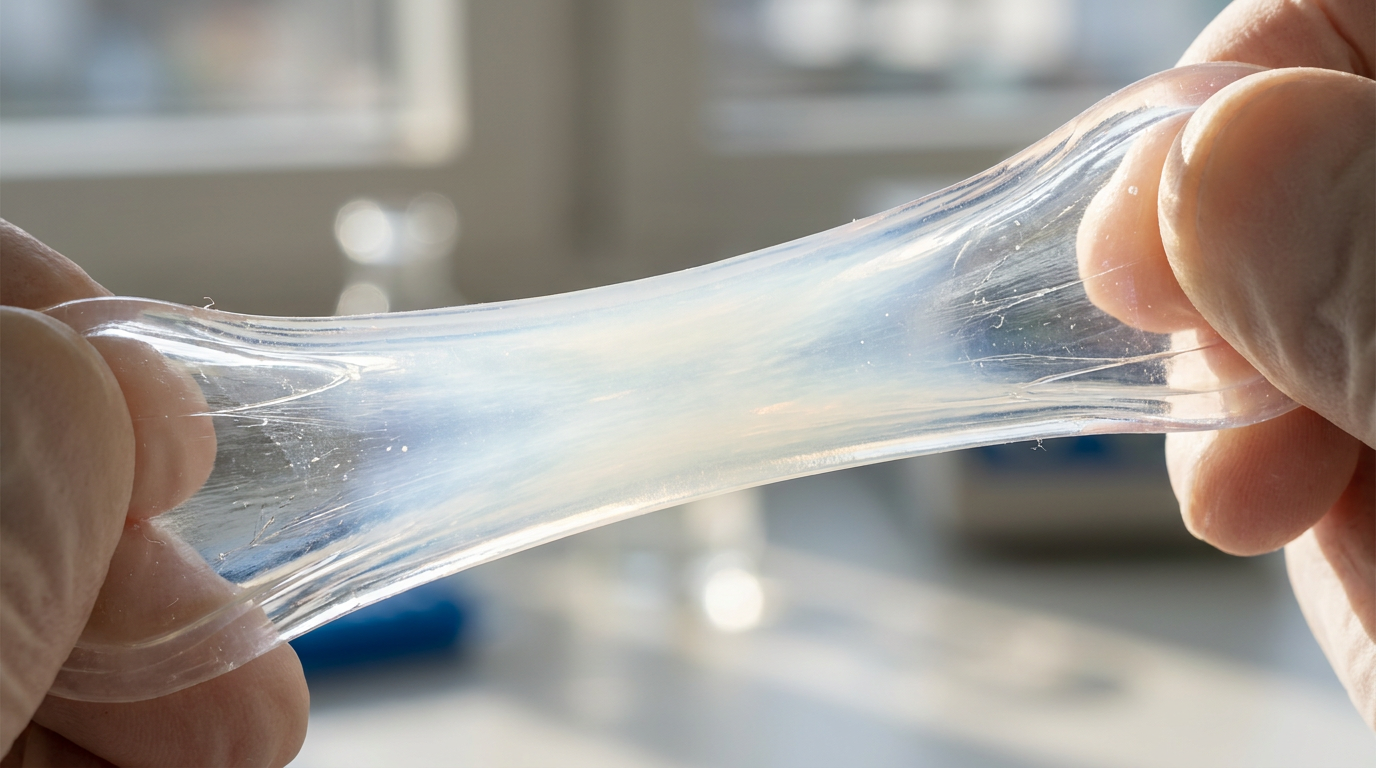
They turn white primarily because internal mechanical stress alters how light passes through the polymer matrix. When you stretch Silicone Products, the physical deformation temporarily changes the material’s optical density and light refraction properties. This optical effect is heavily influenced by the specific Shore hardness, pigment formulation, and wall thickness of the molded part. It is a temporary structural response to tension rather than any chemical degradation.
What is the role of internal stress?
When you stretch a polymer, the internal molecular chains align and create micro-voids or density shifts that scatter light differently. Think about it: this is a temporary optical illusion caused by physical tension, not a chemical breakdown of the silicone itself.
- Light refraction shifts when polymers are stretched.
- Denser materials may scatter light more intensely.
- The whitening usually disappears once tension is released.
How does material hardness impact whitening?
Firmer materials require more physical force to stretch, which generates higher internal stress and more pronounced optical whitening. You will often notice that higher Shore hardness parts show prominent color changes under tension compared to softer elastomers.
Here is the key: material geometry and pigmentation levels heavily dictate how visible these stress marks will be to the naked eye.
Key Takeaway: Physical characteristics like hardness and thickness dictate visual whitening, making it an engineering variable rather than a safety defect.
| Factor | Effect on Whitening |
|---|---|
| High Shore Hardness | Increases visual whitening |
| Thick Wall Geometry | Concentrates optical stress |
| Deep Pigmentation | Can contrast with the white hue |
Analyzing these physical parameters allows you to troubleshoot cosmetic expectations without falsely questioning the material’s integrity.
Does whitening equal unsafe materials?
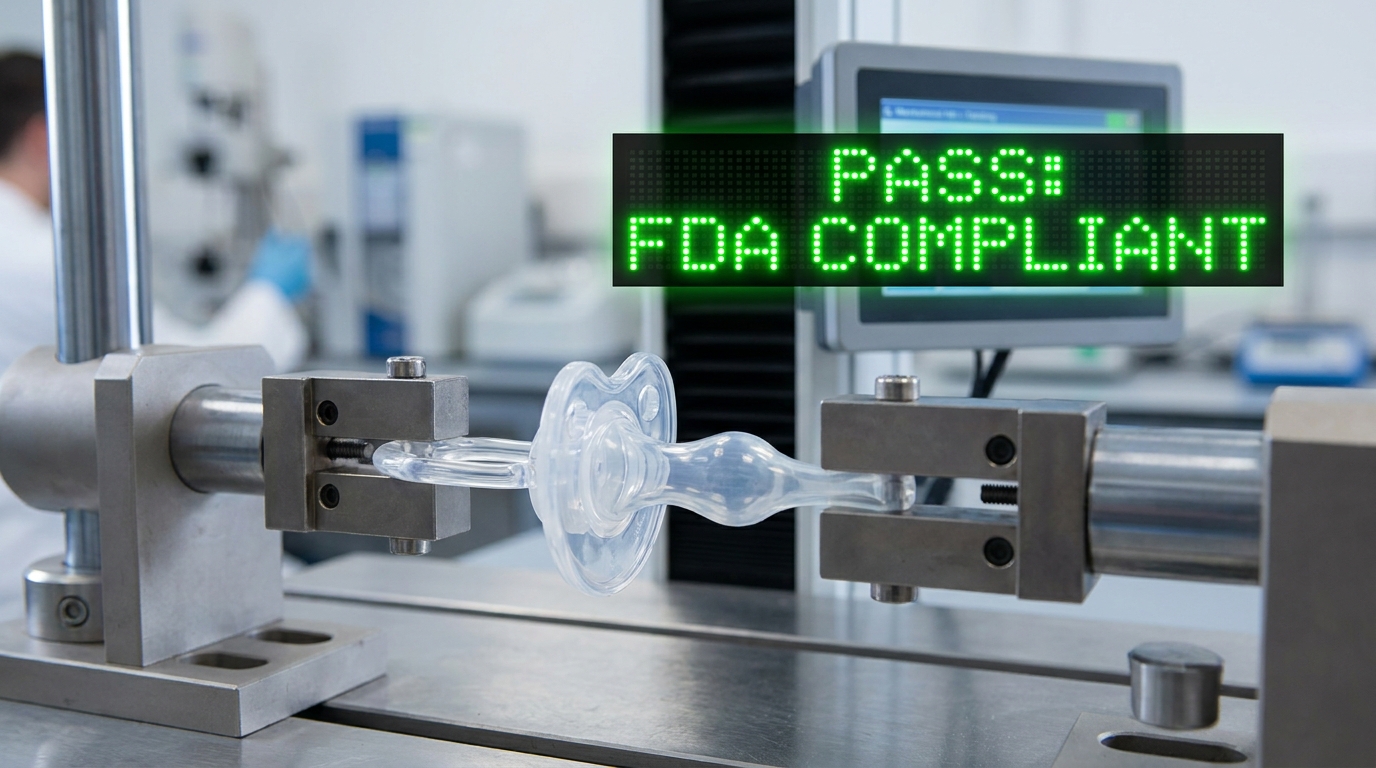
No, whitening during physical stretching does not indicate that the material is toxic or unsafe. Safety compliance for Silicone Products is exclusively determined through rigorous chemical migration and extractables testing in accredited laboratories. An item can easily show visual stress marks and still perfectly meet FDA food-contact regulations because safety is a chemical property, not a cosmetic one. Therefore, judging safety based on visual deformation is a fundamental error.
What does true safety actually mean?
Safety in the world of polymers is about what chemicals leach out of the material, not how it looks when you pull on it. Legitimate safety testing requires specialized laboratory equipment to measure volatile organic compounds and heavy metals.
- Safety is measured by extractables, not optics.
- Migration testing ensures chemicals do not enter food or liquids.
- Odor and taste transfer evaluations are critical metrics.
Why do visual tests fail safety checks?
You cannot see chemical migration or trace toxicity with the naked eye, making visual tension tests completely useless for safety validation.
But wait, there’s more: a toxic formulation with cheap plasticizers can pass the pinch test with zero whitening while actively leaching dangerous chemicals.
Key Takeaway: Material safety is a chemical property measured by laboratory extraction, completely detached from visual stretch behaviors.
| Evaluation Type | What It Measures | Safety Relevance |
|---|---|---|
| Visual Stretching | Optical density changes | None |
| Extraction Test | Chemical leaching limits | Absolute |
| Migration Test | Transfer to consumables | Absolute |
Evaluating materials through scientific laboratory extraction is the only reliable way to guarantee the safety of your consumer goods.
Can fillers affect the test results?
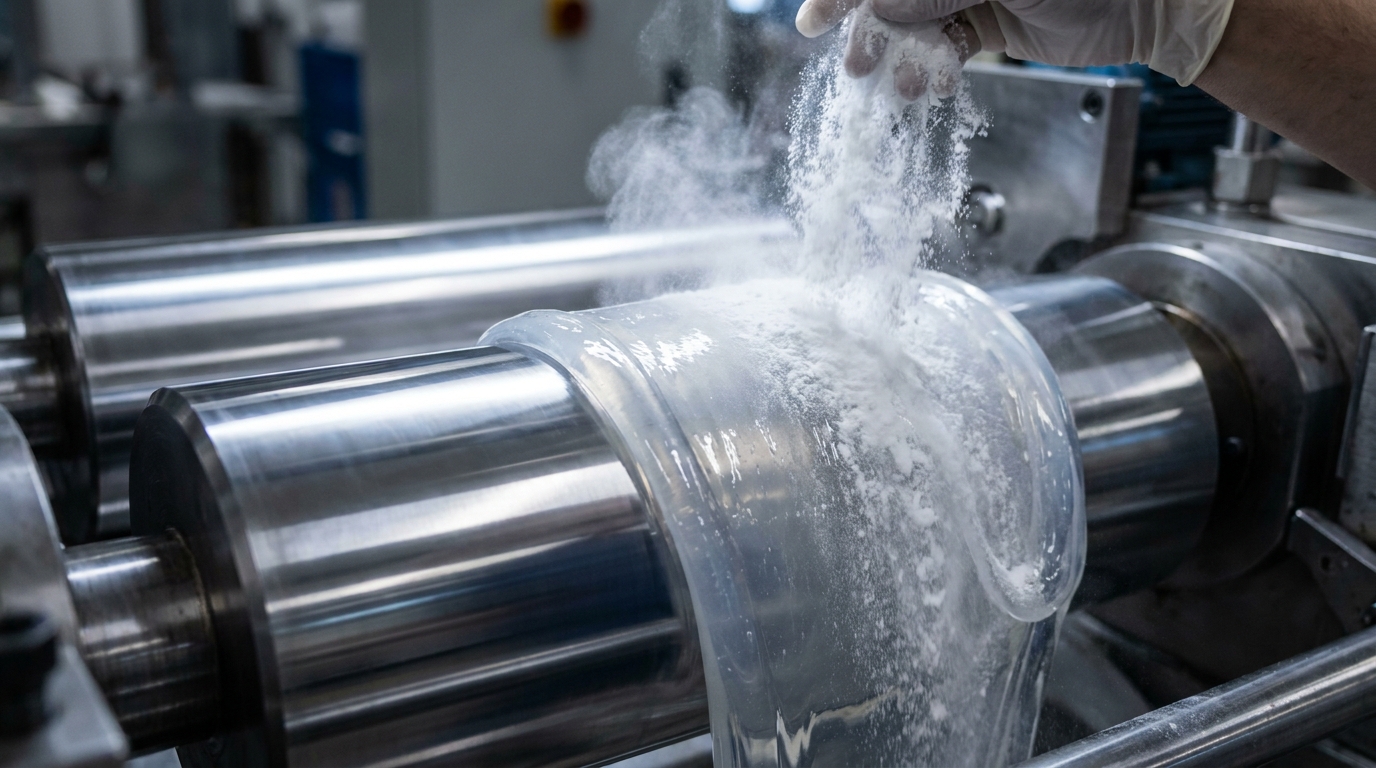
Yes, specific types of fillers can strongly influence how much a component whitens when stretched. However, fillers in Silicone Products are not inherently bad, as they are often necessary engineering additives used to enhance tear strength and durability. The presence of a filler causing a color shift does not prove the use of cheap or harmful adulterants. In fact, many high-performance grades require fillers to function properly in demanding environments.
Why are reinforcing fillers used?
Professional manufacturers intentionally add high-quality silica fillers to give materials massive mechanical strength and stability.
Here is the kicker: without these essential additives, your parts would easily tear and fail during normal assembly or operation.
- Fumed silica drastically improves tensile and tear resistance.
- Fillers help stabilize the molding process during production.
- Additives are crucial for achieving high-durability applications.
How do you distinguish cheap vs engineering additives?
While low-end suppliers might use cheap bulk fillers like calcium carbonate to cut costs, premium engineering additives are strictly controlled and highly refined. Think about it: a properly formulated mixture balances strength and compliance without ever compromising chemical safety.
Key Takeaway: Fillers are often essential for structural integrity, and their optical effects do not inherently indicate a toxic or cheap formulation.
| Filler Type | Purpose | Safety Impact |
|---|---|---|
| Fumed Silica | Tear resistance | Safe (Compliant) |
| Color Pigments | Aesthetic matching | Safe (Compliant) |
| Cheap Adulterants | Cost reduction | Unsafe (Non-Compliant) |
Distinguishing between high-performance silica and low-cost calcium carbonate is critical for ensuring both strength and compliance.
Is the pinch test a reliable standard?
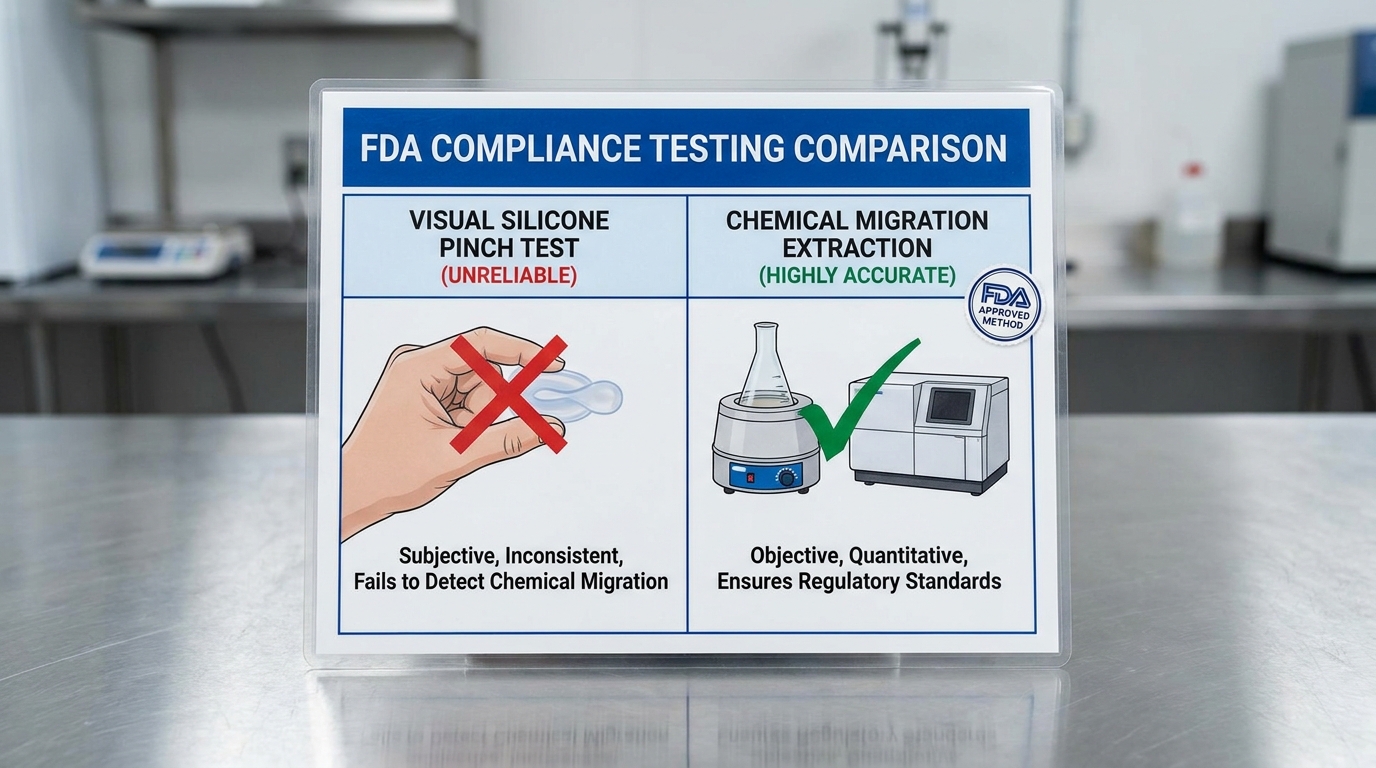
No, it is a highly flawed and misleading standard that fails to assess any actual performance or safety metrics. When engineers design Silicone Products, they rely on standardized laboratory data like tensile strength, compression set, and thermal stability rather than subjective internet tests. Using visual stretching as a quality baseline can lead you to reject perfectly engineered components. It is a superficial test that can disrupt production schedules without adding any value.
What are the dangers of false positives?
You might approve a terrible part just because it doesn’t turn white, completely missing fatal flaws in its curing process.
Here is the key: a material heavily loaded with toxic plasticizers might stretch beautifully while silently leaching dangerous chemicals into food.
- Toxic formulations can easily pass visual stretch tests.
- It gives a completely false sense of chemical security.
- It ignores vital long-term durability and structural metrics.
Do you risk rejecting perfect parts?
Conversely, you risk rejecting a flawlessly engineered, highly durable component just because its robust molecular structure creates an optical shift. Think about it: prioritizing a viral trend over solid engineering data destroys your supply chain efficiency.
Key Takeaway: The visual stretch standard is fundamentally flawed, risking the acceptance of toxic parts and the rejection of robust engineering.
| Assessment Metric | Engineering Value | Risk Level |
|---|---|---|
| Visual Pinch | Zero | High (Misleading) |
| Tensile Strength | Critical for durability | Low (Standardized) |
| Compression Set | Critical for sealing | Low (Standardized) |
Adopting standard mechanical and chemical evaluations is essential for maintaining a reliable, safe product lineup.
How is food-grade safety verified?
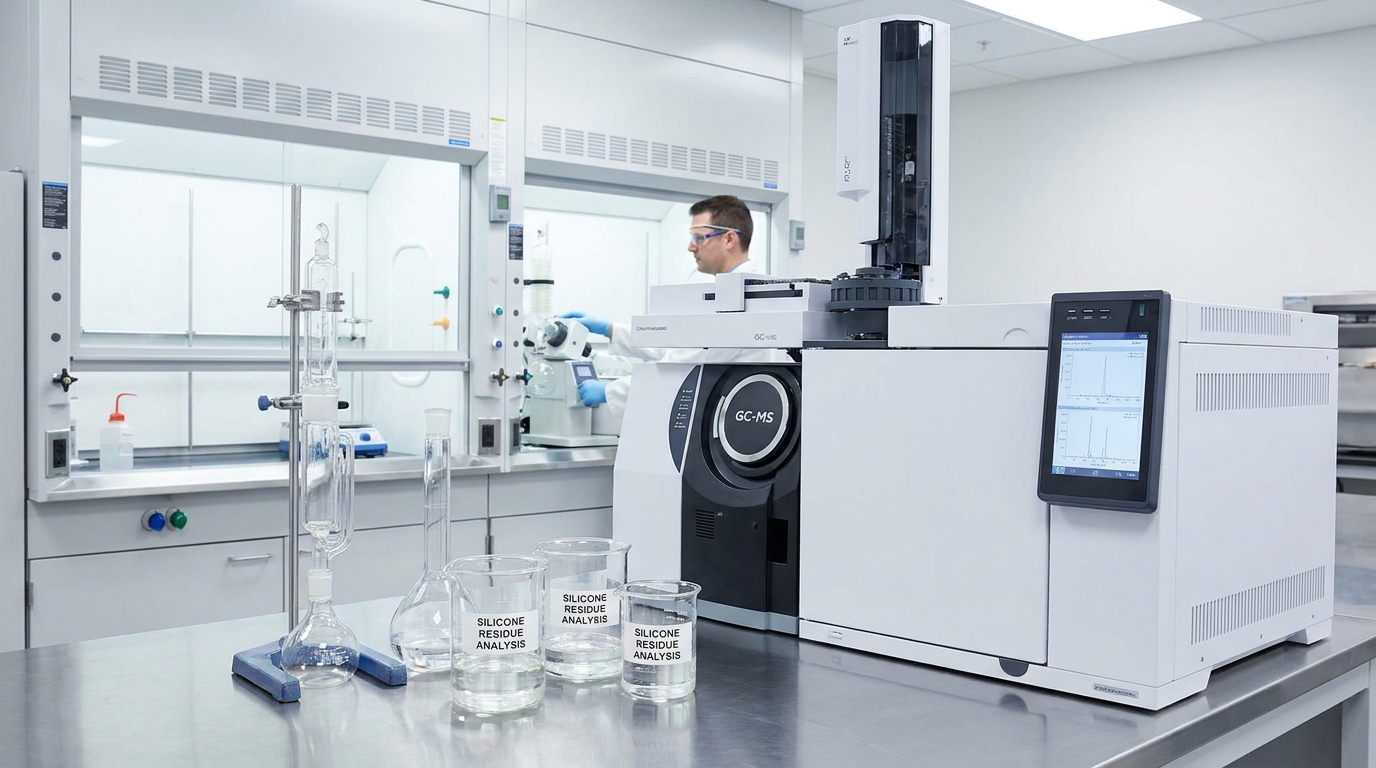
Food-grade safety is verified through standardized extraction and volatile residue testing in accredited laboratories. When developing custom Silicone Products, manufacturers must comply with strict frameworks like FDA 21 CFR 177.2600 or European LFGB standards. These scientific tests accurately measure if any harmful substances migrate from the part into consumables. Visual tests are completely incapable of measuring these microscopic chemical boundaries.
What is the FDA testing process?
When you send a part for FDA compliance testing, technicians simulate long-term exposure using distilled water and fatty solvents.
Think about it: these aggressive extraction environments reveal the true chemical stability of your component far better than manual stretching.
- Tests measure total extractive limits over specific timeframes.
- Water and n-hexane are standard testing mediums used.
- Results must fall strictly below regulatory thresholds to pass.
Why are LFGB standards stricter?
If you are selling globally, you must understand that European LFGB standards are even more rigorous than standard FDA requirements.
Here is the kicker: passing LFGB requires a highly refined manufacturing process with flawless curing controls and premium raw material selection.
Key Takeaway: True food-grade safety is a matter of passing intense chemical extraction and migration laboratory tests.
| Standard | Primary Focus | Stringency Level |
|---|---|---|
| FDA 21 CFR 177.2600 | Aqueous and fatty extractions | High |
| LFGB | Chemical migration + sensory | Very High |
| REACH | Heavy metals and SVHCs | Very High |
Securing documented compliance reports from your manufacturing partner is the ultimate proof of material safety.
Do FDA approved items still whiten?
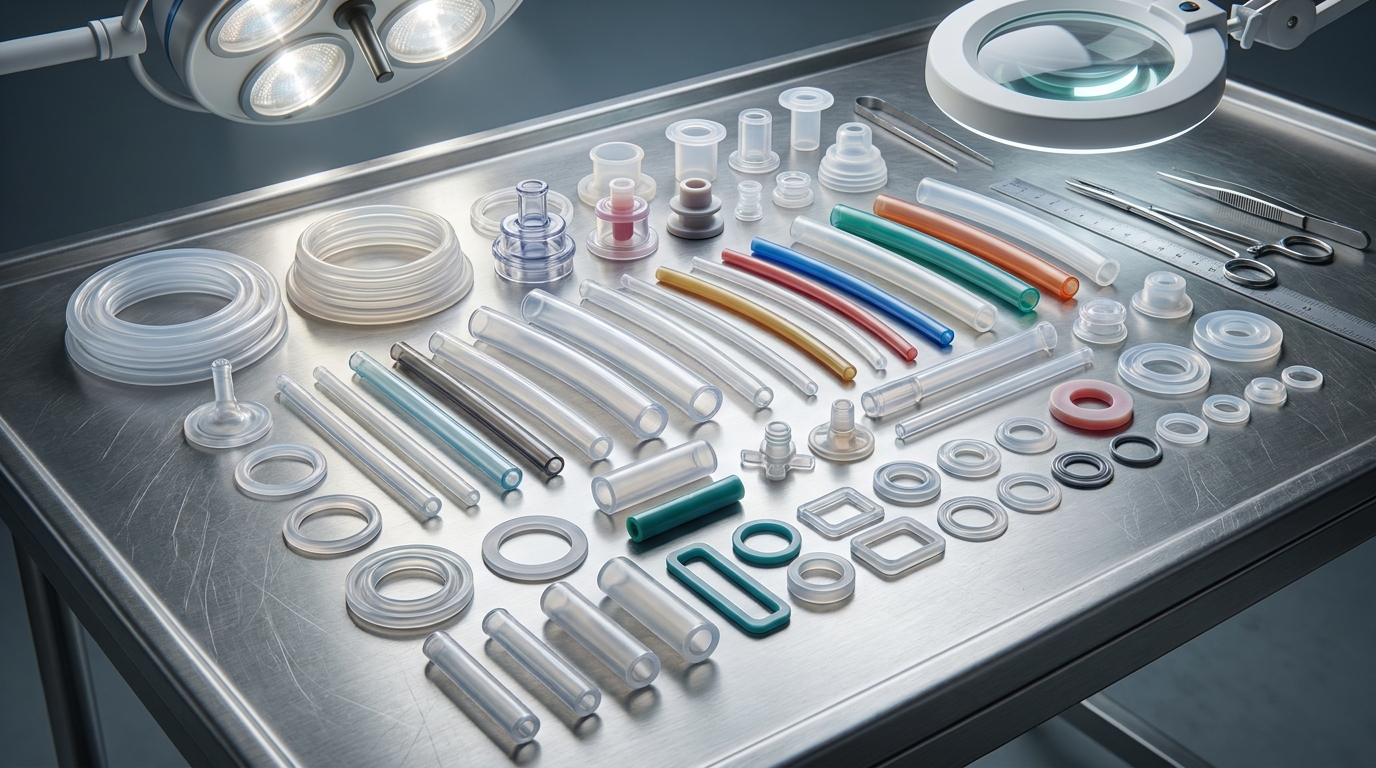
Yes, even fully compliant, high-quality materials can display whitening when subjected to extreme physical tension. Because visual stress responses depend heavily on mechanical geometry and hardness, Silicone Products that easily pass all chemical safety tests might still change color. This perfectly normal optical behavior does not invalidate their regulatory compliance. Understanding this physical reality prevents you from making costly, misinformed manufacturing decisions.
How does geometry concentrate tension?
Thick-walled components require immense force to bend, which naturally concentrates stress and alters light refraction at the flex point.
Think about it: you are observing a physical property of dense polymers, not a chemical failure.
- Thicker cross-sections amplify internal stress during flexion.
- Sharp corners and radii concentrate tension visually.
- Highly elastic designs distribute stress much better.
Does pigmentation interfere with optics?
Darker or highly saturated pigments can make temporary internal micro-voids appear more prominent as white streaks.
But wait, there’s more: unpigmented translucent materials experience the exact same stress, but you simply cannot see the color shift.
Key Takeaway: FDA-approved materials frequently exhibit visual whitening due to their physical geometry and pigment contrast, completely independent of their chemical safety.
| Product Characteristic | Likelihood of Whitening |
|---|---|
| High Hardness (>60A) | High |
| Translucent Unpigmented | Low (Invisible) |
| Dark Solid Colors | High (High Contrast) |
Recognizing that physical attributes dictate visual stress allows you to confidently bypass unfounded cosmetic quality concerns.
What dictates true manufacturing quality?

True manufacturing quality is dictated by rigorous process controls, precise tooling, and optimal curing parameters. Outstanding Silicone Products require exact temperature management and thorough post-curing to ensure cross-linking is complete and volatile compounds are eliminated. Visual tests simply cannot measure the consistency and precision of these critical manufacturing steps. Partnering with a supplier that maintains strict quality control is the key to product success.
Why is post-curing mandatory?
To achieve ultimate chemical stability, your parts must undergo a secondary baking process called post-curing in industrial ovens.
Here is the kicker: this critical step burns off residual volatile organic compounds, which is impossible to verify by just stretching the part.
- Post-curing completely eliminates chemical odors and residues.
- It stabilizes the final physical and dimensional properties.
- It is strictly mandatory for medical and food-grade compliance.
How do tooling and process controls help?
Your product’s success hinges on the microscopic precision of CNC-machined steel molds and the stability of the pressing environment.
Think about it: inconsistent temperatures during molding lead to unseen weak points that ruin long-term performance.
Key Takeaway: Genuine quality is engineered through meticulous mold design, precise curing parameters, and strict environmental controls.
| Manufacturing Step | Quality Impact |
|---|---|
| Vacuum Processing | Removes internal voids |
| Primary Molding | Defines baseline dimensions |
| Post-Curing | Eliminates VOCs and odors |
Prioritizing a factory’s process controls over visual parlor tricks guarantees superior consistency across massive production runs.
How should buyers vet their suppliers?
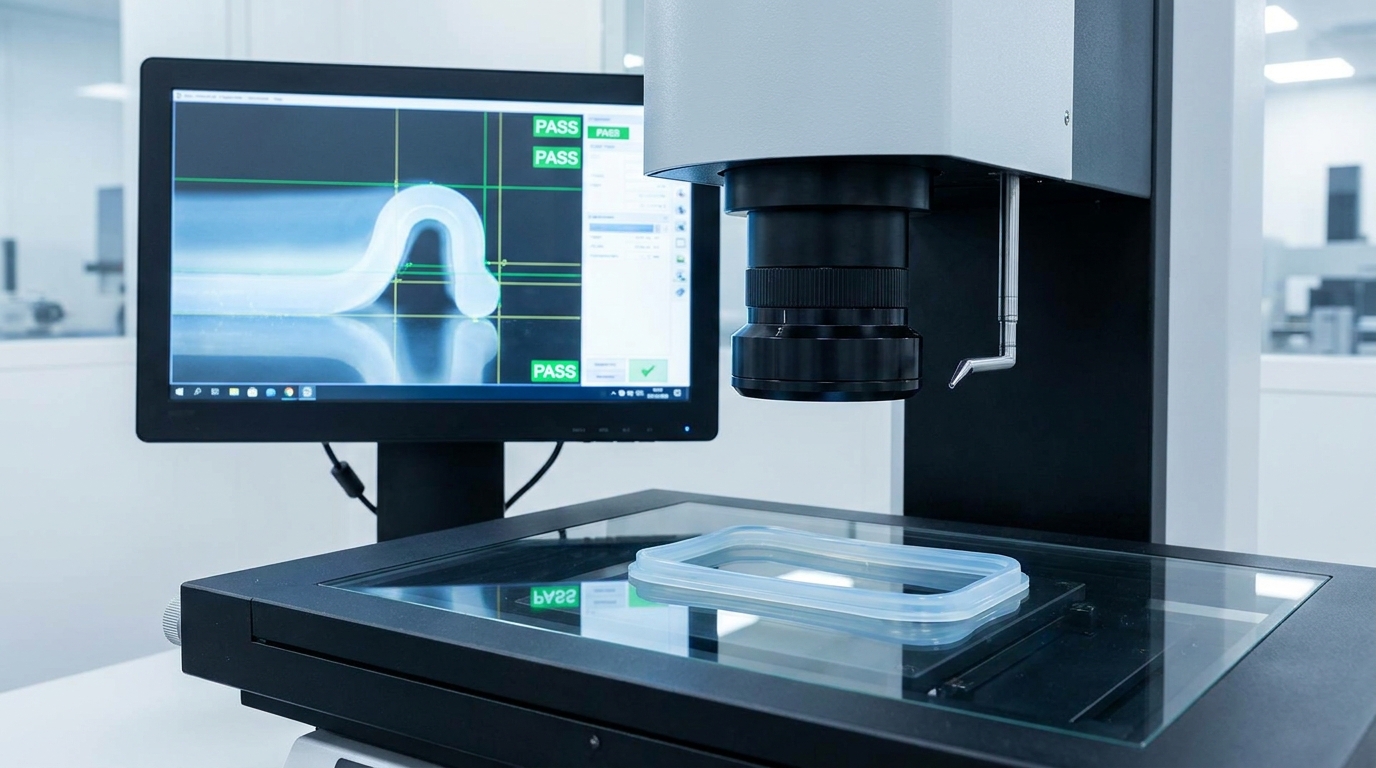
Buyers should vet their suppliers by demanding detailed compliance documentation, quality control protocols, and exact processing methods. When sourcing Silicone Products, asking for third-party laboratory reports and inquiring about post-curing times provides real insight into a supplier’s capabilities. Focusing the conversation on empirical engineering data filters out unreliable manufacturers immediately. It is the only way to protect your brand from quality failures.
What documentation must you request?
You need to stop asking if a part passes the pinch test and start demanding verifiable ISO certifications and FDA/LFGB test reports.
Think about it: a legitimate factory will always have up-to-date, traceable chemical analysis ready for your review.
- Request current raw material technical datasheets (TDS).
- Demand third-party migration and extraction testing results.
- Verify their ISO 9001 and environmental management systems.
Why ask about manufacturing steps?
You must ask your supplier precisely how they handle mixing, molding, and secondary operations to ensure batch consistency.
Let’s face it: if a supplier cannot confidently explain their post-curing temperatures, they are likely cutting dangerous corners.
Key Takeaway: Structuring your supplier inquiries around empirical data and strict process controls is the only way to secure a reliable manufacturing partner.
| Supplier Question | Poor Response | Excellent Response |
|---|---|---|
| Safety Proof? | ‘It passes the pinch test.’ | Provides FDA/LFGB reports |
| Curing Process? | ‘We cure it in the press.’ | Details precise post-curing times |
| QC Methods? | ‘We look at the parts.’ | Explains IQC, IPQC, and OQC |
Elevating your supplier vetting process to focus on certified metrics prevents disastrous quality failures down the supply chain.
How do you properly evaluate prototypes?
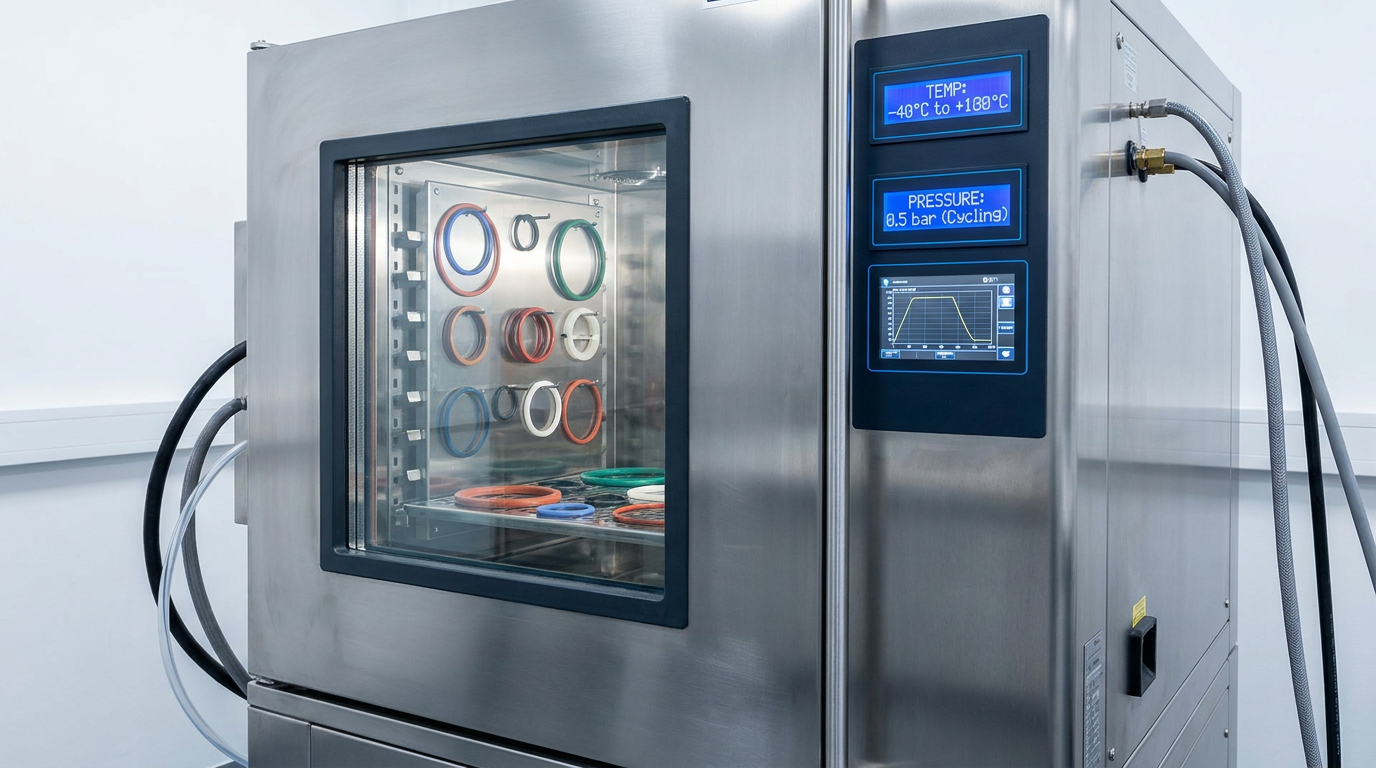
Proper evaluation requires physical prototype testing, measuring critical dimensions, and conducting long-term reliability assessments in real-world environments. To truly validate custom Silicone Products, you must subject them to environmental aging, compression set testing, and actual functional trials. This comprehensive engineering approach ensures the component will survive its intended application without premature failure. Relying on visual stretching tells you absolutely nothing about the part’s mechanical longevity.
Why are functional checks critical?
You need to use precision calipers, optical comparators, and actual mating parts to ensure the component fits your assembly perfectly.
Here is the kicker: a part that fits flawlessly and maintains its seal is infinitely more valuable than one that simply looks good when stretched.
- Verify tolerances against original 3D CAD models.
- Test waterproof seals under actual operating pressure conditions.
- Check assembly mating for long-term interference issues.
How do you predict long-term reliability?
To predict field failures, you must artificially age the parts using thermal chambers and prolonged UV exposure tests.
Think about it: your customers care about how the product performs after two years, not just two seconds of physical pulling.
Key Takeaway: A robust evaluation framework relies on dimensional accuracy, functional assembly testing, and accelerated environmental aging.
| Evaluation Method | What It Proves |
|---|---|
| Dimensional Metrology | Precision and assembly fit |
| Thermal Aging | Long-term environmental durability |
| Compression Set | Sustained sealing performance |
Implementing these strict functional evaluations guarantees that your final product will perform reliably in the hands of the end user.
Conclusion
In the demanding landscape of B2B manufacturing, relying on unscientific visual tricks like the silicone pinch test can lead to costly delays and compromised supply chain decisions. We have solved this exact challenge by shifting the quality conversation from subjective physical pulling to objective chemical extraction. At Hualin Silicone, our advanced manufacturing capabilities—including cleanroom liquid silicone rubber (LSR) injection molding, vacuum-controlled compression molding, and rigorous post-curing regimes—ensure your custom components meet the most stringent FDA and LFGB compliance standards. Our core brand vision is to deliver unmatched precision, absolute safety, and engineering excellence that empowers your products to perform flawlessly in the global market. To partner with an industry leader dedicated to certified quality, contact us today to discuss your custom production specifications.
Frequently Asked Questions
How do I know if my supplier is providing genuine food-grade materials?
It depends entirely on their official documentation. You must demand to see current, third-party laboratory test reports (such as FDA 21 CFR 177.2600 or European LFGB) rather than relying on verbal promises or visual stretch tests.
Can I trust the pinch test to verify if my silicone is food safe?
No, you cannot. Visual stretching does not detect chemical migration, volatile residues, or heavy metal leaching, which are the only parameters that matter for consumer safety.
What’s the best way to evaluate a new silicone prototype?
It is always best to perform objective engineering tests. You should prioritize dimensional metrology, functional assembly testing, and formal chemical compliance reports over unscientific physical manipulation.
How do I know if a color change means the factory used cheap fillers?
You must analyze the material’s Technical Datasheet (TDS). While low-grade suppliers might use cheap bulk additives, professional manufacturers use high-quality fumed silica to improve tear strength, which naturally causes optical shifts.