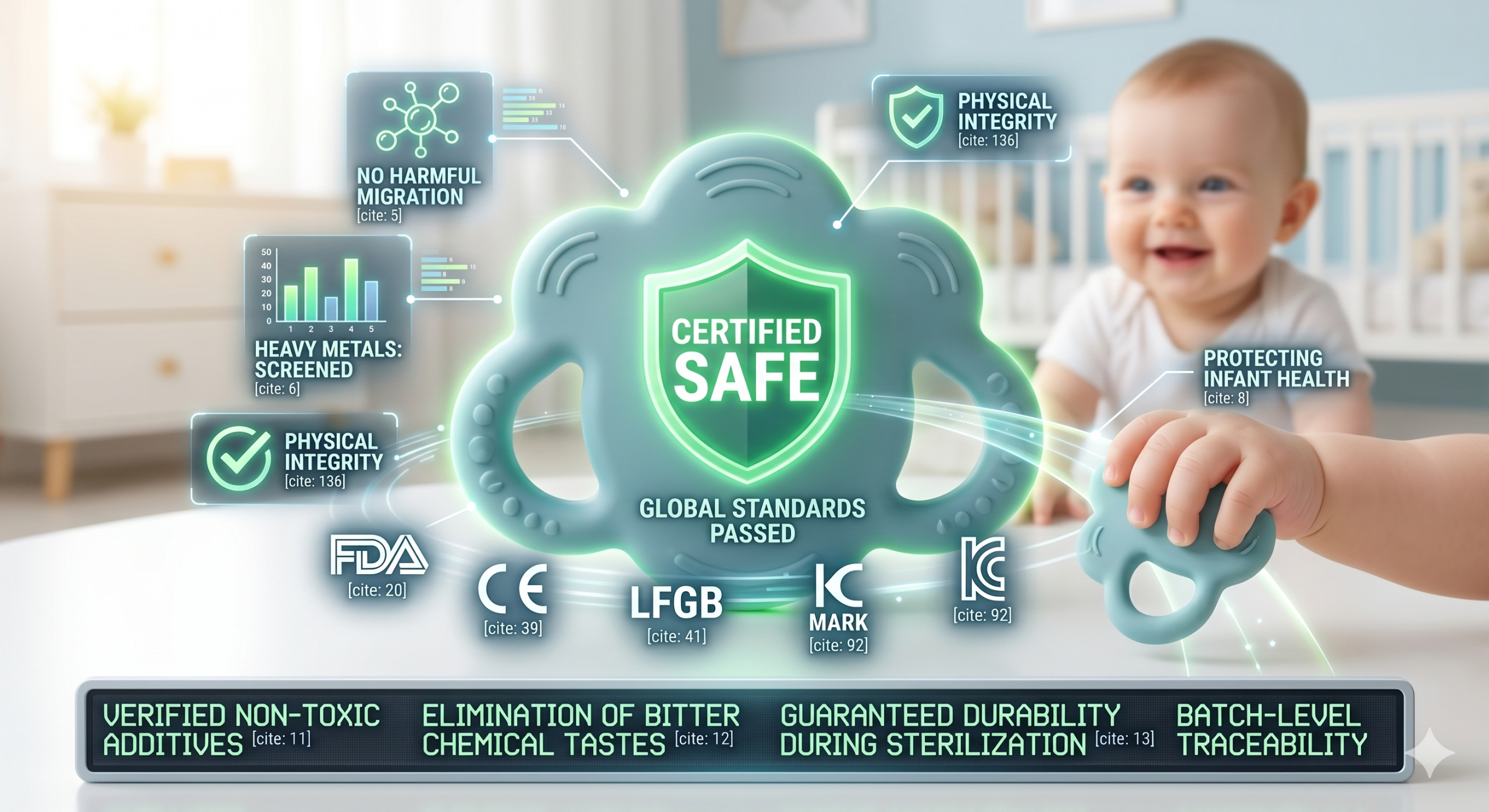
Global certification for Silicone Baby & Mother Products ensures your brand meets legal safety requirements and builds essential consumer trust across international borders. Launching a new product line without proper testing can lead to immediate customs seizures and expensive recalls that drain your capital. This guide helps you navigate international regulations so you can scale your manufacturing with absolute confidence and security.
Why is silicone certification vital for baby products?
Certification is vital because it proves your Silicone Baby & Mother Products are free from harmful chemical migration and physical defects. When you work with a certified factory like HuaLin Silicone, you ensure that infants are not exposed to heavy metals or toxic leachates. This verification acts as your legal shield in highly regulated global markets.
Protecting sensitive infant health
You must understand that infants have developing immune systems and a natural tendency to put objects in their mouths. Certification ensures that your silicone items, such as teethers and pacifiers, do not release volatile organic compounds during use.
Here is the truth:
Standard silicone grades are not enough for the nursery category. You need platinum-cured materials to eliminate the risk of chemical byproducts.
- Verification of non-toxic additives.
- Prevention of skin irritation.
- Elimination of bitter chemical tastes.
- Guaranteed durability during sterilization.
Mitigating expensive legal risks
You can avoid catastrophic financial losses by securing the correct safety documentation before shipping your goods. Non-compliant products are often flagged by automated customs systems, leading to total inventory destruction and massive fines.
| Benefit Category | Impact on Business |
|---|---|
| Regulatory | Avoids customs seizures and fines |
| Financial | Lowers the risk of product recalls |
| Brand | Builds long-term consumer loyalty |
The analysis shows that proactive certification is significantly cheaper than the legal costs of a single safety failure.
Key Takeaway: Prioritizing certification protects your brand’s reputation while ensuring the highest level of safety for the end-user.
What are the primary US certification requirements?
Primary US requirements for Silicone Baby & Mother Products focus on FDA food-contact standards and CPSC safety protocols. You must ensure your products comply with FDA 21 CFR 177.2600 to be legally sold as feeding items. Additionally, the Consumer Product Safety Improvement Act (CPSIA) mandates third-party testing for all children’s goods.
Understanding FDA food contact rules
You should verify that your liquid silicone rubber (LSR) parts meet specific extraction limits when exposed to distilled water and n-hexane. These tests confirm that the material remains inert even when subjected to high temperatures or acidic foods.
But wait:
Just saying a product is “food grade” isn’t enough for US customs. You must provide a formal laboratory report showing exact migration values.
- FDA 21 CFR 177.2600 testing.
- Verification of rubber polymers.
- Specific migration limit checks.
- Platinum-cure verification.
Navigating the CPSIA framework
You are required to issue a Children’s Product Certificate (CPC) for every batch of silicone toys or nursery items. This document proves that your products have passed lead, phthalate, and mechanical safety tests at a CPSC-accepted laboratory.
| US Requirement | Governing Body | Product Type |
|---|---|---|
| FDA 177.2600 | FDA | Feeding & Nursing |
| CPSIA / CPC | CPSC | Toys & Teethers |
| ASTM F963 | ASTM | Mechanical Safety |
The analysis indicates that US compliance requires a dual-track approach involving both chemical and physical testing protocols.
Key Takeaway: Mastering US standards is the first step toward entering the world’s largest consumer market for baby goods.
How do European Union safety standards differ?
European Union standards for Silicone Baby & Mother Products differ by emphasizing the REACH framework and the specific LFGB standards in Germany. You must ensure your items comply with Regulation (EC) 1935/2004 for all food-contact applications. These regulations are often considered more stringent than US counterparts regarding chemical purity.
Complying with REACH and EN71
You need to verify that your Silicone Baby & Mother Products contain less than 0.1% of “Substances of Very High Concern” (SVHC). The EN71-3 standard further limits the migration of 19 specific elements to protect children from heavy metal exposure.
Here is the kicker:
A single non-compliant chemical can lead to a permanent ban across the entire European Economic Area. You must maintain a comprehensive technical file to support your CE marking claims.
- REACH chemical screening.
- EN71-1 mechanical safety.
- EN71-3 heavy metal migration.
- LFGB food-grade compliance.
Meeting the German LFGB standard
You will find that many premium B2B buyers specifically request LFGB certification because of its rigorous testing methods. This standard requires more extensive testing than standard EU directives, ensuring the silicone is completely odorless and tasteless.
| EU Standard | Focus Area | Mandatory? |
|---|---|---|
| REACH | Chemical Substances | Yes |
| EN71 | Toy Safety | Yes |
| LFGB | Food Contact | Recommended |
The analysis reveals that European buyers prioritize chemical inertness and material transparency above all other factors.
Key Takeaway: European compliance depends on meeting strict migration limits and maintaining traceable material documentation.
What does the Canada Consumer Product Safety Act require?
The Canada Consumer Product Safety Act (CCPSA) requires that Silicone Baby & Mother Products do not pose a danger to human health or safety. You must adhere to the Toys Regulations (SOR/2011-17) for any product intended for children. Health Canada actively monitors the market and can order immediate recalls of non-compliant silicone goods.
Adhering to Health Canada protocols
You must ensure that your teething toys and pacifiers meet strict mechanical requirements to prevent choking hazards. The CCPSA also restricts the use of specific phthalates and heavy metals in surface coatings or substrate materials.
Look at this:
Canada’s small parts test is particularly rigorous for items marketed to infants under three years old. You should conduct pre-shipment inspections to verify structural integrity.
- Choking hazard assessments.
- Lead and mercury restrictions.
- Phthalate concentration limits.
- BPA-free verification.
Navigating mandatory reporting
You are legally obligated to report any safety-related incidents to Health Canada within two days of becoming aware of them. This transparency is a cornerstone of the Canadian regulatory environment and protects your brand from punitive damages.
| Canadian Rule | Focus | Benefit |
|---|---|---|
| SOR/2011-17 | Toy Safety | Infant protection |
| CCPSA | General Safety | Legal compliance |
| Surface Coating | Lead Limits | Chemical safety |
The analysis shows that Health Canada focuses heavily on physical safety and proactive incident reporting.
Key Takeaway: Successful entry into Canada requires a strong focus on mechanical durability and strict chemical limit adherence.
Are there specific rules for Australia and New Zealand?
Australia and New Zealand require Silicone Baby & Mother Products to meet the AS/NZS ISO 8124 standard for toy safety. You must follow the Australian Consumer Law (ACL) which enforces mandatory safety standards for items like baby dummies and teething rings. These rules are harmonized between the two nations to simplify trade for HuaLin Silicone partners.
Following AS/NZS ISO 8124 standards
You have to ensure that every silicone component passes mechanical and flammability tests designed for infant environments. Part 3 of this standard specifically limits the migration of heavy metals from silicone materials into a child’s system.
But wait, there is more:
The Australian Competition and Consumer Commission (ACCC) frequently performs market surveillance on baby products. You need to keep your test reports ready for immediate inspection.
- Part 1: Mechanical properties.
- Part 2: Flammability.
- Part 3: Heavy metal migration.
- Age-appropriate labeling.
Understanding dummy and teat standards
You must comply with AS 2432 for any silicone teats or pacifiers sold in Australia. This standard covers everything from the size of the shield to the strength of the nipple-to-shield bond to prevent accidental detachment.
| Region | Standard | Core Requirement |
|---|---|---|
| AU/NZ | AS/NZS ISO 8124 | General Toy Safety |
| Australia | AS 2432 | Pacifier Specifics |
| NZ | Fair Trading Act | Consumer Guarantees |
The analysis confirms that the AU/NZ market is highly protective, with a heavy emphasis on preventing mechanical failures.
Key Takeaway: Compliance in Australia and New Zealand is achieved through rigorous mechanical testing and adherence to harmonized ISO standards.
How does Japan regulate silicone baby and mother items?
Japan regulates Silicone Baby & Mother Products through the Food Sanitation Law administered by the Ministry of Health, Labour and Welfare (MHLW). You must obtain the “ST Mark” from the Japan Toy Association to gain full access to major retailers. This voluntary but essential mark signifies that your product meets Japan’s high expectations for quality.

Mastering the Food Sanitation Law
You should verify that your silicone materials are on the “Positive List” of approved substances for food contact. Japan’s testing methods often involve unique solvents and temperature settings that differ from US or EU protocols.
Here is the truth:
Japanese consumers are extremely sensitive to odors and surface finish. You must use high-grade LSR to ensure your products meet their aesthetic and functional standards.
- MHLW Positive List check.
- Migration testing with water/ethanol.
- Surface texture inspections.
- Odor-free material verification.
Obtaining the Japan ST Mark
You can significantly improve your market share in Japan by displaying the ST (Safety Toy) Mark on your packaging. This certification covers mechanical safety, flammability, and chemical composition, providing peace of mind to Japanese parents.
| Japan Requirement | Body | Purpose |
|---|---|---|
| Food Sanitation Law | MHLW | Chemical Safety |
| ST Mark | JTA | Consumer Trust |
| JIS S 3200 | JSA | General Standards |
The analysis suggests that Japan requires a combination of strict chemical compliance and superior product aesthetics.
Key Takeaway: Winning in Japan requires local certification and a manufacturing process that guarantees a flawless, odorless product.
What are the mandatory Korean KC mark standards?
The KC (Korea Certification) mark is mandatory for all Silicone Baby & Mother Products sold in South Korea. You must have your products tested by a government-approved laboratory in Korea to confirm they meet the Children’s Products Safety Management Act. This certification covers both the chemical safety of the silicone and the physical design of the item.
Navigating the KATS framework
You have to submit samples to the Korean Agency for Technology and Standards (KATS) for comprehensive safety confirmation. This process includes testing for harmful substances like lead, cadmium, and various phthalates that could harm a developing child.
Think about it:
The KC mark is your “passport” into the Korean market. Without it, your products will be blocked at the border by the Korea Customs Service.
- KC Safety Confirmation testing.
- Phthalate concentration checks.
- Heavy metal migration analysis.
- Korean language labeling.
Proving biocompatibility for mothers
You should also consider biocompatibility testing if you are producing breast pump parts or nursing accessories for the Korean market. The Ministry of Food and Drug Safety (MFDS) regulates these items to ensure they are safe for prolonged skin and milk contact.
| Korea Rule | Authority | Category |
|---|---|---|
| KC Mark | KATS | General Baby Care |
| Food Safety Act | MFDS | Feeding Products |
| KS M 3305 | KSA | Silicone Standards |
The analysis indicates that the Korean market is strictly controlled with mandatory local testing for almost all silicone baby goods.
Key Takeaway: The KC mark is non-negotiable for Korean market entry and requires partnership with an accredited testing facility.
How do major retail platforms enforce compliance?
Major retail platforms enforce compliance for Silicone Baby & Mother Products by requiring digital copies of all valid test reports and certificates. You cannot list items on Amazon, Walmart, or Target without proving your factory meets their specific quality and safety benchmarks. Failure to maintain these records leads to immediate account suspension and inventory removal.
Passing Amazon’s category approval
You must upload a valid Children’s Product Certificate (CPC) and supporting ISO 17025 test reports to sell in Amazon’s “Baby” category. Amazon uses automated algorithms to scan listings for safety warnings and age-appropriateness labels.
But wait:
One customer complaint regarding a “chemical smell” can trigger a manual audit of your entire supply chain. You should always keep your material traceability records updated.
- CPC/CE document uploads.
- ISO 17025 lab verification.
- High-res labeling photos.
- Safety warning compliance.
Meeting Walmart and Target standards
You should expect rigorous third-party factory audits if you aim to become a supplier for Walmart or Target. These retailers often have their own internal safety manuals that exceed federal requirements, focusing on social responsibility and advanced chemical management.
| Platform | Key Document | Audit Type |
|---|---|---|
| Amazon | CPC / Test Report | Documentation Review |
| Walmart | Supplier Standards | Factory & Social Audit |
| Target | Vendor Quality Manual | Chemical & Safety Audit |
The analysis highlights that retailers act as the ultimate gatekeepers for consumer safety in the digital age.
Key Takeaway: Retail platform success depends on having a “compliance-ready” documentation package that is easily accessible for audits.
What are the common chemical testing methodologies?
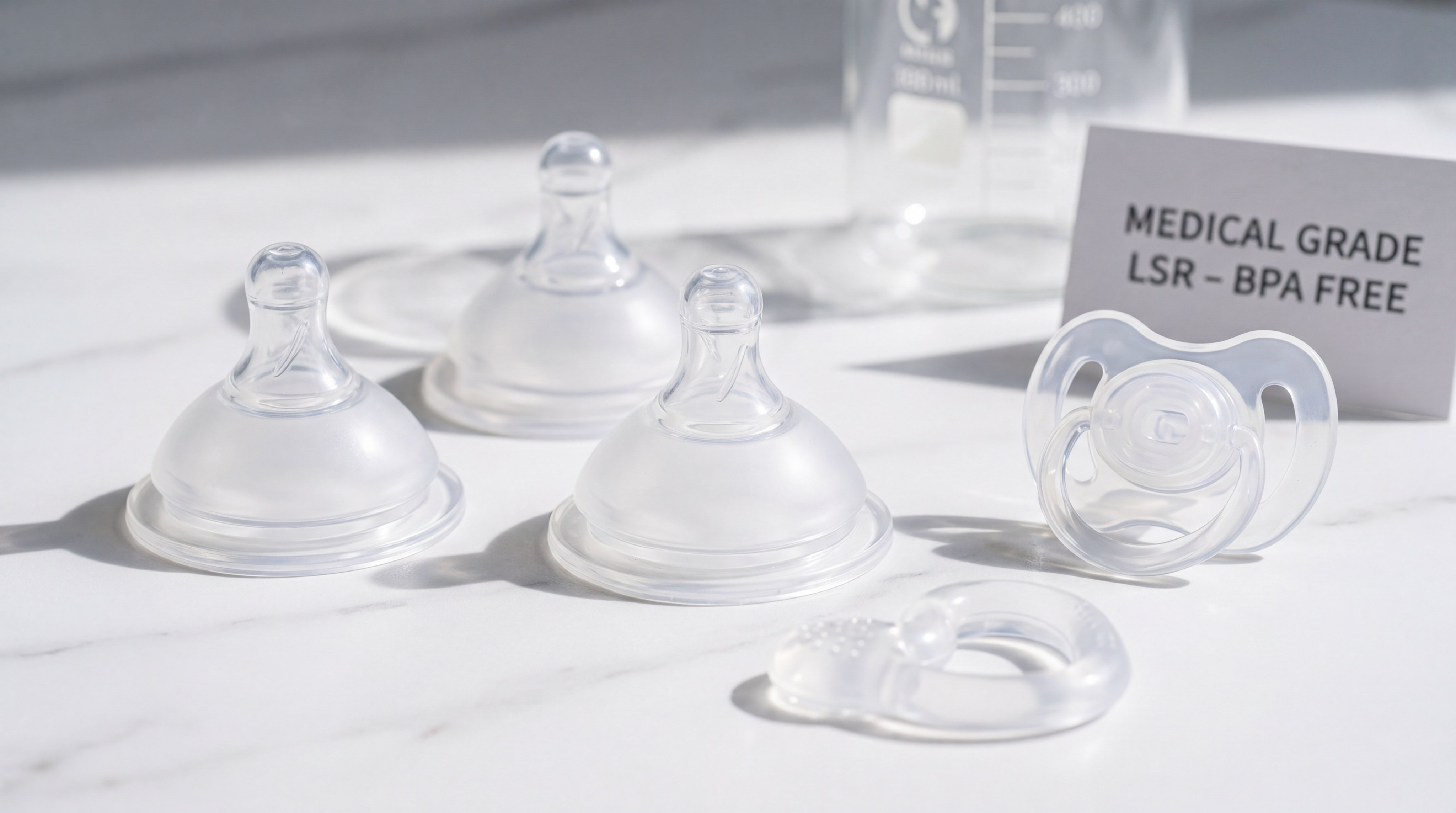
Chemical testing for Silicone Baby & Mother Products utilizes methodologies like GC-MS and ICP-MS to detect trace impurities. You must verify that your material does not leach harmful siloxanes or heavy metals during simulated use. These tests are the only way to scientifically prove your product is “medical-grade” or “food-safe.”
Conducting migration and extraction tests
You have to subject your silicone parts to liquid simulants like acetic acid and ethanol at specific temperatures. These tests measure the total amount of material that “migrates” from the silicone into the liquid, mimicking contact with milk or saliva.
Here is the kicker:
High-purity liquid silicone (LSR) typically passes these tests with ease, while low-cost compression-molded silicone often fails due to impurities.
- Total migration testing.
- Specific migration of elements.
- Volatile organic matter checks.
- Simulant immersion (acid/alcohol).
Screening for heavy metals and phthalates
You should use Inductively Coupled Plasma Mass Spectrometry (ICP-MS) to detect lead, mercury, and cadmium at parts-per-million levels. While pure silicone is naturally phthalate-free, testing is required to prove there was no cross-contamination in the factory.
| Test Method | Equipment | Target Substance |
|---|---|---|
| Migration | Incubator / Simulant | Leachable Material |
| Heavy Metals | ICP-MS | Lead, Cadmium, Mercury |
| Phthalates | GC-MS | Prohibited Plasticizers |
The analysis confirms that advanced laboratory screening is the only reliable way to guarantee material purity.
Key Takeaway: Professional chemical testing eliminates the guesswork in manufacturing and ensures your products are safe for sensitive infants.
How can you maintain ongoing manufacturing quality?
You maintain ongoing quality for Silicone Baby & Mother Products by implementing a rigorous Quality Management System (QMS) such as ISO 9001 or ISO 13485. Ongoing compliance requires batch-level testing and strict control over raw material procurement. You cannot rely on a single initial test report to cover years of continuous production.
Implementing batch testing protocols
You must establish a regular testing schedule where a percentage of every production batch is inspected for dimensional accuracy and material consistency. This prevents “quality drift” where subtle changes in the production environment affect the safety of the finished part.
Check this out:
A factory that offers in-house testing can catch defects before they ever reach your warehouse. This saves you thousands in shipping and return costs.
- Incoming material (IQC) checks.
- In-process (IPQC) monitoring.
- Final outgoing (OQC) inspection.
- Batch-level traceability logs.
Leveraging medical-grade factory standards
You benefit immensely when your manufacturer adheres to ISO 13485 standards, even for non-medical baby products. This framework demands a “clean manufacturing” mindset that minimizes dust, hair, and chemical contamination throughout the molding process.
| Quality Tool | Purpose | Frequency |
|---|---|---|
| ISO 9001 | Management Consistency | Annual Audit |
| Batch Testing | Product Safety | Every Production Run |
| Traceability | Risk Management | Continuous |
The analysis shows that the most successful B2B brands treat quality control as a continuous cycle rather than a one-time event.
Key Takeaway: Continuous quality monitoring is the only way to ensure every single product shipped meets your brand’s safety promise.
Securing Your Market Position Through Compliance
The global market for silicone baby goods is rewarding but demands uncompromising attention to safety. We have explored how major jurisdictions like the US, EU, and Asia enforce distinct rules, and how retail giants like Amazon act as the final authority. By understanding chemical migration, mechanical integrity, and factory-level quality systems, you can transform compliance from a burden into a competitive advantage.
Our vision is to provide brands with the engineering support and regulatory expertise needed to launch products with zero defects. We believe that every mother and infant deserves the peace of mind that comes from medical-grade manufacturing discipline. Ready to certify your next project? Please contact us today to start your journey toward global manufacturing excellence.
*
FAQ
Can I sell silicone teethers in the US without a CPC?
No. You are legally required to provide a Children’s Product Certificate (CPC) for any baby product sold in the US, proving it passed CPSC-mandated safety tests.
What’s the best way to prove my products are BPA-free?
The best way is to obtain a third-party laboratory test report (GC-MS) that specifically screenings for Bisphenol A and confirms its absence in your material.
How do I know if my factory is using medical-grade silicone?
You should request the Material Safety Data Sheet (MSDS) and specific FDA or USP Class VI biocompatibility certificates from your manufacturer to verify the silicone grade.
Can I use the same test report for the US and the EU?
It depends. While some tests overlap, the EU requires specific migration tests (LFGB/REACH) that may not be covered by standard US FDA protocols.
What’s the best curing method for high-end baby products?
Platinum curing is the superior choice for baby products as it produces no chemical byproducts, ensuring the silicone is odorless, tasteless, and highly biocompatible.