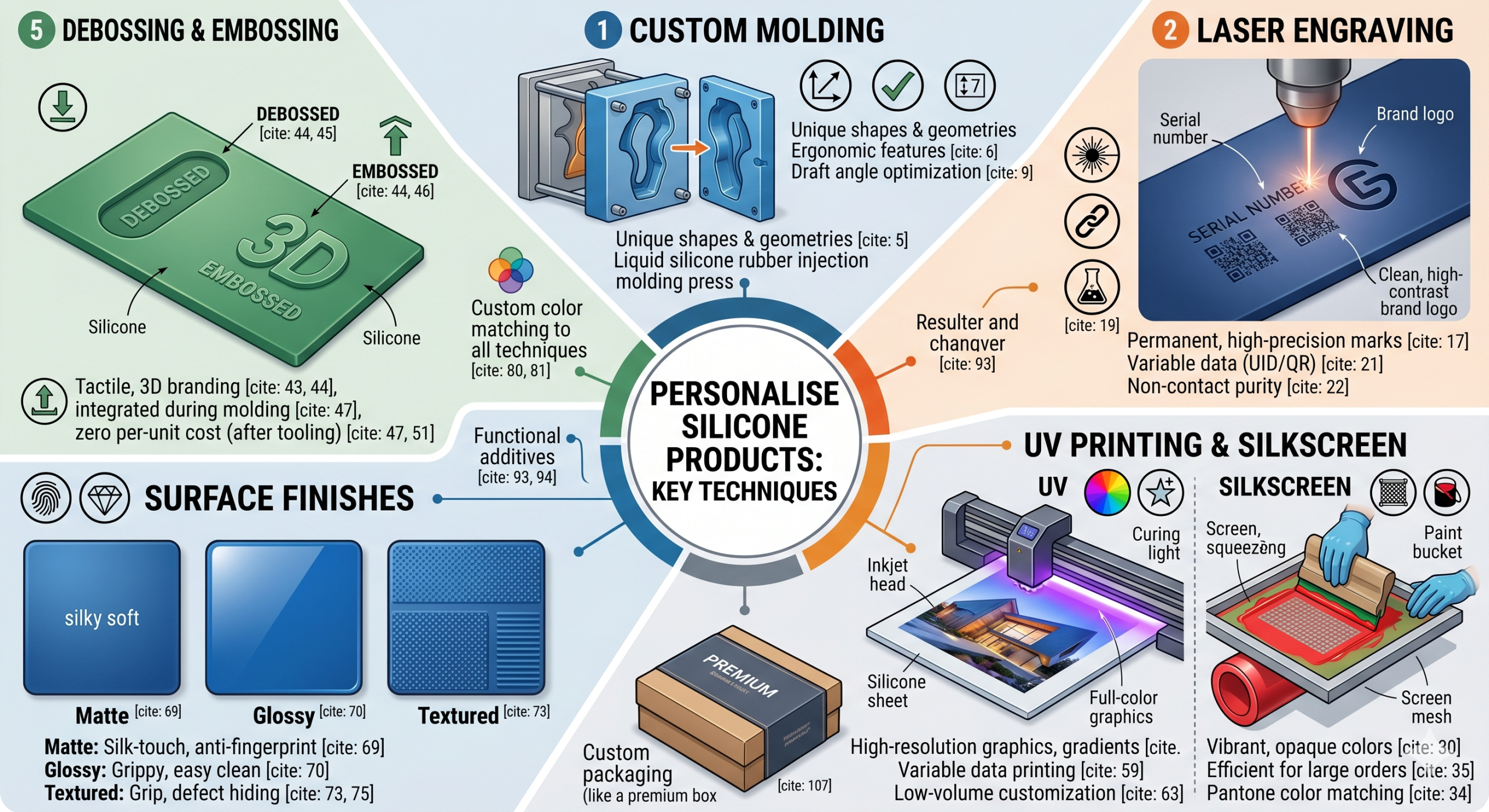
You can personalise Silicone Products through several professional manufacturing techniques, including custom molding, laser engraving, silkscreen printing, and custom color matching.
Standing out in a crowded B2B market is a constant challenge for brands trying to avoid the “commodity trap.” When your hardware looks and feels exactly like the competition’s, you lose your pricing power and your brand identity fades into the background. Professional customization allows you to embed your specific brand DNA directly into the material, ensuring your products are instantly recognizable and functionally superior.
Why custom mold your Silicone Products?
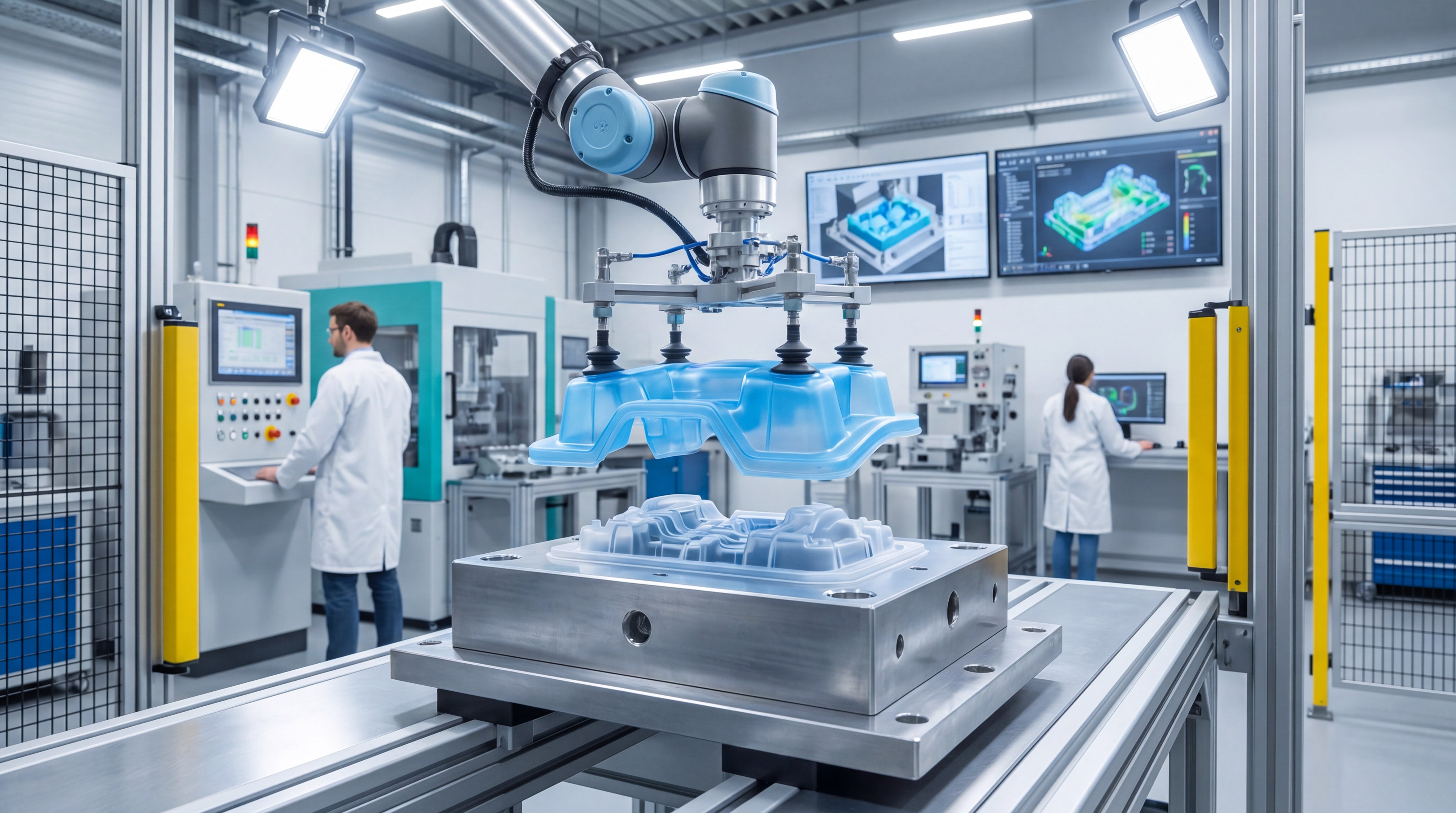
Custom molding creates unique shapes and structures that distinguish your components from generic, off-the-shelf alternatives. High-precision manufacturing allows you to integrate specific brand logos or ergonomic features directly into the core of your Silicone Products, ensuring a seamless and durable finish.
Engineering unique geometries
Custom tooling allows you to design parts with specific structural requirements that meet your exact engineering standards. This process ensures that every curve and cavity is optimized for the intended industrial or consumer application.
- Draft angle optimization for easy release
- Wall thickness consistency for uniform curing
- Precision tolerances for assembly mating
Think about this: without custom molding, you are limited by existing designs that may not solve your specific user pain points.
Utilizing liquid silicone rubber (LSR)
LSR molding provides superior clarity and precision for parts that require high-speed production and intricate detail. This method is ideal for high-volume orders where consistency across thousands of units is non-negotiable.
The best part? LSR is biocompatible, making it the top choice for medical and infant care applications.
Key Takeaway: Custom molding is the foundation of product personalization, offering structural and functional uniqueness that cannot be achieved through post-processing alone.
| Feature | Custom Compression Molding | Injection Molding (LSR) |
|---|---|---|
| Tooling Cost | Lower Initial Investment | Higher Initial Investment |
| Production Speed | Moderate | High-Speed Automation |
| Detail Complexity | Standard | Extreme Precision |
The choice between molding styles depends largely on your projected volume and the required level of geometric complexity.
Is laser engraving best for your brand?
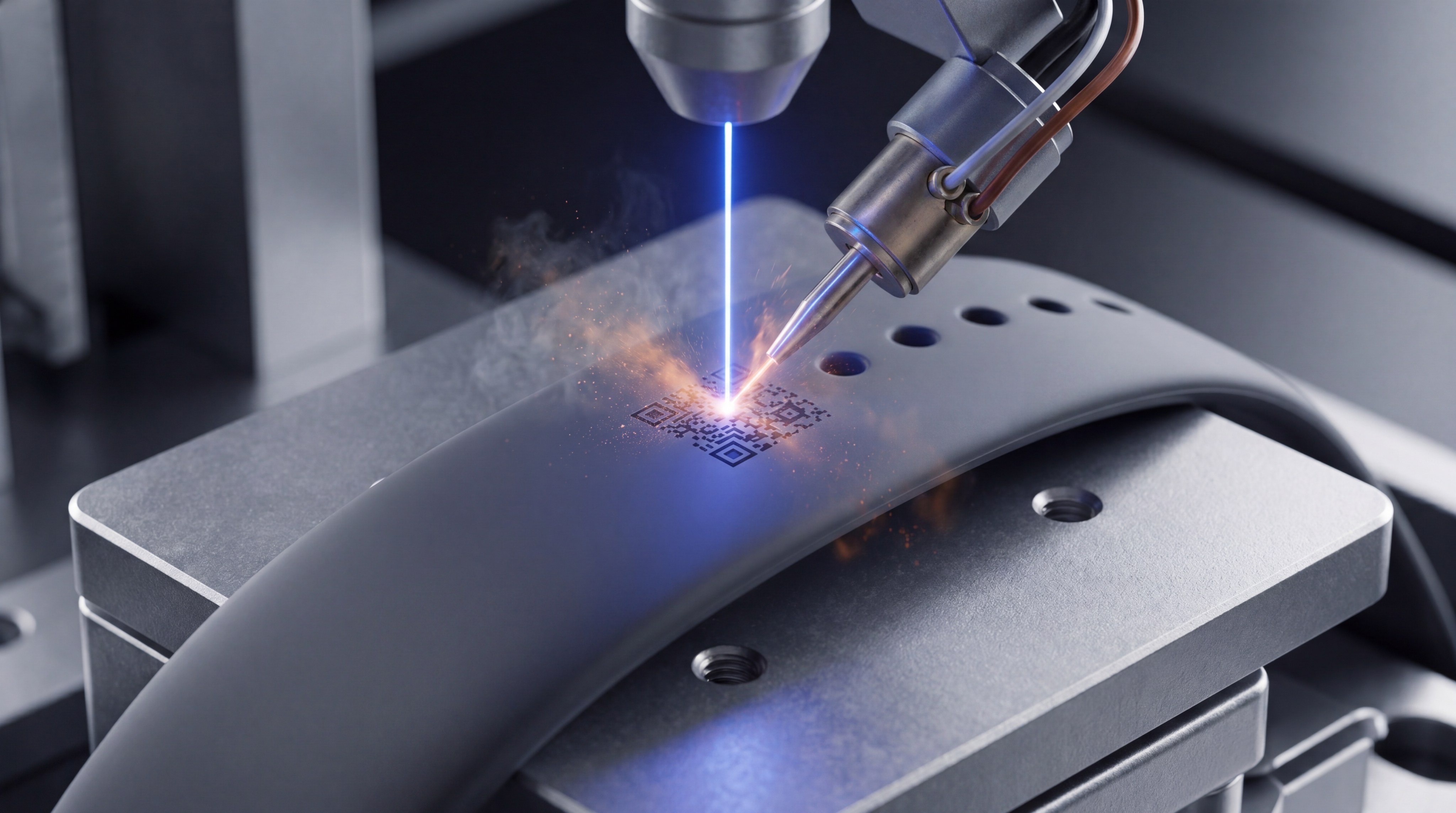
Laser engraving provides a permanent, high-precision marking solution that resists wear, chemicals, and extreme temperatures. It is an ideal method for adding serial numbers, QR codes, or intricate logos to Silicone Products without using inks or solvents.
Achieving permanent identification
The laser beam removes a thin layer of the surface material to create a high-contrast mark that will never fade or peel. This permanence is critical for industrial parts that must remain traceable throughout their entire lifecycle.
- Traceability through unique UID codes
- High-contrast logos for dark materials
- Minimal setup time for small batches
Believe it or not, laser engraving is often the most cost-effective way to handle variable data across a single production run.
Maintaining material purity
Because laser engraving is a non-contact process, it eliminates the risk of contamination from external dyes or adhesives. This makes it particularly suitable for regulated industries where material purity is a primary safety concern.
Let’s dig deeper: the depth of the engraving can be controlled to the micron, ensuring the structural integrity of the part is never compromised.
Key Takeaway: Laser engraving offers a clean, permanent, and highly flexible way to add branding and data to silicone without the need for additional consumables.
| Attribute | Laser Engraving | Traditional Printing |
|---|---|---|
| Durability | Permanent/Indestructible | May Fade Over Time |
| Chemical Resistance | Excellent | Dependent on Ink Type |
| Setup Cost | Low to None | High (Screens/Plates) |
Laser engraving remains the gold standard for technical components requiring permanent marks in harsh environments.
How does silkscreen printing add value?
Silkscreen printing adds value by allowing for vibrant, opaque colors and large-scale branding on flat or slightly curved surfaces. Applying this technique to Silicone Products ensures that your brand colors remain bold and visible even after heavy industrial use.
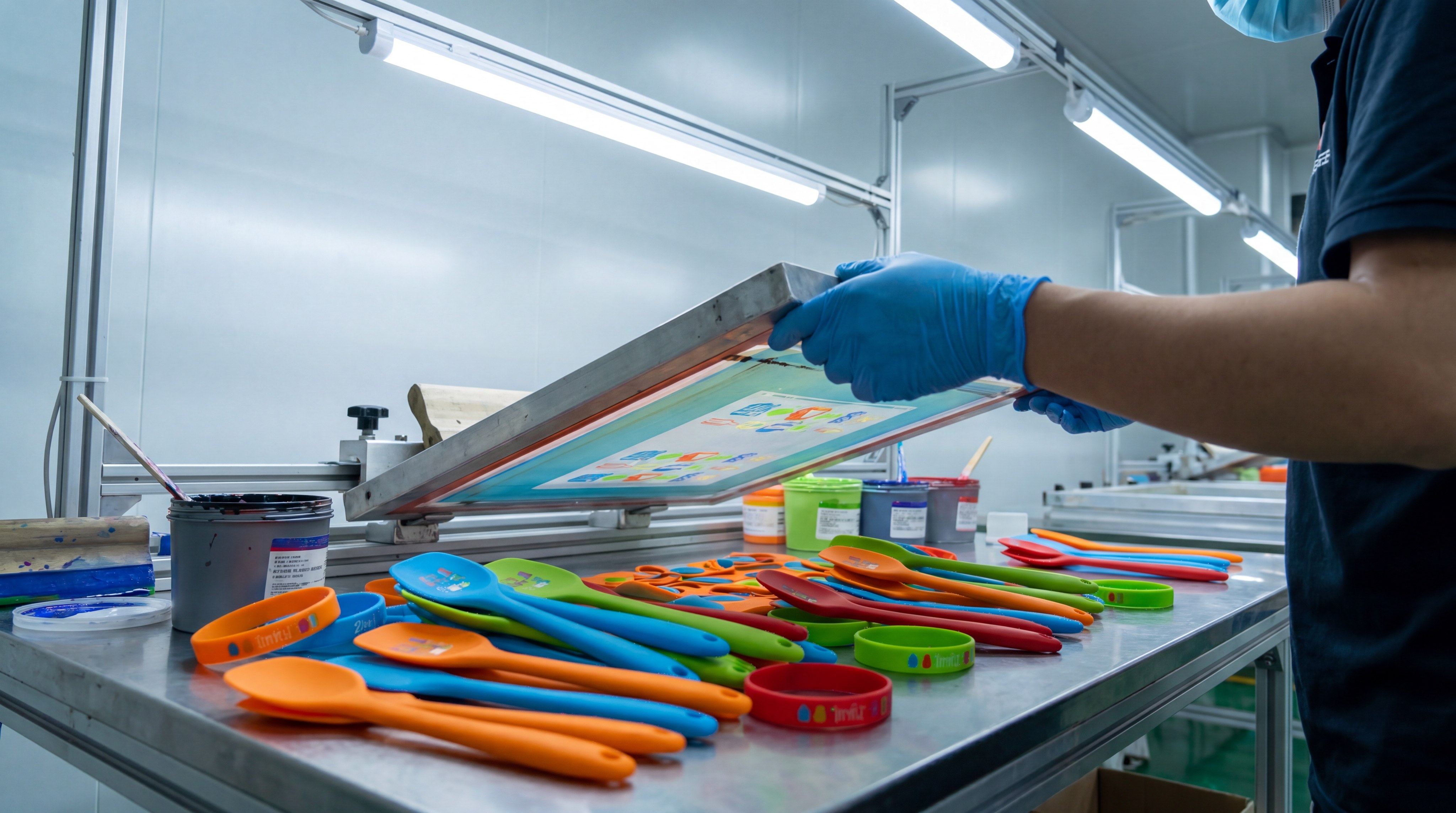
Enhancing visual impact
This process uses specialized silicone-based inks that bond chemically with the substrate for maximum adhesion. This chemical bond prevents the ink from cracking or flaking off when the silicone is stretched or compressed.
- Pantone color matching for brand consistency
- High-opacity inks for dark backgrounds
- Multi-color layering capabilities
But wait, there’s more: silkscreening can also be used to apply functional coatings, such as anti-slip textures or glow-in-the-dark patterns.
Scalability for mass production
Silkscreen printing is exceptionally efficient for large orders where you need to apply the same design to thousands of units quickly. Once the screens are prepared, the cost per unit drops significantly, making it the go-to choice for high-volume consumer goods.
Essentially, it is the most economical way to achieve high-visibility branding on a mass scale.
Key Takeaway: Silkscreen printing provides the most vibrant and cost-effective color branding for high-volume silicone components.
| Metric | Silkscreen Printing | Pad Printing |
|---|---|---|
| Ink Thickness | Thick and Opaque | Thin and Precise |
| Surface Type | Best for Flat Areas | Best for 3D/Curved |
| Volume Efficiency | Very High | High |
Printing techniques should be selected based on the surface geometry of your part and the desired opacity of the graphics.
When should you use debossing or embossing?
You should use debossing or embossing when you want a tactile, 3D branding effect that is integrated directly into the mold. These techniques are often used on Silicone Products to create “sunken” (debossed) or “raised” (embossed) logos that provide a premium feel and improved grip.
Choosing between raised and recessed
Debossing keeps the design protected from surface friction, making it ideal for high-wear areas like handles or buttons. Embossing, conversely, makes the logo stand out prominently, providing a strong tactile cue for the user’s fingertips.
- Improved tactile feedback for users
- No additional cost after tooling is made
- Enhanced aesthetic depth
Here is why: these features are “free” during the molding process once the initial mold has been engraved with the design.
Combining texture with 3D logos
You can combine these 3D effects with various surface textures to create a sophisticated, multi-layered appearance. This combination is frequently used in high-end consumer electronics and automotive interiors to convey a sense of quality.
Bottom line: 3D branding never wears out because it is part of the material itself.
Key Takeaway: Debossing and embossing provide a permanent, tactile branding solution that adds zero cost to the individual unit production.
| Type | Visual Effect | Practical Use |
|---|---|---|
| Debossed | Recessed/Engraved | High-wear surfaces, Buttons |
| Embossed | Raised/3D | Logos, Grip Enhancements |
Integrated 3D branding is the most durable personalization method because it cannot be removed without destroying the product.
Can UV printing achieve full-color results?
UV printing can achieve stunning full-color results by using ultraviolet light to instantly cure ink as it is applied to the surface. This advanced digital method is perfect for adding complex, photographic-quality imagery to Silicone Products without the limitations of traditional screen counts.
Printing high-resolution graphics
Digital UV printing allows for gradients, shadows, and fine details that are impossible to replicate with traditional silkscreening. This flexibility enables you to offer highly customized, limited-edition designs without needing expensive physical plates or screens.
- Unlimited color palette in one pass
- Instant curing for immediate handling
- Variable data printing for unique units
Now: digital printing is the fastest way to move from a design file to a finished physical sample.
Ensuring adhesion on silicone
Standard UV inks often struggle with silicone, so a specialized primer or “pre-treatment” is required to ensure long-term durability. When executed correctly, the print becomes highly resistant to abrasion and environmental factors.
In short: UV printing bridges the gap between digital design and physical manufacturing for complex graphics.
Key Takeaway: UV printing is the premier choice for brands requiring complex, multi-color graphics or low-volume customized runs.
| Capability | Digital UV Printing | Silkscreen Printing |
|---|---|---|
| Color Count | Unlimited | Limited by Screens |
| Gradient Support | Excellent | Very Difficult |
| Prototype Speed | Fast | Slow (Tooling needed) |
Digital printing allows for a level of creative freedom and rapid iteration that traditional methods cannot match.
Which surface finishes improve product feel?
Surface finishes improve product feel by altering the friction, texture, and light reflectivity of the material. Applying a matte or glossy finish to Silicone Products can drastically change how a user perceives the quality and functionality of the device.
Selecting matte vs. glossy
A matte finish provides a sophisticated, non-reflective look and feels soft to the touch, often referred to as “silk-touch” or “skin-feel.” A glossy finish, meanwhile, makes colors pop and creates a grippy surface that is easy to clean.
- Matte reduces fingerprints and glare
- Glossy enhances color depth
- Satin offers a balanced middle ground
The best part? These finishes can be applied either through the mold texture or as a secondary spray coating.
Adding functional surface textures
Textures like knurling or micro-patterns can be added to improve grip in wet or oily conditions. This is essential for industrial tools, medical handles, and kitchenware where safety depends on a secure hold.
Believe it or not, the right texture can actually hide minor manufacturing defects and surface imperfections.
Key Takeaway: Surface finishing is a critical final step that determines the tactile user experience and the perceived value of your brand.
| Finish Type | User Perception | Best For |
|---|---|---|
| Matte (EDM) | Professional, Soft | Electronics, Medical |
| Glossy (Polished) | Clean, Modern | Food Grade, Toys |
| Textured | Rugged, High-Grip | Tools, Handles |
Choosing a finish is as much about the intended environment as it is about the aesthetic goals of the brand.
How do custom colors affect brand identity?
Custom colors affect brand identity by creating an emotional connection and ensuring your hardware is instantly recognizable at a distance. By formulating specific pigments for Silicone Products, you can ensure that every part of your assembly perfectly matches your corporate branding.
Mastering Pantone color matching
Professional manufacturers use precision weighing systems to mix pigments into raw silicone, ensuring an exact match to your specified Pantone code. This process guarantees consistency across different production batches and varying material types.
- Solid colors for bold branding
- Translucent colors for LED indicators
- Fluorescent or metallic effects for visibility
Here is why: color consistency builds trust with your customers by showing attention to detail.
Using multi-color marbling and layers
For consumer-facing products, you can create unique marbled effects by partially mixing different colors during the molding process. This results in “one-of-a-kind” patterns that give each unit a personalized, artisanal feel even in mass production.
Let’s dig deeper: the way color is integrated—either through the entire material or as a surface layer—affects how the part ages over time.
Key Takeaway: Custom color formulation is the most direct way to align your physical hardware with your digital brand assets.
| Color Method | Consistency | Aesthetic Appeal |
|---|---|---|
| Internal Pigment | Very High | Uniform & Solid |
| Surface Spray | High | Metallic/Specialty |
| Marbling | Low (Unique) | Artistic/Custom |
Strategic use of color can highlight functional areas of a product while reinforcing your brand’s visual language.
Why consider functional enhancements?
Functional enhancements go beyond aesthetics to improve the actual performance and lifespan of the component. You can personalize Silicone Products with specific additives that provide antimicrobial properties, UV resistance, or electrical conductivity depending on the use case.
Integrating additives and fillers
Additives can be mixed directly into the silicone before molding to change its physical properties without altering its shape. This allows a single design to serve multiple specialized roles across different industries.
- Antimicrobial agents for medical safety
- Flame retardants for electronics
- Carbon fillers for ESD protection
The best part? These enhancements don’t change the look of the product but drastically improve its value proposition.
Overmolding for hybrid solutions
Overmolding allows you to bond silicone directly to plastic or metal inserts, creating a single, multi-material part. This personalization method provides the soft touch of silicone with the structural rigidity of a hard internal frame.
Think about this: overmolding eliminates the need for manual assembly, reducing your total cost of ownership.
Key Takeaway: Functional enhancements ensure that your personalized products don’t just look better, but actually perform better in the field.
| Enhancement | Problem Solved | Target Industry |
|---|---|---|
| Antimicrobial | Bacteria growth | Healthcare/Infant |
| UV Stabilizers | Sun damage/Yellowing | Outdoor/Marine |
| Overmolding | Assembly labor | Automotive/Consumer |
Adding functionality to your custom parts provides a competitive edge that is difficult for others to replicate.
Does custom packaging complete the experience?
Custom packaging completes the experience by protecting the product during transit while serving as the final touchpoint for your brand. High-quality packaging for Silicone Products ensures that your items arrive in pristine condition and create a professional first impression.
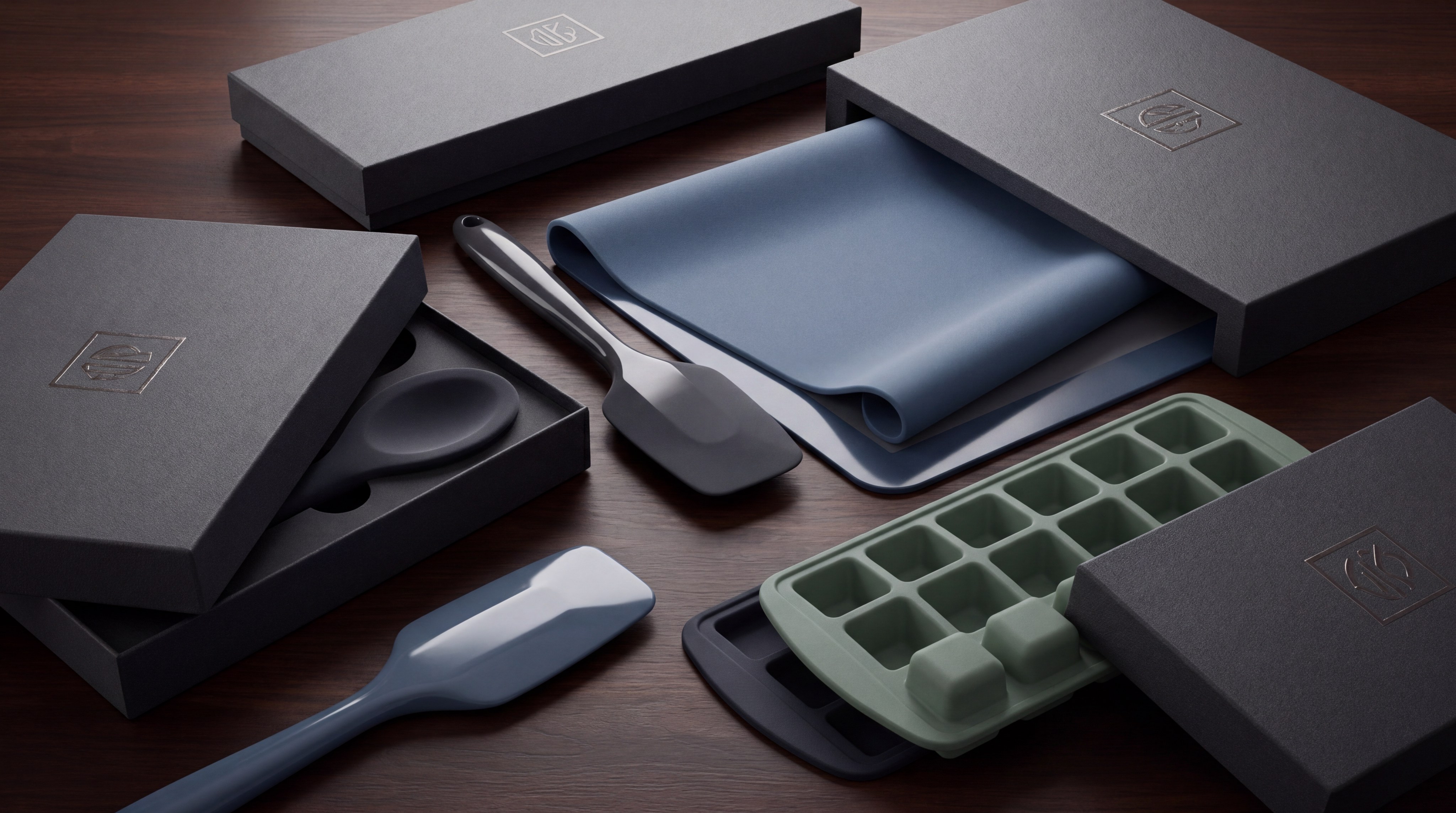
Designing branded retail boxes
Custom-printed boxes with structural foam inserts keep your silicone parts secure and presented in an organized manner. This level of detail communicates to your client that you value the quality of the item inside.
- Die-cut foam for a precision fit
- Full-color litho-printing for branding
- Sustainable, eco-friendly material options
But wait, there’s more: specialized packaging can include instructions, compliance certifications, or QR links to digital support.
Implementing bulk industrial packaging
For B2B components, packaging is less about retail appeal and more about protection and shipping efficiency. Personalized labels and barcoded boxes help your clients integrate your parts into their warehouse systems more easily.
In short: the way a product is packed is the last thing you do, but the first thing your customer sees.
Key Takeaway: Professional packaging is the final layer of personalization that protects your investment and reinforces your brand’s professionalism.
| Packaging Type | Primary Goal | Branding Level |
|---|---|---|
| Retail Box | Sales & Marketing | High |
| Industrial Bulk | Protection & Logic | Functional |
| Blister Pack | Visibility & Security | Moderate |
Your packaging strategy should align with your distribution channel to ensure maximum impact and minimum waste.
How to choose the right custom process?
Choosing the right process requires balancing your budget, production volume, and the specific environment where the product will be used. You must evaluate whether the personalization should be structural (molding) or superficial (printing) to achieve your goals effectively.
Assessing volume and budget
Low-volume projects often benefit from laser engraving or UV printing because they require minimal upfront tooling costs. For mass production, investing in custom molds and silkscreen setups provides a much lower cost per unit in the long run.
- Prototypes: UV Printing / Laser
- Short Runs: Pad Printing / Laser
- Mass Production: Custom Molding / Silkscreen
Believe it or not, the most successful products often use a combination of two or more techniques.
Considering environmental factors
If your product will be exposed to sunlight, oils, or heavy scrubbing, integrated methods like custom molding or laser engraving are superior. For indoor, low-wear items, surface printing provides the most flexibility for complex branding.
The best part? A professional manufacturer can help you run a “Design for Manufacturing” (DFM) review to choose the most efficient path.
Key Takeaway: The ideal personalization strategy is the one that meets your aesthetic requirements while remaining within your technical and financial constraints.
| Criteria | Low Volume Recommendation | High Volume Recommendation |
|---|---|---|
| Customization | Digital UV Printing | Custom Mold + Silkscreen |
| Budget Focus | Low Tooling (Laser) | Low Unit Cost (Molding) |
| Durability | Laser Engraving | Debossed Mold Design |
Consulting with an engineering-led manufacturer early in the design phase is the most effective way to avoid costly mistakes.
Are you struggling with generic product designs or poor brand visibility? We solve these problems by providing end-to-end engineering support, custom mold making, and advanced surface finishing to turn your concepts into high-performance hardware. Our vision is to empower global brands through precision silicone manufacturing and innovative ODM strategies that reduce risk and accelerate time-to-market. To discuss your next project and get a professional DFM review, contact us today.
FAQ
Can I mix multiple personalization methods on one product?
Absolutely, combining methods like custom molding for shape and laser engraving for serial numbers is a standard industry practice. This allows for both structural uniqueness and functional traceability.
How do I know if my logo is too detailed for silkscreen printing?
Generally, if your logo contains gradients or lines thinner than 0.1mm, you should consider UV printing instead. Silkscreening is best for solid colors and bold, clear geometries.
Will the personalized color match my brand perfectly?
Yes, we use professional Pantone matching systems to ensure that the silicone pigment exactly follows your brand guidelines. We can provide color swatches for approval before mass production begins.
Is laser engraving better than printing for medical devices?
Most definitely, because laser engraving is a non-contact process that doesn’t introduce inks or chemicals that could leach into sensitive environments. It is the preferred method for surgical and clinical equipment.
Can I personalize the hardness of the silicone?
Yes, you can specify the exact Shore A durometer of your material during the formulation process. This ensures the product feels exactly how you intended, whether that is soft and squishy or hard and rigid.