
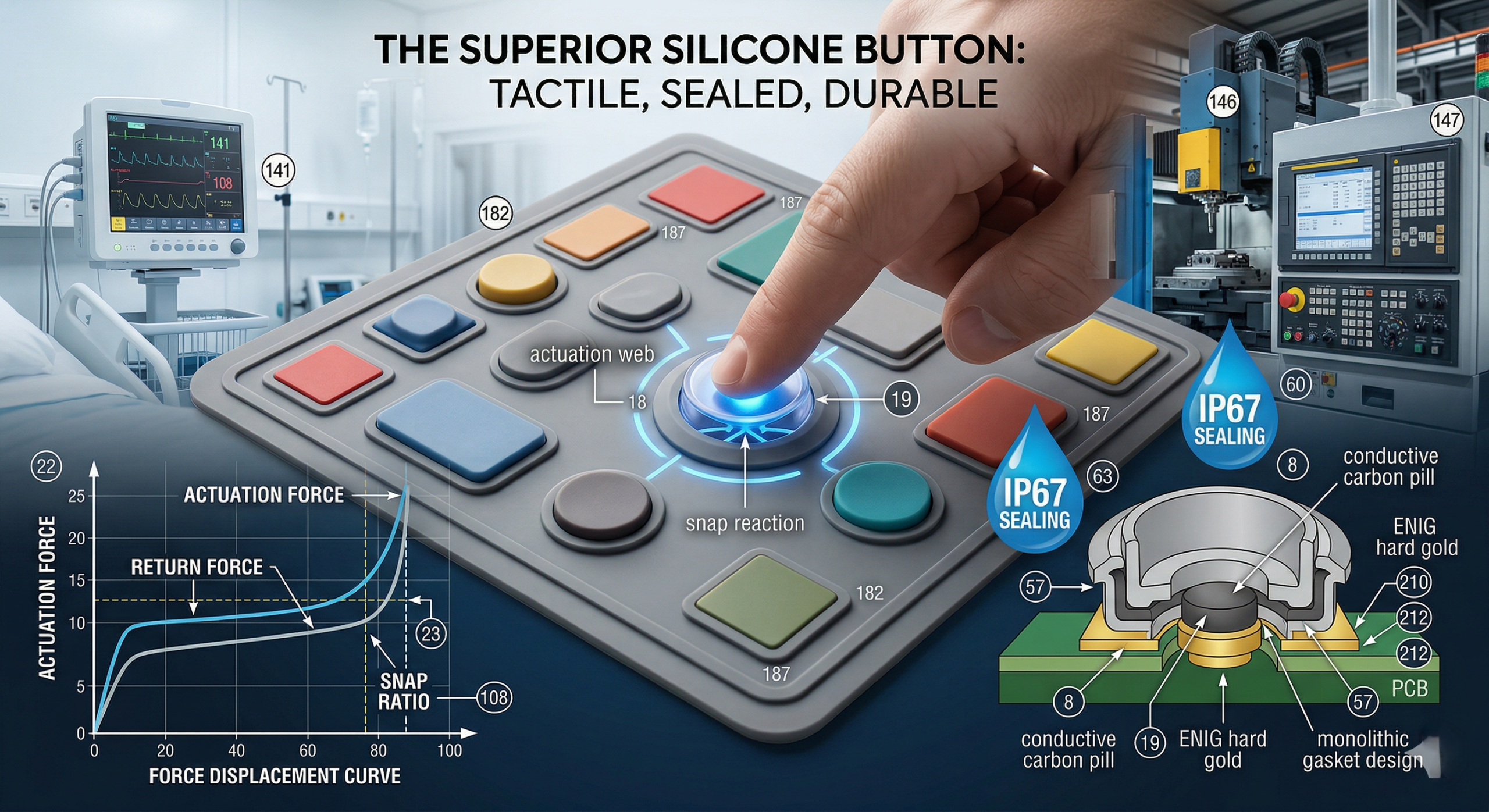
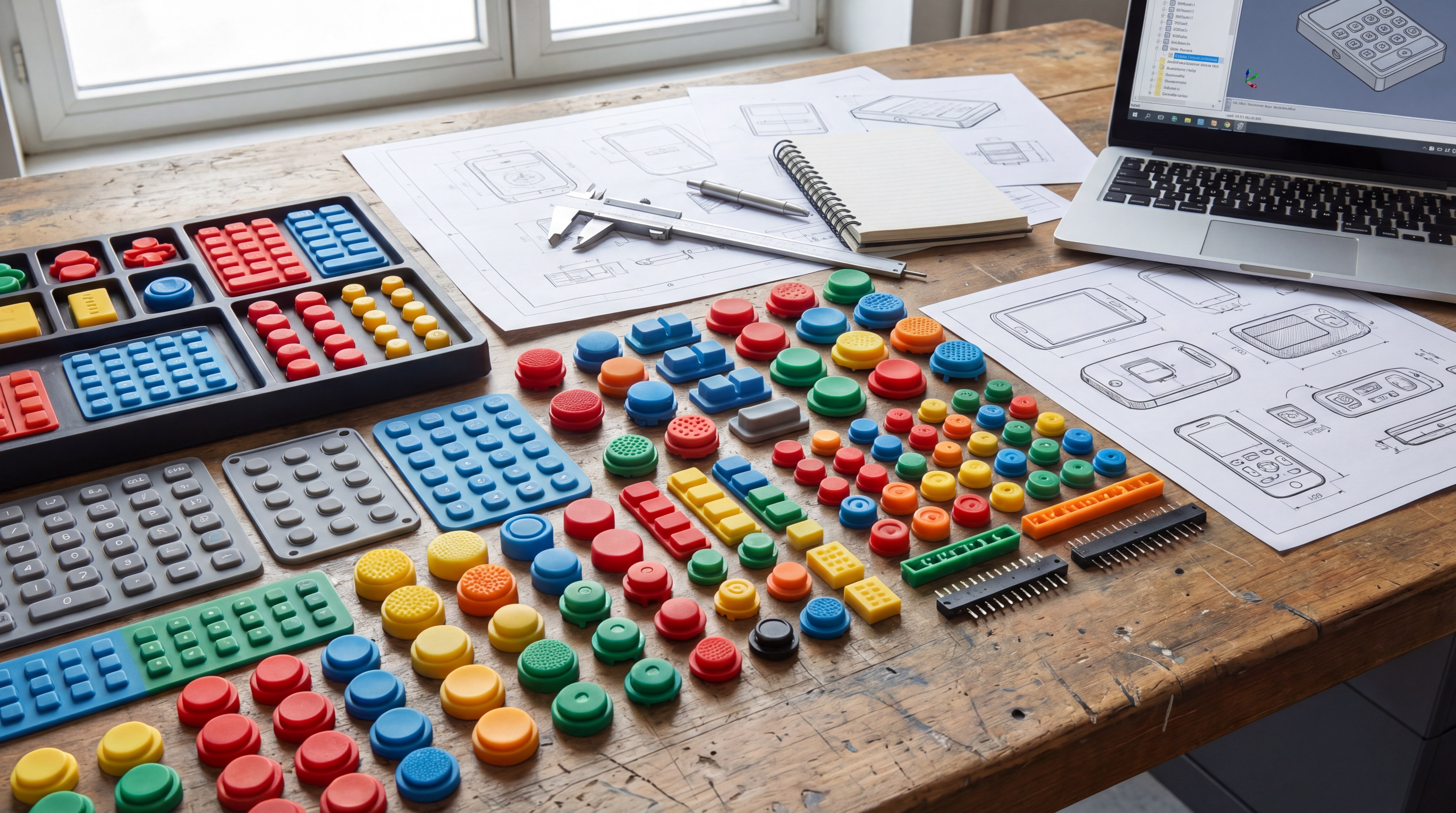
A silicone keypad is a custom-molded elastomeric interface used to bridge the gap between users and electronic circuits. Many mechanical switches often fail due to dust, moisture, or repetitive use in demanding B2B environments. Imagine your medical device or industrial controller failing in the field because a single switch corroded or stuck. That downtime costs you reputation and revenue.
Think about it: a high-quality Silicone Keypad provides a sealed, durable, and tactile solution that outlasts traditional mechanical alternatives. Choosing the right Silicone Button is the first step toward a more reliable product design. The best part? These interfaces are fully customizable to meet your specific engineering requirements.
What is a Silicone Keypad Exactly?
A Silicone Keypad is a high-performance input solution made from flexible silicone rubber that integrates tactile feedback with electronic switching. You can design these to replace multiple mechanical switches with a single, unified part. This reduces assembly time and improves the overall structural integrity of your hardware housing.
What components make a keypad?
The anatomy of a professional interface is more complex than it looks. You need to understand the relationship between the base material and the conductive elements.
- Base Mat: The flexible foundation that holds the entire assembly together.
- Webbing: The thin area around the key that allows for movement and snap.
- Contact Pill: The conductive element that closes the circuit on the PCB.
The bottom line:
Each component must be precision-engineered to ensure consistent electrical performance across thousands of cycles.
How does the elastomeric dome work?
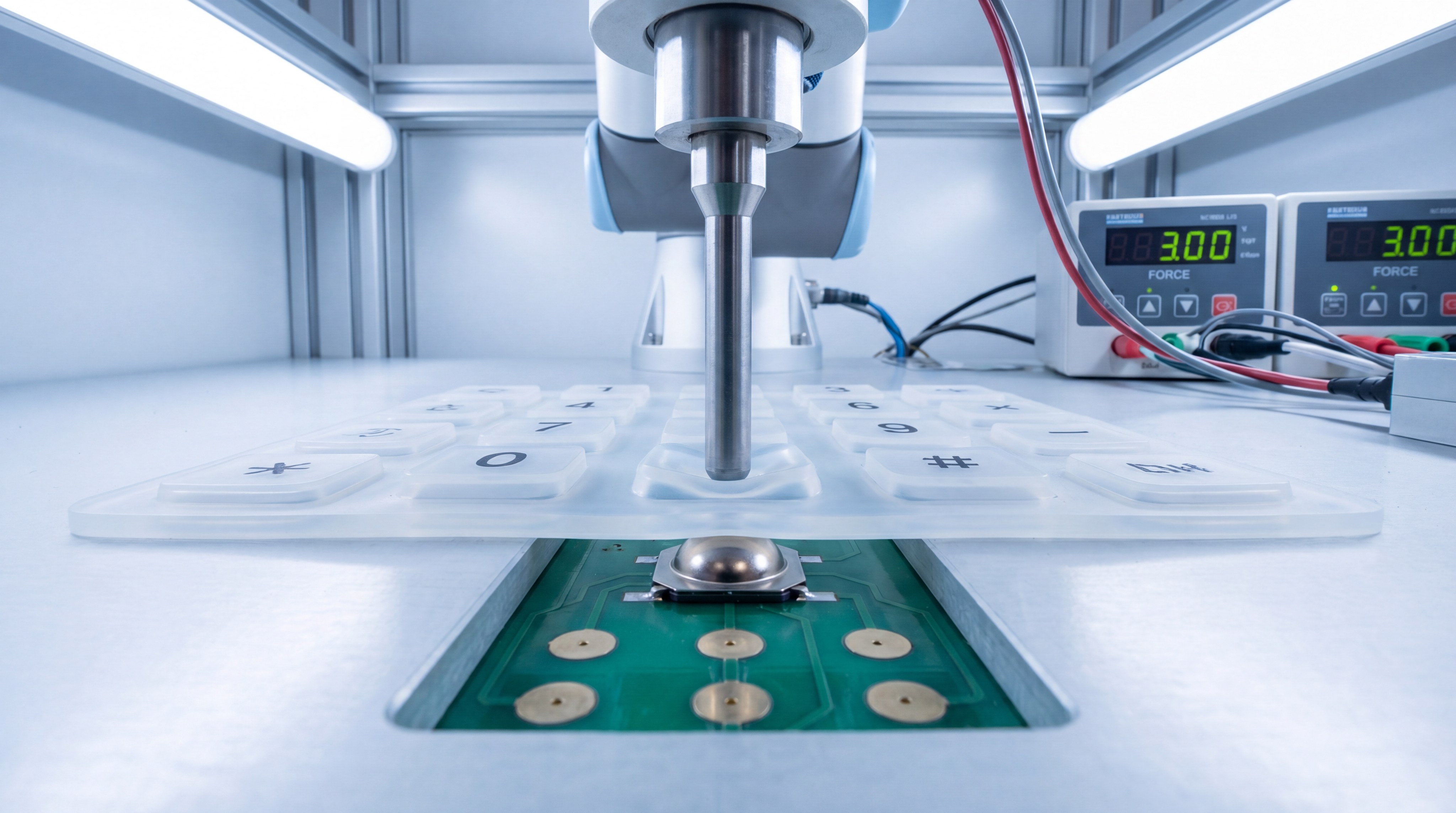
The “snap” feel you experience is a result of the elastomeric dome’s geometry. When you apply pressure, the dome collapses at a specific force known as the actuation point.
- Snap Ratio: The difference between the actuation force and the return force.
- Stroke Length: The distance the key travels before making electrical contact.
- Tactile Feel: The physical “click” sensation relayed back to the user’s finger.
Believe it or not:
Mastering the snap ratio is the secret to creating a premium user experience that feels responsive rather than mushy.
What are conductive contact options?
Choosing the right contact type determines the longevity and reliability of your switch. Most industrial designs rely on carbon pills or printed conductive inks for cost-effectiveness.
- Carbon Pills: Highly durable black carbon discs molded directly into the silicone.
- Gold Plating: Used for high-end applications where low resistance is critical.
- Conductive Ink: A flexible silver or carbon-based ink printed on the keypad base.
Keep this in mind:
Gold contacts are often preferred for mission-critical medical devices where signal integrity cannot be compromised.
Key Takeaway: Understanding the structural components and contact mechanics ensures you design a keypad that provides reliable tactile feedback and consistent electrical switching.
| Component | Material Type | Function |
|---|---|---|
| Base Layer | High-Consistency Silicone | Structural support and housing seal |
| Actuation Dome | Elastomeric Silicone | Provides tactile snap and return |
| Contact Pill | Carbon or Gold | Completes the electrical circuit on the PCB |
The structural harmony between the dome geometry and contact material defines the switch’s life cycle.
How is a Silicone Keypad Manufactured?
The manufacturing process relies on precision molding to transform raw silicone into a finished interface. You typically start with High-Consistency Rubber (HCR) that is colored and prepared for compression. This ensures the material density is uniform across the entire surface of the keypad.
What is the compression molding process?
Compression molding is the gold standard for creating durable silicone interfaces. The raw material is placed into a heated mold cavity and compressed under high pressure.
- Heat Vulcanization: The process of curing the silicone to its final permanent shape.
- Custom Tooling: Steel molds designed specifically for your unique key layout.
- Uniformity: Ensures that every button has the same wall thickness and response.
Here is the deal:
Compression molding is incredibly efficient for producing high volumes of rugged parts without high material waste.
How are conductive traces applied?
After the primary molding, you must integrate the electrical path. This is often done through secondary printing operations or by inserting pre-molded pills into the tool.
- Silkscreen Printing: Applying conductive inks to the bottom of the molded dome.
- Overmolding: Incorporating carbon pills directly during the initial molding cycle.
- Alignment: Precision fixtures ensure the traces line up perfectly with your PCB traces.
Look at it this way:
Secondary operations allow for complex multi-layered conductive paths that standard mechanical switches simply cannot replicate.
What happens during final assembly?
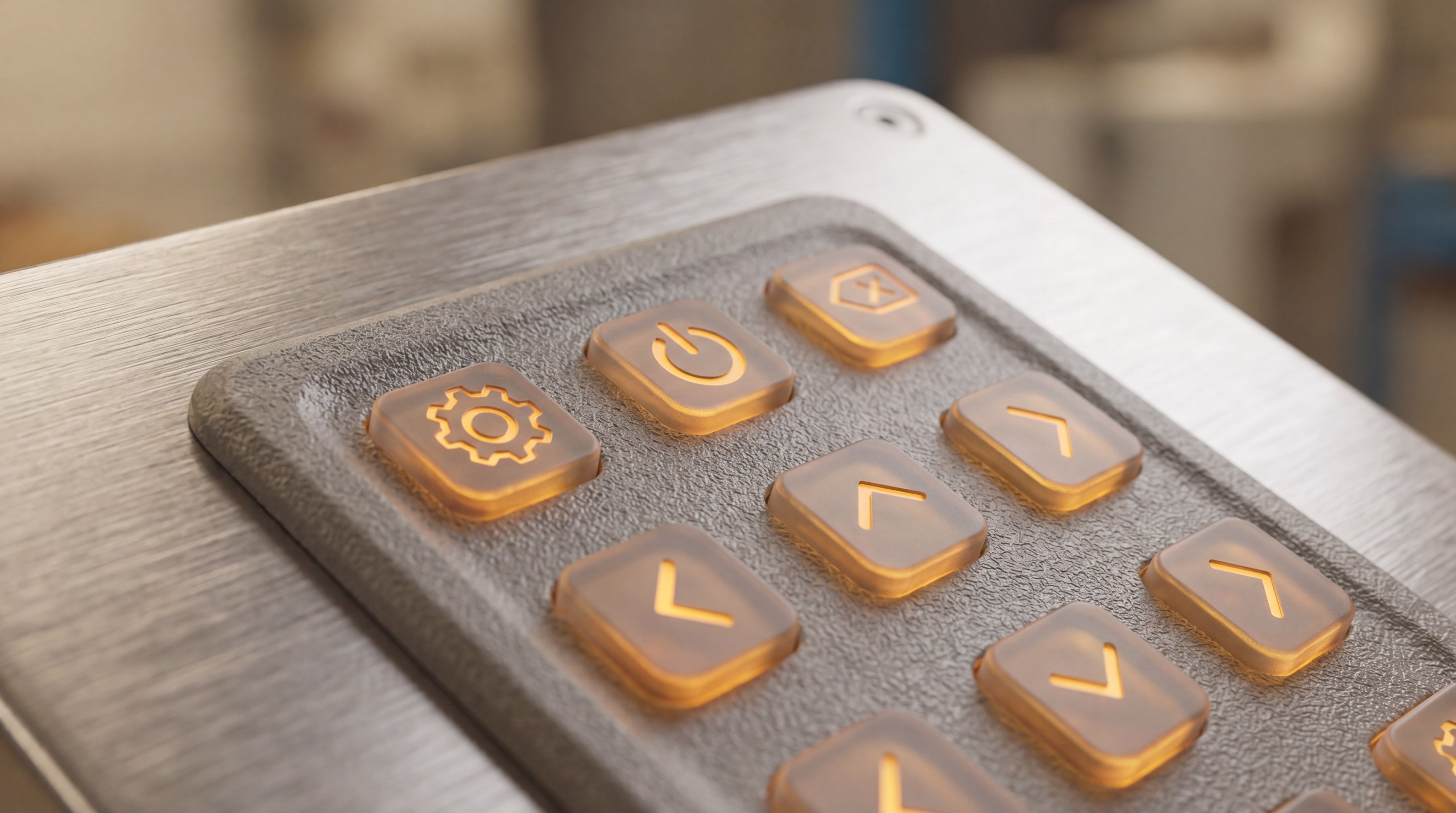
The final stages involve refining the aesthetics and protecting the surface. You can use laser etching to create transparent legends for backlighting or apply protective coatings.
- Laser Etching: Removing a surface paint layer to reveal the base translucent silicone.
- Coating Application: Sprays like PU or Epoxy that protect graphics from wear.
- Quality Inspection: Testing the actuation force of every key before shipping.
Think about it:
Final assembly is where you transform a functional part into a branded, professional interface that reflects your product’s quality.
Key Takeaway: Manufacturing precision, from heat vulcanization to final laser etching, determines the tactile consistency and visual longevity of your interface.
| Step | Process Name | Primary Goal |
|---|---|---|
| Molding | Compression Molding | Creating the 3D shape and tactile domes |
| Printing | Conductive Application | Integrating electrical switching capabilities |
| Finishing | Laser Etching/Coating | Aesthetic customization and surface protection |
The synergy of these three manufacturing phases ensures a product that is both functional and aesthetically pleasing.
What are the Key Benefits of a Silicone Keypad?
Choosing a Silicone Keypad offers significant engineering advantages over standard plastic buttons. You benefit from a naturally resilient material that withstands environments where electronics usually fail. This resilience leads to lower warranty claims and higher customer satisfaction for your hardware products.
Is extreme durability guaranteed?
Silicone is inherently resistant to a wide range of environmental stressors. You can deploy these interfaces in extreme cold or intense heat without worrying about material degradation.
- Thermal Stability: Retains flexibility from -60°C to over 200°C.
- Chemical Resistance: Withstands oils, detergents, and industrial solvents.
- UV Resistance: Does not become brittle or yellow when exposed to sunlight.
The best part?
You get a component that maintains its physical properties for millions of cycles, far exceeding the lifespan of plastic switches.
Can you customize the tactile feel?
Tactile feedback is one of the most adjustable features of an elastomeric interface. You can request specific actuation forces to match the “identity” of your brand.
- Force Adjustment: Range from light 30g touches to heavy 500g industrial presses.
- Travel Distance: Short strokes for rapid data entry or long strokes for safety.
- Snap Feel: Tuning the internal web geometry to create a crisp or soft click.
It gets better:
By fine-tuning these specs, you ensure the user feels a sense of control and quality every time they interact with your device.
Why is sealing critical for ROI?
A major advantage of silicone is the ability to create a wrap-around seal. This eliminates the need for separate gaskets, reducing your overall bill of materials (BOM).
- IP Ratings: Easily achieve IP65 to IP68 water and dust protection.
- Sanitization: Allows for frequent wash-downs with harsh medical disinfectants.
- Zero Ingress: Prevents grit and moisture from reaching the sensitive PCB.
Think about it:
A single sealed keypad is significantly cheaper and more reliable than trying to seal dozens of individual mechanical buttons.
Key Takeaway: The combination of environmental resilience, tactile tunability, and inherent sealing properties makes silicone the superior choice for high-reliability B2B applications.
| Benefit | Impact on Design | Long-term Value |
|---|---|---|
| Extreme Durability | Fewer field failures | Reduced warranty and replacement costs |
| Tactile Tuning | Premium user experience | Higher perceived product quality |
| Unified Sealing | Simplified enclosure design | Faster assembly and lower BOM costs |
These benefits translate directly into a more robust product that can survive the rigors of professional use.
Where are These Interfaces Typically Used?
You will find these interfaces in almost every industry that demands reliability and precision. Because silicone is non-toxic and biocompatible, it is especially prevalent in high-stakes sectors. From the factory floor to the operating room, these keypads perform where others fail.
Are they ideal for medical devices?
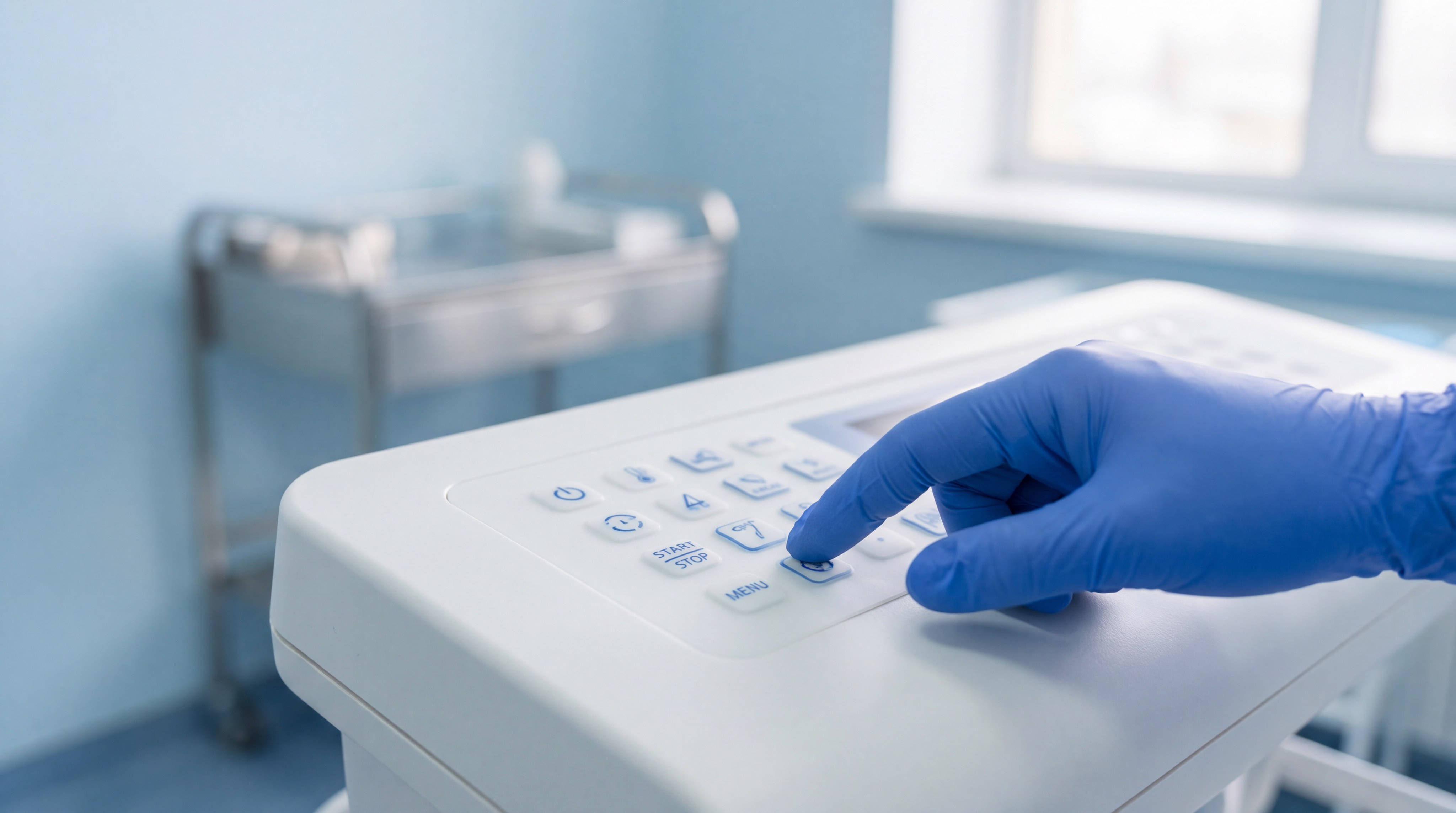
Silicone is the preferred material for healthcare interfaces due to its hygienic properties. You can find them on infusion pumps, patient monitors, and surgical controllers.
- Biocompatibility: Safe for skin contact and compliant with ISO 10993.
- Sterilization: Capable of withstanding autoclave and chemical sterilization.
- Hygiene: Check out these medical devices that use seamless designs to prevent bacteria growth.
Believe it or not:
In clinical settings, the ability to wipe down a device without liquid entering the circuitry is a life-saving feature.
How do they serve industrial panels?
Industrial environments are often filled with grit, grease, and heavy vibrations. You need an interface that won’t clog or malfunction when things get messy.
- Glove-Friendly: Keys can be oversized and spaced for use with heavy work gloves.
- Shock Absorption: The material naturally dampens vibrations that damage electronics.
- Abrasion Resistance: Protective coatings keep legends visible even in abrasive conditions.
The bottom line:
Industrial operators need an interface they can rely on while wearing PPE in the most punishing conditions.
Why use them in consumer electronics?
While ruggedness is key, aesthetics also matter in the consumer and telecom space. You can use silicone to create sleek, backlit controls for high-end home systems.
- Backlighting: Translucent materials allow for vibrant, even light distribution.
- Soft Touch: Provides a premium, high-quality feel compared to hard plastics.
- Integration: Can be overmolded directly onto plastic housings for a seamless look.
The best part?
You can achieve a high-end designer look while maintaining the functional benefits of a rugged, waterproof interface.
Key Takeaway: From medical hygiene to industrial toughness and consumer aesthetics, silicone interfaces adapt to the unique challenges of every major industry.
| Industry | Primary Requirement | Silicone Solution |
|---|---|---|
| Medical | Hygiene/Disinfection | Antimicrobial coatings and seamless seals |
| Industrial | Ruggedness/Reliability | High actuation force and oil resistance |
| Consumer | Aesthetics/Touch | Backlighting and soft-touch textures |
This versatility is why silicone remains the standard for custom user interface design across global markets.
How to Choose the Best Silicone Keypad Spec?
Designing a Silicone Keypad requires a deep dive into your application’s specific environmental and mechanical needs. You shouldn’t just guess on the specifications; you need an evidence-based approach. Early-stage Design for Manufacturability (DFM) ensures your keypad works perfectly with your enclosure and PCB.
How to define operating environments?
Before you select a material, you must analyze where the device will live. You need to account for both peak conditions and long-term exposure levels.
- Temperature Spikes: Will the device be near engines or in cold storage?
- UV Exposure: Is the interface meant for permanent outdoor installation?
- Chemical Splash: Will the keypad contact oils, fuels, or cleaning agents?
Think about it:
Specifying the environment early prevents you from over-engineering the part or choosing a material that fails prematurely.
Why check material certifications?
Certifications are your guarantee that the material is safe and compliant for your specific market. You need to ensure your supplier provides traceable documentation for every batch.
- FDA Compliance: Essential for any device contacting food or medicine.
- RoHS/REACH: Ensures the material is free from hazardous substances.
- ISO Standards: Validates that the manufacturing process is consistent and controlled.
Here is the deal:
Missing a certification can lead to costly product recalls or being blocked from entry into international markets.
What is the required travel distance?
The “travel” refers to how far the button moves before it registers a click. You should choose a travel distance that balances speed with user feedback.
- Short Travel (0.5mm): Ideal for rapid data entry or calculator-style inputs.
- Long Travel (2.5mm+): Preferred for safety switches where accidental activation must be avoided.
- Stroke Precision: Ensures that the switch always activates at the same point.
It gets better:
By matching the travel to the task, you improve the ergonomics and efficiency of the user’s workflow.
Key Takeaway: Successful specification involves balancing environmental limits, regulatory compliance, and mechanical travel to create a cohesive user experience.
| Spec Category | Criteria | Engineering Goal |
|---|---|---|
| Environmental | Temp/UV/Chemicals | Material longevity and stability |
| Regulatory | FDA/RoHS/ISO | Legal compliance and safety |
| Mechanical | Travel/Actuation | Ergonomic and functional performance |
A well-defined spec sheet is the foundation of a successful DFM process and a reliable end-product.
Why is Material Quality Critical for Performance?
Not all silicone is created equal, and the quality of the raw resin dictates the final performance. You must choose the right grade to avoid issues like material leaching or premature tearing. High-quality materials ensure that your buttons don’t lose their snap or develop cracks after just a few months of use.
What defines medical grade silicone?
Medical-grade silicone undergoes rigorous testing to ensure it doesn’t cause adverse reactions in the human body. It is often platinum-cured to provide a higher level of purity and consistency.
- Platinum Curing: Results in a cleaner material with fewer volatile byproducts.
- USP Class VI: The highest standard for biocompatibility in the medical industry.
- Selection Guide: Learn medical grade silicone selection for more details on purity.
Believe it or not:
Using medical-grade material not only protects the patient but also ensures the keypad remains stable under repeated sterilization.
How to manage shrinkage rates?
Silicone shrinks as it cools after being molded, which can affect the fit of your keypad. You need a manufacturer who can accurately predict and compensate for these rates in the mold design.
- Shrinkage Compensation: Designing the mold slightly larger than the final part.
- Wall Thickness: Consistent thickness leads to more predictable shrinkage patterns.
- Tolerance Control: Precision tools are required to keep dimensions within 0.1mm.
The bottom line:
If you ignore shrinkage, your keypad won’t line up with the PCB contacts, rendering the entire device useless.
What is the impact of silicone hardness?
The hardness of silicone is measured on the Shore A scale. You should choose a hardness that provides the right balance between flexibility and structural rigidity.
- 40-50 Shore A: Typical for standard keypads requiring a soft, flexible feel.
- 60-70 Shore A: Used for industrial buttons that need to feel firm and robust.
- Impact on Snap: Harder silicone generally produces a sharper, more defined snap.
Look at it this way:
The Shore A rating is the “voice” of your keypad; it determines whether the button feels luxury or budget.
Key Takeaway: High-purity material selection combined with expert shrinkage management and Shore A calibration is essential for professional-grade performance.
| Material Property | Variation | Impact on Keypad |
|---|---|---|
| Cure System | Peroxide vs. Platinum | Purity and odor levels |
| Hardness | 30A to 80A | Tactile feel and durability |
| Grade | Industrial vs. Medical | Biocompatibility and safety |
Selecting premium material at the start prevents the majority of manufacturing and field failures.
How to Design for Hygiene and Sealing?
In modern product design, hygiene is no longer optional for many sectors. You can use a Silicone Keypad to create a completely sealed environment that is easy to disinfect. This is achieved through clever mechanical design that eliminates the cracks and crevices where pathogens hide.
Can you achieve IP68 waterproofing?
Achieving the highest level of waterproofing requires a integrated perimeter seal. This allows the device to be submerged without any risk of internal water damage.
- Wrap-Around Seals: The silicone mat extends over the edge of the enclosure.
- Gasket Integration: Eliminates the need for a secondary rubber O-ring.
- Telecom Standards: See how IP68 waterproofing is achieved in high-stakes telecom components.
Think about it:
IP68 protection means your device can survive a flood or a cleaning hose-down without missing a beat.
What is the best hygiene design?
A hygienic design focuses on smoothness and the elimination of “dead zones.” You should aim for a surface that allows cleaning agents to flow freely across the entire interface.
- Seamless Surface: No gaps between the buttons and the base mat.
- Antimicrobial Additives: Silver-ion tech integrated into the silicone to kill bacteria.
- Expert Advice: Read this guide on hygiene design for clinical applications.
It gets better:
A truly hygienic interface reduces the risk of cross-contamination in hospitals and food processing plants.
How to eliminate bacterial traps?
Bacterial traps are often found in the small recesses around traditional mechanical buttons. You can eliminate these by using a single-piece molded overlay that covers the entire control panel.
- Flush Mounting: Designing the keys to sit level with the housing.
- Radiused Edges: Avoiding sharp 90-degree corners where dirt accumulates.
- Non-Porous Surface: Silicone naturally resists the absorption of liquids and stains.
The bottom line:
Removing physical traps is the most effective way to ensure a device can be properly sanitized in seconds.
Key Takeaway: By utilizing integrated seals and seamless geometry, you can create a clinical-grade interface that meets the strictest hygiene and waterproofing standards.
| Design Feature | Technical Solution | Benefit |
|---|---|---|
| Water Ingress | Integrated perimeter rib | IP68 waterproof rating |
| Pathogen Growth | Antimicrobial silicone | Self-sanitizing surface |
| Debris Buildup | Seamless molding | Easy-to-clean interface |
Designing with hygiene in mind ensures your product is safe for use in sterile and high-traffic environments.
What are the Main Cost Drivers in Production?
Understanding the economics of silicone production helps you manage your budget without sacrificing quality. You should know that upfront tooling costs are the biggest hurdle, but they lead to very low unit costs in high volumes. Balancing complexity with manufacturing efficiency is the key to a profitable hardware project.
Does mold complexity impact price?
The more complex your keypad geometry, the more expensive the steel mold will be. You should try to simplify features where possible to reduce the machining time for the tool.
- Cavity Count: More cavities mean higher tool costs but lower per-part prices.
- Undercuts: Complex shapes that require moving parts in the mold.
- Multi-Color: Molding different colored buttons in a single mat increases labor.
Here is the deal:
Investing in a multi-cavity tool is usually the smartest move if you plan to produce more than 5,000 units.
How does volume affect lead times?
High-volume production requires a different approach to scheduling and logistics. You need to account for the time it takes to cycle the molds and perform secondary operations.
- Prototype Phase: Rapid single-cavity tools for testing (2-3 weeks).
- Mass Production: High-capacity molding for bulk orders (4-6 weeks).
- Scaling: Larger volumes often allow for automated inspection and packing.
Think about it:
Ordering in larger batches doesn’t just lower the price; it also ensures more consistent material quality across the run.
Are secondary coatings worth the cost?
Protective coatings add an extra step to the process, which increases the price per unit. However, they are often necessary to ensure the legends don’t rub off during use.
- PU Coating: The standard for abrasion resistance and general protection.
- Epoxy Coating: Provides a high-gloss, premium “plastic” look to buttons.
- Parylene: A high-end coating for extreme chemical and moisture resistance.
Look at it this way:
A coating is a small insurance policy that prevents your product from looking “cheap” after a few months of wear.
Key Takeaway: Balancing mold complexity, order volume, and secondary finishes allows you to optimize your production budget while maintaining high performance.
| Cost Factor | High Impact | Low Impact |
|---|---|---|
| Tooling | Multi-cavity steel molds | Single-cavity aluminum molds |
| Part Finish | Laser etching + PU coating | Molded-in legends only |
| Quantity | Sub-1,000 unit runs | 10,000+ unit runs |
By identifying these drivers early, you can make design trade-offs that keep your project on budget.
Is LSR Better Than Compression Molding?
When you decide on a manufacturing route for your Silicone Keypad, the choice between Liquid Silicone Rubber (LSR) and compression molding is critical. LSR is often seen as the modern, high-tech option, but it isn’t always the best fit for every project. You must evaluate your volume and precision requirements before choosing the injection method.
When should you choose LSR?
LSR is an injection molding process that uses a liquid two-part system. You should choose this if you need extreme precision, high volumes, or complex overmolding.
- High Speed: Faster cycle times compared to manual compression molding.
- Precision: Capable of producing flash-free parts with very tight tolerances.
- Automation: Less manual labor means more consistent parts at high scale.
The best part?
LSR allows you to mold silicone directly onto plastic or metal inserts with incredible accuracy.
Is compression molding still viable?
Compression molding remains the most popular method for keypads due to its lower setup costs. You should stick with compression if your parts are large or your volumes are moderate.
- Cost-Effective: Tooling is significantly cheaper than LSR injection molds.
- Material Variety: Easier to use high-consistency rubbers with specific fillers.
- Large Parts: Better suited for very large control panels or overlays.
Think about it:
For many B2B projects, the lower tooling cost of compression molding provides a much faster path to ROI.
Which offers better material purity?
LSR systems are closed, meaning the material is never exposed to the environment before it enters the mold. You benefit from a cleaner process that is ideal for medical and food-grade parts.
- Closed System: Reduces the risk of dust or hair contamination.
- Platinum Curing: LSR is almost always platinum-cured for high purity.
- Consistency: The automated mixing of the two parts ensures uniform properties.
The bottom line:
If your application requires the absolute highest level of cleanliness, LSR is the clear winner.
Key Takeaway: Choose LSR for high-volume precision and purity, but rely on compression molding for cost-effective large parts and lower initial investment.
| Feature | LSR Injection | Compression Molding |
|---|---|---|
| Tooling Cost | High | Moderate to Low |
| Cycle Time | Fast (Seconds) | Moderate (Minutes) |
| Part Precision | Excellent | Good |
The right choice depends entirely on your specific balance of budget, volume, and technical requirements.
How Do Custom Coatings Enhance Performance?
A raw silicone surface can sometimes feel “sticky” or attract dust. You can solve these issues and add functional properties by applying custom coatings. Coatings are the final layer of defense that ensures your interface remains professional and functional throughout its entire service life.
Can you reduce dust attraction?
Silicone is naturally prone to static buildup, which attracts lint and dust. You can apply an anti-static coating to give the keypad a smooth, “silk-like” finish.
- Matte Finish: Reduces glare and provides a premium look.
- Touch Sensation: Transforms the rubbery feel into a smooth, high-end texture.
- Cleanliness: Prevents the device from looking dirty even in dusty environments.
Believe it or not:
An anti-static coating can make a $100 device feel like a $1,000 professional tool.
What are the best graphic finishes?
Graphics need to stay sharp even after millions of finger presses. You can choose between surface printing or sub-surface etching depending on your durability needs.
- Silkscreening: The most common way to add multi-colored legends.
- Laser Etching: Creating legends by removing paint, ideal for backlighting.
- Over-Coating: Applying a clear protective layer to seal the graphics in.
The best part?
Laser etching combined with a PU coating is nearly impossible to wear out, even with heavy daily use.
How to protect against chemicals?
If your keypad is used in a garage or a lab, it will face harsh chemicals. You should use specialty coatings like Parylene to provide a chemical-resistant barrier.
- Fuel Resistance: Prevents swelling when exposed to gasoline or diesel.
- Solvent Barrier: Protects against alcohol-based medical cleaners.
- Environmental Seal: Adds an extra layer of moisture protection for outdoor use.
Think about it:
Chemical protection ensures that your keypad doesn’t melt or deform when it inevitably gets splashed in the field.
Key Takeaway: Surface coatings are essential for managing dust, protecting graphic integrity, and ensuring long-term resistance to environmental and chemical stressors.
| Coating Type | Primary Benefit | Best Application |
|---|---|---|
| Anti-Static | Reduces dust and lint | Consumer and medical electronics |
| PU Spray | Abrasion resistance | Industrial and automotive controls |
| Epoxy Drip | Premium “3D” feel | High-end home automation |
Surface protection is the final step in delivering a product that looks and performs perfectly for years.
Common Questions About Silicone Keypads
Can I customize the actuation force of my keypad?
Yes, the actuation force is fully adjustable by changing the geometry of the internal silicone web. You can specify a force anywhere from a soft 30g to a heavy 500g depending on whether you need a light touch or a deliberate, safety-oriented press.
What’s the best way to clean medical silicone?
Medical-grade silicone is best cleaned with isopropyl alcohol or mild detergents. Because it is non-porous and chemically resistant, it can withstand frequent disinfection without the material degrading or the graphics fading.
How do I know if I need backlighting for my UI?
If your device will be used in low-light environments, such as a cockpit, a dark factory floor, or a patient’s room, backlighting is essential. You should choose translucent silicone and laser-etched legends to allow light to pass through clearly and evenly.
Can I integrate metal domes for higher snap ratios?
Yes, you can place metal domes underneath a silicone keypad to achieve a very crisp, mechanical-style click. This hybrid approach gives you the tactile feel of a mechanical switch with the environmental sealing benefits of a silicone overlay.
What’s the best silicone grade for outdoor exposure?
You should specify a UV-stabilized, high-consistency rubber (HCR) for outdoor use. This grade is specifically formulated to resist yellowing, cracking, and loss of flexibility even after years of exposure to direct sunlight and extreme weather.
Moving Toward a More Durable Device
Custom silicone keypads offer an unmatched balance of tactile feedback, sealing, and durability for professional applications. By choosing these elastomeric interfaces, you eliminate the common failure points of mechanical switches and provide your users with a reliable, hygienic experience. Whether you are designing for the medical, industrial, or telecom sector, silicone provides the flexibility you need to succeed.
Ready to optimize your hardware design and move past the limitations of traditional switching? Contact us today for a free DFM consultation and expert quote on your next project. Our vision is to help you build more durable, user-friendly products through precision silicone engineering. Let’s create an interface that sets your brand apart.