Medical-Grade Silicone Keypads Built for Reliability
Your medical devices demand keypads that survive repeated disinfection, maintain seal integrity, and deliver consistent tactile feedback across every unit shipped. We engineer custom silicone keypads that protect your device's performance and your brand's reputation.
Join 200+ medical device manufacturers who trust Hualin for mission-critical silicone components
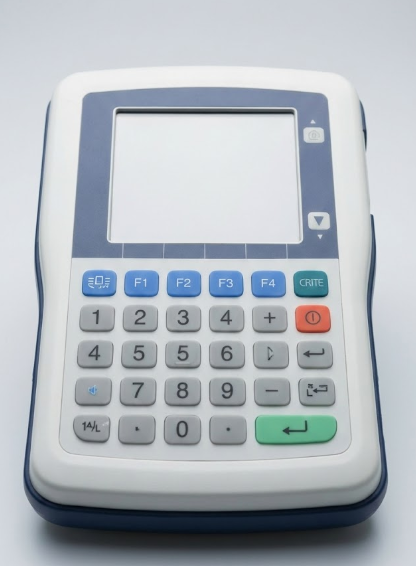
Medical Components Require More Than Just Molding
Your auditors expect process control, batch traceability, and verifiable documentation. We provide the compliance infrastructure that gives you confidence and protects your regulatory standing.
Complete Traceability System
- Lot and batch control with full material pedigree tracking
- IQC records for every incoming material shipment
- In-process inspection data linked to production batches
- Final inspection reports retained for audit trail
- Corrective action (CAPA/8D) workflow with root cause documentation
NDA & IP Protection
- Standard NDA available upon request before design review
- Secure file handling and controlled access protocols
- Your proprietary designs never shared with competitors
- Tooling ownership rights clearly defined upfront
- Confidential manufacturing prevents unauthorized production
Need certification documents, QC procedures, or inspection reports for your audit?
Request Documentation PackStop These 6 Common Medical Keypad Failures Before They Happen
We've analyzed thousands of field failures and production complaints. Here are the root causes that damage device reliability—and our proven engineering fixes that prevent them.
Fading or Worn Legends
Sticky Surface After Cleaning
Liquid Ingress & Failed Sealing
Mis-Touch & Missed Press
Unstable Electrical Conductivity
Prototype Perfect, Production Fails
Concerned About Specific Failure Risks in Your Application?
Share your top 2-3 concerns and we'll create a customized prevention plan with design recommendations and validation approach.
Request Custom Prevention PlanComplete Medical Keypad Solution Portfolio
From single buttons to complex multi-key assemblies with backlighting and conductive integration—we manufacture the full spectrum of medical silicone keypad solutions your devices need.
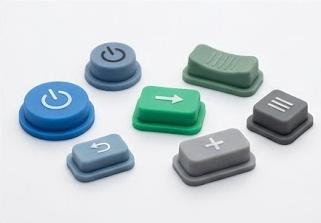
Individual Silicone Buttons
- Custom force/travel profiles tuned to your specifications
- Integrated sealing features for IP-rated protection
- Multiple legend options including laser marking

Multi-Key Medical Keypads
- Complex layouts with consistent key-to-key tactile uniformity
- Anti-mistouch skirt designs prevent accidental activation
- Integrated legends with protective topcoat durability
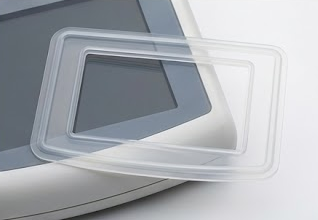
Sealed Silicone Overlays
- Full-membrane construction with perimeter sealing
- Engineered lip seals for liquid ingress protection
- Can integrate transparent windows or display cutouts
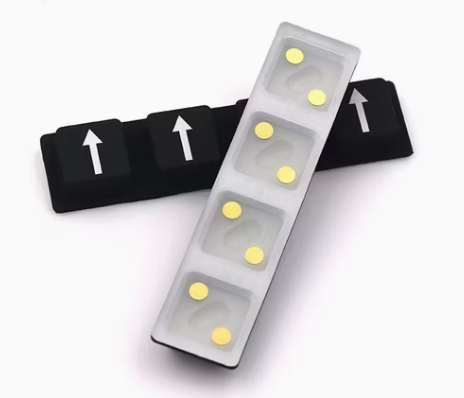
Conductive Keypads
- Carbon pill, metal dome, or printed conductor options
- Stable contact resistance across temperature ranges
- Lifecycle testing validates millions of actuations
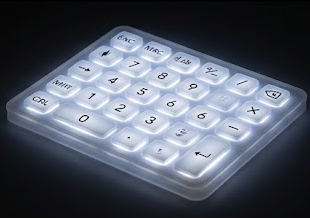
Backlight-Ready Designs
- Translucent silicone with opaque legend masking
- Light-pipe geometry optimized for uniform illumination
- Works with LED backlight or edge-lit configurations
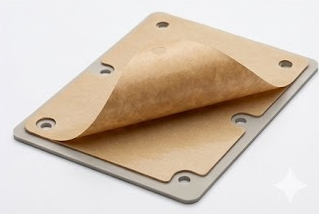
Assembly-Ready Keypads
- PSA backing pre-applied with alignment features
- Die-cut to final shape with locating holes
- Protective liner prevents contamination before install
Can't Find Your Exact Configuration?
We specialize in custom medical keypad solutions. Share your drawing, photo, or specification requirements and we'll engineer the optimal solution for your device.
Upload Your Design for Custom QuoteLSR vs Compression Molding: Choose the Right Process
Different medical devices need different manufacturing approaches. Understanding which silicone molding process fits your volume, tolerance, and cleaning requirements protects your project timeline and budget.
LSR Molding
Liquid Silicone Rubber
Compression Molding
Solid Silicone Rubber
High Volume Production
When producing 50K+ units annually, LSR's automation advantage reduces labor costs and ensures batch consistency that protects your device quality and regulatory compliance over time.
Tight Tolerance Needs
IP-rated sealing, precise tactile force targets, and critical assembly interfaces demand LSR's superior dimensional control to prevent field failures and warranty claims.
Chemical Exposure Testing
For devices cleaned with harsh disinfectants, we validate material performance through actual chemical exposure testing—alcohol, bleach, peroxide—ensuring your keypads won't degrade or become sticky after repeated cleaning cycles.
Not Sure Which Process Fits Your Requirements?
Share your volume targets, tolerance needs, and cleaning protocol—we'll recommend the optimal material and process combination.
Get Free Material RecommendationEngineering Specs Hub
Copy-paste ready specification template with 4 major categories: Tactile Performance, Material & Durability, Legends & Appearance, and Sealing & Assembly requirements.
Tactile Performance
Travel distance, actuation force, tactile feel target, lifetime requirements
Material & Durability
Hardness, tolerance expectations, color stability, chemical resistance
Legends & Appearance
Legend method, durability target, surface finish, backlight compatibility
Sealing & Assembly
IP rating target, assembly constraints, adhesive needs, conductive interface
Tactile & Conductive Options
Four proven conductive methods with best-fit scenarios, watch-outs, and recommended specs. Interactive tactile preference slider helps identify your ideal configuration.
Carbon Pill Integration
BEST FOR
Proven reliability, cost-effective, medium force switching
Contact resistance: 100-500Ω typical. Requires proper cavity design and retention features to prevent pill shifting during molding.
Metal Dome Switch
BEST FOR
Sharp tactile click, consistent snap ratio, crisp feedback
Snap ratio 40-60% for crisp feel. Requires precise dome-to-PCB alignment and controlled compression to prevent dome inversion.
Printed Conductive Ink
BEST FOR
Ultra-thin designs, large contact areas, simplified assembly
Resistance: 500-2000Ω. Eliminates pill misalignment risk but requires validation for flex and thermal cycling compatibility.
Non-Conductive (Mechanical)
BEST FOR
Capacitive touch PCBs, optical sensing, simplified design
Focus on tactile consistency and key travel stability. Webbing design prevents cross-talk between adjacent keys.
Sealing & Protection Design
Practical sealing approaches with real assembly guidance. Four proven methods with design targets, assembly do's/don'ts, and common failure prevention strategies.
Legends & Surface Finishing
Legend marking systems that survive 100,000+ disinfectant wipes. Comprehensive comparison of five marking methods with durability ratings and application guidance.
Our Durability Strategy
Protective Topcoat System
UV-cured or thermally-cured coating applied over printed legends creates a sacrificial barrier that absorbs abrasion and chemical attack, extending legend life by 5-10x compared to uncoated printing.
Controlled Surface Texture
Mold surface finish engineered to balance tactile perception with cleaning resistance—smooth surfaces show wear faster while properly designed texture distributes contact stress.
Test-Backed Process Selection
We validate legend durability through actual abrasion testing (100K+ wipe cycles) combined with your specific cleaning agent exposure to ensure the method we recommend survives your real-world use environment.
Legend Durability Validation
See the Durability Difference for Yourself
We can send you legend durability sample sets showing before/after abrasion and chemical exposure validation for your specific cleaning protocol.
Request Legend Durability SamplesAdhesive, Die-Cut & Assembly-Ready Options
Pre-applied PSA backing, precision die-cutting, and alignment features that eliminate assembly headaches. Install fast, stay bonded, prevent common failures before they happen.
Assembly Flow
Surface Preparation
Clean housing surface with IPA wipe. Verify texture and material compatibility with PSA selection.
Alignment Positioning
Use locating pins or alignment holes to position keypad. Prevent shifting during installation.
Liner Removal & Application
Remove protective liner. Apply keypad from one edge to prevent air bubbles. Use roller for even pressure.
Common Problems & Fixes
Cause: Inadequate surface prep or wrong PSA for material
✓ Fix: Match PSA to housing material (PC, ABS, PMMA). Clean surface thoroughly. Increase adhesive coverage near edges.
Cause: Dropping keypad flat instead of rolling application
✓ Fix: Apply from one edge progressively. Use roller to push air out. Consider venting channels for large areas.
Cause: No locating features or fixture
✓ Fix: Add alignment holes, tabs, or reference edges. Use assembly jig for high-volume production.
Cause: PSA not rated for chemical exposure
✓ Fix: Specify cleaning protocol upfront. Use medical-grade PSA validated for alcohol/disinfectant exposure.
Need Bonding Recommendation for Your Housing?
Share your housing material and surface finish—we'll recommend the optimal PSA and die-cut configuration.
Get Bonding RecommendationFrom Drawing to Mass Production: Your Project Roadmap
A structured 8-step path with clear deliverables at each gate. We reduce project risk through DFM reviews, prototype validation, controlled production ramp-up, and reliable delivery.
Feasibility Review
Your drawing, photos, or samples + specification requirements
DFM summary with recommended changes, risk notes, preliminary timeline
Spec Confirmation
Target specs, volume requirements, quality expectations
Confirmed spec sheet, material selection, tooling quotation
Prototype Samples
Approved tooling plan and deposit
Prototype samples (5-20 pcs), measurement report, tactile force data
Tooling & Trial
Prototype approval and refinement feedback
First article samples, inspection report, tooling acceptance confirmation
Pilot Run
First article approval
Pilot run (100-500 pcs), process validation data, packaging confirmation
Mass Production
Pilot approval and purchase order
Production batches with full IQC/IPQC/FQC reports, lot traceability
Quality Monitoring
Ongoing orders and field feedback
Periodic quality reviews, CAPA/8D if needed, change control documentation
Shipment & Delivery
Production completion, quality approval, shipping instructions
Final packaging, shipping documents, logistics tracking, on-time delivery confirmation
Ready to Start Your Project?
Upload your drawings for a fast DFM review and project timeline estimate.
Upload Drawing for DFM ReviewAuditable Quality System
IQC/IPQC/FQC gates + Full traceability + CAPA/8D corrective action workflow
Incoming Inspection (IQC)
Raw materials and critical inputs verified against specifications before entering production flow.
In-Process Checks (IPQC)
Key dimensions, cosmetic appearance, and functional parameters monitored at control points during molding.
Final Inspection (FQC)
Appearance, functional performance, and packaging verified before shipment with full traceability records.
CAPA/8D Corrective Action Workflow
Reliability Validation & Test Reports
Comprehensive durability testing with detailed reports: mechanical cycling, visual stability, environmental exposure, chemical resistance.
Mechanical Testing
- ✓ Cycle life validation (1M - 10M+ actuations)
- ✓ Actuation force stability tracking
- ✓ Rebound decay measurement
- ✓ Tactile consistency verification
Visual & Legend Testing
- ✓ Abrasion resistance (100K+ wipe cycles)
- ✓ Color stability (ΔE measurement)
- ✓ Legend durability validation
- ✓ Surface texture retention
Environmental Testing
- ✓ Temperature cycling (-40°C to +85°C)
- ✓ Humidity exposure testing
- ✓ UV aging validation
- ✓ Thermal shock resistance
Chemical Resistance Testing
- ✓ Alcohol wipe exposure (70% IPA)
- ✓ Bleach/disinfectant compatibility
- ✓ Peroxide exposure validation
- ✓ Custom cleaning agent testing
Get Sample Test Reports
Review our testing methodology and report format—we can customize validation plans based on your specific use case.
Request Sample Test ReportFrequently Asked Questions
Prototype quantities start at 5-20 pcs. Production MOQ typically 500-1000 pcs depending on complexity, but we can discuss flexible options for new product launches.
Yes—we provide DFM (Design for Manufacturing) reviews highlighting risks, suggesting improvements for sealing, tactile feel, legend durability, and manufacturability.
Pad printing with protective topcoat or laser marking both excel. We recommend testing with your specific disinfectant to validate 100K+ wipe cycles.
First-article approval, in-process dimensional checks, and final IP testing validation. We provide sealing verification reports with each production batch.
Material lot control, process parameter monitoring, tactile force verification, and statistical process control on critical dimensions ensure consistency.
Absolutely. We sign NDA as standard practice to protect your intellectual property and design confidentiality.
2D drawings (PDF/DWG) or 3D files (STEP/STL), specification requirements, expected volume, and cleaning protocol. Photos or reference samples also help.
Dimensional reports, tactile force data, cycle life testing, chemical resistance validation, traceability records, and custom test reports as needed.
Ready to Get Your Quote?
Upload your drawings, photos, or specifications—receive feasibility feedback and quotation direction within 24 hours.
Quick RFQ Checklist:
Or contact us: maxoveek@gmail.com | WhatsApp: +86 139 2385 7841