
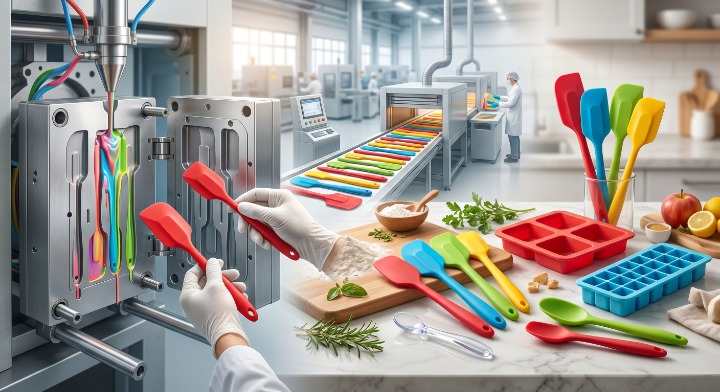
Producing liquid silicone kitchen products requires a high-precision liquid silicone rubber (LSR) injection molding process combined with food-grade material selection and specialized tooling. Many brands struggle with low-quality kitchenware that leaches chemicals or deforms under intense heat. This doesn’t just ruin the customer experience; it can lead to massive recalls and safety liabilities that destroy a brand’s reputation. By utilizing Liquid Silicone Kitchen Products manufactured through professional industrial workflows, you ensure durability and total compliance with international safety standards.
What are liquid silicone kitchen products?
These items are flexible, heat-resistant tools manufactured from two-part liquid silicone rubber (LSR) through a specialized vulcanization process. The demand for Liquid Silicone Kitchen Products is surging because they offer a safer, more durable alternative to traditional plastics and rubber. These products are found in modern kitchens as baking molds, spatulas, and baby feeding utensils.
Defining common household silicone items
Liquid silicone is a high-purity, platinum-cured material that provides superior performance compared to traditional plastics. When you look at high-end kitchenware, you are likely seeing components manufactured through precision molding to ensure they are non-toxic and odorless for food contact.
And the best part?
- Silicone baking molds and mats.
- Ergonomic spatulas and brushes.
- Durable ice cube trays.
- Baby feeding accessories.
| Product Type | Primary Application | Key Attribute |
|---|---|---|
| Baking Tools | High-Heat Ovens | Thermal Stability |
| Storage Lids | Food Preservation | Airtight Sealing |
| Utensils | Cooking/Prep | Ergonomic Grip |
Analytical Insight: Identifying the specific product category early allows for targeted material hardness selection, optimizing both comfort and functionality.
Key Takeaway: Liquid silicone kitchen products combine food-grade safety with high durability, making them the gold standard for modern household applications.
Why choose LSR for kitchenware applications?
LSR is the preferred choice due to its exceptional thermal stability and non-toxic, BPA-free nature. Choosing Liquid Silicone Kitchen Products ensures that your items can withstand temperature fluctuations from -40°C to 230°C without leaching harmful chemicals. This versatility allows the same product to move safely from the freezer to the microwave or oven.
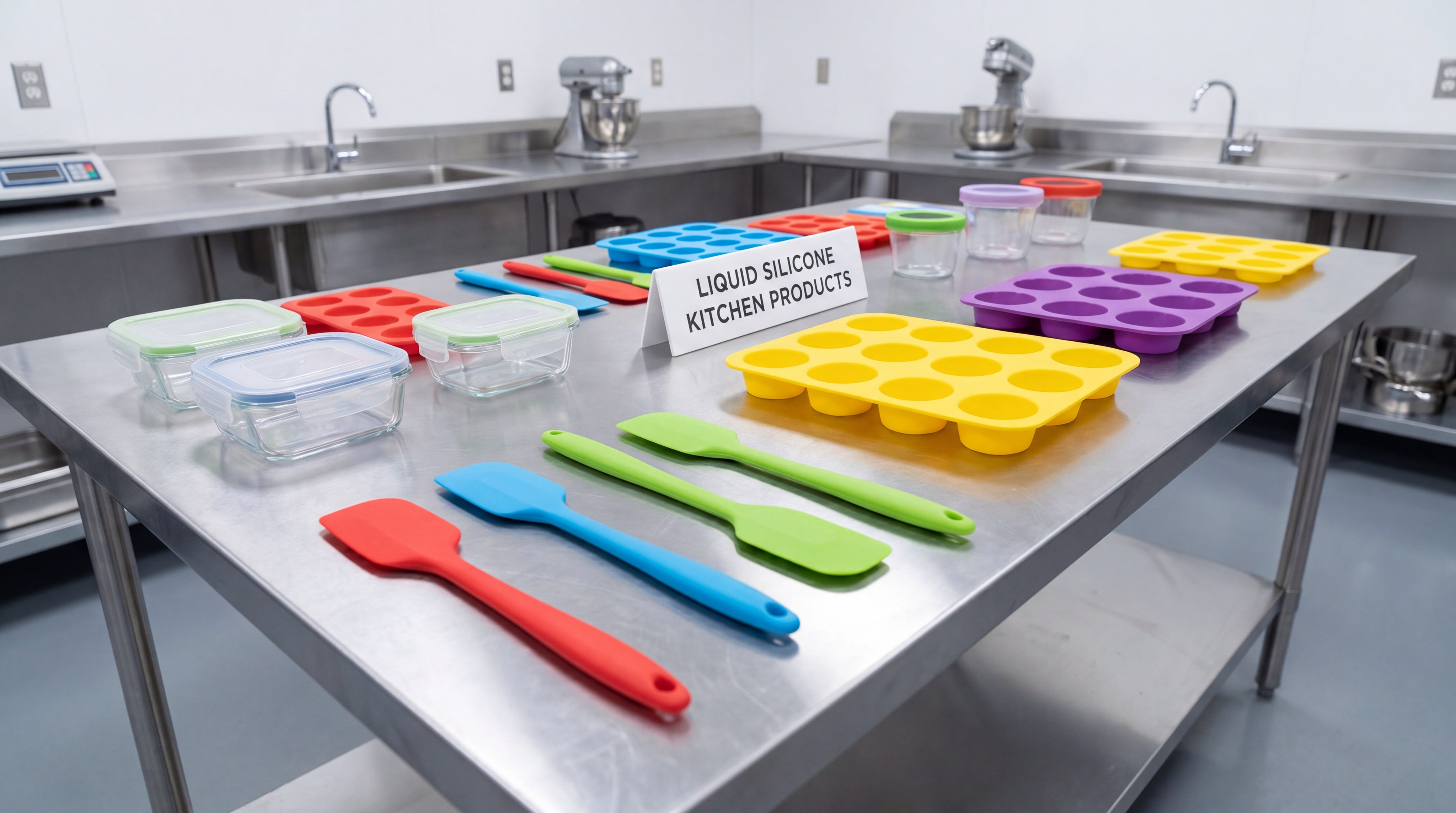
Safety and temperature resistance benefits
When you produce kitchenware, safety is your top priority. Liquid silicone remains stable and functional even under extreme temperature fluctuations, making it ideal for high-performance culinary tools.
But there is more to consider:
- FDA and LFGB compliance.
- Dishwasher safe durability.
- Odorless and tasteless material.
- Eco-friendly and recyclable properties.
| Material Property | Liquid Silicone (LSR) | Traditional Plastic |
|---|---|---|
| Heat Resistance | Up to 230°C | Generally <100°C |
| Chemical Stability | Inert/BPA-Free | Potential Leaching |
| Lifecycle | Decades | Short-term |
Analytical Insight: The thermal stability of LSR provides a significant competitive advantage by reducing product failure rates in high-heat environments.
Key Takeaway: The inherent safety and temperature resistance of liquid silicone make it far superior to plastic for any food-contact application.
How do you select food-grade raw materials?
Choosing the right material involves prioritizing platinum-cured silicone over peroxide-cured versions to ensure no harmful by-products are present. For high-quality Liquid Silicone Kitchen Products, you must source materials that explicitly meet international safety standards. Platinum curing leaves no chemical residue, ensuring your products remain crystal clear and completely odorless.
Choosing platinum-cured silicone grades
For kitchen applications, you must prioritize platinum-cured silicone to avoid the “blooming” effect found in lower-grade materials. This ensures that the physical properties of the silicone, such as tear strength and clarity, remain consistent over time.
Think about it:
- High transparency for storage items.
- Superior mechanical strength.
- Total absence of volatile organic compounds.
- Better aging resistance compared to peroxide.
| Material Grade | Curing Agent | Food Safety Level |
|---|---|---|
| Food-Grade LSR | Platinum | Highest (LFGB) |
| Standard Grade | Peroxide | Lower (Non-Kitchen) |
| Medical Grade | Platinum | Premium Biocompatible |
Analytical Insight: Selecting LFGB-compliant platinum silicone allows brands to access European markets where safety standards are significantly stricter.
Key Takeaway: Always opt for platinum-cured, certified food-grade silicone to ensure your kitchen products are safe for global distribution and long-term use.
What are the key product design guidelines?
Effective design focuses on uniform wall thickness and adequate draft angles to ensure consistent curing and easy demolding. When developing Liquid Silicone Kitchen Products, you must implement Design for Manufacturability (DFM) principles to avoid common defects. A well-optimized design reduces material waste and shortens production cycle times significantly.
Implementing DFM for silicone kitchenware
Your design must account for the unique flow characteristics of liquid silicone. By optimizing gate placement and wall transitions, you can prevent air bubbles and unsightly “flash” from appearing on the finished product.
You might be wondering:
- Uniform walls for even curing.
- Radius edges for better material flow.
- Reinforced ribs for structural integrity.
- Smooth draft angles for easy removal.
| Design Element | Production Impact | Result |
|---|---|---|
| Draft Angles | Demolding Ease | Lower Scrap Rate |
| Wall Thickness | Curing Consistency | No Deformation |
| Gate Location | Material Flow | Flawless Surface |
Analytical Insight: Professional DFM guidance is essential to transform a creative concept into a mass-producible, high-quality silicone tool.
Key Takeaway: Precision in the design phase prevents costly mold revisions and ensures the product functions perfectly in a real-world kitchen environment.
How is precision tooling and mold making handled?
Manufacturers use high-grade hardened steel like S136 and CNC machining to create precise cavities that handle the low viscosity of liquid silicone. Because LSR can flow into the smallest gaps, your molds for Liquid Silicone Kitchen Products must be manufactured with extremely tight tolerances. This high level of precision prevents material leakage and ensures a clean, professional finish.
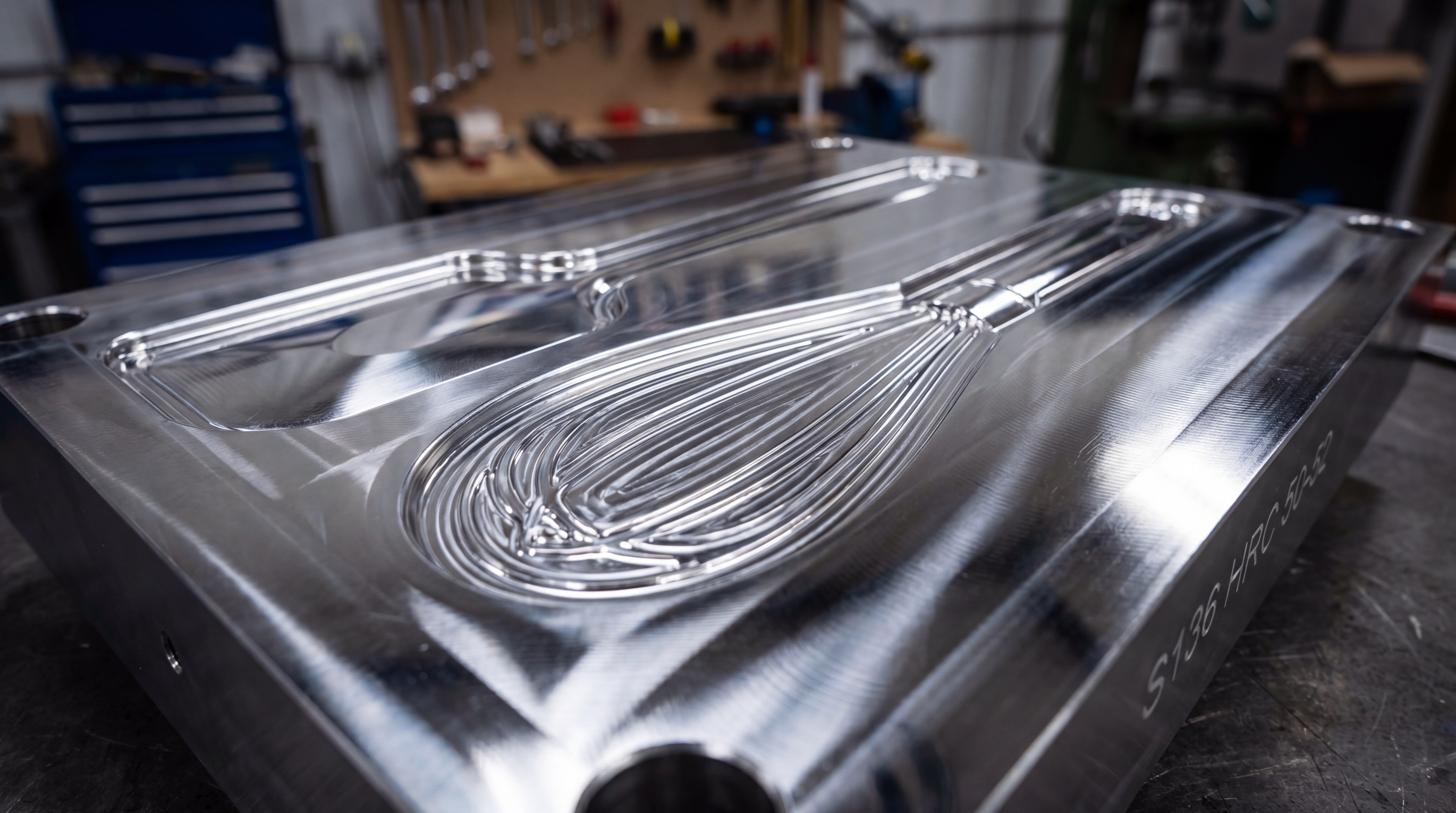
Selecting mold materials for longevity
Using high-grade hardened steel ensures that the mold can withstand the high pressures of the injection process without losing its shape. Mirror polishing is often applied to the mold cavities to give the silicone products a high-gloss or smooth matte finish.
The result?
- Minimal flash on product edges.
- Consistent dimensions across batches.
- Rapid cycle times via cold runners.
- Long tool life (up to 1 million cycles).
| Tooling Feature | Technical Specification | Benefit |
|---|---|---|
| Steel Type | S136 / H13 | Corrosion Resistance |
| Cavity Finish | Mirror Polished | Aesthetic Quality |
| Cooling System | Cold Runner | Zero Material Waste |
Analytical Insight: Investing in high-precision steel molds is a long-term strategy that drastically reduces the per-unit cost over mass production.
Key Takeaway: Superior tooling is the foundation of product consistency, directly dictating the quality and surface finish of your silicone kitchenware.
What does the injection molding process involve?
The process consists of metering, mixing, injecting, and curing the silicone components within a heated mold environment. To produce Liquid Silicone Kitchen Products, a specialized LSR injection machine precisely doses the A and B components at a 1:1 ratio. This mixture is then injected into the heated cavities where vulcanization occurs, transforming the liquid into a solid elastomer.
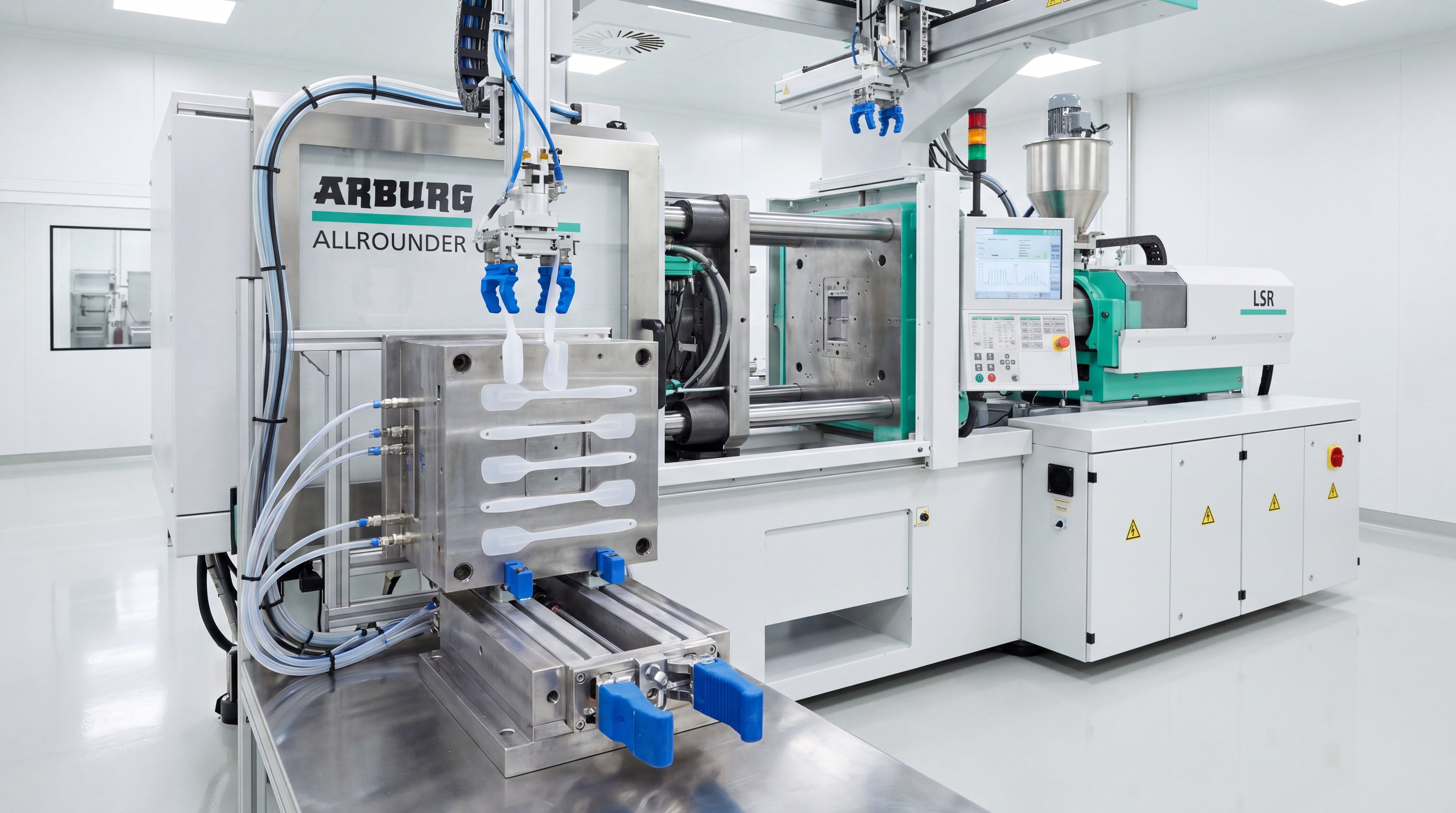
Step-by-step production workflow
The injection stage is followed by a rapid curing cycle triggered by the mold’s high temperature. Once the parts have solidified, they are demolded—either manually or through automated mechanical arms—and prepared for secondary processing.
But that’s not all:
- Cold runner material savings.
- Automated part removal systems.
- High-pressure injection accuracy.
- Rapid vulcanization cycle times.
| Process Stage | Critical Action | Outcome |
|---|---|---|
| Metering | 1:1 Mixing Ratio | Material Stability |
| Injection | Cavity Filling | Dimensional Accuracy |
| Curing | Thermal Vulcanization | Elastic Hardening |
Analytical Insight: Understanding the injection timeline helps you calculate lead times and manage your inventory effectively for large-scale orders.
Key Takeaway: LSR injection molding is a highly efficient and automated process that allows for the mass production of complex kitchen designs with extreme precision.
How is quality control managed for food safety?
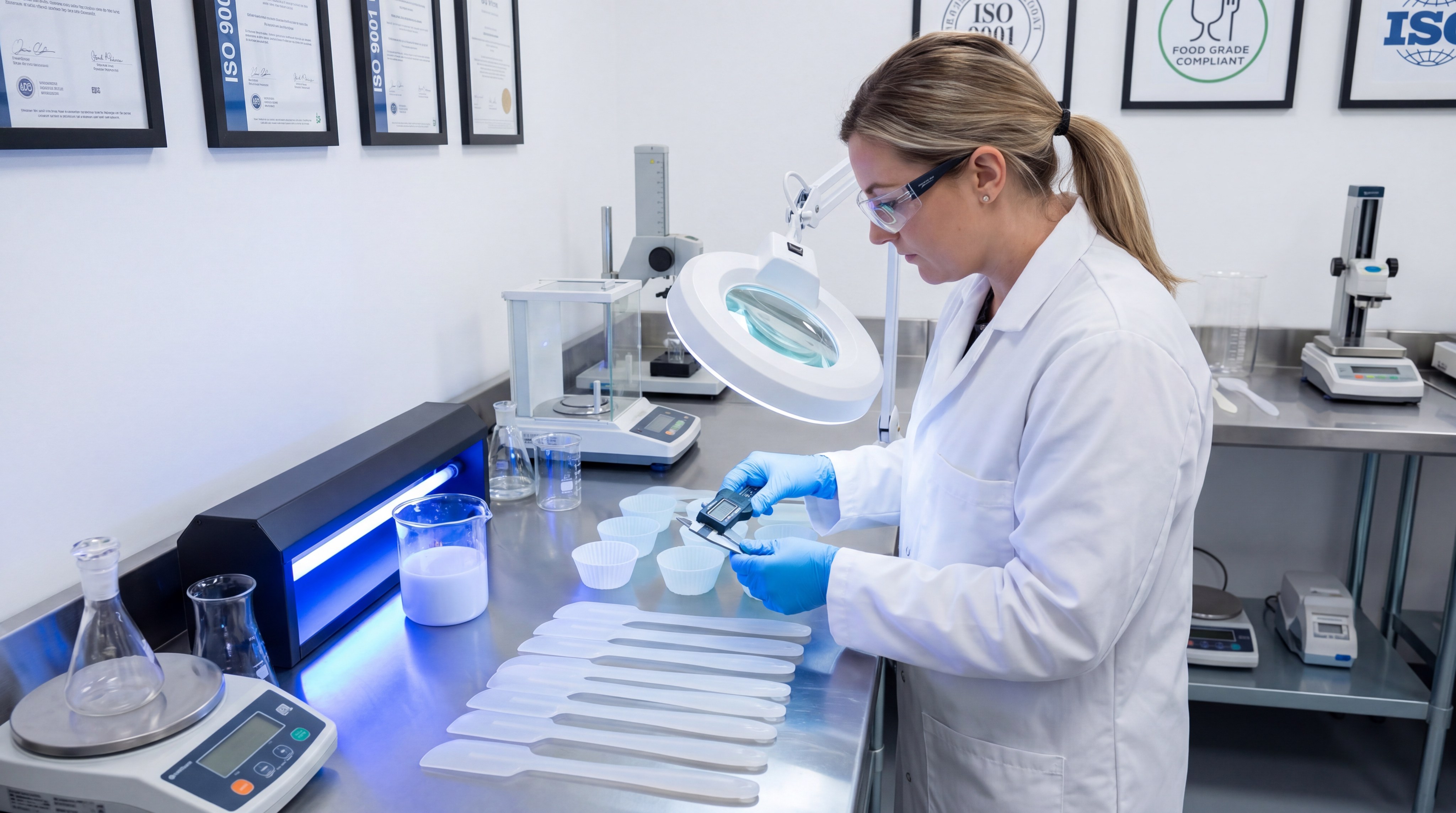
Quality control is maintained through 100% visual inspection and post-curing processes to eliminate any remaining volatile substances. Every batch of Liquid Silicone Kitchen Products must undergo rigorous testing to ensure it meets international food-grade standards. This multi-stage approach catches defects early and guarantees that the finished items are safe for direct food contact.
Inspection and reliability testing
Beyond visual audits, technicians use precision measuring tools and CCD vision systems to verify dimensional compliance. Post-curing in specialized ovens is also standard practice to enhance mechanical properties and remove any residual odors.
Is it worth the effort?
- 100% visual defect checks.
- Dimensional tolerance verification.
- Pull tests for structural durability.
- Post-curing for chemical purity.
| QC Check | Equipment Used | Quality Target |
|---|---|---|
| Dimension | CCD / Micrometer | +/- 0.1mm Accuracy |
| Appearance | 10X Magnification | Zero Surface Voids |
| Safety | Ovens (Post-cure) | Odorless / Inert |
Analytical Insight: A robust quality assurance system, including post-curing, is mandatory to protect your brand reputation in the competitive kitchenware market.
Key Takeaway: Strict quality protocols, from material verification to final inspection, are the only way to guarantee a safe and reliable kitchen product.
What are the packaging and logistics requirements?
Finished products must be packaged in dust-free, food-safe materials to prevent any surface contamination during global transit. Because Liquid Silicone Kitchen Products can attract dust via static electricity, using specialized PE bags or protective films is essential. Proper logistics planning ensures that the products arrive at their destination in pristine, retail-ready condition.
Safe handling and export standards
Since these products are intended for food use, the packaging environment must remain highly controlled. Additionally, you must prepare all necessary export documents, including FDA/LFGB certificates and material safety data sheets, to avoid delays at international customs.
What’s the secret?
- Individual food-grade polybags.
- Moisture-resistant outer cartons.
- Precise labeling for traceability.
- Optimized palletizing for safety.
| Logistic Step | Requirement | Purpose |
|---|---|---|
| Inner Packaging | PE Food-Safe Bags | Dust Prevention |
| Bulk Boxing | Double-Walled Cartons | Impact Protection |
| Documentation | FDA / LFGB Reports | Customs Clearance |
Analytical Insight: Efficient packaging design can reduce your shipping costs by maximizing container space while protecting the product’s shape.
Key Takeaway: Proper food-safe packaging and thorough export documentation are the final steps in ensuring your product’s success in international markets.
Which cost factors impact manufacturing budgets?
The main cost drivers include the raw material volume, mold complexity, and the total number of cavities per tool. Producing Liquid Silicone Kitchen Products involves a balance between initial tooling investment and per-unit production costs. High-volume projects typically benefit from multi-cavity molds, which lower the labor and machine time required for each individual piece.
Optimizing production expenses
Working with a manufacturer that provides in-house tooling and molding can significantly reduce middleman markups. Additionally, optimizing your product design to use less material—without sacrificing strength—is the most effective way to lower long-term manufacturing costs.
How do you save money?
- Multi-cavity mold investment.
- Material-efficient product design.
- High-level automation integration.
- Sourcing from integrated factories.
| Cost Driver | Influence Level | Mitigation Strategy |
|---|---|---|
| Tooling | High (Initial) | Multi-cavity Design |
| Material | Medium (Ongoing) | DFM Optimization |
| Automation | Low (Labor) | Integrated Systems |
Analytical Insight: Balancing initial tooling investment against projected production volume is the key to achieving a healthy profit margin in the B2B sector.
Key Takeaway: Strategic design and selecting the right mold cavity count are the most effective ways to control your manufacturing budget.
How to choose a reliable B2B silicone manufacturer?
Selecting the right partner involves verifying their ISO certifications, DFM support capabilities, and cleanroom production environment. A professional factory should be more than just a supplier; they should act as an engineering partner for your Liquid Silicone Kitchen Products. Look for manufacturers with a proven track record in global export and extensive experience in food-grade silicone molding.
Technical expertise and compliance
A reliable partner will provide proactive feedback on your designs and have the machine capacity to scale as your business grows. They should also provide transparent test reports for every batch of material used in your production run.
What should you ask?
- Do you have ISO 9001 certification?
- Can you provide FDA/LFGB reports?
- Is tooling handled in-house?
- What is your mass production capacity?
| Selection Criteria | Importance | Impact on Project |
|---|---|---|
| In-house Tooling | Critical | Faster Speed to Market |
| Food-Grade Certification | Mandatory | Compliance & Safety |
| Engineering Support | High | Design Optimization |
Analytical Insight: A manufacturer with in-house engineering and global export experience will significantly reduce your project risks and time-to-market.
Key Takeaway: Partnering with an ISO-certified manufacturer that offers end-to-end services is the most critical decision for your production journey.
Ready to launch your own line of high-quality silicone kitchenware? Our expert team is here to guide you from initial design and tooling to stable mass production and global delivery. To get started with a free DFM review or a custom quote, contact us today and let’s build your brand together.
Frequently Asked Questions
Can I customize the color of silicone kitchen products?
Yes, you can fully customize products using Pantone or RAL color matching, provided the pigments used are certified food-grade.
What’s the best hardness for a silicone spatula?
The best hardness generally ranges between 60 and 80 Shore A, offering the ideal balance between flexibility and scraping strength.
Can I use liquid silicone for baby feeding products?
Yes, liquid silicone is the safest material for baby products as it is BPA-free, hypoallergenic, and can be easily sterilized.
What’s the most durable mold material for LSR?
The most durable mold material is S136 hardened stainless steel, which offers excellent corrosion resistance and tool life.
Can I verify the food-grade status of my order?
Yes, you should always request third-party test reports (like SGS or TUV) that reference FDA or LFGB standards for your specific batch.