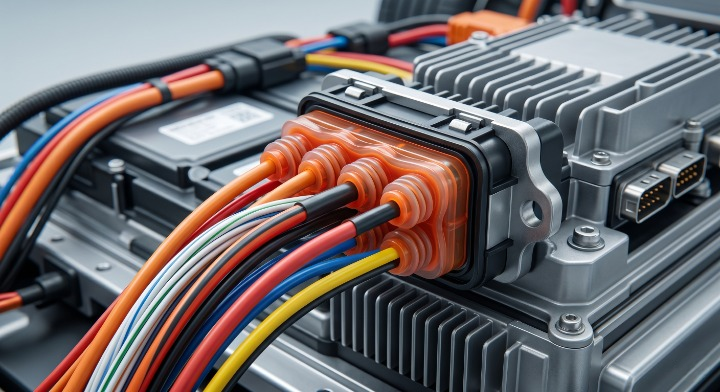
To OEM LSR automotive seal connectors multi-wire, you must partner with an integrated manufacturer that provides expert DFM analysis, high-precision in-house tooling, and automated liquid injection molding. Modern vehicle electrical systems face extreme vibrations and thermal stress that cause traditional rubber seals to fail, leading to moisture ingress and critical electronics damage. This reliability gap puts your production timelines and brand reputation at risk. By utilizing LSR (Liquid Silicone Rubber), you can achieve high-precision sealing that maintains integrity across the most demanding multi-wire wiring architectures.
What Are LSR Automotive Multi-Wire Seal Connectors?
LSR automotive multi-wire seal connectors are high-performance sealing components designed to protect electrical junctions where multiple wires enter a single housing. These components utilize the superior elasticity and thermal stability of LSR to create an airtight barrier around varying wire gauges.
What Roles Do They Play In Modern Vehicles?
These connectors act as the primary defense for sensitive control units against environmental contaminants. They ensure that power and data signals remain uninterrupted even when submerged or exposed to high-pressure washes.
Think about it:
- They prevent short circuits in engine control modules.
- They maintain signal integrity for safety sensors.
- They protect battery management systems in electric vehicles.
Why Is Multi-Wire Sealing Complex?
Sealing multiple wires requires managing inconsistent compression forces across the entire seal face. If the geometry is not perfectly calculated, gaps can form between the wires, allowing moisture to seep into the connector.
Here is the deal:
- Varying wire diameters require custom sealing lip designs.
- Material flow must be uniform to prevent air pockets.
- Multi-cavity molds must maintain identical tolerances.
Key Takeaway: Using liquid silicone ensures a more consistent seal around complex multi-wire clusters compared to traditional solid rubber.
| Feature | LSR Specification | OEM Benefit |
|---|---|---|
| Material State | Liquid (Two-part) | High precision for complex shapes |
| Viscosity | Low | Better flow into thin wall sections |
| Elasticity | High Elongation | Maintains seal under wire movement |
Analysis: Choosing liquid silicone allows for intricate internal geometries that are impossible to achieve with standard compression molding.
Why Choose LSR Over Standard Materials For Seals?
Choosing LSR over standard EPDM or organic rubber is essential for automotive applications that demand long-term durability under heat. The material provides a unique combination of chemical resistance and mechanical flexibility that remains stable for the life of the vehicle.
How Well Does It Resist Extreme Temperatures?
Liquid silicone rubber maintains its physical properties in environments ranging from -50°C to over 200°C. This makes it the ideal candidate for seals located near exhaust systems or high-voltage battery packs.
But there is a catch:
- Standard rubber becomes brittle at low temperatures.
- Synthetic materials can melt or deform under high heat.
- LSR maintains its “set” and sealing pressure regardless of the weather.
Can LSR Withstand Harsh Automotive Chemicals?
The chemical structure of silicone is naturally resistant to ozone, UV radiation, and many common automotive fluids. This prevents the seal from degrading when exposed to oils, coolants, or cleaning agents used during maintenance.
Believe it or not:
- It resists swelling when in contact with many lubricants.
- It prevents ozone cracking in exterior-facing connectors.
- It maintains a biological barrier against mold and bacteria.
Key Takeaway: The superior environmental resistance of silicone reduces the risk of field failures and expensive warranty recalls.
| Material | Temp Range | Chemical Resistance |
|---|---|---|
| EPDM | -40°C to 125°C | Moderate |
| LSR | -50°C to 200°C+ | Excellent |
| Nitril | -30°C to 100°C | Good for oil only |
Analysis: LSR offers the widest operational window for automotive engineers looking for a “fit and forget” sealing solution.
How Do Wire Diameters Affect Multi-Wire Seal Design?
Wire diameters dictate the interference fit required for the seal to function correctly without causing terminal strain. When designing for LSR, engineers must calculate the exact compression ratio for each specific wire gauge used in the bundle.
What Is The Ideal Sealing Lip Geometry?
The sealing lip must be flexible enough to accommodate wire movement while remaining stiff enough to maintain a seal under pressure. Advanced 3D modeling allows for the creation of multiple sealing ribs that provide redundancy against leaks.
Think about it:
- Multiple ribs increase the path for moisture to travel.
- Rounded lips reduce the risk of tearing during wire insertion.
- Tapered entries help guide the wires during automated assembly.
Why Is The Compression Ratio Critical?
The compression ratio must be high enough to seal against the wire insulation but low enough to avoid “creeping” of the material. Over-compression can lead to permanent deformation, which eventually causes the seal to fail.
Here is the deal:
- 15% to 30% compression is typically the “sweet spot.”
- Uniform compression prevents wire insulation damage.
- Dynamic movement must be accounted for in the calculations.
Key Takeaway: Precise geometric design ensures that the seal remains effective even as wires vibrate or bend during vehicle operation.
| Design Factor | Target Value | Impact on Performance |
|---|---|---|
| Compression % | 20-25% | Optimizes seal life vs. ease of assembly |
| Rib Count | 3-4 Ribs | Provides backup sealing layers |
| Tolerance | +/- 0.05mm | Ensures consistent fit across all wires |
Analysis: Precision in the design phase prevents assembly issues and long-term leakage in the field.
What Is The Ideal OEM Development Process For LSR?
The ideal development process for LSR components starts with a comprehensive Design for Manufacturing (DFM) analysis to identify potential molding issues. This proactive approach ensures that the part can be produced efficiently at high volumes without sacrificing quality.
Why Is DFM Analysis Essential Early On?
DFM analysis identifies potential air traps, weld lines, and thin-wall sections that could lead to defects during the injection process. By catching these issues in the digital phase, you save thousands in tooling modification costs.
Check this out:
- It optimizes gate placement for uniform material flow.
- It determines the best parting line to minimize flash.
- It verifies that wall thicknesses are consistent throughout the part.
How Does Prototyping Reduce Production Risks?
Prototyping using soft molds allows for functional testing of the seal before committing to expensive steel production tooling. This step is vital for verifying the actual waterproof performance of the multi-wire connector in real-world conditions.
But there is a catch:
- Digital simulations can miss subtle physical interactions.
- Physical samples allow for actual pull-force testing.
- It provides a benchmark for final production quality.
Key Takeaway: A structured development path from DFM to prototype minimizes technical risks and accelerates your time-to-market.
| Stage | Activity | Primary Goal |
|---|---|---|
| Phase 1 | DFM Review | Feasibility and cost optimization |
| Phase 2 | Prototyping | Functional verification of the seal |
| Phase 3 | Hard Tooling | Mass production readiness |
Analysis: Following a rigorous development sequence is the only way to guarantee zero-defect results at automotive scale.
How Is LSR Injection Molding Executed For Automotive?
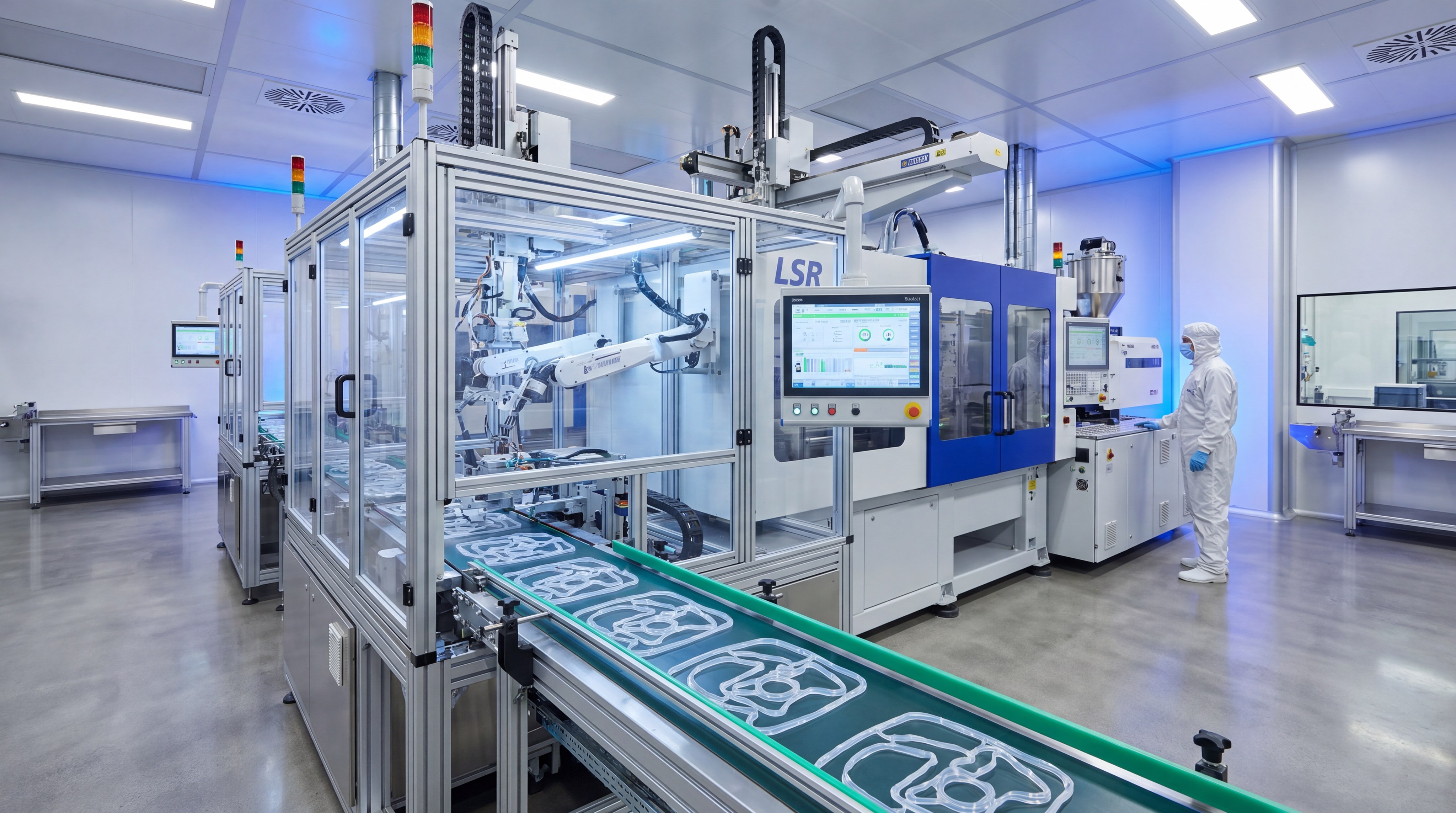
LSR injection molding for the automotive sector involves a closed-loop system where raw materials are mixed and injected into a heated mold. This process is highly automated to ensure that every cycle produces an identical part with high dimensional accuracy.
How Are Components A And B Mixed Correctly?
The two components are pumped from 20L or 200L drums through a static mixer at a precise 1:1 ratio. Modern injection machines use sophisticated sensors to monitor the flow and pressure, ensuring the chemistry is perfect for curing.
Here is the deal:
- Color additives are injected simultaneously for branding.
- Precise mixing prevents soft spots in the finished part.
- The closed system prevents contamination from the factory floor.
What Happens During The Curing Phase?
Unlike thermoplastics, which cool to harden, liquid silicone cures when exposed to heat inside the mold. The chemical cross-linking occurs rapidly, turning the liquid compound into a durable, flexible solid.
Think about it:
- Mold temperatures usually range from 150°C to 200°C.
- Cycle times are optimized for maximum throughput.
- Rapid curing allows for high-cavitation production molds.
Key Takeaway: Automation in the molding process ensures that the physical properties of the seal are consistent across millions of units.
| Process Variable | Control Method | Importance |
|---|---|---|
| Mix Ratio | Metering Pumps | Ensures material strength and cure |
| Injection Speed | Servo Control | Prevents air entrapment and voids |
| Mold Temp | PID Controllers | Guarantees uniform cross-linking |
Analysis: High-tech injection equipment is required to manage the sensitive curing characteristics of automotive-grade silicone.
Which Quality Standards Must LSR Connectors Meet?
For the automotive industry, LSR connectors must comply with IATF 16949 quality management systems. These standards ensure that every part of the supply chain is documented and that the manufacturing process is stable and repeatable.
How Is Waterproofing Tested To IP Ratings?
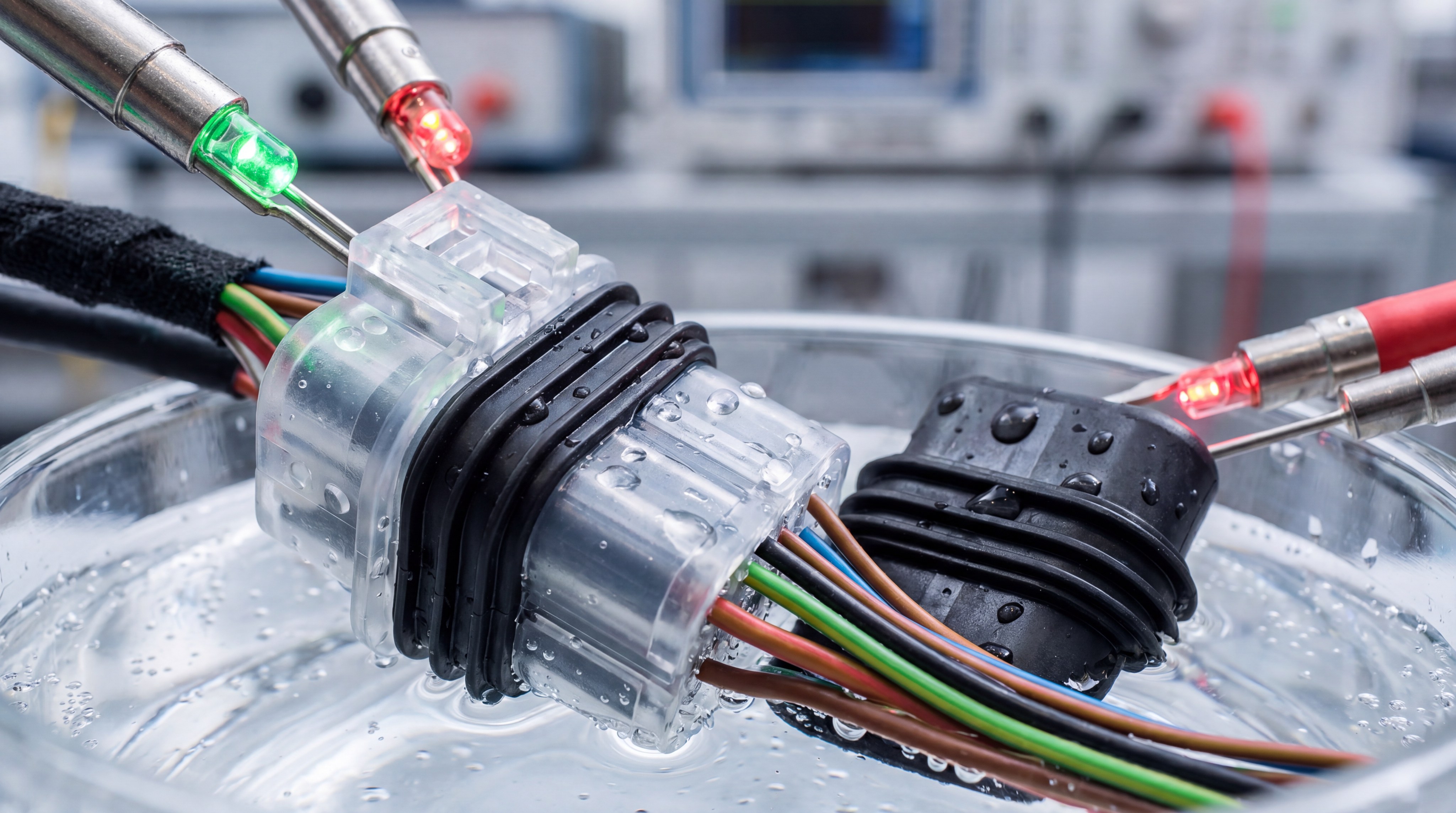
Seals are subjected to immersion tests (IP67) or high-pressure steam jets (IP69K) to verify their performance. During these tests, the internal cavity of the connector is monitored for even the smallest trace of moisture ingress.
Look at the facts:
- IP67 requires 30 minutes of submersion at 1 meter.
- IP69K tests for resistance against 100 bar water pressure.
- Vacuum testing can also be used for rapid production checks.
Why Is Thermal Cycling Critical For Safety?
Thermal cycling tests simulate years of vehicle operation by rapidly switching between extreme hot and cold temperatures. This confirms that the seal will not shrink, crack, or lose its elasticity over the intended 15-year lifespan of the car.
But there is a catch:
- Many materials fail the transition from hot to cold.
- Differential expansion of wires and silicone must be managed.
- It identifies potential fatigue points in the seal geometry.
Key Takeaway: Meeting global automotive standards provides the legal and technical assurance that your vehicle systems are protected.
| Test Category | Requirement | Typical Result |
|---|---|---|
| Ingress | IP68 / IP69K | Zero leakage at 2m depth |
| Thermal | -40°C to +150°C | No physical degradation |
| Durability | 1000+ Cycles | Maintained sealing pressure |
Analysis: Rigorous testing protocols are the backbone of automotive safety and long-term electronic reliability.
Where Are These LSR Seals Applied In Modern Electric Vehicles?
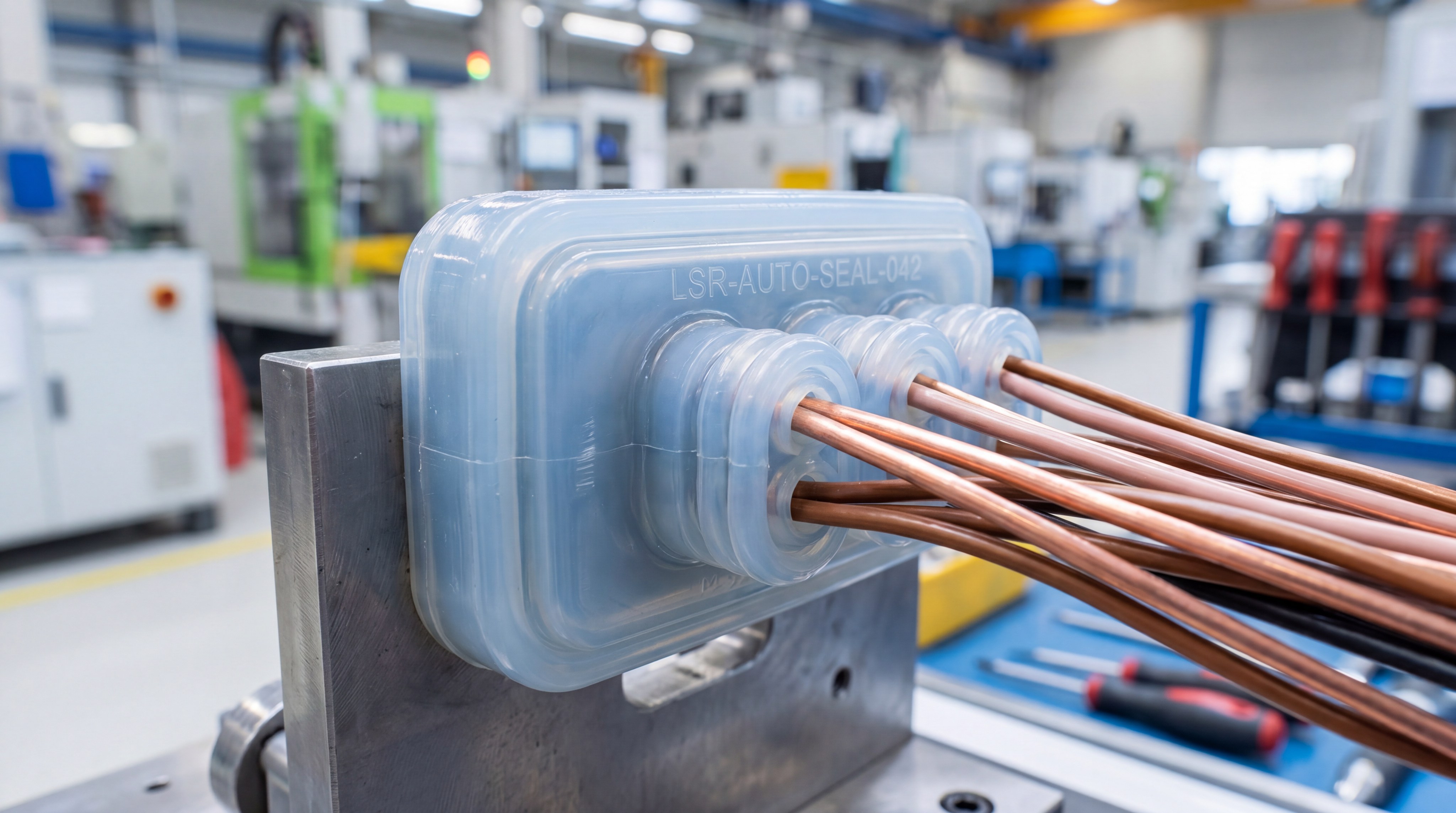
In modern electric vehicles, these multi-wire seals are used in high-voltage junctions and sensor networks. As vehicles become more autonomous and electrified, the number of sensitive wire entries requiring protection continues to grow.
How Do They Protect Electric Vehicle Batteries?
The battery pack is the heart of an EV and must be kept perfectly dry to prevent catastrophic short circuits. Multi-wire LSR seals are used where the monitoring harnesses exit the battery enclosure, providing a fail-safe barrier.
Check this out:
- They seal high-voltage cables carrying hundreds of amps.
- They protect delicate cell-monitoring sensor wires.
- They allow for thermal expansion of the battery case.
Are They Required For Autonomous Driving Sensors?
Autonomous vehicles rely on LIDAR, Radar, and Cameras that are often mounted in exposed locations. These sensors require multi-wire connectors that can withstand high-speed wind, rain, and road debris.
Here is the deal:
- Signal noise is reduced by keeping connections dry.
- Longevity is increased for safety-critical hardware.
- Compact designs allow for easier sensor integration.
Key Takeaway: As vehicle complexity increases, the reliance on high-performance silicone sealing becomes a strategic necessity.
| EV Application | Seal Requirement | Benefit |
|---|---|---|
| Battery Housing | High Dielectric Strength | Prevents arcing and leakage |
| ADAS Sensors | UV & Ozone Resistance | Long-life exterior performance |
| Charging Ports | High Cycle Life | Reliable sealing after many plug-ins |
Analysis: The shift to electric and autonomous driving is the primary driver for advanced LSR sealing technology.
How To Select A Reliable LSR OEM Manufacturer?
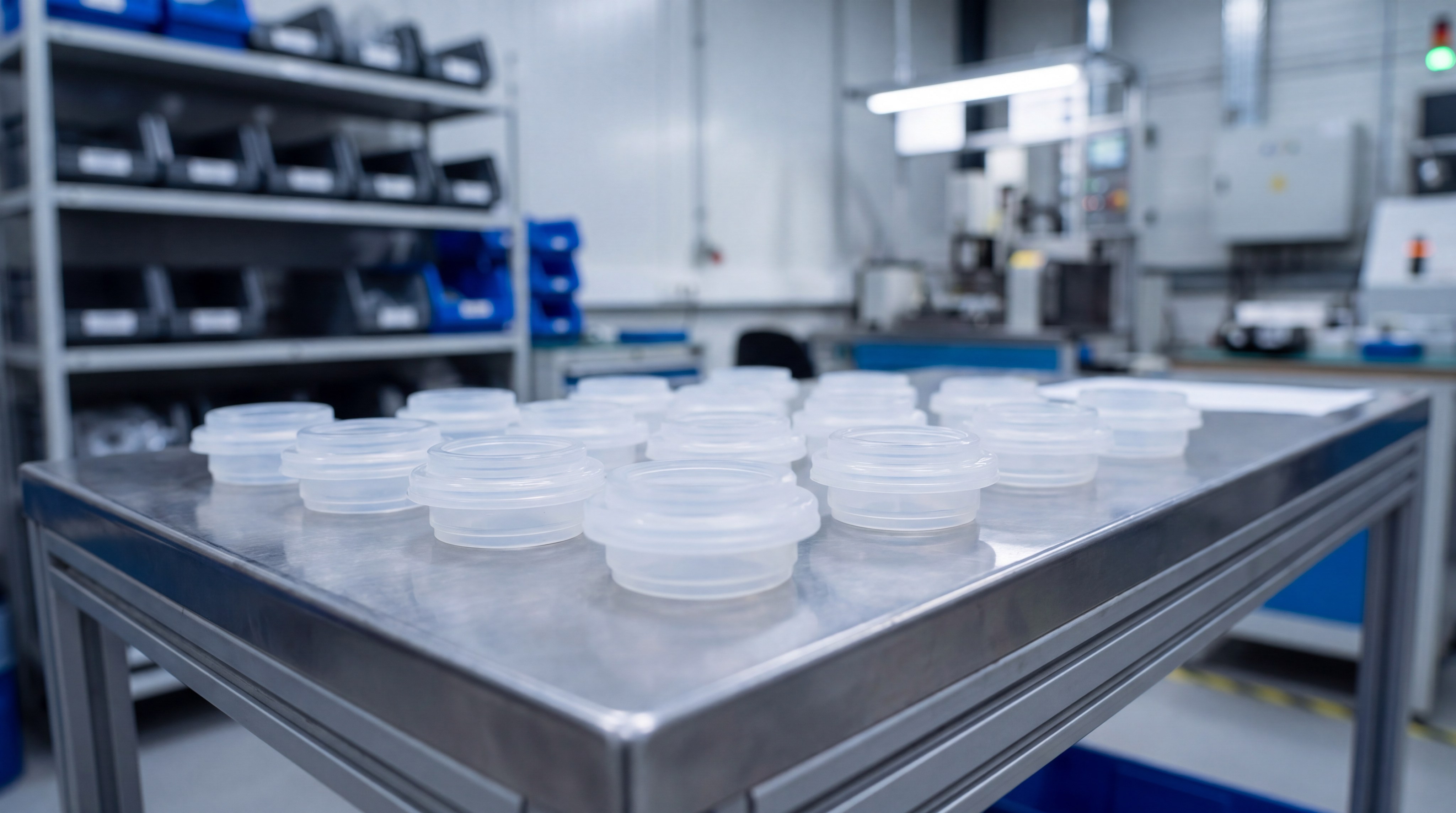
Selecting a partner for LSR manufacturing requires auditing their engineering capabilities and production capacity. A reliable OEM manufacturer should offer a one-stop service from initial mold design to final mass production.
Does The Factory Have IATF 16949 Certification?
This certification is the gold standard for automotive suppliers, proving that they follow strict quality control processes. It ensures that the manufacturer can provide full material traceability and process stability.
Believe it or not:
- Certified factories have lower defect rates.
- Documentation for audits is readily available.
- Continuous improvement is built into their culture.
Can They Handle High-Volume Mass Production?
Automotive projects often require millions of parts per year, which necessitates advanced automation. Look for a factory that uses robotic pick-and-place systems and automated optical inspection (AOI) to maintain speed and quality.
Think about it:
- Manual labor increases the risk of part contamination.
- Robots provide consistent cycle times and handling.
- AOI catches 100% of surface defects before shipping.
Key Takeaway: Choosing a manufacturer with in-house tooling and automation reduces lead times and ensures superior part consistency.
| Selection Criteria | Minimum Requirement | Importance |
|---|---|---|
| Certification | IATF 16949 | Mandatory for automotive Tier 1/2 |
| Tooling | In-house CNC/EDM | Faster iterations and better quality |
| Inspection | 100% AOI Available | Prevents defective parts from shipping |
Analysis: A manufacturer that controls the entire process in-house significantly reduces supply chain risk.
How Does High-Precision Tooling Impact LSR Quality?
High-precision tooling is the foundation of every successful silicone project, as it dictates the final dimensions and surface finish. Because liquid silicone is injected at high pressure and low viscosity, the mold must have incredibly tight tolerances to prevent “flash” or leakage.
Why Use High-Precision Steel For LSR Molds?
High-grade stainless steel is used to resist the corrosive nature of some silicone additives and the wear of high-volume production. Precision machining ensures that the parting lines are virtually invisible and the sealing surfaces are perfectly smooth.
Look at the facts:
- Steel molds can produce millions of parts without wearing out.
- Surface finishes can be mirror-polished or specifically textured.
- Tight tolerances prevent material from leaking into the air vents.
How Do Cold Runner Systems Reduce Waste?
Cold runner systems keep the silicone liquid until it enters the heated mold cavity, which eliminates the “sprue” or waste material. This technology is essential for reducing material costs and improving the sustainability of your production.
But there is a catch:
- Cold runners require a higher initial investment in tooling.
- They allow for faster cycle times and higher productivity.
- Material savings often pay for the tooling within months.
Key Takeaway: Investing in superior tooling upfront results in lower per-part costs and higher quality throughout the project life.
| Tooling Type | Precision Level | Best Use Case |
|---|---|---|
| Standard Steel | +/- 0.05mm | Low volume or simple shapes |
| Hardened Steel | +/- 0.01mm | High volume automotive seals |
| Cold Runner | Integrated | Material-intensive or high-cavity parts |
Analysis: Tooling quality is the single biggest factor in determining the final yield and cost of your LSR parts.
What Are The Future Trends For LSR In Automotive?
The future of LSR in the automotive sector is moving toward “Smart Seals” and advanced overmolding techniques. As vehicles become more integrated, the line between mechanical seals and electronic components is beginning to blur.
Will Smart Sensors Be Integrated Into Seals?
Future seal designs may include embedded pressure or moisture sensors that can alert the vehicle’s computer if a seal is starting to fail. This proactive maintenance capability will be essential for the next generation of autonomous fleet vehicles.
Check this out:
- It reduces the need for manual inspections.
- It prevents small leaks from becoming major failures.
- It provides data for future design improvements.
Is Overmolding Becoming More Common?
LSR overmolding, where silicone is bonded directly to plastic or metal connector housings, is becoming the industry standard. This process creates a chemical bond that is far superior to traditional mechanical assembly methods.
Think about it:
- It eliminates the need for separate assembly steps.
- The bond is permanent and cannot leak at the interface.
- It allows for more compact and lightweight connector designs.
Key Takeaway: Staying ahead of these trends will allow you to design more compact, reliable, and intelligent vehicle systems.
| Emerging Trend | Technology Involved | Industry Impact |
|---|---|---|
| Smart Seals | Embedded RFID/Sensors | Predictive maintenance capabilities |
| Overmolding | Multi-shot Molding | Lower assembly costs and better seals |
| Micro-Molding | High-Precision Pins | Smaller connectors for mobile data |
Analysis: Embracing advanced molding techniques is critical for remaining competitive in the evolving EV landscape.
Frequently Asked Questions
Can I customize the hardness of the LSR for my specific connector?
Yes, because LSR can be formulated from Shore 10A to 80A to match your specific compression and flexibility requirements.
How long does it take to develop a custom multi-wire seal?
Typically 4 to 8 weeks, as this allows for the completion of DFM, mold design, and initial sample production.
Can LSR seals be overmolded onto plastic housings?
Certainly, because modern two-shot molding processes allow for a chemical bond between the silicone and many high-performance plastics.
What is the typical lifespan of an LSR automotive seal?
Over 15 years, because the material’s chemical structure is inherently resistant to aging, heat, and environmental stress.
Do you provide 100% inspection for automotive parts?
Yes, because we utilize automated optical inspection (AOI) systems to ensure every part meets your dimensional and aesthetic requirements.
At Hualin Silicone, we specialize in helping automotive OEMs and Tier 1 suppliers solve their most difficult sealing challenges. From high-precision multi-wire connectors to complex overmolded assemblies, our IATF 16949-certified facilities are equipped to handle your project from the first drawing to global delivery. We are committed to driving the future of automotive technology through precision engineering and material innovation. If you are ready to elevate your product’s reliability and performance, contact us today to receive a comprehensive DFM review and custom quotation for your next project.