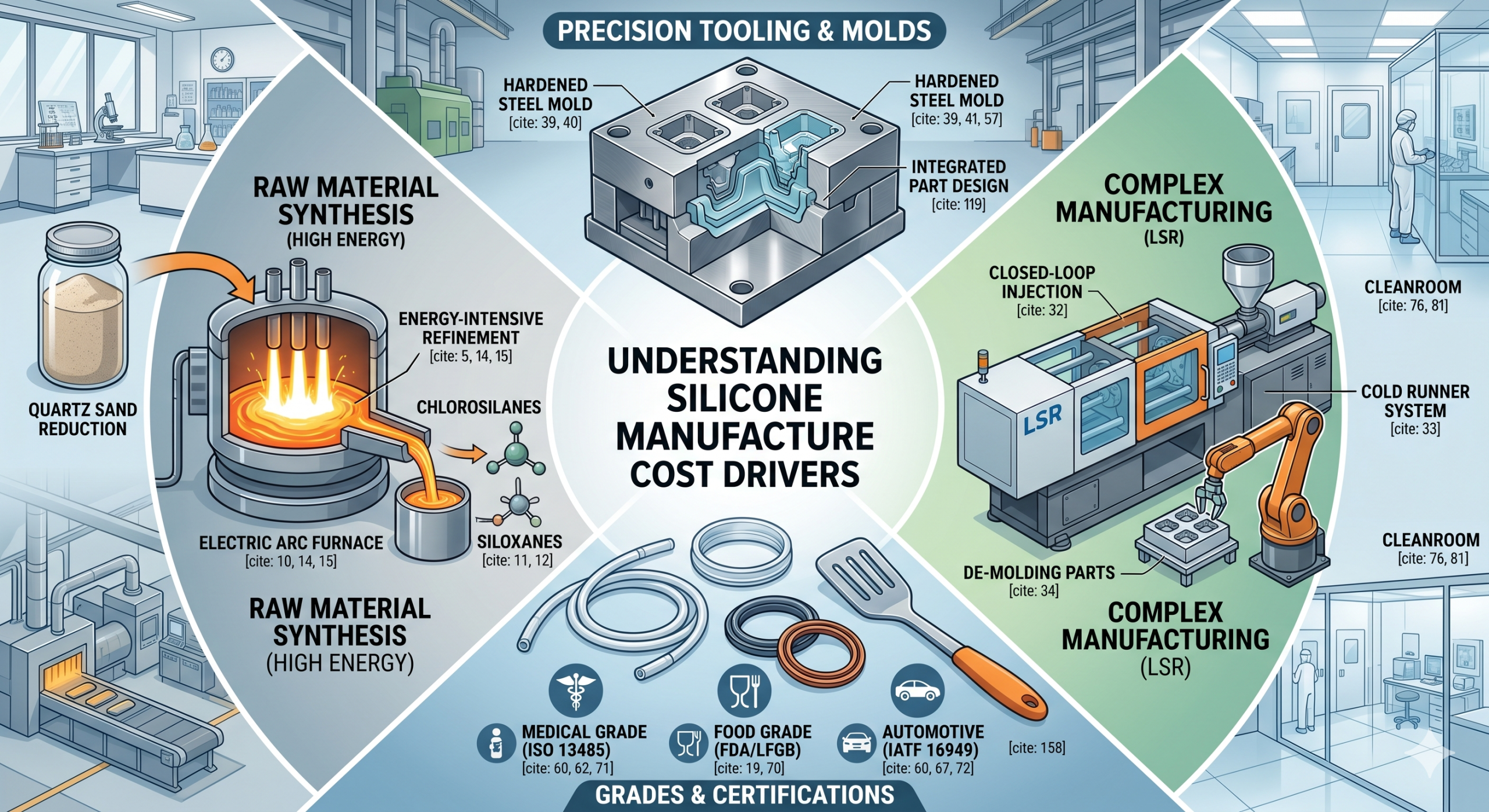
Silicone is expensive primarily due to the high-energy chemical synthesis required to convert raw silica into high-purity polymers and the complex, multi-stage manufacturing processes involved. B2B buyers often face significant sticker shock when comparing custom silicone quotes to cheaper thermoplastic alternatives. This price gap can derail budgets and lead to the tempting path of sourcing inferior materials that fail in the field or lack regulatory compliance. Understanding the intricacies of professional silicone manufacture allows you to justify the investment for your specific high-performance application.
Does the Source of Silica Drive Up Costs?
The refining of quartz sand into silicon metal and then into siloxane polymers is an extremely energy-intensive chemical process. High-purity silica requires specialized mining and rigorous purification steps to ensure the final material meets industrial standards. Our approach to silicone manufacture focuses on sourcing premium raw materials to guarantee consistency.
How is sand turned into silicone?
Let’s look at the facts. The transformation from raw earth to flexible polymer involves several high-stakes chemical stages.
- Reduction of quartz sand to silicon metal in electric arc furnaces.
- Reaction of silicon with methyl chloride to create chlorosilanes.
- Distillation and hydrolysis to produce siloxanes.
- Polymerization into final silicone fluids or rubbers.
Why is the refining process so energy-intensive?
But that’s only the beginning. Reaching the temperatures needed for quartz reduction requires massive amounts of electricity and specialized equipment.
- Industrial furnaces operating at over 1,900 degrees Celsius.
- Multi-stage distillation to remove impurities.
- Continuous chemical monitoring to prevent batch contamination.
Is high purity the main price factor?
The truth is, purity dictates performance. For critical sectors, even trace contaminants can lead to material degradation or safety risks.
- Medical-grade purity requirements for biocompatibility.
- Electronic-grade standards to prevent conductive interference.
- Food-grade certifications for non-leaching properties.
Key Takeaway: Raw material purity directly dictates the final performance and price of the polymer.
| Factor | Description | Impact on Cost |
|---|---|---|
| Synthesis Steps | 15+ chemical processes | Very High |
| Energy Consumption | High-heat refinement | Significant |
| Raw Material Purity | Polymer-grade vs. sand | Moderate |
Understanding the raw material is just the first step in evaluating total expenditure.
How Does Silicone Manufacture Complexity Impact Price?
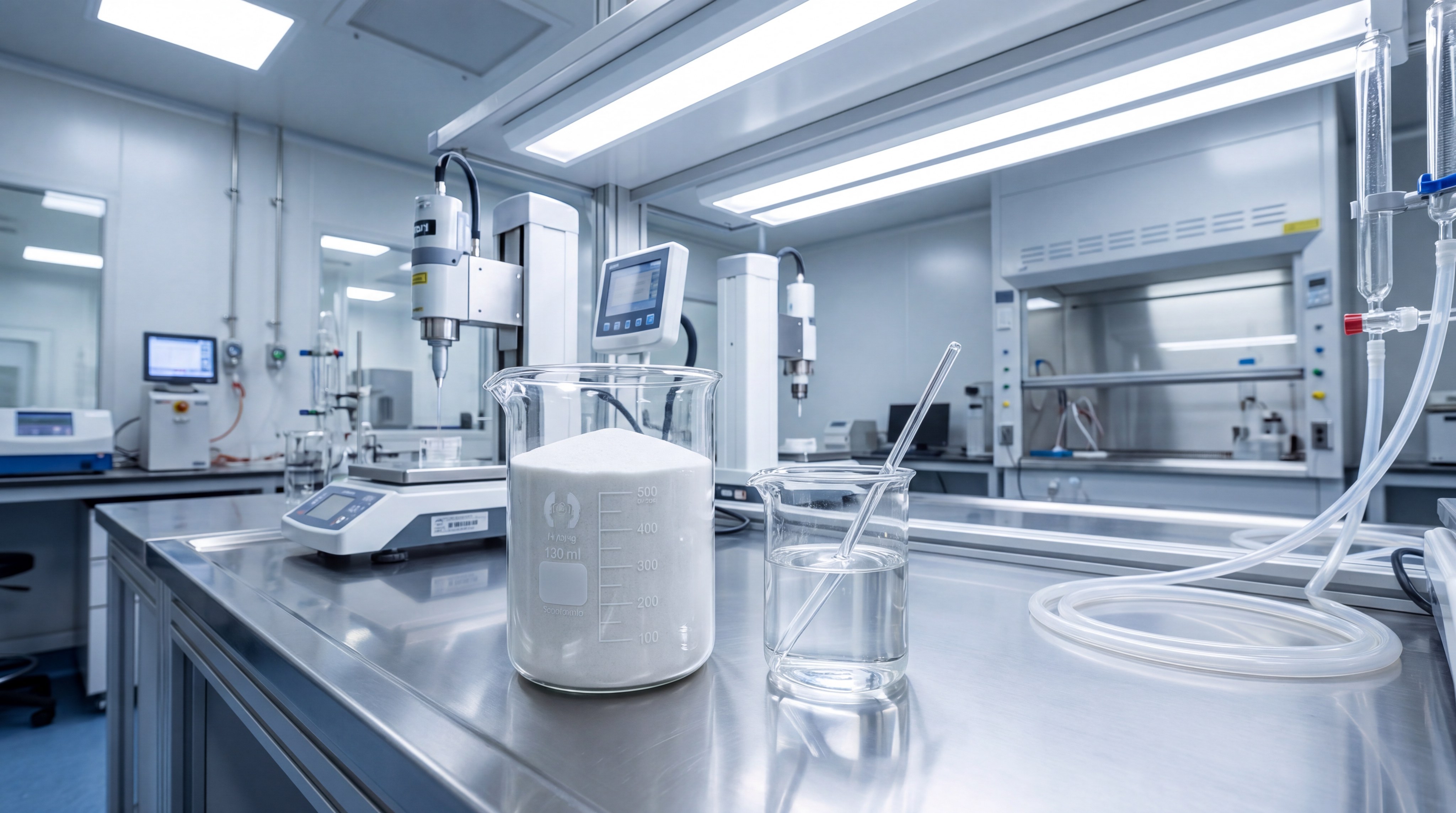
The multi-step production cycle including mixing, milling, and curing adds significant labor and overhead to every project. Every additional processing step requires specialized machinery and skilled technicians to maintain tight tolerances. Professional silicone manufacture involves deep technical expertise to manage these variables effectively.
Are there really 15 steps in production?
It sounds like a lot, right? From compounding the base rubber to the final post-cure, each phase is essential for structural integrity.
- Base rubber compounding with catalysts and fillers.
- Milling to ensure uniform distribution of additives.
- Degassing to remove air bubbles that cause defects.
- Precision curing under heat and pressure.
What machinery is required for LSR?
Think about it this way. Liquid Silicone Rubber (LSR) requires closed-loop injection systems that are far more advanced than standard plastic presses.
- Meter-mix units for precise catalyst delivery.
- Cold runner systems to prevent material waste.
- Automated de-molding robots for high-volume efficiency.
Key Takeaway: Every additional processing step adds labor, energy consumption, and equipment overhead to the final quote.
| Manufacturing Aspect | Process Detail | Cost Influence |
|---|---|---|
| Machine Precision | High-tolerance LSR injection | High Capital Expense |
| Cycle Times | Curing and cooling phases | Operating Expense |
| Equipment Maintenance | Specialized tool upkeep | Moderate |
Beyond the machines themselves, the tooling required for these processes represents a significant upfront cost.
Why Is Custom Tooling Such a Large Investment?
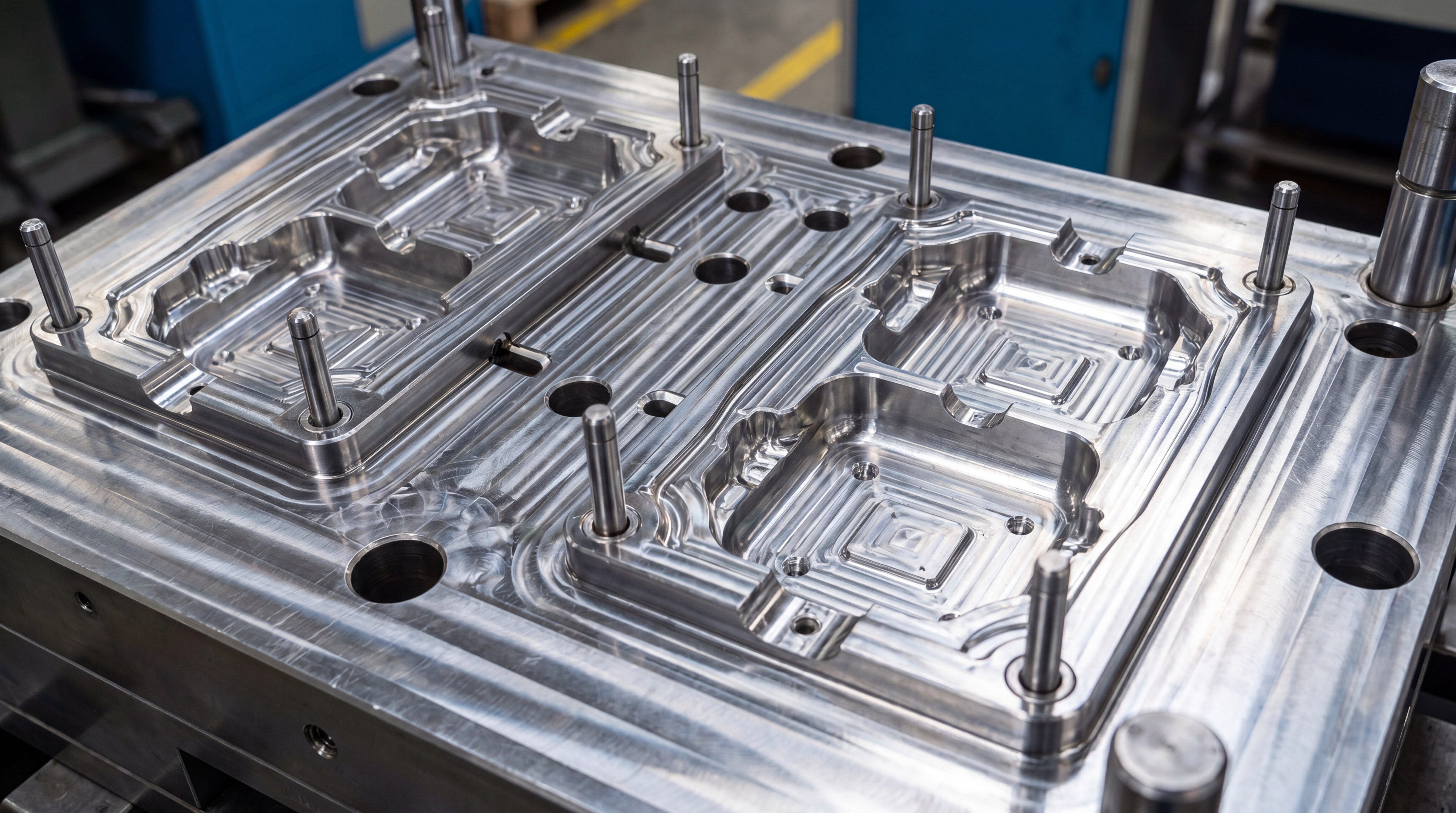
High-precision steel molds required for silicone are expensive to design and machine to tight tolerances compared to aluminum molds used for softer materials. The abrasive nature of some silicone additives means tools must be made from hardened steel to ensure longevity. In our silicone manufacture facility, we prioritize robust tooling to ensure batch-to-batch consistency.
How do mold materials affect the budget?
Here’s the kicker. Choosing between hardened steel and aluminum is a choice between long-term reliability and short-term savings.
- Hardened steel for 500,000+ production cycles.
- Aluminum for low-volume prototyping and fast iterations.
- Surface treatments like Teflon coating for easy release.
Can multi-cavity molds reduce long-term costs?
Believe it or not, spending more upfront can save you a fortune. Multi-cavity tools produce more parts per cycle, drastically reducing the labor cost per unit.
- Higher initial investment for complex plate designs.
- Lower unit price due to increased output volume.
- Reduced machine runtime requirements for mass production.
Is in-house mold design better?
You might be wondering why. Having engineering and tooling under one roof eliminates communication errors and speeds up the revision process.
- Direct collaboration between designers and mold makers.
- Faster turnaround for design modifications and repairs.
- Controlled quality from the first shot to the last.
Key Takeaway: Precision tooling is a one-time high cost that ensures batch consistency and lowers the long-term price per part.
| Tooling Variable | Benefit | Cost Profile |
|---|---|---|
| Hardened Steel Molds | 500,000+ cycles | High Upfront |
| Aluminum Molds | Faster prototyping | Lower Upfront |
| Multi-Cavity Layout | Faster mass production | High Initial Setup |
Once the tools are ready, we must consider the regulatory landscape that governs the production environment.
Do Strict Certifications Increase the Final Rate?
Compliance with FDA, ISO 13485, and IATF 16949 requires rigorous testing and documentation that adds to the unit cost. These standards ensure that parts used in life-critical or high-safety applications will not fail under stress. Our medical-grade silicone manufacture standards prioritize these safety protocols for regulated devices.
What is the cost of FDA compliance?
It doesn’t stop there. Maintaining food-grade or medical-grade status requires continuous audits and material traceability.
- Regular laboratory testing for chemical leaching.
- Strict raw material batch tracking and documentation.
- Compliance with non-toxic and hypoallergenic standards.
Why do automotive standards matter?
Look at it this way. In the automotive world, a single failed seal can lead to a massive vehicle recall and safety liabilities.
- Adherence to IATF 16949 production discipline.
- Failure Mode and Effects Analysis (FMEA) for every part.
- Rigorous environmental stress testing for heat and fluid resistance.
Key Takeaway: Certifications provide a safety net that protects your brand, though they require significant administrative and testing investment.
| Certification | Application | Cost Driver |
|---|---|---|
| FDA/LFGB | Food & Baby Care | Testing & Purity |
| ISO 13485 | Medical Devices | Documentation & Audits |
| IATF 16949 | Automotive | Traceability & QC |
The requirements for these certifications often dictate the specific grade of material used.
Does the Grade of Silicone Matter for Your Budget?
The specific chemical formulation, such as medical-grade versus industrial-grade, dictates the raw material price point due to varying refinement levels. Higher grades often require clean-room environments to prevent particulate contamination during silicone manufacture. Selecting the appropriate grade for your application is essential for cost-efficiency.
Liquid vs. Solid: Which is more expensive?
Wait, there’s more. Liquid Silicone Rubber (LSR) generally has a higher material cost than Solid (HCR) silicone but offers faster automation.
- LSR for high-precision, complex geometries.
- HCR (High Consistency Rubber) for simpler, large-scale gaskets.
- Comparison of raw material cost vs. total production cycle time.
Why is medical-grade silicone priced higher?
The reason is simple. It requires specialized compounding and manufacturing in Class 100,000 clean rooms to ensure biocompatibility.
- High-purity catalysts to prevent skin irritation or toxicity.
- Strict environmental controls to eliminate dust and microbes.
- Comprehensive biocompatibility testing (ISO 10993).
Key Takeaway: Material selection should always be based on performance requirements rather than just the price per kilogram.
| Silicone Grade | Primary Use | Relative Cost |
|---|---|---|
| Industrial Grade | Gaskets, seals | Baseline |
| Food Grade | Kitchenware, baby products | +20-30% |
| Medical Grade | Implants, tubing | +50-100% |
Choosing the right grade requires the guidance of experienced manufacturing partners.
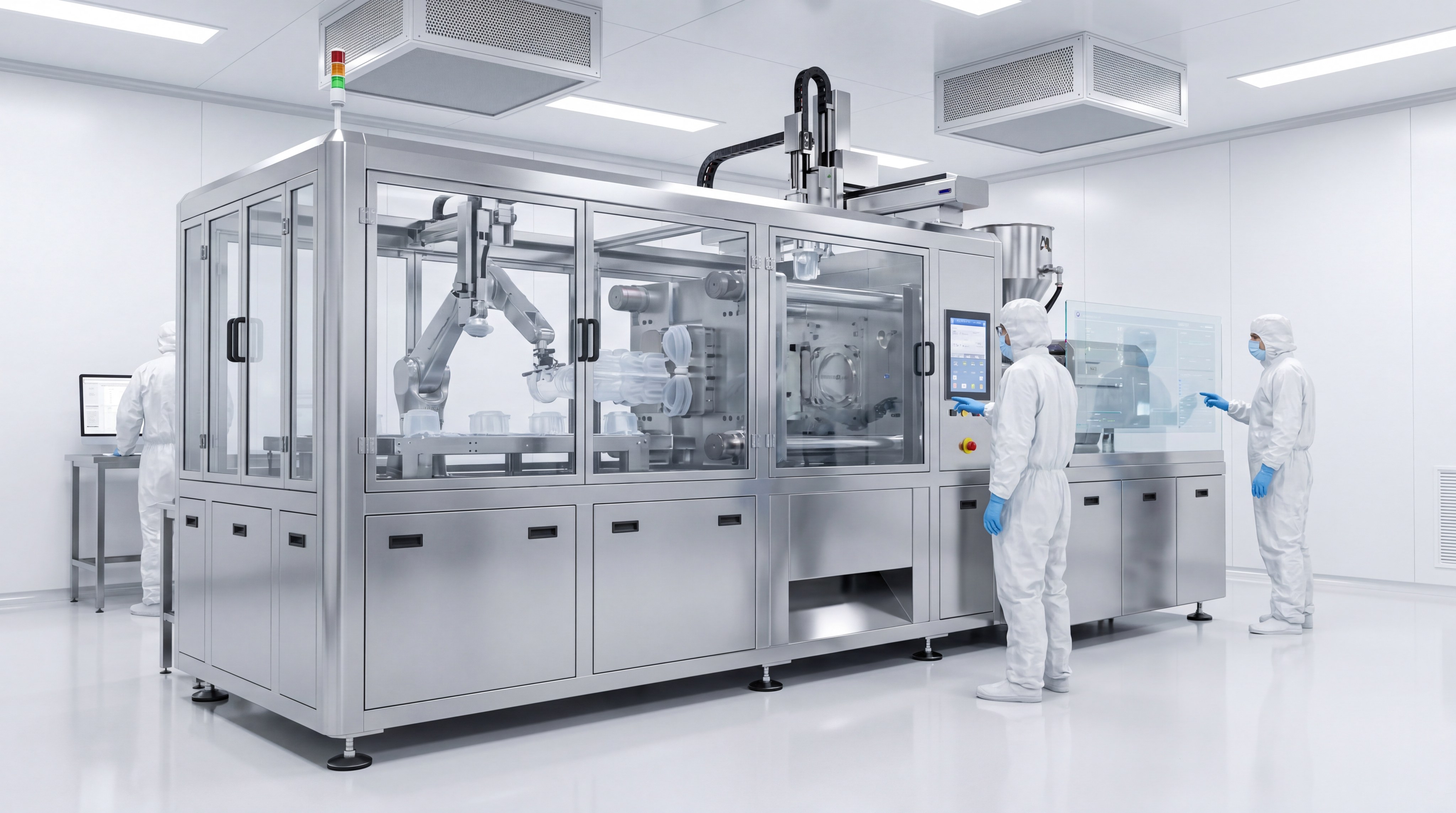
Is Silicone Manufacture Expertise Worth the Premium?
Expert engineering support like Design for Manufacturability (DFM) guidance reduces long-term risks of batch rejection and assembly failure. Investing in high-level silicone manufacture expertise ensures that your design is optimized for the molding process. This proactive approach saves thousands of dollars in potential rework and scrapped material.
How does DFM support prevent costly errors?
Here’s the kicker. Identifying a thin wall or a trap for air before the mold is cut prevents a total project restart.
- Optimizing wall thickness for uniform curing and cooling.
- Adding draft angles to facilitate easy part removal.
- Adjusting gate placements to minimize visible knit lines.
Why are skilled technicians essential?
Let’s face it. Silicone is a “living” material that reacts differently to humidity and temperature variations during the curing phase.
- Real-time adjustment of injection pressure and speed.
- Manual inspection for flash and surface imperfections.
- Expertise in secondary operations like silk-screening or laser etching.
Key Takeaway: Expert engineering reduces long-term risk and ensures that your project stays on schedule without costly failures.
| Service Level | Value Provided | Impact on ROI |
|---|---|---|
| DFM Guidance | Reduced design risk | High |
| Tolerance Planning | Better assembly fit | High |
| Process Optimization | Faster cycle times | Moderate |
Engineering expertise is particularly critical when dealing with highly customized or complex part designs.
Does Complex Customization Add Significant Fees?
Intricate geometries, undercuts, and thin walls increase cycle times and the likelihood of scrap during silicone manufacture. Every custom feature requires additional time in both tool design and machine setup. While customization adds to the initial price, it often integrates multiple parts into one, saving assembly costs later.
How do unique geometries affect molding?
You might be surprised. Parts with internal undercuts often require manual stripping from the mold, which slows down the entire line.
- Collapsible cores for complex internal threads.
- Sliding actions in the mold for side-hole features.
- Uniform wall thickness requirements to prevent warping.
Why are color matching and textures extra?
The truth is, custom colors require the machine to be completely purged and cleaned between batches.
- Precise Pantone or RAL color matching for brand consistency.
- VDI or MT textures added to the mold via laser or etching.
- Material waste during the color changeover process.
Can overmolding save assembly costs?
Think about it this way. Molding silicone directly onto a plastic or metal substrate eliminates the need for manual gluing or fastening.
- Superior mechanical and chemical bonding between materials.
- Reduced number of components in the final assembly.
- Elimination of potential leak paths in multi-part systems.
Key Takeaway: Integrated functions and complex designs in a single part reduce the total “landed” cost of the final product.
| Customization | Complexity | Cost Impact |
|---|---|---|
| Custom Color (Pantone) | Setup & Cleaning | Low-Moderate |
| Precision Textures | Tooling preparation | Moderate |
| Overmolding (2-Shot) | Machine/Tool complexity | High |
Global market conditions also play a role in the fluctuating price of these custom solutions.
How Do Global Supply Chains Affect Pricing?
Fluctuations in energy prices and the availability of raw silica globally can cause rapid price volatility in silicone manufacture. Silicone is a globally traded commodity, meaning geopolitical events can impact the cost of your local supply. Our global silicone manufacture and supply chain management ensure we mitigate these risks for our partners.
Is silicone production vulnerable to disruption?
And the best part? While silicone is abundant in the earth’s crust, the specialized chemical plants that process it are few and far between.
- Limited number of high-tier polymer manufacturers globally.
- Trade restrictions or tariffs on silicon metal exports.
- Impact of natural disasters on centralized chemical hubs.
How do energy prices fluctuate?
Look at it this way. Since silicone synthesis requires high-temperature electric arc furnaces, any spike in energy costs is felt immediately by the manufacturer.
- Direct correlation between industrial electricity rates and polymer pricing.
- Energy surcharges during periods of peak demand or scarcity.
- Investment in energy-efficient machinery to stabilize long-term costs.
Key Takeaway: Supply chain stability and energy prices are external factors that can impact the cost of silicone more than the weight of the material itself.
| External Factor | Description | Price Volatility |
|---|---|---|
| Energy Costs | Electricity for synthesis | High |
| Logistics | Shipping and duty fees | Moderate |
| Raw Material Supply | Global quartz/chemical market | Moderate |
Despite these external pressures, the long-term performance of silicone often provides the best value.
Does Superior Durability Justify the Higher Cost?
Silicone’s ability to withstand extreme temperatures and environmental stress prevents the recurring costs of replacement parts during silicone manufacture. Unlike cheaper rubbers that crack or harden over time, silicone maintains its physical properties for decades. This durability is the primary reason it remains the material of choice for high-end consumer and industrial products.
How does longevity offset the initial price?
Here’s the kicker. A silicone gasket that lasts 10 years is significantly cheaper than a TPE part that fails and requires labor-intensive replacement every 24 months.
- Resistance to UV radiation, ozone, and weathering.
- Superior compression set for long-term sealing performance.
- Stability across a temperature range of -50°C to +250°C.
Why is silicone better than plastic?
You might be wondering why. While plastics are cheap to mold, they often leach chemicals or deform under heat, which silicone avoids entirely.
- Chemical inertness for medical and food safety.
- Non-leaching properties that prevent product contamination.
- Flexibility that doesn’t disappear at freezing temperatures.
Can silicone reduce warranty claims?
The fact is, using high-quality materials is an insurance policy for your brand’s reputation.
- Lower risk of field failures due to environmental stress.
- Increased customer satisfaction with premium tactile feel.
- Reduction in costly product recalls and repair cycles.
Key Takeaway: Investing in silicone today prevents the high cost of failure and replacement tomorrow.
| Property | Silicone | Typical Plastic (TPE) |
|---|---|---|
| Temp. Range | Excellent | Limited |
| UV Resistance | High | Low-Moderate |
| Compression Set | Low (Retains shape) | High |
Ultimately, every business must decide if the performance of silicone aligns with their strategic goals.
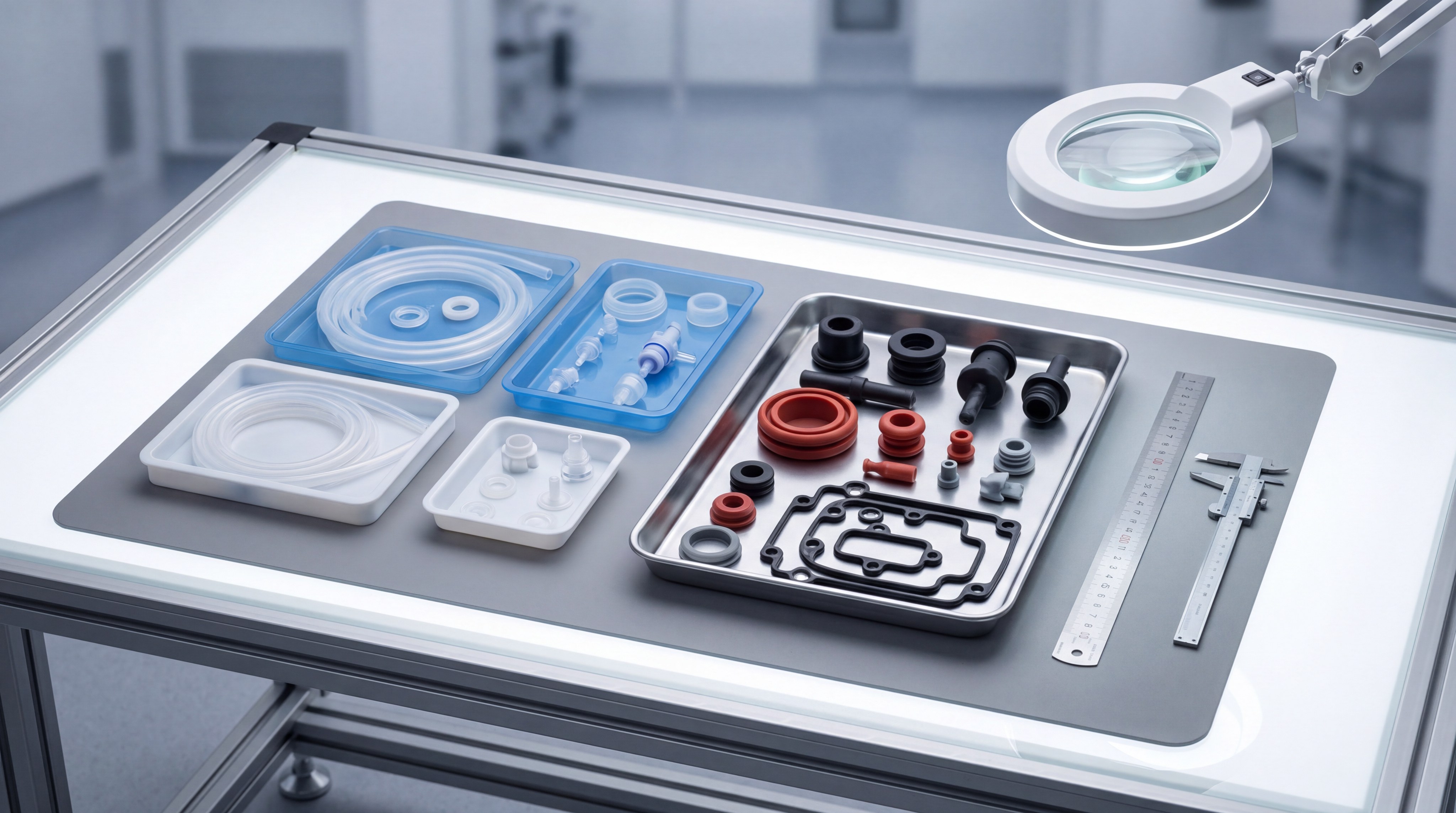
Is Your Silicone Investment Worth the Cost?
Balancing quality and cost through optimized design and material selection ensures a high return on investment for critical components. Working with an integrated manufacturer can streamline the process and reduce the markup associated with multiple sub-vendors. Reach out for a professional silicone manufacture quote to see how we can optimize your production costs.
Can you balance quality and cost?
The truth is, small design tweaks can lead to massive savings without sacrificing the part’s function.
- Reducing unnecessary wall thickness to save material.
- Simplifying the tool design to reduce initial capital expense.
- Selecting the lowest effective grade that still meets regulations.
What are the hidden costs of cheap silicone?
But that’s only the beginning. Low-cost silicone often contains “fillers” like calcium carbonate that compromise the material’s strength and lifespan.
- Increased risk of cracking and tearing under load.
- Chemical leaching that can fail safety inspections.
- Inconsistent dimensions across different production batches.
Why choose an integrated manufacturer?
Think about it this way. A one-stop shop manages everything from mold making to final assembly, cutting out the middleman’s margin.
- Single point of accountability for quality and delivery.
- Reduced logistics costs between different vendors.
- Faster communication and problem-solving during production.
Key Takeaway: The cheapest initial quote often carries the highest risk of long-term failure and brand damage.
| Strategic Choice | Potential Saving | Risk Level |
|---|---|---|
| Design Optimization | 10-15% | Low |
| Material Substitution | 20-30% | High |
| Supplier Consolidation | 5-10% | Low |
At Dongguan Hualin, we are committed to providing transparent, high-value manufacturing that secures your supply chain.
*
Frequently Asked Questions (FAQ)
- Can I use plastic instead of silicone to save money?
You can only substitute if your application doesn’t require extreme heat resistance, biocompatibility, or long-term flexibility. In regulated industries like medical or automotive, plastic often fails where silicone excels. - What’s the best way to lower my silicone part costs?
Focusing on Design for Manufacturability (DFM) is the most effective method. By optimizing wall thickness and simplifying the tool design, you can significantly reduce both material waste and tooling expenses. - How do I know if I’m getting high-quality silicone?
Always request material certifications and batch traceability reports from your supplier. Reputable manufacturers will provide FDA, LFGB, or ISO documentation to prove the material grade and purity. - Can I source cheaper silicone from uncertified suppliers?
It is extremely risky. Uncertified suppliers often use industrial fillers that compromise the material’s physical properties and can lead to regulatory fines or product failure. - What’s the difference between liquid silicone and solid silicone pricing?
Liquid Silicone Rubber (LSR) raw material is more expensive but supports highly automated, high-speed production. Solid silicone (HCR) is cheaper per pound but often requires more manual labor for molding.
*
Secure Your Production with Hualin Silicone
Understanding why silicone is expensive is the first step in building a resilient, high-quality product line. At Dongguan Hualin, we specialize in a repeatable, controlled manufacturing process that prioritizes your project’s stability from prototype to scale. Our in-house mold making and rigorous quality assurance systems are designed to eliminate the risks of quality drift and communication errors.
We believe that transparency in cost and excellence in engineering are the foundations of a successful partnership. Whether you are developing medical devices, automotive components, or high-end consumer goods, our team is ready to help you optimize your design for maximum value. Contact us today to discuss your project requirements and receive a comprehensive manufacturing solution tailored to your budget.