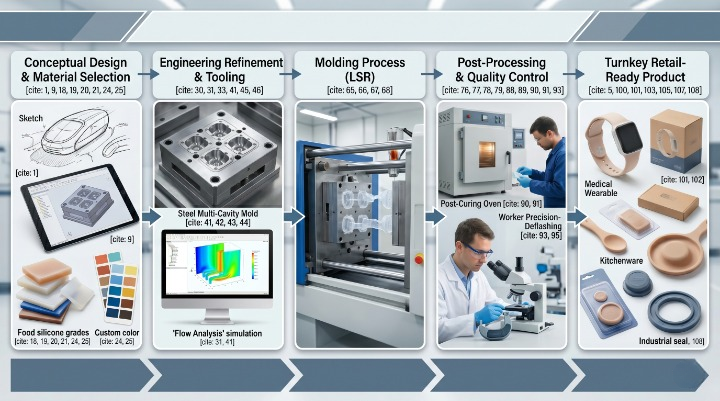
Many brands start with a brilliant sketch but quickly realize that a drawing isn’t a physical product. Without a clear manufacturing roadmap, an innovative idea can become stuck in development limbo, leading to missed market windows and wasted capital. Technical hurdles in silicone product manufacturing often seem like an insurmountable wall for those unfamiliar with the material’s unique properties.
One small error in design or material choice can cause massive failure during production. We provide a turnkey solution that bridges the gap between imagination and a retail-ready product by integrating design, engineering, and logistics into a single workflow. Our expert team transforms complex concepts into high-quality reality using data-driven insights and advanced technology.
Why is the Initial Design Phase Critical for Success?
In the world of silicone product manufacturing, the initial design phase dictates whether a part can be efficiently demolded or will suffer from high reject rates. Translating a creative concept into moldable geometry requires a deep understanding of wall thickness and draft angles.
Identifying Hidden Design Gaps
But that’s not all.
Designing for silicone is fundamentally different than designing for rigid plastics because of the material’s elasticity. We look for specific issues that could compromise structural integrity:
- Uneven wall thickness causing sink marks.
- Sharp internal corners leading to potential tearing.
- Lack of air venting paths in complex geometries.
Aligning Concept with Reality
We analyze every CAD model to ensure it is optimized for high-volume production. This proactive approach prevents expensive mold modifications later in the development cycle.
Key Takeaway: A design-for-manufacturability audit is the first step in ensuring a silicone concept survives the transition to mass production.
| Design Element | Manufacturing Impact | Optimization Goal |
|---|---|---|
| Wall Thickness | Flow & Curing | Maintain Uniformity |
| Edge Radii | Demolding Ease | Maximize Smoothness |
| Draft Angles | Part Release | 0.5 to 1.5 Degrees |
How Does Material Selection Impact Final Performance?
Successful silicone product manufacturing requires matching the specific chemical properties of the raw material to the product’s end-use environment. Choosing between food-grade, medical-grade, or industrial-grade silicone determines the safety and durability of the final item.
Selecting the Right Shore Hardness
Here’s the kicker.
The “durometer” or hardness of the silicone significantly affects the tactile feel and functional performance of the product. Our About Us page highlights our commitment to sourcing only high-purity raw materials.
- 30A Shore: Soft and highly flexible.
- 50A Shore: Standard for consumer kitchenware.
- 70A Shore: Firm and used for industrial seals.
Custom Color and Additive Integration
We can integrate specific additives to enhance the product’s value proposition. This includes antimicrobial properties, UV resistance, or custom Pantone color matching for brand consistency.
Key Takeaway: Selecting the correct material grade and shore hardness is essential for meeting both regulatory standards and consumer expectations.
| Grade | Best Application | Regulatory Standard |
|---|---|---|
| Food Grade | Kitchenware / Baby | FDA / LFGB |
| Medical Grade | Wearables / Implants | ISO 10993 |
| Industrial Grade | Gaskets / Seals | UL / REACH |
What Role Does Engineering Refinement Play?
Engineering refinement in silicone product manufacturing acts as the bridge between a “what if” creative idea and a technical “how to” execution plan. We take the refined design and perform a mold flow analysis to predict material behavior inside the tool.
Optimizing the 3D Model for Flow
Believe it or not.
Liquid silicone behaves uniquely under pressure, and its viscosity changes based on temperature. Engineering tweaks ensure that the material reaches every fine detail of the mold without trapping air.
- Adjusting gate locations for optimal filling.
- Adding overflow wells to capture excess material.
- Refining tolerances for multi-part assemblies.
Ensuring Dimensional Accuracy
Our engineers ensure that the dimensions in the digital file translate perfectly to the physical world. This is particularly vital for smart wearable silicone parts that must house sensitive electronics.
Key Takeaway: Engineering refinement reduces material waste and ensures that every part produced is a carbon copy of the master design.
| Refinement Step | Primary Benefit | Success Metric |
|---|---|---|
| Flow Analysis | Zero Air Bubbles | Surface Perfection |
| Gate Placement | Reduced Flash | Minimal Finishing |
| Tolerance Check | Assembly Fit | ±0.1mm Accuracy |
Why is Precision Tooling the Foundation of Quality?
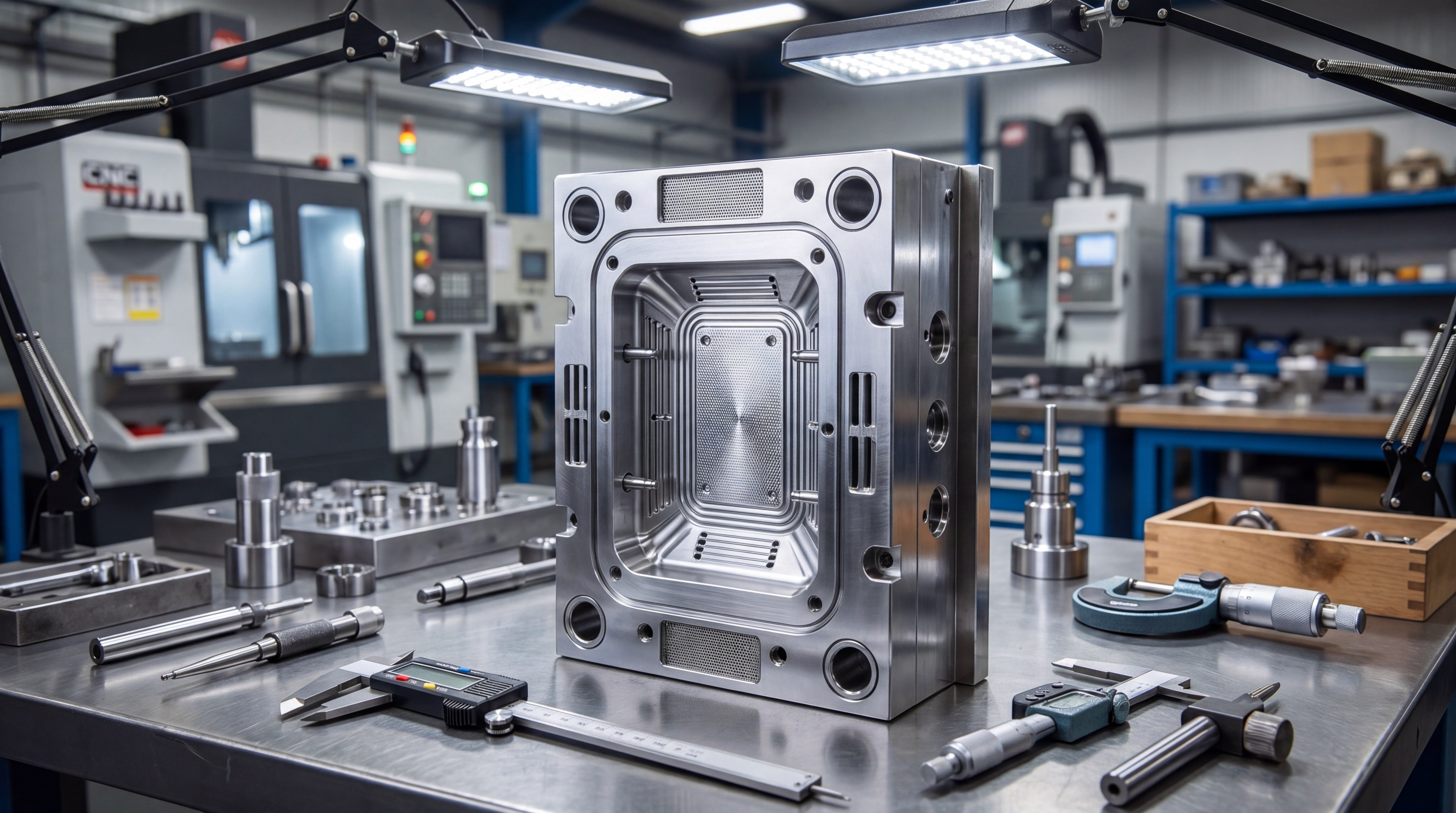
The success of silicone product manufacturing depends entirely on the precision of the steel mold used during the injection process. A high-quality tool allows for thousands of cycles without degrading the part’s surface finish or dimensions.
The Strength of Multi-Cavity Tooling
Wait, there’s more.
Multi-cavity steel molds are designed to produce multiple units in a single cycle, which significantly lowers the unit cost for our clients. We use advanced CNC machining to craft these tools to exacting specifications.
- Hardened steel for long-term durability.
- Mirror-polish finishes for high transparency.
- Integrated logos for permanent branding.
Managing Thermal Expansion
Steel expands when heated, and silicone shrinks when cooled. Our tooling experts calculate these variables during the fabrication process to ensure the final cooled part meets the design specs.
Key Takeaway: Investing in high-grade precision tooling prevents production delays and ensures a professional, consistent product finish.
| Tooling Feature | Manufacturing Benefit | Outcome |
|---|---|---|
| Multi-Cavity | Higher Throughput | Lower Unit Cost |
| CNC Precision | Exact Replication | High Fidelity |
| Surface Texture | Aesthetic Grip | Improved UX |
How Do Prototyping Stages Mitigate Development Risks?
In silicone product manufacturing, jumping straight into mass production is a recipe for expensive errors. Prototyping provides a physical sample to test with real users and identify functional flaws before the final tool is cut.
Rapid Prototyping for Functional Testing
Think about this.
Using simplified prototype molds, we can produce functional silicone samples in as little as one week. This allows our clients to verify the “hand-feel” and flexibility of their product in its intended environment.
- Validating the effectiveness of a seal.
- Testing the durability of a hinge.
- Confirming the comfort of a wearable strap.
Validating Final Design Changes
If a prototype reveals an issue, we can adjust the master plan immediately. This “fail fast” approach is the most cost-effective way to ensure a perfect product launch.
Key Takeaway: A prototype serves as an insurance policy against high-cost production mistakes and design oversights.
| Prototyping Method | Typical Lead Time | Main Purpose |
|---|---|---|
| Rapid Tooling | 7-10 Days | Functional Test |
| 3D Printing (SLA) | 2-3 Days | Visual Validation |
| Prototype Molding | 1-2 Weeks | Material Check |
Which Molding Process Suits Your Product Best?
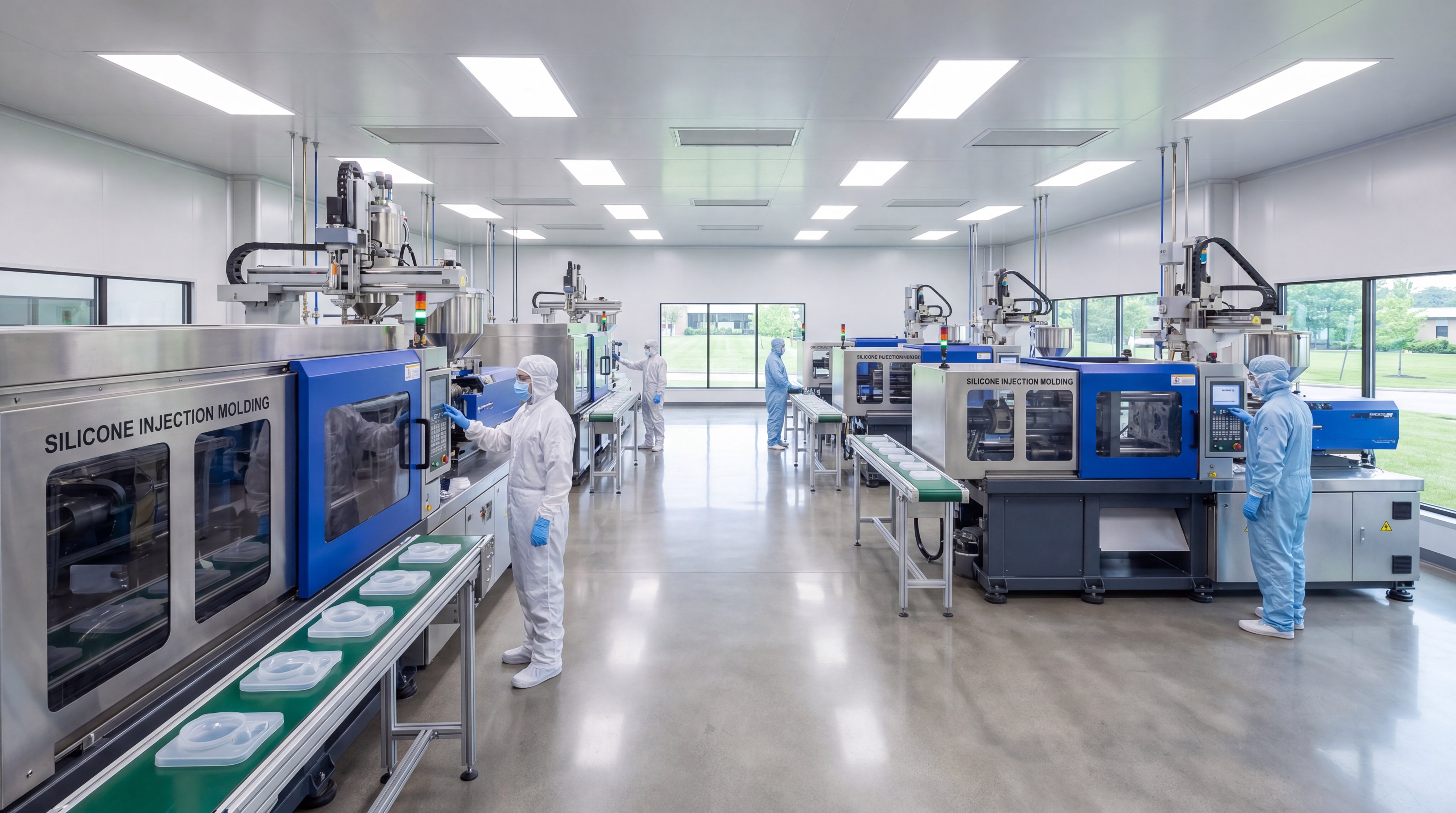
Choosing the right process is a pivotal decision in silicone product manufacturing that balances quality, speed, and overall budget. While there are several ways to mold silicone, Liquid Silicone Rubber (LSR) injection is often the gold standard for complex parts.
The Efficiency of LSR Injection
You might be wondering.
LSR injection is a highly automated process that minimizes human error and waste. It is ideal for high-precision components that require tight tolerances and clean-room production environments.
- Fast cycle times for mass volume.
- Superior detail reproduction.
- Minimal manual trimming required.
Compression Molding for Simplicity
For simpler parts or smaller initial production runs, compression molding can be a more cost-effective alternative. It involves pressing a pre-measured “slug” of silicone into a heated mold under high pressure.
Key Takeaway: The optimal molding process is determined by the complexity of your product’s geometry and your required production volume.
| Molding Process | Geometric Complexity | Volume Capacity |
|---|---|---|
| LSR Injection | High | Very High |
| Compression | Low to Medium | Medium |
| Overmolding | Complex / Multi-Material | High |
How is Quality Control Maintained During Production?
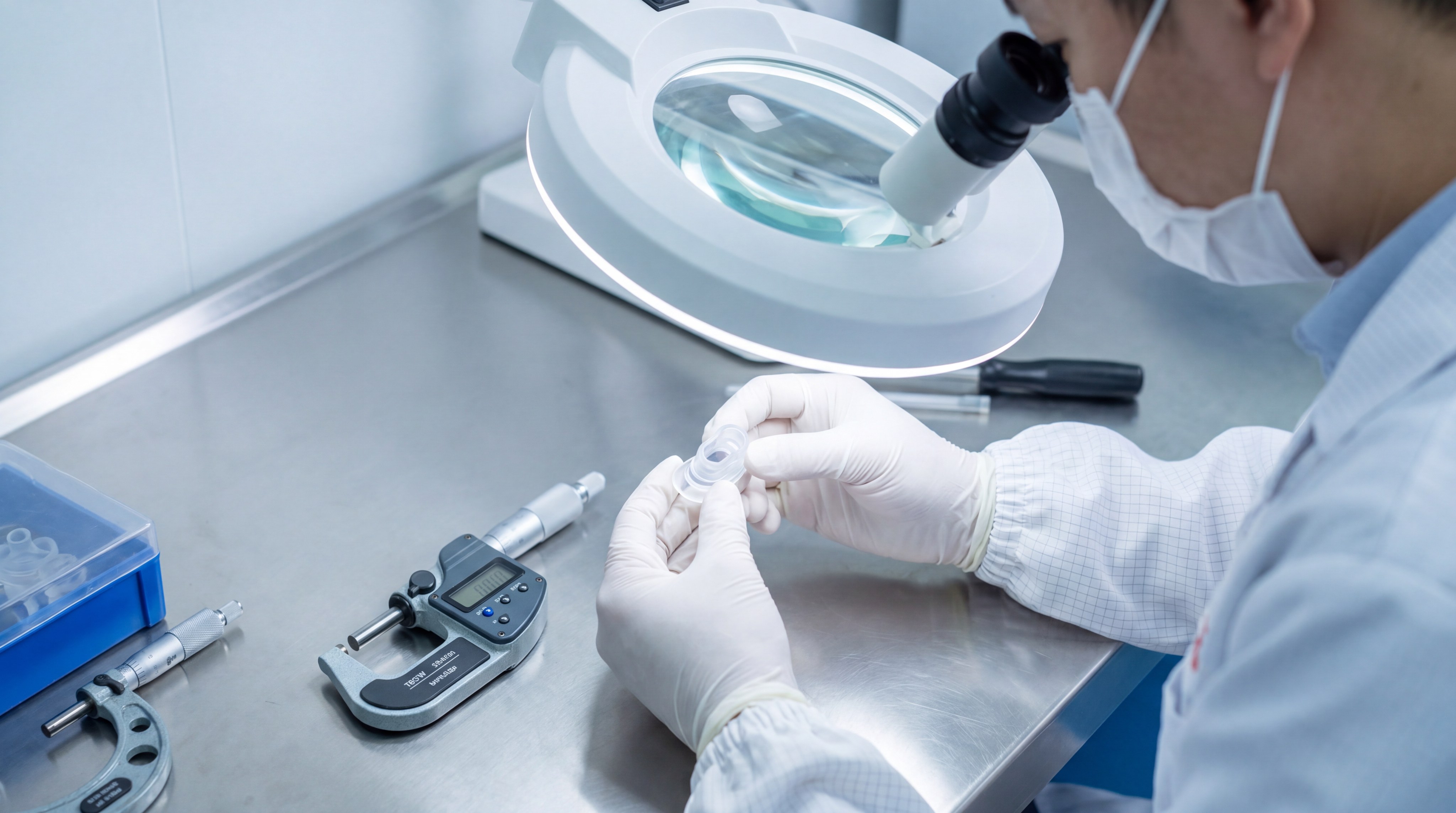
Continuous monitoring is vital in silicone product manufacturing to ensure that every unit leaving the facility meets the client’s specifications. We employ rigorous inspection protocols at every stage of the production cycle to catch defects early.
In-Line Inspection Protocols
As you can imagine.
Our team performs hourly checks on parts coming off the line. This includes visual inspections for surface defects and dimensional verification using high-precision micrometers and calipers.
- Checking for air bubbles or voids.
- Verifying material hardness (Durometer).
- Measuring critical assembly dimensions.
Batch Traceability and Accountability
Every production run is documented, and every material lot is tracked. This level of traceability is essential for medical and baby products where safety is the top priority.
Key Takeaway: A robust quality assurance system protects the brand’s reputation and ensures consumer safety through consistent monitoring.
| QC Check | Frequency | Goal |
|---|---|---|
| Material Audit | Every Batch | Verify Purity |
| In-Line Check | Hourly | Early Defect Detection |
| Final Inspection | 100% of Units | Zero-Defect Delivery |
Why is Post-Processing Essential for Safety Compliance?
For high-end silicone product manufacturing, the work doesn’t end when the part leaves the mold. Post-processing steps like deflashing and secondary curing are essential for achieving a professional finish and ensuring chemical stability.
The Critical Role of Post-Curing
Let’s face it.
Many silicone parts, especially those used in food or medical applications, require a post-cure bake. This process ensures the silicone is fully vulcanized and removes any residual volatile substances.
- Enhances mechanical properties.
- Eliminates chemical odors.
- Ensures absolute safety for skin contact.
Precision Deflashing and Cleaning
Any excess material, known as “flash,” is carefully trimmed from the part’s edges. We then perform specialized cleaning to ensure the product is free of dust and contaminants before it enters the packaging phase.
Key Takeaway: Secondary curing and precision deflashing are the final steps that transform a raw molded part into a safe, consumer-ready product.
| Post-Process | Benefit | Key Application |
|---|---|---|
| Post-Curing | Chemical Stability | Food / Medical |
| Deflashing | Smooth Edges | All Consumer Goods |
| Sanitizing | Hygiene | Baby Products |
What Packaging Options Drive Retail Growth?
The final phase of silicone product manufacturing involves ensuring the product is ready for store shelves. A great product deserves professional packaging that protects the item while communicating the brand’s value to the consumer.

Designing Retail-Ready Solutions
It gets better.
We offer turnkey packaging services, including custom blister packs, branded boxes, and laser-engraved identification. This allows our clients to receive a finished product that can go directly into their distribution channels.
- Custom-printed backing cards.
- Eco-friendly packaging materials.
- Integrated barcodes and QR codes.
Permanent Branding through Tooling
By engraving your logo directly into the production tool, your branding becomes a permanent, hygienic part of the silicone. This is much more durable than surface printing, which can peel or wear off over time.
Key Takeaway: Turnkey manufacturing means delivering a finished, branded, and packaged product that is ready for the end consumer.
| Option | Value Addition | Longevity |
|---|---|---|
| Molded Logo | Permanent Branding | Permanent |
| Custom Color | Brand Identity | Lifetime |
| Blister Pack | Retail Ready | Shelf Protection |
How Does Professional Partnership Accelerate ROI?
Choosing an expert partner for silicone product manufacturing is the fastest way to turn a creative concept into a profitable business asset. Our integrated approach minimizes the friction between design and delivery, allowing you to launch faster with less risk.
Streamlining the Supply Chain
This is where you win.
By housing design, tooling, and mass production under one roof, we eliminate the communication gaps that often occur when using multiple vendors. This streamlined workflow significantly reduces your time-to-market.
- Faster prototyping cycles.
- Direct engineering-to-tooling feedback.
- Unified quality standards across all stages.
Scaling with Confidence
Whether you are launching a single product or a full line, our scalable manufacturing solutions grow with your brand. We provide the technical expertise and production capacity required to conquer your market.
Key Takeaway: A professional OEM/ODM partnership turns manufacturing from a challenge into a strategic competitive advantage.
| Benefit | Impact on Business | Strategic Result |
|---|---|---|
| Integrated Flow | Faster Launch | First-to-Market |
| Expert DFM | Lower Waste | Improved Margins |
| Scalable Output | Market Growth | Increased ROI |
Frequently Asked Questions
Can I start with low-volume production?
Yes, we provide flexible options including rapid prototyping and smaller initial runs to help startups validate their market before scaling.
What is the best way to protect my intellectual property?
We routinely sign Non-Disclosure Agreements (NDAs) to ensure that your designs and proprietary concepts remain strictly confidential throughout the process.
How do I know if my design is moldable?
Our engineering team conducts a thorough Design for Manufacturability (DFM) review to identify any geometry issues before we begin tooling.
What’s the best material for skin-contact wearables?
Medical-grade, platinum-cured silicone is generally the best choice as it is biocompatible, hypoallergenic, and extremely durable.
Can I customize the color of my silicone product?
Absolutely. We use precision pigment mixing to match any Pantone color code provided to ensure your product perfectly aligns with your brand identity.
Conclusion
Turning a creative concept into a production-ready silicone product requires a blend of artistic vision and rigorous engineering. From the initial design audit to precision tooling, high-volume molding, and final retail packaging, every step must be executed with zero margin for error. By partnering with a dedicated expert, you ensure that your innovation is safe, functional, and ready for global success. Don’t let your idea remain on the drawing board—contact us today to start your manufacturing journey.