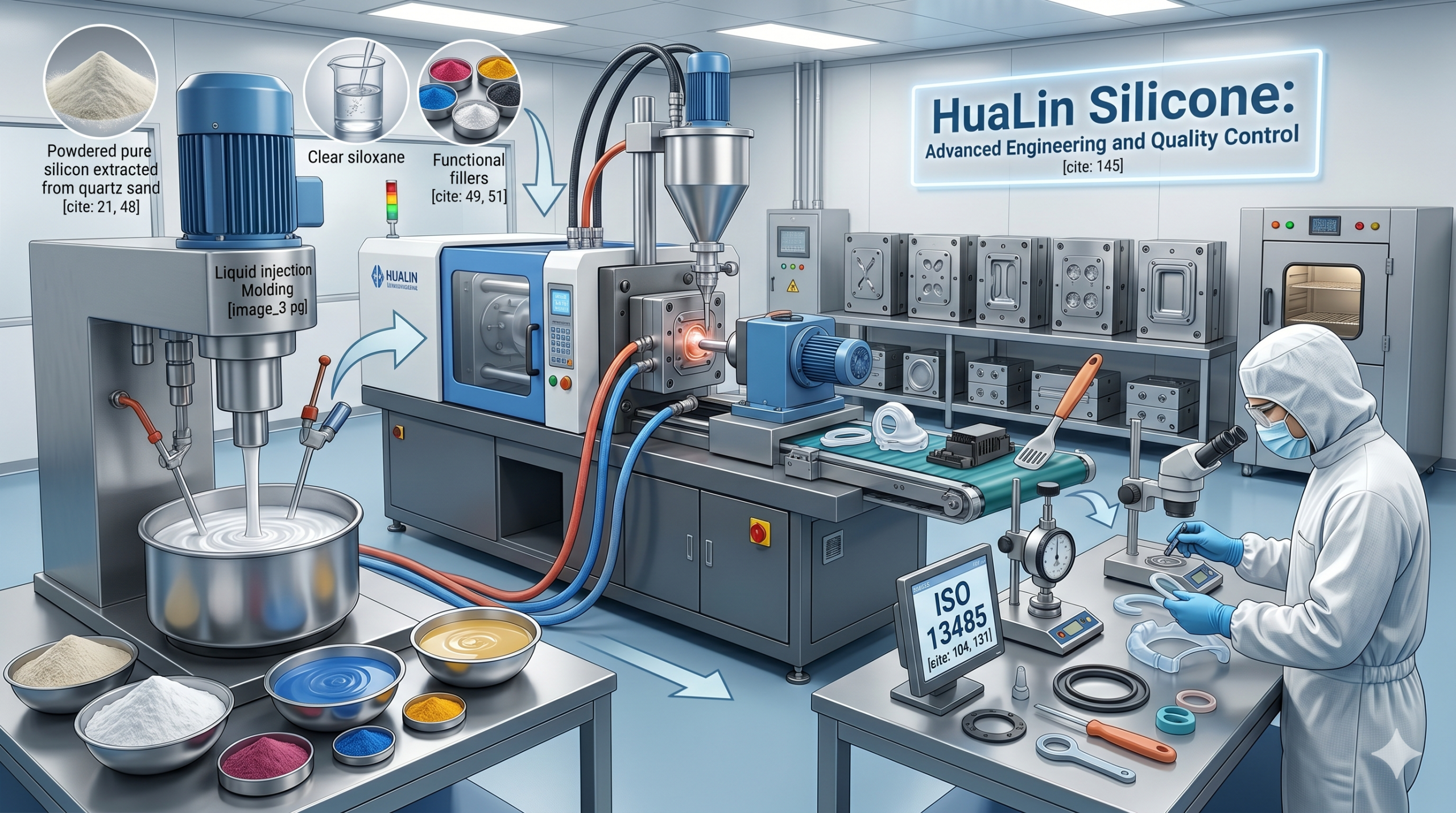
Manufacturing silicone products involves a series of technical stages from raw material synthesis to high-precision molding and final curing. Many businesses struggle with inconsistent quality or material failures when attempting to scale their designs into physical parts. These issues often lead to expensive tooling revisions, delayed launches, and compromised product safety in sensitive industries like healthcare. To overcome these hurdles, you need a partner who understands how to manufacture silicone products through advanced engineering and rigorous quality control.
What Is the Difference Between Silicon and Silicone?
Silicon is a natural element found in the earth’s crust, whereas silicone is a synthetic polymer created for industrial and consumer use. It is vital to understand this chemical distinction before exploring how to manufacture silicone products for specific applications. While silicon is a hard, brittle metalloid, silicone is an elastomer that can be formulated into various degrees of flexibility.
What are the core chemical properties?
Silicone is defined by its siloxane backbone, which consists of repeating silicon and oxygen atoms. This structure allows the material to remain stable under extreme temperatures that would destroy standard plastics.
- High thermal stability ranging from -100°C to 300°C.
- Excellent resistance to UV radiation and ozone.
- High gas permeability for specialized medical uses.
The bottom line is:
This unique chemical arrangement makes silicone the ideal choice for gaskets and seals.
Why does material composition matter?
The specific chemical groups attached to the silicon atoms determine the final physical characteristics of the rubber. By adjusting these organic groups, manufacturers can tune the material for oil resistance or enhanced transparency.
Key Takeaway: Distinguishing between the raw element and the synthetic polymer ensures you select the correct material for environmental resistance and durability.
| Feature | Silicon | Silicone |
|---|---|---|
| Origin | Natural Element (Si) | Synthetic Polymer |
| Texture | Hard and Brittle | Flexible and Elastic |
| Conductivity | Semiconductor | Excellent Insulator |
This fundamental distinction dictates the technical approach taken during the earliest stages of product development and material sourcing.
How Are Silicone Raw Materials Produced?
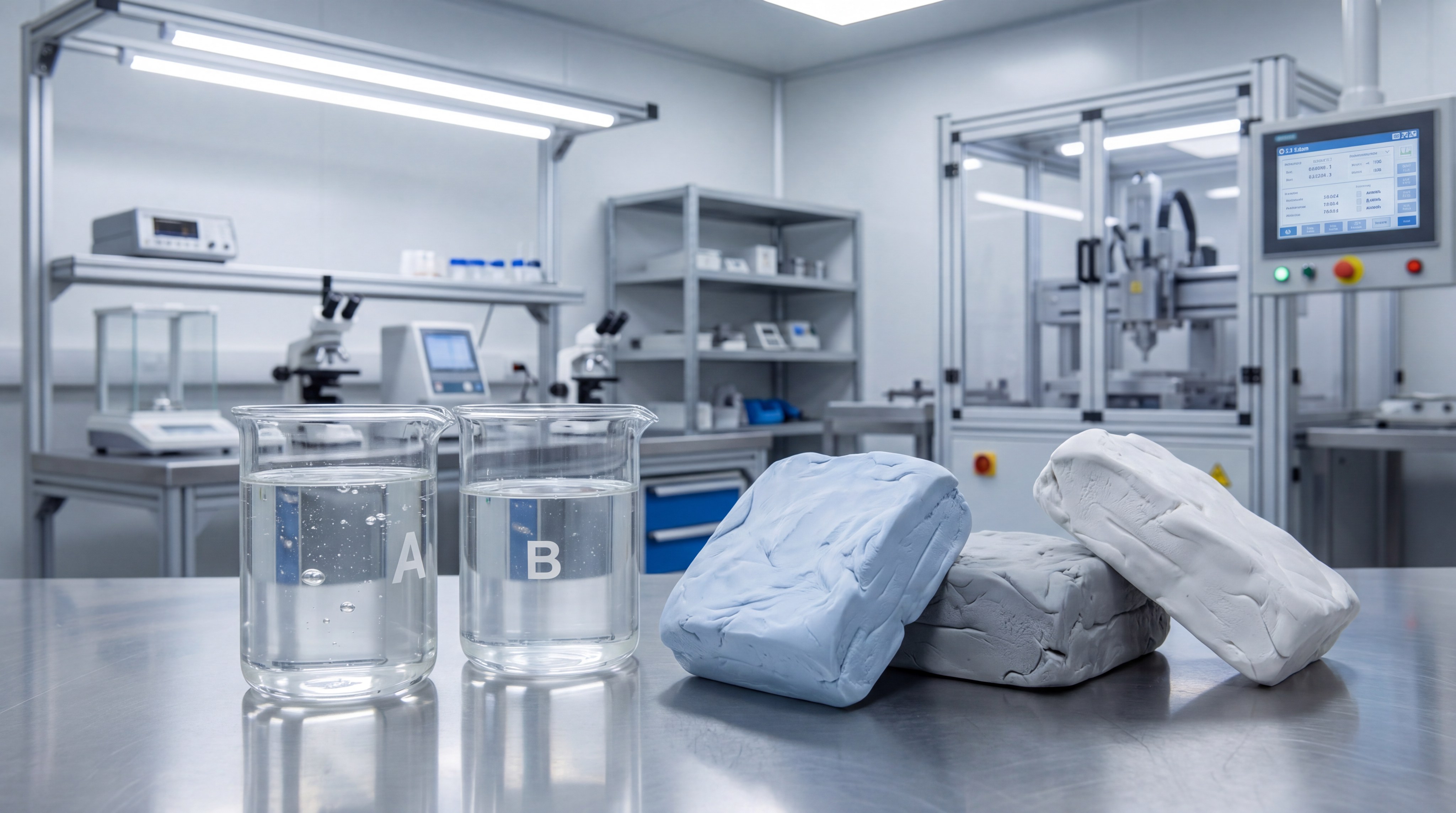
Production starts by extracting silicon from quartz sand at high heat and reacting it with chemicals to form siloxane chains. Understanding this upstream process is a core component of how to manufacture silicone products that meet global safety standards. Pure silicon is reacted with methyl chloride to create the building blocks required for polymerization.
From quartz sand to pure silicon?
Quartz sand is heated to 1800°C in an electric arc furnace to remove oxygen and isolate the silicon. This high-purity silicon is then ground into a fine powder for further chemical processing.
Think about it:
The purity of this initial extraction directly impacts the clarity and strength of your final product.
How does chemical synthesis create PDMS?
Through hydrolysis, the silicon-based chemicals are converted into polydimethylsiloxane (PDMS) chains. These chains act as the “backbone” for almost all silicone rubber variations used in manufacturing today.
- Hydrolysis creates linear chains.
- Polymerization extends these chains to specific lengths.
- Cross-linking agents are added later for curing.
Key Takeaway: The transformation from raw sand to refined siloxane chains is the foundation of high-performance silicone manufacturing.
| Stage | Process | Result |
|---|---|---|
| Extraction | 1800°C Heating | Pure Silicon |
| Reaction | Chemical interaction | Dimethyldichlorosilane |
| Synthesis | Hydrolysis | Polydimethylsiloxane (PDMS) |
Reliable material synthesis ensures that the resulting elastomer has the molecular stability required for demanding industrial environments.
Which Silicone Type Fits Your Application?
Choosing between Solid HCR and Liquid LSR depends entirely on your product’s precision requirements and total production volume. When you evaluate how to manufacture silicone products, you must match the material viscosity to your specific molding equipment. High Consistency Rubber (HCR) is clay-like, whereas Liquid Silicone Rubber (LSR) flows like a thick paste.
HCR vs LSR: Which is more versatile?
HCR is often used for larger, simpler parts because it is easier to handle in compression molding presses. Conversely, LSR is the preferred choice for intricate medical devices and high-speed automated production.
The truth is:
LSR offers superior consistency because it is mixed in a closed, automated system.
When should you use FSR or RTV?
Fluorosilicone (FSR) is the go-to material for automotive parts that must resist fuels and harsh chemicals. Room Temperature Vulcanized (RTV) silicone is typically used for onsite sealing or low-volume prototyping where heat is not available.
- FSR: Aerospace and fuel systems.
- RTV: Prototypes and construction sealants.
- LSR: Medical and baby care products.
Key Takeaway: Selecting the right consistency and chemical grade prevents manufacturing delays and ensures the part functions correctly in its intended environment.
| Type | Consistency | Best Application |
|---|---|---|
| LSR | Liquid/Paste | High-precision medical parts |
| HCR | Solid/Clay | Large industrial gaskets |
| FSR | Solid | Fuel-resistant automotive seals |
Matching the material type to the molding process is the most critical decision in optimizing the manufacturing lifecycle.
How to Manufacture Silicone Products Step-by-Step?
The step-by-step process moves from material compounding and pigmenting to the critical stage of vulcanization. Knowing the exact sequence of how to manufacture silicone products helps you identify where potential defects might occur during the run. Each stage must be carefully controlled to maintain the desired Shore A hardness and color accuracy.
What happens during the mixing stage?
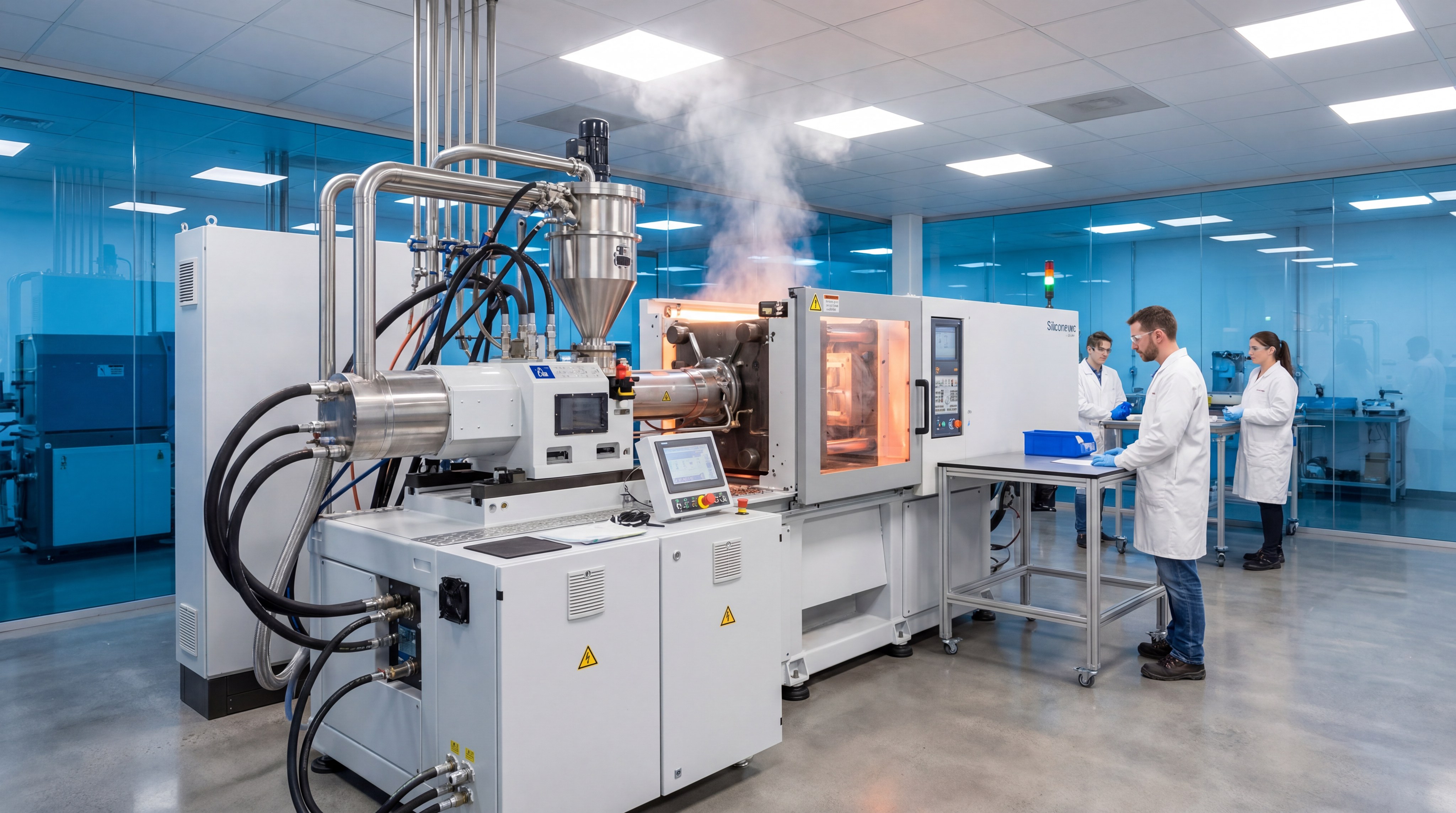
Raw silicone is combined with catalysts, pigments, and functional fillers in a high-shear mixer. This process ensures that the catalyst is evenly distributed so that the material cures uniformly across the entire part.
- Pigments are added for brand-specific colors.
- Platinum or peroxide catalysts are introduced.
- Fillers improve mechanical strength or reduce cost.
Believe it or not:
Even a minor deviation in the catalyst ratio can lead to parts that are too soft or overly brittle.
Why is curing the most critical phase?
Curing, or vulcanization, is the process where heat and pressure transform the soft mixture into a stable solid. This phase creates permanent cross-links between polymer chains, giving the material its famous elasticity and bounce-back.
Key Takeaway: A controlled step-by-step approach from precise mixing to final curing ensures consistent mechanical properties across every production batch.
| Step | Action | Objective |
|---|---|---|
| Mixing | Homogenization | Uniform property distribution |
| Molding | Shaping | Cavity filling |
| Curing | Heat Application | Polymer cross-linking |
Following a rigorous manufacturing sequence eliminates variability and guarantees that the finished parts meet the engineering specifications.
What Are the Best Molding Processes to Use?
Injection molding is typically the gold standard for high-volume precision, while compression molding offers cost-effectiveness for simpler shapes. Choosing the right method is essential when determining how to manufacture silicone products efficiently and within budget. Liquid injection molding is highly automated, which reduces labor costs and increases output speed for large orders.
Is injection molding best for high volume?
LSR injection molding uses a closed-loop system to pump material into heated molds, resulting in extremely fast cycle times. This method is ideal for complex geometries where flash must be kept to an absolute minimum.
Here is the secret:
Automation in injection molding leads to nearly zero human error during the shaping process.
How do compression and transfer molding differ?
Compression molding involves placing a pre-measured “slug” of material directly into the mold cavity. Transfer molding is similar but uses a plunger to force the material through a sprue, which handles parts with metal inserts much more effectively.
- Compression: Low tooling cost, best for simple parts.
- Transfer: Moderate cost, better for overmolding.
- Injection: High tooling cost, best for complex high-volume.
Key Takeaway: High-volume intricate parts require injection molding, whereas simpler, larger gaskets are often more economical via compression molding.
| Process | Complexity | Lead Time | Cost (High Volume) |
|---|---|---|---|
| Injection | Very High | Short | Low |
| Compression | Low | Long | Moderate |
| Transfer | Moderate | Moderate | Moderate |
By selecting the optimal molding route, you can significantly reduce the total cost per part while maintaining high quality standards.
How to Design and Build High-Precision Molds?
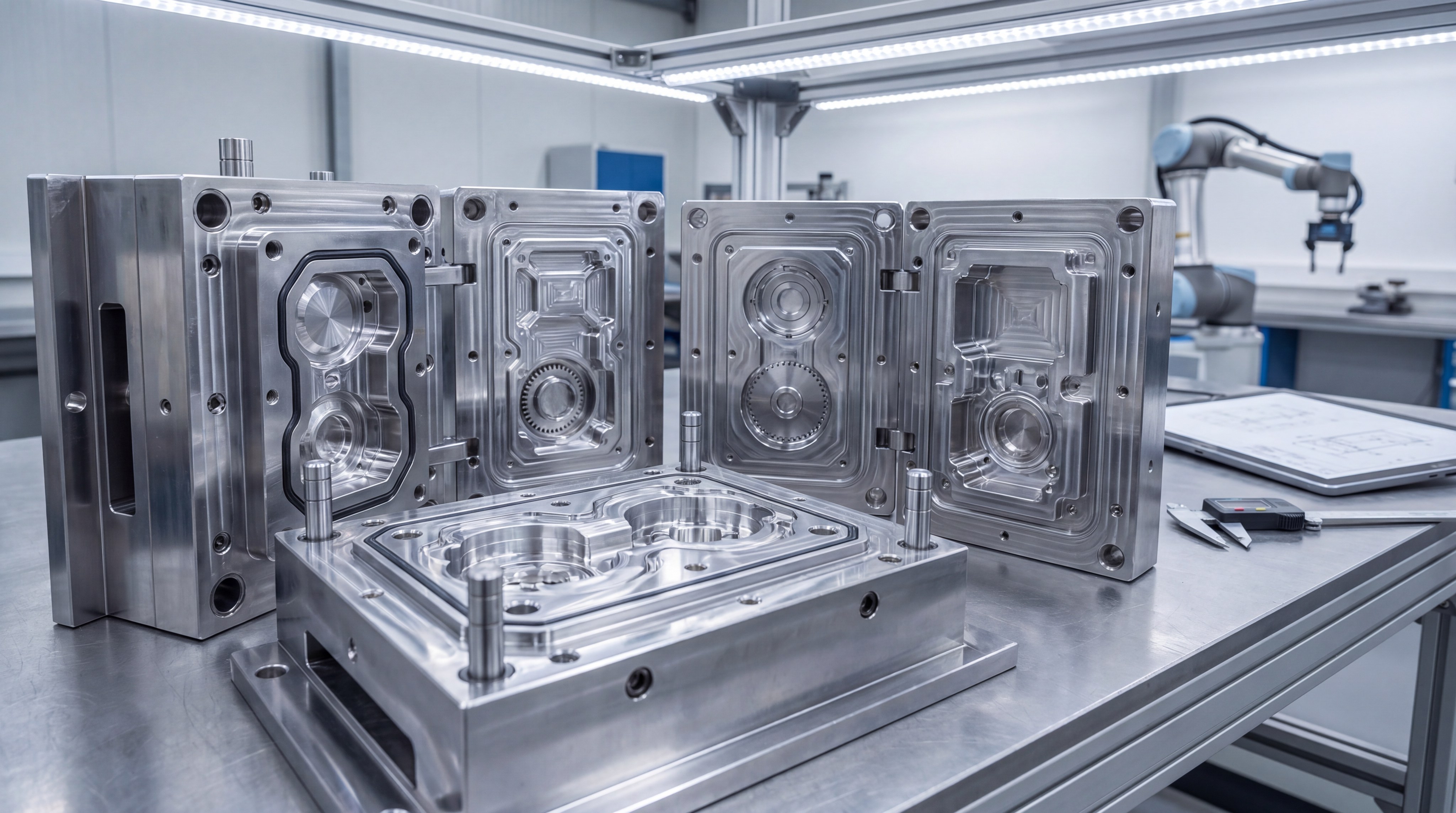
High-precision molds require high-grade stainless steel or aluminum and a deep understanding of thermal expansion rates. Effective mold design is a cornerstone of how to manufacture silicone products with tight tolerances and perfect surface finishes. Engineers must account for silicone’s shrinkage rate, which can vary based on the specific material grade and molding temperature.
Why choose aluminum or stainless steel?
Aluminum is excellent for prototypes or short runs because it is cheaper and heats up quickly. Stainless steel is mandatory for high-volume mass production due to its extreme durability and resistance to the abrasive nature of some fillers.
- Aluminum: Faster iterations, lower initial investment.
- Stainless Steel: Long-term durability, food-grade safe.
- P20 Steel: Good balance for medium-volume production.
The result?
Using high-quality steel ensures the mold remains accurate for hundreds of thousands of cycles.
How does DFM reduce tooling risks?
Design for Manufacturing (DFM) reviews identify issues like air traps or difficult de-molding points before the mold is cut. This proactive step prevents expensive mold modifications and ensures that the part can be manufactured consistently.
Key Takeaway: Investing in high-quality mold materials and a thorough DFM review is the best way to prevent long-term production failures.
| Material | Durability | Heating Speed | Tooling Cost |
|---|---|---|---|
| Aluminum | Low | Very Fast | Low |
| Stainless Steel | Very High | Moderate | High |
| P20 Steel | Moderate | Fast | Moderate |
Precision tooling is the only way to achieve the repeatable accuracy required for modern electronic and medical silicone components.
Is Secondary Vulcanization Really Necessary?
Secondary vulcanization, or post-curing, is mandatory for medical-grade items to remove volatile organic compounds and stabilize dimensions. You should consider this extra step in how to manufacture silicone products when safety and performance are your top priorities. During post-curing, parts are placed in a specialized oven for several hours to complete the chemical reaction.
How does it improve mechanical properties?
Post-curing increases the tensile strength and improves the compression set of the silicone. This means the product will return to its original shape more effectively after being squeezed or stretched.
Think about it:
Without post-curing, your seals might lose their effectiveness much faster in the field.
Does it eliminate harmful volatiles?
For products used in the food or medical industries, secondary vulcanization is essential to drive off residual catalysts and VOCs. This ensures the part is biologically inert and safe for human contact or implantation.
- Removes cyclic siloxanes.
- Stabilizes the material’s physical dimensions.
- Improves long-term environmental resistance.
Key Takeaway: Secondary vulcanization is a non-negotiable step for high-safety applications, ensuring material purity and enhanced mechanical durability.
| Property | Before Post-Cure | After Post-Cure |
|---|---|---|
| Compression Set | Higher (Worse) | Lower (Better) |
| VOC Levels | Present | Eliminated |
| Stability | Variable | Highly Stable |
Adding a secondary cure cycle protects your brand reputation by ensuring that products do not leach chemicals or fail prematurely.
How to Test the Quality of Finished Products?
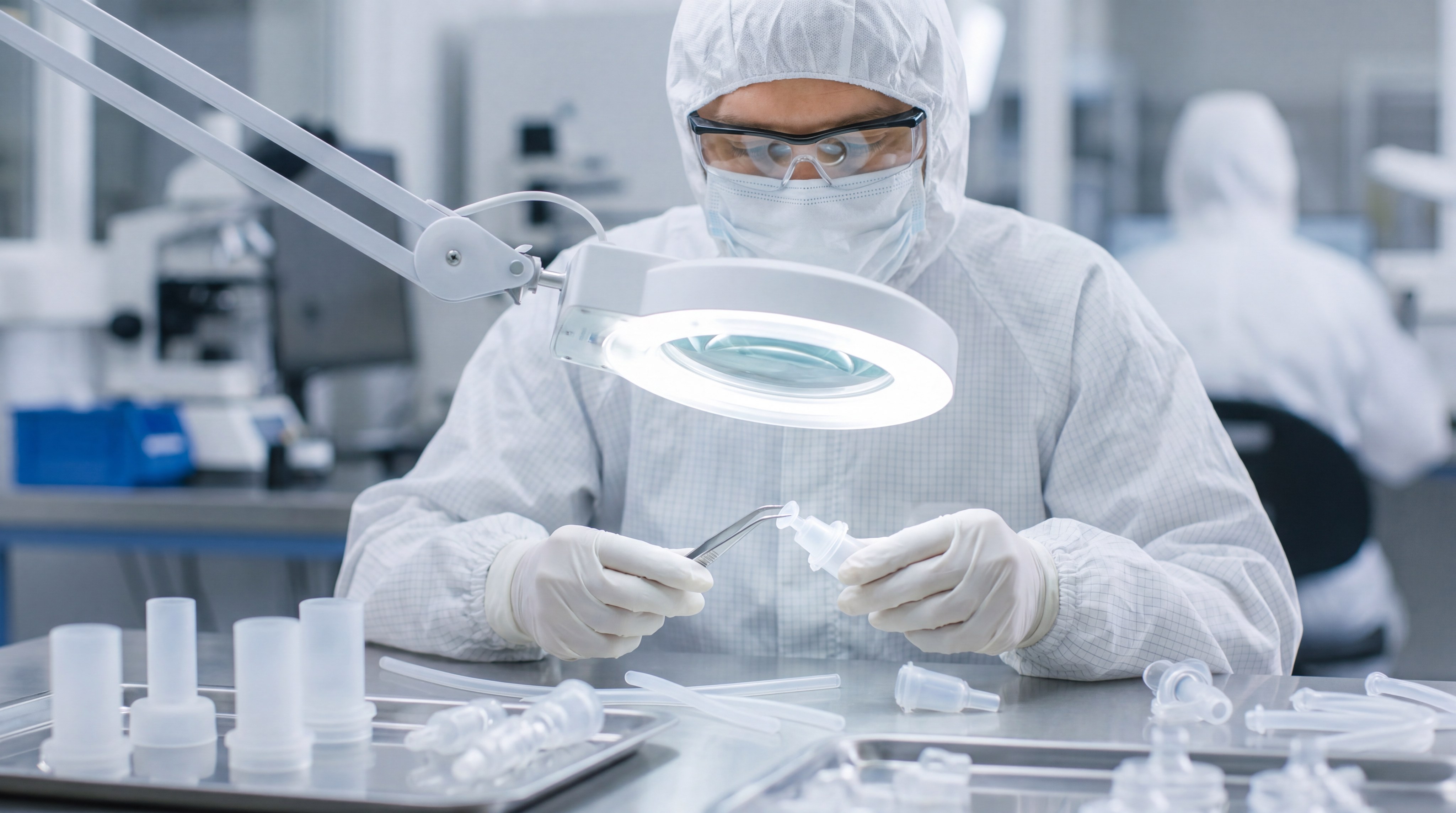
Quality testing involves verifying physical properties like tensile strength and shore hardness through standardized mechanical trials. In how to manufacture silicone products, these tests ensure that every batch meets the client’s functional requirements. A failure in testing indicates an issue in the mixing or curing stage that must be addressed immediately.
What are tensile and durometer tests?
Tensile tests measure how much force the silicone can withstand before breaking, while a durometer measures the surface hardness. These metrics are critical for ensuring that a keypad feels right or a gasket seals correctly.
It’s a fact:
Consistent durometer readings across a batch are the primary indicator of a stable manufacturing process.
Why perform extractables and FTIR testing?
FTIR spectroscopy identifies the chemical fingerprint of the material to verify that it matches the approved grade. Extractables testing is used for medical devices to ensure no harmful substances can migrate out of the silicone into the patient.
- Durometer: Measures Shore A hardness.
- Tensile Test: Measures elongation and break point.
- FTIR: Verifies material chemical purity.
Key Takeaway: Comprehensive testing protocols, from mechanical strength to chemical purity, are essential for maintaining high-quality manufacturing standards.
| Test Type | Metric | Importance |
|---|---|---|
| Durometer | Hardness | User experience and fit |
| Tensile | Elongation | Durability under stress |
| FTIR | Chemical ID | Compliance and safety |
Strict adherence to quality control indexes allows manufacturers to catch defects before they ever reach the end customer.
How to Prevent Manufacturing Defects and Failures?
Preventing defects requires optimized mold temperatures, correct clamping pressure, and strictly controlled material moisture levels. Identifying these risks early is part of mastering how to manufacture silicone products without wasting raw material. Common issues like flash or air bubbles are usually the result of improper venting or unstable pressure during the injection cycle.
How to fix inconsistent dimensions?
Inconsistent dimensions often stem from unstable mold temperatures or varying shrinkage rates. The solution lies in using high-precision temperature controllers and ensuring the material is compounded with exact tolerances.
The reality is:
Precision mold cooling is just as important as the heating phase for dimensional stability.
Why do waterproof seals often fail?
Failure in waterproof performance is usually caused by a mismatch in material hardness or poor surface finish on the mold. Even a microscopic defect on the sealing edge can lead to a leak under high-pressure environments.
- Use DFM to optimize sealing lips.
- Ensure 100% flash removal.
- Match silicone hardness to the mating part.
Key Takeaway: Preventing defects is an ongoing process that involves fine-tuning machine parameters and maintaining high-quality mold surfaces.
| Defect | Root Cause | Solution |
|---|---|---|
| Flash | Excessive Pressure | Adjust clamping force |
| Air Bubbles | Poor Venting | Optimize mold design |
| Shrinkage | Thermal Mismatch | Calibrate temperature |
Proactive defect management reduces scrap rates and ensures that high-performance seals meet their rated IPX waterproof standards.
How to Find a Reliable Silicone Manufacturer?
A reliable manufacturer must hold ISO certifications and provide in-house mold-making capabilities to ensure full process control. When you look for a partner on how to manufacture silicone products, transparency in their quality assurance system is the most important trait. A “one-stop” factory can handle everything from DFM support to final assembly and export.
What certifications are required?
You should look for ISO 9001 for general quality management and specialized certifications like ISO 13485 for medical devices. These standards prove that the factory follows a repeatable and auditable manufacturing process.
The secret to success:
A certified factory reduces your risk of batch rejections and expensive compliance audits.
How to evaluate production capabilities?
An expert manufacturer will offer multiple molding routes and secondary operations like laser etching or silk-screen printing. They should be able to provide a clear DFM report and material traceability documents for every order.
- ISO 9001 and 13485 compliance.
- In-house mold design and repair.
- Cleanroom facilities for medical parts.
Key Takeaway: Choosing a manufacturer with integrated engineering support and global certifications ensures your project moves from prototype to mass production smoothly.
| Criteria | Importance | Why it Matters |
|---|---|---|
| ISO 9001 | Mandatory | Ensures consistent quality |
| In-house Mold | Critical | Faster iterations and lower cost |
| DFM Support | Essential | Prevents design failures |
Partnering with a factory that understands both material science and advanced molding technology is the key to launching successful silicone products.
Manufacturing silicone products no longer needs to be a source of technical stress or quality risks. By understanding the chemical nature of the material, selecting the right molding process, and enforcing rigorous quality testing, you can transform complex designs into high-performance realities. Our comprehensive approach solves the problems of inconsistent dimensions and material failures, allowing you to scale with confidence. Contact us today to begin your project with an expert team. At HuaLin Silicone, our vision is to empower global innovation through precision engineering and stable, high-quality manufacturing.
Frequently Asked Questions
Can I use the same mold for different silicone colors?
Yes. You can switch colors in the same mold, but the machine and mold must be thoroughly cleaned to prevent color contamination.
What is the best silicone for food-grade products?
It depends. Platinum-cured Liquid Silicone Rubber is generally considered the safest and best choice for food-grade applications due to its high purity.
Can silicone be recycled after it is cured?
No. Once silicone is vulcanized (cured), it is a thermoset material and cannot be melted down and reformed like thermoplastics.
How long does it take to make a custom silicone mold?
It depends. Simple aluminum molds can take 1-2 weeks, while complex multi-cavity stainless steel molds usually take 4-6 weeks to complete.
Is silicone better than natural rubber?
Yes. Silicone is superior in terms of temperature resistance, UV stability, and chemical inertness, though natural rubber may have better tear resistance in certain niche cases.