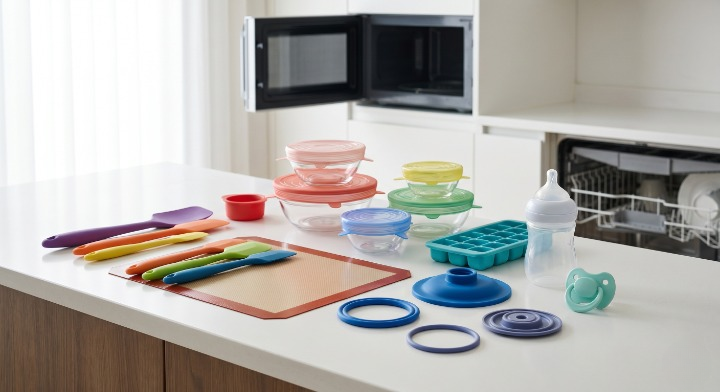
Food-grade LSR injection molding is a high-precision manufacturing process that utilizes ultra-pure, platinum-cured liquid silicone rubber to produce components safe for direct food contact. You often face the challenge of using traditional plastics that contain harmful phthalates or BPAs which leach into products under high heat. This chemical migration isn’t just a minor technical flaw; it’s a significant health risk that leads to expensive product recalls and destroys your brand’s reputation for safety. By choosing Food-Grade LSR injection molding, you implement a chemically inert solution that withstands extreme temperatures while meeting the world’s most rigorous regulatory standards.
What Defines Food-Grade LSR?
Food-Grade LSR is a specialized silicone elastomer formulated with high-purity raw materials and a platinum-catalyzed curing system to eliminate toxic by-products. Unlike industrial-grade silicones that may use peroxide catalysts, this material ensures no volatile organic compounds remain in the finished part.
Is the Purity Level High Enough?
When you evaluate material safety, the purity of the catalyst system is the primary factor. Platinum-cured systems are the industry standard because they do not produce the “acid bloom” or odors common in cheaper alternatives.
Think about it:
- No harmful leaching of chemicals.
- Odorless and tasteless performance.
- Naturally resistant to bacteria and mold growth.
Key Takeaway: High-purity material selection is the foundation of food safety, ensuring your components remain inert even during repeated use.
| Feature | Food-Grade LSR | Standard LSR |
|---|---|---|
| Curing System | Platinum-cured | Peroxide or Platinum |
| Leaching Risk | Non-existent | Low to Moderate |
| Application | Kitchenware & Baby Care | Industrial Seals |
This comparison guide helps you determine if your current material meets the strict non-leaching requirements of the consumer market.
Why Is LSR Safer Than Plastic?
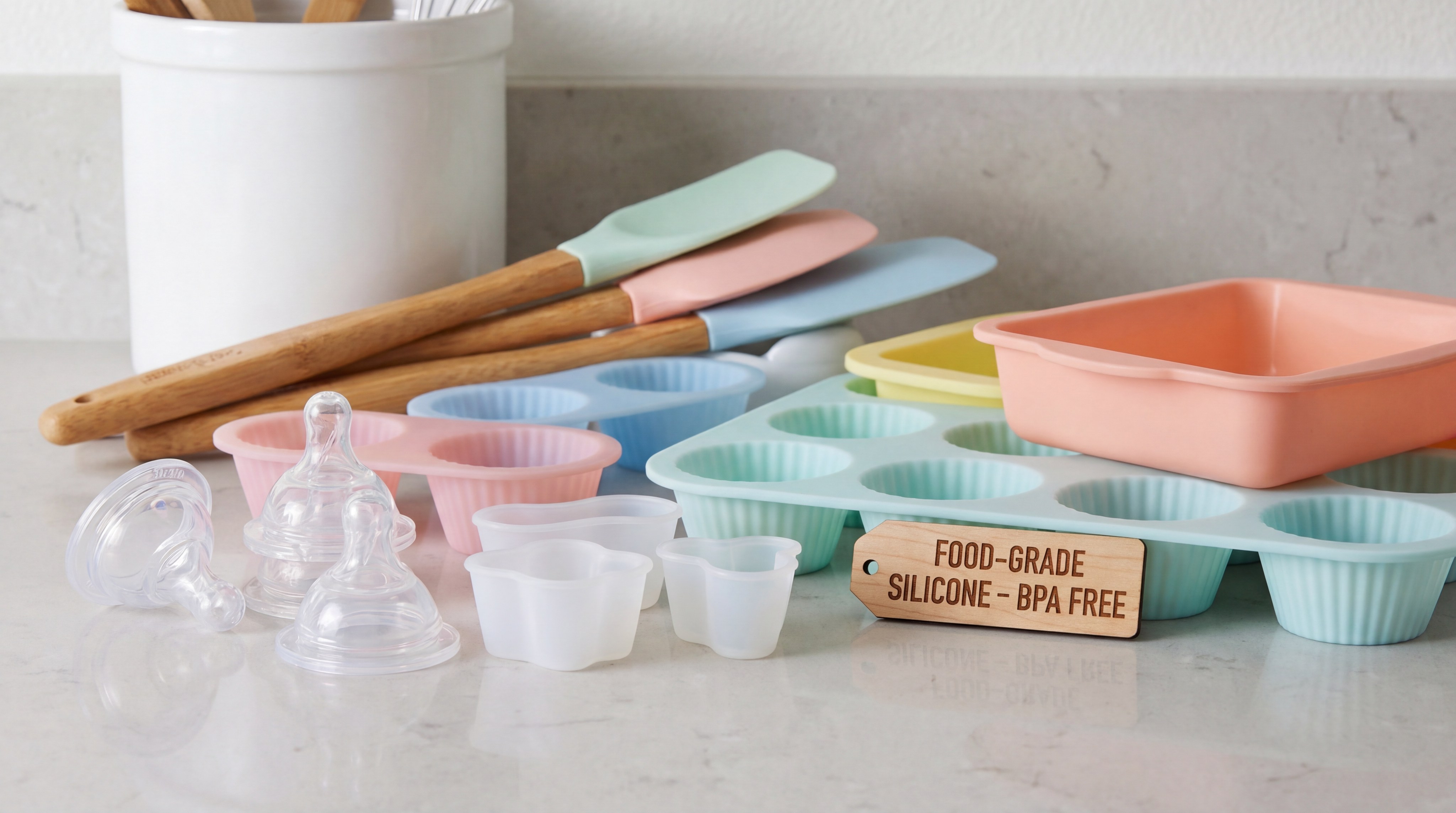
Food-Grade LSR offers a level of chemical stability that even high-performance food-grade plastics cannot consistently match. You will find that silicone’s inorganic backbone makes it naturally resistant to the thermal degradation that causes plastics to release micro-particles into food.
How Does It Resist Extreme Heat?
Most consumer plastics begin to soften or release odors at temperatures well below boiling. However, food-grade silicone maintains its structural integrity and safety profile from −50°C to 200°C.
The bottom line:
- Microwave and dishwasher safe.
- No structural warping under pressure.
- Retains flexibility in freezing environments.
Key Takeaway: Thermal stability ensures that your product remains safe for consumers across a wider range of household and industrial applications.
| Benefit | Impact on Product |
|---|---|
| Heat Resistance | Prevents melting in ovens |
| Chemical Inertness | Prevents flavor contamination |
| Durability | Extends product lifecycle |
Use this analysis to verify that your components can survive the thermal stress of modern kitchen appliances without compromising safety.
How Does the Injection Process Work?
Food-Grade LSR injection molding relies on a highly automated, closed-loop system that prevents environmental contamination during the manufacturing cycle. You benefit from a process where the raw materials are never exposed to the atmosphere until they are fully cured into their final shape.
How Is the Material Prepared?
The process begins with a precision pumping system that meters Part A and Part B in a perfect 1:1 ratio. This mixture is then injected into a heated mold where the platinum catalyst triggers a rapid cross-linking reaction.
Here is the kicker:
- Automated mixing prevents human error.
- Closed systems block dust and debris.
- Cold runner technology reduces material waste.
Key Takeaway: Automation and closed-loop systems are essential for maintaining the sterile integrity required for food-contact surfaces.
| Process Step | Critical Success Factor |
|---|---|
| Metering | Accurate 1:1 ratio control |
| Injection | High-pressure air removal |
| Vulcanization | Precise temperature timing |
This table serves as a checklist to ensure your manufacturing partner maintains the process controls necessary for high-purity results.
Which Standards Certify Material Safety?
Food-Grade LSR components must be backed by transparent documentation to prove they comply with international health regulations. You should prioritize partners who offer traceable material certifications for Medical Grade Silicone Parts and food-contact applications.
Is LFGB Stricter Than FDA?
While FDA 21 CFR 177.2600 is the standard in the United States, the German LFGB certification is often considered the “gold standard” globally. LFGB requires more intensive migration testing, making it the preferred choice for premium European markets.
Think about it:
- FDA is the baseline for global compliance.
- LFGB ensures the highest level of safety.
- EU 1935/2004 provides the framework for European trade.
Key Takeaway: Regulatory compliance is not optional; choosing the right certification level depends entirely on your target market’s legal requirements.
| Standard | Primary Region | Testing Intensity |
|---|---|---|
| FDA | North America | Standard |
| LFGB | Germany / Europe | Premium / Strict |
| EU 1935/2004 | European Union | High |
Review these standards to align your product certification with the legal expectations of your specific geographic sales region.
Why Is Precision Critical in Molding?
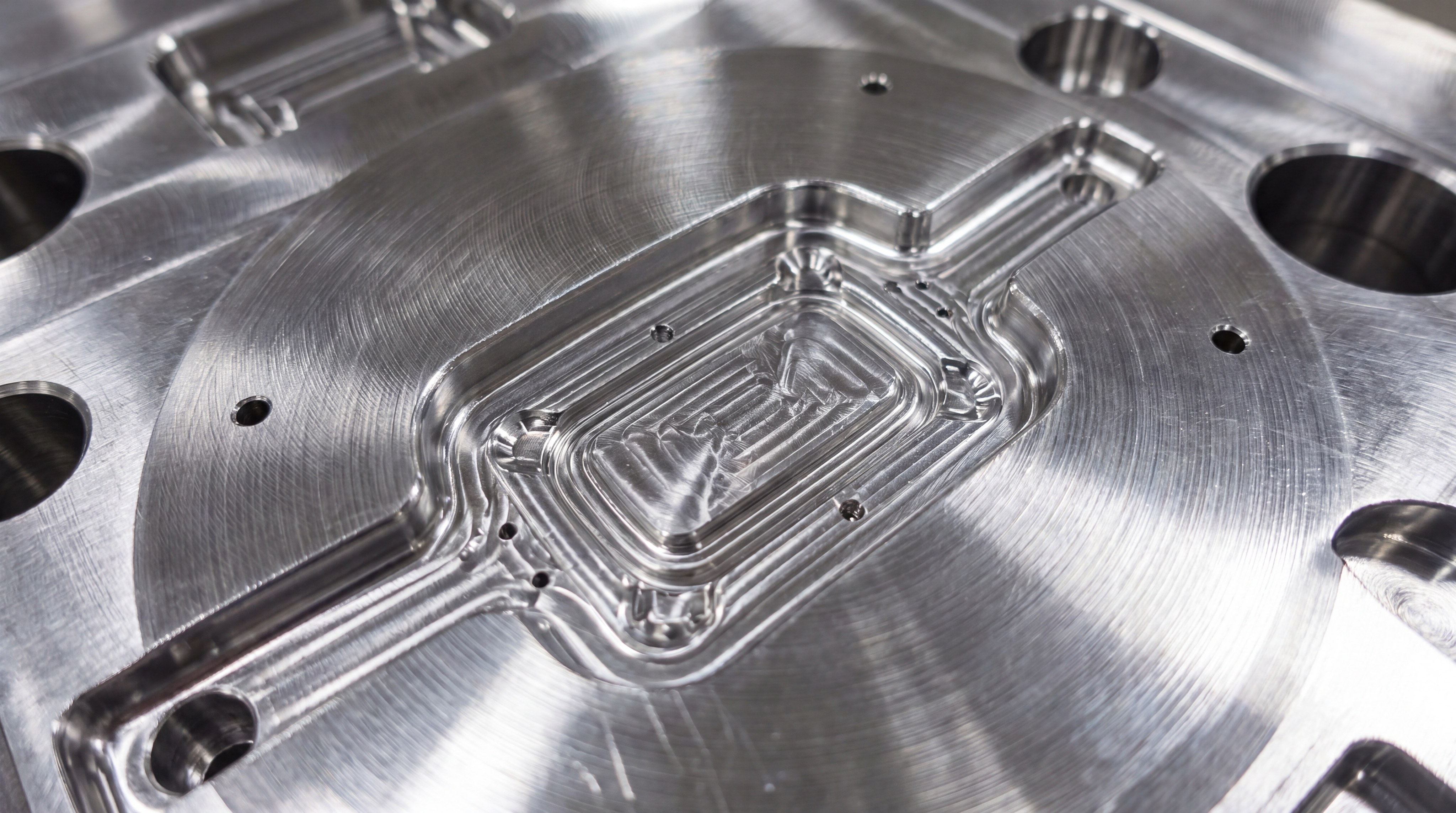
Food-Grade LSR allows you to design complex parts with extremely tight tolerances that are impossible to achieve with traditional compression molding. You need this precision to ensure that seals, valves, and gaskets perform correctly under mechanical stress.
Can It Achieve Complex Geometries?
The low viscosity of liquid silicone allows it to flow easily into thin-walled sections and intricate details. This capability means you can integrate multiple functions into a single molded part, reducing your assembly costs.
The reality is:
- Flash-less molding reduces post-processing.
- High repeatability across millions of cycles.
- Support for micro-molding applications.
Key Takeaway: Advanced tooling design enables you to create sophisticated food-handling components that are both functional and easy to clean.
| Precision Metric | LSR Capability |
|---|---|
| Tolerance | +/- 0.05mm or better |
| Wall Thickness | As thin as 0.25mm |
| Surface Finish | High-gloss to soft-matte |
Evaluate these metrics when reviewing your technical drawings to determine if LSR injection molding is the right fit for your design.
Can You Use It in Cleanrooms?
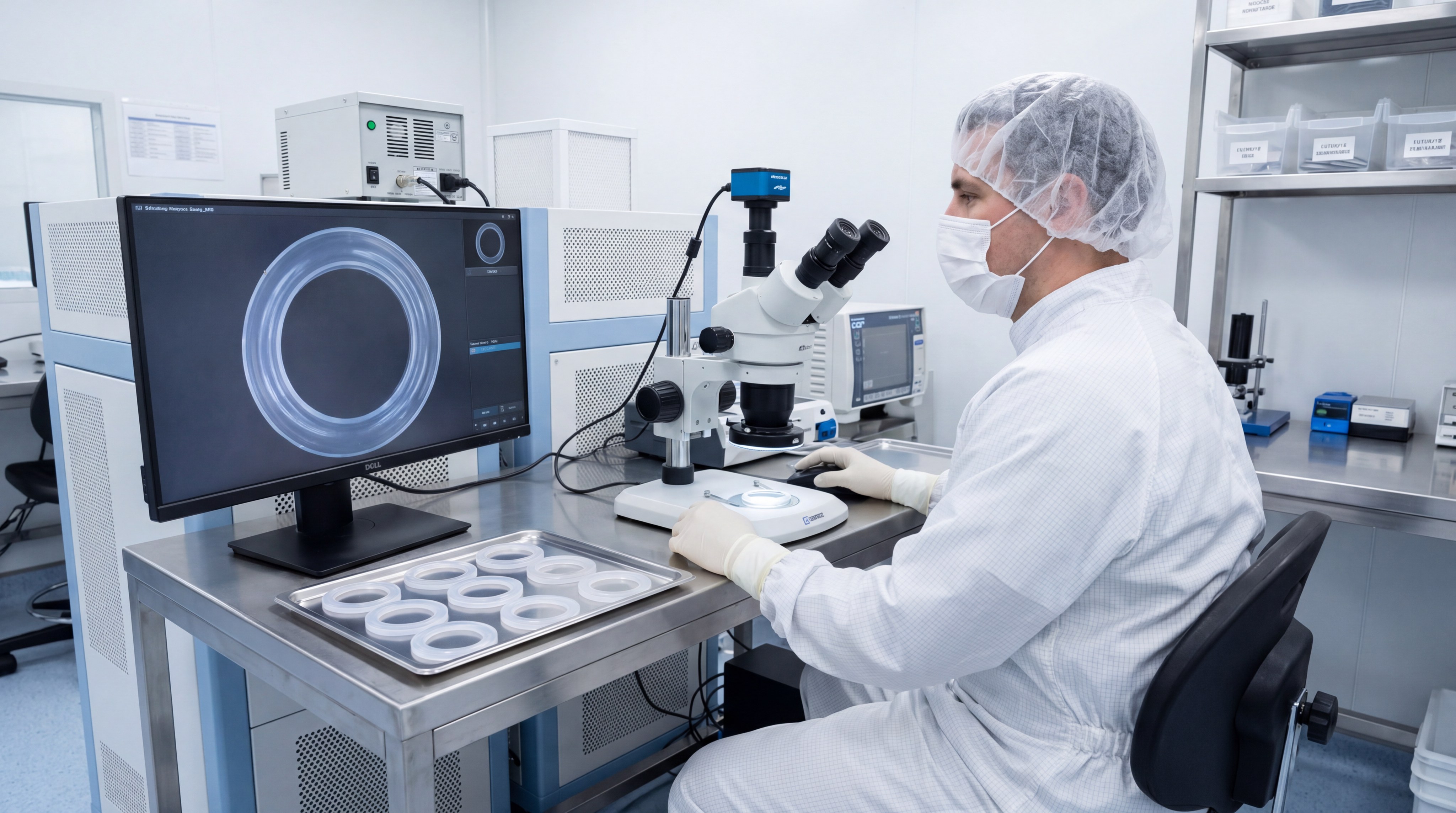
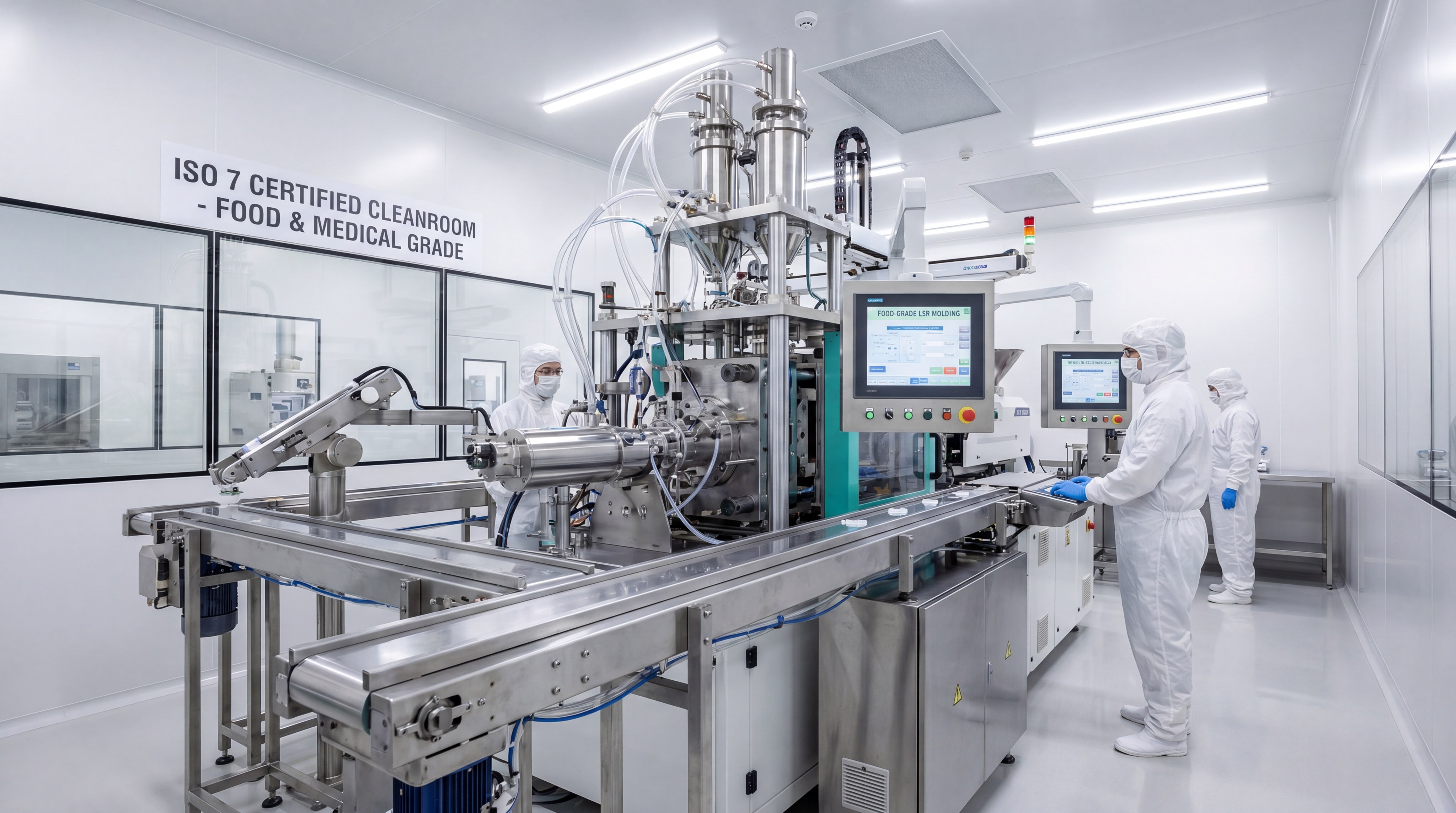
Food-Grade LSR production often takes place in ISO-certified cleanroom environments to eliminate the risk of airborne particulates contaminating the silicone. You will find this especially important for high-purity Industry solutions where even a speck of dust can compromise a seal’s integrity.
Why Is Contamination Control Vital?
In food processing, any foreign material embedded in a silicone gasket can become a breeding ground for bacteria. Cleanroom manufacturing ensures that every part is produced, inspected, and packaged in a controlled atmosphere.
Here’s the deal:
- Prevents dust and hair contamination.
- Utilizes Automated Optical Inspection (AOI).
- Maintains strict hygiene protocols for staff.
Key Takeaway: Cleanroom environments provide an extra layer of safety, ensuring your parts are physically clean and chemically pure.
| Quality Control | Purpose |
|---|---|
| ISO 7 Cleanroom | Removes airborne particles |
| CCD Inspection | Detects surface imperfections |
| Post-Baking | Removes residual volatiles |
This analysis guide helps you verify if your manufacturer’s facility is equipped to handle sensitive food and medical grade requirements.
Where Is This Technology Applied?
Food-Grade LSR is the backbone of modern food-handling equipment, found in everything from household kitchens to large-scale industrial plants. You see this material used wherever hygiene and durability are the top priorities for Baby Care and kitchen products.
Is It Used in Food Processing?
Industrial food plants use silicone for pump diaphragms, valves, and tubing because it can withstand aggressive cleaning chemicals. These parts must remain flexible over thousands of cycles without cracking or degrading.
Think about it:
- Brewing and dairy equipment seals.
- Coffee maker internal gaskets.
- High-volume baking mats and molds.
Key Takeaway: The versatility of LSR makes it the ideal material for both consumer-facing products and behind-the-scenes industrial machinery.
| Application Sector | Common Products |
|---|---|
| Consumer | Spatulas, Lids, Ice Trays |
| Industrial | O-rings, Pump Diaphragms |
| Appliances | Blender Seals, Valve Seats |
Use this sector breakdown to identify potential areas where upgrading to LSR could improve your product’s performance and safety.
How Does It Benefit Baby Care?
Food-Grade LSR is the preferred material for infant products because of its incredible softness and hypoallergenic properties. You can trust that this material is bite-resistant and won’t release any harmful substances when a child uses it daily.
Are Silicone Nipples Safe?
LSR nipples are engineered to mimic the natural feel of skin while remaining strong enough to resist tearing. Because they are heat-stable, you can sterilize them in boiling water repeatedly without the material becoming brittle.
The bottom line:
- BPA, Phthalate, and Latex free.
- Soft texture is gentle on gums.
- Easy to clean and sterilize.
Key Takeaway: For the most vulnerable consumers, LSR provides a non-toxic, durable, and comfortable solution that parents trust.
| Baby Product | Material Advantage |
|---|---|
| Bottle Nipples | Mimics natural feel; soft |
| Pacifiers | High tear strength |
| Teethers | Non-toxic; bite-resistant |
This guide ensures that your baby products meet the highest possible safety and comfort benchmarks for the infant care market.
What Are the Cost Benefits?
Food-Grade LSR injection molding might have higher initial tooling costs, but the long-term efficiency often results in a lower total cost of ownership. You benefit from faster cycle times and significantly reduced material waste compared to traditional rubber molding.
Does It Reduce Material Waste?
By using cold runner systems, the silicone in the distribution channels remains liquid and can be reused or minimized. This is a major advantage over hot runner systems where the “scrap” material is cured and must be thrown away.
The reality is:
- High cavitation molds increase output.
- Low labor costs due to automation.
- Reduced secondary finishing requirements.
Key Takeaway: High-volume production efficiency allows you to scale rapidly while keeping your per-unit costs competitive.
| Efficiency Factor | Economic Impact |
|---|---|
| Cycle Time | Higher units per hour |
| Automation | Lower labor overhead |
| Cold Runners | Drastic scrap reduction |
Use this economic analysis to justify the investment in LSR tooling for your high-volume product lines.
How to Select the Right Manufacturer?
Food-Grade LSR success depends on choosing a partner who offers in-house mold making and 24-hour engineering support. You need a manufacturer that understands Design for Manufacturing (DFM) to optimize your part for the injection process.
Does the Factory Offer DFM Support?
A professional manufacturer will review your drawings early to suggest improvements in wall thickness and draft angles. This proactive approach prevents costly mold modifications later and ensures a smoother transition to mass production.
Here’s the deal:
- In-house tooling speeds up iterations.
- ISO 9001 certification ensures quality.
- Transparent material sourcing is vital.
Key Takeaway: A reliable partner provides more than just molding; they offer the engineering expertise needed to bring your product to market safely.
| Selection Criteria | Minimum Requirement |
|---|---|
| Experience | 10+ Years in LSR |
| Tooling | In-house mold shop |
| Quality | ISO Certified Facility |
Follow these criteria to vet potential suppliers and ensure they have the technical depth to handle complex food-grade projects.
Frequently Asked Questions
- Can I use food-grade LSR for microwave-safe containers?
Yes, it is naturally heat-resistant and does not degrade or release harmful chemicals when exposed to microwave radiation. - What is the best way to verify FDA compliance?
Always request a formal Certificate of Analysis (COA) from the manufacturer and verify their ISO registration status. - Can I get a custom color for food-grade parts?
Yes, food-safe pigments can be added during the injection process to match any specific Pantone color you require. - Can I sterilize these parts in boiling water?
Absolutely, LSR’s high thermal stability allows for repeated sterilization without loss of physical properties. - What is the best material for baby bottle nipples?
Liquid Silicone Rubber (LSR) is the industry standard due to its purity, softness, and durability.
Conclusion
Food-grade LSR injection molding is the definitive solution for brands that refuse to compromise on consumer safety and product precision. By leveraging high-purity materials and advanced automation, you can eliminate chemical risks and deliver durable, high-performance products to the market. At HuaLin Silicone, we are dedicated to solving your manufacturing challenges through factory-direct excellence and rigorous quality control. To protect your brand and ensure your next project meets global safety standards, please contact us today for a comprehensive DFM review and a customized quote.