You print patterns or logos on silicone products by using In-Mold Decoration (IMD), a technique that embeds a pre-printed film directly into the material during the molding process. Many manufacturers struggle with traditional surface printing methods that peel, fade, or wear off after minimal use. This lack of durability creates a poor user experience and makes your brand look cheap in a competitive market. By integrating a Silicone Product logo using IMD, you ensure a high-resolution, permanent finish that withstands harsh environments and daily wear.
What is in-mold decoration for silicone parts?
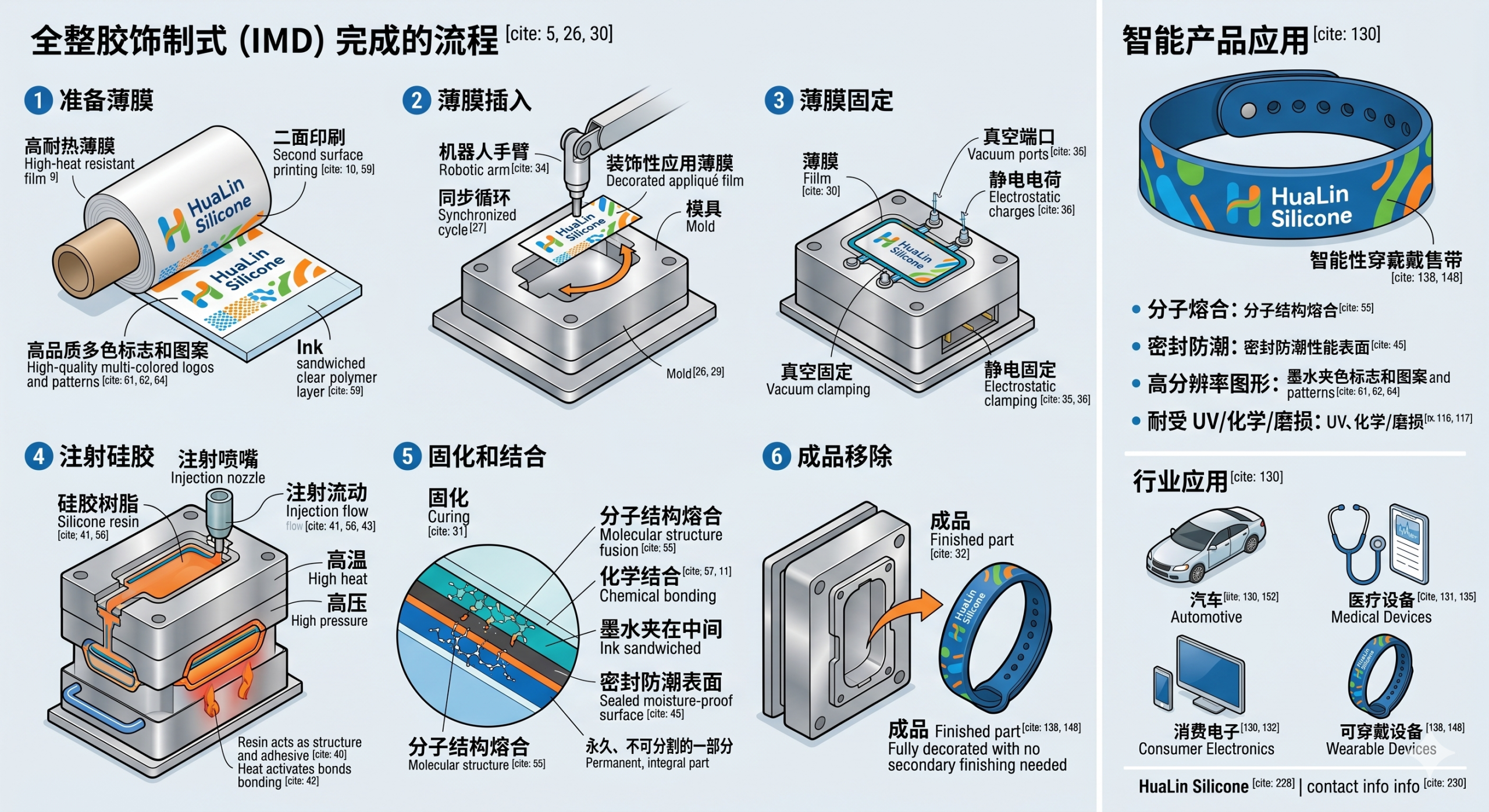
In-mold decoration (IMD) is a specialized manufacturing process where a decorated film is placed inside a mold cavity and encapsulated by silicone resin during the molding cycle. This method ensures that your Silicone Product logo becomes a permanent, integral part of the finished component rather than a surface-level addition.
What is the technical definition of IMD?
Think of it this way: IMD is a fusion process. It involves a polymer carrier, often on a reel-to-reel device, that carries multiple versions of a design to be integrated into the molding workflow.
- High-heat resistant films are used as carriers.
- Graphics are printed on the “second surface” of the film.
- The silicone material bonds chemically or mechanically to the film.
This technical approach allows for a single-step production of fully decorated parts. It effectively replaces metal forms, painting, and pad printing with a more durable solution.
How does IMD differ from traditional labeling?
Here is the deal: Traditional labeling is a post-mold process, while IMD happens during the mold cycle. While stickers or pad printing are applied to the exterior after the product is cooled, IMD creates a sealed surface.
- IMD labels cannot be peeled off without destroying the part.
- Post-mold labels are susceptible to chemical wear.
- IMD offers tighter precision tolerances for complex designs.
This difference is critical for products that face frequent cleaning or abrasion. You get a higher quality finish that maintains its aesthetic appeal over long-term use.
| Feature | In-Mold Decoration (IMD) | Traditional Labeling |
|---|---|---|
| Durability | Permanent / Integral | Surface Level / Peels |
| Process Steps | Single Step | Multiple Steps |
| Graphic Detail | High Resolution / 3D | Variable / Limited |
| Chemical Resistance | Excellent | Poor to Moderate |
Analysis: IMD streamlines production by merging decoration and molding, resulting in a more resilient and visually superior product compared to secondary application methods.
Key Takeaway: IMD transforms the decoration from a vulnerable surface layer into a permanent component of the silicone part’s structure.
How does the in-mold decoration process work?
The process works by positioning a pre-printed film into the mold cavity where it is subsequently covered by injected silicone material. Ensuring the precision of your Silicone Product logo requires a synchronized cycle of film placement, mold closing, and material curing.
What are the primary steps in the cycle?
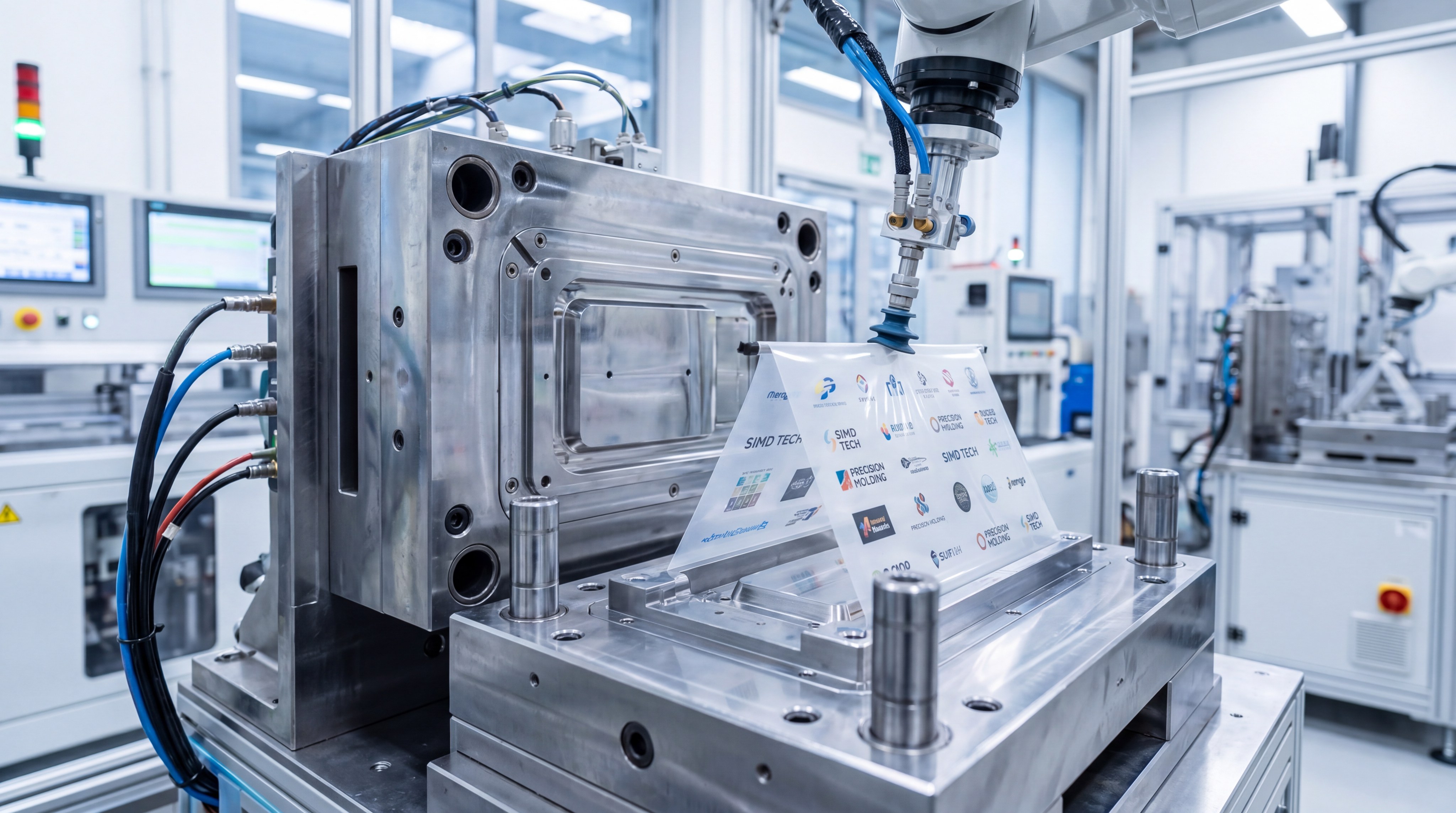
It all starts with the film preparation. The pre-printed label is inserted into the open silicone mold and held firmly in place using vacuum ports or electrostatic charges.
- Insertion of the decorated appliqué film.
- Injection of compatible silicone resin.
- Curing of the material to encapsulate the film.
Once the mold opens, the part is removed fully decorated. This removes the need for any secondary finishing or post-production printing.
How are pre-printed films positioned?
But that’s not all. The positioning is handled by high-precision robotic arms to ensure the patterns align perfectly with the mold geometry.
- Vacuum ports provide a tight seal against the mold wall.
- Electrostatic charges prevent the film from shifting.
- Matched metal dies help form rigid films for 3D shapes.
Accurate positioning prevents graphics from warping during the injection phase. This is essential for achieving the tight tolerances required in high-end consumer electronics.
What role does resin injection play?
Here is the secret: The resin acts as both the structural material and the adhesive agent. When the silicone is injected, it flows behind or over the decorated film, permanently embedding it into the molded part.
- Heat from the resin activates the bonding process.
- Pressure ensures the film conforms to the mold texture.
- The cooling phase locks the graphic into the substrate.
This creates a completely sealed surface that is impervious to moisture. It results in a highly durable, eye-catching part that provides a great user experience.
| Step | Action | Outcome |
|---|---|---|
| Film Placement | Robotic or Manual Insertion | Precise alignment of graphics |
| Clamping | Vacuum or Static Charge | Film remains stable during flow |
| Injection | Resin Flow and Heat | Permanent encapsulation of logo |
| Curing | Controlled Cooling | Integrated, high-strength bond |
Analysis: The synergy between the film’s carrier properties and the silicone’s thermal bonding creates a unified part that cannot delaminate.
Key Takeaway: Success in IMD depends on the precise control of film stability and material temperature during the injection cycle.
How to apply a Silicone Product logo using IMD?
You apply a logo by printing the design onto a film substrate and then molding it directly into the silicone body. This technique ensures your Silicone Product logo remains vibrant and sharp even after years of heavy use or exposure to cleaning agents.
How is the logo permanently embedded?
Make no mistake: The logo becomes part of the molecular structure of the part. Because the silicone is injected at high pressure while the film is in the mold, the two materials fuse together.
- Chemical bonding occurs at the interface.
- The logo is protected by a clear polymer layer.
- Wear and tear occurs on the film, not the ink.
This “second surface” printing means the ink is sandwiched between the carrier and the silicone. This provides unmatched resistance to abrasion and fading.
Can multi-colored patterns be integrated?
The answer is a resounding yes. Since the decoration is first printed on a flat film, you can use sophisticated digital or screen-printing techniques that aren’t possible on a curved silicone surface.
- Supports full-color gradients and photo-realistic images.
- Allows for unique textures and metallic effects.
- Enables multiple designs on a single continuous film reel.
This flexibility allows you to create high-quality, 3D graphics that differentiate your product from competitors. It effectively removes many of the limitations of traditional pad printing.
| Capability | IMD Logo Application | Traditional Pad Printing |
|---|---|---|
| Color Complexity | Unlimited (CMYK + Spot) | Limited (Layer by Layer) |
| 3D Geometry | Follows Complex Curves | Limited to Flat or Simple Arcs |
| Surface Protection | Built-in Overlay | Exposed to Environment |
| Resolution | Photo-realistic | Screen-mesh Dependent |
Analysis: IMD is the superior choice for complex branding because it leverages flat-surface printing technology before applying it to a three-dimensional part.
Key Takeaway: Embedding the logo via IMD offers total protection against the environmental factors that typically destroy surface-level prints.
What are the main types of in-mold decoration?
The main types of IMD include film-insert molding and foil in-mold decorating, which differ based on how the decorative layer is handled. Selecting the right method for your Silicone Product logo depends on your production volume and the complexity of your part’s geometry.
How does film-insert molding function?
Let’s look at the details: Film-insert molding involves printing on a rigid or semi-rigid substrate which is then formed into a 3D shape before molding. This “insert” is placed into the tool, and the silicone is injected behind it.
- Images are printed on flat sheets first.
- The sheet is thermoformed to match the mold’s contour.
- The formed insert becomes the outer shell of the product.
This process is widely used in industries requiring high durability and complex contouring. It is particularly effective for wood-grained panels or telephone headsets.
What are the unique features of foil decorating?
Here is the deal: Foil in-mold decorating uses a thin carrier film that transfers the decoration to the part without leaving the film behind. The carrier is usually on a reel-to-reel device that moves through the mold.
- Only the ink and a thin protective layer remain.
- The process is highly automated for mass production.
- It allows for rapid changes in design without stopping the line.
This technique is excellent for high-volume runs where a thin, lightweight decoration is preferred. It provides sophisticated and highly detailed decoration with minimal material thickness.
| IMD Type | Substrate Used | Final Result |
|---|---|---|
| Film-Insert | Rigid/Semi-rigid Film | Substrate remains part of the product |
| Foil IMD | Thin Transfer Foil | Only decoration transfers to the resin |
| 3D IML | Thermoformed Film | Highly contoured, wrap-around graphics |
Analysis: While film-insert molding adds structural protection, foil decorating is optimized for speed and high-detail transfer in high-volume environments.
Key Takeaway: Your choice between film-insert and foil IMD should be driven by the degree of 3D contouring and the required surface thickness.
Why is a Silicone Product logo best made with IMD?
IMD is the best choice because it provides unmatched durability, high-resolution graphic capabilities, and significant long-term manufacturing efficiencies. Using this method for your Silicone Product logo ensures that your branding stays intact for the life of the product, regardless of the environment.
How does IMD enhance brand visibility?
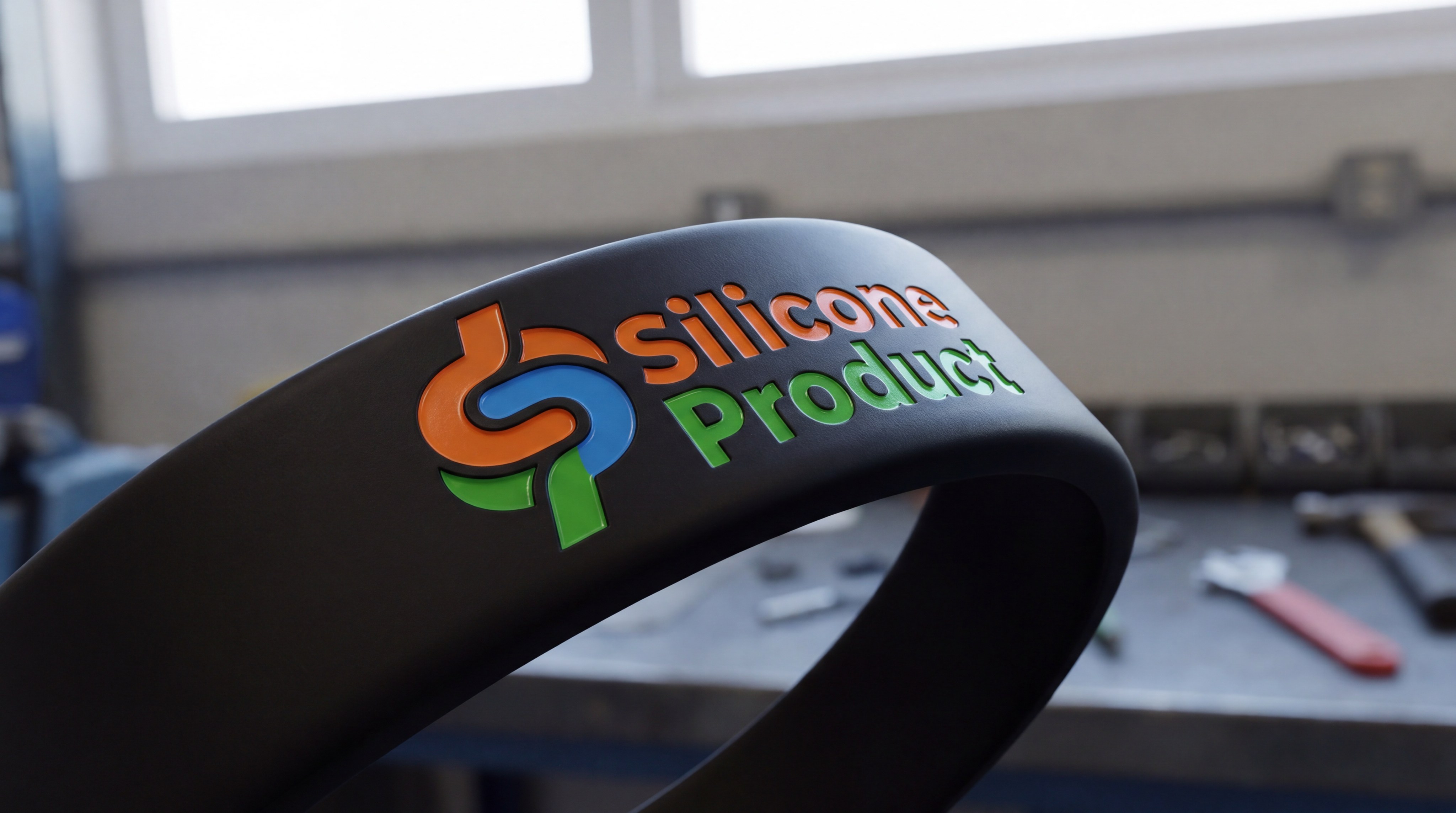
It’s actually quite simple: IMD allows for vibrant, photo-realistic graphics that are impossible with other methods. Because you print on a flat film before molding, you can achieve incredible detail and color accuracy.
- Vibrant colors that don’t wash out.
- Ability to include windows, lenses, and embossing.
- Integration of unique surface textures and effects.
The end result is an elegant, high-quality finish that captures attention. It creates a premium feel that resonates with discerning B2B and retail customers alike.
Does this process offer better long-term cost efficiency?
You might be surprised to learn that while tooling is more expensive, the unit cost often drops. By producing a finished part directly from the press, you eliminate multiple post-processing steps.
- Reduction in work-in-progress (WIP) inventory.
- Elimination of secondary labor for labeling or painting.
- Lower scrap rates due to integrated quality control.
The “less is more” philosophy holds true here; combining the form and decoration into one step reduces the chance of errors. Over a high-volume production run, these savings are substantial.
| Benefit | Impact on Business |
|---|---|
| Durability | Reduces warranty claims and returns |
| Efficiency | Shortens the total manufacturing cycle |
| Design | Allows for premium product differentiation |
| Waste | Minimizes inventory of undecorated parts |
Analysis: The higher initial investment in IMD tooling is quickly offset by the reduction in labor and the enhancement of the product’s market value.
Key Takeaway: IMD is a strategic investment that pays off through superior brand longevity and streamlined factory operations.
What are the pros and cons of IMD technology?
The pros of IMD include extreme durability and design flexibility, while the cons involve high initial tooling costs and a more complex setup. When planning your Silicone Product logo, you must weigh the benefits of a premium finish against the capital requirements of the technology.
What are the top advantages for product durability?
Here is the bottom line: The label becomes an integral part of the piece and cannot be removed without destroying the part. This makes it ideal for products used in harsh or high-touch environments.
- Resistance to UV light, chemicals, and abrasion.
- Completely sealed surface prevents dirt buildup.
- Anti-bacterial or anti-scratch coatings can be added.
This level of protection ensures that instructional text or branding remains legible throughout the product’s lifespan. It is the gold standard for durability in silicone manufacturing.
What are the challenges regarding tooling and machinery costs?
But here is the catch: For IMD to be efficient, it requires a well-designed and properly constructed mold. This is a complex engineering task that demands a significant upfront investment.
- Accurate mold design for film placement is expensive.
- Requires specialized injection or compression machines.
- Logistics and vendor sourcing for films can be complicated.
Because of these factors, IMD is generally not recommended for very small prototype runs unless the final product requires it. It is a process built for scale and long-term stability.
| Pros | Cons |
|---|---|
| High-quality 3D graphics | High initial tooling costs |
| Elimination of post-molding steps | Expensive specialized machinery |
| Permanent, unremovable branding | Complex development and logistics |
| UV and chemical resistance | Higher skill level required for operators |
Analysis: IMD is a specialized technology that offers incredible product benefits but requires a sophisticated manufacturing partner to manage the initial complexity.
Key Takeaway: While the “entry fee” for IMD is higher, the results are unmatched for products requiring permanent, high-fidelity decoration.
Where is IMD used across different industries?
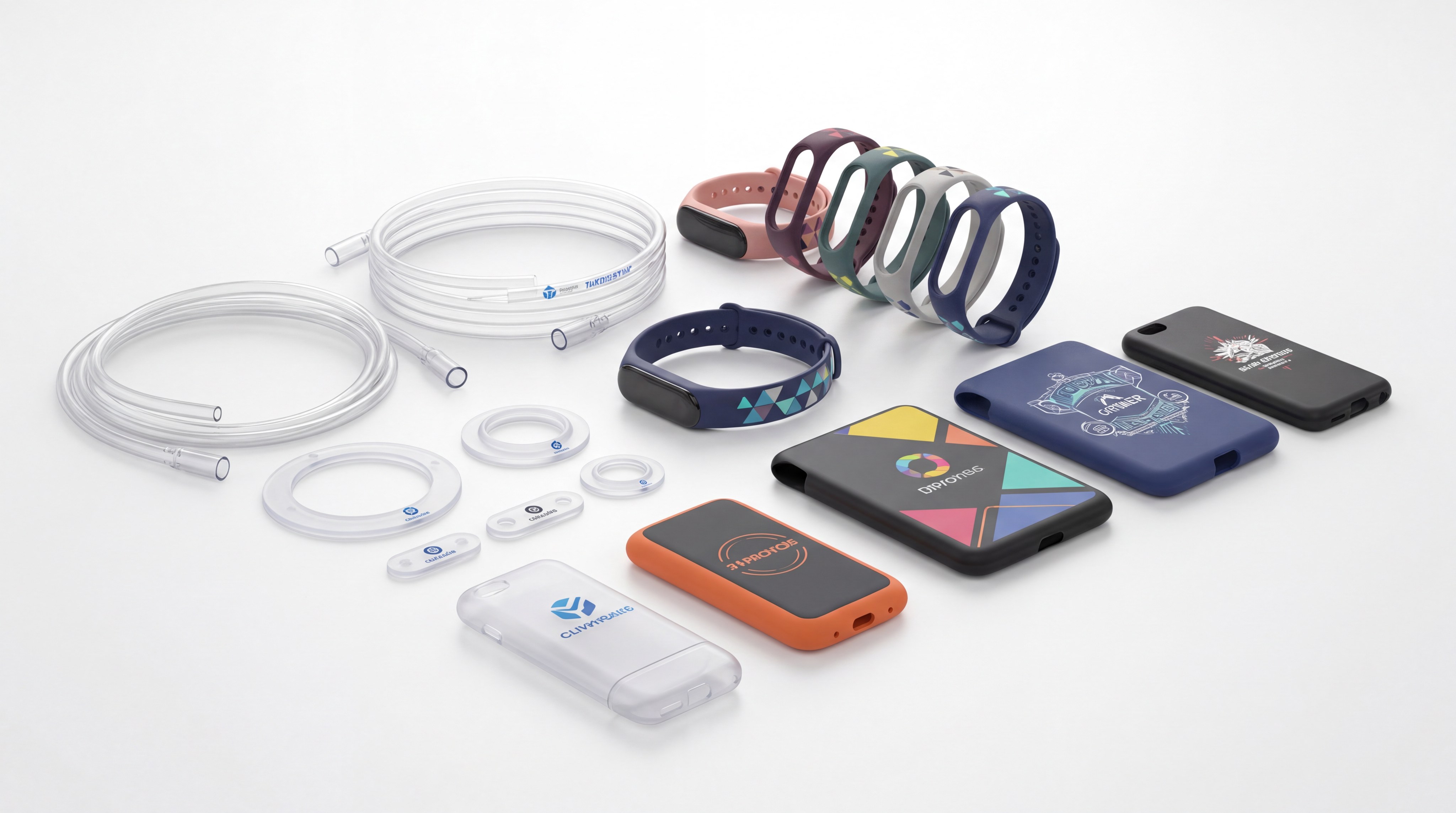
IMD is utilized across the automotive, medical, consumer electronics, and baby care sectors to provide high-quality branding and functional graphics. Whether it is a safety warning on a medical device or a decorative Silicone Product logo on a wearable, IMD provides the necessary durability.
How does IMD benefit medical-grade silicon parts?
Medical environments are notoriously tough on printed markings due to constant sterilization. IMD provides a solution because the labels are encapsulated and cannot harbor bacteria or peel off during cleaning.
- Markings remain legible after repeated autoclave cycles.
- Smooth surfaces are easier to disinfect.
- Biocompatible films ensure patient safety.
This makes it perfect for surgical handles, diagnostic equipment interfaces, and wearable monitors. It ensures critical information stays visible when it matters most.
Why is IMD popular for smart wearable products?
Wearables are in constant contact with sweat, lotions, and environmental pollutants. IMD allows designers to integrate complex patterns and logos into watch straps and sensor housings without risk of wear.
- Vibrant, fashion-forward designs are possible.
- Soft-touch coatings can be integrated during molding.
- Logos won’t fade from skin contact or sun exposure.
This technology allows brands to differentiate their products in a crowded market with high-end aesthetics. It provides a premium user experience for human-machine interface applications.
How is it applied to baby care and protective sleeves?
In the baby care industry, safety and cleanliness are paramount. IMD is used on silicone bibs, mats, and toys to create fun, colorful designs that are 100% food-safe and won’t flake off.
- Non-toxic inks are sealed away from the child.
- Designs survive countless dishwasher cycles.
- Provides a high-contrast visual that aids in development.
For protective sleeves on industrial tools or phones, IMD adds an extra layer of shock absorption and style. It combines functional protection with permanent branding.
| Industry | Primary IMD Application | Key Requirement |
|---|---|---|
| Medical | Equipment Handles / Interfaces | Sterilization Resistance |
| Wearables | Smartwatch Straps | Sweat & UV Durability |
| Baby Care | Bibs / Teethers | Food-safe / Non-toxic |
| Automotive | Interior Panels / Knobs | High-precision Aesthetics |
Analysis: The versatility of IMD allows it to meet the strict regulatory and durability standards of diverse industries, from medical safety to consumer fashion.
Key Takeaway: If your product operates in a high-stress environment, IMD is likely the best choice for maintaining its branding and usability.
Which substrate fits your Silicone Product logo?
The choice of substrate depends on the flexibility of the part, the complexity of the design, and the required adhesion between the film and the silicone. Choosing the wrong carrier for your Silicone Product logo can lead to delamination or poor graphic quality.
How do you choose between rigid and semi-rigid substrates?
The decision is usually based on the shape of your final product. Rigid substrates are best for flatter surfaces or parts that need extra structural support.
- Rigid inserts are printed and then placed in the mold.
- Semi-rigid films are better for thermoforming into 3D shapes.
- Robotic arms handle semi-rigid films more easily in high-speed cycles.
Matched metal dies are often used with semi-rigid films to ensure they conform exactly to the mold. This ensures a seamless look for your brand’s iconography.
Which film materials ensure the best ink-to-silicone adhesion?
Here is the deal: Compatibility is everything. You need a polymer carrier that can withstand the heat of the molding process while bonding securely to the silicone resin.
- Polycarbonate (PC) is a common choice for its heat resistance.
- Polyester (PET) offers excellent clarity and chemical resistance.
- Specialized coatings are often applied to improve bonding.
Without proper adhesion, the film will peel away from the silicone over time. Always test the material interface before committing to a full production run.
| Substrate Property | Rigid Insert | Semi-rigid Film |
|---|---|---|
| 3D Contouring | Low to Moderate | High (via Thermoforming) |
| Structural Support | High | Low |
| Handling Method | Manual or Robotic | Reel-to-reel or Robotic |
| Primary Use | Flat Panels / Buttons | Curved Casings / Wraps |
Analysis: Substrate selection is a balancing act between the mechanical requirements of the part and the aesthetic goals of the decoration.
Key Takeaway: Proper material matching between the substrate and silicone is the most critical factor in preventing part failure.
What materials are required for silicone IMD?
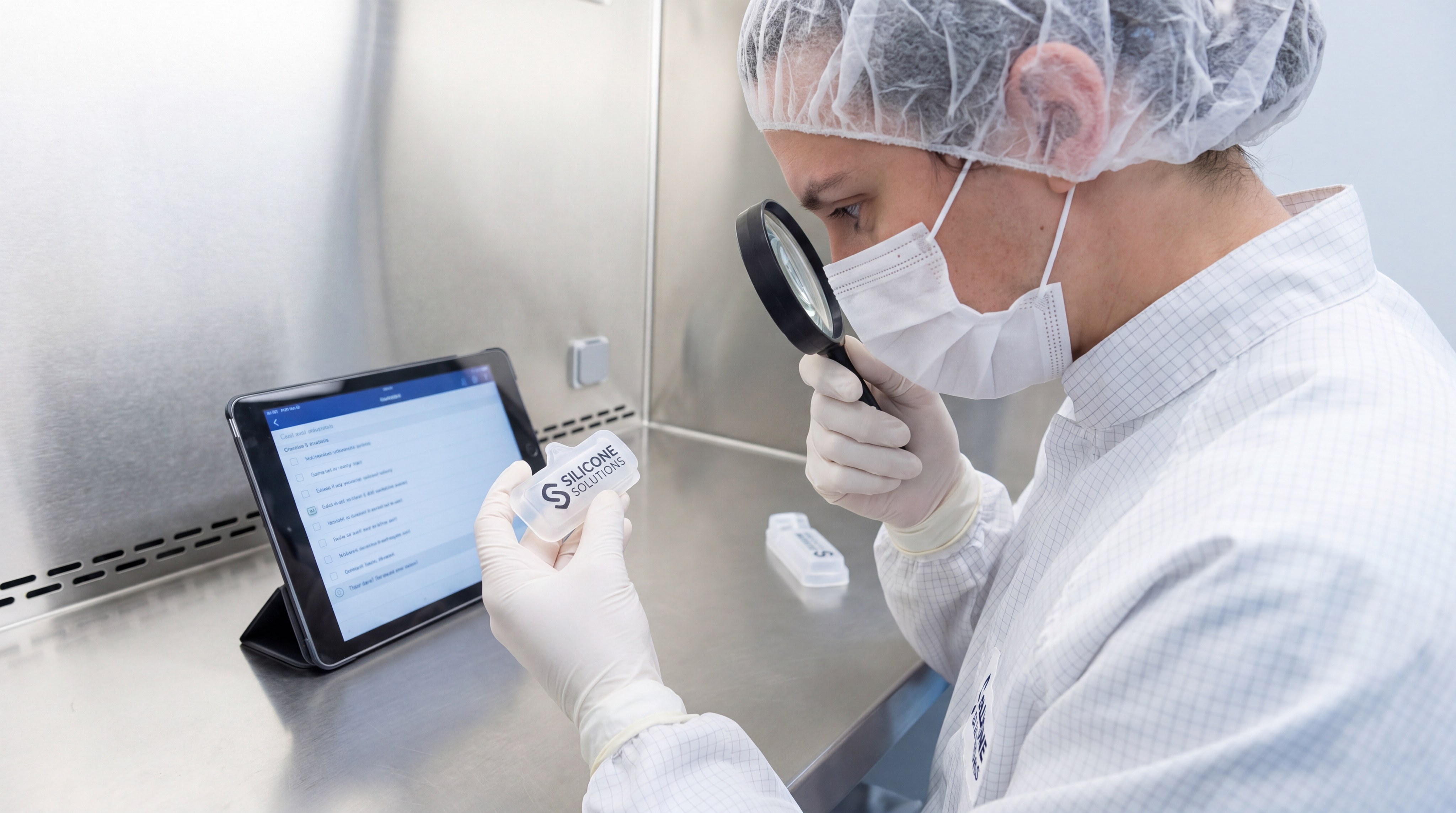
To perform silicone IMD successfully, you need high-heat compatible films, specialized inks, and precision molding equipment. Using the right materials for your Silicone Product logo ensures that the graphics do not warp or discolor under the intense heat and pressure of the molding press.
What specific equipment is essential for the IMD workflow?
The four processes required are printing, forming, trimming, and molding. You cannot achieve professional results without a synchronized set of machines designed for this purpose.
- Precision silk-screen or digital printing presses.
- Thermoforming machines for 3D film shaping.
- High-pressure silicone injection or compression molds.
- Robotic systems for film placement and part removal.
This integrated setup allows for the production of fully decorated resin parts right in the mold. It is a highly specialized environment that requires expert oversight.
Which inks and films are compatible with high-heat molding?
But that’s not all. The inks used must be able to withstand temperatures of up to 200°C without bleeding or shifting.
- Solvent-based or UV inks with high thermal stability.
- Inks that remain flexible enough to stretch during forming.
- Films that don’t shrink or melt during the silicone cure.
Standard printing inks will fail in an IMD environment. You must source materials specifically rated for in-mold applications to ensure long-term quality.
| Required Material | Function | Key Feature |
|---|---|---|
| IMD Foil/Film | Carries the graphic | High heat resistance |
| Thermal Inks | Provides the color | Non-bleeding at high temps |
| Silicone Resin | Forms the part body | Chemical compatibility with film |
| Precision Mold | Shapes the product | Integrated vacuum/static ports |
Analysis: High-quality IMD is a chemistry-driven process that relies on specialized materials designed to survive extreme thermal environments.
Key Takeaway: Never substitute standard printing materials for IMD-rated components, or you will face high scrap rates and poor durability.
How to achieve high-quality Silicone Product logo?
Achieving a high-quality result requires a combination of precise engineering, premium material selection, and advanced printing techniques. When your Silicone Product logo is executed correctly, it provides a vibrant, photo-realistic graphic that is integrated seamlessly into your product.
What techniques ensure vibrant 3D graphic output?
Here is the deal: Advanced printing technology now allows for textures and effects that were previously impossible. Designers can use colors, textures, and even backlighting to make the logo pop.
- Use of secondary surface printing for depth.
- Incorporation of 3D effects through thermoforming.
- Adding metallic or pearlescent inks for a premium look.
These techniques remove the frustrating aspects of post-mold decorating, especially on curved parts. The result is an elegant, photo-realistic graphic that improves your product’s market value.
How to maximize resistance against abrasion and chemicals?
But wait, there’s more. You can add specialized coatings during the in-mold process to enhance the graphic overlay’s resistance to harsh factors.
- Anti-scratch topcoats for high-wear areas.
- Chemical-resistant layers for medical or industrial use.
- UV-stable additives to prevent yellowing in the sun.
Combining the form and decoration eliminates a layer that can affect performance. This “less is more” approach ensures the paint won’t wear off and the label won’t peel.
| Quality Factor | Technique to Improve | Result |
|---|---|---|
| Clarity | High-resolution digital printing | Sharp, crisp details |
| Adhesion | Surface treatment of films | No delamination over time |
| Vibrancy | Pigment-rich thermal inks | Deep, lasting colors |
| Tactile Feel | In-mold embossing | Premium, 3D surface texture |
Analysis: High-quality IMD is the result of meticulous planning where every layer—from the ink to the final coating—is optimized for the product’s end-use.
Key Takeaway: Success in IMD comes from treating the decoration as a core engineering feature rather than a secondary cosmetic addition.
Frequently Asked Questions About In-Mold Decoration
Can I use IMD for small batches of silicone products?
No, IMD is typically not cost-effective for small runs due to the high initial cost of designing and constructing accurate molds. It is best suited for medium to high-volume production where the unit cost can be amortized across many parts.
What’s the best way to ensure my logo doesn’t peel off?
In-mold decoration is the best method because the logo becomes an integral part of the plastic or silicone piece and cannot be removed without destroying the part. Unlike traditional stickers or pad printing, the bond is structural.
How do I know if my design is suitable for IMD?
Generally, if your design requires high resolution, multiple colors, or 3D contouring, it is an excellent candidate for IMD. Our experts can review your drawings and provide DFM (Design for Manufacturing) suggestions to ensure success.
Can I include advanced features like backlighting with IMD?
Yes, you can incorporate unique features like windows, lenses, and even in-mold electronics for capacitive touch or indicators. This flexibility is one of the primary reasons IMD is used in smart devices and automotive interfaces.
What’s the best material for the IMD carrier film?
Polycarbonate and Polyester are the most common choices because they offer a balance of clarity, heat resistance, and chemical stability. The best choice depends on your specific product’s flexibility and environmental exposure requirements.
Looking for a partner to elevate your brand with permanent, high-quality graphics? At HuaLin Silicone, we specialize in high-precision IMD and LSR manufacturing with over 15 years of expertise. From rapid prototyping to mass production, our ISO-certified facility is ready to handle your most complex projects. Contact us today to get a free DFM review and see how we can transform your silicone products with professional branding.