
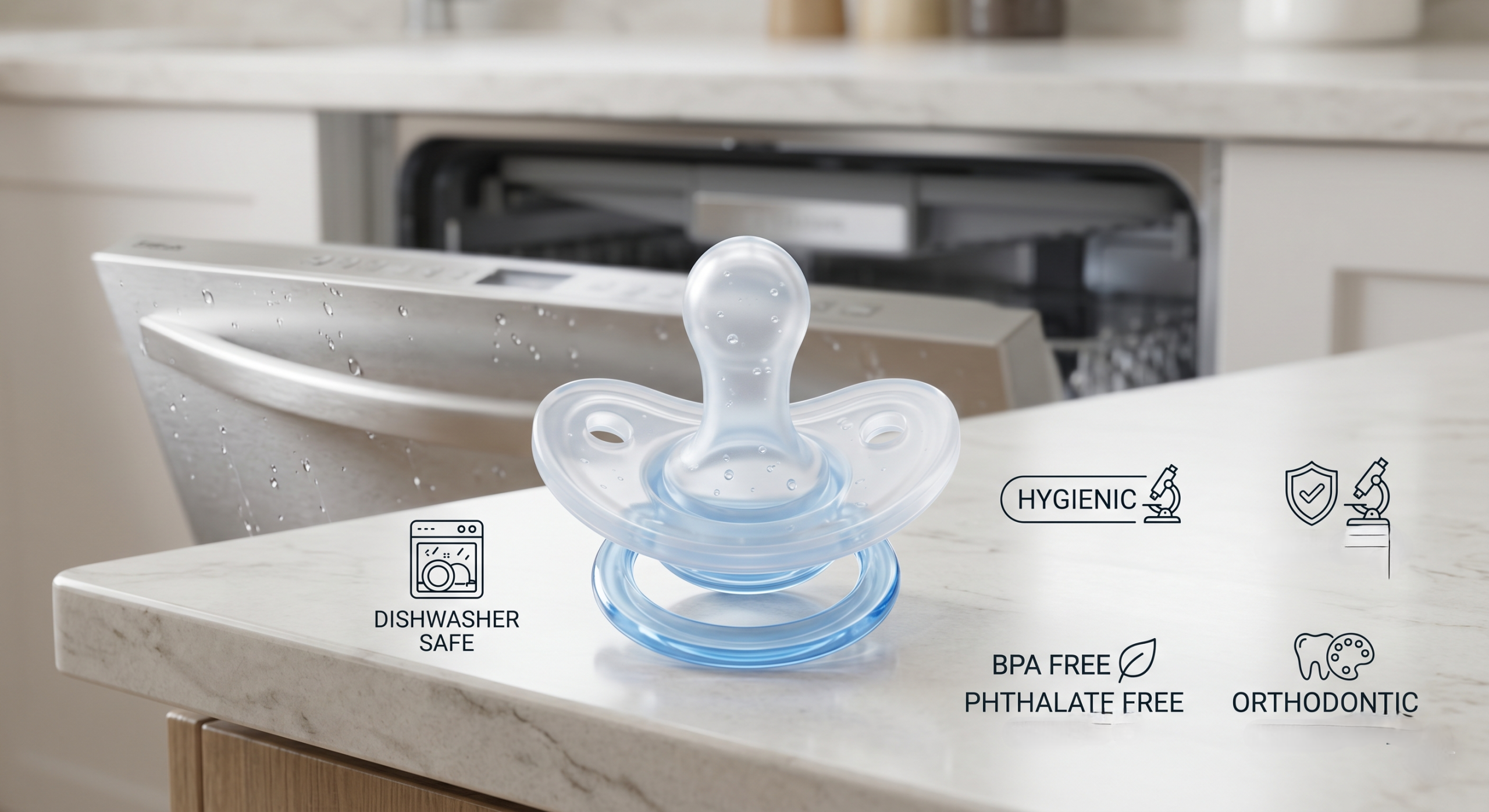
Dishwasher-safe silicone pacifiers provide an effortless sanitization method that modern parents need to ensure infant hygiene. You often find yourself trapped in a relentless cycle of hand-washing and boiling baby gear to keep germs at bay. This tedious process wastes your precious time and can lead to uneven cleaning results that worry any caregiver. By choosing Dishwasher-Safe Silicone Pacifiers, you can automate your cleaning routine while maintaining the highest medical-grade safety standards.
Why is silicone the best choice for baby pacifiers?
Silicone is the ideal material because its non-porous surface naturally resists the growth of harmful bacteria and mold. When you use Dishwasher-Safe Silicone Pacifiers, you are choosing a hypoallergenic material that remains stable under extreme temperatures. Think about it: traditional plastics often degrade, but silicone stays smooth and safe for your infant’s mouth.
Why is medical-grade silicone safer for infants?
Medical-grade silicone is engineered to be chemically inert and free from common allergens found in latex. This ensures that no harmful substances interact with your baby’s sensitive skin or gums during use.
- Hypoallergenic properties reduce skin irritation.
- Inert material prevents chemical leaching.
- Medical-grade standards ensure batch consistency.
Does silicone resist bacterial growth naturally?
The smooth, non-porous surface of silicone makes it difficult for bacteria or fungi to find a foothold. Unlike porous materials, it does not trap moisture or organic matter that could lead to contamination.
- Non-porous texture simplifies the cleaning process.
- Resistance to mold ensures long-term hygiene.
- Smooth finish prevents biofilm accumulation.
Key Takeaway: Silicone’s non-porous surface provides a hygienic, hypoallergenic environment that far surpasses plastic or latex alternatives.
| Feature | Silicone Benefit | Impact on Baby |
|---|---|---|
| Surface Texture | Smooth and non-porous | Prevents mold/bacteria buildup |
| Material Origin | Inorganic and stable | No allergic reactions |
| Purity | BPA/Phthalate-free | Safe for long-term soothing |
This comparison highlights how material selection directly influences the safety and health outcomes for your infant.
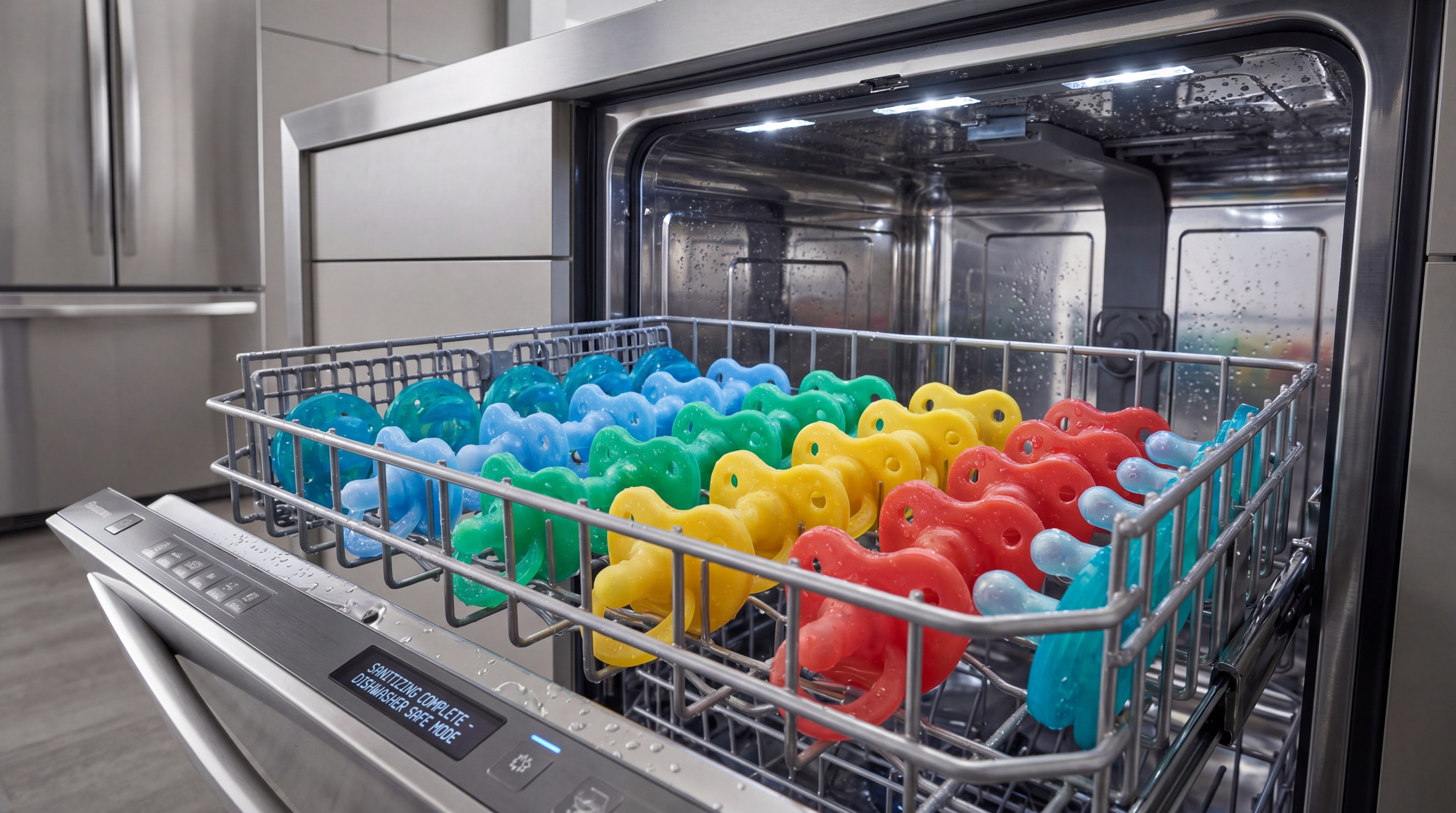
How does dishwasher-safe silicone improve daily life?
Auto-cleaning functionality removes the manual burden of sanitization, allowing you to spend more quality time with your child. High-quality Dishwasher-Safe Silicone Pacifiers are designed to withstand the rigorous heat of a standard machine cycle. Here is the kicker: you no longer have to worry about the internal mechanics of cleaning every tiny crevice by hand.
Is dishwasher cleaning more effective than hand washing?
Dishwashers utilize high-temperature water and consistent pressure that manual scrubbing simply cannot achieve. This ensures that every surface of the pacifier is reached and thoroughly sanitized by the cleaning cycle.
- High-temperature jets kill resilient germs.
- 360-degree coverage reaches all hidden areas.
- Automated cycles provide consistent results every time.
How much time can parents save with auto-cleaning?
Automating the sanitization process can save you up to fifteen minutes of active labor every single day. Instead of standing over a boiling pot, you can simply load the machine and move on to more important tasks.
- Passive cleaning frees up your schedule.
- No need for specialized boiling equipment.
- Bulk cleaning handles multiple pacifiers at once.
Key Takeaway: High-temperature dishwasher cycles provide consistent sanitization that hand-washing simply cannot match.
| Cleaning Method | Efficiency Level | Time Required |
|---|---|---|
| Hand Washing | Low (Manual errors) | 5-10 Minutes |
| Boiling Water | High (High effort) | 15 Minutes |
| Dishwasher | Exceptional (Automated) | 0 Minutes (Passive) |
The data proves that automated solutions offer superior efficiency while drastically reducing the daily workload for busy families.
Are these pacifiers truly safe for my baby’s health?
These products are completely safe because they are manufactured using food-grade materials that are certified free from BPA, phthalates, and PVC. Investing in Dishwasher-Safe Silicone Pacifiers guarantees that your child is not exposed to toxic chemicals during their most vulnerable stages. Believe it or not: many parents overlook chemical stability, but high-heat resistance prevents any structural breakdown.
Is the material free from BPA and toxins?
Premium silicone products are strictly tested to ensure they contain no industrial chemicals that could harm developmental health. This focus on purity means you can trust the material even during long-term daily usage.
- BPA-free construction protects endocrine health.
- No phthalates or PVC are used in production.
- Non-toxic dyes ensure color safety for oral use.
Can heat-resistant silicone leach chemicals?
Unlike many plastics, silicone remains chemically stable and inert even when exposed to temperatures exceeding 100 degrees Celsius. This prevents any migration of materials from the pacifier into your baby’s mouth during feeding or soothing.
- High thermal stability prevents material leaching.
- Inert properties maintain safety during heat cycles.
- Structural integrity remains constant at high heat.
Key Takeaway: Premium silicone remains chemically inert even when exposed to the intense heat and detergents of a modern dishwasher.
| Safety Check | Silicone Standard | Traditional Material |
|---|---|---|
| Chemical Stability | Remains inert at 200°C | May warp or leach |
| Toxicity | Zero BPA or PVC | Varies by plastic grade |
| Durability | High tear resistance | Prone to cracking |
Maintaining chemical purity under heat is the primary reason why silicone is the gold standard for modern infant care.
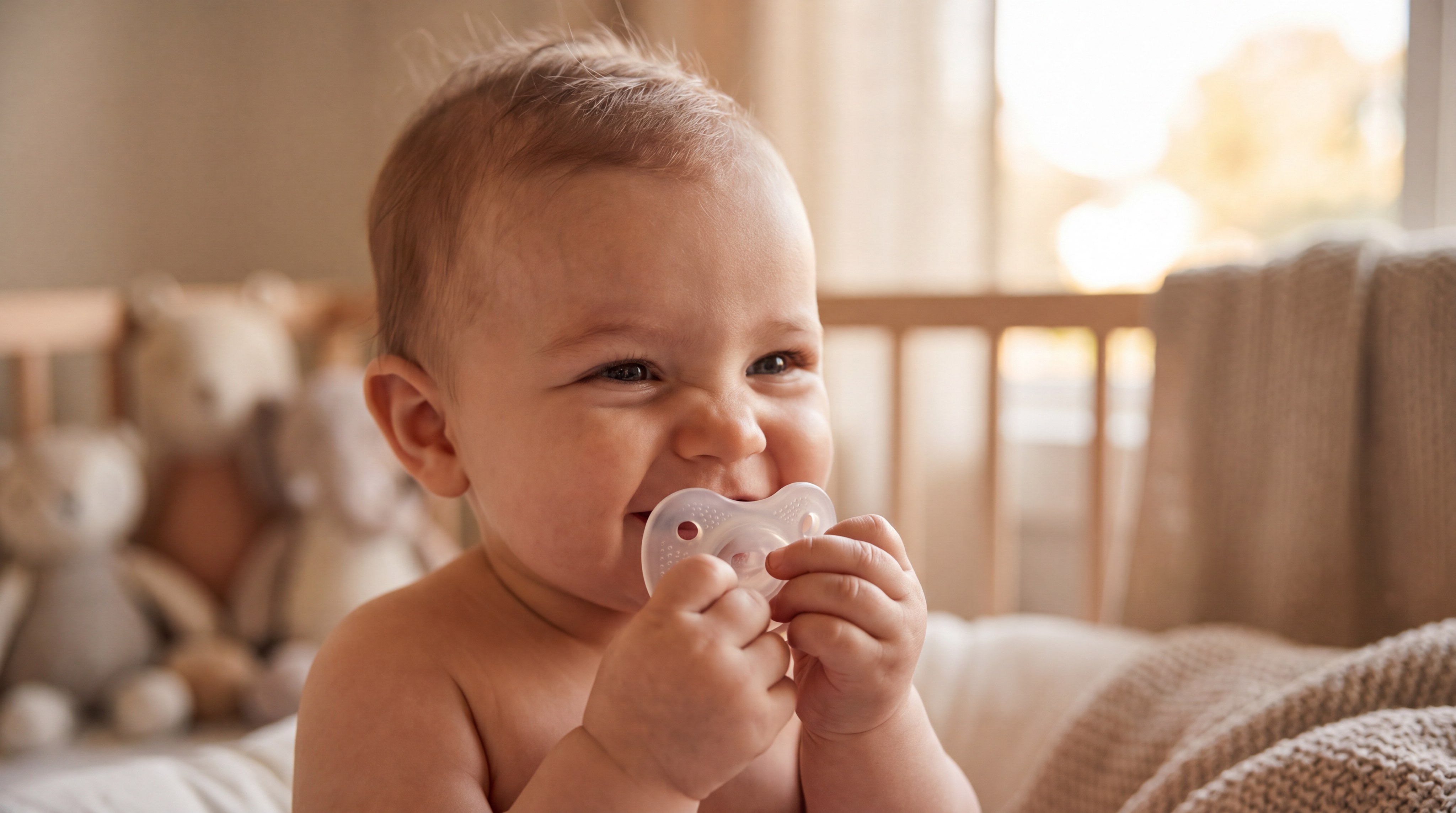
How does the manufacturing process ensure durability?
Durability is achieved through advanced injection molding techniques that create a seamless, single-piece design resistant to tearing. Every batch of Dishwasher-Safe Silicone Pacifiers undergoes rigorous quality checks to ensure they handle repeated mechanical stress. Now, consider this: a single-piece construction eliminates the weak points where traditional pacifiers often break or trap dirt.
How does liquid silicone rubber enhance product quality?
Liquid Silicone Rubber (LSR) injection molding allows for high-precision designs with uniform wall thickness and extreme flexibility. This process results in a product that feels soft to the baby but remains incredibly tough against biting.
- Precision molding creates a consistent feel.
- High tear strength prevents accidental choking risks.
- Uniform material density increases overall lifespan.
Why is in-house mold design critical for safety?
Managing the mold design in-house allows Hualin to control every tolerance and structural detail from the initial concept. This prevents manufacturing defects that could lead to small parts detaching or edges becoming sharp over time.
- Tight tolerances ensure secure component fit.
- Custom mold geometry optimizes infant comfort.
- Quality control starts at the design phase.
Key Takeaway: Precision manufacturing processes ensure that every pacifier is a solid, seamless piece that won’t break apart.
| Process Step | Importance | Quality Result |
|---|---|---|
| LSR Molding | High precision injection | Seamless, smooth finish |
| DFM Review | Design optimization | No weak points in shield |
| Post-Curing | Eliminates volatiles | Maximum material safety |
Integrated manufacturing controls ensure that every unit delivered meets the strict safety standards required for neonatal and infant care.
What makes silicone superior to traditional rubber?
Silicone is superior because it does not become sticky, brittle, or develop an unpleasant odor after repeated washing cycles. When you choose Dishwasher-Safe Silicone Pacifiers, you avoid the rapid degradation typical of natural rubber products. The reality is: while rubber is natural, it cannot compete with the longevity and heat resistance of modern silicone.
Does silicone resist heat better than natural rubber?
Natural rubber begins to break down at relatively low temperatures, often becoming tacky or losing its shape when boiled or dishwashed. Silicone can withstand much higher heat levels without any change in its physical properties or texture.
- Superior heat resistance up to 250°C.
- Maintains flexibility after hundreds of washes.
- Will not melt or deform in the dishwasher.
Why does silicone maintain its shape longer?
The molecular structure of silicone is highly stable, which prevents it from stretching out or becoming thin over time. This ensures that the orthodontic shape remains effective throughout the entire lifespan of the product.
- Resistant to permanent deformation from biting.
- Does not expand when exposed to moisture.
- Retains original nipple geometry for months.
Key Takeaway: Unlike natural rubber, which becomes sticky and brittle over time, silicone retains its soft, flexible texture through hundreds of wash cycles.
| Property | Silicone | Natural Rubber |
|---|---|---|
| Heat Resistance | Up to 250°C | Low (Degrades in heat) |
| Scent/Taste | Neutral | Often has rubbery taste |
| Longevity | 6-12 Months | 4-8 Weeks |
This performance gap demonstrates why silicone has become the preferred material for high-durability B2B baby product solutions.
How should you prepare pacifiers for the dishwasher?
Proper preparation involves securing the pacifiers in a top-rack basket to prevent them from falling onto the heating element. You should always ensure your Dishwasher-Safe Silicone Pacifiers are placed in a way that allows water to drain freely from the nipple area. Best of all: taking these few small steps ensures that your investment remains in perfect condition for the long haul.
What is the best way to secure pacifiers in the rack?
Using a specialized mesh basket or a dishwasher-safe pacifier holder prevents the items from being tossed around by high-pressure water jets. This keeps them in the “safe zone” of the dishwasher where heat is most consistent and less intense.
- Mesh baskets prevent loss into the filter.
- Top-rack placement protects from direct heat.
- Proper spacing allows for complete sterilization.
Should you rinse pacifiers before the wash cycle?
A quick rinse with warm water helps remove any sticky residue or visible debris before the machine cycle begins. This prevents food particles from becoming baked onto the silicone surface during the drying phase.
- Pre-rinsing improves overall wash efficiency.
- Removes saliva and milk proteins early.
- Prevents debris from clogging the machine.
Key Takeaway: Proper placement in a top-rack basket ensures pacifiers receive maximum water flow without being damaged by heating elements.
| Preparation Step | Recommended Action | Reason |
|---|---|---|
| Initial Rinse | Remove visible debris | Improves wash efficiency |
| Placement | Top rack only | Protects from high heat |
| Containment | Use a mesh basket | Prevents falling into filter |
By following these simple guidelines, you maximize the hygienic benefits of automated cleaning while protecting the material integrity.
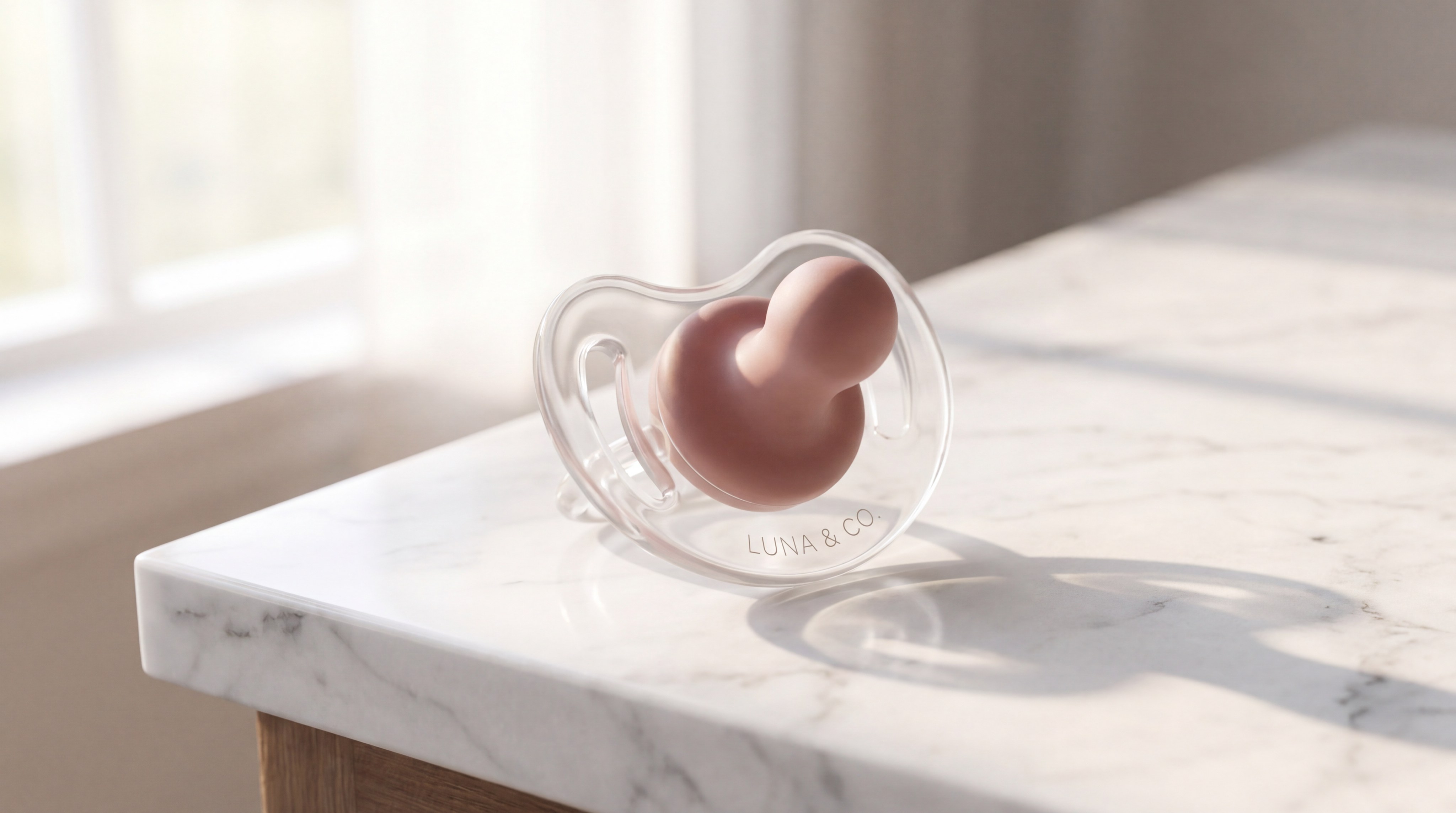
Can silicone pacifiers help with oral development?
Yes, advanced silicone designs are specifically engineered to support the natural development of a baby’s palate and jaw. By utilizing Dishwasher-Safe Silicone Pacifiers, you provide a soothing experience that accommodates the physiological needs of a growing infant. Listen closely: the material’s ability to flex under pressure mimics the natural movements of breastfeeding better than rigid alternatives.
How do nipple shapes mimic natural breastfeeding?
The flexibility of silicone allows the nipple to flatten and stretch against the palate, similar to how a mother’s breast behaves during nursing. This promotes a natural sucking reflex and reduces the likelihood of nipple confusion in breastfed babies.
- Dynamic flexibility mimics natural nursing.
- Soft texture feels familiar to infants.
- Shape promotes proper tongue positioning.
Does silicone support healthy jaw alignment?
Orthodontic designs use a narrow neck and a contoured shield to minimize the pressure placed on developing teeth and gums. This helps prevent misalignment issues that can arise from using bulky or improperly shaped soothing devices.
- Narrow neck reduces dental interference.
- Contoured shield prevents skin irritation.
- Flexibility reduces pressure on the jawbone.
Key Takeaway: Orthodontic silicone designs are specifically engineered to flex and move, supporting the natural development of a baby’s palate and teeth.
| Design Feature | Function | Benefit |
|---|---|---|
| Symmetrical Nipple | Fits at any angle | Reduced pressure on gums |
| Ventilation Holes | Airflow through shield | Prevents skin irritation |
| Thin Neck | Minimal tooth gap | Supports jaw alignment |
Choosing an orthodontic silicone design ensures that soothing today does not lead to dental complications tomorrow.
What quality standards should you look for in silicone?
You should prioritize certifications like ISO 9001 and FDA registration to ensure the highest safety and consistency. Each unit of Dishwasher-Safe Silicone Pacifiers must meet international benchmarks for material purity and mechanical strength. You might be wondering: how do you verify these claims? Look for manufacturers that provide transparent documentation and material traceability.
What certifications guarantee food-grade safety?
The FDA and LFGB standards are the most common benchmarks that confirm silicone is safe for oral contact. These certifications prove that the material has been tested for chemical migration and toxin presence under various conditions.
- FDA registration ensures US safety compliance.
- LFGB certification meets strict EU standards.
- Material traceability guarantees raw quality.
Why is ISO 9001 certification important for parents?
ISO 9001 signifies that the manufacturer follows a globally recognized quality management system for every product. This means that every pacifier you buy is identical in safety and performance to the last one produced.
- Systematic quality checks for every batch.
- Standardized manufacturing reduces human error.
- Consistent product performance across all units.
Key Takeaway: Always verify that your baby products meet strict safety standards to ensure they are free from industrial contaminants.
| Certification | What it Proves | Parent Peace of Mind |
|---|---|---|
| Food-Grade | Safe for oral contact | Non-toxic ingestion risk |
| ISO 9001 | Process consistency | Every unit is identical |
| Tear Tested | High structural integrity | No choking hazards |
Reliable certifications are the only way to objectively measure the safety and reliability of your infant care products.
When is the right time to replace a silicone pacifier?
A silicone pacifier should be replaced every six to eight weeks or immediately if you notice any visible signs of damage. Even the most durable Dishwasher-Safe Silicone Pacifiers will eventually experience wear after months of intense biting and cleaning. It gets better: regular inspection ensures you catch these issues before they become a potential safety risk.
What are the visible signs of material wear and tear?
You should look for small tears, punctures, or changes in the texture of the silicone nipple during your weekly checks. If the material feels sticky, looks cloudy, or has visible bite marks, it is time for a new one.
- Check for nicks or thinning areas.
- Inspect for any changes in firmness.
- Discard items with visible surface cracks.
Does frequent dishwashing shorten the lifespan?
While silicone is highly resistant to heat, the combination of strong detergents and high-pressure water can cause microscopic wear over many months. Replacing pacifiers regularly accounts for this natural aging process and maintains peak hygiene for your baby.
- Detergents can slowly dull the surface finish.
- Mechanical stress eventually affects elasticity.
- Frequent cycles necessitate proactive replacement.
Key Takeaway: Regular inspection is key; while dishwasher-safe silicone is durable, any signs of puncture or thinning mean it is time for a replacement.
| Warning Sign | Visual Cue | Action Required |
|---|---|---|
| Discoloration | Clouding or yellowing | Monitor closely |
| Tears/Bites | Small nicks in nipple | Replace immediately |
| Material Change | Change in firmness | Replace immediately |
Proactive replacement is a fundamental part of maintaining a safe and healthy environment for your growing infant.

How do you choose the perfect pacifier for your baby?
The best choice depends on matching the nipple size and flow rate to your baby’s current developmental stage. When sourcing Dishwasher-Safe Silicone Pacifiers, you must ensure the shield size is appropriate for their age to prevent skin irritation. To top it off: selecting a reputable B2B partner like Hualin ensures you get expert guidance on custom safety features.
Why is age-appropriateness critical for safety?
A pacifier that is too small for an older infant can become a choking hazard, while one that is too large can interfere with oral development. Following the manufacturer’s age guidelines ensures the shield and nipple are sized perfectly for their jaw.
- Correct sizing prevents accidental swallowing.
- Proper shield fit allows for air circulation.
- Nipple length matches the baby’s palate depth.
How do you find a reliable manufacturer for custom needs?
Look for a factory that offers integrated engineering support, DFM reviews, and a proven track record in the baby care industry. A partner that handles everything from mold making to mass production will provide the best reliability and value.
- Integrated services reduce supply chain risks.
- Engineering support optimizes product safety.
- Proven expertise ensures high quality standards.
Key Takeaway: Selecting the right size and flow rate ensures your baby remains comfortable and safe as they hit new developmental milestones.
| Baby Age | Recommended Size | Nipple Characteristics |
|---|---|---|
| 0-6 Months | Small/Newborn | Softest, smallest shield |
| 6-18 Months | Medium/Universal | Firmer silicone for biting |
| 18+ Months | Large/Toddler | Maximized durability |
Tailoring your selection to the specific needs of the infant ensures maximum comfort and long-term oral health.
Conclusion
Embracing the convenience of silicone technology allows you to solve the common pain points of manual sanitization and material degradation. By choosing high-quality, heat-resistant products, you recap the benefits of automated cleaning without sacrificing the safety of your child. Hualin is dedicated to providing premium, ISO-certified silicone solutions that empower parents and businesses alike to prioritize health and efficiency. We invite you to contact us today to explore our custom manufacturing capabilities and discover how our vision for superior infant care can support your needs.
Frequently Asked Questions
Can I put silicone pacifiers in the dishwasher every day?
Yes, high-quality silicone is designed for daily dishwasher use. Its thermal stability allows it to withstand frequent high-temperature cycles without losing its shape or safety properties.
What is the best temperature for washing silicone pacifiers?
Standard dishwasher settings between 45°C and 70°C are perfectly safe for silicone. Most home machines operate within this range, ensuring a deep clean without damaging the material.
Can I use standard dishwasher detergent on baby products?
While silicone is chemically resistant, it is recommended to use mild, fragrance-free detergents. This ensures no residual scents linger on the nipple, which might bother a baby’s sensitive palate.
Does the dishwasher kill all germs on a pacifier?
A dishwasher using a high-heat or “sanitize” cycle is highly effective at eliminating household bacteria and viruses. This provides a much more clinical level of hygiene than simple tap-water rinsing.
How do I dry pacifiers after the dishwasher cycle?
Place them in a way that allows water to drain out of the nipple naturally. If any moisture remains inside, simply squeeze the nipple firmly a few times to expel it and let it air dry.