
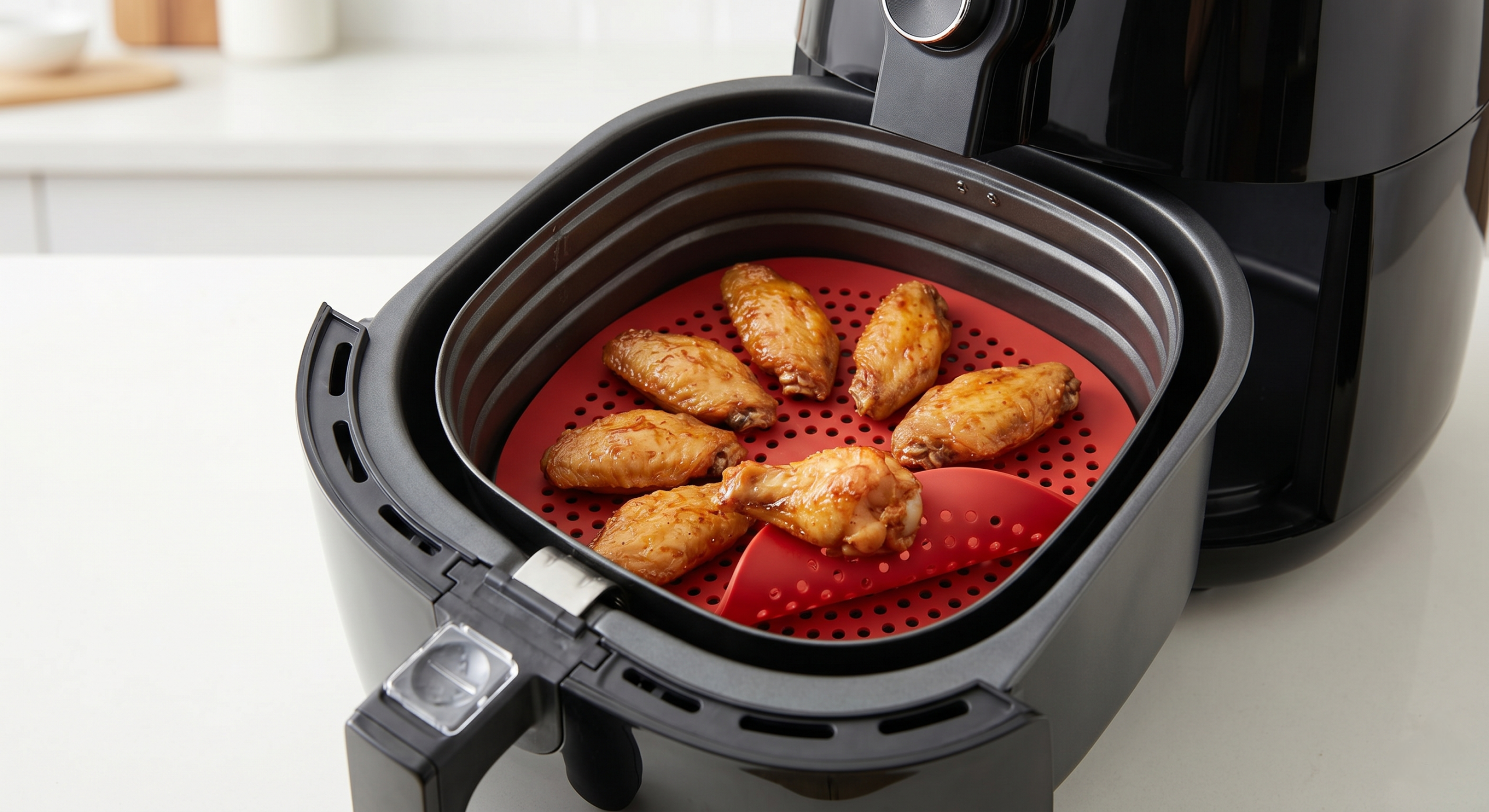
Yes, you can use a silicone mat in an air fryer to protect your basket and simplify cleaning. Imagine spending your evening preparing a perfectly seasoned meal, only to face the grueling task of scrubbing burnt-on grease and food particles from your fryer basket. This tedious maintenance often leads to damaged non-stick coatings and a shortened equipment lifespan. By integrating a high-performance silicone mat manufactured via liquid silicone rubber molding, you eliminate the friction of cleanup while ensuring your cooking surface remains pristine and professional.
Why should you use a silicone mat in your air fryer?
You should use a silicone mat in your air fryer because it provides a durable, non-stick barrier that prevents food from fusing to the metal basket. This accessory acts as a protective shield, absorbing the brunt of high-heat drippings and carbonized oils. By using a mat, you essentially extend the functional life of your appliance’s original components.
Does it save time during the cleaning process?
Using a mat drastically reduces the amount of time you spend maintaining your kitchen equipment. Instead of soaking and scrubbing the bulky basket, you can simply remove the lightweight liner for a quick rinse.
But wait, there’s more:
- It prevents sticky marinades from hardening on the grate.
- It stops small food particles from falling through the holes.
- It eliminates the need for aggressive chemical degreasers.
Can it improve the longevity of your basket?
Frequent scrubbing with abrasive sponges is the primary cause of non-stick coating failure in air fryers. A silicone mat ensures that the basket surface never comes into direct contact with stubborn residues or harsh cleaning tools.
Key Takeaway
A silicone liner is a strategic investment for any high-volume kitchen looking to reduce maintenance overhead and equipment replacement costs.
| Feature | Impact on Efficiency | Result |
|---|---|---|
| Non-stick Barrier | Reduces scrubbing by 80% | Extended Basket Life |
| Protective Layer | Prevents coating scratches | Improved Hygiene |
| Reusability | Eliminates disposable waste | Lower Operating Costs |
Utilizing these accessories transforms a high-maintenance appliance into a streamlined tool for rapid food production.
Is a silicone mat safe for high-temperature air frying?
Yes, a high-quality silicone mat is safe for temperatures reaching up to 450°F (232°C), provided it is made from food-grade industrial silicone molding materials. Platinum-cured silicone is specifically engineered to remain chemically inert and physically stable under the intense heat of convection fans. You can cook with confidence knowing the material will not melt or release odors during standard cycles.
What defines the heat resistance of silicone?
The thermal stability of a silicone mat comes from its robust siloxane backbone. This molecular structure allows the material to expand and contract without losing its shape or integrity during rapid temperature shifts.
Here’s the deal:
- Food-grade silicone withstands constant heat exposure.
- It does not leach chemicals into your ingredients.
- The material remains flexible and easy to handle when hot.
Are there chemical risks with cheap materials?
Lower-grade liners may contain plastic fillers that cannot withstand the 400°F environment of a standard air fryer. Always verify that your silicone mat meets FDA or LFGB standards to ensure a toxin-free cooking environment for your customers or family.
Key Takeaway
Safety is guaranteed when sourcing mats from certified manufacturers who prioritize high-purity raw materials and controlled curing processes.
| Heat Level | Silicone Reaction | Safety Status |
|---|---|---|
| Below 400°F | No change in properties | Fully Safe |
| 400°F – 450°F | Remains stable and inert | Safe for Air Frying |
| Above 500°F | Potential for degradation | Not Recommended |
High-grade silicone remains the industry standard for thermal safety in modern convection cooking applications.
How does a silicone mat affect air circulation?
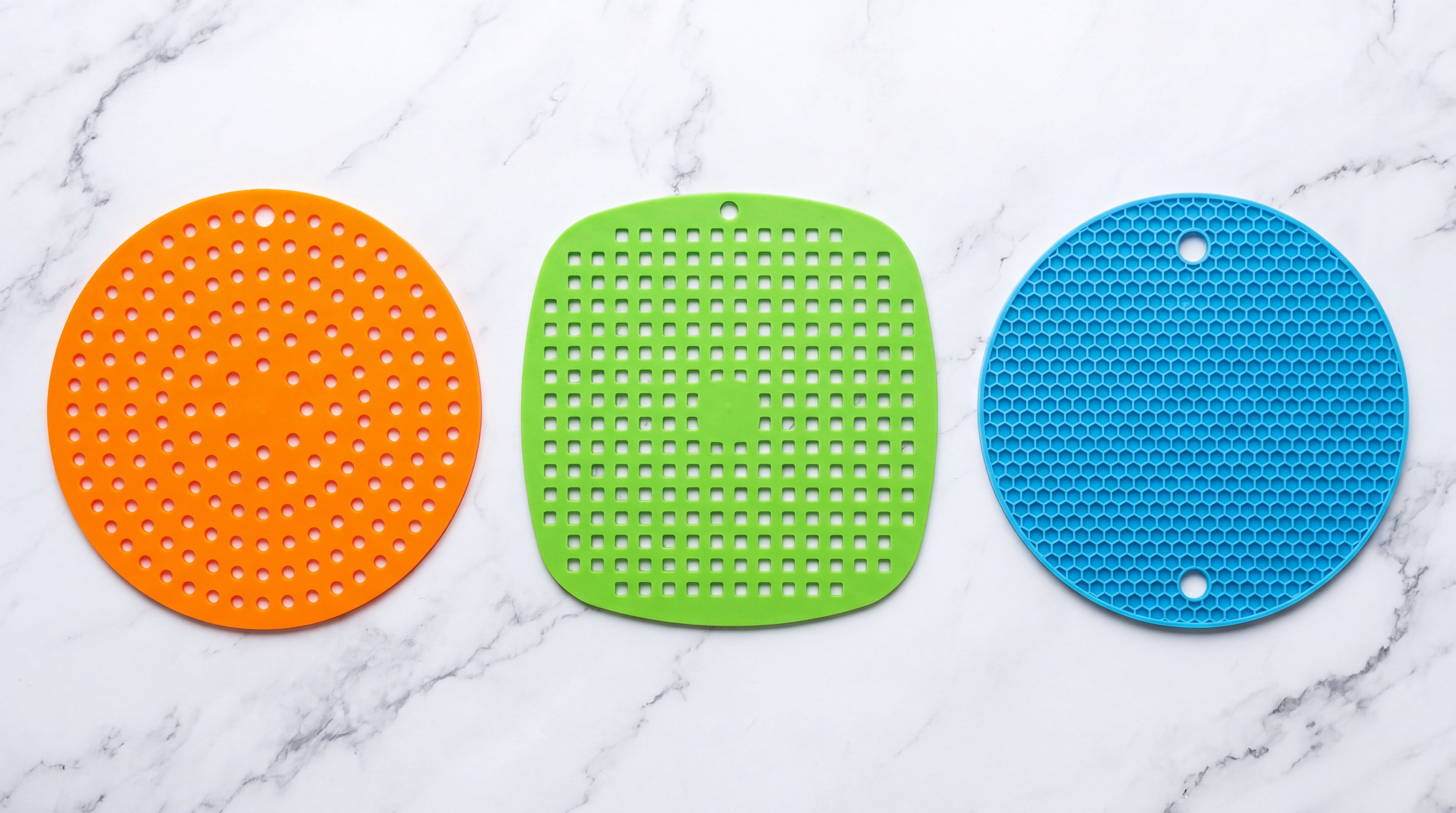
A silicone mat will have a minimal impact on air circulation as long as you choose a perforated design specifically intended for air fryers. These holes allow the high-velocity hot air to pass through the bottom of the food, ensuring a crispy texture. Without these vents, the mat would act as a solid block, leading to soggy results and uneven browning.
Is perforation essential for crispiness?
The entire premise of air frying relies on a 360-degree vortex of heat reaching every surface of your food. A perforated silicone mat facilitates this airflow while still providing the non-stick benefits you require for delicate items.
Think about it:
- Vents ensure the bottom of the food is reached by heat.
- Perforated mats maintain the fryer’s “convection” effect.
- Solid mats are better suited for steaming than air frying.
Where should the mat be placed for best airflow?
You should place the silicone mat flat at the base of the basket, ensuring it does not ride up the side walls. Leaving the side vents clear allows the air to continue its downward spiral, maximizing the efficiency of the unit.
Key Takeaway
Selecting the correct hole pattern is the most critical factor in maintaining the “air fry” quality while using protective liners.
| Design | Airflow Efficiency | Cooking Result |
|---|---|---|
| Perforated Mat | High (95%+) | Crispy and Even |
| Solid Mat | Low (<40%) | Steamed or Soggy |
| Oversized Mat | Obstructed | Uneven Browning |
Properly ventilated mats ensure that you don’t have to sacrifice food quality for the sake of easy cleanup.
Can a silicone mat prevent food from sticking?
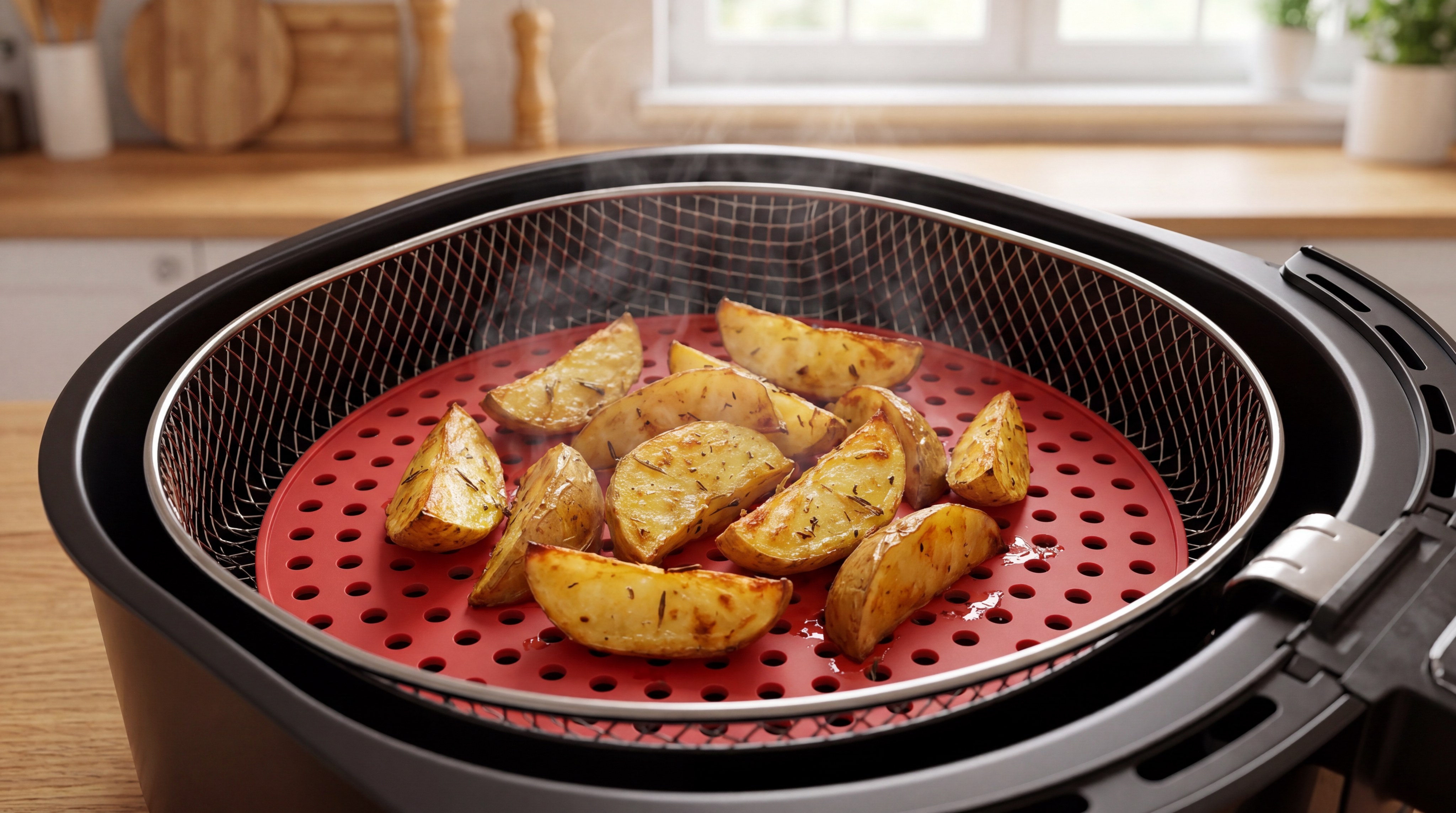
Yes, the inherent surface tension of a silicone mat creates a non-stick environment that is far superior to standard metal grates, especially when produced via the compression molding process. This property prevents proteins and sugars from bonding to the surface, which is vital for delicate foods like fish or marinated wings. You will notice that food releases effortlessly without the need for excessive grease or oils.
Does it help with delicate proteins?
Items like salmon fillets or breaded chicken often tear when they come into contact with a wire basket. A silicone mat provides a smooth, gentle surface that preserves the aesthetic and structural integrity of your high-value ingredients.
But that’s not all:
- Sugary glazes won’t “cement” to the surface.
- Skin-on chicken stays intact during removal.
- Breading remains on the food, not the basket.
Can you reduce oil usage with a mat?
Because the silicone mat is naturally non-stick, you can significantly reduce or even eliminate the use of cooking sprays. This not only makes your meals healthier but also prevents the sticky “gunk” buildup associated with aerosol oils.
Key Takeaway
Using a silicone liner is the most effective way to ensure professional food presentation and easy release every time.
| Food Type | Sticking Risk (No Mat) | Release Ease (With Mat) |
|---|---|---|
| Glazed Wings | Extremely High | Effortless |
| Fish Fillets | High (Tears easily) | Smooth Release |
| Root Veggies | Moderate | Non-stick |
The non-stick performance of high-grade silicone remains unmatched by traditional metal surfaces in high-heat environments.
What is the best way to clean a silicone mat?
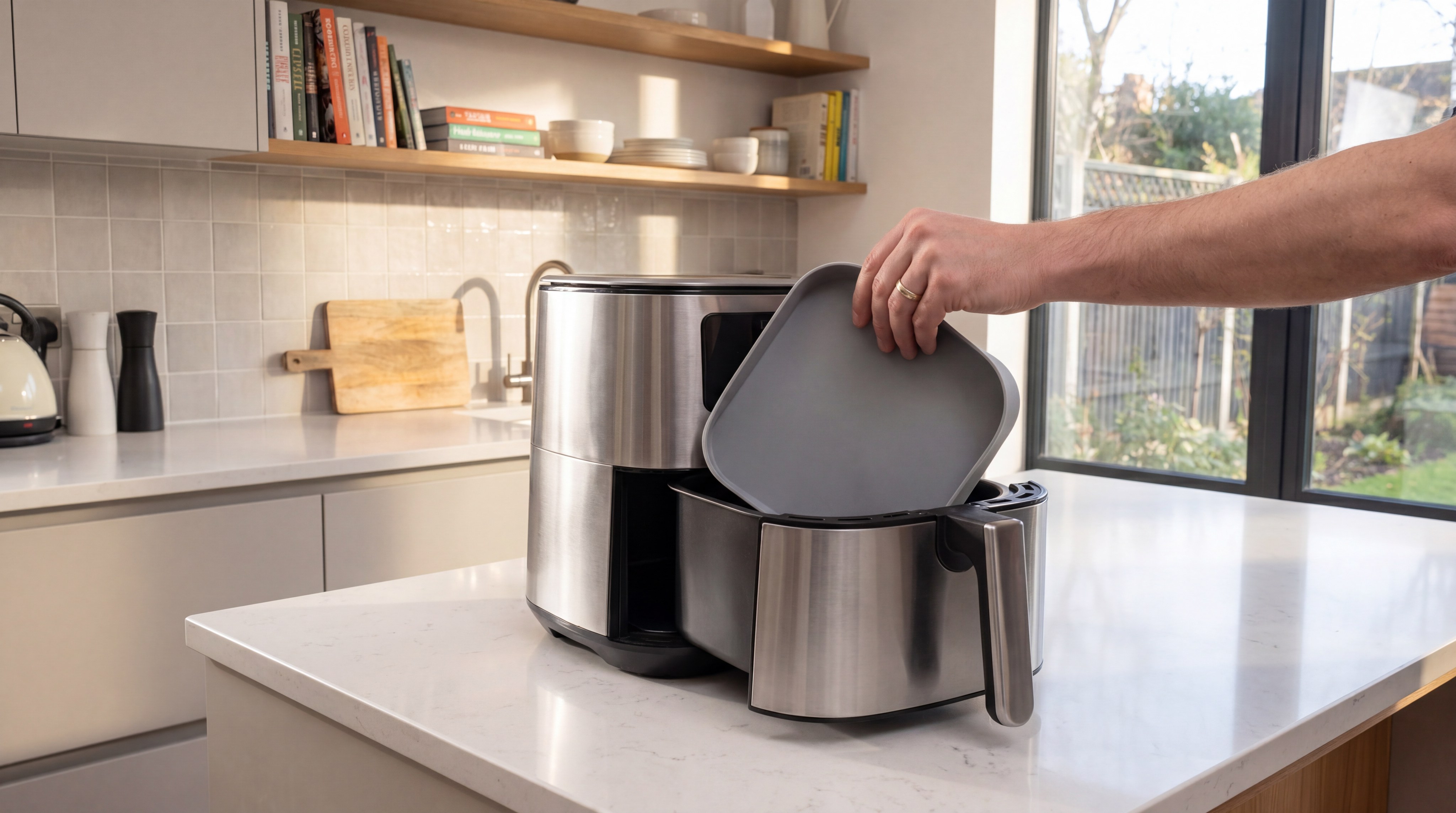
The best way to clean a silicone mat is to place it in the top rack of a dishwasher or wash it with warm, soapy water. Because the surface is non-porous, grease and food residues sit on the surface rather than soaking in. This makes the cleaning process incredibly fast and efficient compared to scrubbing a metal basket.
Is the dishwasher safe for bulk cleaning?
You can safely run a silicone mat through multiple dishwasher cycles without worrying about warping or material degradation. This is ideal for commercial settings where speed and sanitation are paramount for operational success.
You might be wondering:
- Is hand washing faster? For single items, yes.
- Does it require special soap? No, standard detergent works perfectly.
- Will it stain? Highly pigmented spices might cause slight discoloration over time.
How do you handle stubborn grease buildup?
If your silicone mat feels oily after washing, a quick soak in hot water with a grease-cutting soap will restore its original texture. Regularly cleaning the mat prevents the accumulation of old oils that could smoke at high temperatures.
Key Takeaway
The low-maintenance nature of silicone accessories saves labor costs and ensures a more hygienic kitchen environment.
| Method | Effort Level | Time Required |
|---|---|---|
| Dishwasher | Very Low | Cycle Dependent |
| Hand Wash | Low | < 60 Seconds |
| Deep Soak | Moderate | 5 – 10 Minutes |
Simplicity in maintenance is one of the primary drivers behind the rapid adoption of silicone liners in modern kitchens.
Should you choose a silicone mat or parchment paper?
You should choose a silicone mat over parchment paper if you prioritize long-term cost savings, environmental sustainability, and superior liquid silicone rubber molding durability. While parchment paper is a one-time use item that contributes to waste, a single silicone liner can be reused hundreds of times. Furthermore, silicone mats are heavier and won’t blow into the heating element during the cooking process.
Is silicone more cost-effective?
Although the initial purchase price of a silicone mat is higher than a roll of paper, it pays for itself within weeks of regular use. You eliminate the recurring expense of disposables while gaining a more reliable cooking tool.
Let’s be honest:
- Paper can burn if not weighed down properly.
- Silicone stays in place during high-wind cycles.
- Reusable mats are the “green” choice for modern brands.
Which provides better heat distribution?
A silicone mat acts as a thermal buffer, helping to distribute heat more evenly across the bottom of your food. Parchment paper is thin and can sometimes cause uneven browning if it crinkles or folds during the air fryer’s operation.
Key Takeaway
Switching to silicone liners is a smart move for businesses looking to reduce waste and improve the consistency of their output.
| Feature | Silicone Mat | Parchment Paper |
|---|---|---|
| Reusability | 500+ Uses | Single Use |
| Safety | Stays weighted down | Can blow/catch fire |
| Cost | One-time investment | Continuous expense |
The long-term value and safety profile of silicone make it the superior choice for professional air frying applications.
Does a silicone mat protect the air fryer basket coating?
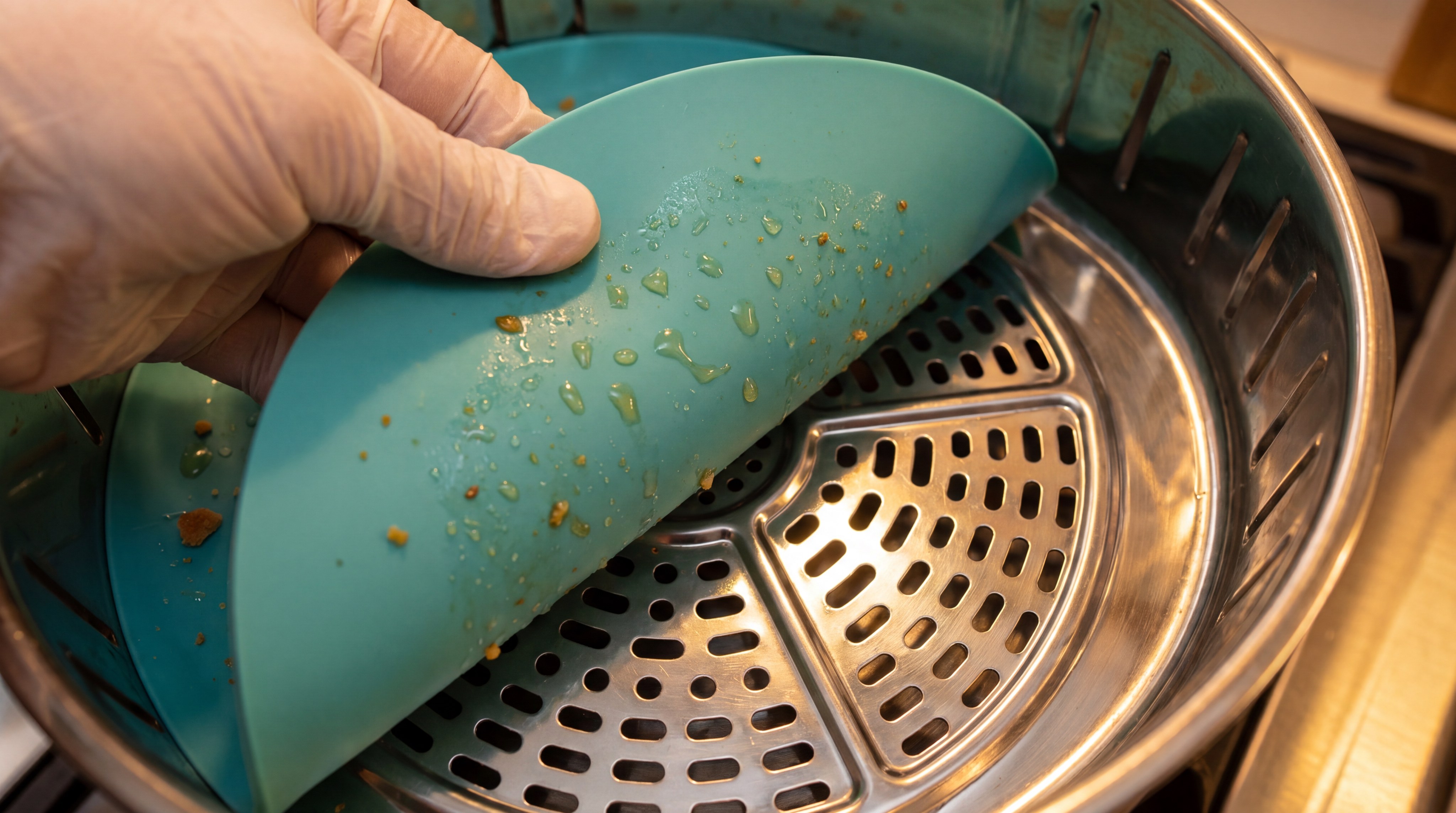
Yes, a silicone mat effectively protects the delicate non-stick coating of your air fryer basket by eliminating the need for abrasive scrubbing. When you use a liner, the basket itself remains virtually clean, requiring only a light wipe. This preservation of the original coating prevents rust and maintains the resale or functional value of the appliance.
Can it prevent mechanical damage?
Tongs and spatulas often scratch the bottom of the basket during food removal, leading to peeling. By using a silicone mat, you provide a soft buffer that absorbs the impact of metal or plastic kitchen tools.
It gets better:
- No more peeling “teflon” in your meals.
- The basket remains “like new” for much longer.
- You avoid the high cost of replacement baskets.
How does protection impact food hygiene?
A scratched basket can harbor bacteria in the crevices of the damaged coating. A silicone mat keeps the basket surface intact, ensuring that your cooking environment remains sanitary and easy to inspect for cleanliness.
Key Takeaway
Using a mat is a preventative maintenance strategy that saves significant money by delaying appliance replacement.
| Protection Type | Benefit | Long-term Impact |
|---|---|---|
| Chemical Protection | No harsh scrubbing needed | Intact non-stick layer |
| Physical Protection | Buffer against utensils | Scratch-free surface |
| Hygiene Protection | No trapped food in pits | Improved food safety |
The life-extending properties of silicone liners make them an essential accessory for protecting capital investments in kitchen gear.
Can you cut a silicone mat to fit smaller baskets?
Yes, you can easily cut a standard silicone mat with kitchen shears to fit any custom basket size, and we provide further details about us regarding our material versatility. Unlike other materials that might fray or degrade when cut, high-purity silicone maintains its structural integrity. This allows you to customize the fit for unique basket shapes, such as square or rectangular models.
Is it safe to trim the edges?
Trimming a silicone mat does not affect its heat resistance or non-stick properties because the material is uniform throughout. You should simply ensure that the cut edges are smooth to prevent any small food particles from getting trapped.
Check this out:
- You can tailor the fit to your specific machine.
- One large mat can be divided for dual-basket fryers.
- Custom-cut mats ensure 100% floor coverage.
Should you leave space for vents?
When cutting your own silicone mat, ensure you do not block the primary airflow vents of the basket. A perfectly tailored mat should cover the floor but allow the side walls to remain clear for optimal heat circulation.
Key Takeaway
The ability to customize the size of silicone liners makes them a versatile solution for diverse appliance inventories.
| Customization | Advantage | Recommendation |
|---|---|---|
| DIY Trimming | Fits any model | Use sharp shears |
| Multi-pack use | Saves money | Cut to fit two units |
| Edge clearance | Ensures airflow | Leave 1/2 inch gap |
Flexibility in fitment is a hallmark of silicone, making it the most adaptable material for kitchen accessories.
How long does a high-quality silicone mat last?
A high-quality silicone mat will typically last for 2 to 3 years of daily use if maintained according to professional standards. Its durability stems from the inherent resilience of the material, which resists cracking, peeling, and thermal fatigue. Unlike plastic, which becomes brittle over time, quality silicone remains flexible and functional through thousands of heating cycles.
What are the signs of a worn-out mat?
You should inspect your silicone mat periodically for signs of deep cuts or material thinning. While surface staining is purely aesthetic, structural damage can compromise the non-stick surface and hygiene.
The best part?
- It won’t rust or corrode like metal.
- It doesn’t lose its non-stick properties.
- It survives accidental drops and bends.
How can you maximize its lifespan?
Avoiding the use of sharp knives directly on the silicone mat is the best way to prevent tears. Additionally, cleaning it after every use ensures that grease does not bake into the surface, which could eventually lead to odors.
Key Takeaway
High-grade silicone offers a superior return on investment compared to any other liner material on the market today.
| Usage Frequency | Estimated Lifespan | Care Level |
|---|---|---|
| Daily | 2+ Years | High (Wash after use) |
| Weekly | 5+ Years | Standard |
| Commercial | 1 Year | Heavy Duty |
Longevity and durability make silicone the most sustainable and cost-efficient choice for long-term kitchen operations.
Where can you find custom silicone mat solutions?
You can find professional custom silicone mat solutions by partnering with an experienced OEM/ODM factory that specializes in the compression molding process. These manufacturers can tailor the thickness, perforation pattern, and material hardness to meet your specific brand requirements. For B2B buyers, sourcing directly from a factory ensures you receive certified food-safe products at competitive price points.
Why choose factory-direct sourcing?
Sourcing your silicone mat inventory directly from the manufacturer allows for tighter quality control and custom branding options. You can specify unique colors or embossed logos to help your products stand out in a crowded marketplace.
Ready to get started?
- Factories provide full DFM (Design for Manufacturing) support.
- You get access to material certifications (FDA, RoHS).
- Bulk orders significantly reduce per-unit costs.
What should you look for in a B2B partner?
Your partner should have extensive experience in kitchenware and a proven track record of exporting to international markets. Look for facilities that offer both compression molding and LSR injection to provide the widest range of product possibilities.
Key Takeaway
Direct manufacturer partnerships are the key to securing high-quality, compliant silicone accessories for your distribution network.
| Sourcing Factor | Importance | Recommended Partner |
|---|---|---|
| Certification | Critical (FDA/LFGB) | ISO Certified Factory |
| Customization | High (Logos/Vents) | OEM/ODM Specialist |
| Lead Time | Moderate | Integrated Factory |
Choosing the right partner ensures your brand delivers safety and performance to the end consumer.
At our core, we believe that the right accessories can elevate the entire cooking experience. Our commitment to precision engineering and food-grade safety ensures that every liner we produce meets the highest industrial standards. Whether you are looking to protect your home appliance or source inventory for a global brand, we are here to support your goals with expert manufacturing solutions.
For professional inquiries and custom silicone quotes, contact us today.
Frequently Asked Questions
Can I use a silicone mat without holes in my air fryer?
You can, but it will significantly hinder the air circulation, leading to uneven cooking and a loss of crispiness. For air frying, it is always recommended to use a perforated silicone mat to allow for proper convection.
What’s the best way to tell if my mat is real food-grade silicone?
Perform the “pinch test”—twist or pinch a piece of the silicone. If it turns white, it likely contains cheap plastic fillers. High-quality food-grade silicone will retain its color when stretched or twisted.
Can I use my silicone mat in a regular oven too?
Yes, silicone is extremely versatile and safe for oven use up to its rated temperature (usually 450°F). This makes it a multi-purpose tool for both air frying and traditional baking.
Can I wash my silicone mat in the dishwasher?
Absolutely. Most quality mats are top-rack dishwasher safe, making them much easier to clean than the air fryer basket itself.
How often should I replace my air fryer silicone mat?
With regular care, a high-quality mat should be replaced every 2 to 3 years, or sooner if you notice deep tears or permanent odors that affect food quality.