
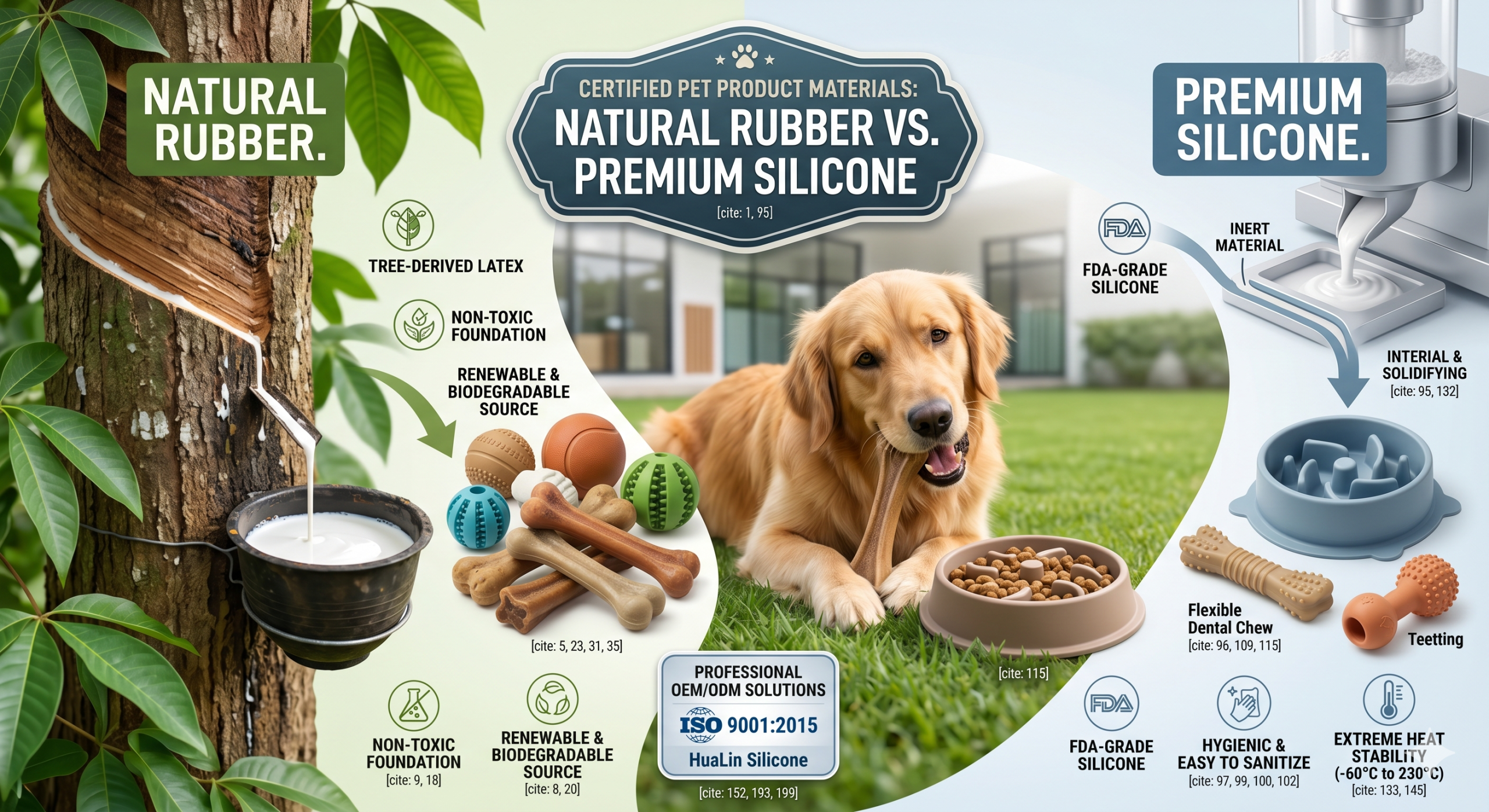
Yes, natural rubber dog toys are generally safe for pets, provided they are sourced from high-quality, non-toxic materials. Many retailers currently face a silent threat in their inventory: low-quality plastic toys laden with toxic chemicals that compromise pet health. These inferior products can leach lead or BPA into a dog’s system, leading to long-term wellness issues and devastating product recalls. Transitioning your inventory to premium natural rubber or a certified silicone pet product ensures you provide the safest, most durable solutions for modern pet brands while protecting your market reputation.
1. What Is the Origin of Natural Rubber in Dog Toys?
Natural rubber dog toys originate from the organic latex sap harvested directly from the Hevea brasiliensis tree. This plant-based material offers a sustainable alternative to petroleum-based plastics commonly found in any standard silicone pet product. By tapping trees rather than using fossil fuels, manufacturers create a renewable resource that is both biodegradable and resilient. You can trust that high-purity latex provides the foundation for a safer chewing experience compared to synthetic blends.
Is natural rubber actually derived from trees?
The raw material is a milky substance known as latex, which is collected through a careful tapping process.
Consider this:
- The sap is harvested without harming the tree’s health.
- It undergoes minimal chemical processing to maintain structural integrity.
- Natural coagulation ensures the material remains dense and tough.
The best part? This organic origin means the toy starts as a completely natural element before it reaches your shelves.
Does the harvesting process affect toy quality?
The purity of the initial sap directly determines the tensile strength of the finished toy.
Check this out:
- Higher purity levels lead to better tear resistance during heavy play.
- Controlled processing prevents the introduction of environmental contaminants.
- Ethical harvesting practices ensure a consistent supply for large-scale B2B orders.
It is quite simple: better raw materials yield a more reliable product for your customers.
Key Takeaway: Natural rubber is a plant-based, renewable material that provides a non-toxic foundation for pet play.
| Feature | Natural Rubber Origin |
|---|---|
| Source | Hevea brasiliensis tree sap |
| Sustainability | Fully renewable and biodegradable |
| Processing | Minimal chemical additives required |
Expert analysis shows that tree-derived latex offers superior mechanical properties compared to unregulated synthetic plastics.
2. Why Are Natural Rubber Toys Preferred for Chewing?
Natural rubber is preferred because its unique molecular structure allows it to stretch and compress without breaking or splintering. This mechanical flexibility is why a high-quality silicone pet product or rubber toy is superior to brittle PVC. When a dog bites down, the material absorbs the pressure and returns to its original shape. You will find that this resilience significantly reduces the risk of sharp fragments being swallowed by aggressive chewers.
Is rubber more durable than standard plastic?
Rubber consistently outperforms traditional plastics in durability tests because it bends rather than cracks.
Look at this:
- Tensile strength is significantly higher in natural latex.
- Elasticity prevents the “snap” effect seen in rigid polymers.
- The material withstands thousands of compression cycles without fatigue.
Think about it: a toy that lasts longer creates higher customer satisfaction for your brand.
Can rubber withstand aggressive chewers?
Even the most powerful breeds find it difficult to destroy solid natural rubber toys during daily sessions.
The secret?
- The solid core construction prevents easy puncturing.
- Flexible fibers allow teeth to sink in without tearing the surface.
- High-density molding provides a satisfying “give” that mimics natural prey.
Believe it or not, these toys are specifically engineered to handle extreme jaw pressure over long periods.

Key Takeaway: The inherent elasticity of rubber makes it the safest choice for dogs with high chewing drives.
| Material | Durability Level | Safety Risk |
|---|---|---|
| Natural Rubber | Extreme | Low (bends) |
| Standard PVC | Moderate | High (splinters) |
| Synthetic Nylon | High | Medium (hard) |
The ability to deform under pressure without structural failure is the primary safety advantage of rubberized materials.
3. Are Toxic Chemicals Found in Natural Rubber Toys?
Pure natural rubber toys are inherently free from the toxic chemical additives often required to soften rigid plastic polymers. Unlike a low-grade silicone pet product, premium rubber does not rely on hormone-disrupting plasticizers for its flexible properties. You should prioritize sourcing from manufacturers that provide transparent testing for lead and heavy metals. This ensures that every item on your shelf supports the long-term health of the pets using them.
Are these products free from BPA and phthalates?
Genuine natural rubber does not contain Bisphenol A (BPA) or phthalates because it is naturally soft and pliable.
Notice this:
- No industrial softeners are added during the molding process.
- The material is naturally hypoallergenic for the vast majority of breeds.
- Lab certifications can confirm the absence of endocrine disruptors.
The bottom line? You can market these products as a 100% non-toxic alternative to cheap vinyl.
Why is non-toxic material vital for pet health?
Dogs use their mouths to explore, meaning they ingest small amounts of whatever material they are chewing.
The reality is:
- Toxic leaching can lead to liver or kidney stress over time.
- Chemical odors can irritate a dog’s sensitive olfactory system.
- Safe materials reduce the risk of acute poisoning from unregulated dyes.
It’s a fact: material safety is the most significant factor in building brand trust with modern pet owners.
Key Takeaway: Natural rubber eliminates the need for harmful plasticizers, making it a “clean” choice for retail inventory.
| Chemical | Natural Rubber Status | Impact on Pet |
|---|---|---|
| BPA | Absent | Hormonal health |
| Phthalates | Absent | Reproductive safety |
| Lead | None (Certified) | Neurological health |
Eliminating industrial additives at the source is the most effective way to ensure a product is truly pet-safe.
4. Can Dogs Develop Allergies to Natural Latex?
Canine latex allergies are possible but remain relatively rare compared to food or environmental sensitivities. While most dogs thrive with a silicone pet product or rubber toy, some individuals may show localized skin irritation. You should advise customers to monitor their pets for redness or itching around the muzzle after initial play sessions. Providing a range of alternative materials ensures you can serve every customer, including those with sensitive pets.
How do you recognize a canine latex allergy?
Allergic reactions usually manifest as contact dermatitis where the toy touches the dog’s skin.
Watch for these:
- Redness or swelling around the lips and gums.
- Persistent paw licking or face rubbing after play.
- Small hives or bumps on the chest and belly area.
The good news? Most reactions are mild and resolve quickly once the rubber toy is removed.
What are the risks of handler latex sensitivity?
Retailers must also consider the safety of the human owners who handle these products daily.
Keep in mind:
- Humans with known latex allergies can react to handling raw rubber toys.
- Packaging should clearly state the material is “Natural Rubber/Latex.”
- Offering synthetic alternatives like LSR provides a safe path for sensitive owners.
Wait, there’s more: clear labeling protects both the pet and the person buying the toy.

Key Takeaway: While rare, latex sensitivity requires clear product labeling and the availability of alternative materials.
| Symptom | Severity | Recommended Action |
|---|---|---|
| Redness | Mild | Discontinue use |
| Itching | Moderate | Consult a veterinarian |
| Hives | High | Switch to silicone |
Monitoring the initial interaction between the pet and the material is the best practice for preventing allergic flare-ups.
5. How Do You Identify High-Quality Rubber Toys?
Identifying high-quality toys requires looking for dense construction, consistent coloring, and the absence of strong chemical odors. A premium silicone pet product or rubber toy will feel heavy in the hand and have a mild, natural scent. You should avoid products that feel oily or have a pungent “new plastic” smell, as these often contain hidden fillers. Checking for compliance with international toy safety standards like EN-71 is the most reliable way to verify quality.
Why should you avoid cheap, unregulated imports?
Low-cost imports frequently use “reclaimed” rubber that may contain traces of heavy metals or industrial waste.
The risk is real:
- Lead contamination is a documented issue in non-certified pet toys.
- Inferior bonding agents can cause toys to fall apart into choking hazards.
- Unregulated factories often bypass safety testing to lower production costs.
Here is the kicker: a cheaper price often reflects a dangerous lack of quality control.
Does the scent of rubber indicate its purity?
Pure natural rubber has a faint, earthy smell that is distinct from the harsh chemical fumes of vinyl.
Consider this:
- High-grade toys often use food-grade dyes that have no scent.
- Off-gassing odors are a red flag for volatile organic compounds (VOCs).
- Dogs are more likely to engage with toys that smell natural and clean.
The best part? Your customers can literally “smell the quality” when they open a premium shipment.
Key Takeaway: Quality can be verified through weight, scent, and third-party safety certifications like ISO.
| Quality Marker | High-End Product | Low-End Product |
|---|---|---|
| Scent | Earthy/Neutral | Pungent/Chemical |
| Weight | Heavy/Dense | Light/Airy |
| Surface | Smooth/Non-oily | Sticky or Greasy |
Relying on physical inspection and documentation ensures that your procurement process remains risk-free.
6. Why Select a Silicone Pet Product Over Standard Plastic?
Selecting a silicone pet product offers a superior level of biocompatibility and chemical stability compared to standard plastics. Silicone is an inert material that does not react with food, water, or a dog’s saliva, making it ideal for feeding accessories. You will find that silicone’s resistance to bacterial growth provides a significant hygiene advantage in professional pet care settings. By choosing these materials, you are investing in a product line that prioritizes both safety and long-term utility.
Is silicone safer for food-contact applications?
Silicone is widely used in the medical and baby care industries specifically because it is non-porous and food-safe.
Check this out:
- FDA-grade silicone prevents the absorption of oils and fats.
- It does not harbor bacteria in microscopic cracks like plastic does.
- The material is easy to sanitize in high-heat environments.
Essentially: silicone is the “gold standard” for anything that goes near a pet’s mouth.
How does silicone improve product longevity?
Unlike plastic which becomes brittle when exposed to sunlight, silicone remains flexible for years.
Look at this:
- UV and ozone resistance prevents cracking and fading.
- The material does not “dry out” or lose its shape over time.
- It withstands extreme temperature shifts without losing structural integrity.
The result? You reduce the frequency of customer returns due to product degradation.
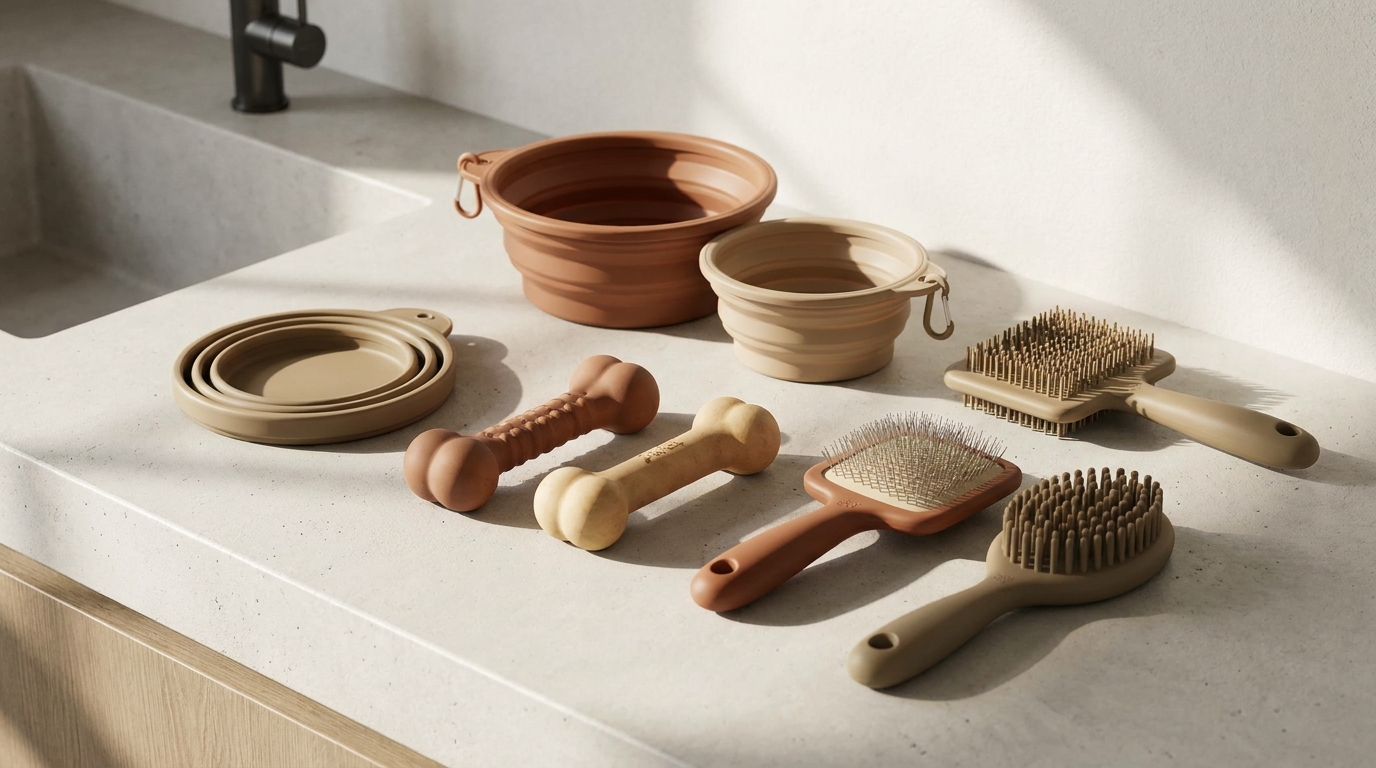
Key Takeaway: Silicone provides a more hygienic and durable alternative to plastic for food-contact pet items.
| Benefit | Silicone | Plastic |
|---|---|---|
| Bacterial Resistance | High | Low |
| Chemical Leaching | Zero | Potential |
| Temperature Range | -60°C to 230°C | Limited |
The inert nature of silicone makes it the most predictable material for long-term pet safety and brand reliability.
7. How Does Rubber Compare to Other Safe Materials?
Natural rubber stands out for its unique combination of extreme durability and eco-friendly biodegradability. While a high-quality silicone pet product is excellent for hygiene, rubber remains the top choice for heavy-duty chewing and fetching. You should consider the specific use case when recommending materials to your clients. Rubber provides the “crunch” and feedback dogs love, while synthetic elastomers serve different specialized needs in the market.
Is natural rubber truly biodegradable?
Because it is a plant-based material, natural rubber will eventually break down in a landfill environment.
Think about this:
- It decomposes much faster than traditional plastic (decades vs. centuries).
- No toxic microplastics are left behind during the degradation process.
- It aligns with the growing consumer demand for “green” pet products.
Imagine this: you can market your brand as a leader in environmental stewardship.
Are there better alternatives for heavy chewers?
While rubber is excellent, some power chewers may benefit from ultra-dense nylon or specialized TPE blends.
Observe this:
- Nylon toys are harder and better for dental scraping.
- TPE (Thermoplastic Elastomer) offers a “rubbery” feel but can be made even tougher.
- Mixing materials in your shop allows you to cater to different chewing styles.
The truth is: no single material is perfect for every dog, but rubber is the most versatile.
Key Takeaway: Rubber is the most eco-friendly choice among durable chew materials, offering a balance of strength and sustainability.
| Material | Eco-Friendly | Best Use Case |
|---|---|---|
| Natural Rubber | Yes | Aggressive Chewing |
| Silicone | No (Recyclable) | Feeding/Soft Play |
| Nylon | No | Dental Cleaning |
Understanding the trade-offs between materials allows you to provide expert guidance to your B2B clients.
8. Does a Silicone Pet Product Offer Better Heat Resistance?
A premium silicone pet product can withstand temperatures up to 230°C, which is far beyond the capabilities of natural rubber. This heat stability means you can boil silicone toys or run them through a commercial dishwasher for deep sterilization. You should promote this feature to kennels and doggy daycares where hygiene and cross-contamination are major concerns. High heat resistance ensures the material never melts or releases fumes during intense cleaning cycles.
Can you sterilize silicone toys more effectively?
Because silicone doesn’t warp at high temperatures, it can be thoroughly sanitized using steam or boiling water.
Consider this:
- This is vital for removing stubborn saliva and dried food.
- Dishwasher-safe properties make maintenance effortless for the end-user.
- It prevents the buildup of harmful biofilm on the toy’s surface.
Believe it or not, this simple cleaning capability is a massive selling point for health-conscious owners.
Is heat stability important for toy safety?
Toys left in hot cars or under direct summer sun can leach chemicals if they are made of low-grade plastics.
But with silicone:
- The chemical bonds remain stable even in extreme heat.
- There is no risk of the toy becoming “gummy” or sticky.
- It maintains its physical properties in both freezing and scorching weather.
The bottom line? Heat stability is a direct proxy for material safety and chemical purity.
Key Takeaway: Silicone’s extreme temperature tolerance makes it the best choice for professional-grade sterilization.
| Material | Max Safe Temp | Dishwasher Safe |
|---|---|---|
| Silicone | ~230°C | Yes |
| Natural Rubber | ~70°C | Usually No |
| PVC Plastic | ~50°C | No |
Thermal stability allows for more aggressive cleaning protocols, which is a key requirement for commercial pet facilities.
9. How Can a Silicone Pet Product Mitigate Business Risks?
Investing in a certified silicone pet product mitigates business risks by drastically reducing the likelihood of toxic chemical lawsuits or product recalls. When you source from an ISO 9001 certified manufacturer, you gain access to a stable supply chain with documented quality control. You will find that material transparency is the strongest tool you have for building consumer loyalty in a crowded market. Protecting your brand from the “silent threat” of toxic materials is a strategic move for long-term profitability.
Can non-toxic certifications protect your brand?
Holding certifications like FDA, RoHS, or REACH proves to your customers that you prioritize their pets’ safety.
Look at this:
- It acts as a legal shield in case of industry-wide safety audits.
- Certifications are a powerful marketing asset for premium pricing.
- They demonstrate professional industry expertise and responsibility.
The best part? Certification-backed products sell faster and with higher margins.
Why is material transparency crucial for retailers?
Modern pet parents are more educated than ever and will actively research the materials in their purchases.
The reality is:
- Brands that hide their material sources lose trust quickly.
- Transparency about manufacturing processes builds an emotional bond with users.
- Providing “Material Safety Data Sheets” (MSDS) shows you are a serious B2B partner.
Don’t forget: honesty about what’s inside the toy is the fastest way to earn a lifelong customer.
Key Takeaway: Safety certifications and transparent sourcing are the best insurance policies for your pet product business.
| Risk Factor | Impact | Mitigation Strategy |
|---|---|---|
| Recall | Brand Death | Source certified materials |
| Lawsuit | Financial Loss | Maintain MSDS records |
| Churn | Lost Revenue | Use non-toxic labeling |
Aligning your business with high-safety standards transforms a simple product into a trusted brand asset.
10. What Are the Best Practices for Safe Toy Play?
While the material itself is safe, you must educate your customers that safe play always requires proper sizing and occasional supervision. A silicone pet product or rubber toy that is too small can become a choking hazard, regardless of its chemical purity. You should provide clear sizing charts on your packaging to help retailers match the right toy to the right breed. Regular inspection for structural fatigue is the final step in maintaining a 100% safe play environment.
Why is supervision essential with rubber toys?
Supervision allows owners to intervene if a dog manages to tear off a piece of the toy before they swallow it.
Keep in mind:
- No material is truly “indestructible” for every dog.
- Early intervention prevents expensive emergency vet visits.
- It allows you to assess the dog’s chewing style for future recommendations.
Just remember: the safest toy in the world still needs an observant owner.
When should you replace a worn-out rubber toy?
You should advise owners to discard any toy that shows deep cracks, missing chunks, or significant thinning.
Watch for this:
- Structural fatigue increases the risk of the toy snapping suddenly.
- Dirt trapped in deep cracks can become a breeding ground for bacteria.
- A fresh toy is always safer than a compromised one.
Check this out: encouraging regular replacement cycles is good for safety and for your recurring sales.
Key Takeaway: Education on sizing and replacement cycles is critical for ensuring material safety translates to actual pet wellness.
| Play Rule | Detail | Goal |
|---|---|---|
| Size Match | Larger than the throat | Choking prevention |
| Inspection | Weekly check for tears | Structural safety |
| Supervision | First 20 mins of play | Behavioral assessment |
Combining the best materials with the best play practices ensures a flawless safety record for your pet product line.
Frequently Asked Questions
Can I clean natural rubber toys with bleach?
No, you should avoid harsh chemicals like bleach as they can degrade the natural latex fibers and leave toxic residues. Use mild soap and warm water instead.
What is the best way to tell if a toy is 100% natural rubber?
High-quality natural rubber will be dense, have a slight earthy scent, and will often be labeled with safety certifications from the manufacturer.
Can puppies use high-density natural rubber toys?
Yes, but it is better to choose “Puppy” specific rubber which is slightly softer to protect their developing teeth while still being non-toxic.
What certifications should I look for in a pet product manufacturer?
You should prioritize manufacturers with ISO 9001:2015, IATF 16949 (for stability), and FDA/LFGB compliance for material safety.
Can natural rubber toys be recycled?
Natural rubber is biodegradable, but most municipal recycling bins do not accept it. However, its ability to break down naturally makes it more eco-friendly than plastic.
The Future of Safe Pet Play
Ensuring the safety of pet toys is more than a quality control measure; it is a commitment to the health of our four-legged companions and the integrity of your brand. By choosing natural rubber and premium silicone, you solve the dual problems of chemical toxicity and physical durability that plague the lower end of the market. Our vision at HuaLin Silicone is to provide B2B partners with the precision-engineered, non-toxic components they need to lead the pet industry into a safer future.
If you are ready to upgrade your product line with certified, high-performance materials that pets love and owners trust, contact us today to discuss your custom manufacturing needs and get a free DFM review.