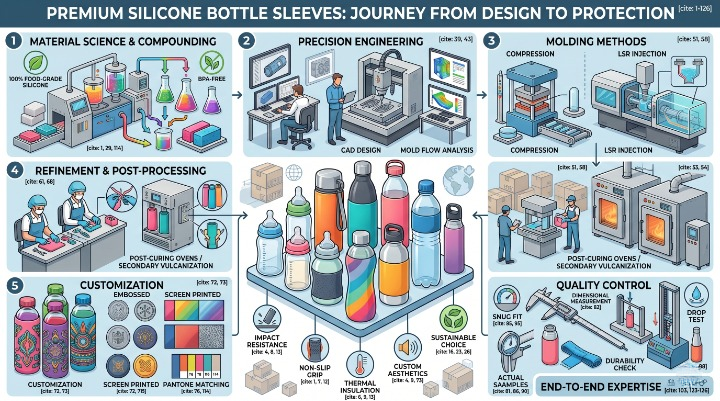
Silicone bottle sleeves are manufactured through a precise sequence of material compounding, mold engineering, and heat-curing processes to create a protective, non-slip barrier for containers. You likely face the constant challenge of breakage, poor grip, and branding limitations when offering bare glass or stainless steel bottles to your customers. These issues do more than just increase product loss; they agitate your buyers and dilute your brand’s premium perception in a competitive marketplace. High-quality Silicone Bottle Sleeves provide the ultimate solution, combining impact protection with customizable aesthetics to elevate your entire product line.
1. What Are Silicone Bottle Sleeves?
Silicone bottle sleeves are flexible, protective covers designed to enhance the grip, insulation, and durability of reusable glass or metal containers. These Silicone Bottle Sleeves act as a shock-absorbing buffer that prevents shattering while keeping beverages at the desired temperature for longer periods.
What Primary Functions Do These Sleeves Serve?
The primary purpose of a sleeve is to provide a tactile, non-slip surface that ensures the user maintains a secure hold even when the bottle is wet.
Here is the kicker:
- Impact resistance to prevent breakage.
- Thermal insulation for hot and cold drinks.
- Enhanced aesthetic appeal through color and texture.
- Acoustic dampening to reduce noise on hard surfaces.
Key Takeaway: Understanding the functional core of these accessories is the first step in leveraging their value to improve your product’s user experience and safety.
| Function | Benefit |
|---|---|
| Grip | Prevents accidental drops and spills. |
| Protection | Extends the lifespan of glass vessels. |
| Insulation | Protects hands from extreme temperatures. |
This multi-functional approach transforms a simple bottle into a high-performance lifestyle accessory suitable for fitness, travel, and childcare.
2. Why Is the Demand for Silicone Sleeves Rising?
Market demand is surging because modern consumers are shifting toward sustainable, reusable lifestyle products that require both protection and high-end style. The growth of eco-conscious consumerism in Western markets has made Silicone Bottle Sleeves an essential accessory for brands targeting health-conscious professionals.
Why Do Western Markets Prefer Silicone Options?
Consumers in North America and Europe prioritize materials that are both environmentally friendly and safe for direct skin and food contact.
But there is more.
- Growing bans on single-use plastic containers.
- Preference for glass baby bottles over plastic alternatives.
- Increased popularity of personalized outdoor gear.
- High valuation of durability in “buy-it-for-life” products.
Key Takeaway: The surge in demand is driven by a global shift toward sustainable living, where protective accessories are no longer optional but expected.
| Market Driver | Business Impact |
|---|---|
| Sustainability | Higher consumer willingness to pay for quality. |
| Safety Compliance | Easier entry into regulated baby/food markets. |
| Brand Loyalty | Long-lasting products build trust over time. |
By aligning your product development with these global trends, you can capture a larger share of the rapidly expanding reusable drinkware market.
3. Which Materials Ensure Premium Sleeve Quality?
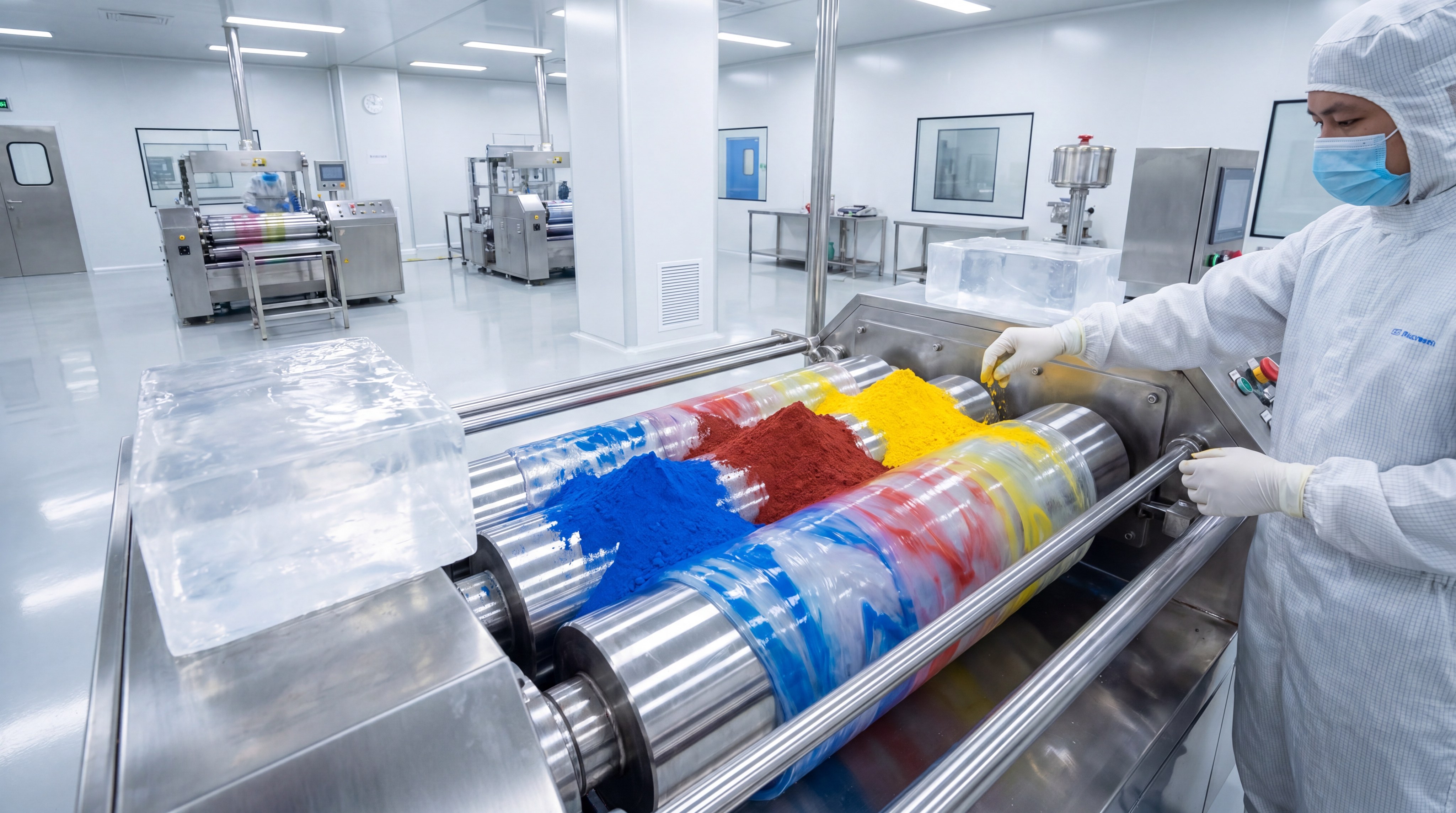
High-quality production starts with 100% food-grade, BPA-free silicone rubber that meets global safety standards like FDA, LFGB, and RoHS. Choosing the right raw material for Silicone Bottle Sleeves determines the final product’s longevity, odor profile, and resistance to environmental wear.
Is Food-Grade Silicone Mandatory for Your Brand?
Using premium food-grade silicone is non-negotiable if you want to ensure your products are hypoallergenic and safe for use with baby bottles or drinkware.
Here is the kicker:
- Certified 100% non-toxic and BPA-free material.
- High purity levels to prevent “blooming” or white residue.
- High temperature tolerance from -40°C to 230°C.
- Resistance to UV rays and chemical cleaning agents.
Key Takeaway: Professional manufacturing begins with the selection of certified materials that guarantee safety and high performance across all usage scenarios.
| Material Feature | Specification |
|---|---|
| Purity | 100% Silicone (no cheap fillers). |
| Safety | FDA and LFGB compliant. |
| Durability | Resistant to tearing and color fading. |
Starting with superior raw materials ensures that your brand avoids common pitfalls like material degradation or unpleasant odors that plague lower-tier alternatives.
4. How Is Precision Mold Engineering Conducted?
Manufacturers use advanced CAD modeling and high-precision CNC machining to create steel molds that define the sleeve’s exact dimensions and texture. The engineering behind Silicone Bottle Sleeves ensures a snug fit that won’t slip off during use or stretch out over time.
Why Is Mold Flow Analysis Essential for Quality?
Before a single piece is molded, engineering teams perform mold flow analysis to predict how the liquid silicone will fill every corner of the cavity.
But there is more.
- CAD design for precision fitment on specific bottle models.
- Steel tooling to prevent warping under high pressure.
- Air venting strategies to eliminate trapped air bubbles.
- Inclusion of draft angles for easy part ejection.
Key Takeaway: Precision engineering at the tooling stage is the blueprint for a flawless final product, preventing common defects like uneven walls.
| Engineering Phase | Importance |
|---|---|
| CAD Design | Ensures the sleeve fits the bottle like a second skin. |
| Mold Flow | Prevents structural weak points and air pockets. |
| Steel Tooling | Guarantees consistency across millions of units. |
Investing in high-quality molds from the start reduces long-term costs by minimizing defect rates and ensuring every sleeve meets your exact specifications.
5. Which Molding Methods Create These Sleeves?
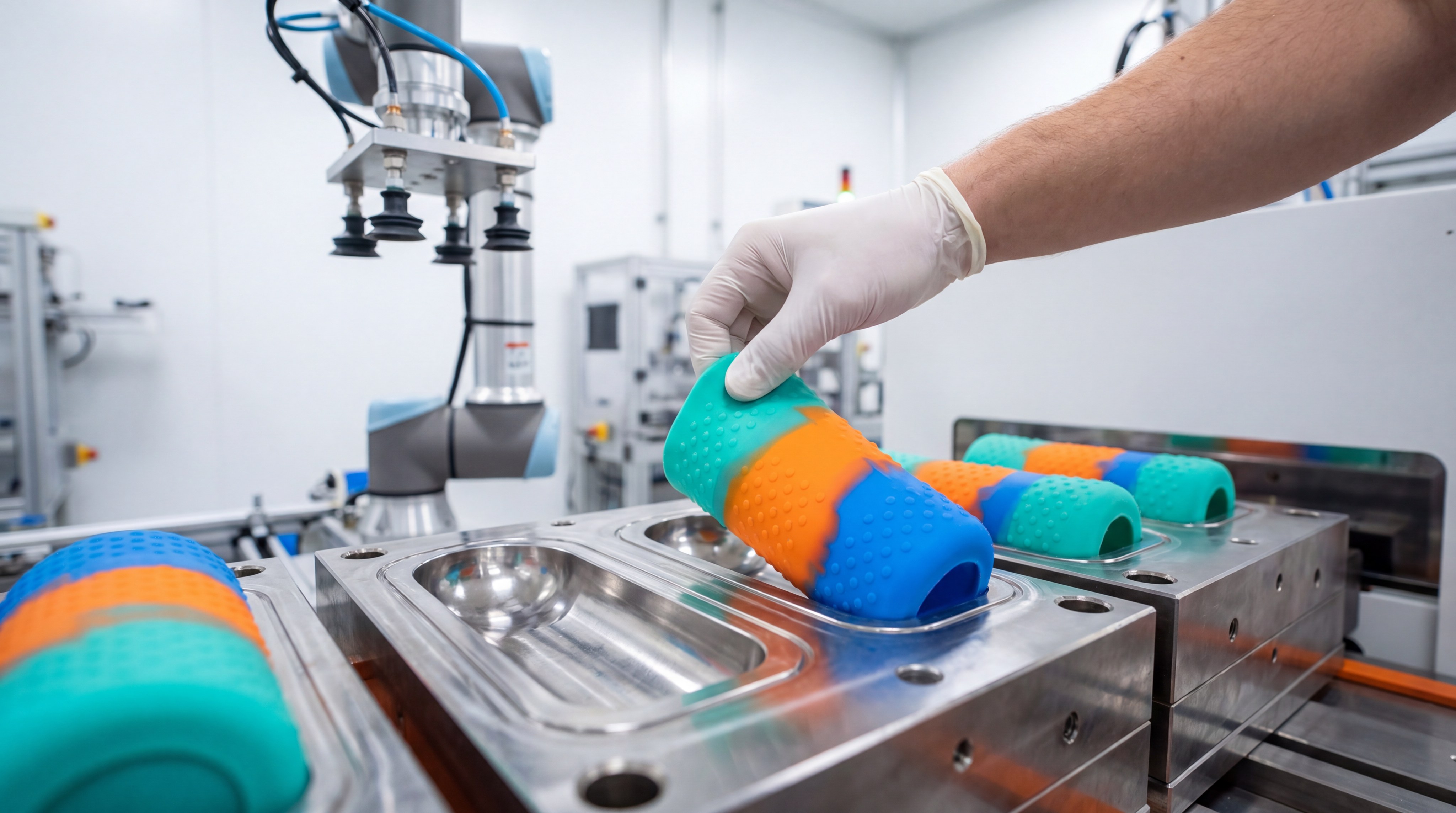
The two primary manufacturing techniques are compression molding for standard designs and liquid injection molding for high-precision, complex shapes. Selecting the right molding process for Silicone Bottle Sleeves depends on your required production volume, budget constraints, and design intricacy.
Does Liquid Silicone Injection Offer Better Precision?
Liquid Silicone Rubber (LSR) molding is often preferred for high-volume orders because it offers superior detail reproduction and faster cycle times.
Here is the kicker:
- High automation reduces manual labor and human error.
- Perfect for intricate textures and micro-patterns.
- Faster turnaround times for large-scale B2B orders.
- Consistent quality across massive production runs.
Key Takeaway: Choosing between compression and injection molding is a strategic decision based on balancing your design complexity with your target price point.
| Method | Best For |
|---|---|
| Compression | Simple shapes and lower initial tooling costs. |
| LSR Injection | Complex designs and high-speed mass production. |
| Overmolding | Bonding silicone directly to other materials. |
By selecting the appropriate molding technology, you can optimize your production efficiency while maintaining the high quality your customers expect from your brand.
6. What Post-Processing Steps Refine the Finish?
Post-processing involves the manual or automated trimming of excess material followed by secondary vulcanization in specialized industrial ovens. These finishing steps ensure Silicone Bottle Sleeves are safe, odor-free, and aesthetically flawless for the retail market.
Why Is Secondary Vulcanization Necessary for Safety?
Secondary curing, or post-curing, is a critical step where the sleeves are baked to drive off volatile substances and stabilize the material properties.
But there is more.
- Removes residual odors often found in new silicone.
- Eliminates volatile organic compounds (VOCs).
- Improves the tensile strength and elasticity of the sleeve.
- Ensures compliance with the strictest food safety standards.
Key Takeaway: The refinement process is what separates a crude industrial part from a premium consumer product ready for the most sensitive markets.
| Step | Purpose |
|---|---|
| Deflashing | Creates a smooth, seamless exterior edge. |
| Post-Curing | Guarantees safety and material stability. |
| Surface Coating | Reduces static and lint attraction for a clean feel. |
These meticulous finishing touches reflect the manufacturer’s attention to detail and provide your end-users with a product that feels high-end and luxurious.
7. How Are Sleeves Customized for Your Brand?
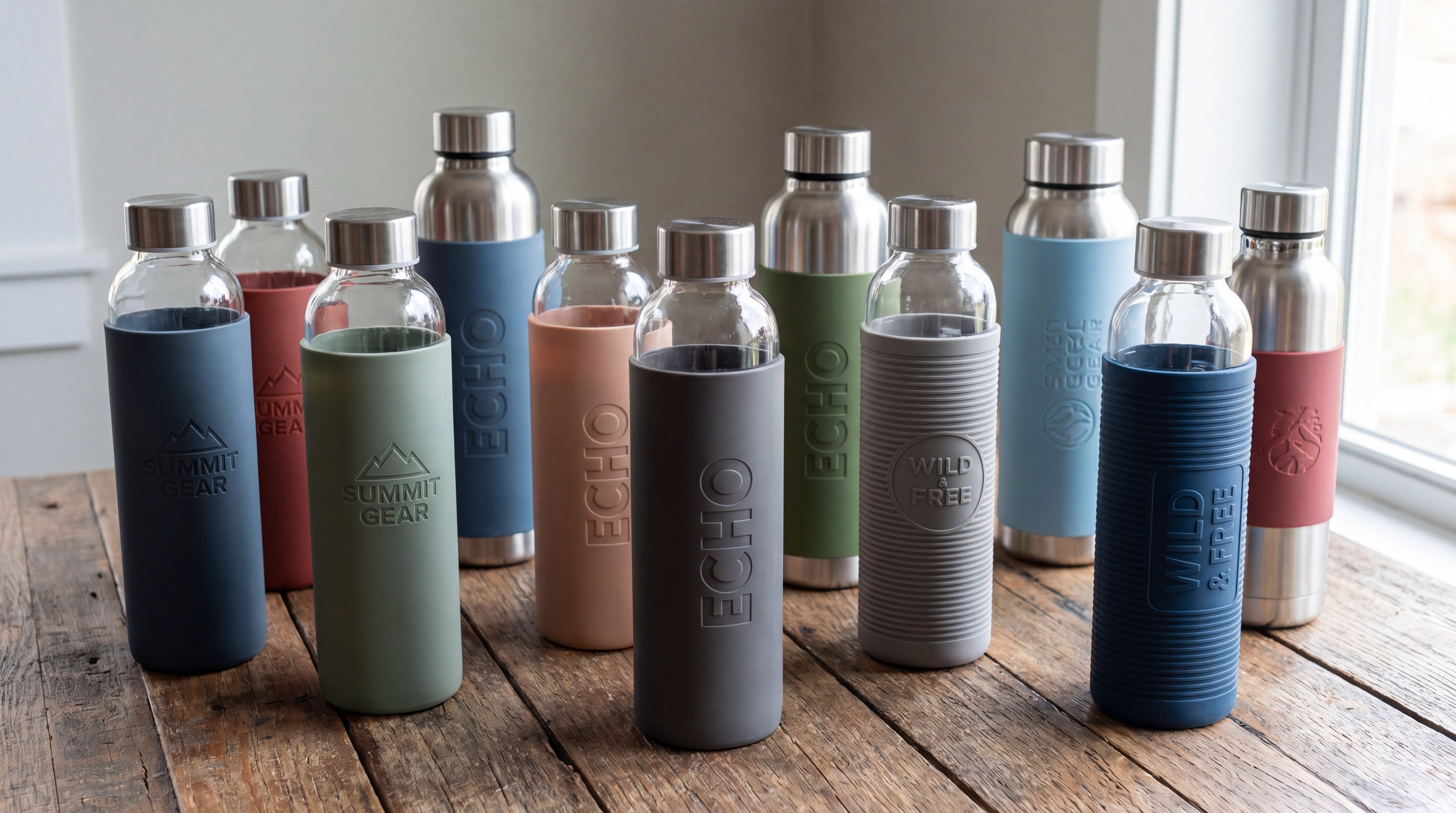
Branding is achieved through molded-in logos, silk-screen printing, or specialized laser etching directly onto the silicone surface during or after production. Customizing Silicone Bottle Sleeves allows you to match specific Pantone colors and unique textures that distinguish your brand from generic competitors.
What Printing Techniques Enhance Your Logo?
Using high-quality silicone-based inks ensures that your branding won’t rub off, fade, or peel even after multiple washes or heavy usage.
Here is the kicker:
- Embossed or debossed logos for a tactile 3D effect.
- Screen printing for vibrant, multi-colored designs.
- Custom Pantone matching for brand consistency.
- Functional patterns like measurement scales or ribs.
Key Takeaway: Effective customization turns a protective tool into a powerful marketing asset that reinforces your brand identity with every use.
| Feature | Method |
|---|---|
| Logo | Embossing (in-mold) or Screen Printing. |
| Color | Custom pigment masterbatching. |
| Texture | Sandblasted matte or anti-slip patterns. |
Leveraging these customization options allows you to create a unique aesthetic that resonates with your target audience while providing functional protection.
8. How Is Quality Control Managed in Production?
Rigorous quality control includes visual inspections for cosmetic defects and physical testing for tensile strength, stretchability, and fitment. Maintaining strict standards for Silicone Bottle Sleeves guarantees that every unit shipped meets your performance expectations and international safety certifications.
How Are Fit and Durability Tests Performed?
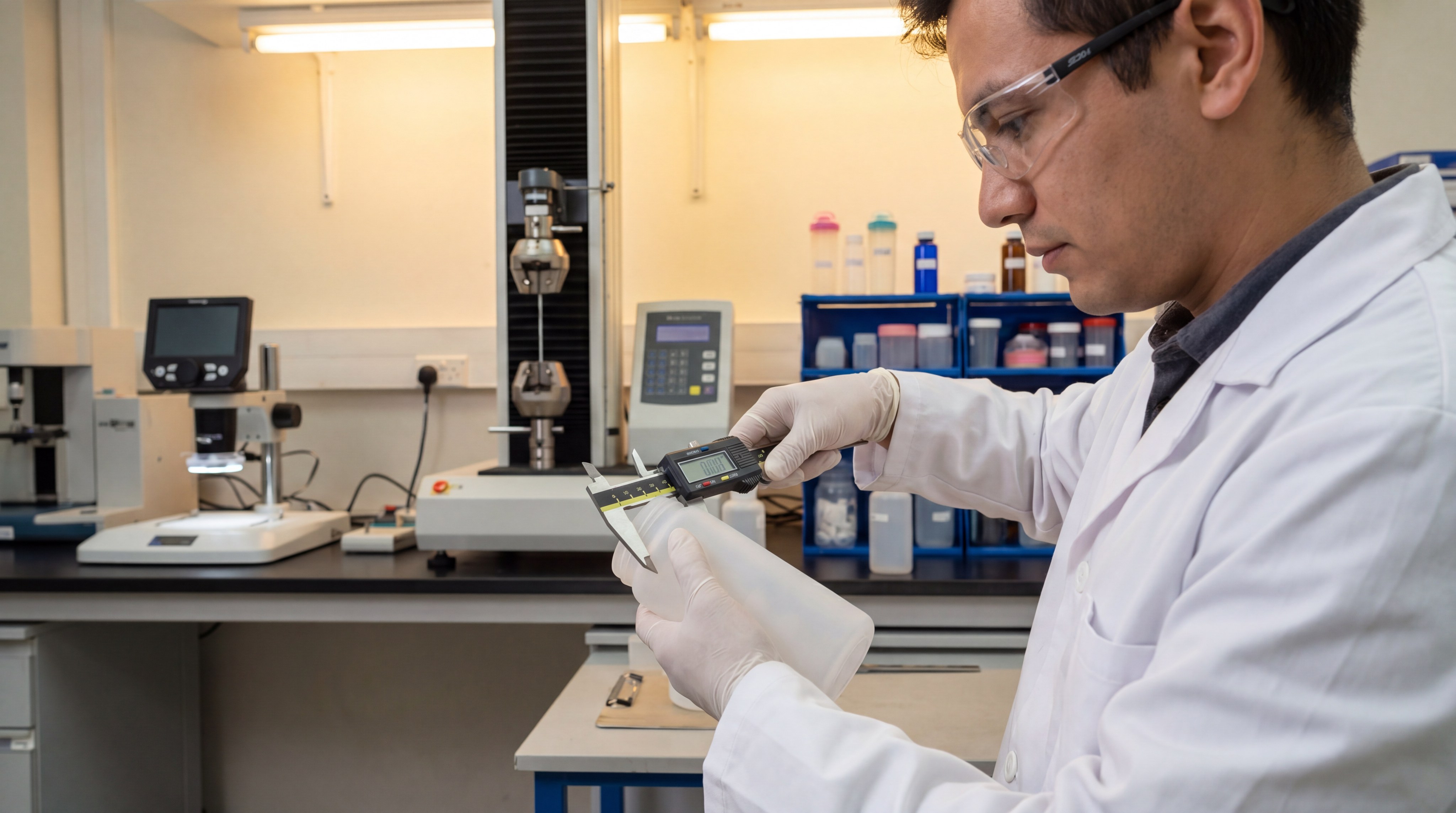
Technicians use actual bottle samples to ensure the sleeves stretch correctly and fit snugly without sliding or becoming loose over time.
But there is more.
- Calibrated measurement of inner diameter and wall thickness.
- Stress testing to confirm high tear resistance.
- Visual checks for air bubbles or color inconsistencies.
- Drop tests to validate shock-absorption capabilities.
Key Takeaway: A robust quality control system prevents defective products from reaching your customers, protecting your brand’s reputation and bottom line.
| Check Type | Testing Parameter |
|---|---|
| Dimensional | Snug fit on the target container. |
| Physical | Material durability and stretch recovery. |
| Visual | Surface finish and color uniformity. |
Rigorous testing ensures that your customers receive a product that is not only beautiful but also capable of withstanding the rigors of daily use.
9. What Are the Logistics for Bulk Orders?
Logistics management involves protective packaging solutions to prevent deformation and optimized shipping documentation for smooth international customs clearance. Efficient distribution of Silicone Bottle Sleeves ensures your products arrive on time, in perfect condition, and ready for the retail shelf.
Which Packaging Solutions Protect Your Order?
Customized packaging can range from simple bulk packs to individual, retail-ready branded boxes that protect the product during long-distance transit.
Here is the kicker:
- Durable cartons that prevent crushing during shipping.
- Individual polybags to keep surfaces lint-free.
- Palletization for efficient warehouse handling.
- Complete MSDS and export documentation for fast clearance.
Key Takeaway: Professional logistics management minimizes transit damage and shipping delays, ensuring a reliable supply chain for your business.
| Logistic Factor | Manufacturer Strategy |
|---|---|
| Packaging | Protective layers to maintain product shape. |
| Shipping | Sea or air freight optimized for cost and speed. |
| Compliance | Accurate paperwork for international trade. |
By handling the complexities of global logistics, an expert manufacturer allows you to focus on your sales and marketing strategies with total peace of mind.
10. Why Partner With an Expert Manufacturer?
Partnering with a professional factory provides you with end-to-end expertise, from initial material science and mold engineering to final global delivery. A reliable supplier for Silicone Bottle Sleeves simplifies your supply chain and reduces long-term operational risks by ensuring consistent quality.
How Does One-Stop Service Simplify Your Supply Chain?
A one-stop manufacturer handles everything from design consultation to mass production, meaning you deal with a single point of accountability for quality.
But there is more.
- In-house engineering reduces R&D lead times.
- Direct sourcing of premium materials lowers costs.
- Scalable production capacity for your growing brand.
- Expertise in international market safety regulations.
Key Takeaway: A strategic manufacturing partnership provides the technical foundation and reliability required to build a market-leading brand.
| Benefit | Business Impact |
|---|---|
| Expertise | Faster time-to-market for new designs. |
| Consistency | Stable quality that builds consumer trust. |
| Support | Professional guidance through the entire lifecycle. |
Working with an expert ensures that your silicone products are more than just commodities; they are high-performance tools that enhance your brand value.
FAQ Section
- Can I customize the exact Pantone color for my Silicone Bottle Sleeves?
Yes, you can specify any Pantone color, and we will match it using non-toxic pigment masterbatches for perfect brand consistency. - What’s the best way to ensure the sleeves fit my custom bottle shape?
The best way is to provide a physical sample or 3D CAD drawing of your bottle so we can engineer a precise, snug-fitting mold. - Can I request a prototype before committing to full-scale mass production?
Yes, we recommend creating a prototype or sample run to verify the fit, feel, and color before proceeding with mass manufacturing. - What’s the standard lead time for custom silicone sleeve tooling?
The standard lead time for mold engineering and fabrication typically ranges from 15 to 25 days depending on the design complexity. - Can I use these silicone sleeves for glass baby bottles?
Yes, our food-grade silicone is 100% BPA-free and safe for baby products, providing both impact protection and a safe, non-slip grip.
Conclusion
Manufacturing high-quality silicone bottle sleeves requires a meticulous blend of material science, precision engineering, and rigorous quality control. By addressing the fundamental problems of bottle breakage and branding limitations, these sleeves serve as a vital solution for any brand looking to succeed in the reusable drinkware market. We stand at the forefront of this industry, committed to providing you with the end-to-end expertise needed to bring your vision to life. If you are ready to elevate your products with premium protection and custom style, please contact us today to start your next project.