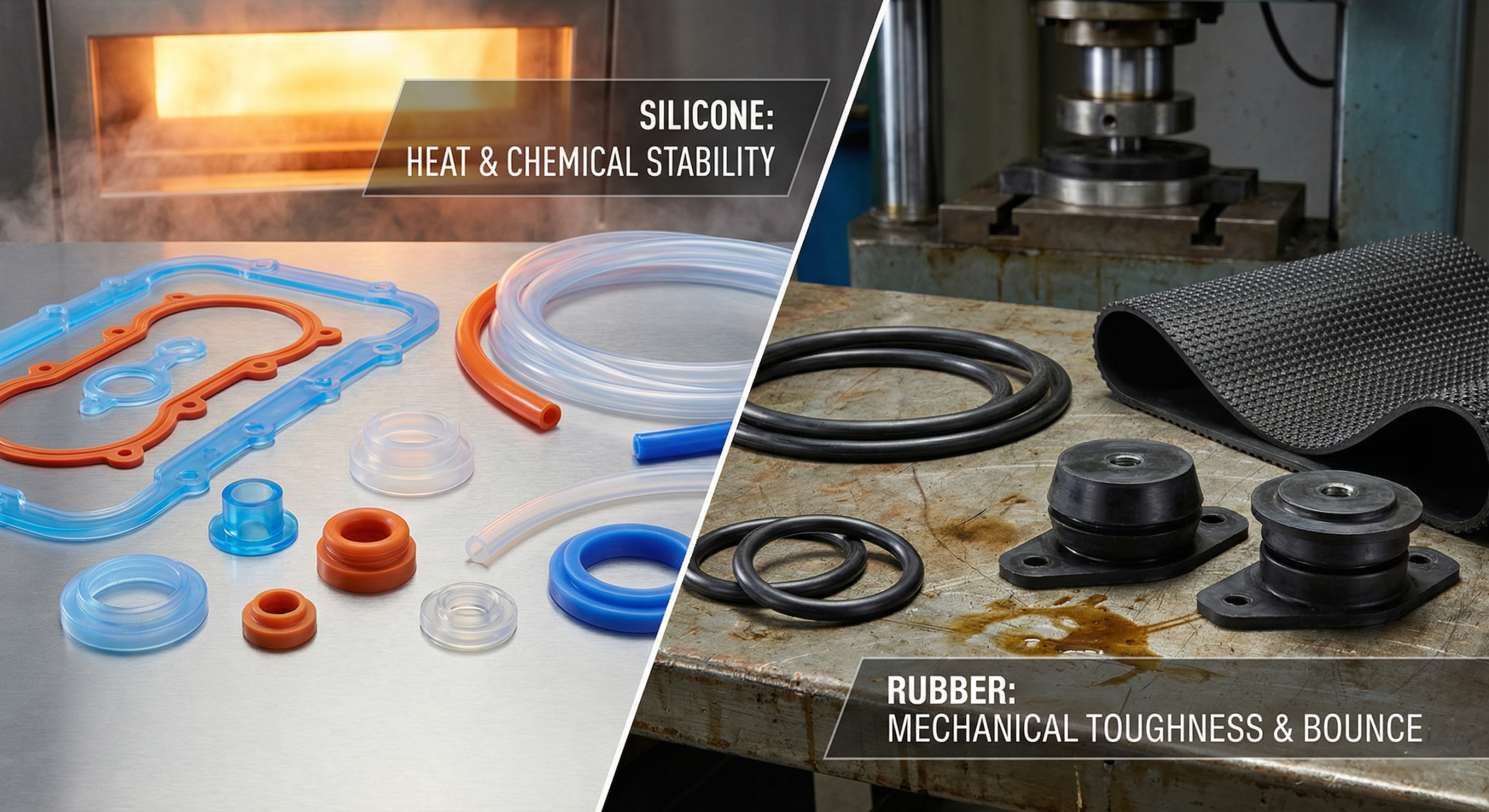
Choosing the right material depends on whether your priority is extreme thermal stability or high mechanical toughness. To make the right choice, you must understand Silicone vs Rubber: What’s the Difference for Industrial Buyers . Selecting the wrong seal can result in catastrophic system failures and expensive production delays. If you do not account for environmental stressors now, you may face frequent maintenance and compromised product safety later.
What are the chemical origins of these materials?
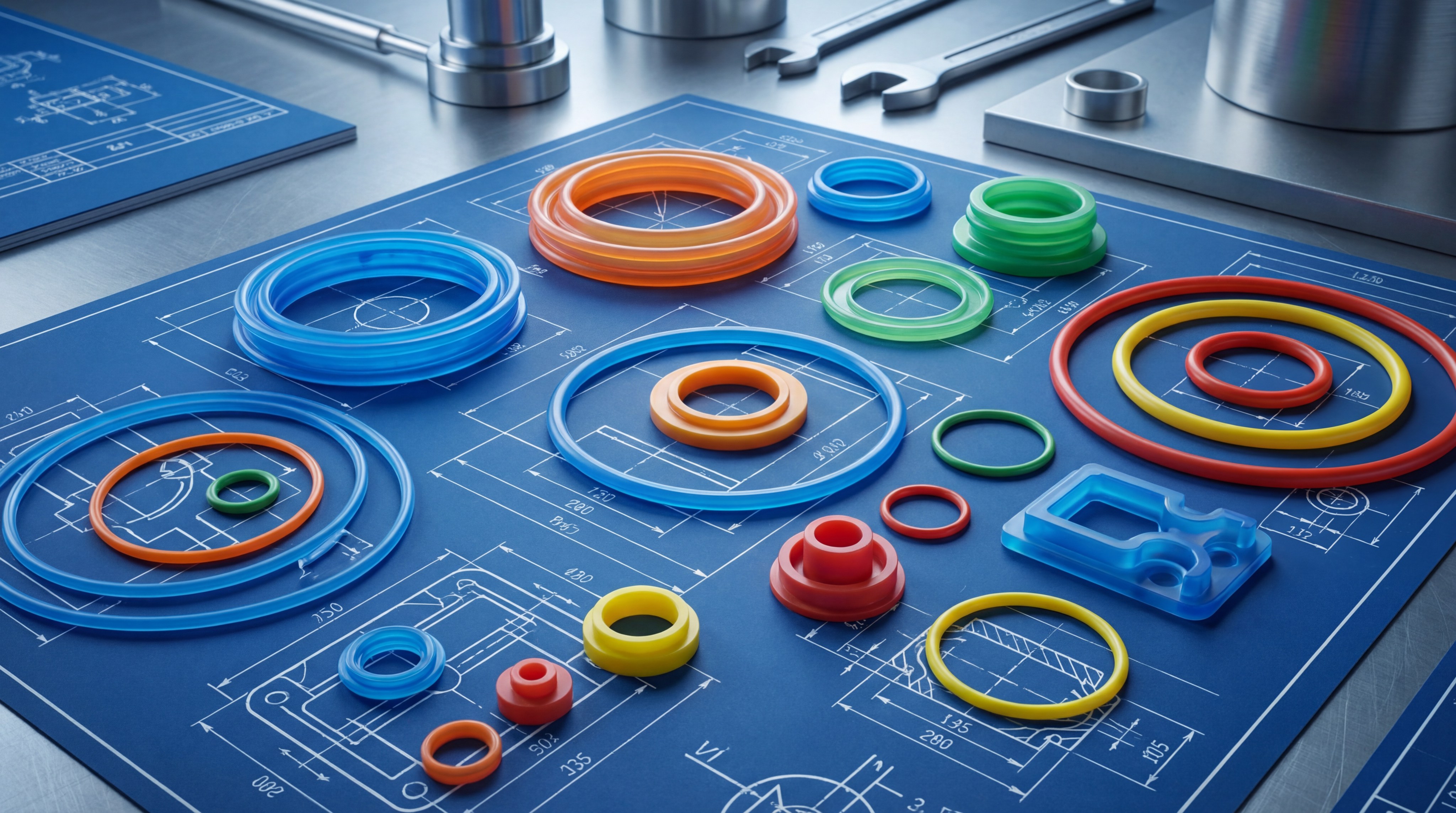
Silicone is an inorganic polymer while natural rubber is an organic elastomer derived from plant sap, which defines Silicone vs Rubber: What’s the Difference for Industrial Buyers. This structural contrast determines how each material interacts with heat and chemicals. You will find that silicone’s backbone of alternating silicon and oxygen provides unique stability. Natural rubber consists of long-chain hydrocarbon polymers that offer immense tensile strength.
What makes silicone’s molecular structure unique?
The silicon-oxygen bond is significantly stronger and more stable than the carbon-carbon bonds found in organic rubbers. This allows the material to resist oxidation and ozone degradation that would typically cause organic materials to crumble.
The best part?
- High resistance to UV radiation.
- Superior oxidation stability.
- Inorganic backbone for durability.
How is natural rubber harvested for production?
Natural rubber is harvested from the latex sap of specific trees and processed into an elastic hydrocarbon polymer. This organic origin provides the material with its legendary “bounce-back” capability and mechanical resilience.
Think about it:
- Harvested from Hevea brasiliensis.
- High mechanical strength.
- Eco-friendly renewable sourcing.
Key Takeaway: Understanding the chemical base helps you predict how a material will age in your specific industrial environment.
| Property | Silicone | Natural Rubber |
|---|---|---|
| Origin | Synthetic (Inorganic) | Natural (Organic) |
| Base Bond | Si-O | C-C |
This structural breakdown confirms that silicone is engineered for stability while rubber is built for mechanical impact.
How does heat resistance affect industrial performance?
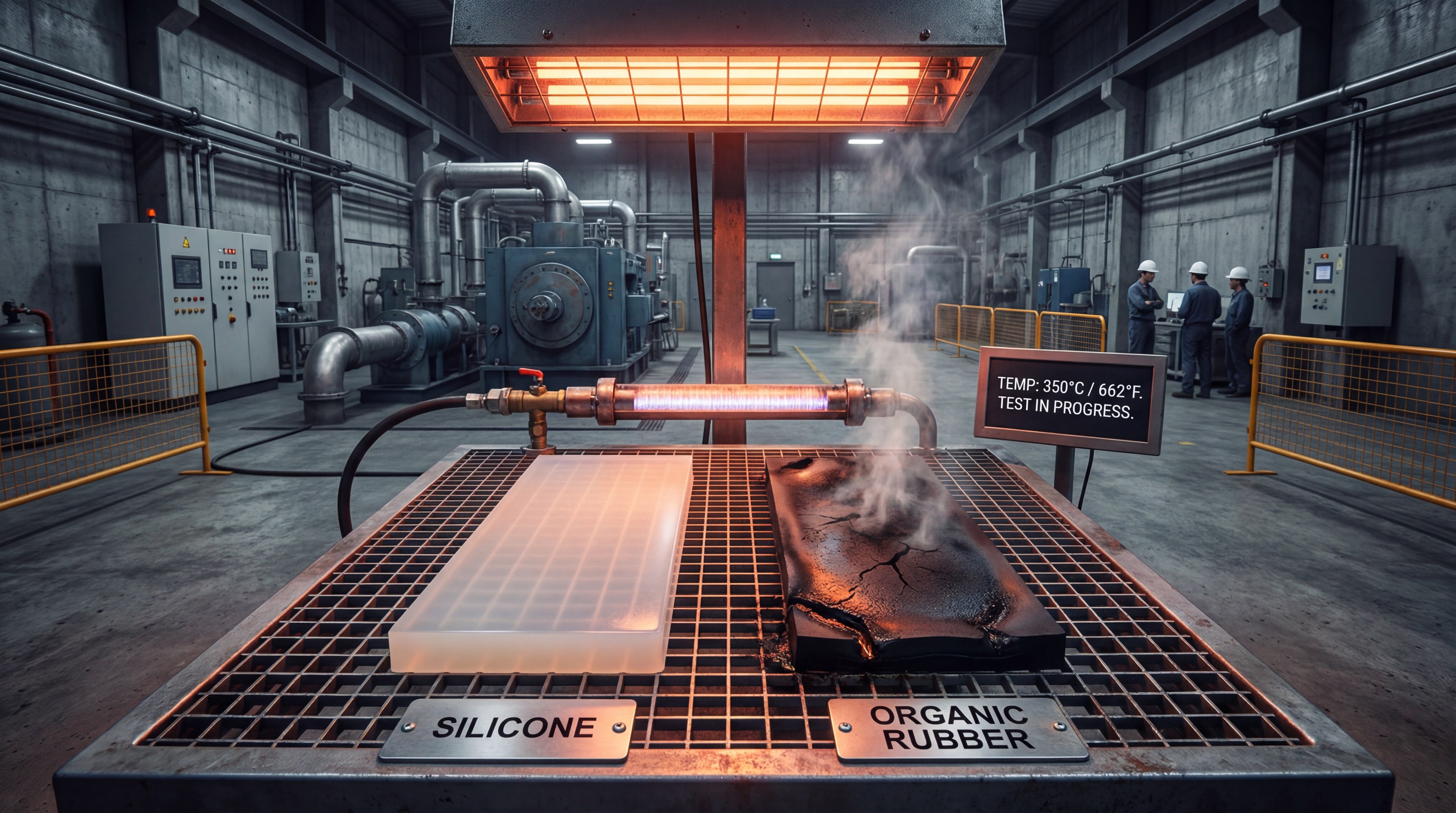
Silicone far outperforms natural rubber in high-heat environments because of its stable silicon-oxygen backbone, a key factor in Silicone vs Rubber: What’s the Difference for Industrial Buyers. You can rely on silicone to operate consistently at temperatures where organic rubber would simply melt. While natural rubber begins to lose its integrity at just 80°C, silicone remains functional up to 250°C.
Why does silicone handle extreme heat better?
The thermal stability of silicone prevents it from becoming gummy or brittle during prolonged heat exposure. It maintains its physical properties across a massive temperature range, including cryogenic conditions.
Here is why:
- Operates from -40°C to 250°C.
- Excellent flame retardancy.
- No gummy residue at high heat.
What happens to rubber under thermal stress?
Natural rubber undergoes rapid thermal degradation, leading to hardening, cracking, and eventual failure of the seal or component. For high-temperature applications, using rubber can lead to dangerous leaks.
Let’s face it:
- Melts around 120°C.
- Becomes brittle over 80°C.
- Higher risk of fire.
Key Takeaway: If your application involves temperatures exceeding 80°C, silicone is the only viable choice for long-term reliability.
| Feature | Silicone | Natural Rubber |
|---|---|---|
| Temp Range | -40°C to 250°C | -40°C to 80°C |
| Heat Stability | Exceptional | Poor |
Silicones maintain structural integrity at high temperatures, ensuring your machinery stays operational without frequent seal replacements.
When should you prioritize mechanical durability?
Natural rubber is the superior choice for high-friction mechanical parts because it possesses significantly higher tensile strength, which is vital to understand regarding Silicone vs Rubber: What’s the Difference for Industrial Buyers. You will find that rubber resists tearing and abrasion much more effectively than standard silicone. In environments where components are subjected to constant physical stress, rubber’s “memory” ensures a consistent seal.
Does rubber offer better abrasion resistance?
Rubber is the industry standard for tires, conveyor belts, and high-impact mounts due to its ability to absorb mechanical shocks. It resists cutting and nicking better than almost any synthetic alternative.
Here is the kicker:
- Superior tear strength (~25 MPa).
- Excellent “bounce-back” memory.
- High resistance to abrasive wear.
Why is silicone vulnerable to mechanical damage?
Silicone has relatively low tear strength, meaning once a small nick or cut occurs, it can easily propagate through the material. While it survives heat, it cannot match the raw mechanical toughness of organic rubber.
Surprisingly:
- Lower tensile strength (~5 MPa).
- Prone to propagation of tears.
- Not ideal for high-friction uses.
Key Takeaway: Choose natural rubber for high-load mechanical applications where heat is not the primary environmental stressor.
| Metric | Natural Rubber | Silicone |
|---|---|---|
| Tear Resistance | High | Low |
| Tensile Strength | 25 MPa | 5 MPa |
Mechanical toughness is rubber’s greatest strength, making it perfect for industrial components like rubber impellers and high-load wheels.
Which material offers superior chemical resistance?
Silicone generally provides broader resistance to environmental chemicals and specific oils than natural rubber, a critical distinction in Silicone vs Rubber: What’s the Difference for Industrial Buyers. You must evaluate your specific fluid environment, as rubber swells rapidly when it contacts petroleum-based products. Silicone is more inert, making it compatible with many industrial cleaners and brake fluids.
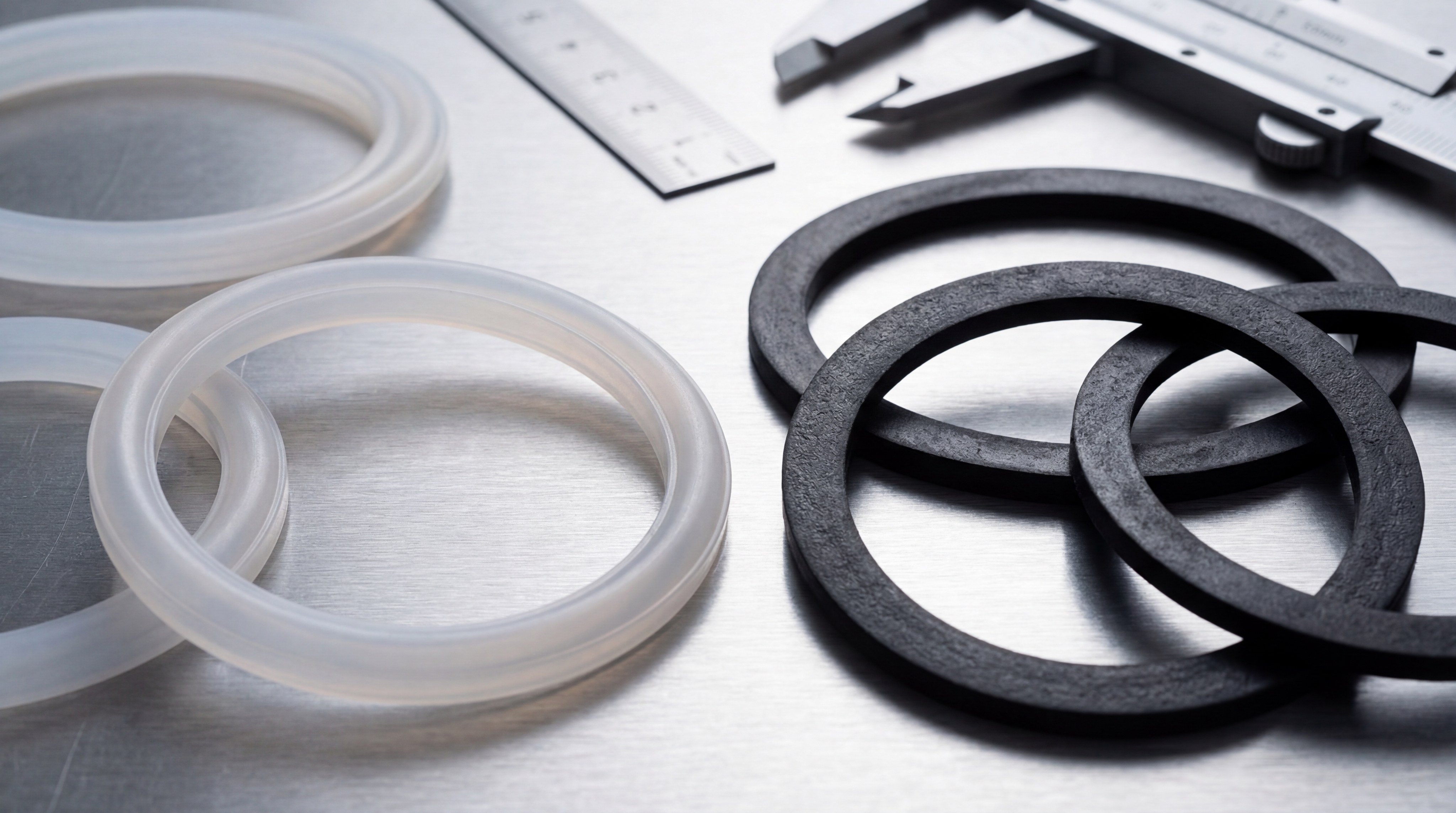
How do materials react to petroleum and oils?
Natural rubber is highly susceptible to swelling and degradation when exposed to hydrocarbons and grease. Silicone offers fair to good resistance, though specialized grades may be needed for constant fuel immersion.
Here is the deal:
- Rubber swells in oil contact.
- Silicone resists many lubricants.
- Both fail in strong acids.
What about ozone and environmental exposure?
Environmental factors like ozone and UV radiation cause organic rubber to dry out and crack over time. Silicone is inherently resistant to these factors, making it the better choice for outdoor gaskets.
The best part?
- No “dry rot” cracking.
- Excellent outdoor lifespan.
- Stable against ozone attack.
Key Takeaway: For outdoor applications or contact with mild lubricants, silicone provides a more stable chemical profile.
| Chemical Factor | Silicone | Natural Rubber |
|---|---|---|
| Ozone Resistance | Excellent | Poor |
| Petroleum Resistance | Fair | Poor |
Inertness allows silicone to maintain its shape in chemical environments where industrial rubber parts might otherwise dissolve or swell.
Why is silicone preferred for medical and food safety?
Silicone is inherently non-toxic, odorless, and hypoallergenic, which are vital features of Silicone vs Rubber: What’s the Difference for Industrial Buyers. You will often see it used in sensitive environments because it does not support microbial growth. Unlike natural rubber, silicone is free from latex proteins that cause allergic reactions in humans.
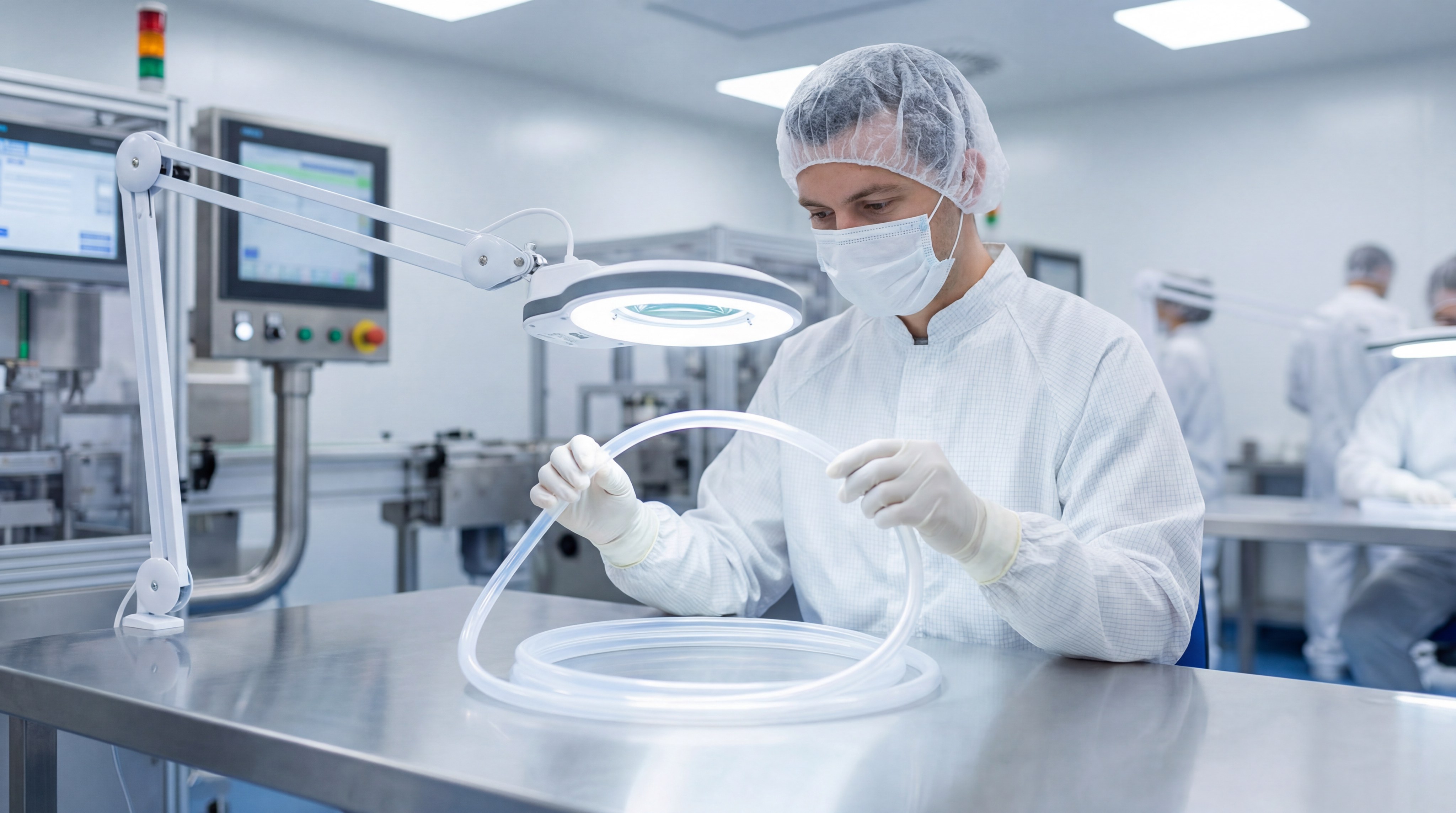
Is silicone safe for medical devices?
High-purity silicone is biocompatible and does not leach harmful chemicals into the human body or sensitive fluids. This makes it the gold standard for catheters, surgical tubing, and implantable components.
Here is why:
- Hypoallergenic properties.
- Biocompatible material.
- Non-leaching and odorless.
Does rubber pose a safety risk?
Natural rubber contains latex, which is a common allergen that can cause severe reactions in medical settings. Furthermore, its organic nature can sometimes provide a porous surface for bacteria to grow.
Let’s face it:
- Contains latex allergens.
- Potential for microbial growth.
- Harder to keep sterile.
Key Takeaway: For any application involving food contact or medical intervention, silicone is the only safe and compliant choice.
| Safety Factor | Silicone | Natural Rubber |
|---|---|---|
| Allergen Free | Yes | No (Latex) |
| Food Grade | Standard | Specialized Only |
Using liquid silicone products ensures the highest level of purity and safety for consumers and patients alike.
What are the differences in flexibility and compression?
Natural rubber has a superior “compression set,” meaning it returns to its original shape perfectly after being squashed, a key point in Silicone vs Rubber: What’s the Difference for Industrial Buyers. You will find that rubber is the ultimate choice for vibration damping and high-load sealing. However, silicone maintains its consistent flexibility over a much broader temperature range.
Which material seals better under pressure?
Rubber’s elasticity and high physical memory make it ideal for low-temperature mechanical gates and automotive mounts. It absorbs energy efficiently, providing a dampening effect that silicone cannot quite match.
Think about it:
- Exceptional physical memory.
- Great vibration damping.
- Ideal for high-load mounts.
How does silicone handle low temperatures?
While rubber can become brittle in extreme cold, silicone remains pliable and functional down to -40°C. It does not harden with age, meaning your seals will not crack after several years of service.
The best part?
- Retains cold flexibility.
- No hardening over time.
- Stable elasticity at -40°C.
Key Takeaway: Use rubber for heavy-duty sealing at room temperature; use silicone for consistent flexibility in fluctuating climates.
| Feature | Silicone | Natural Rubber |
|---|---|---|
| Compression Set | Moderate | Excellent |
| Cold Pliability | Exceptional | Good |
Mechanical seals require the high-load recovery of rubber, while consistent environmental seals benefit from the stability of silicone molding.
Which option handles environmental weathering better?
Silicone is virtually immune to the effects of long-term exposure to the sun and outdoor weather, a major advantage in Silicone vs Rubber: What’s the Difference for Industrial Buyers. You will see that rubber components left outside eventually develop “dry rot” due to UV and ozone damage. Silicone products can last for decades in harsh outdoor environments without losing their integrity.
Does UV light destroy rubber?
Organic polymers in natural rubber break down when exposed to ultraviolet light, leading to a loss of elasticity and surface cracking. This degradation eventually compromises the seal and leads to system failure.
Here is why:
- Susceptible to UV rot.
- Ozone causes micro-cracking.
- Short lifespan outdoors.
Why is silicone an outdoor champion?
The inorganic backbone of silicone is not reactive to the energy levels of UV light or ozone. This stability makes it the preferred material for construction sealants and automotive weather-stripping.
Believe it or not:
- Resists all UV damage.
- Stable against ozone.
- Decades of outdoor life.
Key Takeaway: For any component exposed to the elements, silicone offers a significantly lower total cost of ownership due to its longevity.
| Weather Factor | Silicone | Natural Rubber |
|---|---|---|
| UV Resistance | High | Low |
| Outdoor Life | 20+ Years | 2-5 Years |
Longevity in the field reduces your maintenance overhead and prevents sudden environmental failures in organic silicon materials.
How do sterilization and cleaning requirements compare?
Silicone is significantly easier to sterilize because it can withstand the high heat of an autoclave, a defining trait in Silicone vs Rubber: What’s the Difference for Industrial Buyers. You can boil or steam silicone components repeatedly without affecting their shape or physical properties. Natural rubber, however, often becomes brittle or gummy when subjected to high-temperature cleaning cycles.
Can you autoclave silicone safely?
Silicone maintains its structural integrity under high-pressure steam and extreme heat, which is essential for medical hygiene. Its smooth, non-porous surface also makes it easy to wipe clean of contaminants.
The best part?
- Safe for autoclaving.
- Resists boiling water.
- Easy-to-clean surface.
What are the limits of cleaning rubber?
Natural rubber can leach chemicals or degrade when exposed to harsh disinfecting agents and high temperatures. Over time, the surface can become tacky, making it a magnet for dust and microbes.
Let’s face it:
- Degrades in steam.
- Surface becomes tacky.
- Limited chemical wash.
Key Takeaway: Silicone is the only choice for equipment that requires rigorous, repeated high-heat sterilization.
| Cleaning Type | Silicone | Natural Rubber |
|---|---|---|
| Autoclave | Safe | Fails |
| Boiling | Safe | Damages |
Sterilization is a non-negotiable requirement for many industries, making silicone the superior investment for medical grade tubing.
What are the primary cost and lifecycle considerations?
Industrial buyers must weigh the lower upfront cost of rubber against the vastly superior lifespan of silicone, a core conflict in Silicone vs Rubber: What’s the Difference for Industrial Buyers. You will find that while rubber is cheaper to source initially, it often results in higher maintenance costs. Silicone’s durability ensures that it needs to be replaced far less frequently in challenging environments.
Is rubber truly more cost-effective?
For short-term or low-stress applications, natural rubber provides an excellent return on investment. If your project has a tight budget and doesn’t face extreme heat, rubber is the logical economic choice.
Here is the deal:
- Lower initial purchase price.
- High availability of parts.
- Great for short-cycle needs.
How does silicone reduce long-term costs?
Silicone often lasts four to five times longer than rubber in outdoor or high-heat settings. By reducing downtime and replacement labor, silicone can be the more sustainable and cheaper choice over several years.
Think about it:
- Fewer replacements required.
- Reduced machine downtime.
- Lower total lifecycle cost.
Key Takeaway: Don’t just look at the price tag; calculate the cost of failure and replacement before choosing your material.
| Cost Metric | Natural Rubber | Silicone |
|---|---|---|
| Initial Cost | Low | High |
| Total Value | Short-term | Long-term |
Lifecycle analysis proves that silicone is the more efficient choice for high-performance industrial parts that must survive extreme conditions.
Which material is best for your specific industry application?
Your choice ultimately depends on whether you value specialized performance in extreme conditions or cost-effective mechanical strength, summarizing Silicone vs Rubber: What’s the Difference for Industrial Buyers. You should select silicone for medical, food, and high-heat aerospace applications. Natural rubber remains the king of the automotive shop floor for tires, mounts, and high-friction belts.
When is silicone the clear winner?
In any environment where hygiene, heat, or outdoor longevity is the primary concern, silicone is the only material that meets professional standards. It protects your brand from product contamination and seal failure.
Here is why:
- High-heat performance.
- Medical/Food compliance.
- Long-term outdoor use.
Where does natural rubber still dominate?
For industrial applications requiring pure mechanical toughness and low-cost vibration dampening, rubber is still unmatched. Its ability to take a beating and return to its original shape is legendary.
Let’s face it:
- High-friction environments.
- Room-temperature sealing.
- Heavy-duty vibration mounts.
Key Takeaway: Match the material to your environment’s primary stressor—heat and hygiene favor silicone, while friction and load favor rubber.
| Application | Best Material |
|---|---|
| Aerospace Seals | Silicone |
| Industrial Tires | Natural Rubber |
Selecting the correct material ensures your operations remain efficient and safe. If you need expert guidance, contact us for a technical consultation.
Frequently Asked Questions
Can I use natural rubber in high-heat environments?
Concise judgment: No, natural rubber typically begins to degrade at 80°C and will melt or harden rapidly. For temperatures above this threshold, silicone is required to prevent seal failure.
What’s the best material for medical-grade seals?
Concise judgment: Silicone is the superior choice because it is hypoallergenic, non-toxic, and can be sterilized in an autoclave without losing its physical properties.
How do I know if I need LSR?
Concise judgment: If your application requires high precision, complex geometries, and high-purity medical or food-grade results, Liquid Silicone Rubber (LSR) injection molding is necessary.
What’s the best choice for high-friction applications?
Concise judgment: Natural rubber is much better for high-friction uses, such as tires or conveyor belts, because it has much higher abrasion and tear resistance than silicone.
Can I recycle silicone and rubber products?
Concise judgment: Yes, both materials can be recycled, but they require specialized industrial facilities to be ground down into filler or converted into oils and other raw materials.
Conclusion: Secure Your Industrial Performance Today
Navigating the choice between silicone and rubber is essential for optimizing your industrial efficiency. By addressing the problems of heat degradation, chemical swelling, and mechanical failure, we help you build systems that last. We provide the technical expertise and high-quality silicone products required to meet your most demanding specifications. Our vision is to empower global industries with durable, safe, and high-performance material solutions that push the boundaries of engineering. To find the perfect match for your next project, contact us today.