
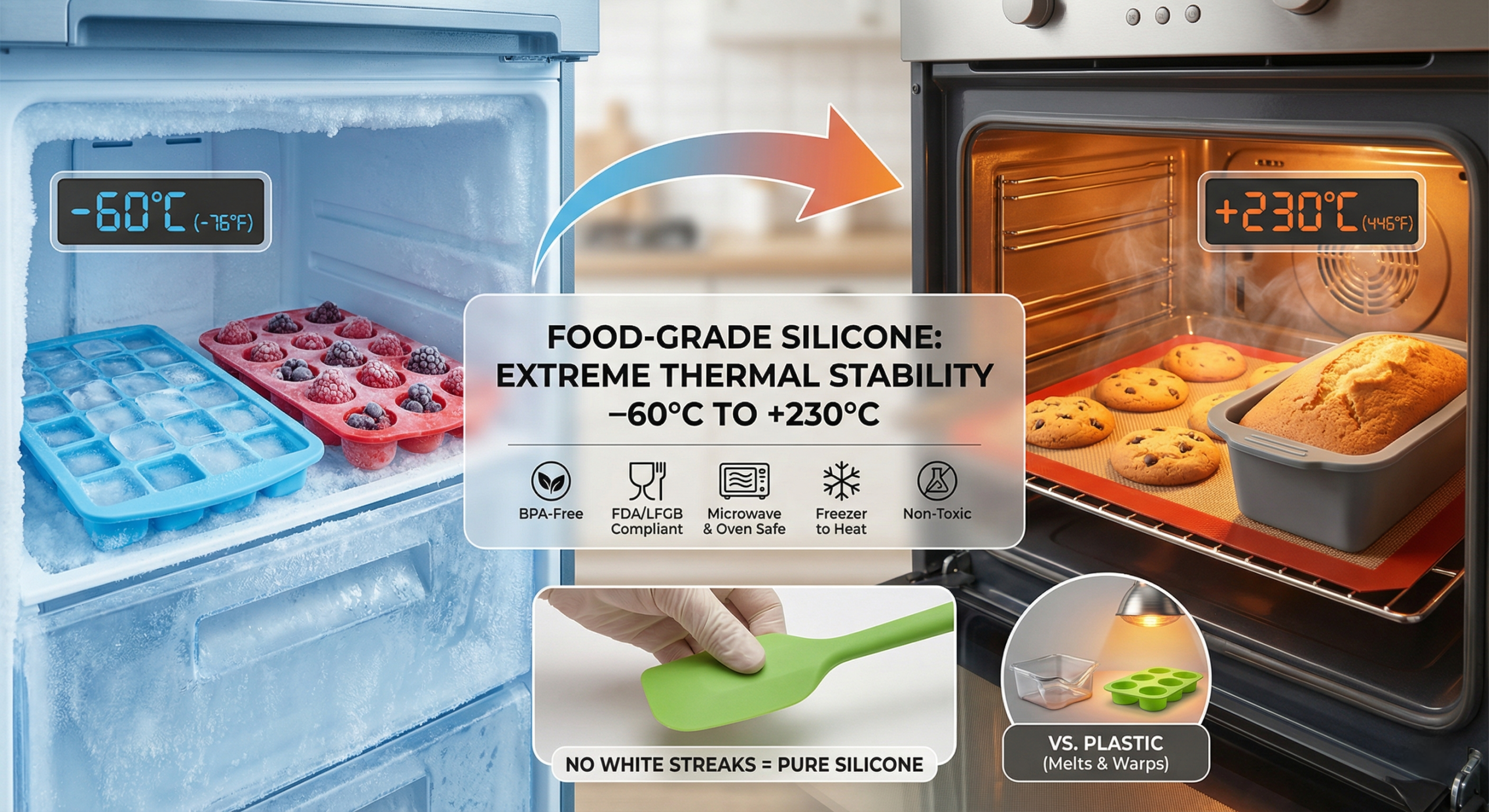
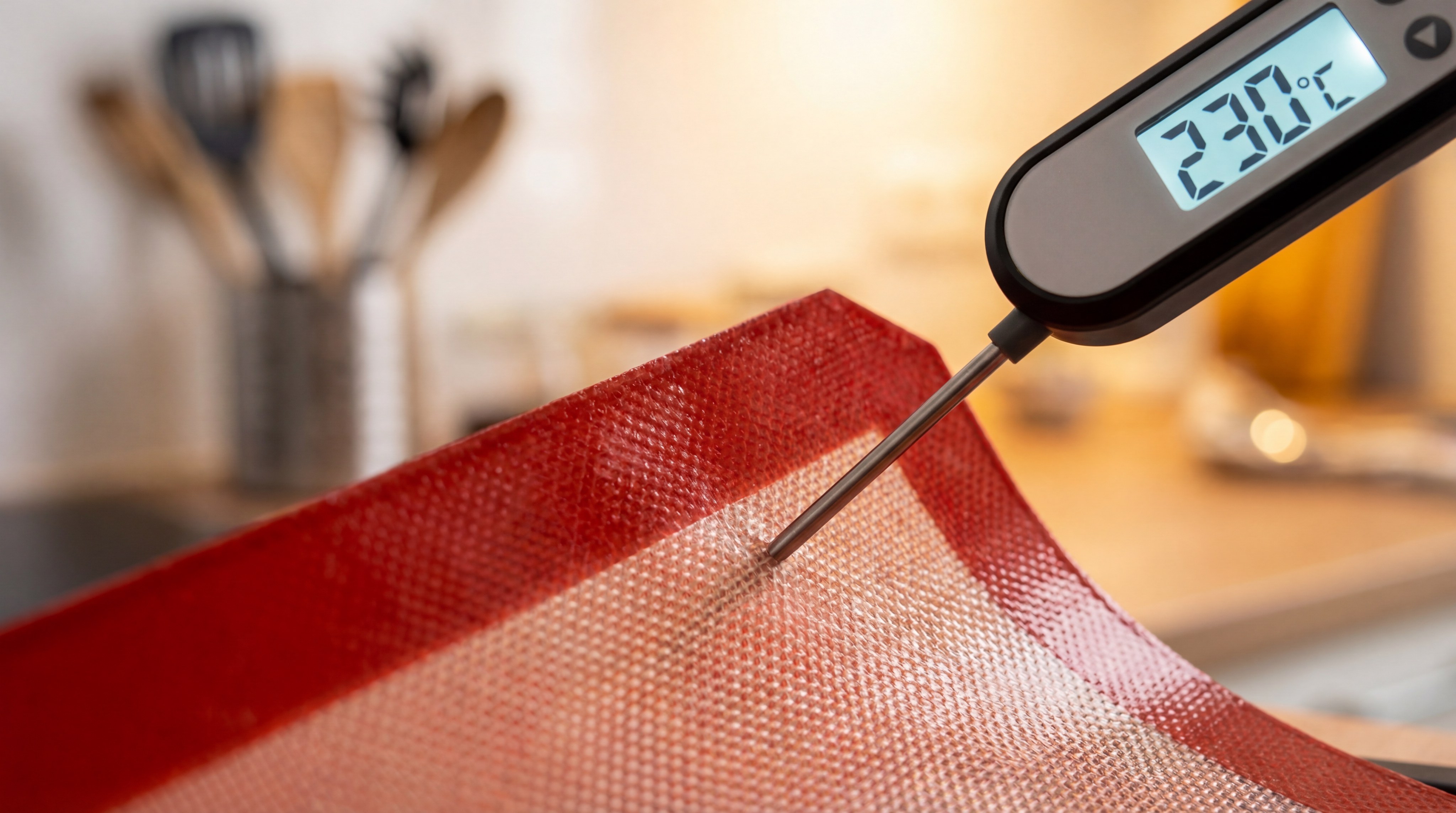
Standard food-grade silicone typically withstands a temperature range from -60°C up to +230°C. Many industrial manufacturers struggle with traditional plastics that leach chemicals or warp when exposed to intense heat. This creates a massive liability regarding consumer safety and product durability in professional kitchens. Thankfully, Food-grade Silicone provides a chemically inert, highly stable solution that remains safe under extreme thermal stress. You can explore our full range of certified solutions at https://hualinsili.com/ to find the perfect material for your high-heat applications.
What is the maximum temperature for food-grade silicone?
Most Food-grade Silicone is rated for continuous use at 230°C (446°F). This limit ensures that the polymer chains remain stable without losing their elastic properties. Think about it: most household ovens rarely exceed this temperature, making the material perfect for daily baking.
Typical Operating Temperature Ranges
Professional chefs and industrial food processors rely on this material because of its vast thermal window. You will find that high-quality batches can even handle spikes up to 250°C for short durations.
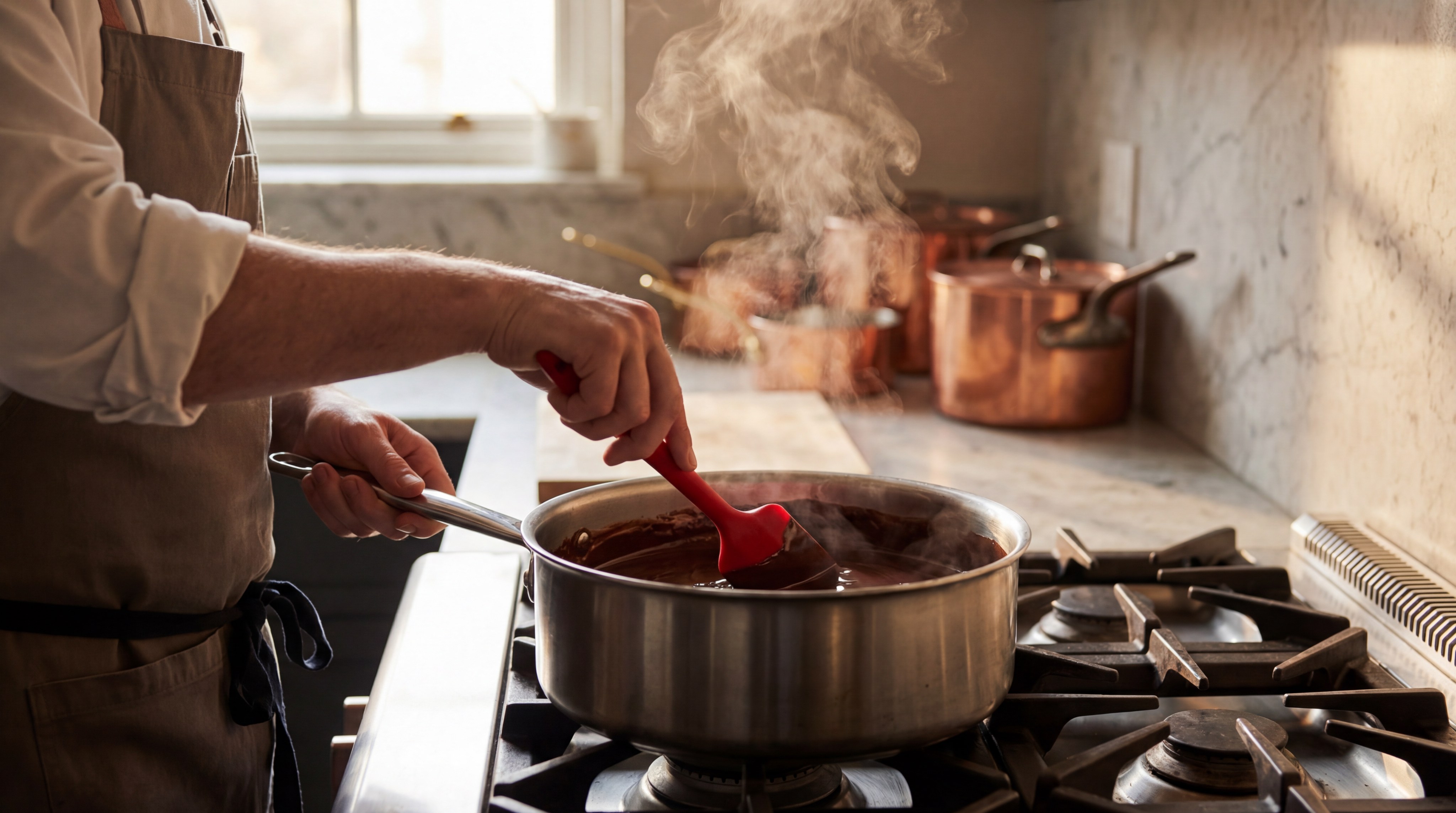
- Low-end limit: -60°C for deep freezing.
- Standard high-limit: 230°C for baking.
- Specialized limit: 300°C for short-term industrial seals.
Short-term Peak Heat Tolerance
But here is the kicker: the time spent at these temperatures is what truly matters for longevity. If you exceed the rated limit for too long, the material will eventually become brittle and lose its seal. Food-grade silicone typically handles -60°C to +230°C indefinitely without property changes.
| Feature | Standard Range | Peak Tolerance |
|---|---|---|
| Temperature (°C) | -60°C to 230°C | Up to 300°C |
| Duration | Continuous | Short-term (minutes) |
The table demonstrates that while silicone is robust, its peak performance is optimized for specific thermal windows.
Is food-grade silicone safe for oven and microwave use?
Yes, Food-grade Silicone is exceptionally safe for both oven and microwave environments because it does not absorb microwave radiation. This material’s molecular structure allows it to stay relatively cool while the food inside heats up. You can trust that it won’t leach harmful substances into your meals.
Stability Under Microwave Radiation
Microwaves vibrate water molecules, but the backbone of this polymer remains unaffected by high-frequency waves. This makes it an ideal choice for high-temperature kitchenware that needs to move from the counter to the oven.
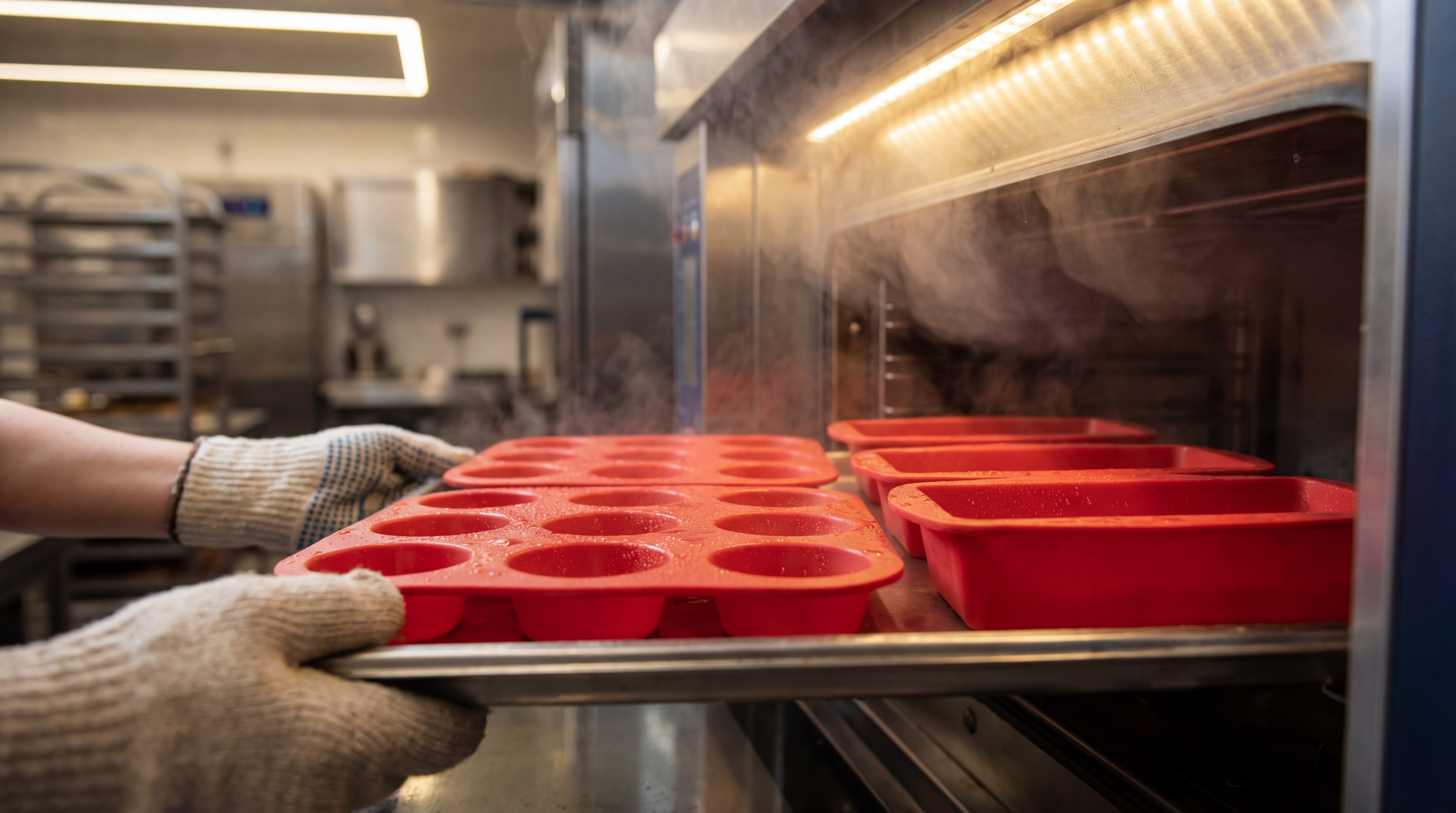
- Non-reactive to electromagnetic waves.
- Retains shape under rapid heating.
- Safe for repeated cycles in high-wattage units.
Oven Safety and Thermal Aging
Think about it: many plastics melt at the mere sight of a preheated oven rack. However, this elastomer maintains its integrity even during 10,000-hour exposure tests at high heat. High thermal stability makes it safer than most plastics for repeated oven and microwave cycles.
| Application | Safe Temperature | Benefit |
|---|---|---|
| Electric Oven | 230°C | Uniform heat distribution |
| Microwave | 200°C+ | No chemical migration |
The comparison shows that silicone is a superior alternative for any heat-intensive cooking method.
Does high heat cause food-grade silicone to melt?
No, Food-grade Silicone does not “melt” into a liquid pool like traditional thermoplastics would. Instead of liquefying, the material undergoes a slow process of decomposition when it reaches its absolute limit. You will notice it becoming stiffer or more prone to cracking rather than turning into a sticky mess.
Understanding the Decomposition Point
The decomposition point is usually much higher than the recommended operating temperature. But here is the kicker: once the material reaches 350°C, the chemical bonds start to break down permanently.
- Inorganic backbone prevents melting.
- Gradual hardening occurs over 300°C.
- No toxic fumes are released during standard overheating.
Chemical Stability vs. Physical State
Unlike plastics, silicone does not have a “melting point” in the traditional sense; it essentially turns back into silica and ash. This unique property ensures that even if a product fails, it doesn’t cause the same cleanup nightmare as melted nylon. Unlike plastics, silicone does not “melt” into a liquid; it gradually hardens at temperatures exceeding 300°C.
| Temperature | Physical Effect | State |
|---|---|---|
| 230°C | Stable | Elastic |
| 300°C | Slow Hardening | Solid |
| 500°C | Decomposition | Ash/Powder |
This data confirms that the material is remarkably safe even when pushed to its physical limits.
How does food-grade silicone compare to plastic in heat?
Food-grade Silicone outperforms plastic because it is a thermoset elastomer rather than a thermoplastic. This means that once it is cured, its shape is permanently set and cannot be reshaped by heat. You will find that plastics like PET or PP fail long before silicone even breaks a sweat.
Thermoset vs. Thermoplastic Properties
Think about it: why use a material that could deform during a simple dishwashing cycle? Thermoplastics soften when heated, but silicone remains rigid and functional throughout the entire cooking process.
- Silicone: Thermoset (heat-stable).
- Plastic: Thermoplastic (heat-softened).
- Integrity: Silicone remains elastic at 200°C+.
Why Silicone Outlasts Organic Rubbers
Most organic rubbers contain carbon backbones that oxidize and fail in high-heat environments. Since silicone uses an inorganic Si-O-Si backbone, it resists the thermal oxidation that ruins other materials. Silicone’s inorganic backbone provides superior heat resistance compared to carbon-based organic rubbers.
| Material | Heat Limit | Type |
|---|---|---|
| Food-grade Silicone | 230°C | Thermoset |
| Polypropylene (Plastic) | 120°C | Thermoplastic |
This comparison highlights why professional-grade tools rely on silicone for long-term durability.
Are there different heat standards for food-grade silicone?
Yes, Food-grade Silicone must meet stringent international standards like FDA or LFGB to prove its thermal safety. These regulations ensure that no harmful “extractables” migrate into food at the maximum rated temperatures. You should always check for these certifications to guarantee the quality of your industrial components.
FDA vs. LFGB Thermal Requirements
While both standards are high, LFGB (the German standard) often involves more rigorous testing for volatile organic compounds. But here is the kicker: both require the material to remain non-toxic at 200°C for extended periods.
- FDA: Standard for the US market.
- LFGB: Stricter European standard.
- BPA-Free: Universal requirement for food safety.
Compliance for High-Heat Contact
Think about it: a material might look safe, but only certification proves it won’t release odors when hot. Testing labs heat the silicone to its limit to measure any change in mass or chemical output. Certification ensures the material remains non-toxic and odor-free even at its maximum rated temperature.
| Standard | Region | Stricter Testing? |
|---|---|---|
| FDA | USA | No |
| LFGB | Europe | Yes |
Choosing certified materials is the only way to ensure total compliance in food processing.
How long can silicone withstand peak temperatures?
Food-grade Silicone can withstand its peak temperature of 230°C for thousands of hours without losing its mechanical properties. However, if you push the temperature to 300°C, the lifespan of the product drops significantly. You must balance the temperature requirements with the expected lifecycle of your equipment.
The Impact of 10,000-Hour Heat Exposure
Industrial tests show that silicone can maintain 50% of its original elasticity after 10,000 hours at 200°C. But here is the kicker: most other materials would have turned to dust within the first 100 hours.
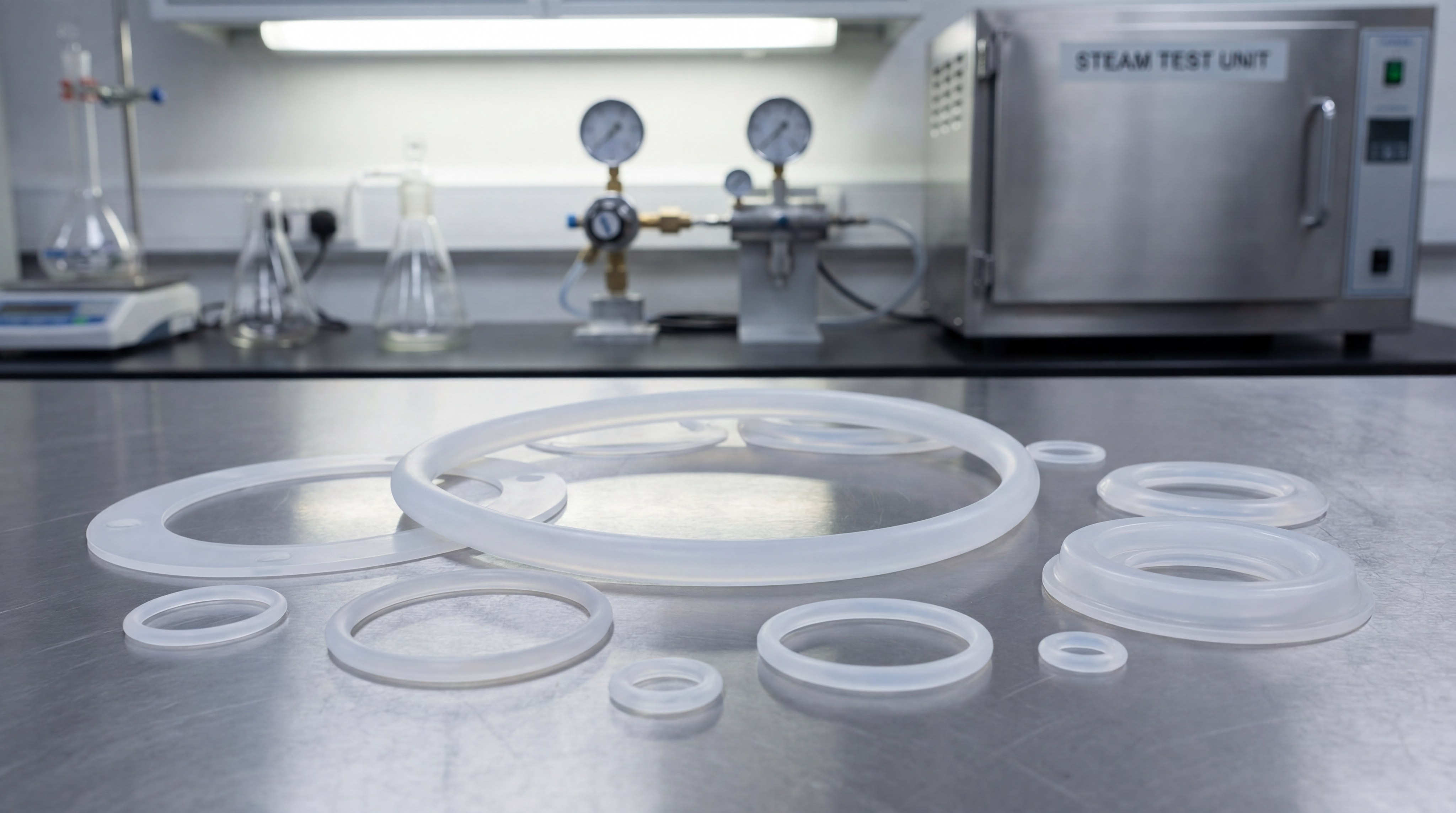
- 200°C: 10,000+ hours.
- 230°C: 2,000+ hours.
- 250°C: ~500 hours.
Instantaneous Heat Resistance Limits
Think about it: sometimes you only need a material to survive a momentary flash of heat. Silicone can survive a brief exposure to 350°C, but it will suffer permanent damage if the exposure continues. While it can hit 350°C briefly, long-term performance is optimized at 200°C for over 10,000 hours.
| Temperature | Estimated Life | Usage Type |
|---|---|---|
| 200°C | 1-2 Years | Continuous |
| 250°C | 3-4 Weeks | Intermittent |
Understanding these limits allows for better maintenance scheduling in industrial settings.
Does heat resistance change with silicone thickness?
While the inherent heat resistance remains the same, Food-grade Silicone thickness affects how the material dissipates thermal energy. Thicker sections provide better structural support, which prevents the part from sagging when it is extremely hot. You will notice that thin-walled tubes might feel softer at high heat compared to solid molded blocks.
Thermal Conductivity in Molded Parts
Silicone is a natural insulator, meaning heat travels through it slowly compared to metals. But here is the kicker: this low thermal conductivity helps protect users from burns when handling hot kitchenware.
- Thicker walls = Better insulation.
- Thinner walls = Faster heat transfer.
- Consistent chemical stability across all thicknesses.
Structural Integrity of Thin-Walled Tubes
Think about it: a thin silicone straw needs to stay rigid even in boiling water. Higher-quality grades are engineered to maintain their stiffness even when the cross-section is minimal. Thicker cross-sections provide better structural support, though the material’s inherent heat resistance remains constant.
| Wall Thickness | Heat Dissipation | Structural Stability |
|---|---|---|
| 1mm (Thin) | Fast | Low |
| 5mm (Thick) | Slow | High |
The geometry of the part is just as important as the material grade for high-heat performance.
Can food-grade silicone handle freezing temperatures too?
Yes, Food-grade Silicone is uniquely designed to transition from -40°C freezers to 230°C ovens instantly. This “dual-end” resistance is one of the reasons it is so popular in modern food logistics. You won’t have to worry about the material cracking due to thermal shock.
Low-Temperature Flexibility at -40°C
Many rubbers become brittle like glass when they get too cold, but silicone remains flexible and soft. But here is the kicker: this allows you to remove frozen food from a mold without breaking the mold or the food.
- Remains elastic at -40°C.
- Resists brittle failure.
- Ideal for ice trays and frozen storage.
Transitioning from Freezer to Oven
Think about it: you can take a silicone tray directly from the freezer and put it into a preheated oven. No other material offers this level of versatility without the risk of shattering or warping. Its dual-end temperature resistance makes it the only material suitable for “freeze-and-bake” workflows.
| Environment | Temperature | State |
|---|---|---|
| Deep Freezer | -40°C | Flexible |
| Industrial Oven | 230°C | Flexible |
The material’s ability to handle extreme transitions makes it a top choice for versatile food production.
How do you identify high-quality heat-resistant silicone?
You can identify premium Food-grade Silicone by checking for specific certifications and performing a manual “pinch test” for fillers. Genuine silicone will not change color or produce white streaks when twisted or stretched. You should always prioritize suppliers who can provide clear documentation of their material’s thermal limits.
Visual and Tactile Inspection Tips
High-quality silicone feels smooth and lacks any oily residue or strong chemical odors. But here is the kicker: cheap fillers will often smell like plastic when they are heated for the first time.
- The Pinch Test: Look for white spots (indicates fillers).
- Smell Test: No odor at room temp or 200°C.
- Texture: Supple and elastic, not gummy.
Verification of Temperature Ratings
Think about it: why risk your production line on unverified materials? High-end manufacturers will always stamp their products with the maximum temperature rating and compliance logos. Genuine Food-grade Silicone will not produce “white” stress marks or odors when twisted or heated.
| Quality Marker | Premium Silicone | Low-Grade Silicone |
|---|---|---|
| Pinch Test | Remains clear | Turns white |
| Odor | None | Chemical smell |
Testing the material yourself is a quick way to ensure you are getting the performance you paid for.
Why is food-grade silicone ideal for kitchenware molding?
Food-grade Silicone is the premier choice for molding because it allows for complex, durable designs that withstand high-heat cycles. Its ability to take on intricate shapes while remaining flexible makes it superior to metal or wood for specialized tools. You will benefit from a material that is both easy to clean and nearly impossible to break.
Precision in Complex Heat-Safe Designs
Molding allows for the creation of undercuts and textures that are impossible with other heat-resistant materials. But here is the kicker: even the most complex designs will retain their precision after hundreds of baking cycles.
- High tear strength for complex shapes.
- Excellent release properties for easy demolding.
- Consistent shrinkage rates for precision engineering.
Durability and Lifecycle Benefits
Think about it: a single silicone mold can replace thousands of disposable paper liners or fragile plastic trays. This long-term durability reduces waste and lowers the overall cost of ownership for food manufacturers. Custom molding allows for the creation of intricate, durable kitchen tools that outperform traditional metal or wood.
| Benefit | Impact | Value |
|---|---|---|
| Durability | Years of use | High ROI |
| Hygiene | Non-porous surface | Safe |
The versatility and longevity of this material make it a cornerstone of the modern food industry.
Final Vision and Action
Our mission is to provide the highest-quality silicone solutions that empower manufacturers to create safer, more durable products. By leveraging advanced material science and rigorous testing, we ensure every component meets the toughest global standards. To discuss your project requirements or receive a technical consultation, contact us today.
*
Frequently Asked Questions
Can I use food-grade silicone directly on an open flame?
No, while it is heat-resistant, direct flame contact exceeds the decomposition temperature and will damage the material.
What’s the best way to clean heat-stressed silicone?
Mild soap and warm water are sufficient; the material’s non-stick properties prevent food from baking onto the surface.
How do I know if my silicone is truly food-grade?
It depends, but generally, you should look for FDA or LFGB compliance marks and perform the “pinch test” to ensure no fillers are present.
Can I bake with silicone molds at 450 degrees?
Yes, most Food-grade Silicone is rated up to 446°F (230°C), making it safe for standard baking, but you should avoid broiler settings.
What’s the best silicone grade for high-heat sealing?
It depends on the application, but platinum-cured silicone is preferred for high-purity and superior thermal stability in sealing.