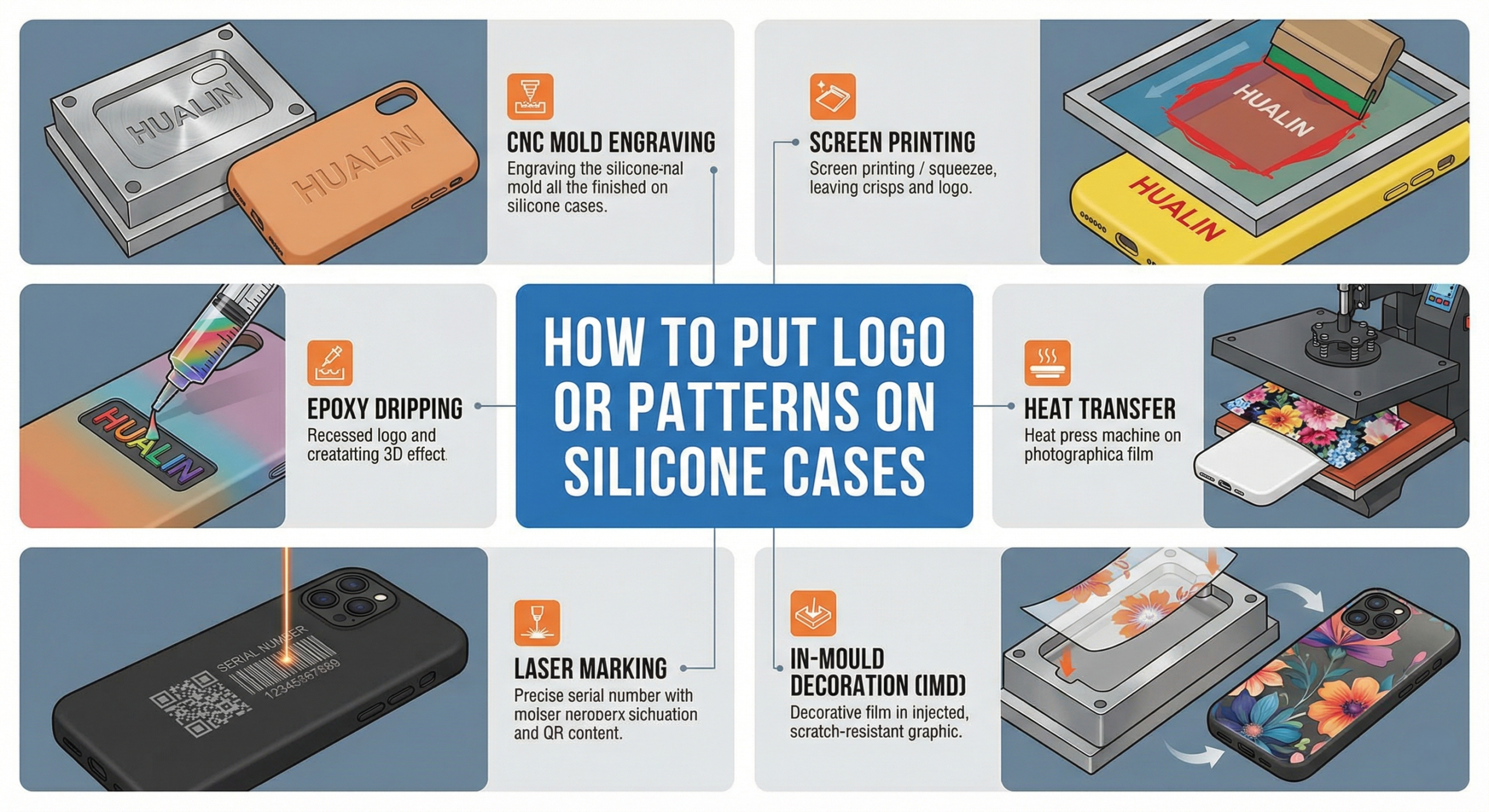
You can apply logos or patterns to silicone through methods like CNC mold engraving, epoxy dripping, laser marking, screen printing, heat transfer, or In-Mould Decoration (IMD).
Many B2B buyers struggle to differentiate their products in a saturated market, often settling for generic protective gear that fails to build brand equity. A plain case does nothing for your identity; it is a missed opportunity for marketing, and without a high-quality logo, even the most durable Silicone Cases can look like cheap imitations. By utilizing professional branding techniques—ranging from permanent mold etching to high-definition color transfers—you can transform standard inventory into premium, branded assets that drive customer loyalty.
What are the most popular branding methods for Silicone Cases?
The most popular methods for adding professional branding to Silicone Cases? involve a mix of structural molding, surface printing, and advanced film transfers. You need to choose a technique that aligns with your brand’s aesthetic goals and the expected environment of the product’s use.
Which techniques provide the best visual impact?
Think about it: the visual quality of your logo directly reflects the perceived value of your electronics accessories. You can choose between tactile methods that change the texture of the silicone or high-resolution printing for complex graphics.
- CNC Milling for 3D textures.
- Screen Printing for vibrant, flat colors.
- Heat Transfer for photographic details.
Here is the kicker: choosing the right method early in the design phase saves you significant tooling costs later. You should consult with your manufacturer to see which equipment is currently available for your production volume.
Key Takeaway: Balancing cost and visual complexity is essential when selecting a branding method for high-volume consumer goods.
| Method | Primary Benefit | Durability |
|---|---|---|
| CNC Milling | Permanent texture | Highest |
| Screen Printing | Cost-effective bulk | Medium |
| Heat Transfer | Photo-quality color | High |
This comparison shows that while printing offers color flexibility, structural methods provide unmatched longevity.
How does CNC milling create permanent patterns for Silicone Cases?
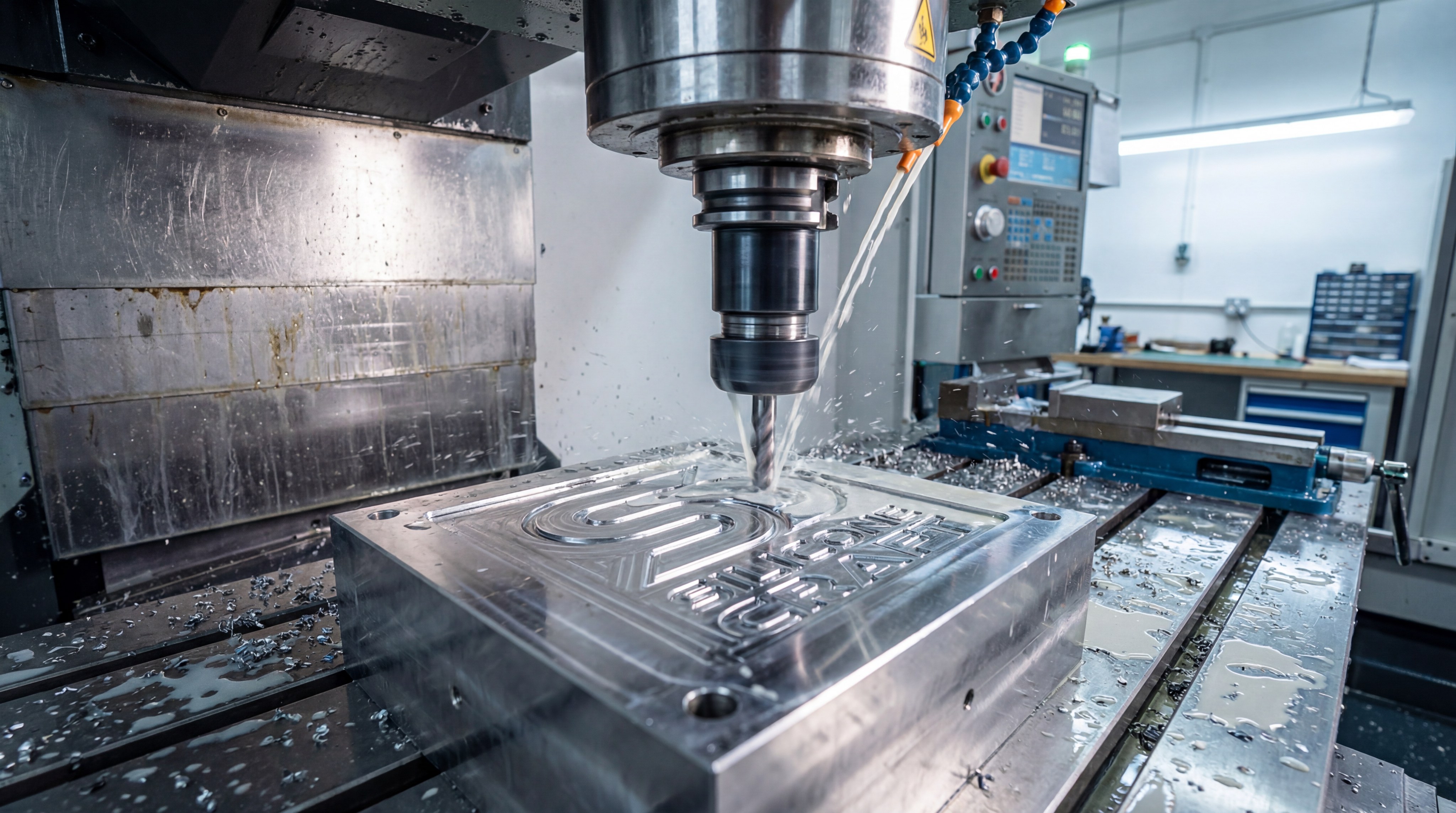
CNC milling creates permanent patterns by engraving your logo directly into the steel mold used for producing Silicone Cases. This process ensures that every part coming off the production line features a consistent, physical representation of your brand.
What is the difference between embossed and debossed?
Look: the choice between a raised or recessed logo changes the tactile feel and the way light hits the surface of your product. You can specify “embossed” to have the logo stand out from the surface or “debossed” to have it sunken in.
- Embossed: Logo is raised and tactile.
- Debossed: Logo is engraved into the case.
- Longevity: Neither will ever wear off or fade.
But there’s more. Because the logo is part of the physical mold, you don’t have to worry about ink peeling or chemical reactions over time.
Key Takeaway: Use CNC milling when you want a premium, subtle look that is guaranteed to last the entire lifespan of the device.
| Texture Type | Manufacturing Cost | User Experience |
|---|---|---|
| Embossed | Integrated in mold | Highly tactile |
| Debossed | Integrated in mold | Smooth, sleek |
This data confirms that mold-integrated branding is the most reliable choice for industrial and high-end consumer applications.
Can epoxy dripping produce colorful 3D logos for Silicone Cases?
Epoxy dripping can indeed produce vibrant, multi-color 3D logos that stay securely bonded to your Silicone Cases?. This method involves injecting liquid silicone or epoxy into specific recessed areas of the case to create a layered, “raised” effect with distinct colors.
Why is multi-color dripping popular for toys?
Here is the kicker: the 3D effect created by dripping makes your product look significantly more “fun” and interactive for children or pet brands. You can combine up to a dozen different colors in a single design without the colors bleeding into each other.
- Sharp color borders.
- Soft, rubbery 3D feel.
- Excellent wear resistance.
Think about it: the manual or semi-automated dripping process allows for a level of detail that traditional molding simply cannot match. It’s perfect for character-based designs or complex mascot logos.
Key Takeaway: Epoxy or multi-color dripping is the gold standard for creating eye-catching, kid-friendly, or character-branded protective gear.
| Feature | Dripping | Standard Molding |
|---|---|---|
| Color Count | High (Multi-color) | Low (Single/Dual) |
| Visual Depth | 3D Layered | Flat or Textured |
Multi-color dripping clearly beats standard molding when your primary goal is a playful and high-contrast visual design.
Why choose laser engraving for high-precision Silicone Cases?
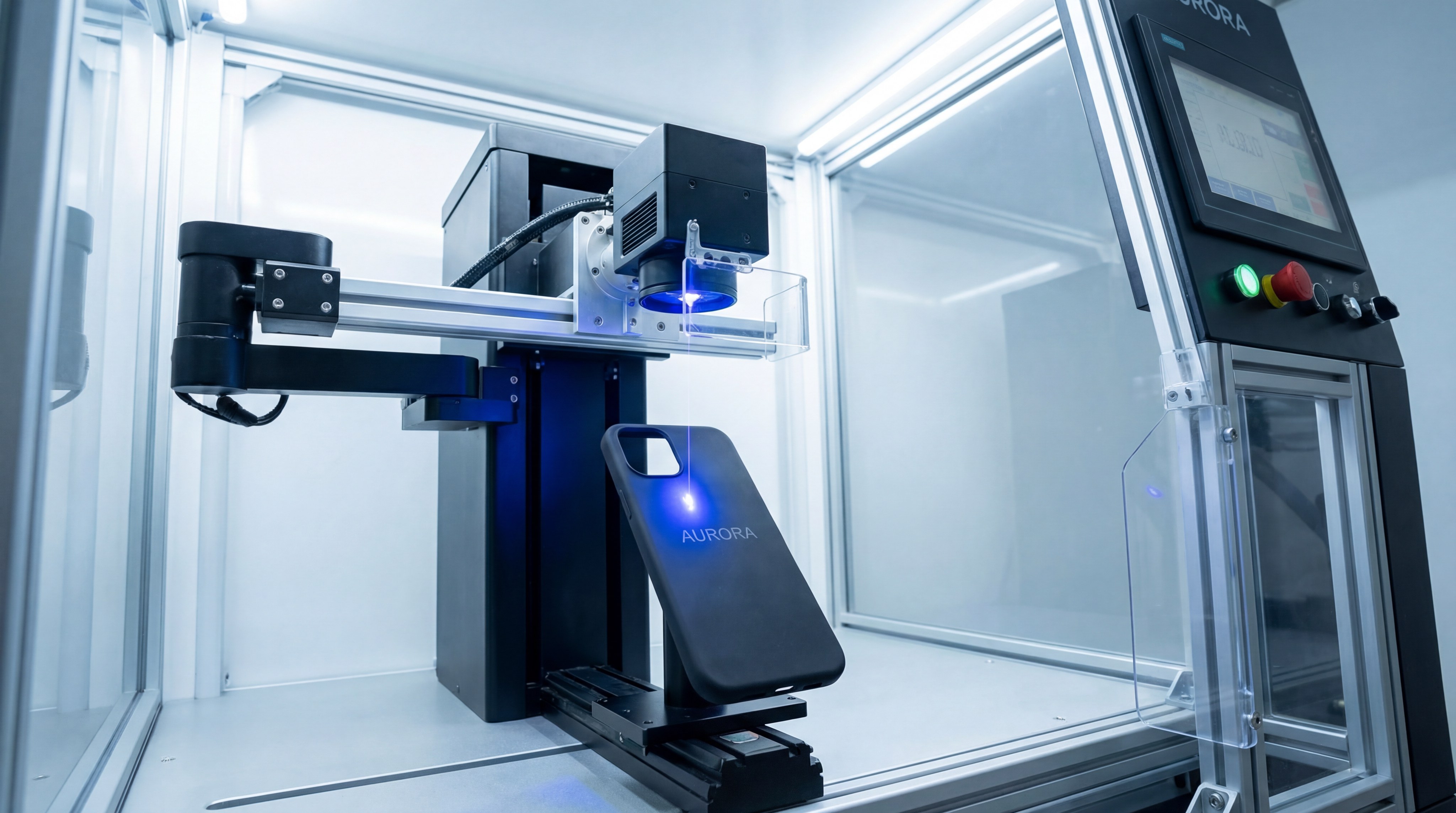
You should choose laser engraving for high-precision Silicone Cases when your design requires fine lines, serial numbers, or intricate patterns that printing cannot achieve. The laser beam removes a thin layer of the surface material to “etch” the design directly into the rubber.
Is laser marking truly permanent on rubber?
The best part? Laser marking is a permanent chemical or physical change to the material surface that cannot be washed or rubbed away. You can even use this method on dark-colored cases to create a contrasting light-gray or white mark depending on the silicone composition.
- Zero ink required.
- Precision down to 0.1mm.
- Fast setup for small batches.
But there’s more. Laser engraving allows for “on-the-fly” customization, meaning you can add unique identifiers like QR codes or individual names to every single unit in a production run.
Key Takeaway: Laser engraving offers the highest level of precision and flexibility for brands needing serialized or extremely detailed markings.
| Detail Level | Setup Time | Unit Cost |
|---|---|---|
| Ultra-Fine | Very Fast | Moderate |
| Broad Patterns | Fast | Low |
Laser technology bridges the gap between high-volume consistency and the need for intricate, individual customization.
Is screen printing the best choice for bulk Silicone Cases?
Screen printing remains the most cost-effective solution for applying simple logos to massive quantities of Silicone Cases?. This technique uses a mesh stencil and specialized silicone-based inks that cure under heat to form a strong bond with the substrate.
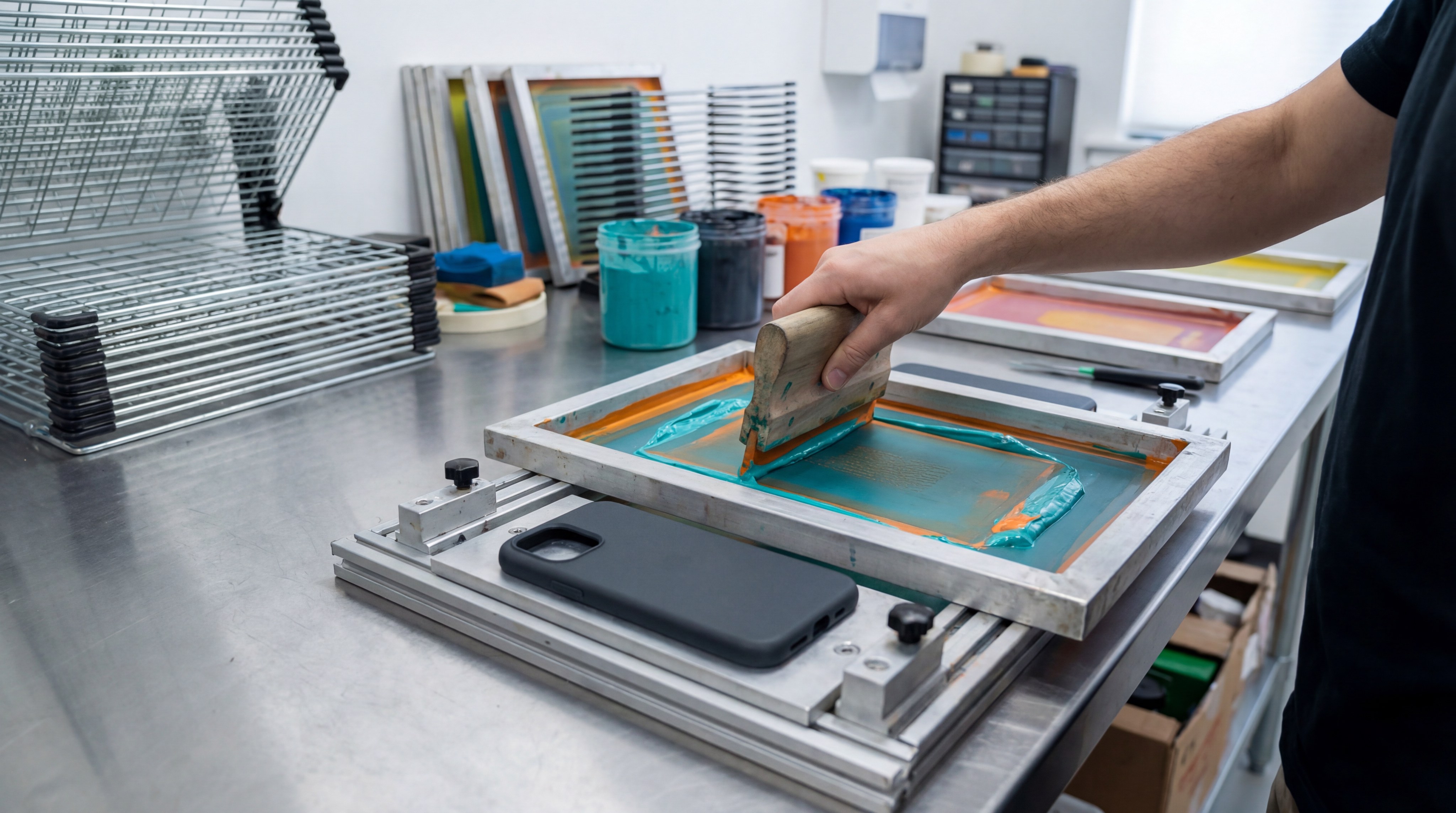
How do you maximize ink adhesion?
Look: the biggest challenge with printing on silicone is ensuring the ink doesn’t peel off during daily use. You must ensure your factory uses “silicone-on-silicone” ink systems and proper flame or corona treatment to activate the surface before the ink is applied.
- Low cost per unit.
- Vibrant Pantone matching.
- Scalable for millions of units.
Here is the kicker: while it is affordable, screen printing is generally limited to one or two colors if you want to keep production speeds high and costs low.
Key Takeaway: Choose screen printing for large-scale promotional projects where budget and color accuracy are your primary concerns.
| Volume | Cost Efficiency | Color Limit |
|---|---|---|
| >10,000 units | Excellent | 1-3 colors |
| <500 units | Average | Unlimited |
Data suggests that for large B2B orders, screen printing provides the most competitive pricing without sacrificing brand visibility.
How do heat transfer and water transfer differ for Silicone Cases?
Heat transfer uses high temperatures to bond a pre-printed film to your Silicone Cases, whereas water transfer (hydro-dipping) uses a water-soluble film to wrap complex 3D shapes. Both allow you to achieve graphics that are far more complex than simple screen printing.
Can you achieve photographic quality?
Think about it: if your brand requires a wood grain, carbon fiber, or high-definition camouflage look, transfer printing is your only viable option. You can apply full-color photos or intricate gradients that look identical to the digital source file.
- Full CMYK color range.
- Wraps around curved edges.
- Soft-touch finish options.
But here is the kicker: water transfer is particularly effective for “all-over” patterns, while heat transfer is better for centered, high-resolution logos on flat or slightly curved surfaces.
Key Takeaway: Transfer printing is the preferred method for fashion-forward brands that demand complex patterns or photographic realism on their products.
| Feature | Heat Transfer | Water Transfer |
|---|---|---|
| Pattern Coverage | Specific Area | Full Wrap |
| Image Clarity | Highest (Sharp) | High (May Stretch) |
Transfer methods provide a level of artistic freedom that traditional ink-based processes simply cannot match for modern accessories.
What is in-mould decoration (IMD) for custom Silicone Cases?
In-Mould Decoration (IMD) for custom Silicone Cases? involves placing a decorated film inside the mold before the silicone is injected. This integrates the graphic into the body of the case, making it virtually impossible to scratch or wear away.
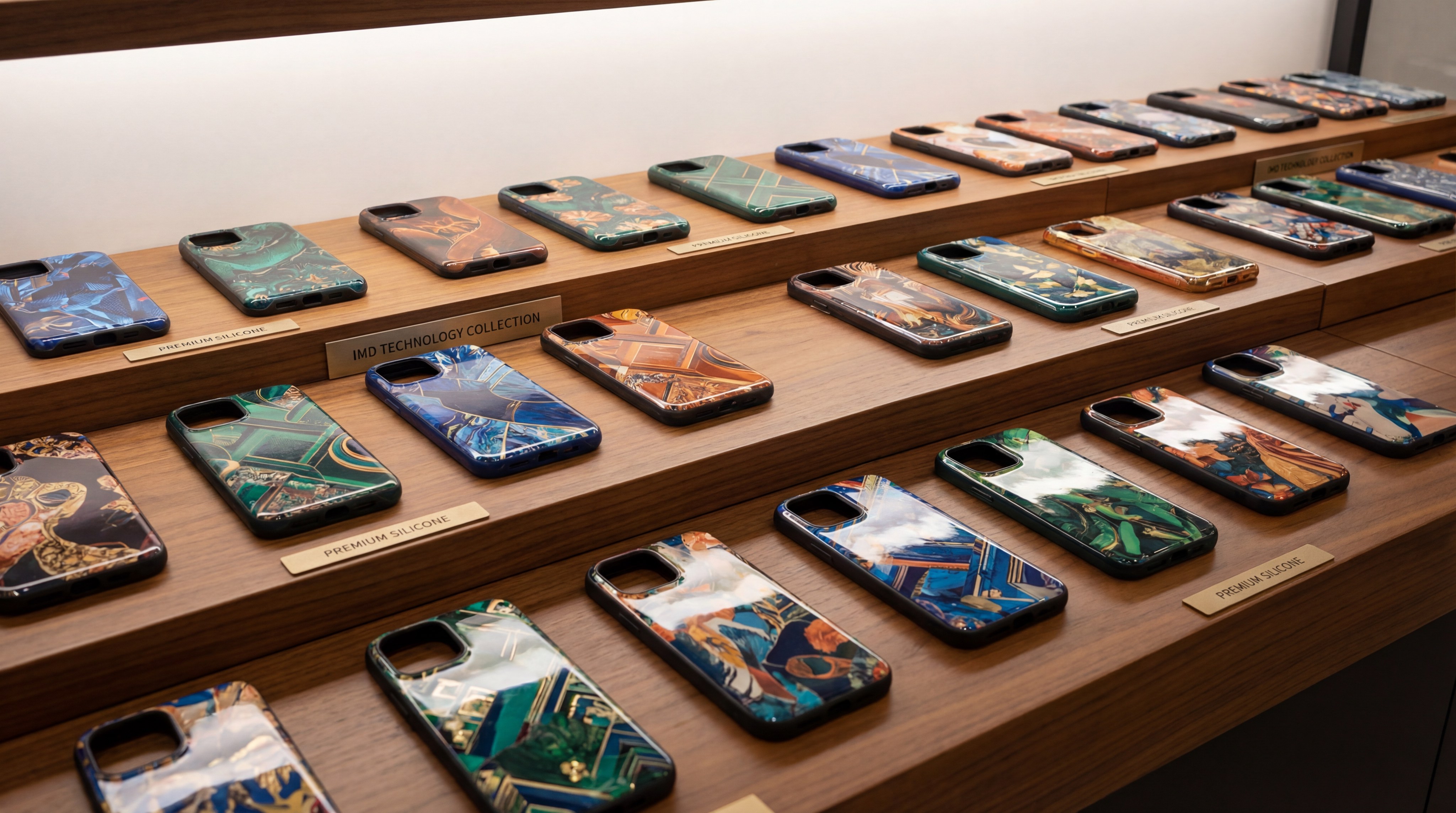
Is IMD the most durable decorative option?
Look: because the graphic is protected by a layer of clear silicone or integrated into the surface, it will never fade from friction or exposure to oils from the user’s hands. You can achieve stunning depth and gloss effects that are simply not possible with surface-level printing.
- Scratch-proof graphics.
- Premium “layered” look.
- High production efficiency.
The best part? IMD allows for the use of metallic or holographic foils, giving your cases a futuristic or luxury appearance that stands out on retail shelves.
Key Takeaway: For premium retail products where durability and high-end aesthetics are paramount, IMD is the most advanced choice.
| Durability | Aesthetic Appeal | Tooling Cost |
|---|---|---|
| Highest | Luxury / Premium | High |
| High | Modern / Stylish | Moderate |
As the analysis shows, the higher initial investment in IMD tooling pays off through superior product longevity and retail appeal.
How to ensure durability of logo printing on Silicone Cases?
You ensure durability for Silicone Cases by performing rigorous adhesion tests and selecting the correct curing parameters for the specific grade of rubber used. Professional manufacturers focus on the chemical bond between the ink and the silicone to prevent delamination.
What are the standard quality tests?
Here is the kicker: even the best-looking logo is worthless if it peels off after two weeks of use. You should demand that your supplier performs “3M tape tests” and alcohol rub tests to simulate the wear and tear of a typical consumer environment.
- Cross-cut adhesion test.
- RCA abrasion testing.
- Chemical resistance check.
Think about it: the curing temperature and duration are the most critical factors. If the oven is too cold, the ink won’t cross-link with the silicone; if it’s too hot, the case might deform.
Key Takeaway: Durable branding is a result of precise chemistry and strict process control during the post-molding phase.
| Test Type | Failure Mode | Success Metric |
|---|---|---|
| Tape Test | Peeling / Flaking | Zero ink transfer |
| Alcohol Rub | Fading / Dissolving | >100 cycles |
Ensuring your supplier meets these metrics is the only way to protect your brand reputation from quality-related returns.
What are the key benefits of branding your Silicone Cases?
Branding your Silicone Cases? turns a simple commodity into a powerful marketing tool that builds continuous awareness for your company. Whether you are a reseller or a corporate gift buyer, customized products justify higher price points and better market positioning.
How does branding improve ROI?
The best part? A branded case stays on a user’s phone for an average of 18 months, providing thousands of impressions for your logo at a fraction of the cost of digital advertising. You can use these items to build a professional image that separates you from low-cost “no-name” competitors.
- Enhanced brand recall.
- Perceived higher value.
- Improved anti-counterfeiting.
But there’s more. Custom patterns and colors allow you to target specific demographics, such as sports fans, tech enthusiasts, or corporate professionals, with tailored designs that resonate with their lifestyle.
Key Takeaway: Strategic branding is the most effective way to elevate your product’s market value and ensure long-term brand visibility.
| Objective | Branding Method | ROI Potential |
|---|---|---|
| Brand Awareness | Large Printed Logo | High |
| Product Premiumization | IMD / Laser Etch | Very High |
The data confirms that branding is not an expense, but a strategic investment in your product’s marketability and profit margins.
How to select the right manufacturer for branded Silicone Cases?
Selecting the right manufacturer for your Silicone Cases? requires auditing their in-house decoration capabilities and their history of exporting to Western markets. You need a partner that understands the strict safety and quality standards required for consumer electronics accessories.
Why is DFM guidance critical?
Here is the kicker: a factory that provides Design for Manufacturing (DFM) advice can help you optimize your logo placement to avoid molding defects or printing misalignments. You should look for manufacturers that handle everything from mold-making to secondary printing under one roof.
- ISO 9001 certification.
- In-house printing lab.
- English-speaking support.
Think about it: having a single point of accountability reduces the risk of quality drift between the molding stage and the final branding stage. This ensures your colors are consistent across every batch.
Key Takeaway: Partner with an integrated manufacturer that offers both precision molding and advanced decorative services for the best results.
| Selection Criteria | Importance | Impact |
|---|---|---|
| In-house Tooling | Critical | Lead time & Quality |
| Export Experience | High | Compliance & Logistics |
Choosing a factory with these strengths ensures your project moves from concept to mass production with minimal technical hurdles.
Frequently Asked Questions (FAQ)
- Can I put a full-color photo on a silicone case?
Yes, you can achieve photographic quality using heat transfer or water transfer printing methods which allow for high-resolution graphics and complex gradients. - What’s the best method for small logo runs?
Laser engraving is typically the best choice for small runs because it requires no expensive molds or screens and can be set up quickly for low-volume orders. - Are printed logos on silicone cases toxic?
Directly answered: No, reputable manufacturers use food-grade, non-toxic inks that comply with FDA and RoHS standards to ensure the cases are safe for daily human contact. - How long does it take to develop custom case tooling?
With an efficient manufacturer, the process from DFM review to a finished steel mold and initial samples usually takes between 15 and 25 business days. - Which branding method is best for industrial environments?
CNC milling (embossed or debossed logos) is the best for industrial use as the logo is physically part of the product and cannot be worn off by chemicals or abrasion.
Conclusion
Putting a logo or pattern on silicone products is more than just an aesthetic choice; it is a critical business strategy to ensure product differentiation and brand recognition. We have explored how structural methods like CNC milling provide unmatched durability, while advanced printing techniques like IMD and heat transfer offer the visual complexity needed for modern consumer electronics. By selecting the right process based on your volume, budget, and durability requirements, you can resolve the problem of generic, uninspiring products.
At HuaLin Silicone, we are committed to helping B2B buyers launch professional, high-quality products through our integrated manufacturing and decoration services. We provide the engineering expertise and stable mass production needed to protect your brand’s reputation on the global stage. To start your custom branding project and receive expert DFM guidance, contact us today and let our team transform your designs into reality.