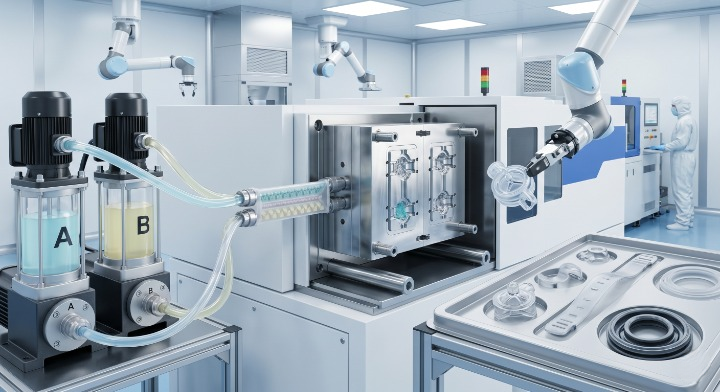
LSR silicone molded components are high-precision elastomeric parts manufactured by injecting liquid silicone rubber into a heated mold to produce durable, flexible, and biocompatible products. You often face the stress of inconsistent part dimensions or seals that fail under pressure, leading to costly assembly delays and high scrap rates. These manufacturing defects can stall your product launch and damage your brand’s reputation for quality. By utilizing high-performance LSR Molding Mold technology, you can achieve the tight tolerances and material stability required for even the most demanding industrial applications.
What Is Liquid Silicone Rubber (LSR)?
Liquid Silicone Rubber (LSR) is a high-purity, two-component elastomer that uses a platinum-cured system to create stable and flexible finished parts. To maximize the performance of your LSR Molding Mold, you must understand the specific chemistry of Part A and Part B mixing. This material is delivered as a pumpable liquid, allowing for high-speed automated processing.
The Chemical Composition of LSR Materials?
Let’s break it down:
- Part A: Contains the silicone polymer and the essential platinum catalyst.
- Part B: Consists of the silicone polymer along with a crosslinker and specific additives.
- Mixing Ratio: Always maintained at a precise 1:1 ratio for uniform curing.
You will find that this chemical structure ensures your components remain inert and stable over time. The platinum-cure system is preferred because it leaves no chemical by-products, making it safer for sensitive applications.
Key Takeaway: LSR’s two-part liquid chemistry allows for a cleaner, faster, and more precise manufacturing process compared to solid rubbers.
| Component | Function | State |
|---|---|---|
| Part A | Silicone + Platinum Catalyst | Liquid |
| Part B | Silicone + Crosslinker | Liquid |
This basic composition is the foundation of every high-quality silicone part you integrate into your product design.
Why Use LSR Silicone Molded Components?
You should use LSR silicone molded components because they offer unparalleled thermal stability, chemical resistance, and mechanical durability across a wide range of extreme environments. Investing in a precision LSR Molding Mold ensures that your finished parts maintain their physical properties at temperatures ranging from -60°C up to +200°C. This reliability makes them the gold standard for high-stakes sealing and protection.
Superior Thermal and Mechanical Stability?
Here is the kicker:
- Temperature Resistance: Remains flexible in freezing cold and stable in intense heat.
- Compression Set: Offers excellent resistance to permanent deformation under load.
- Environmental Protection: Highly resistant to UV light, ozone, and harsh weather conditions.
You can rely on these components to provide long-lasting performance without the degradation seen in traditional rubbers. The hydrophobic surface also ensures your electronics stay protected from moisture and humidity.
Key Takeaway: The extreme durability of LSR parts reduces your long-term maintenance costs and improves your overall product lifespan.
| Property | Benefit | Typical Application |
|---|---|---|
| Temperature Range | -60°C to +200°C | Automotive/Aerospace |
| Hardness | 10 to 80 Shore A | Consumer Electronics |
These mechanical properties provide the design flexibility you need to solve complex engineering challenges.
How Does the LSR Injection Process Work?
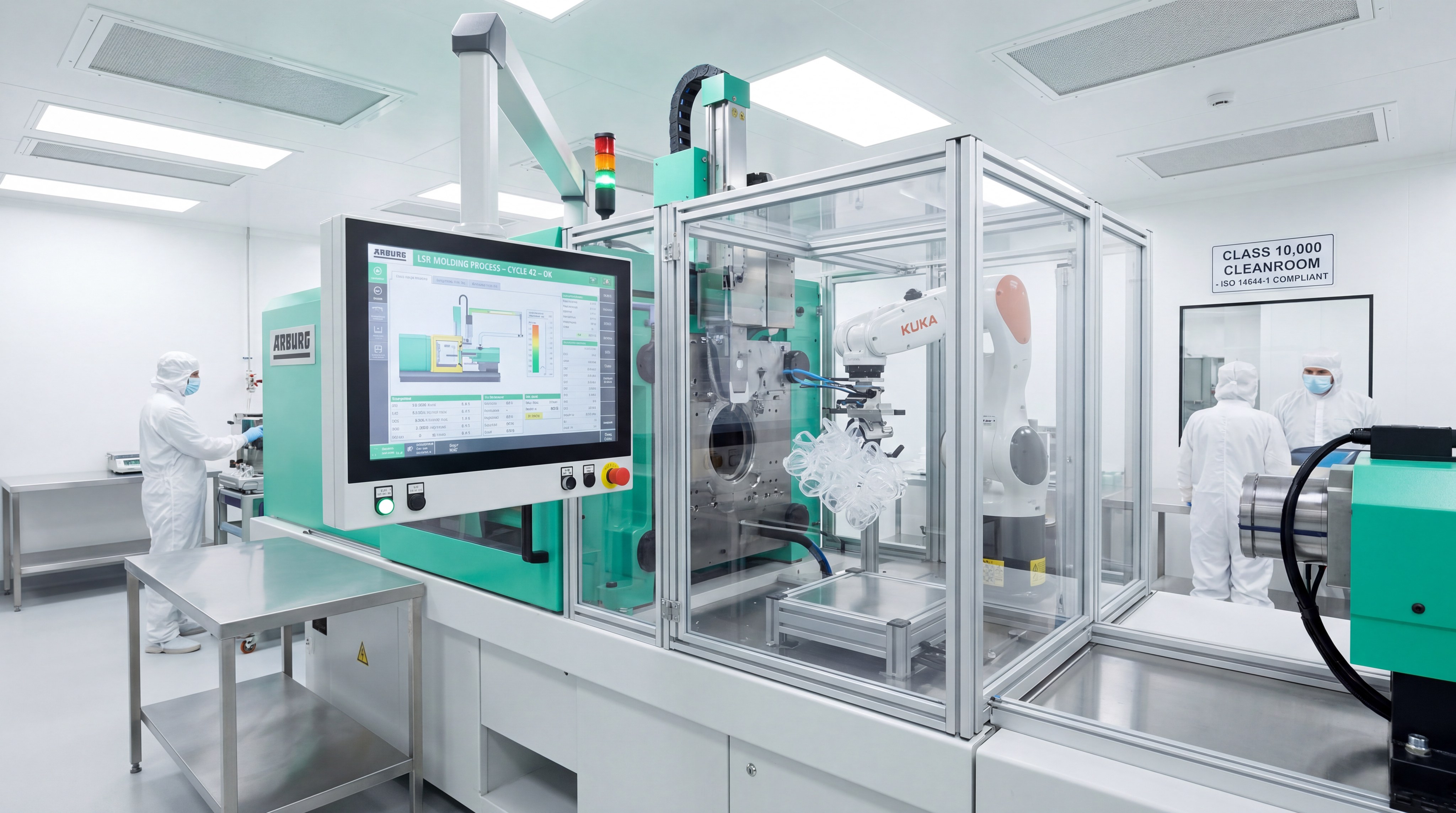
The LSR injection process works by pumping raw liquid components through a static mixer and into a heated mold cavity where they rapidly cure into a solid part. Using an automated LSR Molding Mold setup minimizes human error and significantly speeds up your mass production cycles. This closed-loop system ensures that the material remains free from contamination throughout the entire manufacturing journey.
Precision Steps for Automated Production?
Think about this:
- Material Feeding: Pumps deliver Part A and B into the system with 1:1 precision.
- Injection Phase: The mixed liquid is injected into the mold at high pressure.
- Thermal Curing: Heat within the mold triggers the cross-linking reaction within seconds.
You benefit from a process that is highly repeatable, ensuring the millionth part is identical to the first. This level of automation allows you to scale production quickly without sacrificing quality.
Key Takeaway: Process automation in LSR molding provides the consistency you need for high-volume, zero-defect manufacturing.
| Process Step | Goal | Result |
|---|---|---|
| Static Mixing | Uniform blending | Even curing |
| High-Pressure Injection | Complete cavity filling | No voids or air pockets |
Maintaining control over these injection parameters is the secret to producing parts with flawless appearance and function.
What Makes LSR Mold Design Unique?
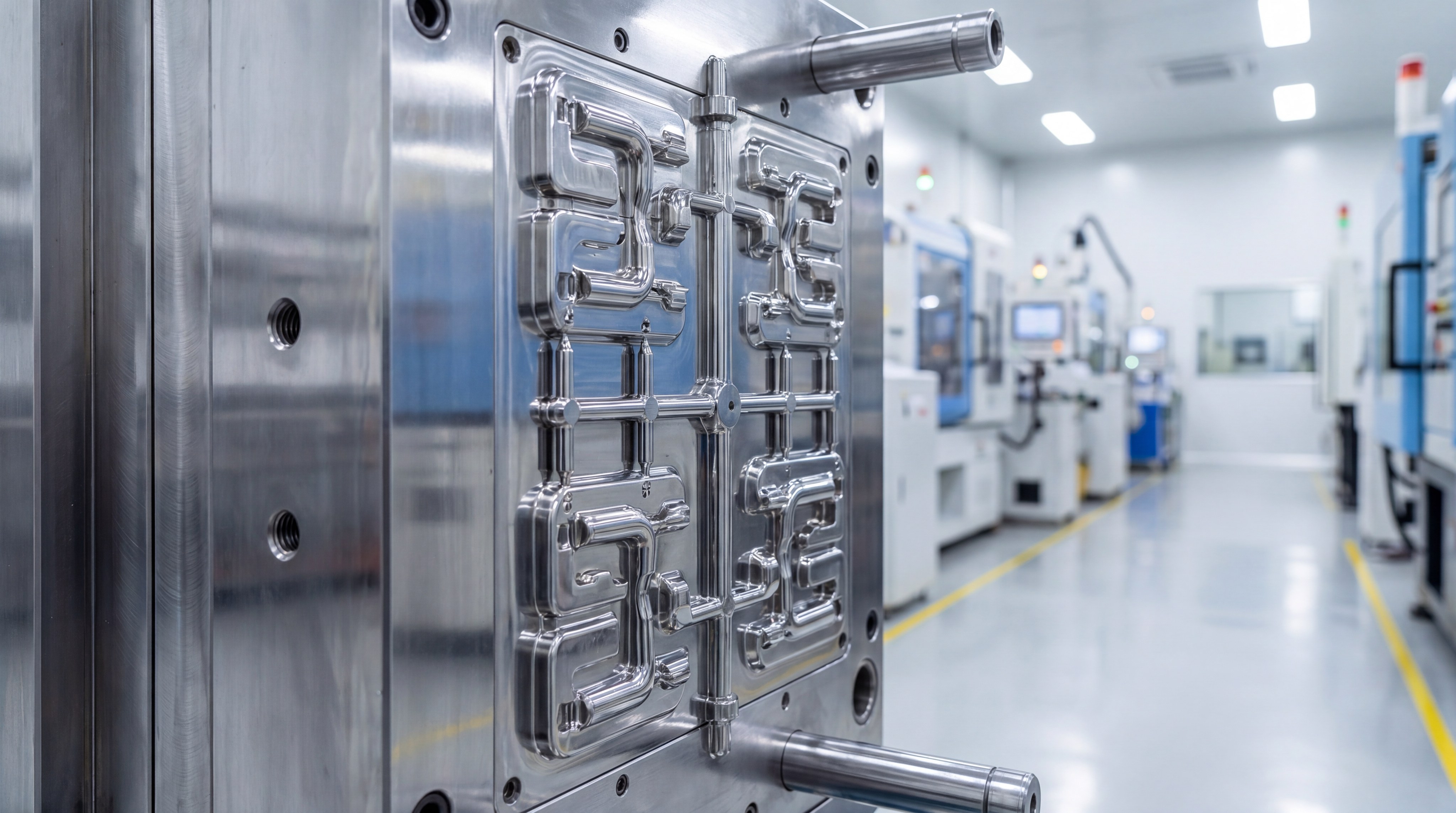
LSR mold design is unique because it requires specialized features like cold runner systems and vacuum venting to handle the low viscosity of liquid silicone. When you secure a high-end LSR Molding Mold, you are choosing tooling that prevents “flash” and eliminates material waste through advanced engineering. Unlike thermoplastic molds, these tools must be heated to cure the material rather than cooled to solidify it.
Technical Features of High-End Tooling?
The secret is simple:
- Cold Runner Systems: Keep the silicone liquid in the runners to eliminate waste.
- Vacuum Venting: Removes all trapped air to prevent bubbles and incomplete fills.
- Cavity Finish: High-polish surfaces create parts with optical clarity or smooth textures.
You will notice that these molds are often crafted from hardened S136 stainless steel to withstand millions of cycles. This precision ensures your parts meet the tightest dimensional requirements in your assembly.
Key Takeaway: Advanced mold design is the primary factor that determines the surface quality and dimensional accuracy of your silicone parts.
| Mold Feature | Technical Impact | Business Value |
|---|---|---|
| Cold Runner | Zero runner waste | Lower per-part cost |
| Hardened Steel | High mold life | Consistent long-term production |
Precision tooling protects your investment by ensuring your parts fit perfectly every time.
Which Industries Rely on LSR Parts?
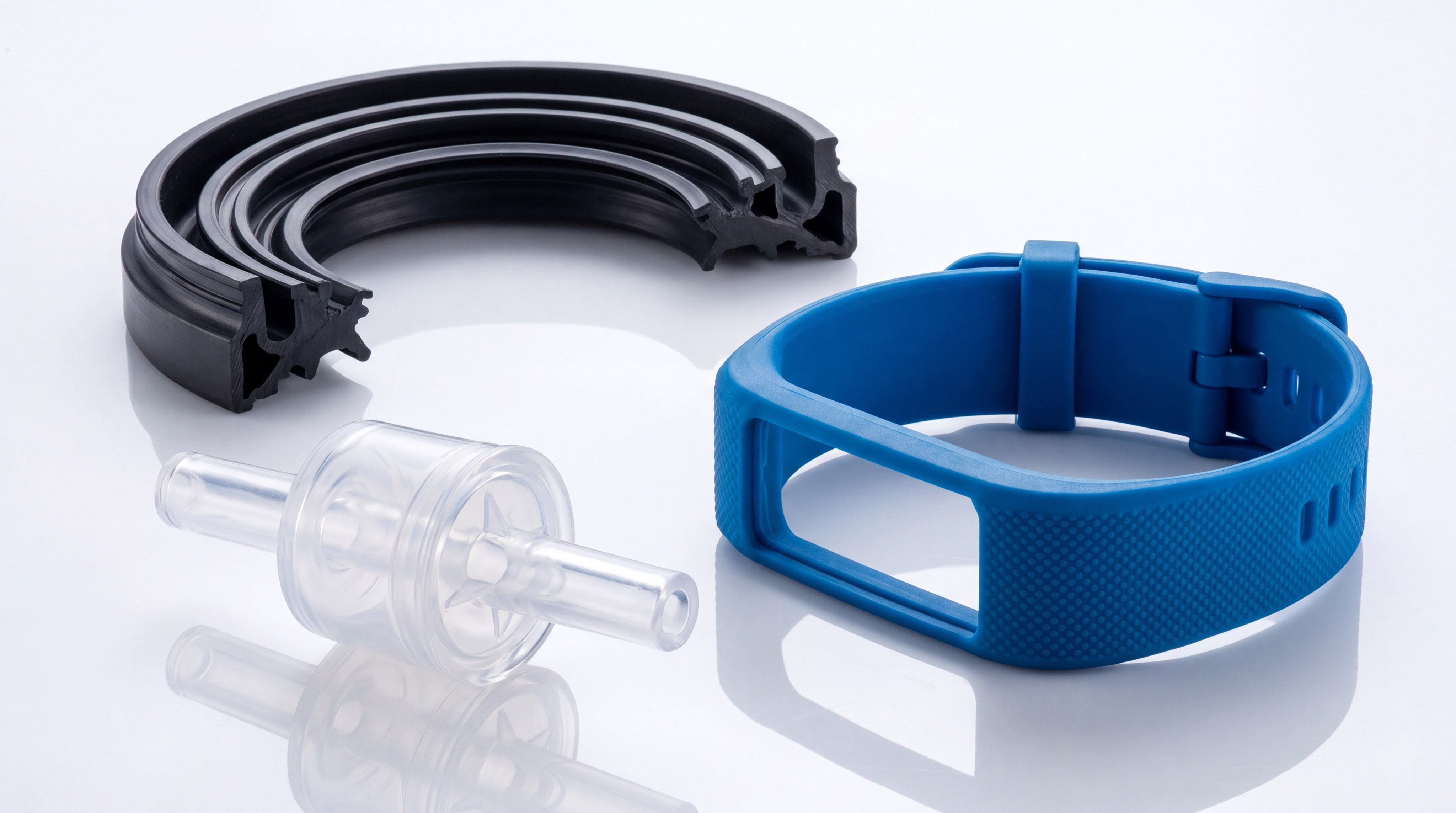
Many critical industries rely on LSR parts because of their biocompatibility, chemical resistance, and ability to survive in high-stress environments. Your development of a custom LSR Molding Mold can serve the medical, automotive, and telecommunications sectors where failure is not an option. From life-saving medical devices to the infrastructure of 5G networks, these components are everywhere.
Critical Roles in Medical and Telecom?
But wait, there’s more:
- Healthcare: Surgical valves and respiratory masks that require ISO 13485 compliance.
- Communication: Weather-proof seals for outdoor 5G stations and fiber optic housings.
- Wearables: Skin-safe straps for smartwatches that resist sweat and oils.
You can leverage the purity of LSR to meet the most demanding regulatory standards in the world. Whether it is for food-contact safety or medical-grade sterilization, LSR is the superior choice.
Key Takeaway: LSR is the versatile material of choice for any industry that demands safety, longevity, and high performance.
| Industry | Primary Need | Example Component |
|---|---|---|
| Medical | Biocompatibility | Respirator seals |
| Telecom | UV Resistance | Fiber optic gaskets |
Selecting the right material grade for your industry ensures your product remains compliant and safe for the end user.
How Does LSR Overmolding Benefit Design?
LSR overmolding benefits your design by allowing you to bond silicone directly to plastic or metal parts, creating a single integrated unit. Using a sophisticated LSR Molding Mold for overmolding eliminates the need for messy adhesives or mechanical fasteners. This process creates a permanent chemical or mechanical bond that is waterproof and incredibly durable.
Achieving Multi-Material Integration?
It gets better:
- Labor Savings: Reduces the number of steps in your final assembly process.
- Structural Integrity: Creates a seal that cannot be pried apart or leaked.
- Ergonomics: Adds a “soft-touch” feel to rigid plastic handles or electronic housings.
You can combine the strength of metal or plastic with the flexibility and sealing power of silicone. This leads to more compact designs and a more premium feel for your finished product.
Key Takeaway: Overmolding simplifies your supply chain and enhances the functional performance of your multi-material products.
| Substrate | Bonding Type | Application |
|---|---|---|
| Plastic (PC/PA) | Chemical/Mechanical | Handheld devices |
| Metal (SS/AL) | Primer-assisted | Medical tools |
This advanced technique allows you to innovate faster while maintaining a high level of aesthetic quality.
LSR vs. HTV: Which Silicone Is Better?
LSR is generally better for your project if you require high-volume production, intricate details, and a high level of automation. Choosing an LSR Molding Mold typically leads to faster cycle times compared to the manual labor involved in High Consistency Rubber (HTV) molding. While HTV is excellent for large, bulky items, LSR wins on precision and purity every time.
Performance and Processing Comparison?
You might wonder:
- Speed: LSR cures in seconds, while HTV often takes minutes to process.
- Accuracy: Liquid injection allows for much tighter tolerances than compression molding.
- Cleanliness: LSR systems are closed, drastically reducing the risk of material contamination.
You should evaluate your production volume and part complexity before deciding. For millions of tiny, precise components, the automation of LSR is far more cost-effective in the long run.
Key Takeaway: LSR is the superior choice for high-volume, high-precision projects that require automated consistency.
| Feature | LSR (Liquid) | HTV (Solid) |
|---|---|---|
| Cycle Time | Very Fast | Moderate |
| Automation | Fully Automated | Often Manual |
Understanding these differences helps you allocate your budget toward the most efficient manufacturing method.
What Quality Standards Must LSR Meet?
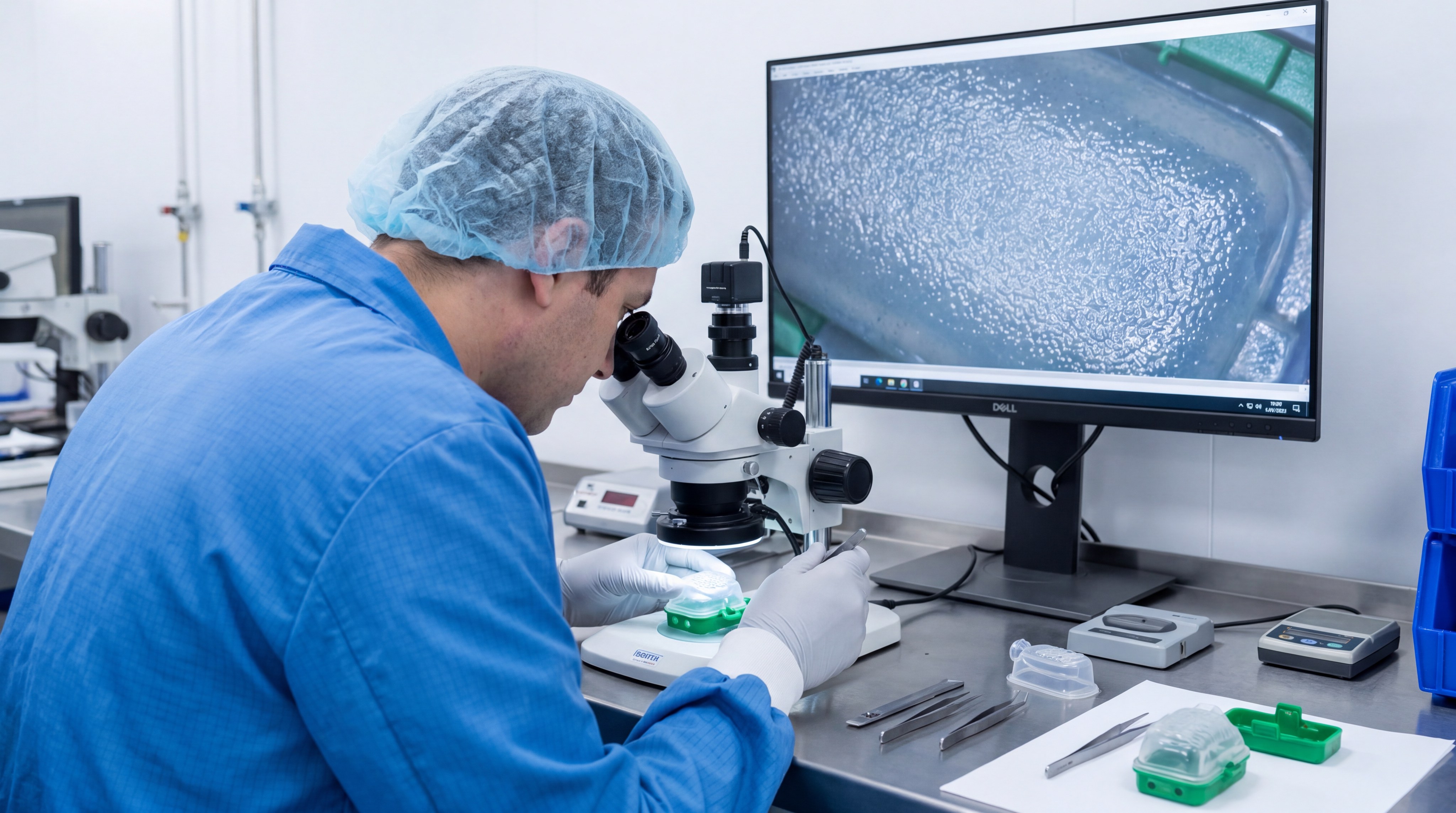
Your LSR components must meet strict global quality standards to ensure they are safe for consumers and compatible with sensitive electronics. Implementing a validated LSR Molding Mold process allows you to maintain full traceability and meet certifications like FDA, RoHS, and REACH. This rigorous testing prevents batch rejections and ensures your products are ready for the international market.
Certifications and Validation Protocols?
Why does this matter?
- Material Purity: Ensuring no harmful chemicals leach out during use.
- Dimensional Checks: Using CMM and CCD visual systems to verify every millimeter.
- Medical Compliance: Meeting USP Class VI and ISO 13485 for healthcare devices.
You can sleep better knowing that your supplier uses a three-stage quality control system. This includes checking raw materials, monitoring the injection process, and performing a final 100% visual inspection.
Key Takeaway: Strict adherence to quality standards is the only way to guarantee the safety and reliability of your silicone parts.
| Standard | Focus | Industry |
|---|---|---|
| ISO 9001 | General Quality | All Industries |
| FDA/LFGB | Food Safety | Kitchen/Baby Care |
Consistent quality protocols ensure that your parts perform as expected, even in the most demanding conditions.
What Challenges Exist in LSR Production?
The most common challenges you will face in LSR production include managing the high cost of tooling and preventing tiny defects like air bubbles. Expert management of your LSR Molding Mold is the only way to avoid “flash,” which occurs when the liquid material leaks out of the mold seams. Managing these risks requires a manufacturer with deep engineering expertise and advanced process control systems.
Mitigating Tooling and Process Risks?
The bottom line:
- Flash Control: Using high-precision mold tolerances to keep edges clean.
- Air Entrapment: Utilizing vacuum systems to pull air out before the silicone enters.
- Initial Investment: Planning for long-term production to offset the high cost of the mold.
You must work with engineers who provide Design for Manufacturing (DFM) suggestions early in the process. This proactive approach catches design flaws before they become expensive problems in the factory.
Key Takeaway: High-quality LSR manufacturing requires a significant upfront investment in engineering and precision tooling.
| Challenge | Solution | Benefit |
|---|---|---|
| Part Flash | Precision Tolerances | No manual trimming |
| High Tooling Cost | Mass Production Scale | Lower cost per part |
Choosing a partner with in-house tooling capabilities is the best way to mitigate these production risks effectively.
How to Choose a Top LSR Manufacturer?
To find the best partner, you should choose an LSR manufacturer that offers integrated services, from initial DFM support to stable mass production. Partnering with a factory that builds their own LSR Molding Mold ensures that they have full control over the quality and lead time of your project. You need a supplier that acts as an extension of your engineering team, not just a vendor.
Evaluating Technical and Operational Depth?
Ready to start?
- In-House Tooling: Ensures faster mold changes and superior maintenance.
- Experience: Look for a track record in complex industries like medical or automotive.
- Export Support: Choose a manufacturer that understands international logistics and documentation.
You should look for transparency in their quality systems and a willingness to provide a detailed QC plan for your specific part. A manufacturer with ISO 9001 certification and a modern facility is a strong indicator of long-term reliability.
Key Takeaway: Your manufacturing partner’s engineering depth is just as important as their production capacity.
| Criteria | Ideal Partner | Result |
|---|---|---|
| Engineering | 24-hour DFM support | Optimized design |
| Reliability | ISO Certified | Consistent quality |
Making the right choice today will ensure a smooth, successful product launch and a stable supply chain for years to come.
FAQ
What is the difference between LSR and standard silicone?
LSR is a liquid that is injected and cured quickly via heat, while standard silicone (HTV) is a solid, clay-like material usually processed through compression molding. This makes LSR much better for automated, high-precision production.
Can LSR be used for food-contact products?
Yes, LSR is inherently inert and can be formulated to meet strict FDA and LFGB food-safety standards. It is the preferred material for baby pacifiers, kitchenware, and bottle nipples.
What are the typical lead times for an LSR mold?
Generally, a precision LSR mold takes 4 to 6 weeks to design and fabricate, depending on the complexity. However, choosing a partner with in-house tooling can often shorten this timeline.
Is LSR overmolding possible on all plastics?
No, the plastic must be able to withstand the LSR curing temperatures, which typically range from 120°C to 180°C. Common substrates include Nylon (PA), Polycarbonate (PC), and PBT.
How do I know if LSR is right for my project?
LSR is usually the best choice if you need high volumes, tight tolerances, medical-grade purity, or complex geometries that are difficult to achieve with solid rubber. If you require millions of consistent parts, LSR is your solution.
Partner With the Experts
If you are ready to bring your next silicone project to life with precision and speed, reach out today to start a conversation with our engineering team. We are committed to transforming your complex designs into high-performance components that drive your business forward. Our vision is to empower global OEMs through engineering excellence and transparent manufacturing, ensuring that your path from prototype to mass production is flawless and efficient.