Selecting a partner for critical high-purity components is a high-stakes decision that directly impacts your product’s safety and long-term performance. If you fail to verify production standards, you risk costly material degradation, contamination, and regulatory rejection. Fortunately, by learning how to choose silicone manufacturer through a rigorous technical vetting process, you can ensure your supply chain remains both resilient and compliant.
Why is raw material grade critical in tubing?
Selecting the correct grade of silicone is the first step in ensuring application success because different grades offer vastly different levels of biocompatibility and chemical stability. Medical-grade silicone is specifically tested for non-reactivity within the human body, whereas industrial or food-grade variants focus primarily on mechanical durability or low volatile content. Using an improper grade can lead to leaching, material failure, or immediate safety recalls in sensitive healthcare and laboratory environments.
What is the difference between food and medical grade?
Medical-grade silicone must meet much more stringent requirements to ensure it is non-toxic, sterile, and non-reactive during patient contact. While food-grade silicone tubing focuses on preventing contamination during processing, medical variants are fungi-resistant and biocompatible.
But that is just the beginning.
- Medical Grade: Tested for USP Class VI compliance and biocompatibility.
- Food Grade: Complies with FDA 21 CFR 177.2600 for repeated food contact.
- Industrial Grade: Optimized for high tear strength and mechanical resilience.
Key Takeaway: Always match the material certification to your specific industry regulation to avoid catastrophic safety risks and product liability issues.
How do chemical and temperature resistance vary?
High-quality silicone must exhibit exceptional resilience to extreme temperature ranges, often from -60°C to over 230°C. Investigating how to choose silicone manufacturer involves assessing their ability to formulate silicone that withstands specific corrosive chemicals.
| Grade | Primary Certification | Key Characteristic |
|---|---|---|
| Medical | USP Class VI / ISO 10993 | Non-reactive and sterile |
| Food | FDA 21 CFR | Low volatile content |
| Industrial | ASTM Standards | High mechanical durability |
Understanding the chemical composition is vital, but the environment where it is extruded matters just as much.
Does the manufacturer maintain ISO-certified cleanrooms?
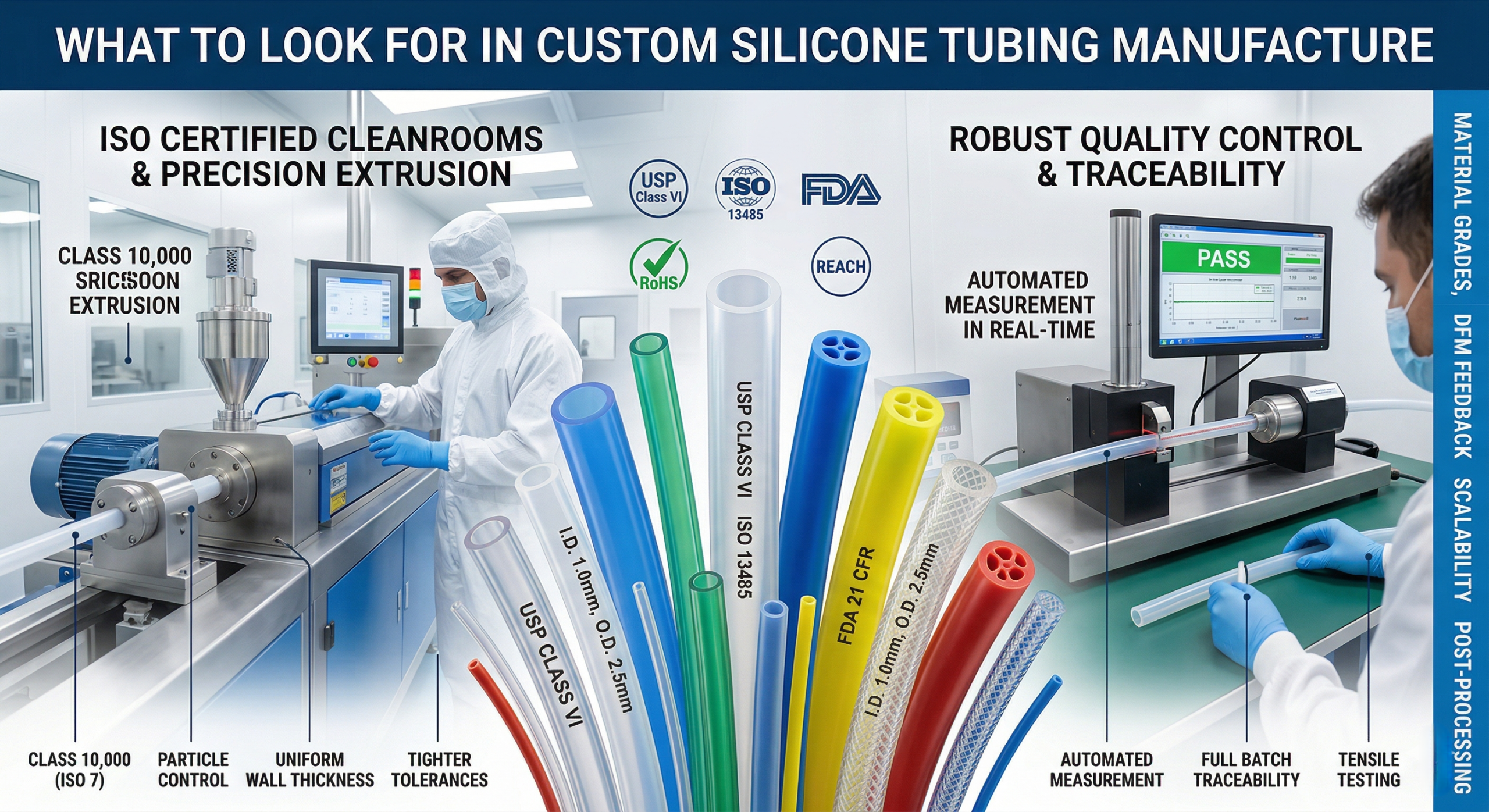
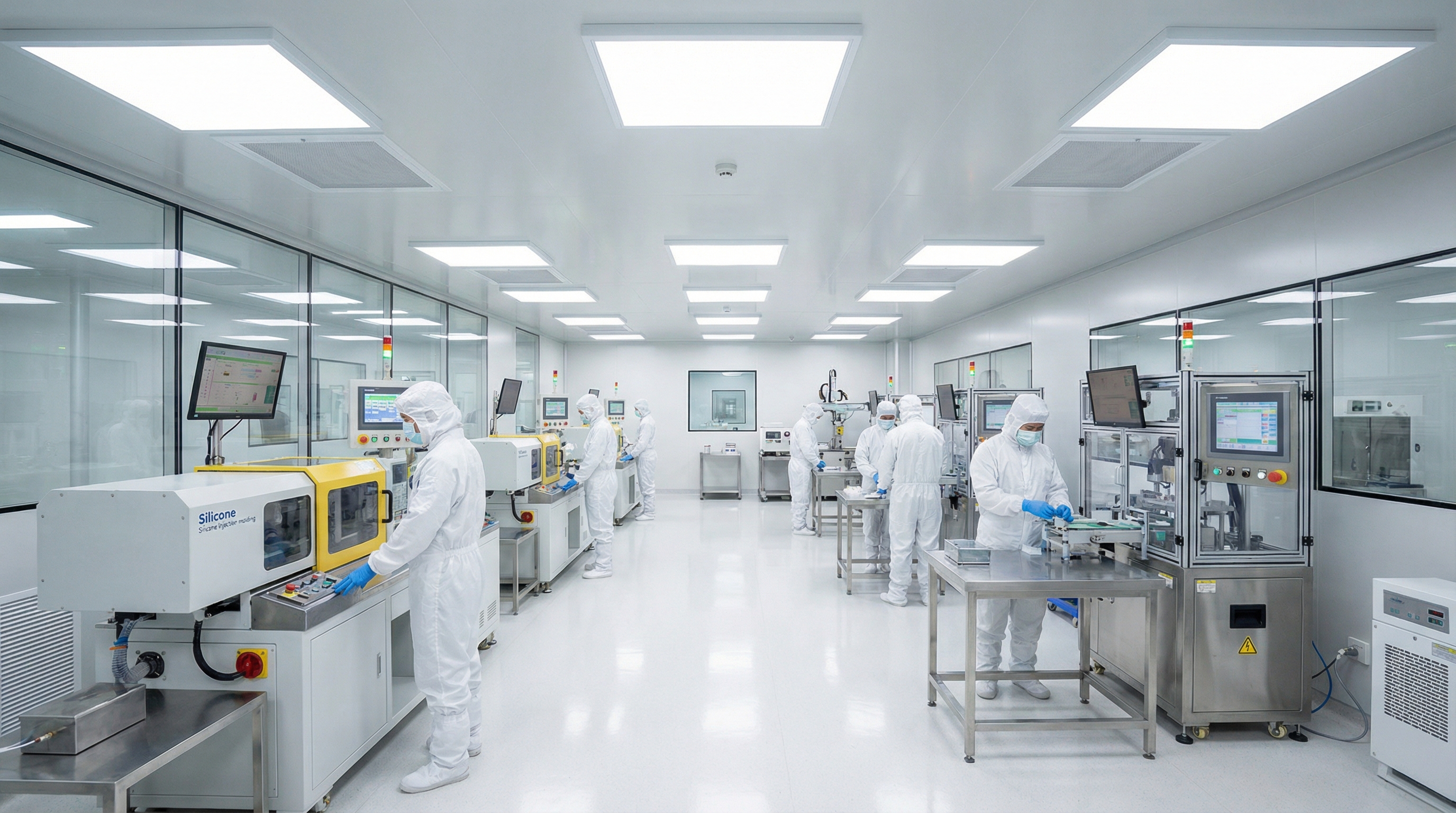
Manufacturing in a controlled cleanroom is essential to prevent airborne particles from embedding in the silicone walls during the extrusion process. To maintain the integrity of medical or electronic components, how to choose silicone manufacturer requires auditing their production environment for particle counts. This level of environmental control is the only way to prevent contamination in sensitive fluid transfer applications.
Why is particle control vital for medical tubing?
Even microscopic dust can compromise the surface finish of a tube, creating sites for bacterial growth or blockages in micro-fluidic systems. Here is why controlled environments are non-negotiable for high-end production:
- Class 100,000 (ISO 8): The standard for most high-quality medical device components.
- Class 10,000 (ISO 7): Required for high-purity pharmaceutical or surgical grade tubing.
- Environmental Monitoring: Continuous tracking of humidity, temperature, and airborne particulates.
Key Takeaway: Certified cleanroom manufacturing is a fundamental requirement for any tubing used in surgical, pharmaceutical, or laboratory settings.
| Cleanroom Class | ISO Equivalent | Application Suitability |
|---|---|---|
| Class 100,000 | ISO 8 | General medical parts |
| Class 10,000 | ISO 7 | High-purity fluid transfer |
| Controlled Area | N/A | Industrial sealing products |
Beyond the environment, the physical tools used to shape the silicone determine your final return on investment.
How do custom tooling capabilities impact your ROI?
Custom tooling allows for significantly tighter tolerances, which translates directly to less raw material consumption and higher product consistency. When a manufacturer utilizes precision LSR molding and extrusion dies, the tubing walls remain uniform throughout the entire production cycle. This precision reduces the number of rejected parts and lowers your total cost per unit over time.
Can precision tooling reduce material waste?
Investing in superior custom tooling upfront drastically reduces long-term operational expenses and material loss by eliminating variance. Here is why specialized tooling matters:
- Tighter Tolerances: Crucial for maintaining consistent flow rates in drug delivery systems.
- Custom Profiles: Allows for complex multi-lumen or non-cylindrical extrusion shapes.
- Tool Longevity: High-quality hardened dies last through millions of production cycles without degrading accuracy.
Key Takeaway: High-precision tooling ensures consistent wall thickness, minimizing scrap rates and maximizing the value of every meter produced.
| Tooling Feature | Benefit | ROI Impact |
|---|---|---|
| Precision Dies | Uniform wall thickness | Lower scrap rates |
| Multi-Lumen Support | Complex fluid paths | High product value |
| In-house Maintenance | Minimal downtime | Faster production |
Technical precision must be backed by official documentation to be viable in global markets.
Can the supplier meet strict medical or industrial certifications?
A reliable manufacturer must demonstrate how to choose silicone manufacturer by provides transparent certification records for every batch. Whether you are in the automotive or pharma sector, your supplier should hold ISO 9001 and ISO 13485 certifications. These documents prove that the manufacturer follows a standardized quality management system that satisfies global auditors.
Are FDA and USP Class VI standards non-negotiable?
For any application involving human contact or food processing, these certifications are the only way to guarantee safety. Never partner with a manufacturer that cannot provide:
- USP Class VI: The highest standard for biocompatibility in the medical industry.
- ISO 13485: Specifically required for medical device quality management systems.
- RoHS/REACH: Ensures the absence of hazardous substances in electronics applications.
Key Takeaway: Ensure your partner can provide up-to-date third-party lab test reports for all raw materials used in your tubing.
| Certification | Industry | Purpose |
|---|---|---|
| USP Class VI | Medical/Bio-pharma | Biocompatibility safety |
| ISO 13485 | Medical Device | Quality management |
| RoHS | Electronics | Hazardous substance control |
Certifications provide the framework, but engineering support brings your specific design to life.
What level of engineering support is available for design?
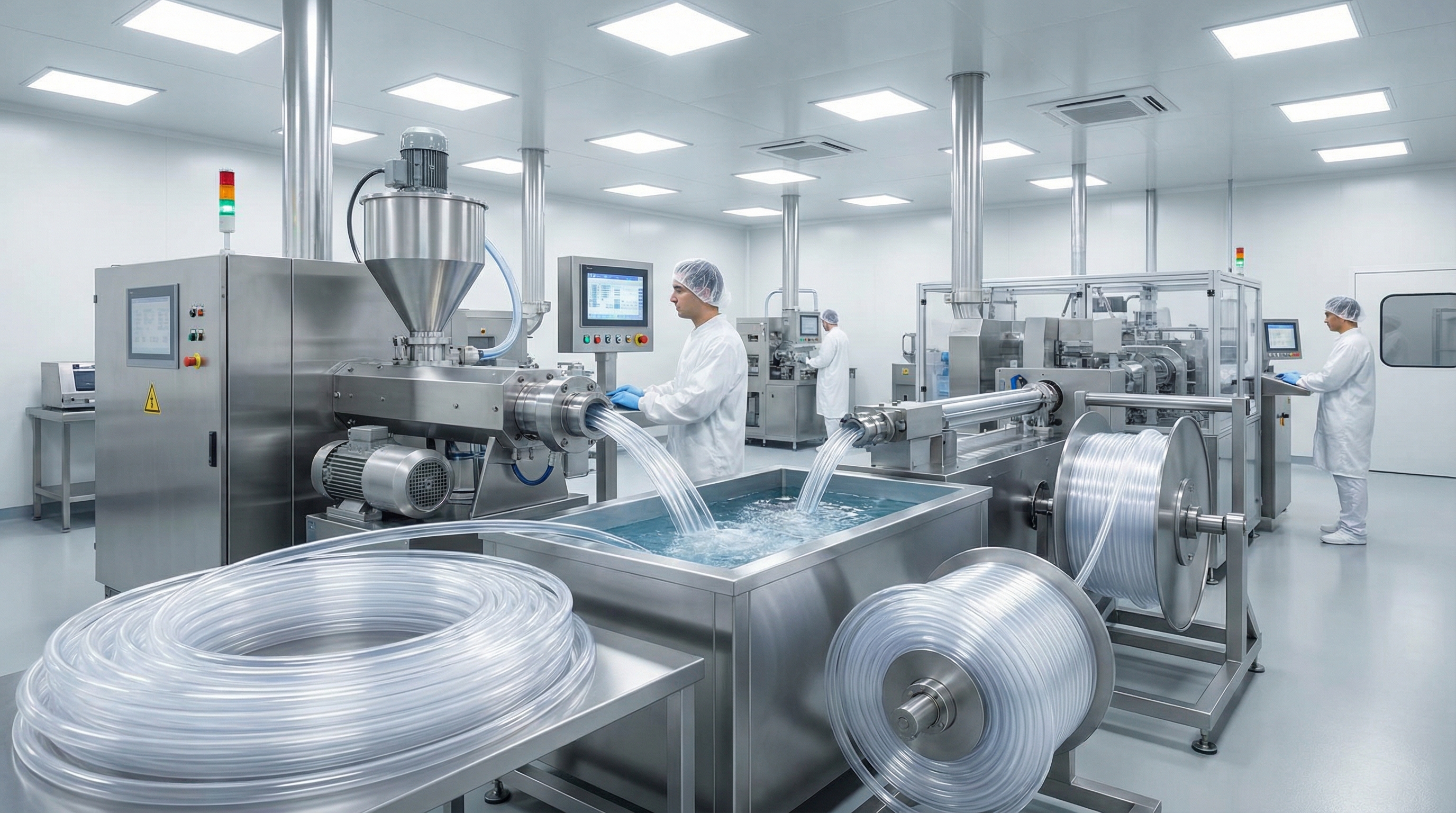
Expert engineering support can identify potential design flaws before they ever reach the production floor, saving thousands in revision costs. Searching for how to choose silicone manufacturer involves finding a team that offers Design for Manufacturing (DFM) feedback. This collaborative approach ensures that the tubing performs perfectly under pressure or extreme thermal stress.
Do they provide DFM (Design for Manufacturing) feedback?
Good engineering support should guide you through material selection, shore hardness, and elongation specs to optimize performance. You need to know the why behind the design.
- Material Selection: Professional guidance on selecting the right durometer for flexibility.
- Prototyping: Rapid iteration of designs to validate function before mass production.
- Stress Analysis: Predicting how the silicone reacts to tight bends or vacuum pressure.
Key Takeaway: Partner with engineers who understand the chemistry of silicone to optimize your product’s performance profile from day one.
How critical is material durometer selection?
Shore hardness affects everything from kink resistance to ease of assembly on your production line. Skilled engineers help you balance softness for sealing against hardness for structural integrity.
Key Takeaway: Proper durometer selection prevents premature tubing collapse or splitting during high-pressure cycles.
Once the design is perfected, you must ensure the manufacturer can keep up with your growth.
Is the production capacity scalable for your growth?
Scalability is a critical factor when deciding how to choose silicone manufacturer for long-term strategic partnerships. A supplier should have the flexibility to produce small batches for testing and then seamlessly ramp up to high-volume extrusion. This prevents the need to switch manufacturers as your business expands, maintaining essential product consistency.
Can they handle both prototyping and mass production?
A “one-stop-shop” capability for both R&D and mass production is the ideal scenario for a lean supply chain. It saves time and minimizes risk.
- High-Volume Extrusion: Automated lines for 24/7 production of standard sizes.
- Small Batch Runs: specialized configurations for niche or emerging markets.
- Lead Time Management: The ability to adjust production output based on your fluctuating demand.
Key Takeaway: Evaluate a manufacturer’s machinery and shifts to ensure they can accommodate a sudden increase in order volume without crashing.
| Production Scale | Volume Range | Typical Use Case |
|---|---|---|
| Prototyping | 1 – 100 meters | R&D and validation |
| Mid-Scale | 100 – 5,000 meters | Specialized equipment |
| Mass Production | 5,000+ meters | Global supply chain |
Scaling is only effective if every meter of tubing meets your strict quality standards.
How does the quality control process ensure zero defects?
Advanced quality control involves significantly more than just a final visual inspection of the finished tubing before shipping. A robust system includes in-line laser monitoring of dimensions and batch-specific documentation for full traceability. If a failure occurs in the field, you must be able to trace the material back to the raw lot and specific production date.
Is there full traceability for every batch?
Traceability is the backbone of risk management in highly regulated industries like aerospace and medicine. Here is how it is achieved:
- In-line Laser Measurement: Real-time monitoring of OD/ID to ensure micron-level accuracy.
- Batch Recording: Documenting every temperature and pressure setting during the run.
- Tensile Testing: Destructive testing to ensure the silicone meets elongation and strength specs.
Key Takeaway: Do not settle for a manufacturer that lacks a documented quality control manual and batch-tracking capabilities.
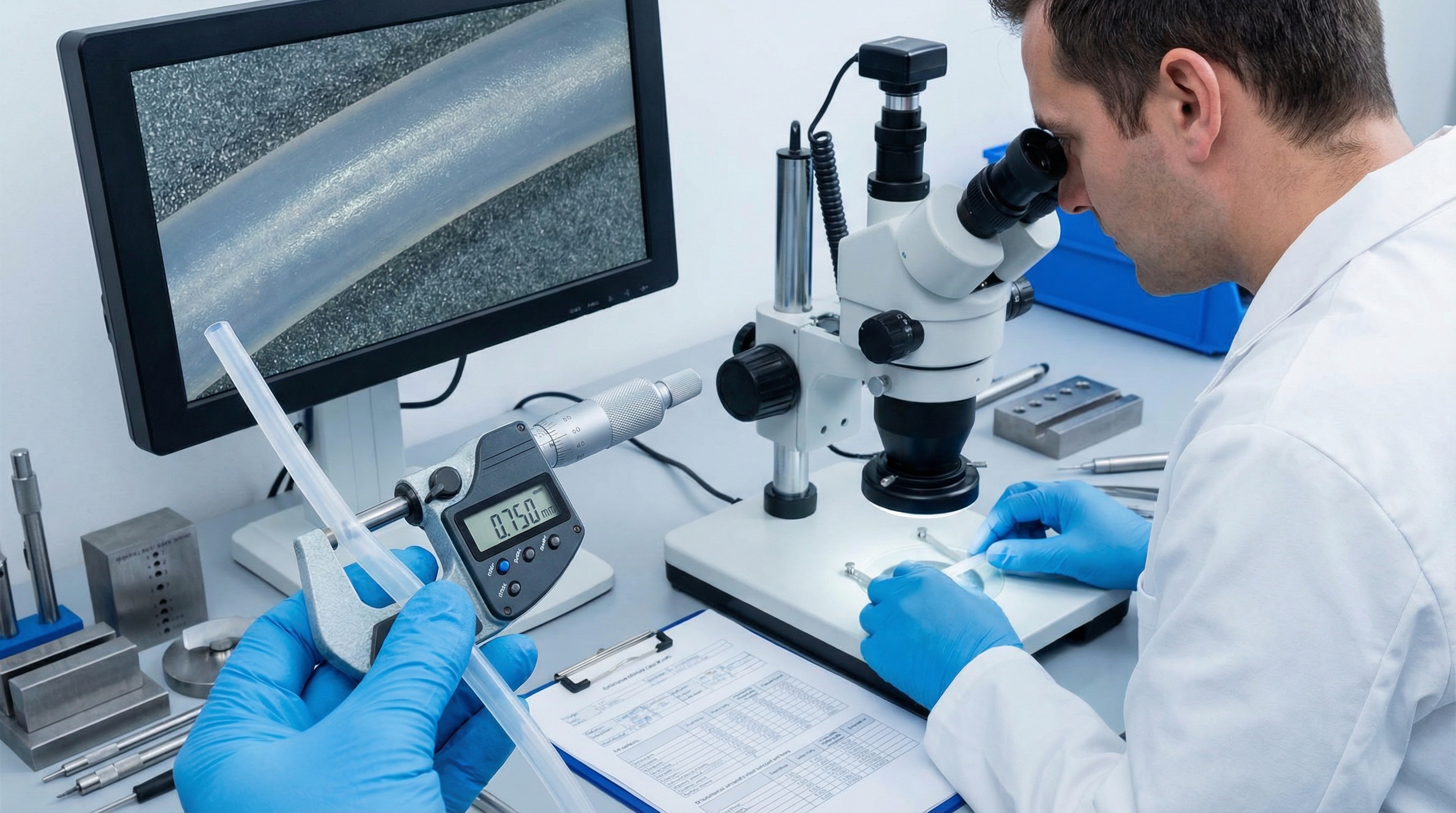
What tools are used for precision measurement?
Modern extrusion lines use automated laser micrometers that alert operators to any deviation in wall thickness immediately. This prevents the production of entire reels of non-compliant material.
Key Takeaway: Automated in-line inspection is far more reliable than manual spot checks for identifying subtle extrusion flaws.
Even perfect tubing often requires additional services to be ready for the final assembly line.
Are there post-processing services like cutting and marking?
Integrating post-processing services at the manufacturing site helps you understand how to choose silicone manufacturer for a more streamlined supply chain. Services like precision cutting, laser marking, and specialized packaging save you significant time and labor costs during final assembly. This approach also reduces the risk of material damage during transit between multiple vendors.
Can they provide precision cut-to-length services?
Precision cutting ensures that every piece of silicone tubing is uniform and ready for immediate installation into your product. This reduces the complexity of your logistics.
- Precision Cutting: Automated blades for exact lengths with zero fraying.
- Laser Marking: Permanent identification for branding, safety, or part tracking.
- Custom Packaging: Kitting, labeling, or double-bagging for immediate cleanroom use.
Key Takeaway: Value-added services at the source reduce lead times and minimize the hidden costs of secondary logistics.
| Post-Processing | Benefit | Efficiency Gain |
|---|---|---|
| Precision Cutting | Uniform lengths | Ready for assembly |
| Laser Printing | Part identification | Improved traceability |
| Special Cleaning | Removes residue | Immediate medical use |
While services are vital, you must still balance the project’s financial requirements.
What is the balance between cost-efficiency and performance?
While low-cost manufacturers may seem attractive initially, inferior silicone often leads to premature failure and high replacement costs. Investigating how to choose silicone manufacturer reveals that high-quality tubing provides better chemical resistance and thermal stability. Investing in a premium manufacturer often results in a lower total cost of ownership over the entire product life cycle.
Does high-quality silicone reduce long-term costs?
The true cost of a component includes the cost of failure. High-grade silicone prevents these expensive outcomes.
- Durability: High-grade silicone lasts years longer in harsh or pressurized environments.
- Maintenance: Fewer tubing replacements mean less equipment downtime for your customers.
- Compliance: avoids the massive financial costs associated with regulatory fines or re-testing.
Key Takeaway: Prioritize value and performance over the lowest sticker price to ensure your brand reputation remains flawless.
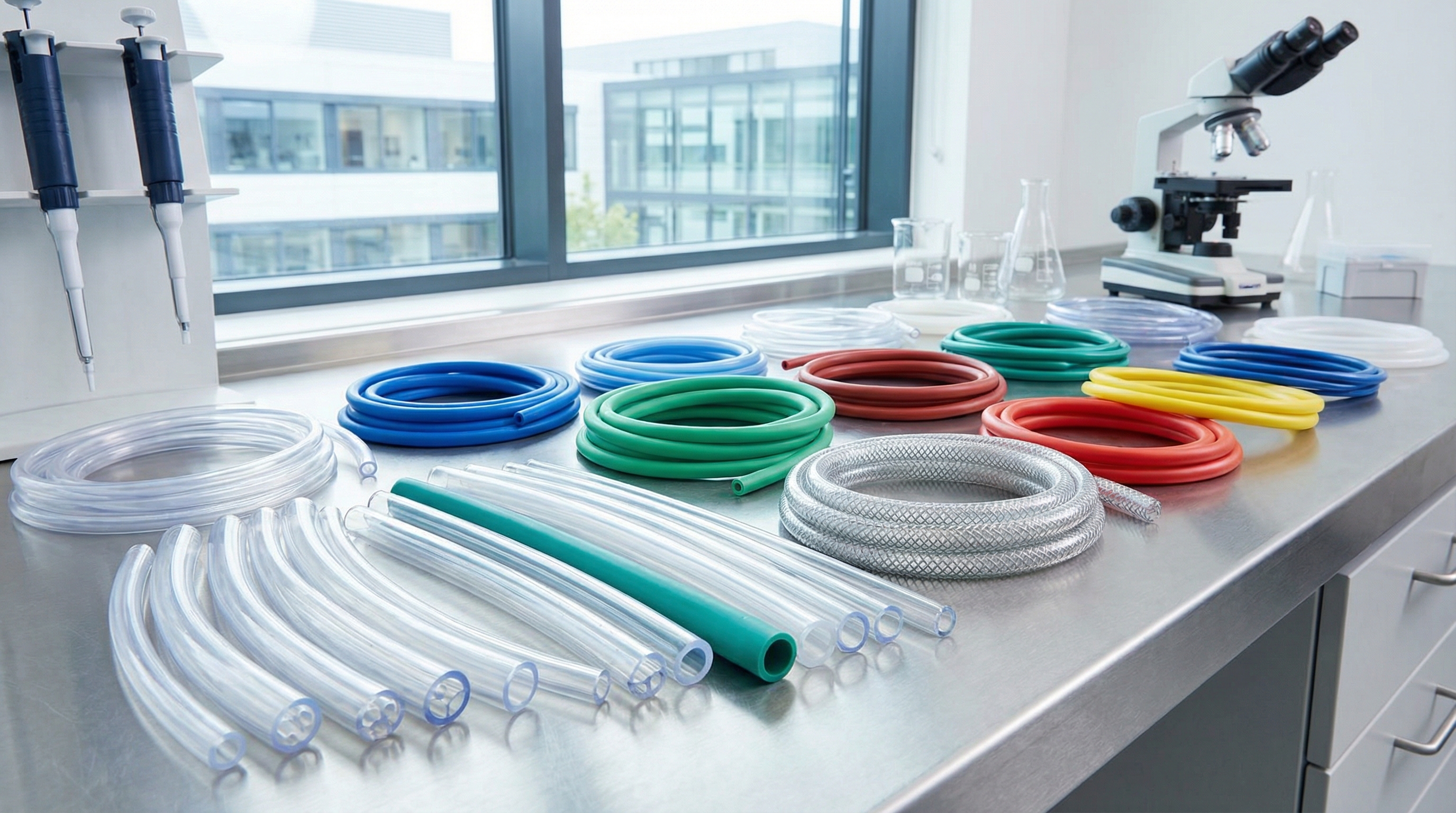
Is cheap silicone worth the risk?
Low-quality silicone may leach volatiles or crack under UV exposure, leading to device failure. The cost of a single recall far outweighs any savings from a cheap manufacturer.
Key Takeaway: Reliable performance in the field is the most important financial metric for your silicone tubing choice.
Financial planning is only useful if your products arrive when they are needed.
How do lead times affect your supply chain stability?
Lead time reliability is the final pillar in determining how to choose silicone manufacturer for your ongoing operations. A manufacturer with agile production schedules can respond quickly to sudden market changes or urgent custom orders. Consistent delivery schedules prevent bottlenecks in your assembly process and keep your final customers satisfied.
How can agile manufacturing reduce delays?
Agile partners use lean manufacturing principles to minimize downtime and speed up the transition from order to shipment. Consider these features:
- Buffer Stock: Keeping common raw materials on hand for immediate production starts.
- Efficient Logistics: Partnering with reliable global couriers for rapid international delivery.
- Clear Communication: Providing regular milestone updates on your production status.
Key Takeaway: A manufacturer with a proven record of on-time delivery is essential for maintaining a lean, efficient, and profitable inventory.
| Factor | Impact on Supply | Mitigation Strategy |
|---|---|---|
| Raw Material Shortage | Production stop | Diverse supplier base |
| Shipping Delays | Inventory gaps | Strategic local warehousing |
| Design Changes | Project stall | In-house tool modification |
Stable supply chains start with a single conversation about your specific project needs.
Frequently Asked Questions
Can I get custom colors for my silicone tubing?
Yes, professional manufacturers can match specific Pantone colors by adding medical-grade pigments during the compounding stage to ensure brand consistency.
What is the smallest diameter available for custom tubing?
Precision manufacturers can produce micro-bore silicone tubing with inner diameters as small as 0.2mm for specialized ophthalmic or cardiovascular medical applications.
How do I know if I need platinum-cured or peroxide-cured silicone?
Platinum-cured silicone is preferred for medical use due to its higher purity and lack of by-products, while peroxide-cured is generally used for industrial seals.
Can silicone tubing be reinforced for high-pressure use?
Absolutely, manufacturers can integrate internal polyester braiding or stainless steel wire within the silicone walls to handle significantly higher burst pressures.
What’s the best way to ensure my tubing is sterile upon arrival?
You should request cleanroom packaging (double-bagging) and, if required, secondary sterilization services such as Gamma radiation or ETO gas sterilization.
Conclusion
Finding the right partner for custom silicone tubing requires a deep dive into material grades, certified cleanroom standards, and precision engineering capabilities. By focusing on quality-first manufacturers who offer scalability and comprehensive post-processing services, you can protect your product’s integrity and your company’s long-term bottom line. Ensure your next manufacturing project meets every regulatory and performance benchmark by making an informed, data-driven choice today. To discuss your specific technical requirements and receive a precision quote, contact us today to speak with a silicone manufacturing expert.