
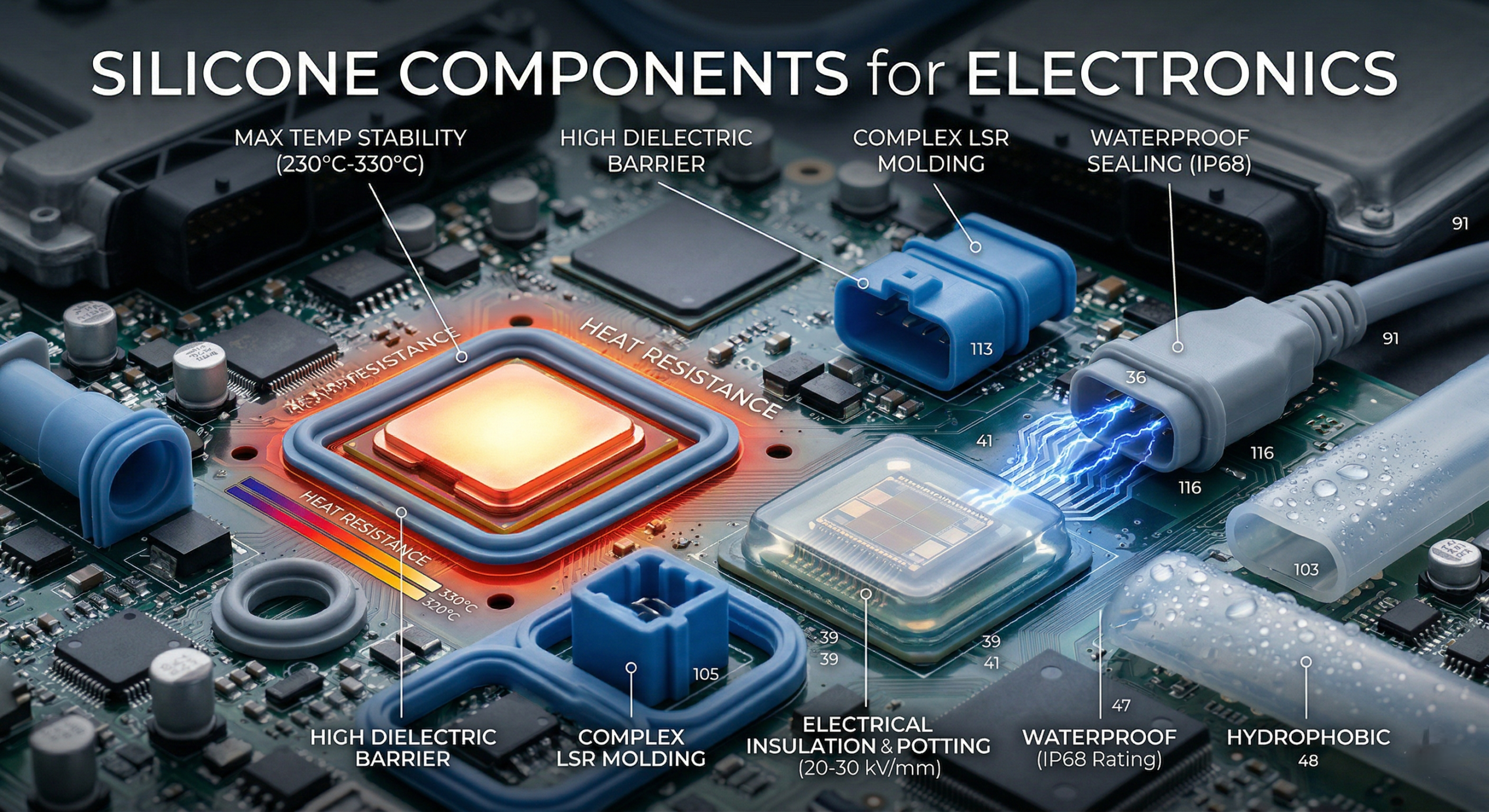
Silicone components provide superior thermal stability and electrical insulation needed to protect sensitive circuitry from extreme heat and current leakage. Imagine a high-performance PCB failing during a critical field operation because a standard plastic seal melted under load. This catastrophic downtime results in massive replacement costs and damages your brand’s reputation for reliability. By integrating high-grade Silicone Components for Electronics, you ensure your devices withstand harsh environments while maintaining peak performance.
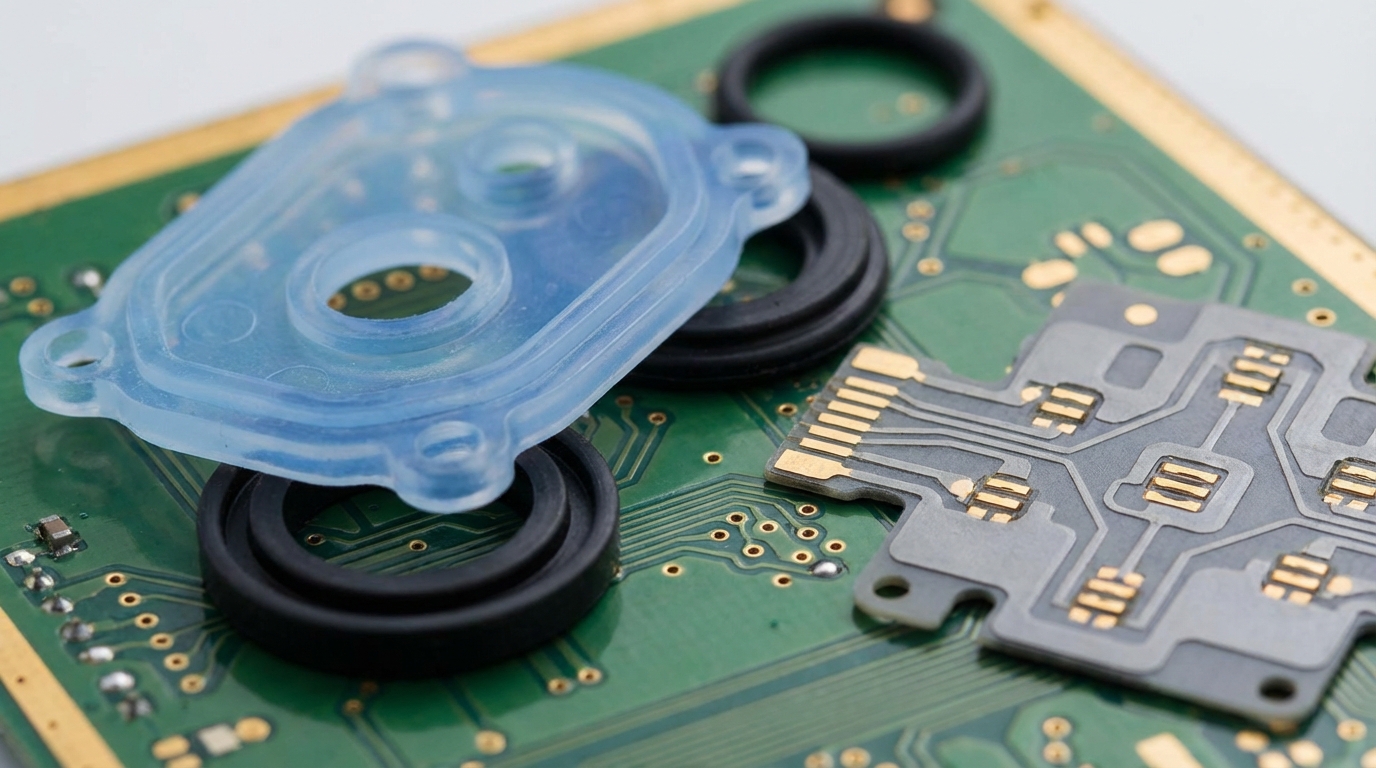
Why Is Heat Resistance Vital for Silicone Electronics?
High heat resistance prevents component deformation and chemical degradation in devices that generate significant thermal energy. When you specify Silicone Components for Electronics, you are investing in a material that remains stable up to 330°C.
Can high heat cause mechanical failure?
Think about this: standard plastics often soften or melt when exposed to the internal temperatures of a modern CPU or power inverter. This leads to seal failure and component exposure.
- Silicone maintains its shape under extreme thermal stress.
- It prevents “flow” issues common in lower-grade elastomers.
- Low thermal expansion ensures tight tolerances are kept.
Does silicone withstand thermal cycling?
The real challenge is the repeated heating and cooling of a device. Because silicone is highly elastic, it absorbs the stress of expansion and contraction without cracking.
- Resists fatigue over thousands of thermal cycles.
- Prevents delamination in overmolded parts.
- Maintains a consistent seal regardless of ambient temperature.
Key Takeaway: Silicone’s ability to withstand temperatures from -50°C to over 300°C makes it the gold standard for high-power electronic housing and seals.
| Property | Silicone Performance | Benefit |
|---|---|---|
| Max Operating Temp | 230°C – 330°C | No melting or degradation |
| Thermal Expansion | Very Low | Dimensional stability |
| Elasticity | High | Resists thermal fatigue |
Analytical Guidance: Engineers should evaluate peak intermittent temperatures versus constant operating heat to select the correct silicone grade.
How Does Silicone Improve Electrical Insulation?
Silicone acts as a high-performance dielectric barrier that prevents electrical arcing and short circuits in densely packed boards. Silicone Components for Electronics are naturally non-conductive, offering a volume resistivity that protects sensitive signals from interference.
What is the dielectric strength of silicone?
Here is why this matters: silicone typically offers a dielectric strength of 20–30 kV/mm. This allows you to design thinner insulating layers without risking a voltage breakdown.
- Prevents current leakage between high-voltage traces.
- Ideal for potting sensitive integrated circuits (ICs).
- Maintains insulation even in high-humidity environments.
Is silicone better than air for insulation?
But that’s not all. Filling gaps with silicone potting compounds eliminates air pockets where corona discharge might occur.
- Displaces moisture-laden air that causes arcing.
- Provides a physical barrier against conductive dust.
- Ensures consistent performance in high-altitude applications.
Key Takeaway: High dielectric strength combined with moisture resistance ensures that silicone remains an effective insulator even in contaminated environments.
| Electrical Property | Typical Value | Importance |
|---|---|---|
| Dielectric Strength | 20-30 kV/mm | High voltage protection |
| Volume Resistivity | >10^14 Ω·cm | Prevents current leakage |
| Dielectric Constant | Stable (2.7-3.3) | Consistent signal integrity |
Analytical Guidance: When designing high-density PCBs, use silicone encapsulation to reduce the required creepage and clearance distances between traces.
Which Forms of Silicone Suit Electronic Assemblies?
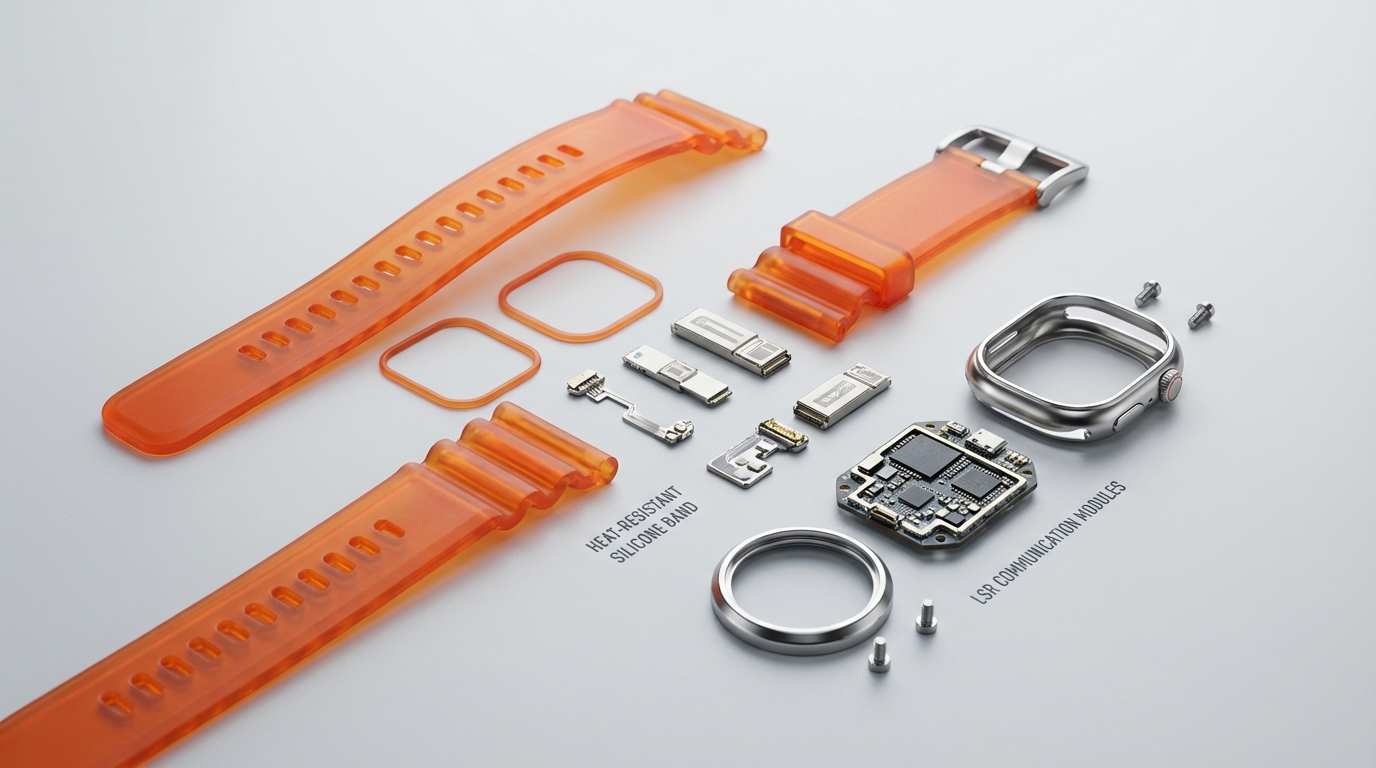
Silicone exists as solid rubber, liquid silicone rubber (LSR), gels, and thermal greases to fit diverse assembly requirements. Choosing the right form of Silicone Components for Electronics depends on your production volume and precision needs.
Is LSR better for precision parts?
The answer is a resounding yes for complex geometries. Liquid Silicone Rubber (LSR) can be injected into high-precision molds to create intricate seals and connector housings.
- Flash-less molding reduces secondary finishing costs.
- Ideal for overmolding onto plastic or metal inserts.
- Maintains extremely tight dimensional tolerances.
When should you use silicone gels?
Here is the deal: gels are perfect for protecting fragile components like wire bonds or sensors. They cure into a soft, shock-absorbing mass that doesn’t put stress on delicate parts.
- Provides excellent vibration and shock damping.
- Easily “heals” if pierced by a probe for testing.
- Conforms perfectly to irregular internal shapes.
Key Takeaway: From high-speed LSR molding to soft protective gels, silicone’s versatility allows it to serve as both a structural part and a protective barrier.
| Silicone Form | Primary Use Case | Key Advantage |
|---|---|---|
| LSR | Precision seals/connectors | High speed & accuracy |
| Solid Rubber | Keypads/gaskets | Durability & tactile feel |
| Gels/Greases | Potting/thermal interface | Stress-free protection |
Analytical Guidance: For consumer electronics with curved geometries, LSR overmolding provides the best balance of aesthetic finish and waterproof sealing.
Can Silicone Protect Electronics from Moisture?
Yes, silicone’s hydrophobic nature creates an airtight seal that prevents water ingress and corrosion of sensitive metal parts. Use Silicone Components for Electronics as gaskets or conformal coatings to achieve IP67 or IP68 ratings for your devices.
How does silicone handle condensation?
Think about this: when electronics move between cold and warm environments, condensation forms inside the housing. Silicone sealants block external moisture while maintaining a low moisture vapor transmission rate.
- Prevents “wicking” of water through cable entries.
- Keeps internal humidity levels stable.
- Resists mold and fungal growth in damp climates.
Does it stay waterproof over time?
But wait, there’s more. Unlike organic rubbers that dry out and crack, silicone remains flexible for decades.
- Compression set resistance ensures seals don’t fail.
- UV resistance prevents sunlight from degrading outdoor seals.
- Resists common chemicals and cleaning agents.
Key Takeaway: Silicone’s natural water-repellency and long-term elasticity make it the most reliable material for achieving permanent waterproof seals.
| Environmental Factor | Silicone Reaction | Result |
|---|---|---|
| Water Ingress | Repelled (Hydrophobic) | No short circuits |
| Humidity | Minimal absorption | Stable dielectric properties |
| UV Exposure | Highly resistant | No cracking or leaking |
Analytical Guidance: To ensure IP68 compliance, utilize a compression-molded silicone gasket with a minimum 20% compression ratio in the assembly.
Why Choose LSR for High-Volume Electronic Parts?
Liquid Silicone Rubber (LSR) offers rapid cycle times and high precision, making it the most cost-effective choice for mass-produced components. High-output Silicone Components for Electronics production relies on LSR’s automated injection process to keep unit costs low.
What are the benefits of automated molding?
The process is virtually hands-free. This means you get a highly repeatable product with almost zero human error or contamination risk.
- Fast curing times increase daily output.
- Integrated cold-runner systems reduce material waste.
- Consistent part weight and dimensions across batches.
Can LSR be used for multi-material parts?
Here is why this matters: LSR is excellent for 2-shot molding. You can bond silicone directly to a plastic frame in one machine cycle, eliminating assembly steps.
- Creates a permanent chemical bond without adhesives.
- Reduces the number of parts in your Bill of Materials (BOM).
- Eliminates potential leak paths between separate parts.
Key Takeaway: LSR injection molding is the premier method for scaling electronic part production while maintaining medical or automotive-grade precision.
| Production Metric | LSR Injection | Compression Molding |
|---|---|---|
| Cycle Time | 30-90 seconds | 3-10 minutes |
| Precision | Excellent | Moderate |
| Labor Cost | Low (Automated) | High (Manual) |
Analytical Guidance: If your annual volume exceeds 10,000 units, the initial tooling cost of LSR will be offset by significant savings in labor and material waste.
How Does Silicone Compare to Epoxy or PVC?
Silicone outperforms epoxy and PVC by remaining flexible at extreme temperatures and resisting UV degradation much longer. While Silicone Components for Electronics may have a higher material cost, their failure rate in the field is drastically lower.
Is silicone more durable than epoxy?
You should consider this: epoxy is hard and brittle, meaning it can crack under thermal shock or vibration. Silicone’s flexibility allows it to move with the components it protects.
- Lower stress on delicate solder joints.
- Easier to remove for repairs compared to permanent epoxy.
- Superior resistance to yellowing and outdoor aging.
Why not just use cheap PVC?
But that’s not all. PVC often contains plasticizers that can “outgas” or leach out, potentially contaminating sensitive optical sensors or switches.
- Silicone is chemically inert and does not outgas.
- It does not harden or become brittle over time.
- Maintains performance in both heat and freezing cold.
Key Takeaway: The total cost of ownership for silicone is lower than cheaper alternatives due to its vastly superior longevity and protection.
| Material | Temp Range | Flexibility | Longevity |
|---|---|---|---|
| Silicone | -50 to 300°C | Excellent | 20+ Years |
| Epoxy | -40 to 150°C | Brittle | 5-10 Years |
| PVC | -10 to 80°C | Poor | <5 Years |
Analytical Guidance: Choose silicone over epoxy for any component that will experience frequent power-on/power-off thermal cycling to prevent structural cracks.
Where Is Silicone Used in Automotive Electronics?
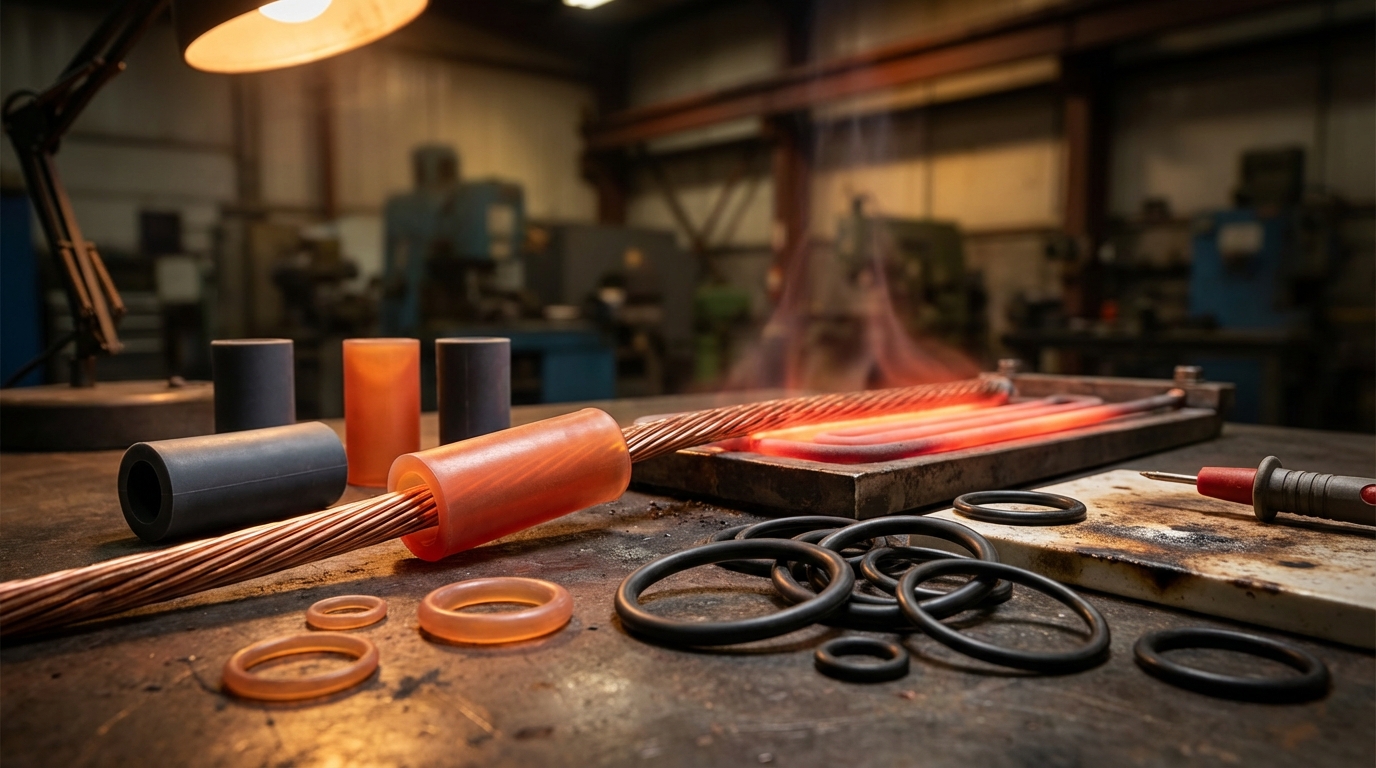
Silicone is critical for under-hood sensors, ECU seals, and EV battery fire-blocking foams due to its extreme thermal tolerance. Modern Silicone Components for Electronics are essential as vehicles transition to high-voltage electric platforms.
Does silicone protect EV battery modules?
Think about this: thermal runaway is a major safety concern in electric vehicles. Silicone foams and gaskets act as thermal barriers that slow the spread of fire between cells.
- Flame retardant grades meet UL 94-V0 standards.
- Insulates individual cells from external heat.
- Maintains sealing even during high-impact events.
How does it handle automotive fluids?
Here is why this matters: under-hood environments are messy. Silicone is resistant to engine oils, coolant, and road salts that destroy other rubbers.
- Protects Electronic Control Units (ECUs) from corrosion.
- Ensures reliable sensor data in harsh conditions.
- Critical for wiring harness grommets and connectors.
Key Takeaway: In the automotive sector, silicone is the primary choice for mission-critical safety and power management systems.
| Auto Application | Silicone Role | Requirement |
|---|---|---|
| EV Battery | Thermal Barrier | Flame Retardancy |
| ECU Seals | Environmental Protection | Chemical Resistance |
| Sensors | Vibration Damping | High Temp Stability |
Analytical Guidance: When designing for automotive applications, ensure your silicone supplier provides IATF 16949 certification to guarantee production discipline.
Can Silicone Components Be Fully Customized?
Modern manufacturing allows for total customization of silicone hardness, color, conductivity, and complex geometries through advanced tooling. You can tailor Silicone Components for Electronics to match your brand’s aesthetics or specific functional requirements.
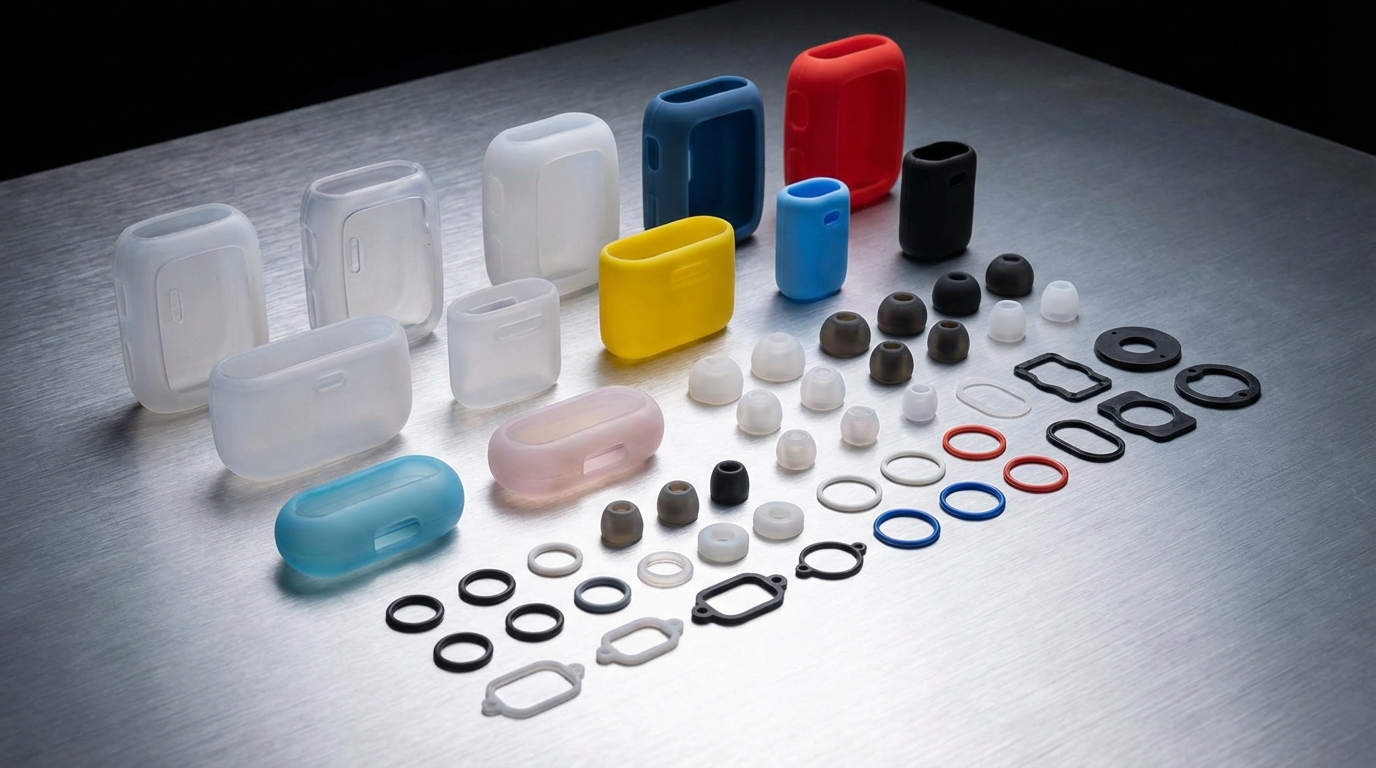
What customization options are available?
But wait, there’s more. You aren’t limited to standard parts.
- Hardness ranges from Shore 10A (very soft) to 80A (hard).
- Custom Pantone color matching for consumer devices.
- Addition of conductive fillers for EMI/RFI shielding.
Can you add branding directly to the part?
The answer is yes. Laser marking and pad printing allow you to add logos, serial numbers, or instructional icons directly onto the silicone surface.
- Permanent marking that won’t rub off.
- High-contrast visuals for user interfaces.
- Texture options from matte to soft-touch finishes.
Key Takeaway: Custom silicone allows you to solve mechanical engineering challenges while simultaneously meeting industrial design goals.
| Custom Option | Range / Choice | Purpose |
|---|---|---|
| Durometer | 10A – 80A Shore | Tactile feel / Stiffness |
| Conductance | Insulative to EMI-shielded | Signal protection |
| Aesthetics | Any Pantone / Texture | Brand identity |
Analytical Guidance: For wearable tech, specify biocompatible medical-grade silicone with a matte finish to prevent skin irritation and dust accumulation.
What Is the Lifespan of Electronic Silicone Parts?
Properly formulated silicone components can last over 20 years, significantly outlasting the typical lifecycle of the electronic device itself. By using high-quality Silicone Components for Electronics, you prevent early product failure due to material aging.
Does silicone age well in outdoor settings?
Think about this: most plastics turn brittle and crack after a few years in the sun. Silicone is virtually unaffected by ozone and UV radiation.
- Maintains elasticity in direct sunlight.
- Does not develop “micro-cracks” that lead to leaks.
- Ideal for 5G base stations and solar power inverters.
Will it degrade when exposed to heat?
Here is the key: silicone’s molecular structure is based on a silicon-oxygen backbone, which is much stronger than the carbon-carbon backbone of other polymers.
- Resists oxidation at high temperatures.
- Maintains dielectric properties as it ages.
- Does not leach chemicals into the surrounding environment.
Key Takeaway: Choosing silicone ensures that the protective elements of your device will never be the first part to fail.
| Environmental Stress | 5 Year Impact | 20 Year Impact |
|---|---|---|
| UV Radiation | None | Negligible |
| Heat (150°C) | None | Slight hardening |
| Cold (-40°C) | None | None |
Analytical Guidance: For infrastructure equipment, verify that your silicone material has passed accelerated aging tests (ASTM D573) to guarantee a 20-year service life.
How to Ensure Quality in Silicone Manufacturing?
Quality is ensured through rigorous ISO-certified inspections, material traceability, and functional testing like IP-rating verification. When sourcing Silicone Components for Electronics, you must work with a factory that uses a three-stage quality control system.
What testing standards should you expect?
Here is why this matters: a single defective seal can cause a thousand devices to fail. Your manufacturer should provide documented proof of performance.
- IQC (Incoming) material verification and batch records.
- IPQC (In-process) first-article approval and monitoring.
- FQC (Final) visual standards and dimensional checks.
Is material traceability important?
But that’s not all. For regulated industries like medical or automotive, knowing the exact source of your raw material is mandatory.
- RoHS and REACH compliance documentation.
- FDA or LFGB certification for food/skin contact.
- Certificates of Analysis (COA) for every material batch.
Key Takeaway: A repeatable, controlled manufacturing process is just as important as the material itself in ensuring electronic reliability.
| Inspection Stage | Primary Check | Equipment |
|---|---|---|
| Incoming | Material Purity | Spectrometer |
| In-Process | Critical Dimensions | CCD Visual / Microscopic |
| Final | Functional Seal | Waterproof Pressure Tester |
Analytical Guidance: Always request a DFM (Design for Manufacturability) review before tooling begins to identify potential thin walls or air trap issues in the mold.
Conclusion
Silicone components have solved the most pressing challenges in modern electronics: managing extreme heat and preventing electrical failure. By providing a flexible, durable, and highly insulative barrier, these parts protect everything from the smallest wearable sensor to the largest electric vehicle battery. We have explored how silicone’s unique chemistry allows it to outperform traditional plastics and epoxies, ensuring your products remain safe and functional for decades.
If you are ready to enhance your product’s reliability with precision-engineered solutions, contact us today. At HuaLin Silicone, our vision is to empower global innovation through superior material science and flawless manufacturing execution.
FAQ
Can I use silicone for EMI shielding?
Yes. By adding conductive fillers like nickel-graphite or silver to the silicone base, it can provide excellent electromagnetic interference (EMI) protection while maintaining its sealing properties.
What’s the best way to bond silicone to plastic?
The best method is overmolding or 2-shot injection molding. This creates a chemical bond during the curing process that is far stronger than manual adhesive application.
How do I know if my part needs LSR or compression molding?
Judgment call: choose LSR if your part has complex thin-walled geometry or high volume (10k+); choose compression molding for simple gaskets or low-volume prototypes.
Can silicone be used in vacuum environments?
Yes. Silicone is known for its low outgassing properties, making it suitable for aerospace and semiconductor manufacturing equipment where vacuum integrity is critical.
What’s the best shore hardness for an electronic button?
Judgment call: 50A to 60A Shore hardness is typically best as it provides a firm, tactile “click” while remaining durable enough for millions of actuations.