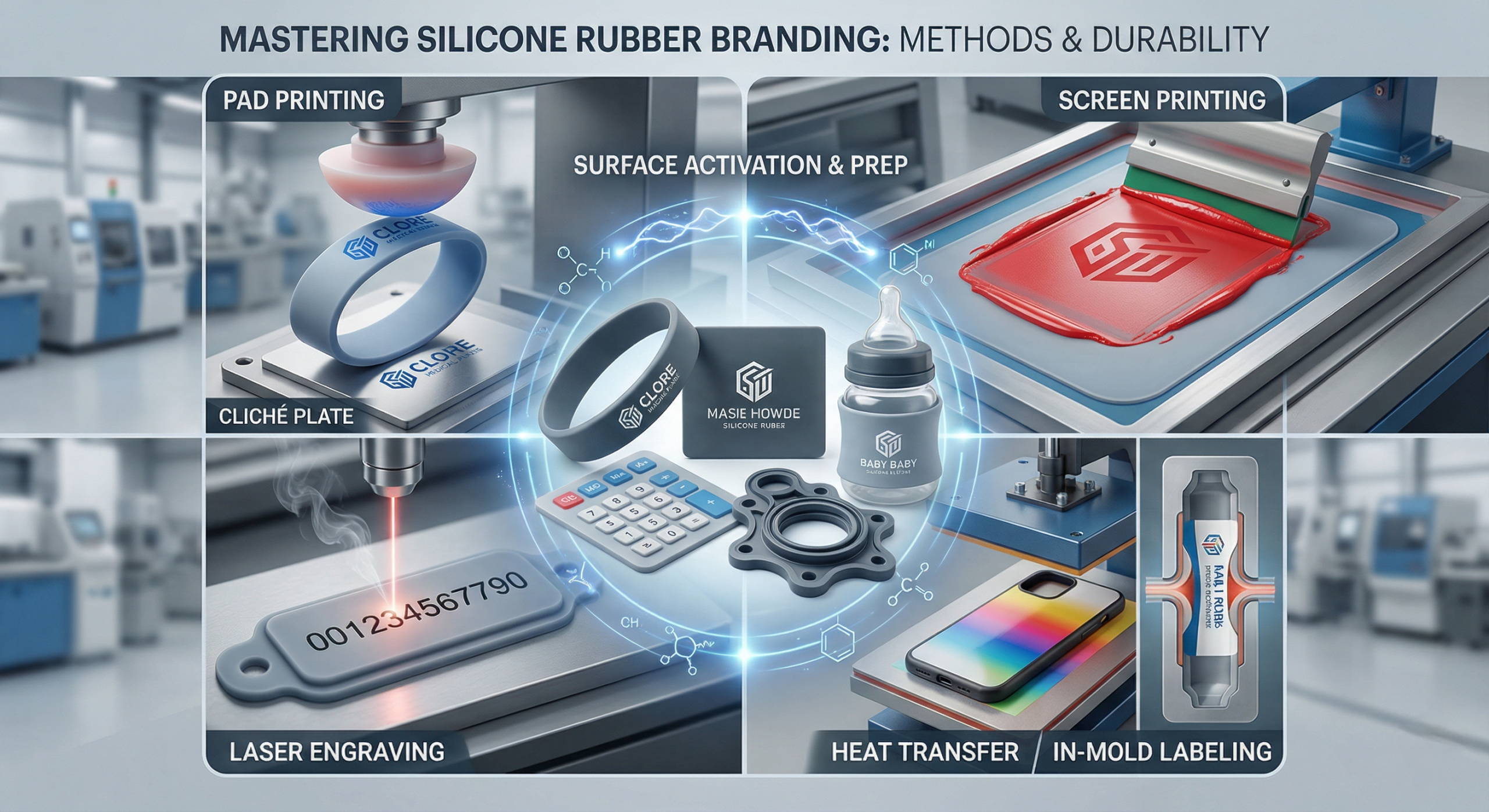
You print a logo on your Silicone Rubber Products by selecting a specialized method like pad printing, screen printing, or laser engraving that overcomes the material’s naturally low surface energy. Branding these items is often a nightmare because standard inks simply will not bond to the chemically inert surface. If your logo peels or fades, your brand looks unprofessional and loses the trust of professional buyers in high-stakes industries like healthcare or electronics. By leveraging advanced surface treatments and silicone-specific inks, you can create a permanent, high-definition mark that withstands sterilization and heavy use.
Why Should You Brand Your Silicone Rubber Products?
You brand your Silicone Rubber Products to establish market identity, ensure product traceability, and command a premium price in a competitive B2B landscape. Professional logos transform generic components into trusted assets that represent your company’s commitment to quality.
Can Logos Boost Global Brand Recognition?
Branding ensures that every part leaving your facility serves as a silent ambassador for your business. When your logo is clearly visible, users associate the performance of the part directly with your corporate identity.
Think about it:
- Consistent visibility builds long-term buyer trust.
- Unique colors differentiate you from generic competitors.
- Professional marking enhances the perceived value of the part.
How Does Branding Improve Product Aesthetics?
A high-quality logo provides a finished look that suggests the product has undergone rigorous manufacturing standards. This is particularly vital for consumer-facing items where visual appeal dictates the user’s first impression.
Here is why:
- Clean lines suggest precision engineering and care.
- Multi-color logos can align with modern design trends.
- Permanent marking prevents the “worn-out” look of cheap alternatives.
Does Branding Prevent Counterfeit Quality Drift?
Permanent logos act as a first line of defense against unauthorized replicas that could damage your reputation. By using complex printing techniques, you make it significantly harder for low-quality imitators to copy your specific aesthetic.
Look at the facts:
- Unique printing patterns are difficult to replicate exactly.
- Batch coding within logos assists in logistics and recall.
- Specific ink formulations provide a “signature” for your brand.
Key Takeaway: Effective branding on silicone components is a strategic investment that secures your market position and protects your intellectual property from inferior imitations.
| Benefit | Impact on Business | Primary Objective |
|---|---|---|
| Market Identity | Increases repeat orders | Recognition |
| Aesthetics | Supports premium pricing | Visual Appeal |
| Traceability | Reduces liability risks | Security |
This summary highlights how strategic branding moves beyond simple decoration to provide tangible business security and growth.
Why Is Printing on Silicone Rubber Products Difficult?
Printing on Silicone Rubber Products is difficult because the material possesses a “non-stick” surface energy that naturally repels most industrial inks and adhesives. This chemical inertness, while excellent for performance, creates a barrier that requires specialized activation to achieve a permanent bond.
How Does Low Surface Energy Affect Ink?
Silicone’s low surface energy means that liquids, including standard printing inks, tend to bead up rather than spread and stick. Without a chemical or physical “anchor,” the ink sits on the surface and can be easily wiped or scratched away.
The reality is:
- Inks require a surface energy higher than their own to wet properly.
- Raw silicone often has a surface energy below 24 mN/m.
- Most durable inks need the surface to be at least 38-40 mN/m.
Why Is Chemical Inertness a Branding Barrier?
Silicone is designed to be unreactive, meaning it does not easily form bonds with other chemical substances. This property makes it ideal for medical grade silicon parts but frustrates traditional printing processes that rely on chemical absorption.
Consider this:
- Standard solvent-based inks cannot penetrate the silicone matrix.
- The material lacks the reactive sites found in common plastics.
- Only silicone-on-silicone bonding provides true molecular adhesion.
Does Material Flexibility Cause Logo Cracking?
Because silicone is highly elastomeric, any logo applied to it must be able to stretch and compress at the same rate as the substrate. If the ink is too rigid, the logo will develop micro-cracks and eventually flake off during normal product use.
Here is the problem:
- Traditional inks are too brittle for flexible substrates.
- Repeated stretching stresses the bond between ink and silicone.
- Thermal expansion rates must be matched to prevent delamination.
Key Takeaway: The very properties that make silicone an elite material—flexibility and inertness—are the exact factors that necessitate highly specialized printing technologies.
| Challenge | Physical Cause | Resulting Issue |
|---|---|---|
| Adhesion | Low surface energy | Ink peeling/flaking |
| Inertness | Lack of reactive sites | Poor chemical bonding |
| Flexibility | High elongation | Logo cracking |
Understanding these physical barriers is the first step in selecting a manufacturing partner capable of delivering durable results.
How Does Pad Printing Benefit Complex Silicone Parts?
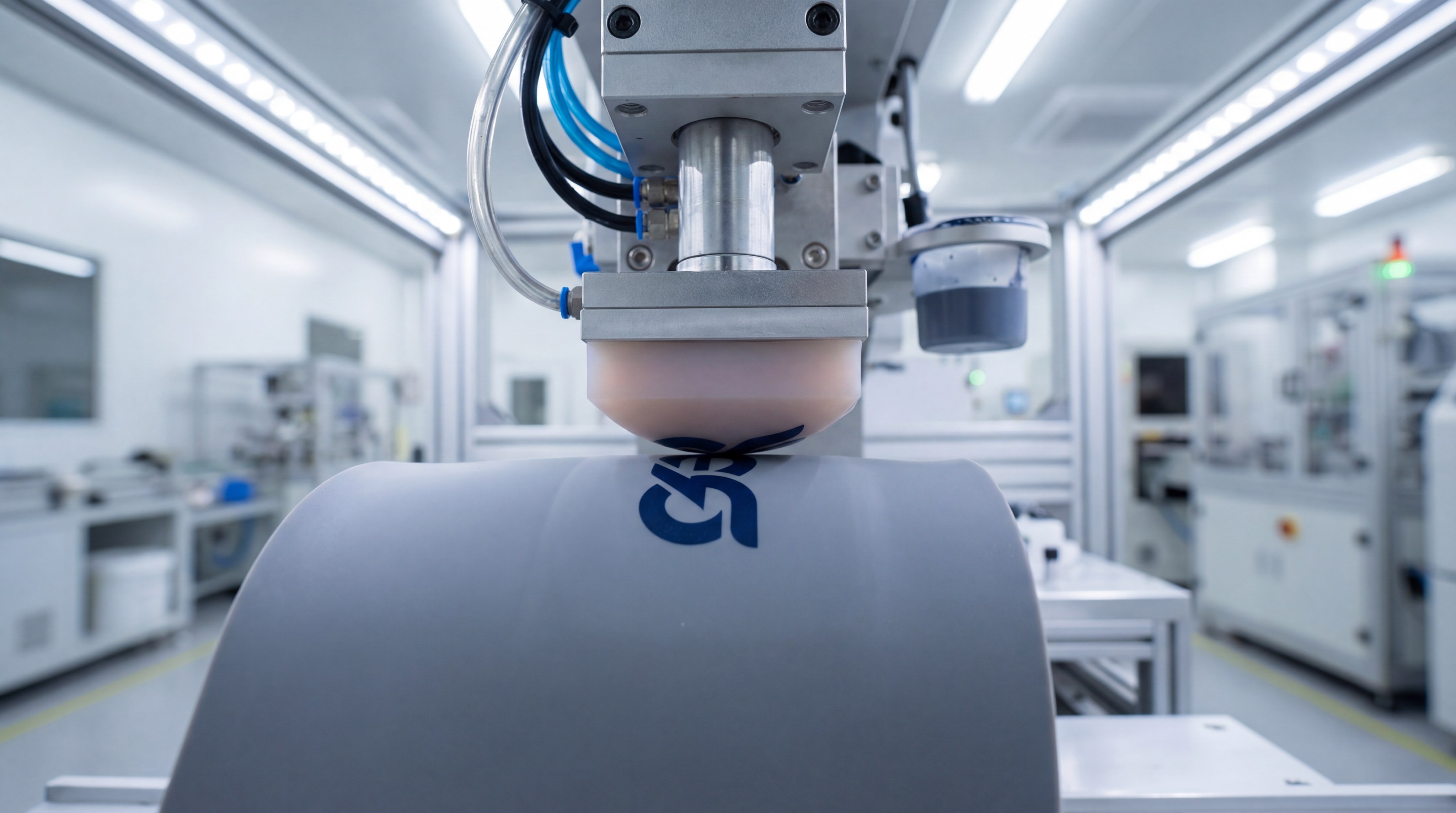
Pad printing benefits your Silicone Rubber Products by allowing a flexible silicone pad to transfer ink onto three-dimensional, curved, or recessed surfaces that other methods cannot reach. This versatility makes it the gold standard for branding irregular shapes like buttons, handles, and small electronic components.
How Does the Pad Adapt to Curved Shapes?
The printing pad is made of soft, compliant silicone that acts like a stamp, conforming to the unique geometry of your part. As the pad presses down, it “wraps” the logo around curves without distorting the design or losing registration.
Think about it:
- Soft pads can print into deep grooves and over ridges.
- Variable pad shapes can be molded for specific product contours.
- The process maintains high resolution on spherical surfaces.
Is Pad Printing Cost-Efficient for Medium Runs?
Pad printing offers a balance of low tooling costs and high speed, making it ideal for production volumes that don’t justify the expense of fully automated in-mold labeling. You can change designs quickly by simply replacing the etched plate, which keeps your lead times short.
Here is why:
- Etched plates (clichés) are relatively inexpensive to produce.
- Machine setup times are minimal compared to other industrial methods.
- The process is easily scalable from hundreds to thousands of units.
Why Is Precision High for Small Logos?
Because the ink is transferred via a fine-grained pad from a high-resolution etched plate, the detail level is exceptional. This is crucial for branding small protective sleeves where space is limited but clarity is mandatory.
The secret is:
- High-density silicone pads pick up every micron of the etch.
- Solvent evaporation during transfer makes the ink “tacky” and sharp.
- Multi-color registration is highly accurate on small footprints.
Key Takeaway: Pad printing remains the most versatile and precise choice for complex, three-dimensional silicone components that require sharp, multi-colored branding.
| Feature | Performance | Best For |
|---|---|---|
| Surface Geometry | High Adaptability | Curved/Irregular |
| Resolution | Very High | Small Icons/Text |
| Initial Cost | Low to Moderate | Prototyping/Medium Runs |
This method ensures that even the most complex geometric parts receive a clear and durable brand mark.
Is Screen Printing Best for Large Silicone Graphics?
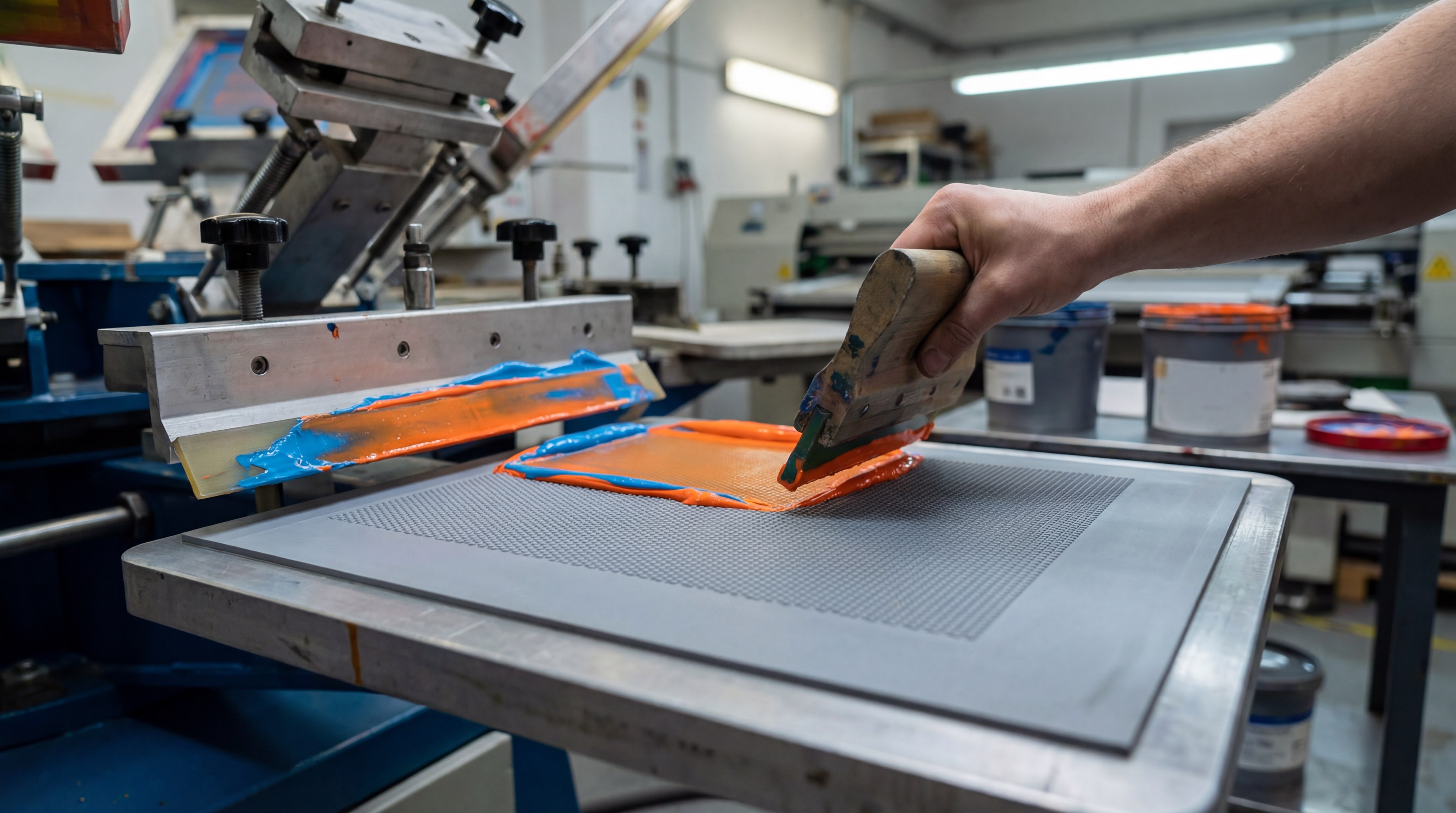
Screen printing is often the best choice for large graphics on your Silicone Rubber Products because it allows for a thick layer of ink to be applied over a wide, flat surface area. This method provides unmatched color vibrancy and opacity, making your brand pop on items like mats, bibs, and large protective enclosures.
How Does Ink Thickness Impact Vibrancy?
Screen printing uses a mesh to push a heavy volume of ink onto the substrate, resulting in a much thicker coating than pad printing. This high “ink deposit” ensures that the colors remain bright and opaque, even when printing light colors on dark silicone.
The benefit is clear:
- Thick ink layers resist fading over long-term use.
- High opacity prevents the substrate color from bleeding through.
- Fluorescent or metallic inks show their full effect with this method.
Is It Efficient for High-Volume Bulk Runs?
Once the screens are prepared, the actual printing process is incredibly fast, allowing for thousands of baby care items to be branded in a single shift. The simplicity of the mechanical motion makes it one of the most cost-effective ways to handle mass production.
Here is the efficiency:
- Automated carousels can print multiple colors in seconds.
- Large surface areas are covered in a single pass.
- Material waste is significantly lower than other manual methods.
What Surfaces Are Ideal for Silk Screening?
While modern tech allows for slight curves, screen printing truly excels on flat or cylindrical surfaces where the screen can maintain consistent contact. For products with large, unobstructed branding zones, this method provides the cleanest and most consistent results.
Consider these items:
- Industrial gaskets and large sealing sheets.
- Promotional wristbands and flat electronics covers.
- Large kitchenware and tabletop protection mats.
Key Takeaway: For high-volume projects requiring bold, large-scale graphics on flat surfaces, screen printing provides the best combination of visual impact and cost efficiency.
| Metric | Level | Comparison |
|---|---|---|
| Ink Volume | High | Best color saturation |
| Speed | Excellent | Fastest for large flat items |
| Detail | Moderate | Better for bold designs |
Choosing screen printing ensures your large-scale branding remains vibrant and durable throughout the product’s lifecycle.
Why Choose Laser Engraving for Permanent Branding?
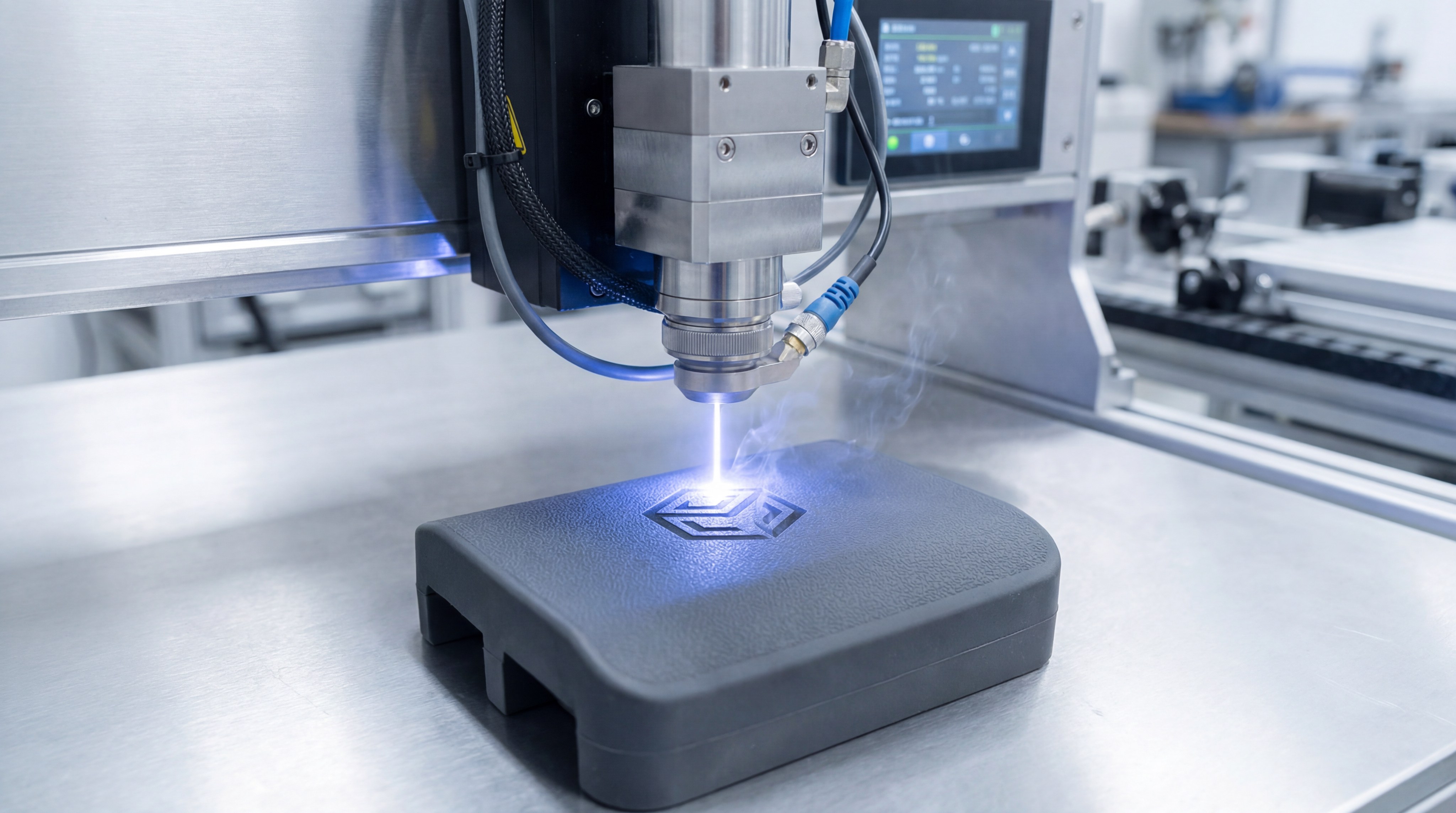
You choose laser engraving for your Silicone Rubber Products when permanence and precision are your top priorities, as this method physically alters the material rather than adding a layer of ink. This ensures that your branding can never peel, wash off, or wear away, even in the harshest industrial or medical environments.
How Does Precision Benefit Medical Devices?
Laser engraving can produce incredibly fine details and micro-text that remain legible under magnification. For medical grade silicon parts, this allows for permanent serial numbers and tracking codes that are essential for regulatory compliance.
Look at the precision:
- Lasers can etch designs with micron-level accuracy.
- No-contact marking prevents distortion of delicate parts.
- High-contrast marks are easily read by automated scanners.
Why Is Eliminating Inks a Strategic Advantage?
By removing inks and chemicals from the branding process, you eliminate the risk of biocompatibility issues or chemical leaching. This makes laser engraving the safest choice for products that come into contact with food, skin, or internal bodily tissues.
Here is why it matters:
- There are no inks to flake off into sensitive environments.
- The process is environmentally friendly and waste-free.
- It simplifies compliance with FDA and LFGB standards.
Is Lifetime Durability Truly Possible?
Because the logo is etched into the silicone itself, it becomes an integral part of the product’s structure. It can withstand repeated autoclave sterilization, chemical cleaning, and extreme temperatures without any loss of clarity.
Think about it:
- The mark lasts as long as the silicone material itself.
- It is immune to the abrasion that destroys surface-printed logos.
- No “re-printing” is ever required during the product’s life.
Key Takeaway: Laser engraving is the ultimate solution for high-stakes applications where permanent traceability and material purity are non-negotiable requirements.
| Characteristic | Performance | Ideal Industry |
|---|---|---|
| Permanence | Eternal | Medical / Industrial |
| Purity | 100% Ink-Free | Food / Healthcare |
| Flexibility | No Cracking | Wearables |
The integration of laser marking ensures that critical information remains intact regardless of the environmental stresses placed on the part.
Can Heat Transfer Achieve High-Detail Logo Results?
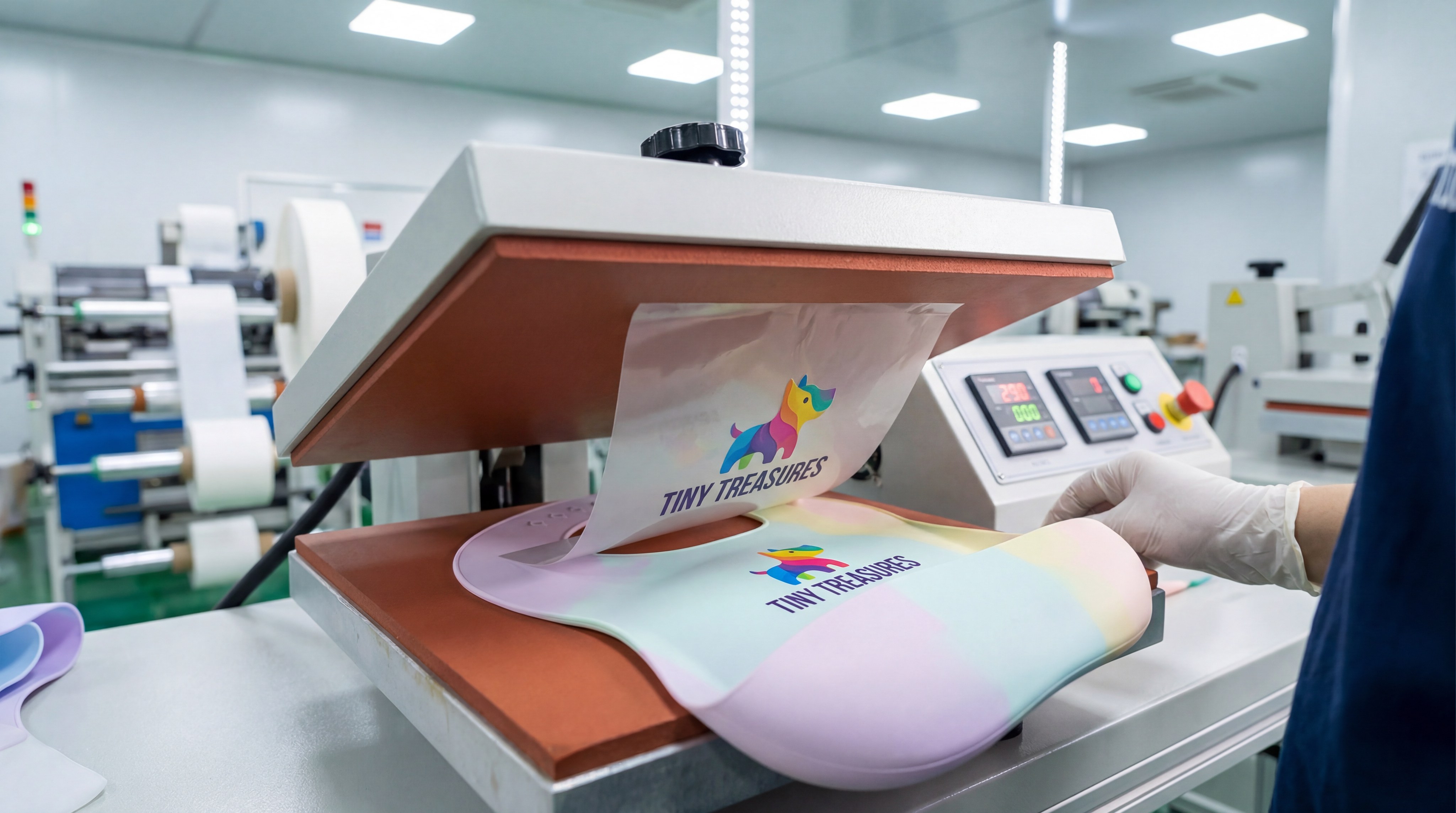
Heat transfer can achieve stunning, high-detail results on Silicone Rubber Products by using a pre-printed film that is fused to the surface under heat and pressure. This method is the preferred choice for complex, multi-color logos, gradients, and even photographic images that are impossible to replicate with traditional printing.
How Are Multi-Color Gradients Managed?
The logo is first printed onto a carrier film using high-resolution digital or rotogravure processes, allowing for unlimited color depth. During the heat press stage, the entire multi-color image is transferred in a single step, ensuring perfect registration every time.
Here is why:
- Digital film printing allows for photorealistic detail.
- Complex color blends appear smooth and professional.
- It eliminates the need for multiple “hits” of individual colors.
What Are the Specialized Heat Press Requirements?
To bond a transfer to silicone, you must use a heat press that can maintain exact temperatures—typically between 150°C and 180°C—and consistent pressure. The silicone must also be pre-treated or used with a specific silicone-based adhesive film to ensure the two materials fuse at a molecular level.
Think about it:
- Temperature control prevents scorching of the silicone.
- Even pressure ensures there are no bubbles or gaps in the logo.
- Dwell time must be precisely calibrated for the material thickness.
Are There Durability Limits for Flexible Parts?
While heat transfer produces beautiful results, it creates a “skin” on the surface of the silicone that may have different elongation properties than the base material. For extremely stretchy items, it is vital to use high-elasticity transfer films to prevent the logo from peeling under stress.
The reality is:
- Standard transfers may peel if the product is over-stretched.
- Selecting the right “stretch-grade” film is critical for success.
- Adhesion testing is mandatory for items like exercise bands.
Key Takeaway: Heat transfer is the best method for “retail-ready” aesthetics requiring complex colors, provided you match the film’s elasticity to the product’s function.
| Aspect | Capability | Requirement |
|---|---|---|
| Color Detail | Photographic | High-quality film |
| Setup Speed | Fast | Pre-printed rolls |
| Bonding | Thermal Fusion | Precise Heat/Pressure |
This technique allows your brand to utilize complex modern designs without sacrificing the unique feel of silicone.
What Are the Strategic Benefits of In-Mold Labeling?
In-Mold Labeling (IML) offers strategic benefits for your Silicone Rubber Products by integrating the branding directly into the material during the molding process. This results in a “seamless” look where the logo is actually part of the product’s body, offering the highest level of durability and professional finish available in the industry.
How Is a Seamless Integrated Design Created?
A pre-printed silicone label is placed inside the mold cavity before the liquid silicone is injected. As the silicone cures, it fuses with the label, creating a single, unified piece where the logo cannot be felt on the surface and has zero chance of peeling.
Think about it:
- The logo is “buried” flush with the surface for a sleek feel.
- It eliminates the need for secondary post-production printing.
- The design is protected by a thin layer of transparent silicone.
Can You Maximize ROI in High-Volume Runs?
While the initial setup for IML is more complex, the cost per unit drops significantly in mass production because branding happens simultaneously with molding. This removes an entire step from your supply chain, reducing labor costs and shortening the overall manufacturing cycle.
Here is why:
- Labor costs for secondary printing are completely removed.
- Part-to-part consistency is significantly higher than manual printing.
- Rejection rates due to printing errors are nearly eliminated.
How Does It Reduce Post-Processing Labor?
Because the branding is completed inside the mold, parts come out of the machine ready for final inspection and packaging. This is especially beneficial for high-volume protective sleeves where handling thousands of units for secondary printing would be cost-prohibitive.
Look at the workflow:
- No drying or curing racks are needed after production.
- Parts don’t need to be moved to a separate printing department.
- Packaging can happen immediately after the cooling phase.
Key Takeaway: In-Mold Labeling provides the most premium, durable finish for large-scale production by merging the branding and manufacturing processes into a single, efficient step.
| Benefit | Impact | Context |
|---|---|---|
| Durability | Zero Peeling | Integrated Molecular Bond |
| Aesthetics | Premium Feel | Seamless Finish |
| Efficiency | Lower Unit Cost | Mass Production Only |
Investing in IML technology ensures your brand is permanently and professionally represented on every high-volume component you produce.
Why Is Surface Prep Vital for Silicone Rubber Products?
Surface preparation is vital for Silicone Rubber Products because it temporarily modifies the chemical structure of the material’s top layer to allow inks and adhesives to form a strong bond. Without these critical steps, even the highest quality silicone-based inks will fail to adhere, leading to logos that easily rub off during shipping or use.
What Are Plasma and Corona Treatment Methods?
Plasma and corona treatments use high-voltage electrical discharges to “bombard” the silicone surface, breaking molecular bonds and creating reactive sites. This increases the surface energy of the silicone, making it “thirsty” for ink and allowing for a much stronger physical and chemical attachment.
The science is simple:
- Electrical energy creates oxygen-based functional groups on the surface.
- These groups act as “hooks” for the incoming ink molecules.
- The effect is temporary, so printing must happen shortly after.
How Do Chemical Bonding Primers Work?
Primers act as a bridge between the inert silicone and the ink, containing special “coupling agents” that bond to both materials simultaneously. For quality control standards, using a primer is often the safest way to ensure long-term adhesion on parts that will face heavy chemical exposure.
Here is why:
- Primers provide a consistent surface regardless of batch variations.
- They fill micro-pores in the silicone to increase contact area.
- Specialized primers can be matched to specific ink types.
Are Heat Curing Parameters Critical?
Most silicone inks are “thermosetting,” meaning they require a specific temperature and time (the curing cycle) to transition from a liquid to a permanent solid. If the temperature is too low, the ink won’t bond; if it’s too high, you risk warping the product or scorching the logo.
Consider these factors:
- Curing ovens must maintain +/- 5-degree accuracy.
- Dwell time is dictated by the thickness of the silicone part.
- Proper cooling after curing prevents “blocking” or sticking.
Key Takeaway: You cannot achieve industrial-grade branding without mastering surface activation; it is the “invisible” step that determines the success or failure of your logo.
| Method | Function | Duration of Effect |
|---|---|---|
| Plasma | Electrical Activation | Very Short (Minutes) |
| Primer | Chemical Bridging | Long (Hours) |
| Curing | Molecular Setting | Permanent |
By strictly controlling these preparation variables, you ensure that every logo applied is as resilient as the silicone itself.
Should You Choose Printing or Molded Logo Effects?
You choose between printing and molded effects on your Silicone Rubber Products based on whether you need multi-color detail or permanent, tactile branding that requires no ink. While printing offers color flexibility, molded effects like embossing and debossing provide a sophisticated, 3D look that is impossible to wear away.
What Is the Difference: Embossing vs. Debossing?
Embossing creates a raised logo that stands out from the surface, providing a strong tactile feel, while debossing indents the logo into the material. Both methods are integrated into the mold design, ensuring the branding is as permanent as the part itself.
Think about it:
- Raised logos are easier to feel but can catch on clothing.
- Indented logos are “protected” from surface abrasion.
- Both methods eliminate the need for chemical inks.
When Should You Utilize Tactile Branding?
Tactile branding is ideal for functional parts like buttons or grips where the user needs to identify the brand or function by touch. It is also a popular choice for “minimalist” branding where a subtle, monochromatic look is preferred over bright, printed colors.
Here is why:
- It works perfectly for “blind” operation in dark environments.
- It provides a high-end, architectural feel to consumer goods.
- There is zero risk of color fading or ink leaching.
Are Tooling Costs Worth the Aesthetic Value?
While molded effects require a more expensive initial mold (since the logo must be CNC-machined or EDM-etched into the steel), the cost per part is zero. Over long production runs, this makes molded branding far cheaper than any printing method while offering superior longevity.
Look at the ROI:
- Initial tooling is 10-20% higher for complex logos.
- Production cost per logo is $0.00 after the mold is paid for.
- It removes all secondary printing and curing risks.
Key Takeaway: Choose molded effects for long-term production where durability and subtle, high-end aesthetics are more important than multi-color branding.
| Method | Appearance | Lifetime Cost |
|---|---|---|
| Printing | Multi-color / Vivid | Higher (Per unit ink/labor) |
| Embossing | Raised / Tactile | Lower (Built into mold) |
| Debossing | Recessed / Subtle | Lower (Built into mold) |
This comparison helps you decide whether to invest in the mold upfront or pay for individual printing services later.
How Do You Ensure Quality in Silicone Logo Printing?
You ensure quality in silicone logo printing by implementing rigorous adhesion testing, maintaining strict quality control over ink formulations, and establishing repeatable environmental stress tests. In a B2B environment, a failing logo is a failing product, so your verification process must be as robust as your manufacturing.
What Are Adhesion and Cross-Cut Standards?
The “Cross-Hatch” or “Tape Test” is the industry standard for verifying that your ink has properly bonded to the silicone. By cutting a grid into the logo and applying a specific adhesive tape, you can objectively measure how much ink is removed, ensuring it meets ASTM or ISO standards.
Here is why it works:
- It provides a repeatable, numerical score for adhesion.
- It identifies issues with surface prep before bulk shipping.
- It mimics the “scratch” stress a product faces in the field.
How Do You Avoid Surface Fading Issues?
Fading is often caused by UV exposure or chemical interactions, so you must use UV-stabilized pigments and perform “rub tests” with common cleaners. For medical or kitchen products, the logo must survive repeated cycles of IPA (alcohol) wipes or dishwasher detergents.
Consider these tests:
- 500+ cycles of the “Crockmeter” rub test.
- Exposure to UV aging chambers for 48-72 hours.
- Chemical soak tests in acids or bases relevant to the industry.
Why Establish Repeatable QC Protocols?
Consistency is the hallmark of a professional manufacturer; you must ensure that the 1,000th part looks and performs exactly like the first. This requires documented “standard operating procedures” (SOPs) for ink mixing, curing temperatures, and operator inspection.
Think about it:
- Documented logs help trace the root cause of any failures.
- Automated optical inspection (AOI) catches visual defects instantly.
- Regular equipment calibration prevents “drift” in curing results.
Key Takeaway: Quality isn’t just about the final look; it is a systematic process of testing and verification that guarantees your brand remains intact under any condition.
| QC Test | Purpose | Target Metric |
|---|---|---|
| Tape Test | Bond Strength | Grade 4B or 5B |
| Solvent Rub | Chemical Resistance | No color transfer after 50 cycles |
| Elongation | Elasticity | No cracking at 200% stretch |
A rigorous QC framework protects your reputation and ensures that your products consistently meet global performance standards.
FAQ
Can I print a logo on a curved silicone surface?
Yes, pad printing is the preferred industrial method for curved surfaces because the flexible silicone pad can wrap around the part without distorting the design.
What is the most durable logo method for silicone?
Laser engraving and In-Mold Labeling (IML) are the most durable because they either physically etch the material or fuse the branding into the product during the molding process.
Do I need special ink for silicone rubber products?
Absolutely, you must use silicone-based inks that contain a catalyst; these inks form a molecular bond with the substrate during the heat-curing process.
Is laser engraving better than pad printing?
Laser engraving is superior for permanent, monochromatic marking and medical safety, while pad printing is better for vibrant, multi-color logos and detailed graphics.
How do I prevent my logo from peeling off?
Ensuring proper surface preparation—such as plasma treatment or the application of a specialized primer—is the only way to guarantee the ink bonds permanently to the inert silicone surface.
Conclusion
Mastering the art of branding on silicone requires a deep understanding of the material’s unique chemistry and the specialized technologies designed to conquer its “non-stick” nature. Whether you choose the versatile precision of pad printing, the bold vibrancy of screen printing, or the eternal permanence of laser engraving, the success of your brand depends on selecting the right method for your specific application. By prioritizing surface preparation and rigorous quality testing, you ensure that your logo remains as durable and reliable as the high-performance silicone components it represents. Our team is dedicated to helping you navigate these complex manufacturing choices to deliver retail-ready products that command respect in your industry. If you are ready to elevate your product line with professional, permanent branding, contact us today for a comprehensive technical review and quote.