
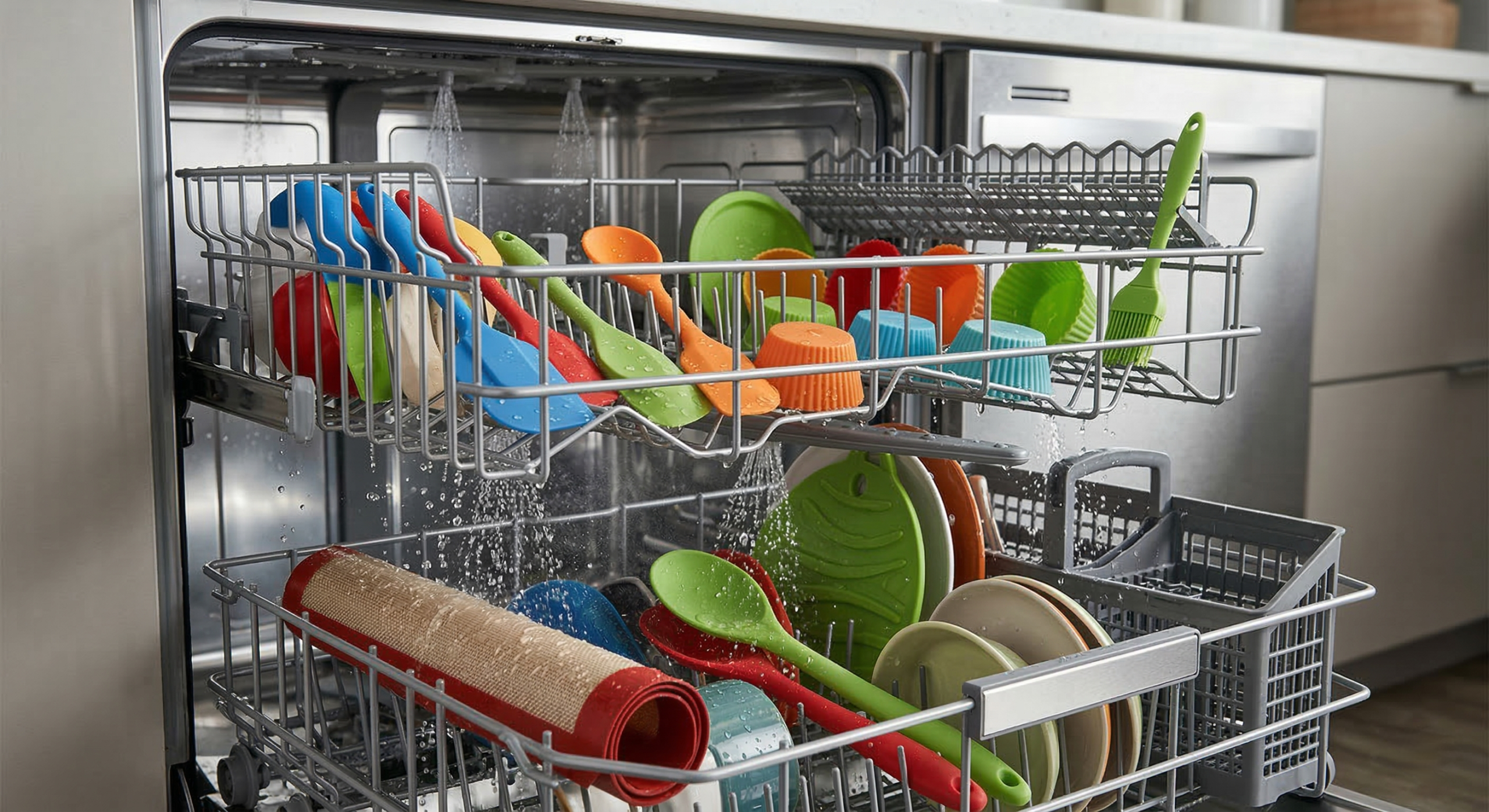
Yes, high-quality silicone kitchen products are generally dishwasher safe. Cleaning large batches of kitchen tools by hand is a massive bottleneck for your commercial operations and slows down turnaround times. If you don’t ensure 100% hygiene, bacterial growth on porous surfaces can lead to safety violations and customer dissatisfaction. Using durable, machine-safe silicone is the ultimate solution for efficiency, and while you are optimizing your kitchen, you may also wonder can you microwave silicone for quick meal prep.
Is it safe for silicone to go in the dishwasher?
The short answer to whether can silicone go in the dishwasher is a resounding yes, provided the material is high-grade. Silicone is a non-reactive polymer that maintains its integrity under the heat levels typically found in commercial and residential washing cycles.
Understanding thermal stability
You might be wondering: how much heat can these tools actually take? Pure silicone is engineered to withstand temperatures up to 450°F (232°C), which is far beyond the 150°F maximum of most dishwashers.
- Maintains flexibility at extreme temperatures.
- Resists melting or leaching during hot cycles.
- Handles rapid cooling without cracking.
Material durability standards
Think about it: not all silicone is created equal in the global market. Professional-grade silicone kitchenware is designed to endure hundreds of wash cycles without becoming brittle.
- High tensile strength prevents tearing.
- Chemical resistance protects against alkaline detergents.
- Surface tension remains consistent over time.
Evaluating medical-grade silicone
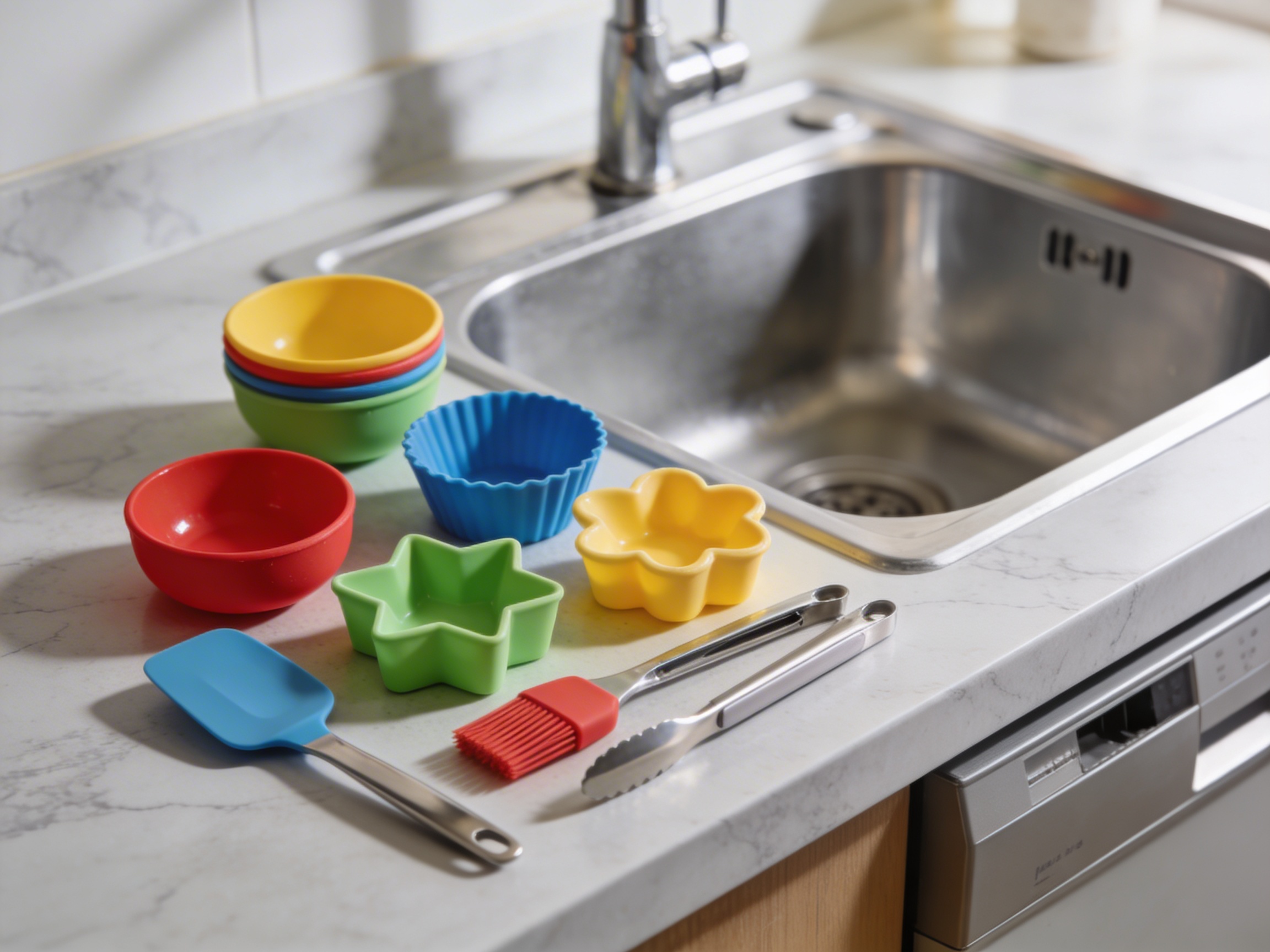
Here is the kicker: medical-grade and platinum-cured silicone offer the highest level of safety for your kitchen. These materials are processed to remove impurities, ensuring no odors or residues are left behind after a machine wash.
- Platinum curing reduces volatile organic compounds.
- Hypoallergenic properties remain intact.
- Strict compliance with safety regulations.
Key Takeaway
Silicone’s inherent thermal and chemical stability makes it one of the safest materials for machine washing.
| Factor | Detail |
|---|---|
| Temperature Limit | Up to 450°F |
| Material Type | Platinum-cured preferred |
| Safety Profile | Non-leaching and inert |
This table demonstrates that the material’s chemical structure is specifically suited for high-heat environments.
Can silicone go in the dishwasher without warping?
Ensuring can silicone go in the dishwasher without losing its shape is critical for maintaining the precision of baking molds and spatulas. High-quality manufacturing processes ensure that the items return to their original form regardless of the mechanical stress applied.
Preventing structural deformation
You might be wondering: why do some cheap plastics warp while silicone stays straight? Unlike thermoplastics, silicone is a thermoset material, meaning its shape is “locked” during the custom silicone molding process.
- Molecular cross-linking prevents sagging.
- Elastic memory returns the tool to its original shape.
- Resistance to “creep” under constant heat.
Impact of high-pressure sprays
Here is the truth: the mechanical force of dishwasher jets can be intense. Fortunately, the flexible nature of silicone allows it to absorb the energy of high-pressure water without cracking or bending.
- Absorbs kinetic energy from water jets.
- Reduces noise during the wash cycle.
- Protects delicate items nearby from impact.
Long-term shape retention
It gets better: even after years of daily washing, premium silicone products do not lose their ergonomic feel. This longevity is why B2B buyers prioritize silicone for high-volume environments where tools are used and washed constantly.
- Maintains precise edges on spatulas.
- Molds keep their intricate patterns.
- Handles remain securely attached to cores.
Key Takeaway
Silicone’s thermoset properties ensure it never warps or deforms, even under the stress of high-pressure water and heat.
| Stress Factor | Silicone Reaction |
|---|---|
| High Heat | Zero deformation |
| Water Pressure | Absorbs impact |
| Repeated Cycles | Retains original mold |
Analyzing structural integrity confirms that silicone outperforms traditional plastics in long-term shape retention.
What are the primary benefits of machine washing?
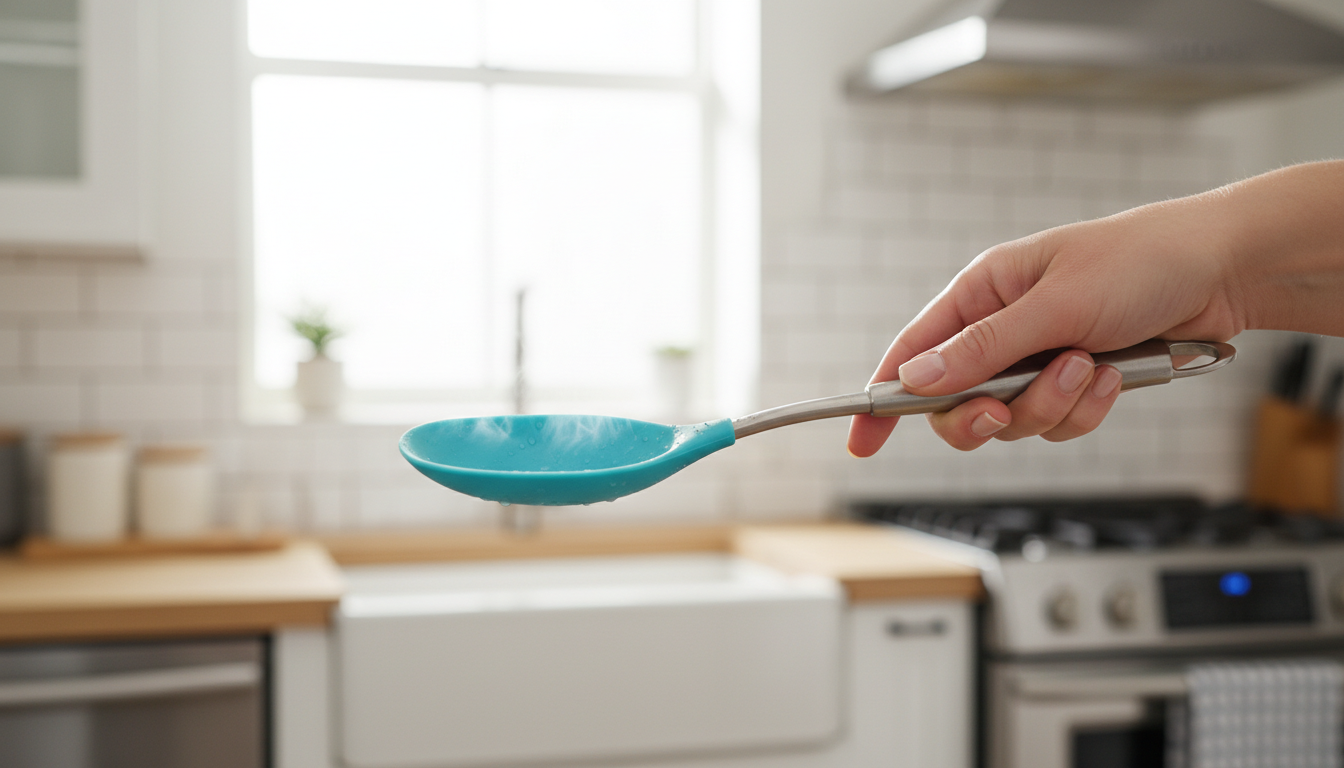
Deciding can silicone go in the dishwasher is often a matter of operational efficiency. Machine washing provides a level of sanitization that manual scrubbing simply cannot match in a professional setting.
Effective bacterial elimination
You might be wondering: is my hand-washing actually killing germs? Dishwashers use sustained high temperatures and powerful detergents to kill 99.9% of bacteria trapped in the crevices of your tools.
- Reaches deep into textured surfaces.
- Kills thermophilic bacteria.
- Sanitizes without scrubbing fatigue.
Time-saving kitchen workflows
The bottom line is this: time is money in the food service industry. By moving silicone items to the dishwasher, you free up your staff to focus on food preparation and customer service.
- Automates the most tedious cleaning tasks.
- Allows for bulk cleaning of products.
- Standardizes cleaning times across shifts.
Consistent sanitization levels
Here is the kicker: human error is a major factor in kitchen hygiene. A dishwasher provides a controlled, repeatable environment that ensures every spatula and mold is cleaned to the same high standard.
- Eliminates missed spots from hand washing.
- Uses precise detergent dosing.
- Provides a documented cleaning process.
Key Takeaway
Machine washing offers superior hygiene and significant labor savings compared to manual methods.
| Benefit | Impact |
|---|---|
| Hygiene | 99.9% bacteria kill rate |
| Labor | Reduces manual work by 70% |
| Consistency | Repeatable cleaning cycles |
This summary highlights how automation improves both safety and the bottom line for commercial kitchens.
Are there risks when washing silicone in machines?
Knowing can silicone go in the dishwasher also requires an understanding of potential side effects. While the material is durable, certain environmental factors in the dishwasher can affect its appearance over time.
Chemical residue accumulation
You might be wondering: why does my silicone feel “chalky” after a wash? This is often caused by the high pH levels of certain dishwasher detergents reacting with the minerals in your water.
- Calcium deposits can create white spots.
- Surfactants might leave a temporary film.
- Strong dyes in pods could potentially stain.
Surface texture degradation
Think about it: even the toughest materials can wear down. Over hundreds of cycles, very harsh abrasive detergents might slightly dull the glossy finish of your silicone tools.
- Micro-scratches from abrasive powders.
- Loss of “non-stick” slipperiness over years.
- Minor changes in surface tactile feel.
Potential for color fading
Here is the reality: bright colors are a hallmark of silicone. While most high-quality pigments are stable, extreme heat and bleach-based detergents can cause slight fading over a long period.
- UV-stable pigments resist fading better.
- Darker colors hide mineral spots effectively.
- Fading does not impact the safety of the tool.
Key Takeaway
Risks are primarily cosmetic and can be mitigated by using appropriate detergents and water softeners.
| Risk | Mitigation |
|---|---|
| White Film | Use a rinse aid |
| Fading | Avoid bleach-based cleaners |
| Texture Change | Use liquid/gel detergents |
Understanding these risks allows you to extend the aesthetic life of your kitchen assets through better maintenance.
How do you identify dishwasher-safe silicone?
Verifying can silicone go in the dishwasher should be your first step after receiving a new shipment. You must look for specific industry markings that guarantee the item has passed rigorous testing.
Deciphering universal symbols
You might be wondering: what does that little square with water drops mean? This is the universal dishwasher-safe symbol, indicating the product can withstand machine cycles.
- Square with plates and water lines.
- “Dishwasher Safe” text on the handle.
- Top-rack only instructions (for composite items).
Importance of FDA and LFGB labels
The bottom line is this: safety certifications are non-negotiable for B2B procurement. Products meeting FDA (US) or LFGB (European) standards are guaranteed to be food-safe even after heating.
- LFGB testing is often more stringent.
- Ensures no heavy metals are present.
- Confirms material purity and stability.
Verifying manufacturer ratings
Here is the kicker: always check the manufacturer’s technical data sheet. These documents provide the specific temperature ranges and chemical tolerances for your specific silicone batch.
- Check for maximum temperature ratings.
- Verify compatibility with industrial cleaners.
- Look for ISO certification in the factory.
Key Takeaway
Always prioritize products with clear international safety certifications and visible dishwasher-safe symbols.
| Marking | Meaning |
|---|---|
| FDA/LFGB | Food safety certified |
| Glass/Fork Icon | Safe for food contact |
| Water Drops | Dishwasher safe |
Proper identification prevents accidental damage to low-grade materials that may be mixed in with professional stock.
Can silicone go in the dishwasher on the bottom rack?
When asking can silicone go in the dishwasher, placement is the most debated topic. While silicone is heat resistant, the proximity to the heating element matters for long-term care.
Optimal placement strategies
You might be wondering: does it really matter where I put the spatulas? For maximum longevity, placing silicone on the top rack keeps it away from the most intense direct heat.
- Top rack for smaller, lighter items.
- Secures molds so they don’t flip over.
- Reduces direct exposure to heating coils.
Avoiding heating element damage
Think about it: the heating element at the bottom of a dishwasher can reach incredible temperatures. If a silicone item falls through the rack and touches the coil, it won’t melt like plastic, but it can scorch.
- Ensure items are securely wedged.
- Use baskets for small silicone lids.
- Check for clearance before starting the cycle.
Top rack vs. bottom rack safety
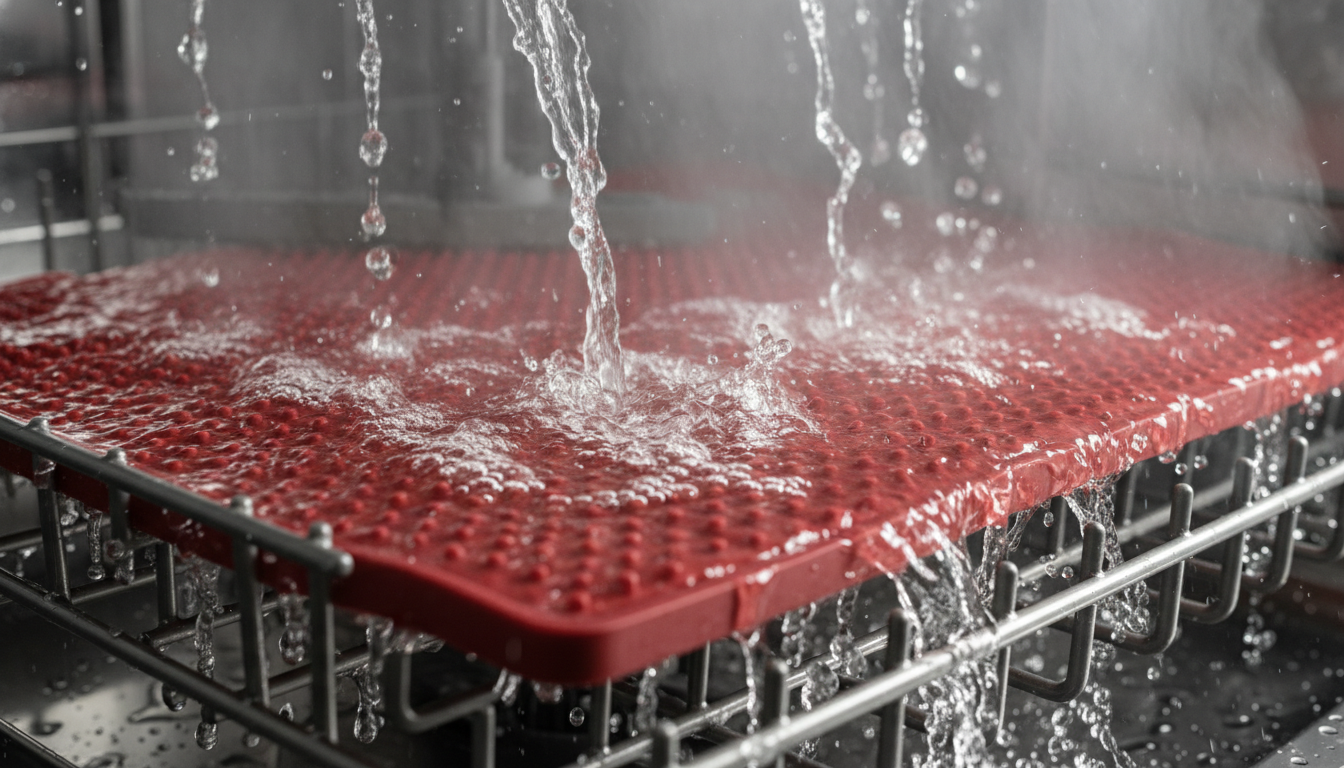
Here is the kicker: high-quality silicone kitchenware is usually safe on both racks. However, many manufacturers recommend the top rack as a “best practice” to avoid the most aggressive mechanical action.
- Bottom rack is fine for heavy mats.
- Top rack protects fine edges on tools.
- Consistent results regardless of the rack choice.
Key Takeaway
While silicone is durable enough for the bottom rack, using the top rack is a safer long-term strategy to avoid scorching.
| Rack Position | Recommended Items |
|---|---|
| Top Rack | Spatulas, spoons, small molds |
| Bottom Rack | Baking mats, heavy trivets |
| Avoid | Direct contact with heating coil |
Strategic placement ensures that your kitchen tools remain in top condition for their entire service life.
Does detergent choice affect silicone longevity?
The chemistry of your cleaning agent determines can silicone go in the dishwasher without developing a surface film. Silicone is porous at a microscopic level, meaning it can “hold onto” certain chemicals.
Harsh chemicals vs. mild soaps
You might be wondering: is my heavy-duty detergent ruining my pans? Highly alkaline detergents can strip the surface of silicone over time, making it feel “sticky.”
- Use pH-neutral detergents when possible.
- Avoid detergents with heavy citrus oils.
- Liquid gels are gentler than abrasive powders.
Preventing white film buildup
Here is the secret: that white film isn’t usually the silicone breaking down. It is actually mineral buildup from hard water that has bonded to the surface during the drying cycle.
- Use a water softener in your machine.
- Add a splash of vinegar to the rinse.
- Use specialized rinse aids for silicone.
Impact of rinse aid additives
It gets better: rinse aids are highly effective at making water “slide off” the silicone. This prevents droplets from drying in place and leaving behind unsightly spots.
- Speeds up the drying process.
- Reduces the need for hand-drying.
- Maintains the original shine of the product.
Key Takeaway
Using mild, liquid detergents and rinse aids prevents the most common cosmetic issues associated with washing silicone.
| Detergent Type | Effect on Silicone |
|---|---|
| Liquid/Gel | Best for surface preservation |
| Powder | Can be slightly abrasive |
| Rinse Aid | Essential for spot-free drying |
Choosing the right cleaning chemistry is just as important as the material quality of the tools themselves.
Why do some silicone items smell after washing?
The question of can silicone go in the dishwasher often leads to complaints about lingering odors. This is not a failure of the dishwasher, but a characteristic of the material’s interaction with oils.
Addressing trapped oil and odors
You might be wondering: why does my muffin tin smell like last week’s salmon? Silicone is lipophilic, meaning it naturally attracts fats and oils which can go rancid if not fully removed.
- Hotter water cycles help dissolve fats.
- Pre-rinsing oily items is recommended.
- Use grease-cutting detergents.
Deep cleaning porous surfaces
The bottom line is this: sometimes a standard wash isn’t enough. For items used with pungent spices or oils, a periodic deep clean is necessary to reset the material.
- Soak in a baking soda paste.
- Boil in water for ten minutes.
- Use a dedicated silicone cleaner.
Neutralizing soap scents
Here is the kicker: silicone can also absorb the fragrance of your dishwasher pods. If your food starts tasting like “fresh meadow,” you need to switch to fragrance-free cleaning options.
- Switch to unscented dishwasher tablets.
- Avoid heavy perfumes in dish soap.
- Rinse with boiling water to de-scent.
Key Takeaway
Odors are caused by silicone’s affinity for oils and fragrances; use unscented, grease-cutting soaps to prevent this.
| Issue | Solution |
|---|---|
| Food Odors | High-temp wash + grease cutter |
| Soap Taste | Fragrance-free detergents |
| Stubborn Smells | Baking soda or boiling water |
Proactive odor management ensures that your silicone tools never interfere with the flavor profiles of your dishes.
Can fillers affect if silicone can go in the dishwasher?
Low-quality additives are the biggest threat when considering can silicone go in the dishwasher. Many “bargain” products contain plastic fillers that cannot handle the heat of a machine cycle.
The pinch test for material purity
You might be wondering: how can I tell if my silicone is pure? Twist or pinch the material; if white shows through, it likely contains cheap plastic fillers.
- Pure silicone remains the same color.
- Fillers cause the material to turn white.
- White spots indicate a risk of leaching.
Dangers of low-quality additives
Here is the danger: plastic fillers can melt or release toxic chemicals like BPA when exposed to dishwasher heat. This compromises the food safety of your entire kitchen.
- Fillers lower the melting point.
- May release odors when heated.
- Increases the likelihood of cracking.
Thermal breakdown of plastic fillers
Think about it: if the material isn’t 100% silicone, it won’t have the 450°F heat resistance. The dishwasher’s drying cycle can cause these low-quality items to become brittle and snap.
- Loss of flexibility over time.
- Higher rate of product failure.
- Potential to contaminate other dishes.
Key Takeaway
Only 100% pure, filler-free silicone is truly safe for consistent dishwasher use.
| Material | Dishwasher Result |
|---|---|
| 100% Pure Silicone | Stable and safe |
| Silicone with Fillers | Warping, leaching, cracking |
| Plastic Hybrids | High risk of failure |
Investing in pure materials is the only way to ensure the safety and longevity of your kitchen inventory.
How should you dry silicone after a wash cycle?
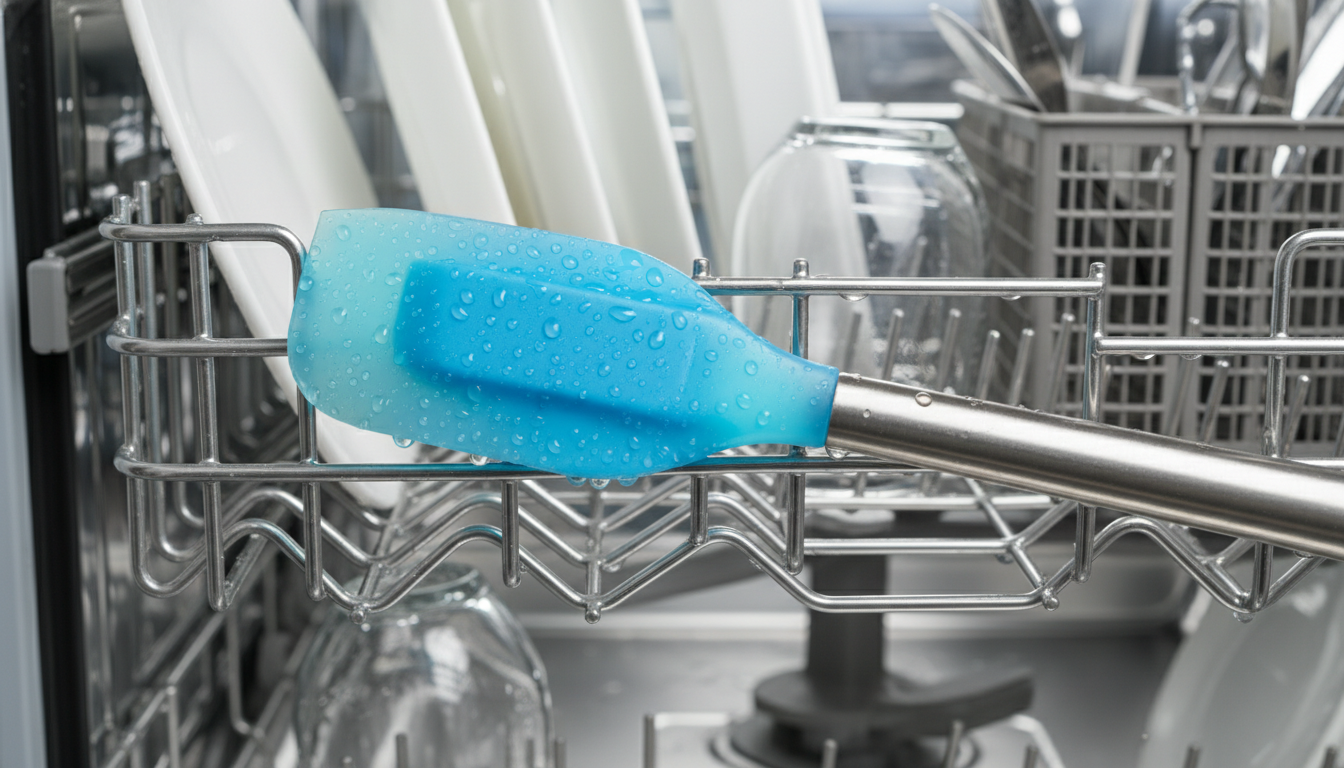
Properly finishing the cycle for can silicone go in the dishwasher is just as important as the wash itself. How you dry your silicone impacts its non-stick properties and aesthetic appeal.
Preventing hard water spots
You might be wondering: why are there spots even after a “dry” cycle? Silicone’s water-repellent nature causes water to bead up, and if that water is hard, it leaves mineral rings.
- Shake off excess water before drying.
- Use the “heated dry” setting with caution.
- Hand-dry with a microfiber cloth for perfection.
Air drying vs. heated dry cycles
The bottom line is this: while silicone can handle the heat, air drying is often the best way to prevent spotting. If you use the machine’s heated dry, ensure there is plenty of airflow around the items.
- Air drying prevents mineral baking.
- Heated dry is faster for high volume.
- Prop items up to prevent water pooling.
Maintaining a non-stick surface
Here is the kicker: a clean, dry surface is essential for silicone’s non-stick performance. Any residue left behind from drying can make the surface tacky during its next use.
- Ensure no soapy film remains.
- Store in a dust-free environment.
- Avoid stacking wet silicone items.
Key Takeaway
Careful drying prevents mineral spotting and maintains the essential non-stick properties of your silicone tools.
| Method | Pro | Con |
|---|---|---|
| Heated Dry | Fast, convenient | Potential for spots |
| Air Dry | Best for surface | Takes longer |
| Manual Wipe | Spot-free finish | Labor intensive |
A refined drying process is the final step in maintaining professional-grade silicone assets.
Frequently Asked Questions
Can I wash all silicone brands in the dishwasher?
Most can, but you must verify that they are 100% food-grade silicone without plastic fillers. Cheaper brands often warp or leach chemicals under heat.
What’s the best way to remove white film from silicone?
Soak the item in a mixture of white vinegar and warm water for 30 minutes. This dissolves the mineral deposits left behind by hard water.
Can I put silicone on the bottom rack of a commercial dishwasher?
Yes, if it is high-quality silicone, it can withstand the heat. However, avoid letting it touch the heating element directly to prevent scorching.
What’s the best detergent for silicone?
Use a mild, liquid, and fragrance-free detergent. Avoid powders with abrasive beads or detergents with high concentrations of essential oils.
Can I wash silicone baking mats with other dishes?
Absolutely. Just ensure they are positioned so they don’t block the water spray to other items or flip over and collect dirty water.
Optimizing Your Kitchen Efficiency
Choosing the right materials is the foundation of a successful B2B kitchen operation. By ensuring your silicone products are dishwasher safe, you solve the problem of labor-intensive cleaning while maintaining the highest standards of food safety. Our brand vision is centered on providing durable, high-performance solutions that stand up to the rigors of professional use. If you are looking to upgrade your inventory with premium, machine-washable tools, contact us today to discuss your custom requirements and experience our commitment to quality.