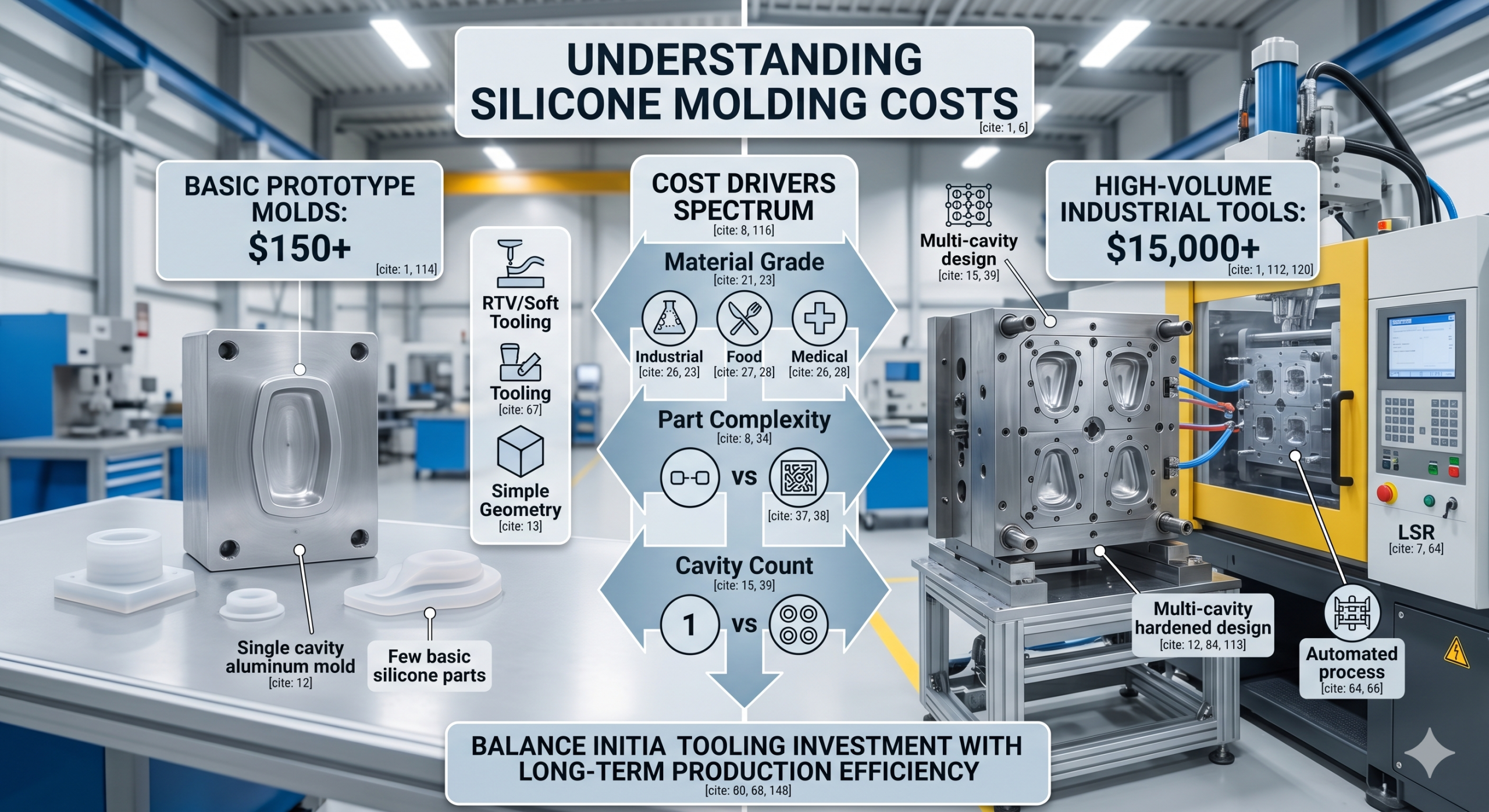
Silicone molding costs typically range from $150 for a basic prototype to over $15,000 for high-volume industrial tools. Navigating the financial landscape of custom manufacturing often feels like a guessing game. Many businesses struggle to estimate the initial investment required for a high-quality Silicone mold, leading to unexpected budget overruns or compromised product quality.
Imagine spending thousands of dollars on tooling, only to realize the material grade is insufficient for your industry or the mold life is too short for mass production. Without a clear breakdown of material costs, labor, and technical overhead, you risk choosing the wrong molding partner and stalling your product launch. Understanding the specific variables—from material grades to cavity complexity—is the only way to achieve cost-efficiency.
What Factors Influence Silicone Molding Costs?
Primary cost drivers include tooling material, part geometry, and the chosen manufacturing process. The price of a Silicone mold is never a flat rate but a calculated sum of design hours and material volume. Mechanical precision also dictates how much you will pay for the final tool.
What are the main cost drivers?
The specific material used for the tool itself often determines the baseline price. Aluminum is significantly cheaper for prototypes, while hardened steel is required for long-term production runs.
But wait:
- Part Geometry: Deep undercuts or thin walls require complex mold actions.
- Tolerance Levels: Tighter tolerances demand advanced CNC machining.
- Cavity Count: More cavities increase the price per mold but lower the price per part.
Key Takeaway: Tooling complexity and the chosen manufacturing process are the primary determinants of your initial capital expenditure.
| Factor | Impact on Cost | Estimated Price Range |
|---|---|---|
| Tooling Material | High | $500 – $10,000+ |
| Part Complexity | Moderate | Variable labor hours |
| Molding Method | Very High | LSR ($$$) vs. Compression ($) |
The interplay between material durability and part features creates the total cost structure for your project.
How Do Silicone Material Costs Affect Pricing?
Raw material prices fluctuate based on the purity and performance characteristics required for your specific application. The raw material used in your Silicone mold is a significant recurring expense once production begins. Standard industrial silicone is significantly more affordable than specialized variants used in medical devices.
What is the price of different silicone grades?
General-purpose silicone is the most budget-friendly option for non-critical industrial parts. However, for specialized industries, you must account for higher certifications.
Here is the truth:
- General Purpose: $20–$50 per kg for gaskets and seals.
- Food Grade: $60–$100 per kg for kitchenware or baby products.
- Medical Grade: $100–$200+ per kg for surgical tools or implants.
Key Takeaway: Material costs are non-negotiable when meeting regulatory standards like FDA or ISO 13485 for high-purity parts.
| Material Type | Cost Per Kilogram | Primary Application |
|---|---|---|
| Industrial Grade | $20 – $50 | Gaskets, seals |
| Food Grade | $60 – $100 | Kitchenware, baby teethers |
| Medical Grade | $100 – $200+ | Implants, surgical tools |
Selecting the correct grade ensures compliance while preventing the unnecessary expense of over-specifying materials.
Does Mold Size and Complexity Increase Price?
Yes, larger and more intricate designs require more CNC machining time and raw metal. A complex Silicone mold often requires additional components like slides, lifters, and cooling channels. For specialized items like custom pet products, intricate textures or multi-part assemblies add to the labor hours.
Why do intricate designs cost more?
Complexity adds hours to the programming and machining phase of the project. Every undercut or fine detail requires precision tooling that increases the risk of manufacturing errors.
Think about this:
- Cavity Count: More cavities mean more parts per cycle but higher upfront tool costs.
- Surface Finish: High-gloss or specific textures require manual polishing or etching.
- Size: Larger molds consume more steel and require larger molding machines.
Key Takeaway: Minimize undercuts and maximize draft angles during the design phase to keep mold complexity—and costs—low.
| Mold Feature | Cost Impact | Why? |
|---|---|---|
| Multi-Cavity | Increases | More machining and material |
| Textured Finish | Increases | Extra labor for etching |
| Simple Geometry | Decreases | Standard CNC paths |
Strategic design choices can drastically reduce the price of the mold without sacrificing the functionality of the part.
Why Hire Professional Molding Services?
Professional services provide essential “Design for Manufacturing” (DFM) analysis to prevent costly errors. They ensure your Silicone mold won’t fail during the first injection cycle. Experts handle flow analysis to prevent air bubbles and optimize gate placement for clean part removal.
What do engineering fees cover?
The fees you pay for engineering cover the technical insurance needed for a successful product launch. Skilled engineers identify potential failure points before any metal is cut.
But wait:
- Flow Analysis: Prevents material waste and air entrapment.
- Gate Optimization: Ensures aesthetic quality and easy trimming.
- Quality Control: Guarantees parts meet ISO standards.
Key Takeaway: Professional engineers provide the technical insurance needed to ensure a high yield and long tool life.
| Service Element | Included Value | Cost Benefit |
|---|---|---|
| DFM Analysis | Prevents rework | Saves thousands in edits |
| Quality Control | ISO compliance | Reduces product liability |
| Tool Maintenance | Extended mold life | Lowers long-term costs |
Investing in expert engineering upfront saves you from expensive tool revisions and high rejection rates later.
How Does Production Volume Impact Your Budget?
Higher production volumes significantly lower the price per unit as you amortize the tooling cost. The “First Part Cost” is always the highest when developing a Silicone mold. Once the tool is paid for, the unit price drops because setup times are spread across thousands of parts.
How does unit price drop with volume?
The per-item cost is a function of the molding speed and the number of cavities in the tool. Automated processes like LSR injection molding are expensive to set up but extremely cheap per cycle.
Here is the kicker:
- Low Volume: High unit cost due to manual labor and setup time.
- High Volume: Low unit cost due to high-speed automation.
- Prototyping: RTV or soft tooling offers a low-cost entry point for startups.
Key Takeaway: Choose your molding technology based on your 12-month production forecast to optimize the “Total Cost of Ownership.”
| Annual Volume | Recommended Method | Tooling Investment |
|---|---|---|
| 1 – 100 units | Prototype/RTV | Low ($) |
| 100 – 5,000 units | Compression | Moderate ($$) |
| 5,000+ units | LSR Injection | High ($$$) |
Calculating the total cost over the entire product lifecycle is the most effective way to budget for manufacturing.
What Are the Hidden Costs of Silicone Molding?
Hidden expenses often include ongoing maintenance, storage fees, and logistics. A Silicone mold is not a “set and forget” asset but requires regular cleaning and lubrication to maintain precision. Steel molds may also need gate repairs or refurbishment after reaching 100,000 cycles.
What about maintenance and storage?
Some factories charge for climate-controlled tool storage to prevent rust and degradation. If you are manufacturing overseas, the weight of the steel tool can add significant air freight costs.
Here is the truth:
- Storage Fees: Ongoing costs for keeping your tool in a safe environment.
- Refurbishment: Necessary repairs after high-volume usage.
- Landed Cost: Shipping and tariff fees for transporting the heavy tool.
Key Takeaway: Always ask your partner for a “landed cost” quote that includes maintenance, storage, and logistics.
| Hidden Cost | Typical Range | Frequency |
|---|---|---|
| Tool Maintenance | 5-10% of tool cost | Annually |
| Mold Storage | $50 – $200/mo | Ongoing |
| Shipping/Freight | $200 – $2,000 | Once per tool |
Failure to account for these secondary expenses can lead to unexpected hits to your operational budget.
How Much Does Design and Prototyping Cost?
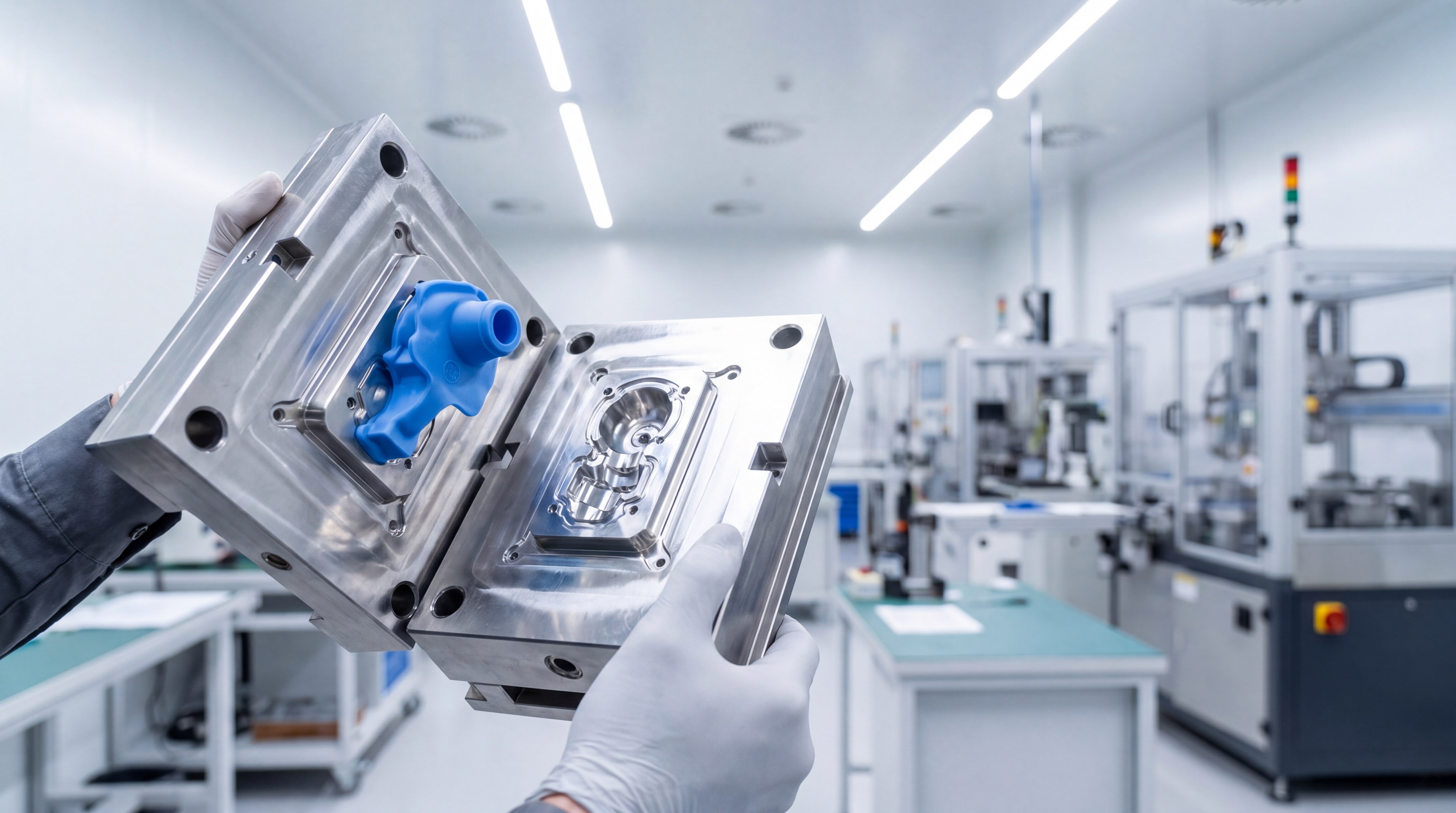
Prototyping costs usually range from $500 for CAD modeling to $1,500 for soft tooling. Before the Silicone mold is cut, you need a digital blueprint or physical sample. Engineering firms typically charge hourly rates for complex designs, especially for smart wearable components.
Do I need a prototype mold?
Absolutely, because investing in a soft mold can prevent a much more expensive mistake in the final hard tool. It allows you to check for fit, function, and the tactile feel of the material.
But wait:
- CAD Design: Digital validation ensures the part can be molded.
- 3D Print Mockup: Inexpensive way to check physical form.
- Soft Tooling: Best for testing the actual silicone material properties.
Key Takeaway: Prototyping is a cost-avoidance strategy; it identifies flaws before they are etched in hardened steel.
| Design Phase | Estimated Cost | Objective |
|---|---|---|
| CAD Design | $500 – $2,000 | Digital validation |
| 3D Print Mockup | $100 – $300 | Physical form check |
| Soft Tooling | $500 – $1,500 | Material testing |
Spending a small amount on validation early in the process prevents massive losses during full-scale production.
What Is the Cost of Post-Mold Processing?
Post-processing can represent up to 20% of your total unit cost depending on the required finish. Raw parts often require “flash” removal where excess silicone is trimmed away from the Silicone mold edges. While manual trimming is cheaper for small batches, high-volume production often requires cryogenic deflashing.
What is the cost of surface finishing?
Adding functional or aesthetic coatings will increase the unit price by approximately 10–15%. Consumer electronics often require anti-static or soft-touch sprays to meet market expectations.
Here is the truth:
- Manual Trimming: Labor-intensive but requires no special equipment.
- Laser Etching: Moderate cost for adding logos or serial numbers.
- Specialized Coating: High cost for anti-dust or medical-grade barriers.
Key Takeaway: Post-processing can represent 20% of your total unit cost; define these requirements early to avoid price creep.
| Process | Cost Level | Purpose |
|---|---|---|
| Manual Trimming | Low (Labor) | Removing excess flash |
| Laser Etching | Moderate | Adding logos/serial numbers |
| Specialized Coating | High | Anti-dust or medical barrier |
Defining these requirements at the start of the project ensures your quotes are accurate and comprehensive.

What Are Some Typical Pricing Examples?
Small decorative molds start at $150, while high-end industrial systems can exceed $15,000. For a simple, single-cavity Silicone mold used for jewelry or small goods, expect to pay on the lower end of the spectrum. Conversely, medical applications require multi-cavity LSR molds designed for millions of cycles.
What is a high-end industrial price?
Enterprise-level pricing accounts for zero-defect tolerances and extreme durability. These molds are built from hardened stainless steel to withstand the high pressures of injection molding.
Think about this:
- Small Business: $200 – $600 for compression tooling.
- Mid-Market: $1,500 – $4,000 for standard consumer products.
- Enterprise: $10,000+ for automotive or surgical components.
Key Takeaway: Pricing is a spectrum; match your mold quality to the expected lifecycle and precision requirements of your product.
| Project Scope | Est. Tooling Cost | Est. Unit Cost |
|---|---|---|
| Small Business | $200 – $600 | $2.00 – $5.00 |
| Mid-Market | $1,500 – $4,000 | $0.50 – $1.50 |
| Enterprise | $10,000+ | $0.10 – $0.40 |
Understanding where your project falls on this spectrum helps you set realistic expectations for your stakeholders.
How Can You Save on Silicone Molding Costs?
The most effective way to save is to simplify part geometry and use standard colors. Reducing the number of part features allows for a simpler Silicone mold that can be machined faster. You can also consolidate multiple parts into a single mold to reduce total tooling investment.
How to optimize for mass production?
High upfront investment in “cold runner” technology pays for itself through massive material savings over time. This system reduces the “sprue” waste that otherwise hardens and becomes scrap.
But wait:
- Simplify Geometry: Immediate savings on CNC machining time.
- Standard Colors: Avoids custom pigment mixing and cleaning fees.
- Consolidation: Fewer molds lead to lower overall maintenance costs.
Key Takeaway: High upfront investment in “cold runner” technology pays for itself through material savings in high-volume runs.
| Saving Strategy | Short-Term Impact | Long-Term Impact |
|---|---|---|
| Simplify Geometry | Immediate saving | Easier maintenance |
| Cold Runner System | Higher cost | Massive material saving |
| Standard Pigments | Lowers setup | Faster lead times |
By planning for the long term, you can turn a high initial expense into a high-profit manufacturing operation.
Frequently Asked Questions
Can I reuse a silicone mold to save money?
Yes, industrial steel molds are highly durable and can produce up to 1,000,000 cycles. However, soft RTV molds used for prototyping only last for 25–50 uses before losing their detail.
How do I know if I need LSR or compression molding?
The choice depends on your volume requirements and part complexity. If you need 10,000+ parts with tight tolerances, LSR is necessary; for small batches of simple parts, compression is much cheaper.
Can I 3D print the mold master myself?
Yes, 3D printing a master is a cost-effective way to validate your design before committing to metal. However, the final production mold should always be professionally machined for accuracy and heat resistance.
What is the best way to get an accurate quote?
Provide a 3D CAD file in STEP format along with your material hardness and annual volume requirements. This allows engineers to calculate exact machining time and material consumption.
Can I reduce shipping costs for heavy molds?
Yes, you can choose sea freight if you are not in a rush, which is significantly cheaper than air transport. You should also consider storing the mold at the manufacturer’s facility to avoid repeated shipping fees.
Ready to Optimize Your Production?
Calculating the cost of a silicone mold requires a balance between initial tooling capital and long-term production efficiency. We solve the problems of budget uncertainty and manufacturing defects by providing expert DFM analysis and high-precision tooling. Our team helps you navigate material selection and volume optimization to ensure your product hits the market with the highest quality at the lowest possible cost.
Whether you are launching a medical device or a consumer accessory, we are committed to your success. contact us today for a professional consultation and a precise estimate tailored to your design. Precision molding isn’t just about manufacturing; it’s about engineering your competitive advantage.