
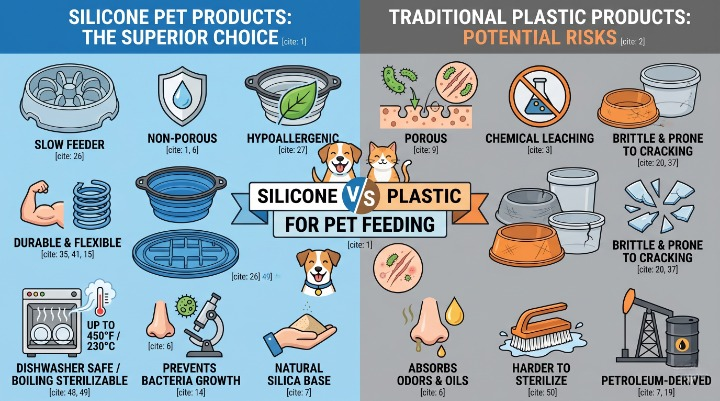
Silicone is the superior choice for pet feeding products due to its non-porous nature, chemical stability, and exceptional durability compared to traditional plastics. Many businesses unknowingly stock plastic containers that harbor invisible bacteria in microscopic scratches, leading to recurring skin infections and digestive upsets for the end consumer’s pets. Over time, these cheaper plastic materials degrade, potentially leaching harmful chemicals into water and food supplies. Transitioning your inventory to a premium silicone Pet product provides a non-porous, hypoallergenic, and virtually indestructible solution that prioritizes long-term animal wellness. Explore our full range of safety-first solutions at our silicone Pet product catalog.
Why choose silicone over plastic for pets?
You should choose silicone because it is an inert, non-porous material that prevents the absorption of odors and oils that typically plague plastic feeders. This specialized polymer is derived from silica, making every silicone Pet product fundamentally different from petroleum-based plastic alternatives. Because silicone does not react with food or water, it ensures that every meal remains untainted by chemical residues or stale smells.
Does a non-porous surface matter?
Think about it: a porous surface is a breeding ground for pathogens that you cannot see. Silicone’s smooth surface prevents the accumulation of organic matter that often leads to mold.
- Resists the absorption of strong food odors.
- Prevents fats and oils from staining the material.
- Ensures a fresh tasting experience for the pet.
- Stops bacteria from nesting in surface pores.
Flexibility and portability benefits
But here is the kicker: silicone can be collapsed or folded thousands of times without showing signs of stress or fatigue. This makes it perfect for the modern, mobile pet owner who values space-saving designs.
Key Takeaway: Silicone provides a hygienic, odor-resistant feeding surface that offers unmatched flexibility for both home and travel use.
| Feature | Food-Grade Silicone | Standard Plastic |
|---|---|---|
| Material Base | Natural Silica | Petroleum/Crude Oil |
| Porosity | Non-porous | High (absorbs odors) |
| Flexibility | High / Foldable | Low / Brittle |
The data indicates that silicone’s natural silica base provides a cleaner and more versatile foundation than petroleum-derived plastics.
Is silicone safer than BPA-free plastic?
Yes, silicone is inherently safer because it is naturally free from endocrine disruptors like BPA, BPS, and phthalates without needing chemical additives. While many manufacturers market “BPA-free” plastic, they often substitute the harmful chemical with other bisphenols that carry similar health risks. Choosing a high-quality silicone Pet product eliminates the fear of chemical migration during the feeding process.
How stable is the chemistry?
The chemical structure of silicone remains stable across an incredible temperature range, ensuring no toxins are released during heating. Unlike plastic, it does not release fumes or degrade when exposed to ultraviolet light or microwave radiation.
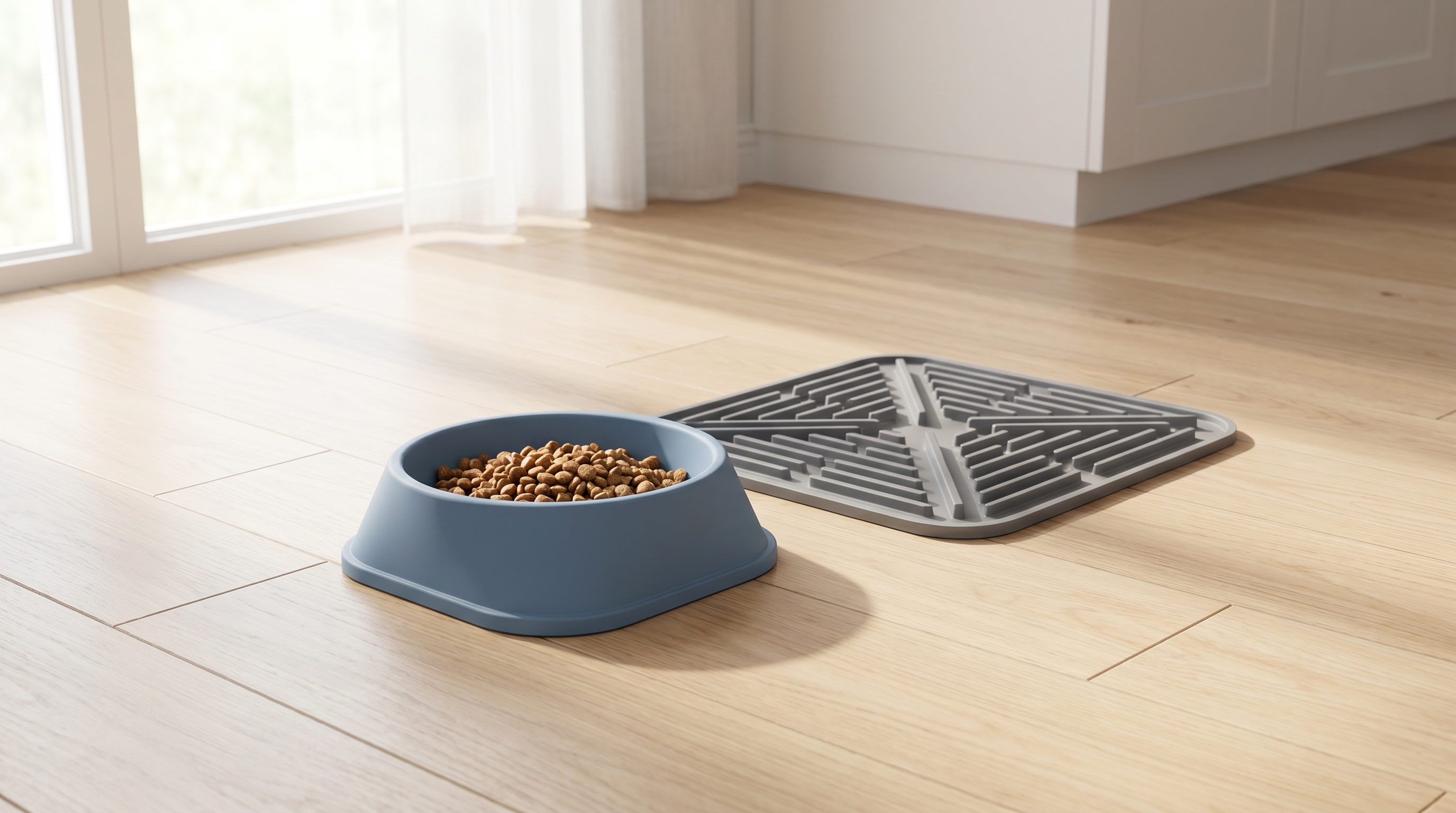
Hypoallergenic properties for sensitive pets
It is a well-known fact that many animals suffer from contact dermatitis caused by the dyes and resins found in low-grade plastics. Silicone is a biocompatible material that minimizes the risk of allergic reactions or skin irritation.
- Free from lead and heavy metals.
- No synthetic fragrances or VOCs.
- Safe for pets with severe environmental allergies.
- Meets strict FDA and LFGB food-safety standards.
Key Takeaway: Silicone avoids the chemical pitfalls of plastic resins by offering a stable, hypoallergenic alternative that exceeds standard safety certifications.
| Safety Factor | Silicone Performance | Plastic Performance |
|---|---|---|
| Chemical Leaching | Negligible | Possible under heat |
| Allergy Risk | Extremely Low | Moderate to High |
| UV Stability | Excellent | Poor (becomes brittle) |
The comparison highlights that silicone maintains its safety profile even under environmental stresses that cause plastic to fail.
How does durability compare between materials?
Silicone offers significantly higher durability than plastic because it is impact-resistant and does not become brittle or “craze” with age. When you invest in a silicone Pet product, you are selecting a material that can withstand being dropped, stepped on, or tossed into a travel bag without cracking. Plastic, conversely, is prone to shattering and developing fine cracks that weaken the structural integrity over time.
Can it resist aggressive chewing?
While no material is completely indestructible, silicone’s rubbery texture is far more resilient against sharp teeth than rigid plastic. It absorbs the force of a bite rather than splintering into dangerous shards that could be ingested.
- Absorbs high-impact energy without breaking.
- Does not produce sharp edges if damaged.
- Resistant to tearing under tension.
- Maintains shape after extreme compression.
Longevity over many years
Think about it: how many plastic bowls have you seen discarded because they looked weathered and worn? Silicone maintains its “like-new” appearance and physical properties for over a decade with proper care.
Key Takeaway: Silicone’s elasticity and impact resistance make it a long-term investment that outlasts multiple cycles of plastic replacements.
| Durability Metric | Silicone | Plastic |
|---|---|---|
| Impact Resistance | Exceptional (bounces) | Poor (shatters/cracks) |
| Weather Resistance | High (Internal/External) | Low (Fades/Warps) |
| Lifespan | 5-10+ Years | 1-2 Years |
Silicone demonstrates a clear advantage in longevity, offering a much lower total cost of ownership for pet owners.
Which material is easier to keep clean?
Silicone is much easier to keep clean because its high thermal resistance allows for boiling or high-heat dishwashing that would melt or warp plastic. Every silicone Pet product can be sterilized at temperatures up to 450°F, ensuring total elimination of pathogens. Plastic often warps in the dishwasher, creating new nooks where bacteria can hide and flourish despite cleaning attempts.
Is it dishwasher safe?
The simple answer is yes, and it can handle the “heavy-duty” cycle without any risk of losing its shape. This allows for a level of sanitation that is simply impossible to achieve with standard plastic resins.
- Withstands boiling water for deep sterilization.
- Compatible with all standard dishwashing detergents.
- Does not require harsh abrasive scrubbing.
- Dries quickly due to its hydrophobic nature.
Preventing the dreaded biofilm
But here is the kicker: the slick surface of silicone makes it difficult for biofilms—those slimy bacterial colonies—to take hold. Since the material doesn’t scratch easily, there are no microscopic grooves for bacteria to anchor themselves.
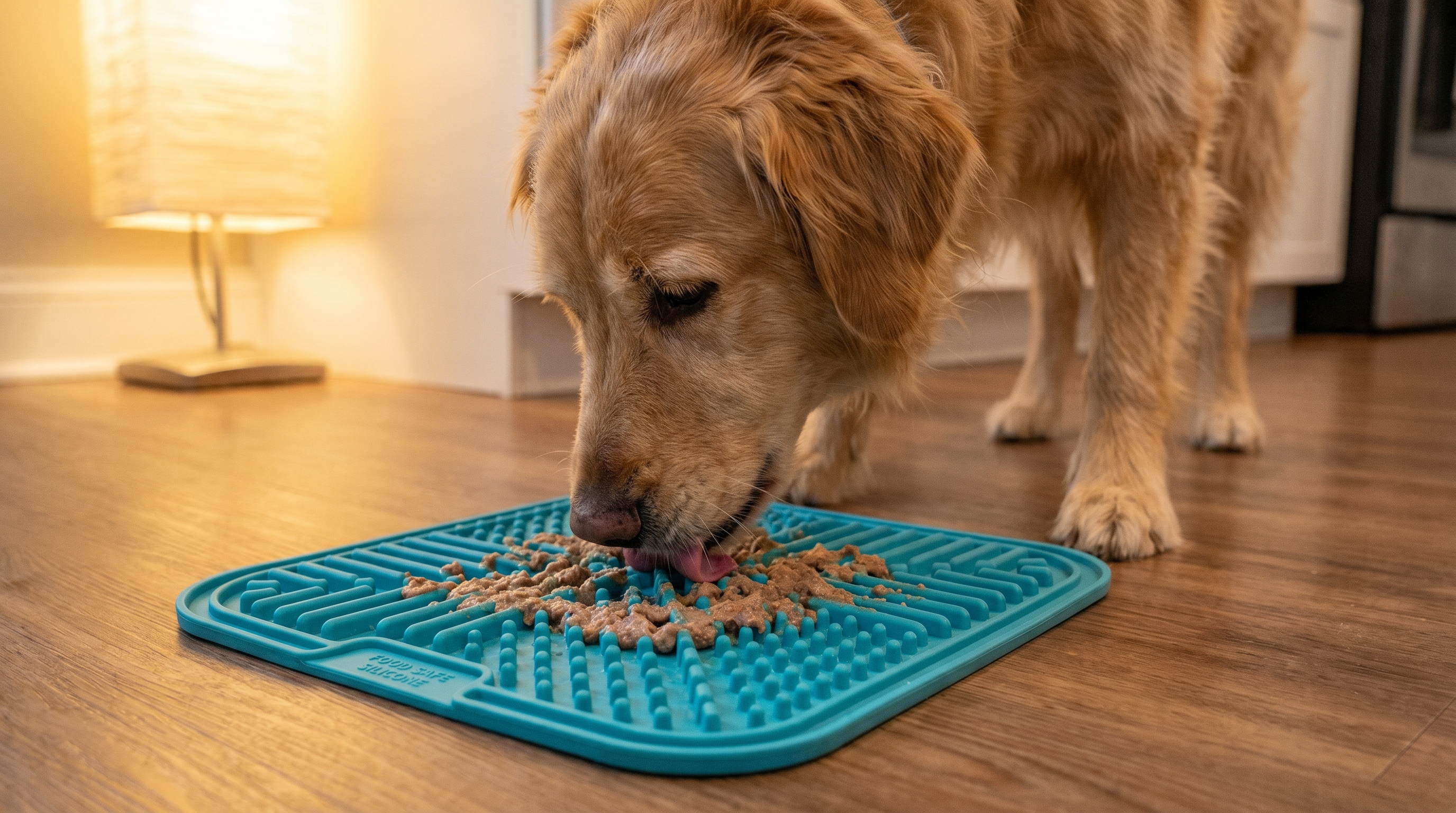
Key Takeaway: The ability to withstand extreme heat and resist scratching makes silicone the most hygienic material choice for pet feeding.
| Cleaning Capability | Silicone | Plastic |
|---|---|---|
| Max Temp Safety | Up to 450°F | Usually < 200°F |
| Boiling Safe | Yes | No |
| Scratch Resistance | High | Low |
This table shows that silicone allows for professional-grade sterilization that plastic materials cannot support.
Can plastic bowls cause pet health issues?
Yes, veterinarians frequently identify plastic bowls as a leading cause of feline acne and bacterial infections in dogs. The scratches that naturally occur in a silicone Pet product are non-existent compared to the deep gouges found in used plastic. These gouges trap food particles and moisture, creating a perfect environment for bacterial overgrowth that contacts the pet’s skin during every meal.
Understanding feline acne risks
Think about it: your pet’s chin is constantly rubbing against the rim of their bowl. If that rim is laden with bacteria from old scratches, skin irritation is almost inevitable.
Digestive and behavioral impacts
Moreover, the chemical odors absorbed by plastic can actually discourage a pet from drinking enough water. Many animals are highly sensitive to the “plastic” taste that leaches into their food, which can lead to finicky eating habits.
- Reduces the risk of localized skin infections.
- Prevents the ingestion of microplastic particles.
- Eliminates chemical odors that affect appetite.
- Supports better hydration through clean-tasting water.
Key Takeaway: Moving away from plastic can directly resolve common skin and digestive health issues seen in household pets.
| Health Condition | Plastic Risk | Silicone Impact |
|---|---|---|
| Chin Acne | High Risk | Preventive |
| Microplastic Ingestion | High Risk | Zero Risk |
| Bacterial Infection | Common | Rare |
Choosing silicone is a proactive health decision that mitigates several common veterinary concerns associated with feeding.
Is silicone better for travel feeding?
Silicone is vastly superior for travel because it is lightweight, collapsible, and has a natural “grip” that prevents it from sliding on car mats or forest floors. A silicone Pet product can be squashed into a backpack and will pop back into its original shape instantly upon arrival. Plastic travel bowls are often bulky, rigid, and prone to breaking if they are dropped on rocky terrain or crushed in luggage.
The advantage of collapsible design
The most popular travel feeders utilize a bellows-like design that allows them to shrink to less than an inch in thickness. This portability makes them an essential item for any outdoor adventure or road trip.
- Clips easily to backpacks via carabiners.
- Fits into glove boxes and side pockets.
- Ultra-lightweight for long-distance hiking.
- Maintains structural integrity when expanded.
Stability and anti-skid performance
But here is the kicker: silicone has a naturally high coefficient of friction. This means the bowl stays where you put it, even if your pet is an enthusiastic eater on an uneven surface.
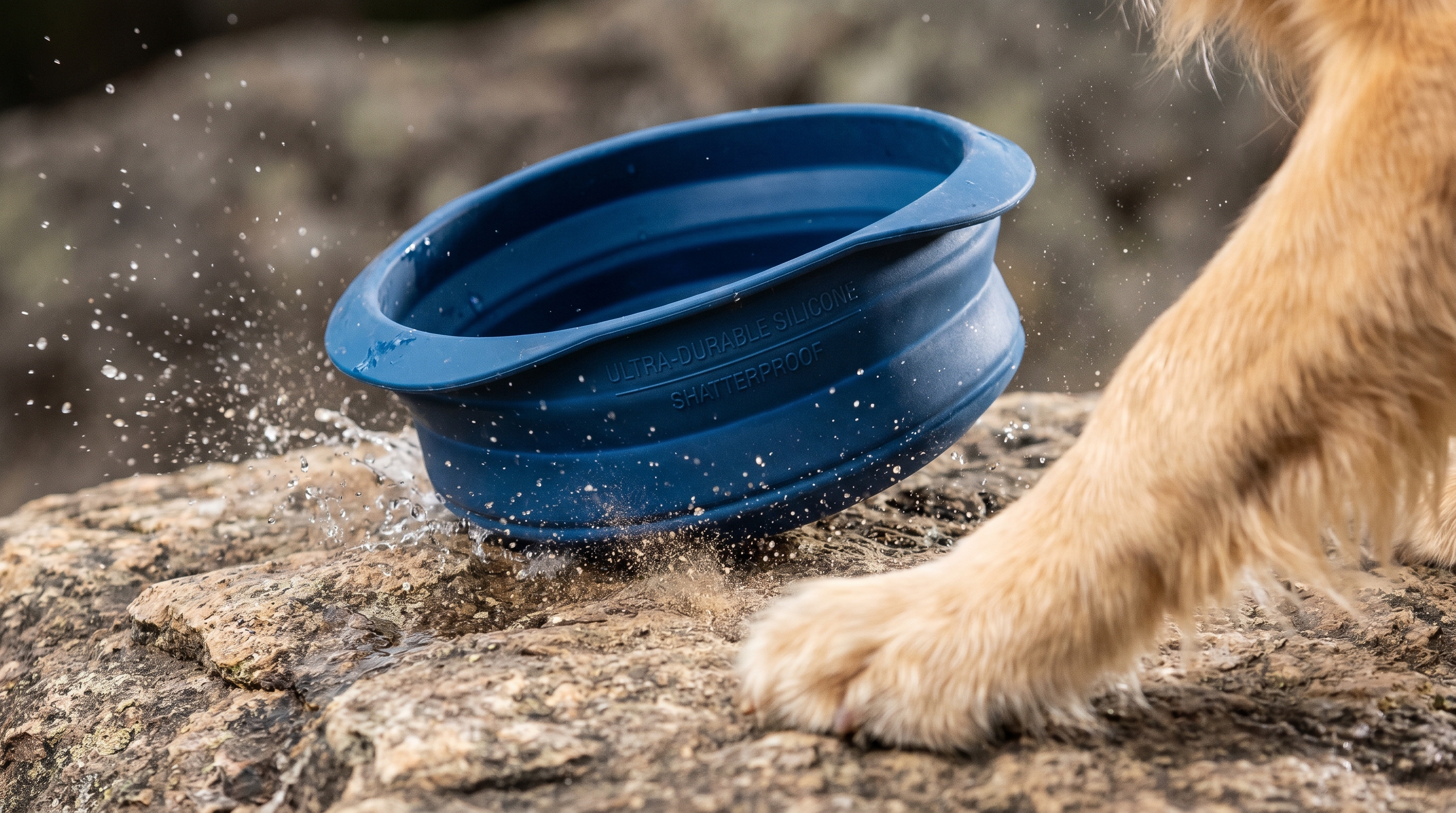
Key Takeaway: For on-the-go feeding, the combination of packability and slip-resistance makes silicone the undisputed champion for travel gear.
| Travel Factor | Silicone Bowls | Plastic Travel Bowls |
|---|---|---|
| Portability | Collapsible / Flat | Rigid / Bulky |
| Weight | Very Light | Light but Fragile |
| Surface Grip | High (Anti-slip) | Low (Slides easily) |
The travel-specific benefits of silicone ensure a more convenient and reliable experience for pets and their owners during transit.
Which is more environmentally friendly?
Silicone is more environmentally friendly because it is a long-lasting, reusable material that does not break down into harmful microplastics. While the production of a silicone Pet product requires energy, its extreme lifespan significantly reduces the volume of waste sent to landfills. Plastic pet products are often treated as semi-disposable items, contributing to the global crisis of petroleum-based pollution.
Durability vs. disposability
Think about it: one silicone bowl can replace five to ten plastic bowls over the course of a pet’s life. This reduction in consumption is the most effective way to lower an individual brand’s environmental footprint.
Impact on marine ecosystems
Unlike plastic, silicone does not crumble into tiny particles that enter the food chain through our oceans. It is a stable material that remains intact, preventing the chemical contamination associated with degrading plastic resins.
- Derived from abundant natural silica (sand).
- Does not release toxic chemicals during decomposition.
- Reduces the demand for petroleum-based manufacturing.
- Supports a “buy it once” consumer philosophy.
Key Takeaway: Sustainable pet care starts with choosing materials that offer extreme longevity and non-toxic end-of-life cycles.
| Eco-Metric | Silicone | Plastic |
|---|---|---|
| Source Material | Silica / Sand | Crude Oil |
| Microplastics | None | High Generation |
| Landfill Impact | Low (due to lifespan) | High (frequent disposal) |
Investing in silicone products aligns with modern sustainability goals by reducing total waste and preventing microplastic pollution.
How does heat resistance affect safety?
Silicone’s massive temperature range allows it to be used in the microwave or freezer without any risk of chemical leaching or material failure. You can safely warm up a meal in a silicone Pet product to increase its palatability for sick or senior animals. Most plastics will warp, melt, or release hazardous “off-gassing” when subjected to the localized high temperatures of a microwave.
Is it safe for the microwave?
Yes, food-grade silicone is rated for use in the microwave, making it easy to soften food or warm up supplements. This convenience allows pet owners to provide a more appetizing meal without transferring food between different containers.
- Safe for rapid heating cycles.
- Does not get dangerously hot to the touch.
- Maintains its shape even at peak temperatures.
- No risk of melting onto the microwave surface.
Freezing treats and enrichment
But here is the kicker: silicone remains perfectly flexible even at sub-zero temperatures. This makes it the ideal material for “pupsicles” or frozen enrichment mats that provide mental stimulation during hot summer days.
Key Takeaway: Silicone’s thermal stability offers a level of versatility for food preparation that plastic simply cannot match.
| Temperature Limit | Silicone Performance | Plastic Performance |
|---|---|---|
| High Heat (Dishwasher/MW) | Safe (up to 450°F) | Risks Melting / Leaching |
| Extreme Cold (Freezer) | Remains Pliable | Becomes Brittle / Cracks |
| Thermal Shock | No Effect | High Stress / Cracking |
The thermal resilience of silicone ensures it remains safe and functional regardless of whether it is being boiled, microwaved, or frozen.
Are there cost differences to consider?
While the initial purchase price of silicone is higher, the “cost per use” is significantly lower due to its resistance to damage and degradation. A standard silicone Pet product might cost more upfront, but it eliminates the need for the annual or bi-annual replacements required for plastic. When you factor in the potential savings on veterinary visits for skin issues, silicone becomes the more economical choice.
Analyzing the upfront investment
It is true that high-quality silicone costs more to manufacture than cheap injection-molded plastic. However, savvy B2B buyers recognize that premium materials command higher retail prices and better customer satisfaction ratings.
- Higher perceived value for consumers.
- Reduced return rates due to breakage.
- Stronger brand reputation for quality.
- Lower long-term replacement costs.
Frequency of replacement
Think about it: if you replace a $5 plastic bowl every year, you spend $50 over a decade. A $20 silicone bowl that lasts those same ten years saves the consumer money and reduces waste.
Key Takeaway: The superior durability of silicone translates to better long-term value for both the retailer and the end-user.
| Cost Analysis | Silicone Bowl | Plastic Bowl |
|---|---|---|
| Initial Price | $15 – $25 | $5 – $12 |
| Expected Lifespan | 10 Years | 1 Year |
| Total 10-Year Cost | $20 | $80+ |
Although the entry price is higher, silicone proves to be the most cost-effective solution over the life of the product.
What should you look for in a pet bowl?
When selecting a bowl, you must look for 100% food-grade silicone certifications and avoid products that use cheap plastic fillers. A high-quality silicone Pet product will pass the “pinch test”—if you twist the material and white shows through, it likely contains fillers. Pure silicone maintains its color throughout the entire thickness of the product, ensuring you are getting a non-toxic item.
Understanding certifications and quality
The best products will carry FDA or LFGB (European) food-grade certifications. These standards guarantee that the material has been tested for safety and will not leach chemicals into food.
- Look for “100% Food-Grade Silicone” labels.
- Verify FDA or LFGB certification status.
- Perform the pinch test to check for fillers.
- Ensure the material feels heavy and substantial.
Design features for better feeding
But here is the kicker: the design of the bowl is just as important as the material. Look for wide, shallow shapes for cats to prevent whisker fatigue and weighted bases for dogs to prevent sliding.
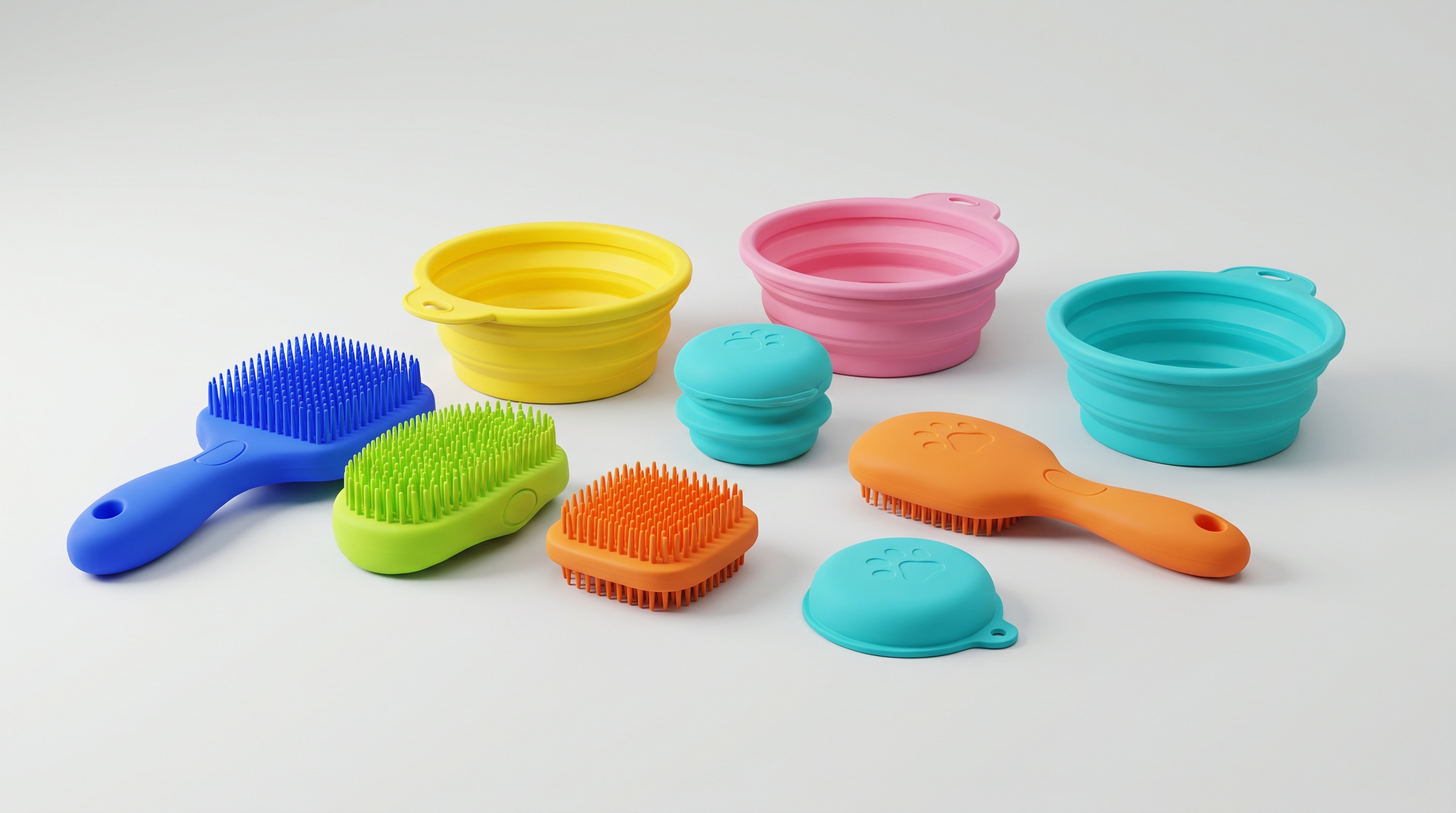
Key Takeaway: Quality control and thoughtful design are the final steps in ensuring your silicone feeding products outperform the competition.
| Quality Indicator | High-Quality Silicone | Low-Quality / Filler Mix |
|---|---|---|
| Pinch Test | Color stays uniform | White shows through |
| Texture | Soft-touch / Smooth | Waxy or Sticky |
| Certifications | FDA / LFGB | None / Vague |
This guide helps you identify the markers of true quality, ensuring that the products you stock provide the safety and performance promised.
*
Frequently Asked Questions
Can I wash silicone pet bowls in the dishwasher?
Yes, silicone is completely dishwasher safe and can withstand high-temperature cycles without warping or leaching chemicals. Unlike plastic, it does not degrade from the harsh detergents used in most machines.
What is the best way to remove odors from silicone?
If a bowl develops a scent, you can boil it in water with a splash of vinegar or bake it in the oven at a low temperature to release trapped molecules. This is a unique advantage of silicone that plastic cannot support without melting.
Can dogs chew through silicone pet products?
While silicone is very durable, it is not indestructible; a determined, aggressive chewer can eventually bite through the material. However, it will not shatter into sharp shards, making it significantly safer than plastic if a pet does manage to damage it.
Is silicone a type of plastic?
No, silicone is a synthetic rubber made from silica (sand), whereas plastic is made from petroleum-based chemicals. Their molecular structures are different, giving silicone its unique heat resistance and non-toxic properties.
Can I use silicone bowls for hot food?
Yes, silicone is rated for temperatures up to 450°F, so it is perfectly safe to use for warmed meals or fresh-cooked pet food. It will not melt or release fumes when in contact with hot liquids.
*
The choice between silicone and plastic is clear for any brand prioritizing safety, longevity, and hygiene. By selecting high-performance materials, you provide pet owners with the peace of mind they deserve while reducing the environmental impact of your supply chain. If you are ready to upgrade your product line with premium, food-grade solutions, contact us today to discuss your custom manufacturing needs and start your journey toward a higher standard of pet care.