To manufacture successful silicone parts, you must prioritize precise material selection, rigorous Design for Manufacturing (DFM) analysis, and a partner with advanced injection molding capabilities. Many businesses struggle with parts that fail due to poor tolerance control or material degradation in the field. This inconsistency agitates your production timeline and leads to expensive scrap rates that drain your budget. By choosing a high-quality Silicone Parts Manufacturer, you solve these issues through expert engineering guidance and scalable production technology.
1. Why Is Vendor Selection Critical for Your Project?
Selecting the right vendor is the difference between a product that performs and one that fails in the hands of your customers. Your Silicone Parts Manufacturer should act as a technical consultant, ensuring your design is optimized for the specific properties of silicone rubber. This partnership determines the long-term durability and safety of your components.
Evaluating Technical Expertise and Track Record
A qualified Silicone Parts Manufacturer will have extensive experience across multiple industries. You need to know if they have handled complex geometries similar to yours. Their ability to provide historical data on similar projects is a major indicator of future success.
- Engineering Depth: Does the team understand the chemical nuances of different silicone grades?
- Industry Experience: Have they served demanding sectors like medical or automotive?
- Problem-Solving: Can they suggest design improvements that reduce cost?
Verifying Modern Production Standards
But that’s not all. You must ensure your Silicone Parts Manufacturer utilizes the latest automated machinery to maintain consistency. Old equipment often leads to variations in curing times and part dimensions.
- Automation: Reduces human error during high-volume runs.
- Process Monitoring: Real-time data tracking for every injection cycle.
Key Takeaway: The expertise and equipment of your vendor are the primary drivers of part quality and project reliability.
| Selection Metric | Minimum Requirement | Ideal Standard |
|---|---|---|
| Experience | 5+ Years | 10+ Years with Case Studies |
| Equipment | Standard Molding | High-Precision LSR Injection |
| Engineering | Basic CAD Review | Full DFM and Mold Flow Analysis |
The right choice at the start prevents expensive re-tooling and production delays later.
2. What Technical Capabilities Should You Verify?
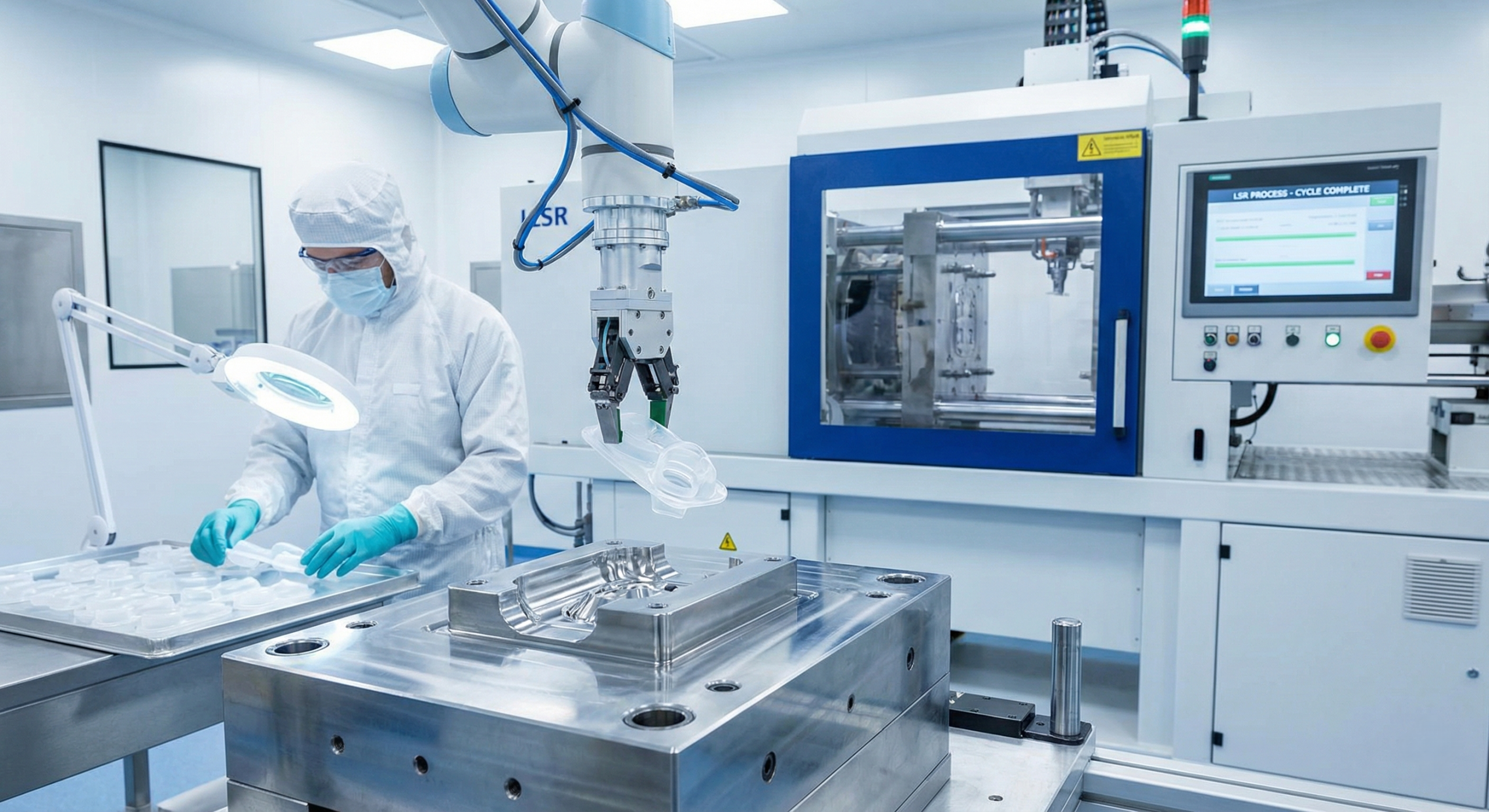
You should verify that your Silicone Parts Manufacturer possesses advanced liquid injection molding technology and cleanroom facilities for sensitive applications. A generic molding shop might lack the specialized environment needed to prevent contamination. This is why it matters: microscopic dust can ruin the seal of a medical device or an electronic housing.
Assessing Cleanroom and Certification Standards
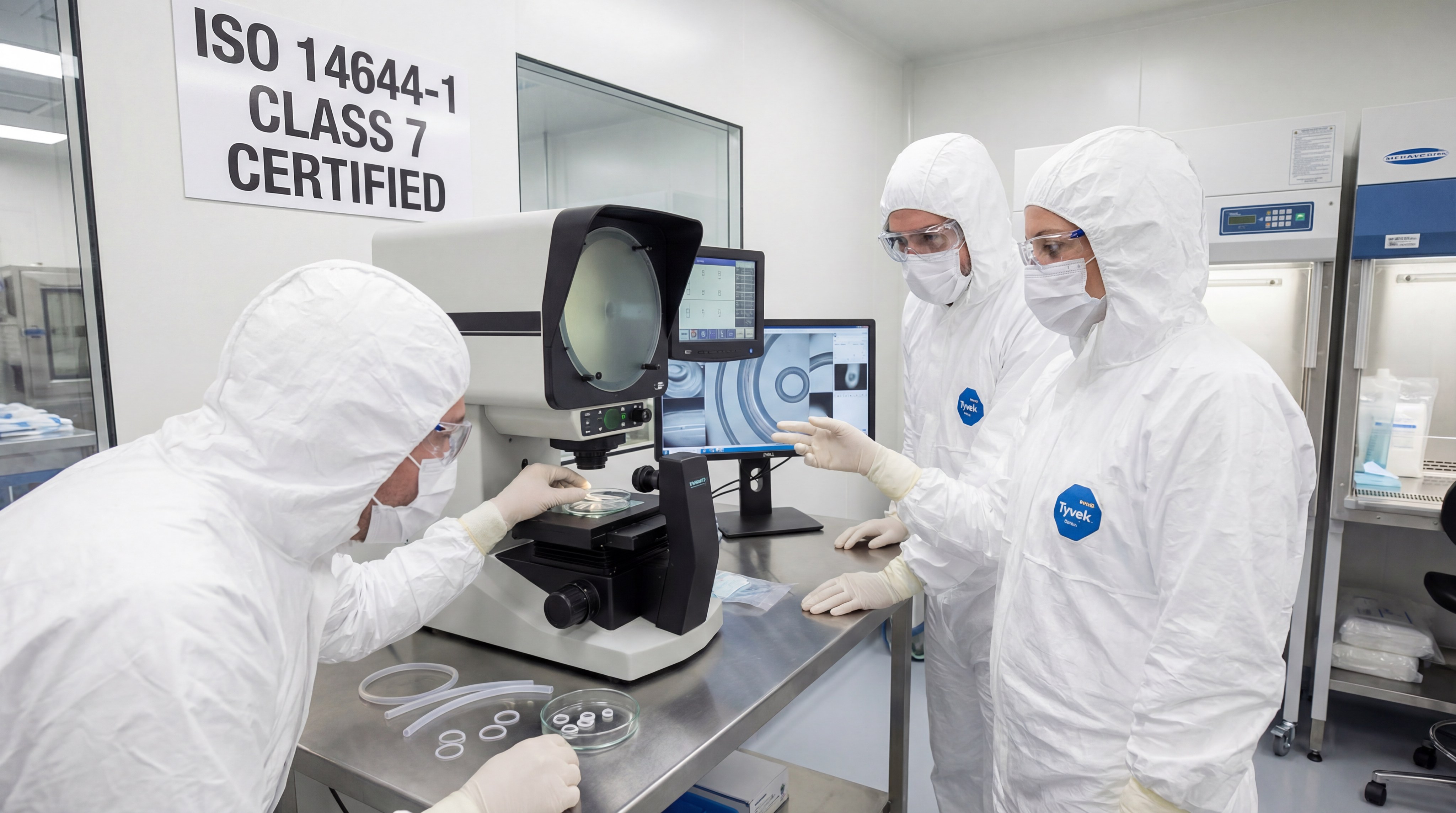
Your Silicone Parts Manufacturer must offer ISO-certified environments if you are in the medical or electronics field. Here is the deal: contamination during the curing process is often invisible but leads to structural failure.
- ISO 13485: Critical for medical-grade silicone production.
- Class 100,000 Cleanrooms: Ensures a dust-free environment for sensitive parts.
- Quality Management: Robust systems for traceability and batch testing.
Understanding Precision Molding Limits
A top-tier Silicone Parts Manufacturer should be able to hit tolerances as tight as ±0.05mm. If your vendor cannot guarantee these numbers, you will face fitment issues during final assembly.
- Flash Control: High-precision molds prevent excess material at parting lines.
- Wall Thickness: Capability to mold thin-walled sections without tearing.
Key Takeaway: Technical capabilities like cleanroom molding and micro-precision are non-negotiable for high-performance industries.
| Capability | Purpose | Typical Industries |
|---|---|---|
| ISO Cleanroom | Contamination Prevention | Medical, Biotech, Electronics |
| Tight Tolerances | Assembly Precision | Aerospace, Automotive |
| Material Lab | Chemical Verification | Industrial, Food Grade |
Confirming these standards early ensures your parts meet all regulatory and functional requirements.
3. How Can You Scale High-Volume Production Effectively?
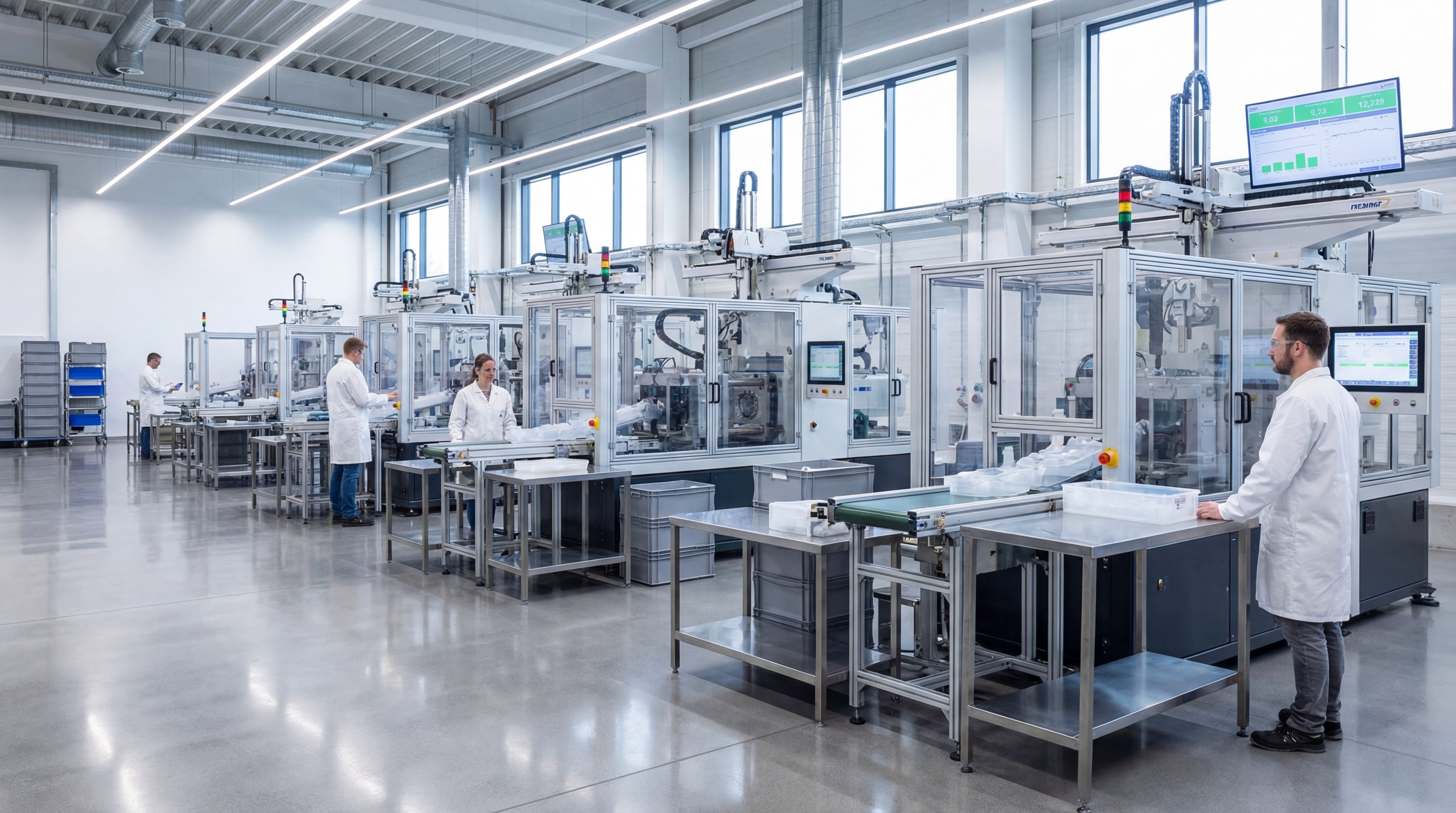
Scaling production effectively requires transitioning to fully automated Liquid Silicone Rubber (LSR) injection molding to minimize cycle times. Your Silicone Parts Manufacturer should have the capacity to move from small batches to millions of units without a loss in quality. Manual processes that work for prototypes will quickly become a bottleneck during mass production.
Leveraging Automated LSR Technology
A specialized Silicone Parts Manufacturer uses LSR because it allows for 24/7 “lights-out” manufacturing. This technology is superior for scaling because it uses closed-loop systems to ensure every part is identical.
- Fast Cycles: Parts cure in seconds, not minutes.
- Zero Waste: Automated systems reduce material scrap significantly.
- Consistency: Computer-controlled injection ensures uniform density and strength.
Transitioning from Prototypes to Mass Runs
You must discuss the transition plan with your Silicone Parts Manufacturer before cutting the final tool. The best part? High-cavity molds can produce dozens of parts in a single shot, drastically lowering your cost per unit.
- Multi-Cavity Molds: Essential for orders exceeding 50,000 units.
- Tooling Material: Using hardened steel ensures the mold lasts for millions of cycles.
Key Takeaway: High-volume success depends on automation and multi-cavity tooling strategies to keep costs low and quality high.
| Feature | Low Volume | High Volume (LSR) |
|---|---|---|
| Labor Intensity | High (Manual) | Low (Automated) |
| Per-Part Cost | Higher | Significantly Lower |
| Cycle Time | 5-10 Minutes | 20-60 Seconds |
Strategic scaling allows you to meet market demand while maintaining a healthy profit margin.
4. What Are the Key Benefits of Silicone Rubber?
The key benefits include extreme temperature resistance, biocompatibility, and long-term durability in harsh environments provided by your Silicone Parts Manufacturer. Silicone is a unique elastomer that maintains its flexibility from -60°C to +230°C. Other materials often become brittle or melt under these conditions, leading to part failure.
Resistance to Environmental Stress
Working with a Silicone Parts Manufacturer allows you to create products that survive outdoor exposure and chemical contact. Think about it: UV rays and ozone can destroy standard plastics, but silicone remains stable for decades.
- Weatherability: Unaffected by sunlight, rain, or extreme cold.
- Chemical Inertness: Resists many oils, solvents, and industrial chemicals.
- Compression Set: Recovers its shape even after years of pressure.
Safety and Biocompatibility
Your Silicone Parts Manufacturer can supply medical-grade materials that are safe for human contact. This is important: silicone is naturally hypoallergenic and does not support bacterial growth.
- FDA Compliance: Safe for food and beverage applications.
- USP Class VI: The gold standard for medical implants and devices.
Key Takeaway: Silicone’s resilience and safety make it the premium choice for critical components in demanding industries.
| Property | Value/Range | User Benefit |
|---|---|---|
| Temp. Range | -60°C to 230°C | Reliability in extreme heat/cold |
| UV Resistance | Excellent | Long life in outdoor applications |
| Hardness | 10A to 80A Shore | Flexibility to meet tactile needs |
Understanding these benefits helps you justify the material choice to your stakeholders.
5. How Does Silicone Improve Pet Product Manufacturing?
Silicone improves pet products by providing a non-toxic, indestructible material that is safe for animals to chew and use daily. A specialized Silicone Parts Manufacturer can produce food-grade items that are free from harmful chemicals like BPA or phthalates. Pet owners today demand safety, and silicone is the most trusted material in the premium pet care market.
Ensuring Material Safety for Animals
A reputable Silicone Parts Manufacturer ensures that all pet products meet strict FDA or LFGB standards. This is the best part: silicone does not leach chemicals into food or water, unlike many cheap plastics.
- Odorless and Tasteless: Does not change the flavor of pet food.
- Hypoallergenic: Prevents skin irritation for sensitive breeds.
- Easy to Clean: Dishwasher safe and capable of being sterilized.
Designing for Extreme Durability
You should collaborate with your Silicone Parts Manufacturer to select high-tear-strength grades for chew toys. Here is why it matters: high-strength silicone resists punctures from sharp teeth, preventing pets from swallowing small pieces.
- Impact Resistance: Remains intact even after aggressive play.
- Flexible Textures: Soft on gums but firm enough for dental cleaning.
Key Takeaway: Silicone’s safety profile and physical toughness make it the ideal material for high-quality pet accessories.
| Product Category | Recommended Material | Primary Advantage |
|---|---|---|
| Chew Toys | High-Tear HCR | Indestructible, Non-toxic |
| Slow Feeders | Food-Grade LSR | BPA-free, easy to clean |
| Grooming Tools | Soft-Touch Silicone | Gentle on skin and fur |
Choosing silicone for pet products positions your brand as a leader in safety and quality.
6. What Role Does DFM Play in Your Project?
Design for Manufacturing (DFM) is the process where your Silicone Parts Manufacturer optimizes your part geometry to ensure it can be molded efficiently and without defects. Silicone has unique flow characteristics and a high shrinkage rate (typically 2-4%). If you ignore these factors during design, you will encounter air traps, sink marks, or parts that tear during demolding.
Optimizing Geometry for Flow and Curing
An expert Silicone Parts Manufacturer will review your wall thicknesses to ensure they are uniform. Think about it: uneven walls cause the material to cure at different rates, leading to internal stress and warping.
- Uniform Walls: Prevents voids and ensures structural integrity.
- Radii and Fillets: Sharp internal corners should be avoided to prevent tearing.
- Draft Angles: Usually requires 0.5° to 2° for easy ejection from the mold.
Managing Air Venting and Parting Lines
Your Silicone Parts Manufacturer must carefully place vents to allow air to escape as the silicone injected. Here is the deal: if air is trapped, it creates “burn marks” or incomplete parts.
- Venting Strategy: Essential for complex shapes and thin sections.
- Gate Placement: Determines where the material enters and affects the finish.
Key Takeaway: Proactive DFM analysis reduces production costs by eliminating defects before the mold is built.
| DFM Element | Recommendation | Common Pitfall |
|---|---|---|
| Wall Thickness | Keep it uniform (1.5mm – 3mm) | Sink marks, uneven curing |
| Corners | Add 0.5mm minimum radii | Stress fractures, tearing |
| Draft Angle | 1 degree minimum | Part sticking in the mold |
Using DFM services ensures your design is ready for high-speed, high-quality production.
7. Why Use LSR for Smart Wearables?
You should use Liquid Silicone Rubber (LSR) for smart wearables because it offers unparalleled skin comfort and superior environmental sealing for sensitive electronics. A professional Silicone Parts Manufacturer can overmold silicone directly onto plastic or metal housings. This creates a permanent, waterproof bond that protects internal sensors from sweat, rain, and dust.
Achieving Biocompatibility and Comfort
The best Silicone Parts Manufacturer uses USP Class VI silicone to ensure the wearable strap won’t cause skin irritation. You might be wondering why this matters. Users wear these devices for 24 hours a day; any discomfort leads to high return rates and poor reviews.
- Soft-Touch Finish: Provides a premium feel that consumers expect.
- Breathability: Can be engineered with textures that reduce sweat buildup.
- Hypoallergenic: Safe for long-term skin contact.
Ensuring IP67 and IP68 Sealing
Your Silicone Parts Manufacturer plays a critical role in making your device waterproof. LSR gaskets and overmolded seals are the industry standard for achieving high IP ratings.
- Compression Set Resistance: Seals stay tight even after years of use.
- Vibration Damping: Protects delicate electronics from drops and impacts.
Key Takeaway: Silicone is the only material that combines skin-safe comfort with the technical sealing required for electronics.
| Wearable Part | Required Property | Manufacturer Focus |
|---|---|---|
| Watch Strap | Biocompatibility | ISO 10993 Testing |
| Internal Gasket | Precision Fit | ±0.05mm Tolerances |
| Case Overmold | Strong Bonding | Primerless LSR Systems |
Wearable technology relies on silicone to bridge the gap between high-tech electronics and human comfort.
8. What Should You Avoid in Part Design?
You must avoid sharp internal corners, inconsistent wall thicknesses, and excessive undercuts that could complicate production for your Silicone Parts Manufacturer. While silicone is flexible, it still has physical limits. Designing a part that is too complex for the molding process will lead to high scrap rates and increased labor costs for manual trimming.
Eliminating Sharp Internal Corners
A seasoned Silicone Parts Manufacturer will always tell you to add radii to your corners. Here is why: silicone tends to tear at sharp stress points when it is being pulled out of a mold.
- Tear Prevention: Rounded corners distribute the force of ejection.
- Flow Improvement: Smooth curves allow the silicone to fill the mold faster.
- Tool Longevity: Sharp edges in the mold wear down more quickly.
Avoiding Improper Wall Transitions
You should never have abrupt transitions from thick to thin areas. Your Silicone Parts Manufacturer will warn you that this leads to “sink,” where the material pulls away from the surface during cooling.
- Gradual Transitions: Use tapers to connect different wall thicknesses.
- Balanced Flow: Ensures the material reaches all areas at the same pressure.
Key Takeaway: Simplifying your design by following basic molding rules prevents 90% of common production failures.
| Avoid This | Why? | Solution |
|---|---|---|
| Sharp Corners | High risk of tearing | Add 0.5mm – 1mm radii |
| Thick Sections | Curing issues, sink marks | Core out thick areas |
| Narrow Gaps | Mold filling problems | Increase gap width |
A simple, clean design is always the most cost-effective to manufacture.
9. How Do Material Grades Impact Quality?
Material grades impact quality by determining the final part’s hardness, clarity, and resistance to specific environmental factors like heat or chemicals. Your Silicone Parts Manufacturer should offer a range of durometers, typically from 10A (very soft) to 80A (very hard). Choosing the wrong grade can result in a part that is too stiff for its application or degrades prematurely when exposed to industrial fluids.
Choosing Between Platinum and Peroxide Curing
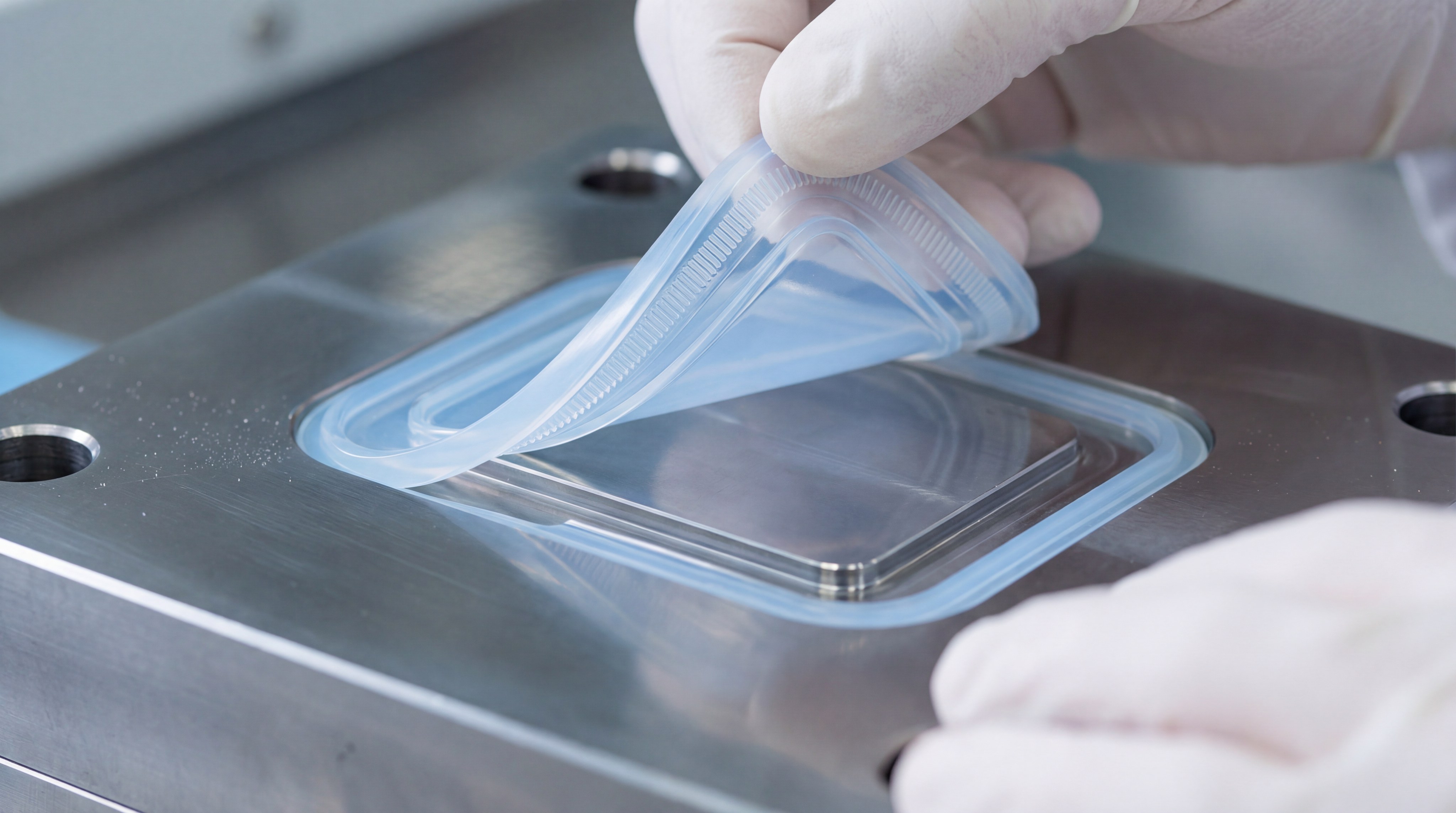
An expert Silicone Parts Manufacturer will help you choose the right curing system for your needs. Simply put, platinum-cured silicone is cleaner and more stable, making it the standard for medical and food-contact parts.
- Platinum Cured: No toxic by-products, high clarity, and better consistency.
- Peroxide Cured: More cost-effective for general industrial seals and gaskets.
- Comparison: Platinum systems have superior tear strength and elongation.
Selecting the Proper Shore Hardness
You need to match the durometer to the functional requirements of the part. If you are designing a button, your Silicone Parts Manufacturer might suggest a 50A or 60A grade to provide the right tactile “snap.”
- Low Hardness (10A-30A): Best for gaskets and soft seals.
- Medium Hardness (40A-60A): Standard for consumer goods and straps.
- High Hardness (70A-80A): Used for structural parts and heavy-duty spacers.
Key Takeaway: The material grade is the foundation of your part’s performance; always match the chemistry to the environment.
| Grade Category | Key Property | Typical Use |
|---|---|---|
| Medical Grade | USP Class VI | Implants, Tubing |
| High-Temp Grade | Heat Stabilized | Automotive Gaskets |
| Food Grade | FDA/LFGB Compliant | Kitchenware, Baby Products |
Refining your material selection ensures your product stands up to real-world use.
10. Is a Higher Manufacturing Price Always Justified?
A higher price from a premium Silicone Parts Manufacturer is often justified by the use of high-grade raw materials and the implementation of 100% quality inspection. Low-cost vendors often use “regrind” material or fillers that weaken the silicone’s molecular structure. In other words, a cheaper part today can lead to a million-dollar recall tomorrow.
The Cost of Quality and Traceability
Working with a top-tier Silicone Parts Manufacturer gives you peace of mind through full batch traceability. This matters because if a failure occurs, you can pinpoint exactly which material lot and production date were involved.
- Material Purity: 100% virgin silicone ensures maximum lifespan and safety.
- Testing Labs: In-house testing for hardness, tensile strength, and compression set.
- Inspection: Using CCD cameras to inspect every single part for defects.
Long-Term ROI of Precision Tooling
You might pay more for a hardened steel mold, but your Silicone Parts Manufacturer will produce millions of parts without the tool wearing out. Cheap aluminum molds lose their precision after a few thousand shots.
- Tooling Life: Steel lasts for 1 million+ cycles; aluminum may fail at 10,000.
- Consistency: Better molds mean fewer part variations and less assembly downtime.
Key Takeaway: Investing in quality manufacturing protects your brand reputation and reduces long-term operational risks.
| Cost Factor | Low-Cost Vendor | Premium Manufacturer |
|---|---|---|
| Raw Material | Low-grade/Fillers | 100% Virgin Grade |
| Tooling | Aluminum (Short life) | Hardened Steel (Long life) |
| Inspection | Visual/Random | Automated/100% |
Choosing the cheapest option is often the most expensive mistake you can make in silicone manufacturing.
Frequently Asked Questions
Can I use the same mold for different silicone colors?
Yes, but the mold must be thoroughly cleaned between batches to prevent cross-contamination. Most manufacturers prefer to run colors in a specific sequence to minimize downtime.
What’s the best way to bond silicone to plastic?
Overmolding is the most effective method, where the silicone is injected directly onto a pre-formed plastic part. This typically requires a chemical primer or a self-bonding silicone grade to ensure a permanent seal.
How long does it take to get a custom silicone part?
Prototype samples usually take 1 to 2 weeks. Full production tooling typically takes 4 to 6 weeks, depending on the complexity and number of cavities in the mold.
Can I manufacture silicone parts with very thin walls?
Yes, with Liquid Silicone Rubber (LSR), you can achieve wall thicknesses as thin as 0.2mm to 0.5mm. However, this requires high-precision molds and careful venting to prevent air traps.
What’s the best way to verify if my manufacturer is qualified?
Check for ISO certifications relevant to your industry (like ISO 13485 for medical). Additionally, request a factory audit or material test reports to verify their production standards.
At HuaLin Silicone, we solve the complex engineering challenges that others avoid. Our commitment to precision, transparency, and high-volume excellence ensures your brand remains competitive in demanding markets. Ready to bring your vision to life? Contact us today for a technical consultation and a custom quote tailored to your project’s needs.