
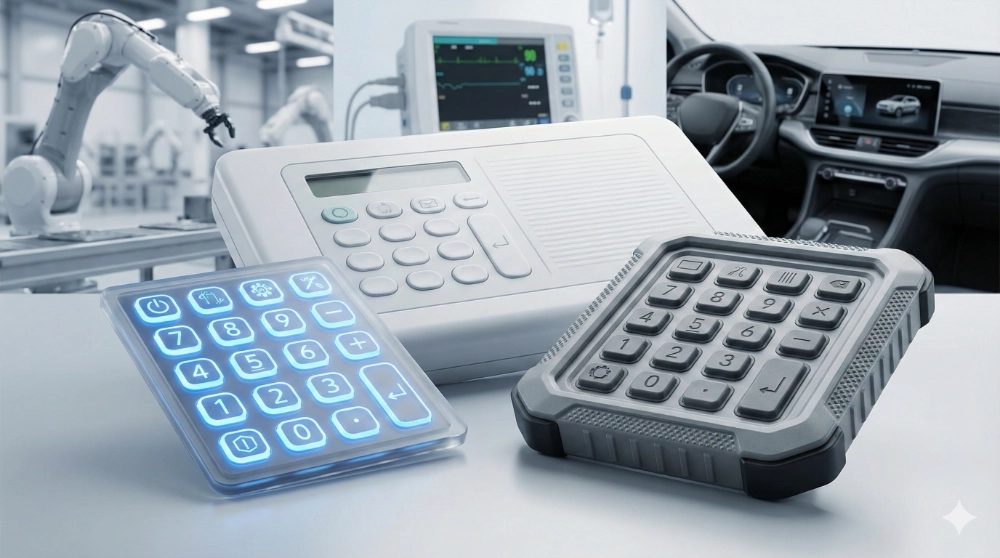
A top-tier silicone keypad manufacturer optimizes your product design by integrating customized tactile feedback, durable environmental sealing, and precise electrical interfaces into a single, cost-effective component. Designing high-performance interfaces for industrial electronics often leads to a compromise between tactile responsiveness and long-term durability. Standard mechanical buttons frequently succumb to dust, moisture, and chemical exposure, leading to premature device failure and costly maintenance. Imagine the frustration of a medical device failing in a critical moment or an industrial controller becoming unresponsive due to grease buildup. These failures erode user trust and can lead even to safety risks. By partnering with an expert manufacturer, you can leverage elastomeric technology to create robust, customized, and contamination-proof switching solutions that thrive in even the harshest environments.
1. What are the essential elements of keypad construction?
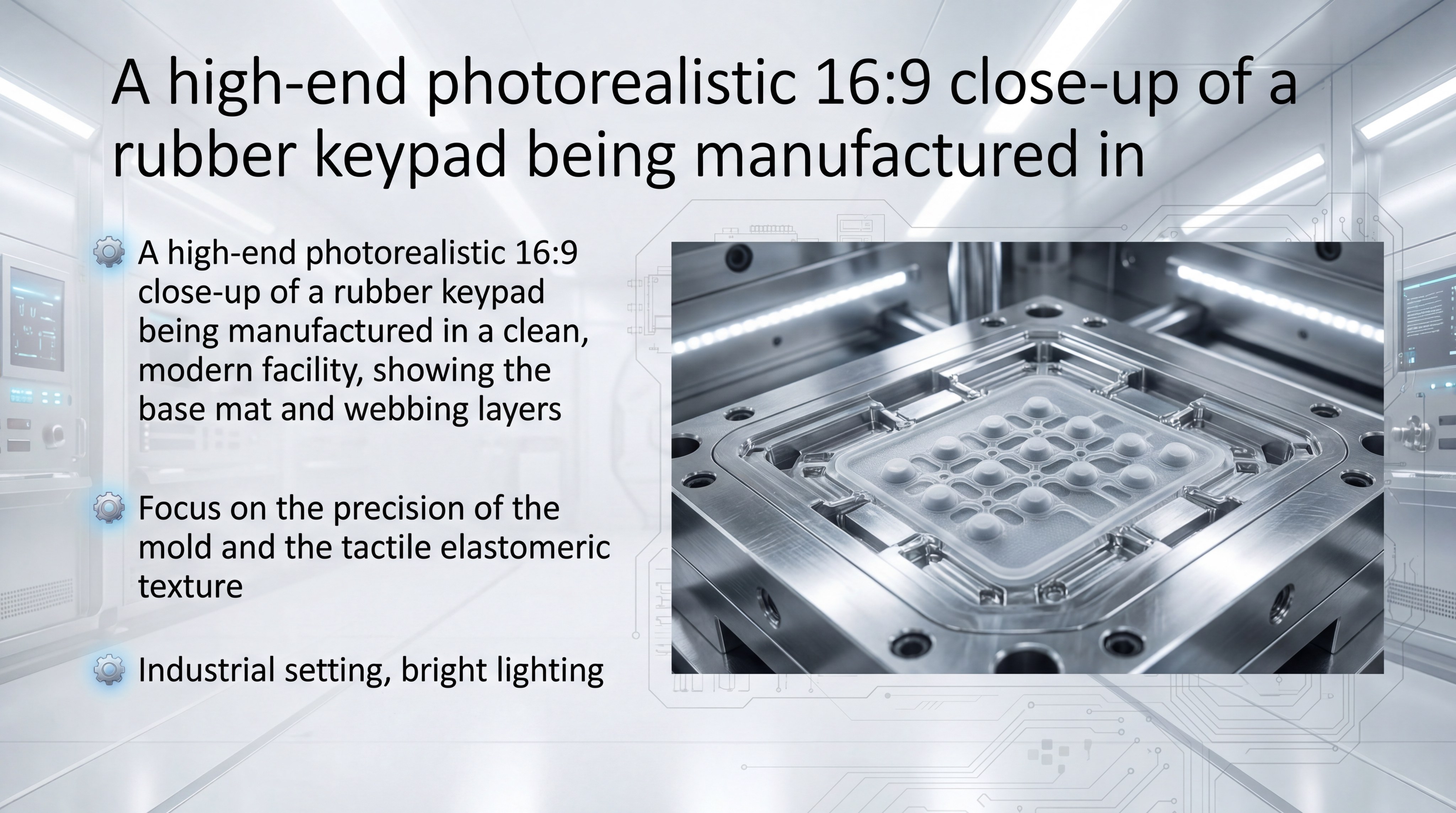
Working with a professional silicone keypad manufacturer allows you to utilize a modular construction approach where the base mat serves as the foundation. The molded webbing determines the tactile “spring” mechanism and the overall return force of the interface.
How does the base mat function for you?
The base mat provides the specific travel distance required for your user interface. Here is the deal: it is engineered with specific durometers to ensure the keypad returns to its original position after every actuation.
- Shore 30A to 50A: Ideal for soft-touch consumer electronics.
- Shore 60A to 80A: Best for firm, clicky industrial applications.
- Consistent Performance: Maintains integrity over millions of cycles.
You should consider the durometer early in the design phase to avoid mechanical mismatch. This ensures the user experience aligns perfectly with your brand’s physical identity.
Key Takeaway: Basic Construction
Effective construction relies on balancing durometer and webbing geometry to achieve the desired tactile response.
| Component | Function | Options |
|---|---|---|
| Base Mat | Actuation & Return Force | Variable thicknesses and durometers |
| Key Top | User Interaction Point | Flat, concave, convex, or plastic-capped |
| Contact Pad | Electrical Connection | Carbon pill, gold-plated, or conductive ink |
This table provides a foundational overview of how individual components contribute to the overall mechanical and electrical integrity of the keypad.
2. How do different contact designs affect performance?
Consulting a silicone keypad manufacturer is the best way to determine the right contact design for ensuring long-term electrical reliability. The contact must provide a stable connection with your PCB while resisting oxidation and environmental wear.
Is carbon or gold better for your project?
For most industrial applications, carbon pills are the standard due to their incredible durability. But that’s not all… if your device operates in an extremely corrosive environment, gold or nickel plating is often recommended to maintain low contact resistance.
- Printed Carbon Ink: Supports up to 1 million activations at ~1,000 Ohms.
- Molded Carbon Pill: Designed for high-reliability needs, often exceeding 1 million cycles.
- Gold/Nickel: Provides the lowest resistance for critical medical or aerospace data.
You can select these based on the sensitivity of your electronic circuitry. Choosing the wrong contact can lead to signal noise or premature failure in the field.
Key Takeaway: Contact Reliability
Selecting the appropriate contact material is critical for matching the electrical life of the keypad to the expected lifecycle of the device.
| Contact Type | Typical Resistance | Cycle Life | Best Use Case |
|---|---|---|---|
| Printed Carbon | 1,000 Ohms | ≤ 1 Million | Consumer Handhelds |
| Carbon Pill | 200 Ohms | ≥ 1 Million | Industrial Controllers |
| Gold/Nickel | Low Resistance | High Reliability | Critical Medical Devices |
The comparison above helps engineers decide between cost-efficiency and high-performance reliability based on specific application demands.
3. How is nomenclature legend applied for longevity?
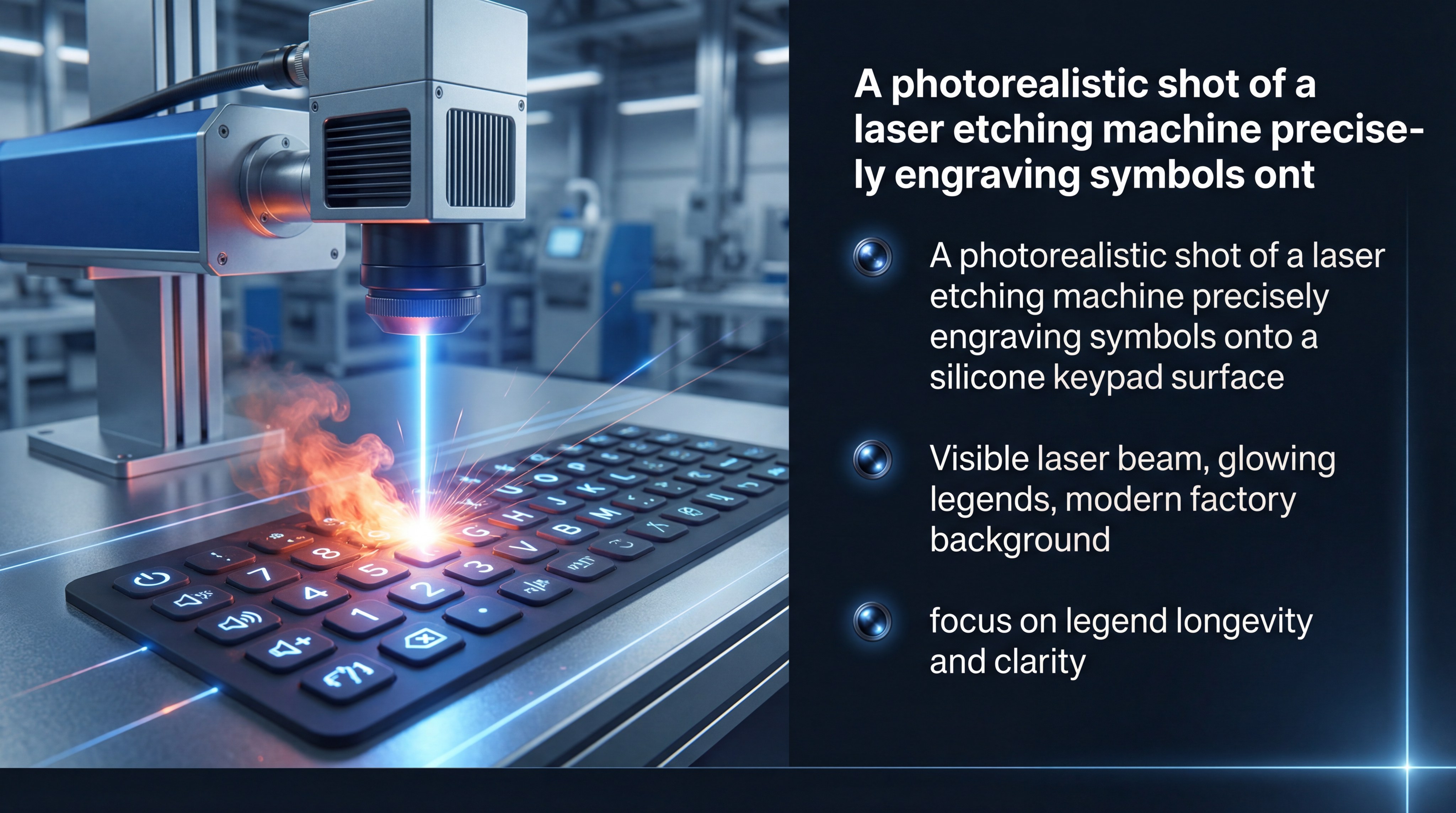
A silicone keypad manufacturer uses advanced printing and etching methodologies to ensure your legends remain legible despite heavy finger traffic. Standard techniques are robust, but specific high-wear environments require additional layers of protective coating.
Can overcoats extend the legend life for you?
Adding a protective overcoat like polyurethane can significantly extend the life of your printed graphics. You might be wondering: does this affect the feel? The coating is thin enough to protect the ink without altering the tactile response.
- Silk Screen: Must be at least 0.5mm from the key edge for adhesion.
- Curved Surfaces: Requires specific radii to ensure consistent ink coverage.
- Polyurethane Coating: Extends durability beyond 1,000,000 cycles.
You can also use laser etching for backlighting, which provides a legend that can never be rubbed off. This is the gold standard for premium industrial equipment.
Key Takeaway: Legend Durability
Legend longevity is achieved through a combination of high-quality inks, precise etching, and secondary protective coatings.
| Method | Durability | Best For |
|---|---|---|
| Silk Screen | Standard | Cost-sensitive high volume |
| Laser Etching | Permanent | Backlit and high-use interfaces |
| PU Coating | Very High | Harsh chemical environments |
This analysis serves as a guide for selecting the most appropriate marking technology based on the expected mechanical wear of the interface.
4. What specific conditions dictate keypad design?
Every top-tier silicone keypad manufacturer evaluates actuation force and travel distance to match your specific human-machine interface requirements. These mechanical parameters define the “quality feel” that users associate with your brand.
Why is tactile feedback optional for you?
Tactile feedback is achieved through the “snap ratio” of the webbing design. Look: some applications require a silent, linear feel, while others benefit from a sharp tactile “click” to confirm actuation to the operator.
- Actuation Force: Typically ranges from 50g to 500g.
- Snap Ratio: Ideally kept between 40% and 60% for a crisp feel.
- Stroke/Travel: Usually between 0.5mm and 3.0mm depending on the housing.
You should define these values during the prototyping phase to ensure the physical response meets user expectations. A well-designed snap ratio prevents accidental presses while providing clear haptic confirmation.
Key Takeaway: Design Parameters
The physical user experience is a direct result of fine-tuning the mechanical resistance and travel of the silicone buttons.
| Parameter | Range/Standard | Impact on Design |
|---|---|---|
| Actuation Force | 50g to 500g | User comfort and accidental press prevention |
| Snap Ratio | 40% to 60% | Determines the “tactile” feel of the key |
| Stroke/Travel | 0.5mm to 3.0mm | Feedback and mechanical clearance |
Engineers should use these metrics to specify the exact tactile signature required for their specific hardware application.
5. What are the three most common construction methods?
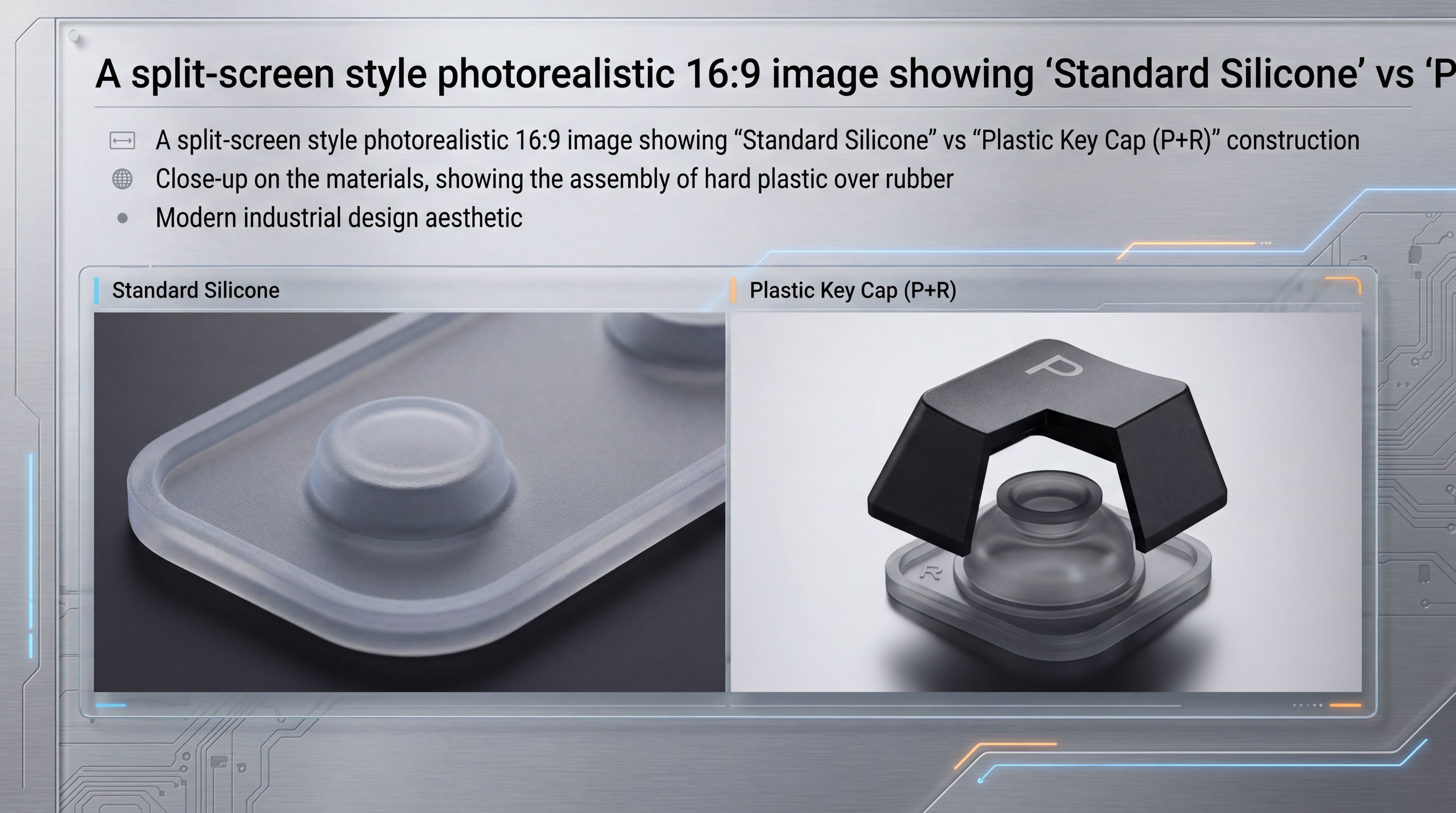
Choosing the right construction method with a silicone keypad manufacturer helps you find the perfect balance between cost, aesthetics, and performance. Each method offers distinct advantages depending on the final assembly of your product.
Why should you choose overmolding?
Overmolding allows you to bond silicone directly to plastic or metal substrates for a permanent, hermetic seal. The best part? This eliminates the need for separate gaskets, reducing your overall bill of materials and assembly time.
- Standard Elastomeric: Single-piece construction for maximum sealing.
- Plastic Key Cap (P+R): Combines a hard key feel with silicone’s durability.
- Liquid Silicone Rubber (LSR): Offers high precision for complex geometries.
You can achieve a premium, high-end look by using plastic caps while still benefiting from the reliable switching of a silicone base. This hybrid approach is common in automotive and medical luxury goods.
Key Takeaway: Construction Types
Construction methods vary from simple single-material molds to complex multi-material overmolding processes.
| Type | Aesthetic | Cost |
|---|---|---|
| Standard | Industrial | Lowest |
| P + R | Premium/Hard | Moderate |
| Overmolded | Integrated | Higher |
This table allows designers to quickly compare the visual and financial trade-offs of the most common silicone interface structures.
6. How durable are silicone keypads in high-usage scenarios?
The durability of a silicone keypad manufacturer‘s output is unmatched because silicone is an inert material that maintains elasticity over time. It does not degrade easily under repeated mechanical stress or extreme temperature fluctuations.
How is abrasion resistance measured for you?
Abrasion is measured using specialized testers that simulate millions of finger presses against the surface. Think about it: a keypad that looks worn after only a month of use can significantly damage your product’s reputation.
- Cycle Life: Often exceeds 1,000,000 cycles without fatigue.
- Temperature Stability: Operates from -60°C to over 200°C.
- Norman Tester: Used to validate legend longevity under constant friction.
You should request testing reports for high-usage projects to ensure the materials selected can withstand the expected environment. Silicone’s resilience ensures that the keypad remains functional for the entire life of the electronics.
Key Takeaway: Durability Metrics
Silicone’s inherent material properties provide a long-lasting solution that resists mechanical fatigue and surface wear.
| Test Category | Standard Met | Benefit |
|---|---|---|
| Cycle Life | >1,000,000 Cycles | Long-term reliability |
| Abrasion | Norman Tester (500g) | Legend longevity |
| Chemical | Oil/Solvent Exposure | Resistance to corrosion |
Understanding these metrics is essential for verifying that the chosen interface will survive the rigors of real-world operation.
7. What customization options can enhance aesthetics?
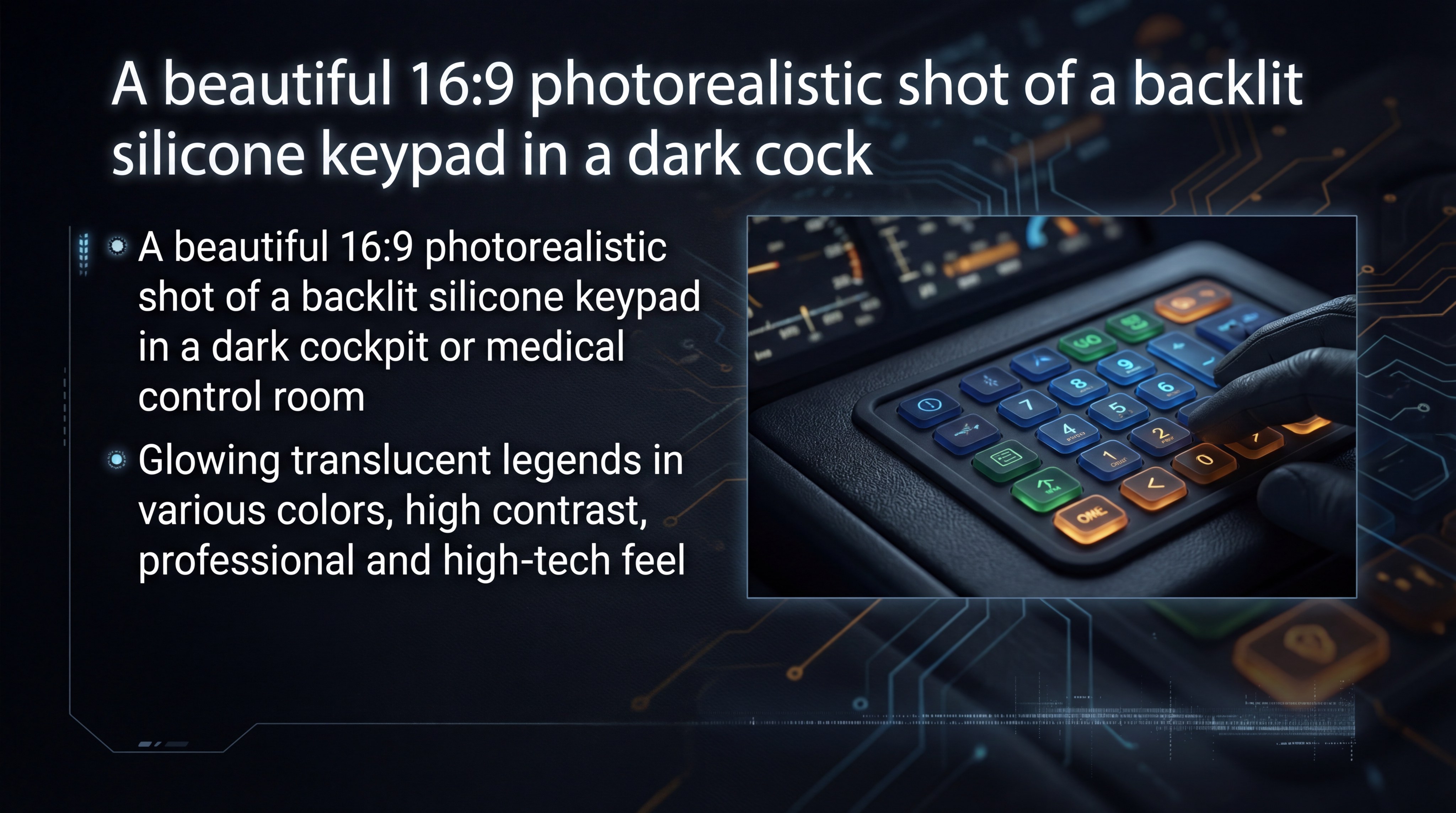
A silicone keypad manufacturer provides nearly unlimited flexibility to match your branding and functional requirements. From metallic finishes to integrated light pipes, the visual appeal can be tailored precisely to your needs.
How does backlighting work for your design?
Backlighting is achieved by using a translucent base material and coating it with opaque paint before laser etching the legends. Check this out: when you pair this with internal LEDs, you create a sharp, glowing interface that works in total darkness.
- Dual Durometer: Allows for different hardness levels on a single mat.
- LED Windows: Integrated clear sections for status indicators.
- Chroming: Metallic finishes that give silicone a professional metal appearance.
You can use these features to differentiate your product in a crowded market. Custom colors can be matched to any Pantone or RAL shade to maintain brand consistency.
Key Takeaway: Customization
Aesthetic enhancements like backlighting and custom textures allow for a highly differentiated and professional product appearance.
| Feature | Visual Effect | Practical Benefit |
|---|---|---|
| Laser Etching | Glowing Legends | Low-light operation |
| Matte Spray | Soft-touch feel | Fingerprint resistance |
| Epoxy Coating | Hard, glossy finish | Enhanced legend protection |
This guide highlights how specific aesthetic treatments also provide functional benefits like visibility and protection.
8. How does silicone withstand harsh environments?
Environmental resistance is one of the primary reasons to partner with a silicone keypad manufacturer. Silicone is naturally hydrophobic and chemically stable, making it the perfect choice for equipment used in demanding industrial or medical settings.
What about waterproofing for your device?
Due to its physical construction, a silicone keypad can act as its own gasket when compressed against a housing. It gets better: this allows you to achieve IP65 to IP67 ratings without adding expensive secondary seals.
- Chemical Resistance: Resists oils, greases, and common cleaning agents.
- UV Stability: Will not yellow or crack under direct sunlight exposure.
- Hermetic Sealing: Keeps dust and moisture away from sensitive PCB components.
You will find that silicone remains pliable in freezing temperatures and stable in extreme heat. This reliability is why it is preferred for outdoor controllers and kitchen appliances.
Key Takeaway: Environmental Resistance
The natural resilience of silicone makes it an ideal barrier against moisture, dust, and chemical contaminants.
| Exposure Type | Silicone Performance | Result |
|---|---|---|
| Moisture | Hydrophobic | Waterproof sealing |
| Grease/Oil | Resistant (with coating) | No swelling or degradation |
| UV Light | Highly Stable | No yellowing or cracking |
The table summarizes why silicone is the superior choice for interfaces that must survive exposure to various destructive elements.
9. Which industrial applications benefit most from silicone?
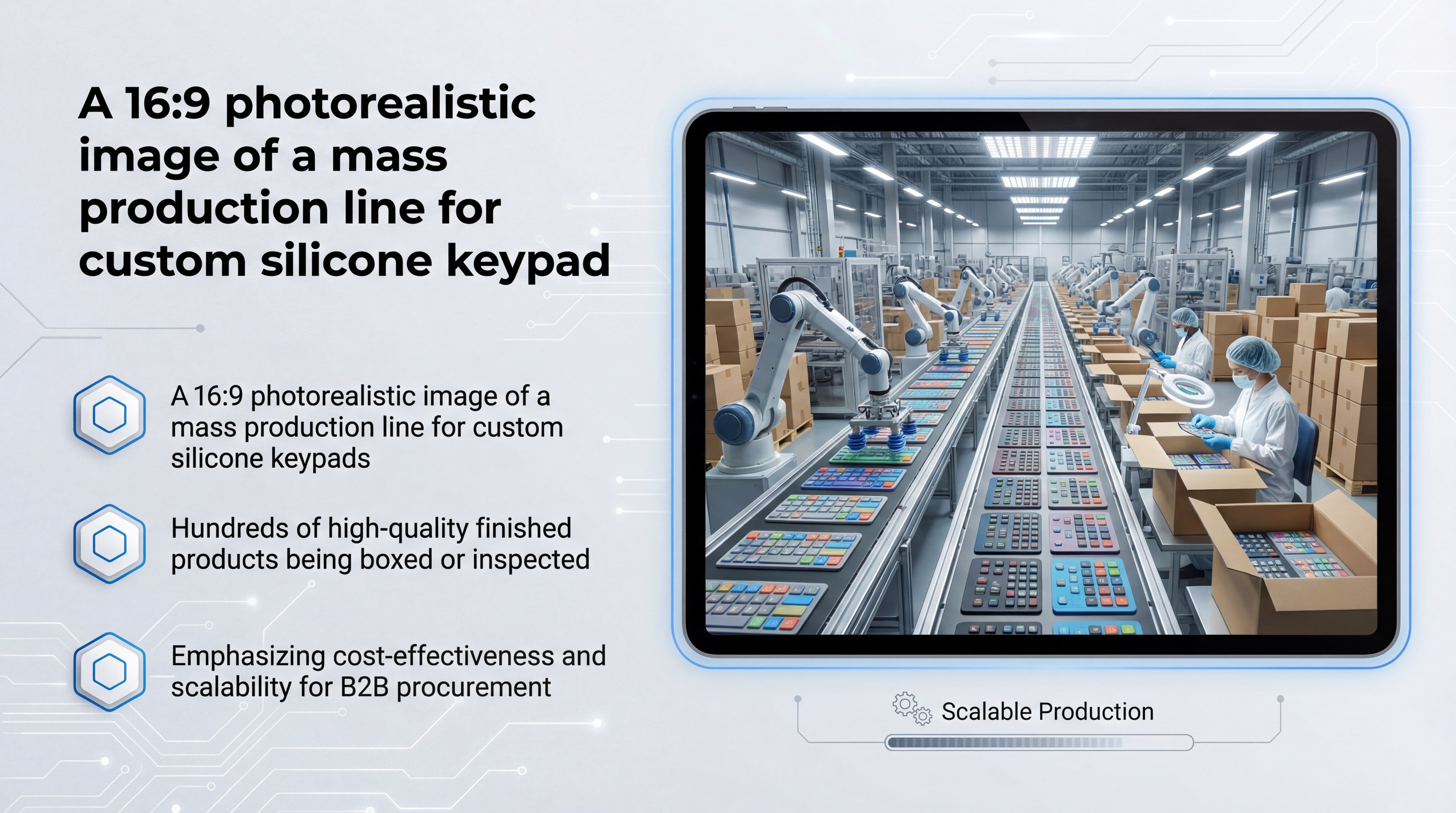
From healthcare to heavy machinery, a silicone keypad manufacturer serves sectors where reliability is non-negotiable. Each industry utilizes specific properties of silicone to solve unique environmental and usability challenges.
Are medical settings ideal for your product?
In medical settings, the ability to sterilize equipment is vital for patient safety. In fact: silicone keypads are non-toxic and can be molded into a single, gapless sheet that prevents bacteria from hiding in crevices.
- Automotive: High vibration resistance and wide temperature range.
- Fitness: Sweat-resistant and easy to clean after heavy use.
- Aerospace: Backlit legends and lightweight construction for cockpits.
You can benefit from these same properties in consumer electronics that need to feel “rugged.” The versatility of the material allows it to adapt to almost any professional standard.
Key Takeaway: Industry Use Cases
Silicone keypads are the standard for any industry that requires a combination of hygiene, durability, and reliable tactile feedback.
| Industry | Key Requirement | Silicone Solution |
|---|---|---|
| Medical | Cleanliness | Gapless, antimicrobial mats |
| Industrial | Ruggedness | High durometer, chemical resistance |
| Automotive | Temperature | -60°C to 200°C stability |
This industry-specific breakdown illustrates how silicone addresses the most critical pain points across diverse professional sectors.
10. Why is rubber keypad design a cost-effective choice?
The decision to work with a silicone keypad manufacturer usually results in a significantly lower total cost of ownership. While there are initial tooling costs, the low unit price and high reliability make it the most economical choice for mass-produced electronics.
Do tooling costs pay off for you?
The initial investment in a high-quality compression mold pays off by reducing the need for mechanical switches and separate gaskets. Bottom line: you simplify your assembly process, which leads to fewer points of failure and lower labor costs.
- Consolidated Design: One part replaces dozens of individual buttons.
- High Yields: Stable manufacturing processes ensure consistent quality.
- Long Lifespan: Reduced replacement costs due to material durability.
You should view the tooling as a long-term asset that guarantees the consistency of your user interface for years. This makes silicone the most sustainable choice for high-volume product lines.
Key Takeaway: Cost-Efficiency
Silicone keypads offer a superior return on investment by simplifying assembly and ensuring long-term field reliability.
| Financial Factor | Impact | Long-term Value |
|---|---|---|
| Tooling Cost | Upfront Investment | High repeatability |
| Unit Price | Very Low | Ideal for mass production |
| Failure Rate | Minimal | Low warranty and repair costs |
This final analysis confirms that choosing silicone is not just a design decision, but a strategic financial one for your product’s lifecycle.
Conclusion
Partnering with a professional manufacturer allows you to solve complex design problems while enhancing your brand vision through superior haptic quality. From achieving IP67 waterproof ratings to ensuring permanent legend clarity, silicone technology provides the most versatile solution for modern HMI challenges. If you are ready to optimize your next project with precision-engineered elastomeric components, contact us today to receive a comprehensive DFM review and quote. Let our expertise transform your product requirements into a durable, high-performance reality.
Frequently Asked Questions (FAQ)
Can I request a custom color match for my brand?
Yes, silicone can be pigmented to match any Pantone or RAL color with a tolerance of +/- 1 shade.
What’s the best way to ensure waterproof performance?
The best method is to design the keypad as a full “perimeter seal” mat that is compressed between the top and bottom housing of the device.
Can I use medical-grade materials for my project?
Absolutely. Professional manufacturers offer FDA-compliant and biocompatible silicone for healthcare and food-service applications.
How do I know if my design requires a protective overcoat?
If your device will be exposed to abrasive cleaning agents, heavy industrial grease, or constant outdoor use, a PU or silicone overcoat is highly recommended.
Can I integrate different button shapes on the same keypad?
Yes, because silicone is molded, you can have any combination of shapes, sizes, and heights on a single integrated base mat.