
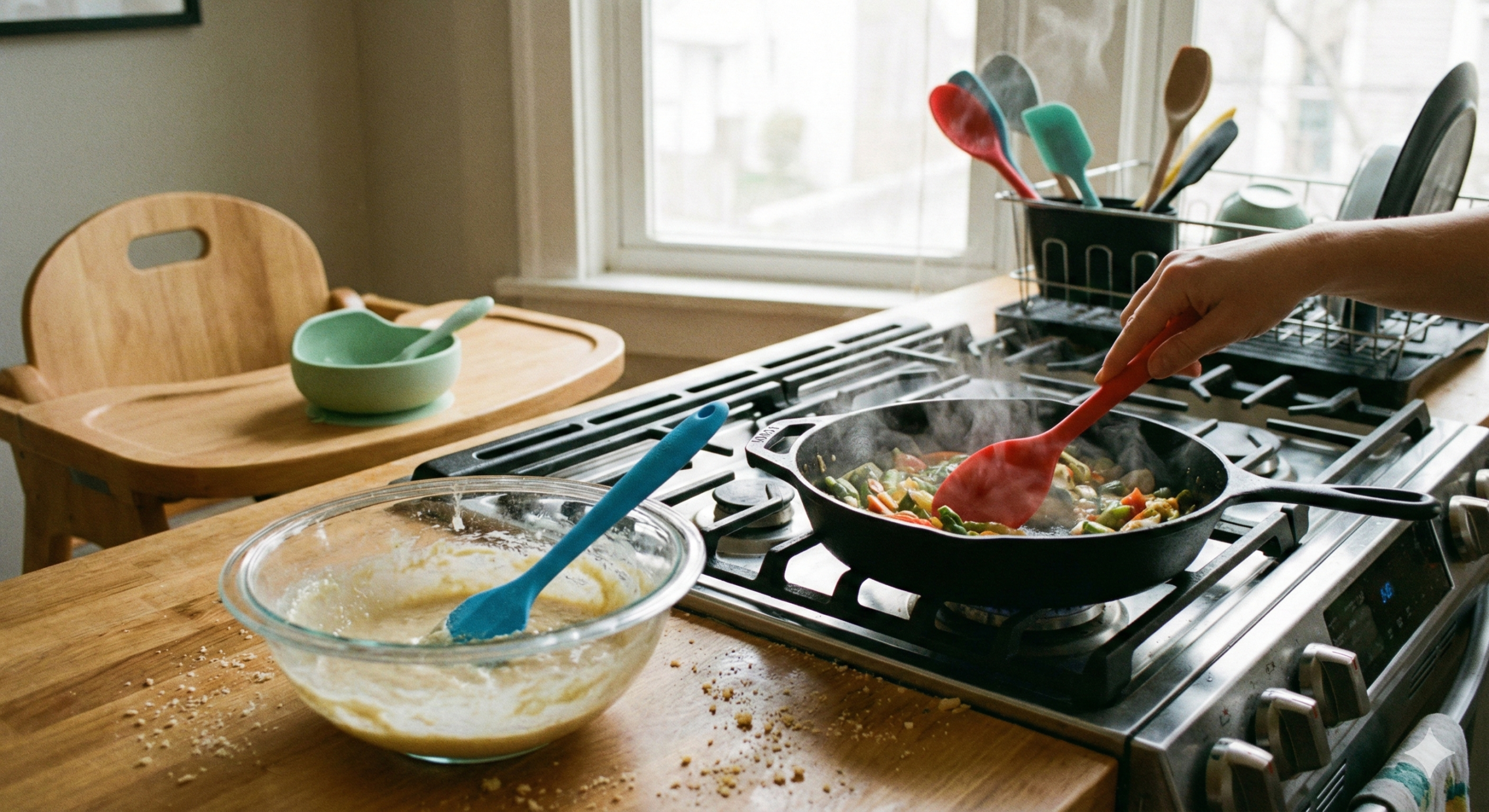
Yes, high-quality food-grade silicone is exceptionally safe for modern cooking and food preparation. Many home cooks struggle with the fear of melting plastic utensils or the metallic taste left behind by stainless steel tools. You might worry that heat causes synthetic chemicals to leach into your family’s meals, leading to long-term health concerns. The ultimate solution lies in choosing high-purity Are Silicone Cooking Utensils Safe products that are engineered specifically for extreme thermal environments.
Is silicone safer than standard plastic tools?
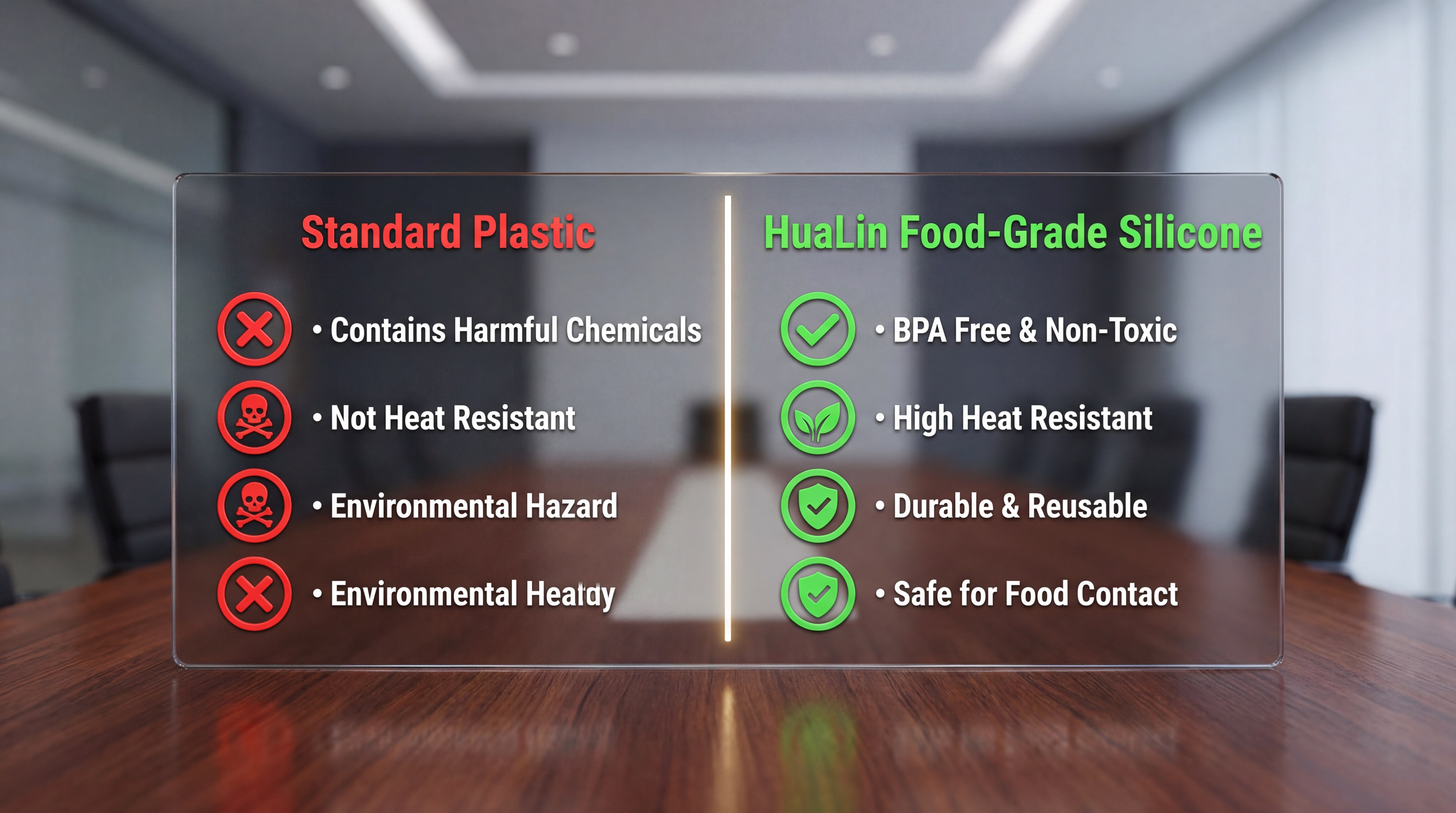
Yes, food-grade silicone is significantly safer than plastic because it is an inert material that does not contain BPA or phthalates. When you ask Are Silicone Cooking Utensils Safe, the answer depends on their ability to resist chemical migration. Unlike plastic, which can degrade and release toxins at relatively low temperatures, silicone remains stable. You can trust it to stay non-reactive even when in direct contact with acidic ingredients.
Why does material purity matter?
Purity ensures that no industrial fillers or heavy metals enter your food during the cooking process. High-purity silicone is derived from silicon, which is a natural element found in common sand. You will notice that premium tools do not emit odd smells when first exposed to heat.
But here is the kicker:
- Pure silicone does not leach harmful endocrine disruptors.
- It lacks the volatile organic compounds found in cheap polymers.
- The material is naturally hypoallergenic and non-porous.
Key Takeaway: Choosing high-purity silicone eliminates the chemical risks associated with traditional plastic kitchenware.
| Material Feature | Food-Grade Silicone | Standard Plastic |
|---|---|---|
| BPA/Phthalate Free | 100% Guaranteed | Often Contains Fillers |
| Chemical Leaching | None at high heat | High risk above 100°C |
| Purity Level | Medical-grade options | Industrial recycling possible |
This comparison highlights why professional kitchens are rapidly transitioning away from plastic tools to protect consumer health.
Can silicone withstand high cooking temperatures?
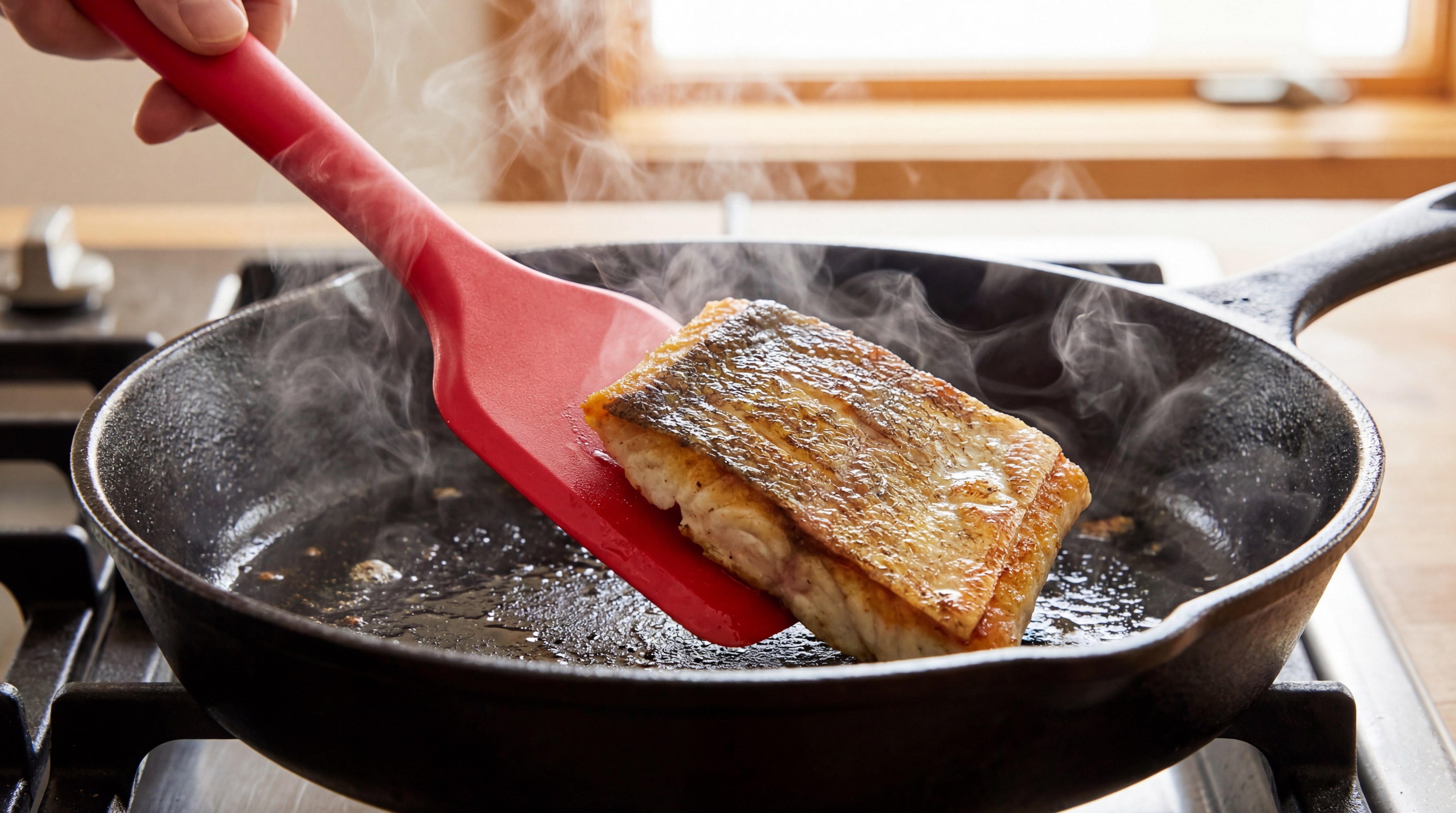
Yes, premium silicone utensils can typically withstand temperatures up to 250°C (482°F) without melting or warping. Determining Are Silicone Cooking Utensils Safe for high-heat tasks requires checking the manufacturer’s specific thermal rating. This resilience makes them perfect for deep frying, sautéing, and candy making where temperatures fluctuate rapidly. You don’t have to worry about a spatula tip breaking off in your skillet.
What happens at extreme heat?
At temperatures within its rated range, the molecular structure of silicone remains flexible and intact. It does not undergo the thermal decomposition that turns plastic tools into hazardous waste. You can move a tool from a boiling pot to a freezer without causing structural cracks.
You might be wondering:
- Does the handle get too hot to touch?
- Will the color fade after repeated high-heat use?
- Can it survive a professional convection oven?
Key Takeaway: Silicone’s extreme temperature stability ensures it remains structurally sound and non-toxic during the most demanding cooking tasks.
| Thermal Property | Performance Detail |
|---|---|
| Heat Resistance | Stable up to 250°C |
| Cold Resistance | Flexible down to -60°C |
| Melting Point | Does not melt; eventually turns to ash |
Evaluating thermal limits is the first step in ensuring your kitchen tools perform safely under pressure.
How do you spot toxic fillers in silicone?
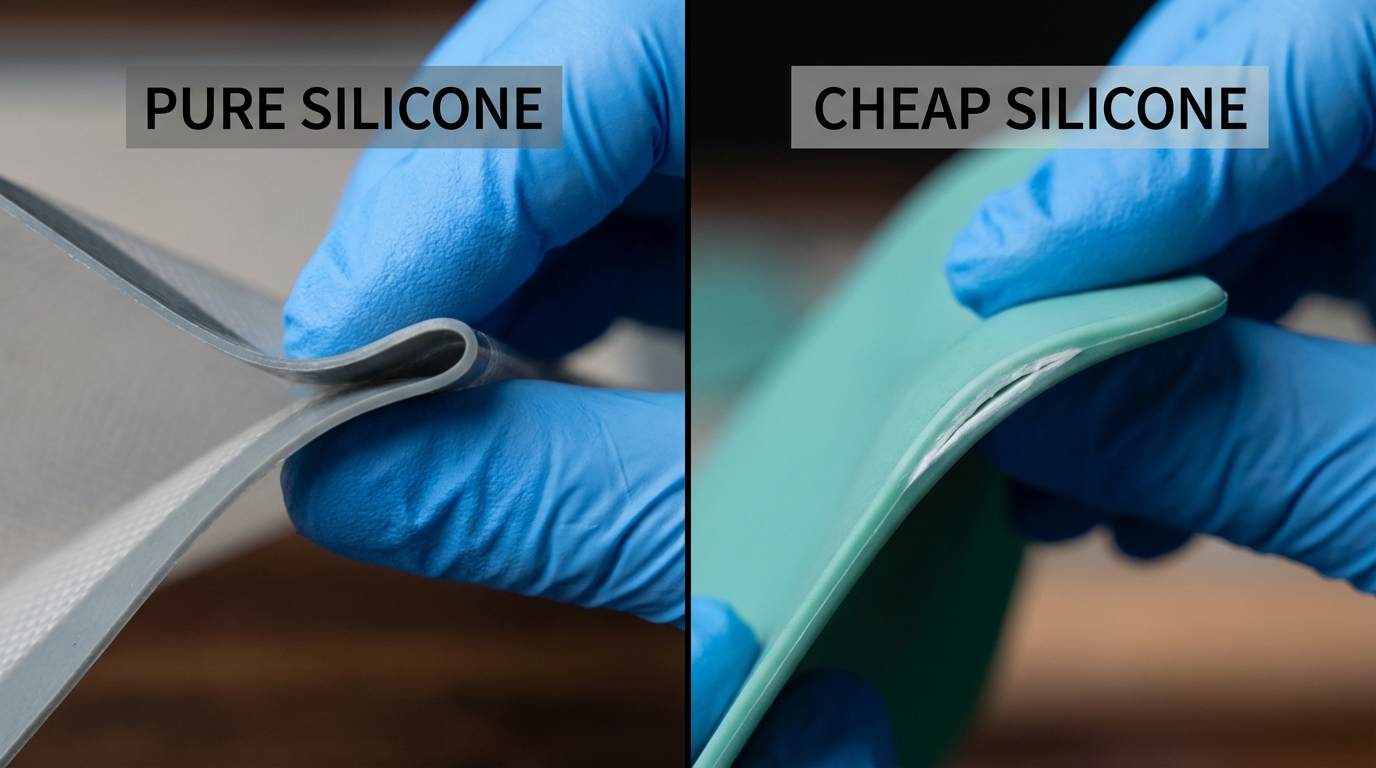
Yes, you can easily identify low-quality silicone by performing the “pinch test” to reveal hidden chemical fillers. When researching Are Silicone Cooking Utensils Safe, you must look for tools that maintain their color even when stretched or twisted. If white streaks appear during the pinch, the material likely contains cheap calcium carbonate or industrial bulking agents. These fillers compromise the heat resistance and can leach into your food.
Why are fillers dangerous?
Fillers are often used by budget manufacturers to reduce material costs, but they are not food-contact approved. These substances can off-gas during cooking, creating unpleasant odors in your kitchen. You should prioritize tools that are labeled as 100% food-grade or medical-grade for the best results.
Think about this for a second:
- Pure silicone maintains a consistent color when stretched.
- Filler-heavy products feel oily or chalky to the touch.
- Low-quality tools often crack prematurely at the edges.
Key Takeaway: The pinch test is your most reliable field method for verifying that your kitchen tools are free from toxic industrial additives.
| Quality Indicator | High-Purity Silicone | Filler-Heavy Silicone |
|---|---|---|
| Pinch Test Results | Color remains constant | White streaks appear |
| Texture/Feel | Silky and consistent | Sticky or powdery |
| Odor | Completely odorless | Chemical or plastic smell |
Performing a simple physical check prevents you from introducing unknown chemicals into your daily meal preparation.
Is silicone safe for baby feeding tools?

Yes, silicone is the gold standard for infant feeding because it is soft, bite-resistant, and entirely non-toxic. Understanding Are Silicone Cooking Utensils Safe for toddlers involves looking at mechanical safety and chemical purity. The material is gentle on developing gums and won’t shatter if dropped on a hard floor. You can sterilize these tools in boiling water without worrying about degrading the material.
How does silicone protect infants?
Silicone’s flexible nature prevents oral injuries that can occur with hard plastic or metal spoons. It is naturally resistant to bacteria, making it much more hygienic than wooden alternatives for teething toys. You will find that these products don’t absorb food stains or odors over time.
It gets even better:
- Silicone is hypoallergenic and free from latex.
- One-piece designs eliminate small part choking hazards.
- The material withstands aggressive chewing without tearing.
Key Takeaway: Silicone provides a soft, durable, and chemically inert solution for the most sensitive members of your family.
| Safety Factor | Silicone Benefit | Infant Protection |
|---|---|---|
| Texture | Soft and flexible | Protects delicate gums |
| Durability | Bite-resistant | Prevents choking hazards |
| Hygiene | Dishwasher safe | Allows for easy sterilization |
Selecting high-grade silicone for baby products ensures that safety remains the top priority throughout every developmental milestone.
Why is LSR molding superior for safety?
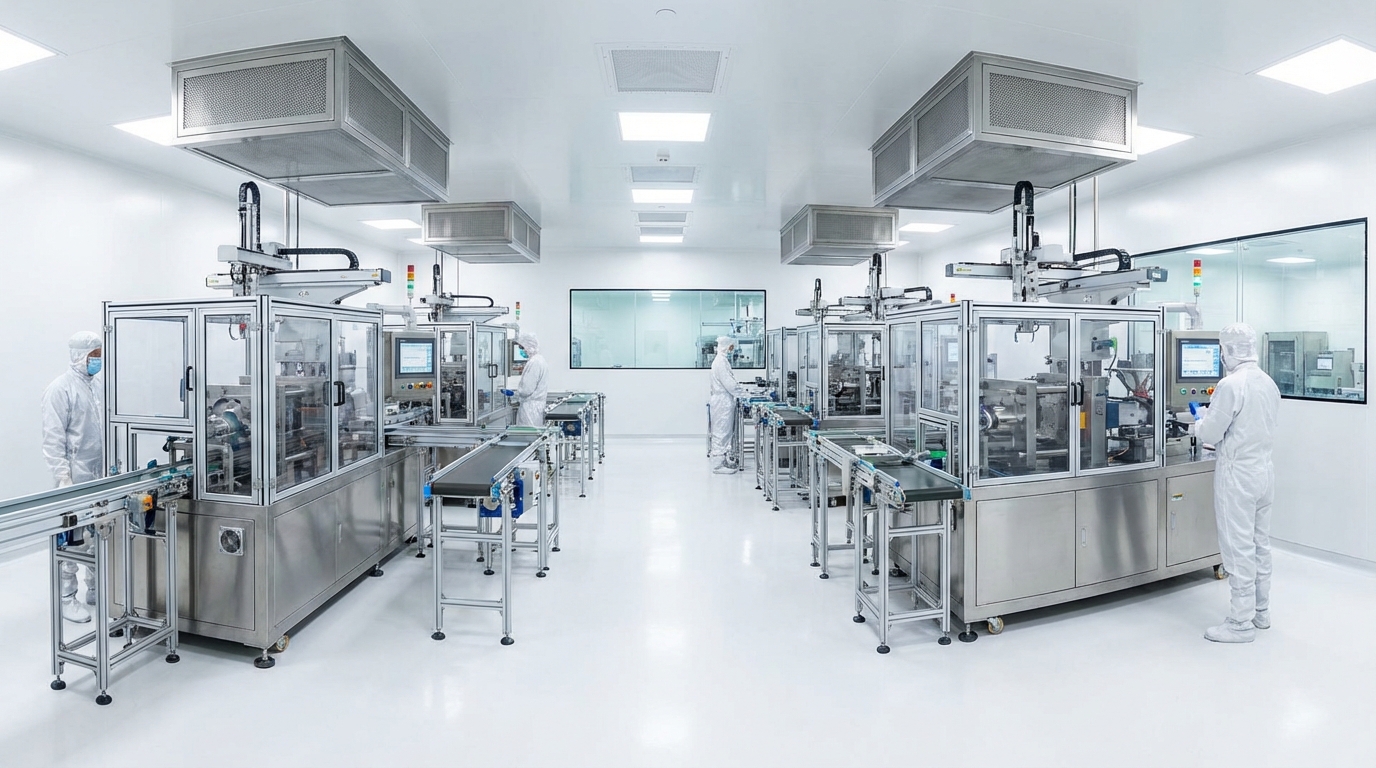
Yes, Liquid Silicone Rubber (LSR) molding is the most advanced production method for ensuring maximum product purity and safety. When experts discuss Are Silicone Cooking Utensils Safe, they often point to LSR because it occurs in a fully closed, automated system. This process prevents dust, oils, and human skin cells from contaminating the raw material during molding. You receive a product that is cleaner and more precise than traditional compression-molded items.
What makes LSR technology different?
LSR uses a 1:1 ratio of catalyst and base, ensuring a perfect chemical cure every single time. This eliminates the “sticky” residues sometimes found on lower-quality silicone products. You can rely on the consistent density and tear strength provided by this high-tech injection process.
Check this out:
- LSR allows for extremely tight tolerances and precision.
- The automated system reduces the risk of batch-to-batch variation.
- It is the preferred method for medical-grade and food-contact parts.
Key Takeaway: LSR injection molding provides a level of purity and structural integrity that traditional manufacturing simply cannot match.
| Production Method | LSR Injection Molding | Traditional Compression |
|---|---|---|
| System Type | Fully closed/Automated | Open/Manual handling |
| Contamination Risk | Near Zero | Moderate (Dust/Oils) |
| Precision | High-precision parts | Lower detail accuracy |
Investing in LSR-manufactured tools means you are choosing products made to the highest engineering standards available today.
Does silicone resist bacteria in the kitchen?
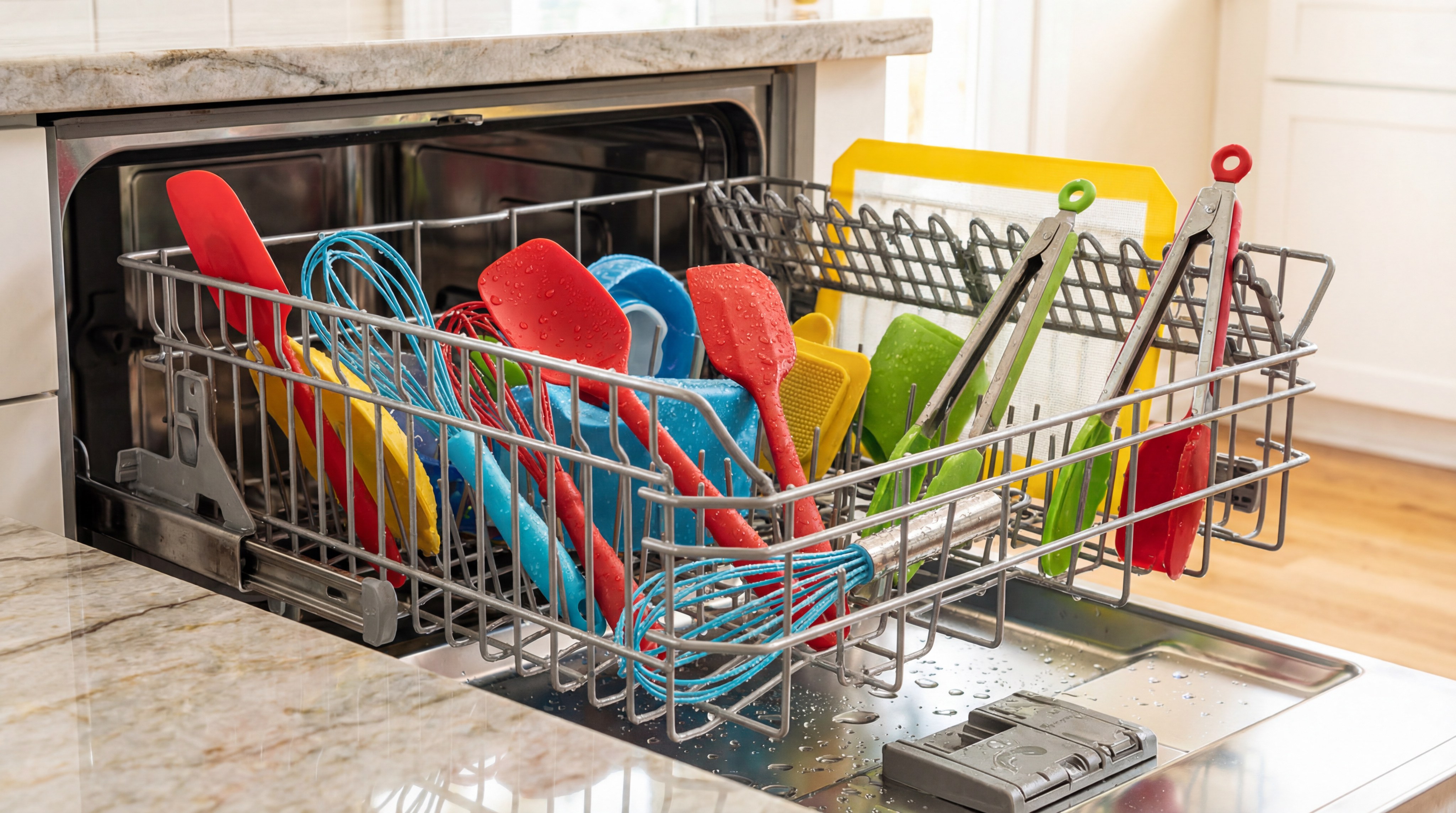
Yes, silicone is naturally non-porous and inhibits the growth of bacteria, mold, and mildew in your kitchen. Confirming Are Silicone Cooking Utensils Safe for long-term use means evaluating how easy they are to keep sanitary. Unlike wood, which has microscopic crevices that trap food particles, silicone has a smooth surface that rinses clean instantly. You can toss these tools into the dishwasher for a deep, high-heat sanitization cycle.
Why is non-porous material better?
Because it does not absorb liquids, silicone won’t hold onto the raw juices from meat or strong spice aromas like garlic. This prevents cross-contamination between different dishes you prepare throughout the week. You will notice that your silicone spatulas never develop that “old kitchen” smell.
Here is the kicker:
- Silicone surfaces are hostile to microbial colonization.
- They do not peel or flake like coated non-stick tools.
- Cleaning requires minimal effort and no harsh chemicals.
Key Takeaway: The hygienic properties of silicone make it the most sanitary material choice for high-moisture kitchen environments.
| Hygiene Feature | Silicone Performance | Health Impact |
|---|---|---|
| Surface Porosity | Non-porous | Blocks bacterial nesting |
| Odor Absorption | Zero absorption | Prevents cross-contamination |
| Dishwasher Safe | 100% Resistant | Ensures total sanitization |
Maintaining a clean kitchen becomes significantly easier when your tools are designed to repel microscopic pathogens.
What do FDA and LFGB labels mean?
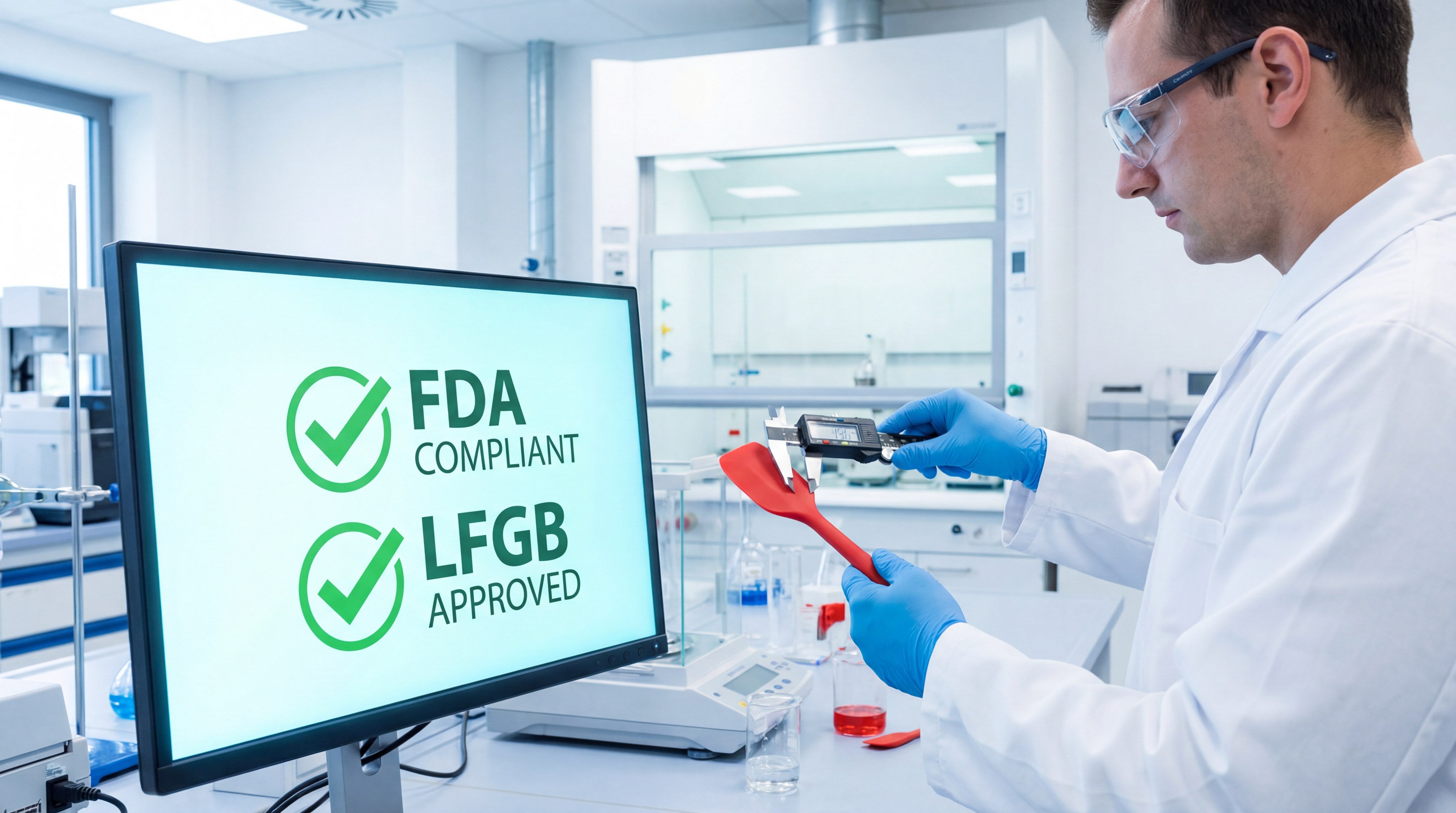
Yes, FDA and LFGB certifications are essential proof that your silicone tools meet rigorous international safety standards. When you ask Are Silicone Cooking Utensils Safe, these labels provide the official answer by confirming the material has passed migration testing. LFGB is often considered the “gold standard” because it includes even stricter tests for taste and odor transfer. You should always check the packaging for these recognized safety stamps.
Why are these tests necessary?
Compliance testing ensures that the silicone does not release substances into food in quantities that could harm your health. Labs simulate various cooking scenarios, including exposure to high heat and acidic liquids, to verify material stability. You can cook with peace of mind knowing your tools have been professionally audited.
You might be wondering:
- Is LFGB better than FDA approval?
- Do these certifications cover the whole tool or just the tip?
- How often are these products re-tested?
Key Takeaway: Certifications like FDA and LFGB are your guarantee that the manufacturer has invested in third-party safety validation.
| Standard Type | FDA (USA) | LFGB (Europe) |
|---|---|---|
| Main Focus | Chemical migration limits | Migration + Sensory (Taste/Smell) |
| Strictness | High | Very High (The gold standard) |
| Global Access | North American Market | European and Premium Markets |
Always verify certification to ensure your kitchen tools are manufactured under the world’s most demanding safety protocols.
Is silicone more durable than plastic spoons?
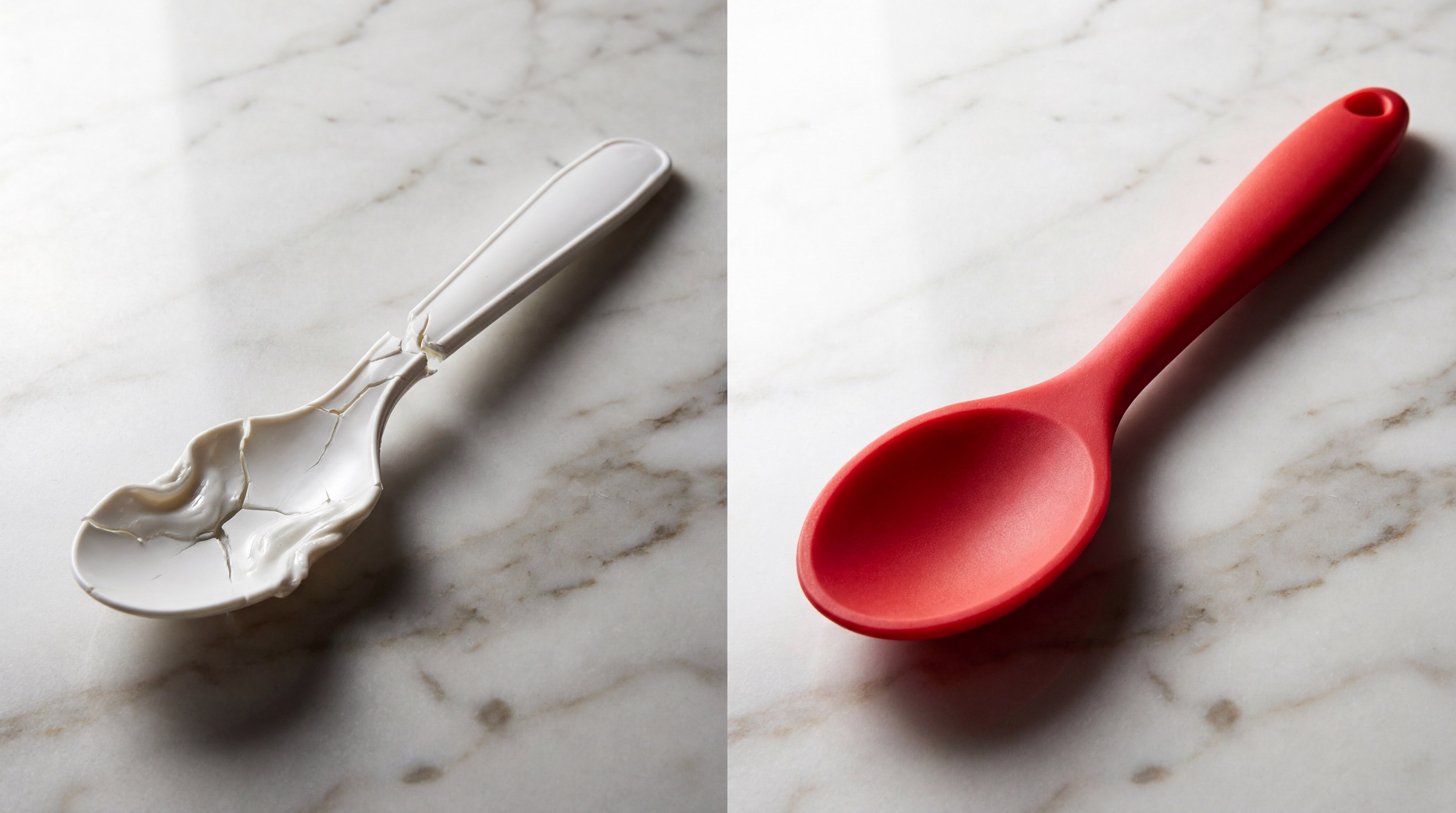
Yes, silicone is far more durable than plastic because it does not become brittle or snap after repeated use. Determining Are Silicone Cooking Utensils Safe also involves assessing their longevity and resistance to mechanical failure. Plastic tools often melt at the edges or crack under pressure, creating sharp fragments that can end up in your food. You will find that silicone maintains its soft, flexible edge for years.
How does silicone handle wear and tear?
The rubber-like elasticity of silicone allows it to absorb impacts and return to its original shape. It is resistant to UV light and oxidation, meaning it won’t “age” or turn yellow like many cheap plastic polymers. You are making a long-term investment in your kitchen’s functional safety.
Believe it or not:
- Silicone tools can last for over a decade with proper care.
- They won’t scratch your expensive non-stick pans.
- The material is virtually impossible to break by hand.
Key Takeaway: Silicone’s superior durability prevents the physical hazards associated with broken or degraded plastic kitchen tools.
| Durability Factor | Silicone Performance | Standard Plastic |
|---|---|---|
| Brittleness | Never becomes brittle | High risk of snapping |
| Edge Wear | Resists fraying and melting | Melts and deforms easily |
| Longevity | 5-10+ Year Lifespan | 6-12 Month Lifespan |
Choosing tools that last reduces the risk of material failure while saving you money on frequent replacements.
Is silicone an eco-friendly material choice?
Yes, silicone is considered more eco-friendly than plastic because it is extremely long-lasting and does not break down into microplastics. When evaluating Are Silicone Cooking Utensils Safe for the environment, you must consider the entire product lifecycle. While it isn’t biodegradable, its extreme durability means you will buy fewer tools over your lifetime. You are helping to reduce the massive volume of single-use and low-quality plastic waste in our oceans.
Can silicone be recycled?
Silicone can be mechanically recycled and turned into industrial lubricants or playground surfaces at specialized facilities. Unlike plastic, it is an inert material that won’t leach toxic chemicals into the soil if it eventually ends up in a landfill. You should prioritize reusable silicone covers over disposable plastic wrap for a greener kitchen.
Think about this for a second:
- Silicone reduces your reliance on disposable plastics.
- It is made from silica, an abundant natural resource.
- The material does not crumble into microscopic pollutants.
Key Takeaway: Silicone’s longevity and non-toxic nature make it a responsible choice for consumers focused on sustainability.
| Eco-Feature | Silicone Advantage | Environmental Impact |
|---|---|---|
| Lifecycle | Multi-year reusability | Reduces landfill volume |
| Microplastics | Does not create microplastics | Protects marine life |
| Resource Base | Derived from abundant sand | Less reliance on fossil fuels |
Selecting materials that stand the test of time is one of the most effective ways to lower your personal environmental footprint.
Which material should you choose today?
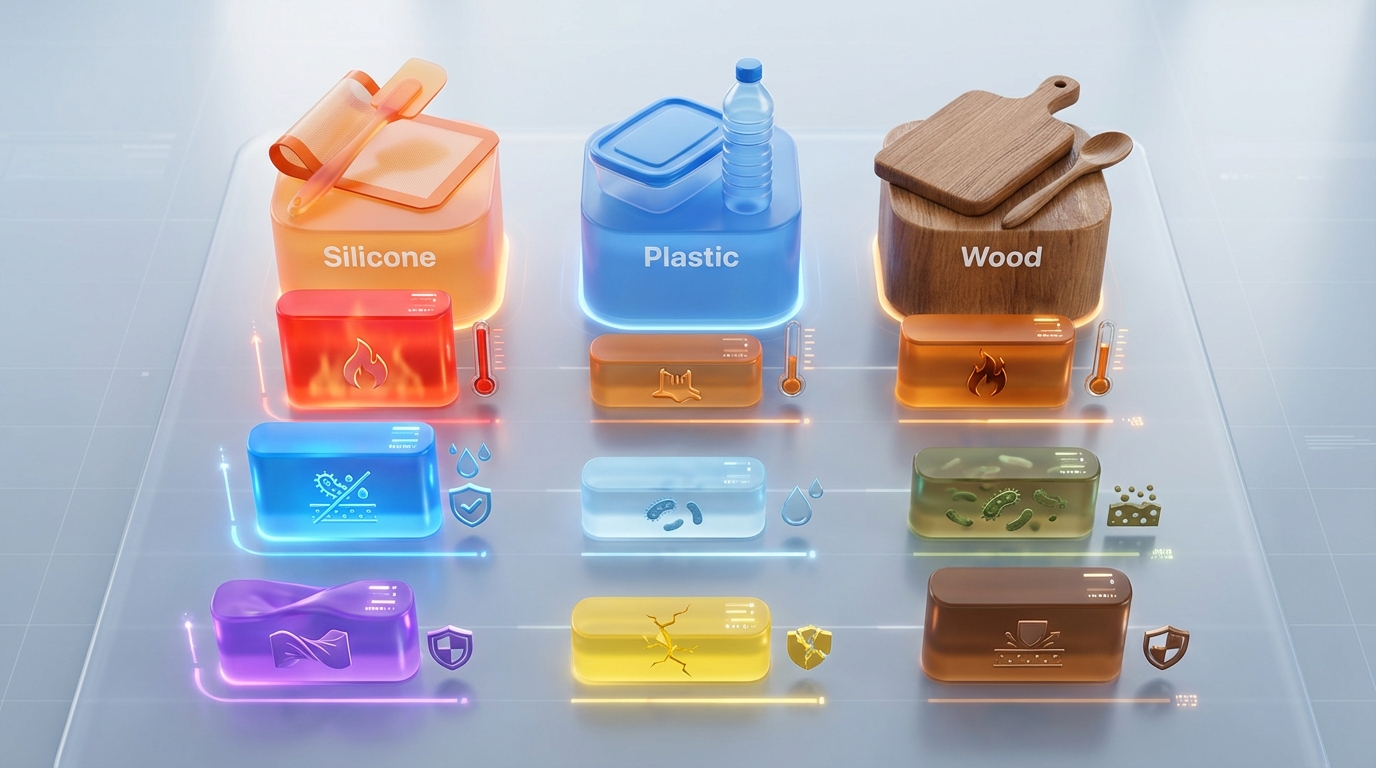
Yes, silicone is the optimal choice for modern kitchens because it combines the safety of wood with the versatility of high-tech polymers. Finalizing your decision on Are Silicone Cooking Utensils Safe requires comparing all common materials side-by-side. Silicone outperforms wood in hygiene and beats metal in protecting your non-stick surfaces. You get the best of all worlds in a single, chemically inert package.
Why is silicone the clear winner?
It handles heat better than plastic and is easier to sanitize than bamboo or wood. The flexibility of the material allows for better scraping of bowls and pans, reducing food waste in your home. You will enjoy a tool that is as functional as it is safe for your entire family.
But here is the kicker:
- It provides a superior grip even when wet or oily.
- The material is available in vibrant, food-safe colors.
- It is the only synthetic material that is truly heat-stable.
Key Takeaway: Silicone represents the pinnacle of kitchen tool engineering, offering unmatched safety, hygiene, and performance.
| Material | Heat Safety | Bacterial Resistance | Non-Stick Safe |
|---|---|---|---|
| Silicone | Excellent | Superior | Yes |
| Wood | Good | Poor (Porous) | Yes |
| Metal | Excellent | Good | No |
Choosing the right material ensures that every meal you prepare is supported by the safest technology available.
*
Summary of Safety Truths
Uncovering the truth about kitchen tools reveals that high-quality silicone is a powerhouse of safety and performance. By moving away from cheap plastics and porous woods, you eliminate the risks of chemical leaching, bacterial growth, and material failure. Our mission is to provide you with the world’s most reliable and non-toxic silicone solutions, manufactured under strict ISO-certified conditions. We resolve your safety anxieties by engineering protection into every spoon, spatula, and baby feeder we produce. Feel the difference that medical-grade purity and precision LSR molding can make in your home. contact us today to explore our full range of certified food-safe products and start your journey toward a healthier, more efficient kitchen.
*
Frequently Asked Questions
Can I use silicone utensils in an air fryer?
Yes, silicone is perfectly safe for air fryers because it can withstand the high-speed hot air and typical temperatures up to 230°C. Just ensure that the silicone does not block the essential airflow vents of the machine.
What’s the best way to clean stained silicone?
A simple paste of baking soda and water is the best way to remove stubborn stains from silicone without using harsh chemicals. Let the paste sit for thirty minutes before rinsing to restore the tool’s original appearance.
Can I use these tools on a charcoal grill?
No, you should avoid using silicone over open flames or direct charcoal heat, as these temperatures can easily exceed 500°C. Silicone is designed for stovetop and oven use, not for direct contact with glowing coals.
What is the “white powdery” residue on my silicone?
This is often just calcium or minerals from hard water that have dried on the surface after a dishwasher cycle. It is not harmful and can be easily wiped away with a little vinegar or lemon juice.
How do I know if my silicone is FDA approved?
Look for the FDA logo or a “Food Grade” statement on the original packaging or the manufacturer’s website. Reputable brands will always provide their safety certification reports upon request to prove compliance.