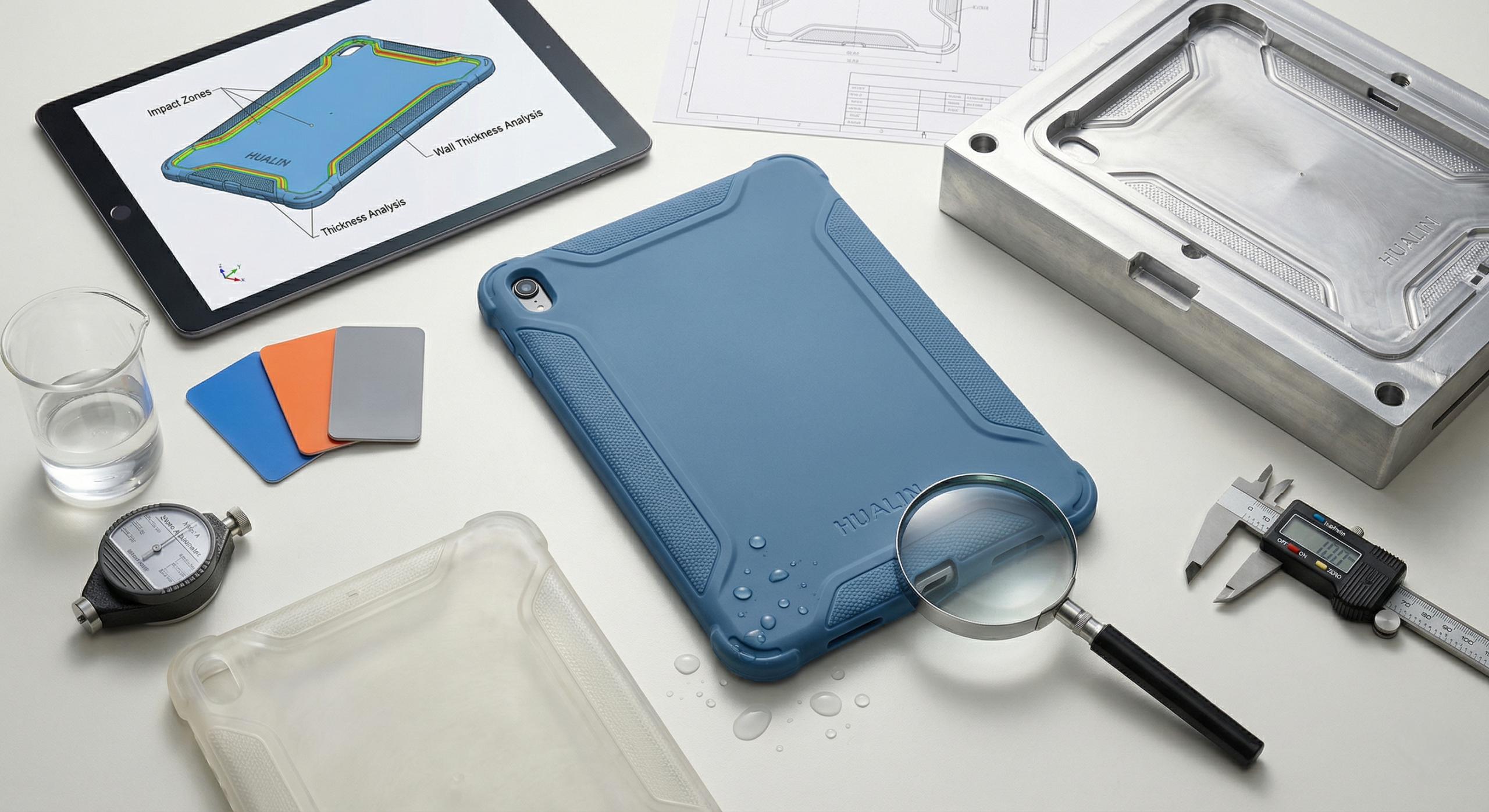
your silicone skin involves a precision-engineered approach that integrates material science, ergonomic design, and advanced molding techniques to protect high-value hardware. Many businesses struggle with off-the-shelf enclosures that fail to protect sensitive equipment or lack the professional branding required for a market-ready product. A poorly fitted case is more than an aesthetic flaw; it leads to button misalignment and inadequate shock absorption, which can result in hardware failure or costly product recalls. Partnering with an expert manufacturer allows you to leverage advanced molding technologies to ensure your silicone protective case provides a snug fit and a premium tactile experience that enhances your brand’s value.
How do you design a high-performance silicone protective case?
Designing a high-performance skin requires a deep understanding of the device’s environment combined with precise mechanical mapping of all user interface points. When you develop a silicone protective case, you must balance wall thickness for impact resistance with strategic cutouts for essential port access.
Optimizing for Impact Protection
You should focus on reinforcing corners and edges where drops are most likely to cause internal damage. A thicker profile in these high-risk zones dissipates kinetic energy before it reaches sensitive electronics.
The goal is to provide maximum security without adding unnecessary bulk to the overall form factor. You can achieve this by using variable wall thicknesses across the 3D model.
Enhancing User Ergonomics
Integrating tactile textures or ridges into the side walls significantly improves grip and prevents accidental slips during daily use. Think about it: a device that feels secure in the hand is less likely to be dropped in the first place.
Custom button covers should offer a crisp “click” feel rather than a mushy response. This tactile feedback ensures that the user remains in control of the device functions at all times.
Strategic Cutouts and Access
Precision-map all speakers, sensors, and charging ports to ensure the skin doesn’t hinder the utility of the hardware. You must account for connector head sizes to prevent interference during charging cycles.
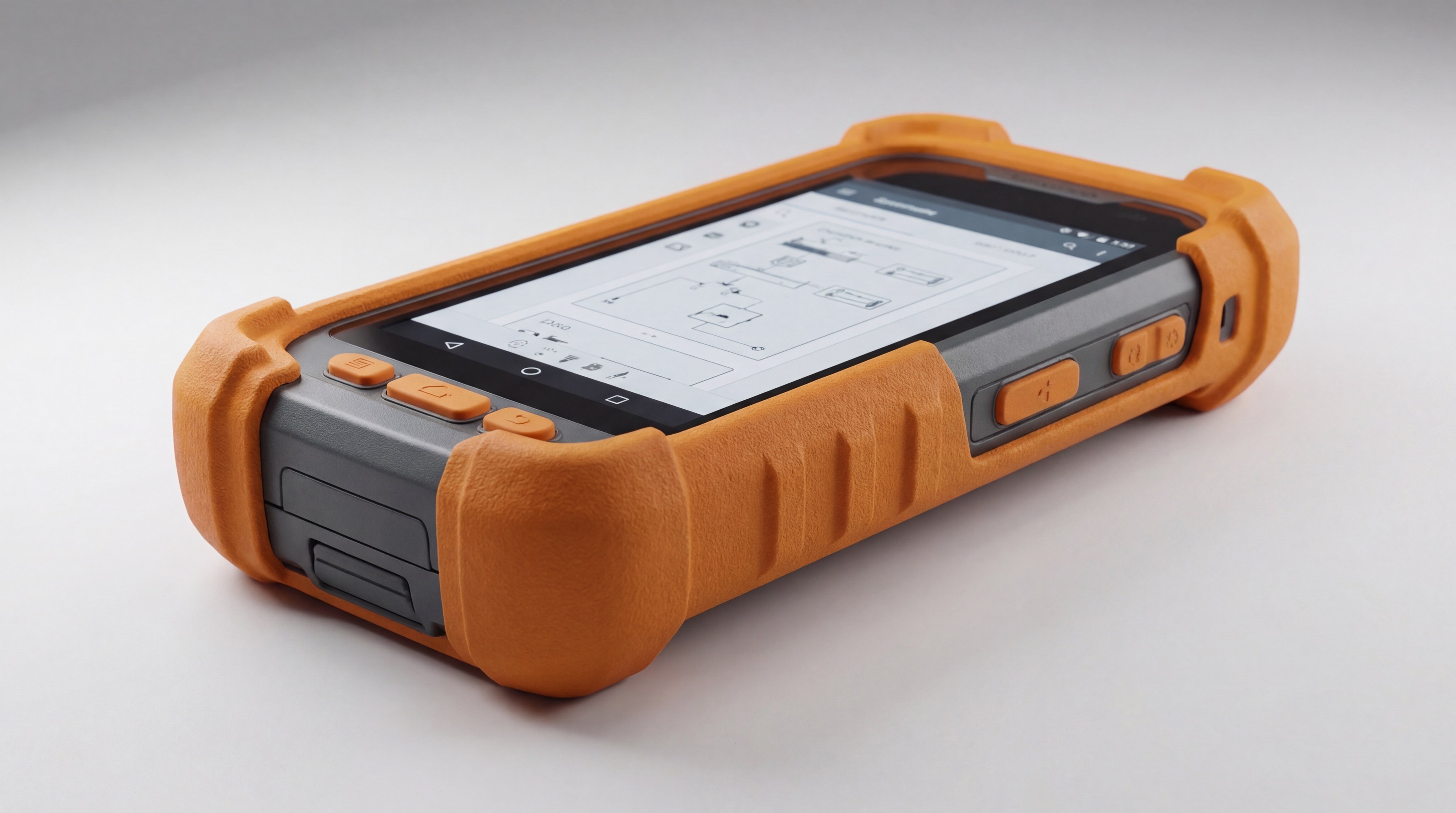
Key Takeaway: Success in design depends on finding the perfect equilibrium between rugged protection and unhindered functional access for the end user.
| Design Element | Primary Benefit | User Impact |
|---|---|---|
| Reinforced Corners | Shock Absorption | Reduced Hardware Failure |
| Tactile Textures | Improved Grip | Fewer Accidental Drops |
| Precision Cutouts | Full Functionality | Seamless User Experience |
Careful attention to these mechanical details during the initial CAD phase prevents expensive revisions during the later manufacturing stages.
Which materials are best for your silicone protective case?
The best material depends entirely on your specific application, ranging from standard industrial grades to specialized medical grade silicone parts for healthcare environments. Selecting the right compound for your silicone protective case ensures longevity and regulatory compliance for your target market.
Understanding Shore Hardness
Shore hardness typically ranges from 30A to 70A, where softer grades offer more flexibility for easy installation. Harder grades provide the structural support needed for rugged industrial equipment that faces heavy daily wear.
You must decide if your product needs the “squishy” feel of a low-durometer material or the rigid protection of a higher-density compound. This choice directly impacts the energy-absorption capabilities of the final product.
Environmental and Chemical Resistance
Choose materials rated for high-heat, flame retardancy, or UV stability based on where the device will be deployed. If the skin is used outdoors, UV resistance prevents the material from becoming brittle over time.
For food-contact or healthcare applications, ensure the raw material meets FDA, RoHS, or LFGB requirements. These certifications are non-negotiable for products involving prolonged skin contact or hygiene sensitivity.
Key Takeaway: Material selection is the foundation of product durability and must be aligned with the environmental stresses the device will encounter.
| Material Feature | Ideal Application | Compliance |
|---|---|---|
| High Tensile Strength | Consumer Electronics | RoHS |
| Antimicrobial | Medical Handhelds | FDA / ISO 10993 |
| UV Stability | Outdoor Telecom | UL 94-V0 |
Matching the chemical properties of the silicone to the intended environment prevents premature degradation and maintains a professional appearance.
Why is prototyping essential for custom silicone skins?
Prototyping serves as the ultimate insurance policy against design flaws by allowing you to verify the physical fit and tactile feedback of the silicone protective case before committing to production. But wait, there’s more. Prototyping is the only way to accurately measure how the material contracts after cooling.
Verifying the Stretch-Fit
Silicone skins rely on an “interference fit,” meaning they are slightly smaller than the device to stay securely in place. You need a physical sample to ensure the tension is high enough to prevent slipping but low enough to allow for installation.
Testing this fit with 3D-printed samples or rapid molds saves thousands of dollars in potential tooling modifications. It gives you the confidence to proceed to high-volume manufacturing without fear of sizing errors.
Testing Functional Performance
Prototyping allows you to test button responsiveness and port alignment in a real-world setting. You can evaluate the durability of port flaps and the clarity of any integrated light pipes or transparent windows.
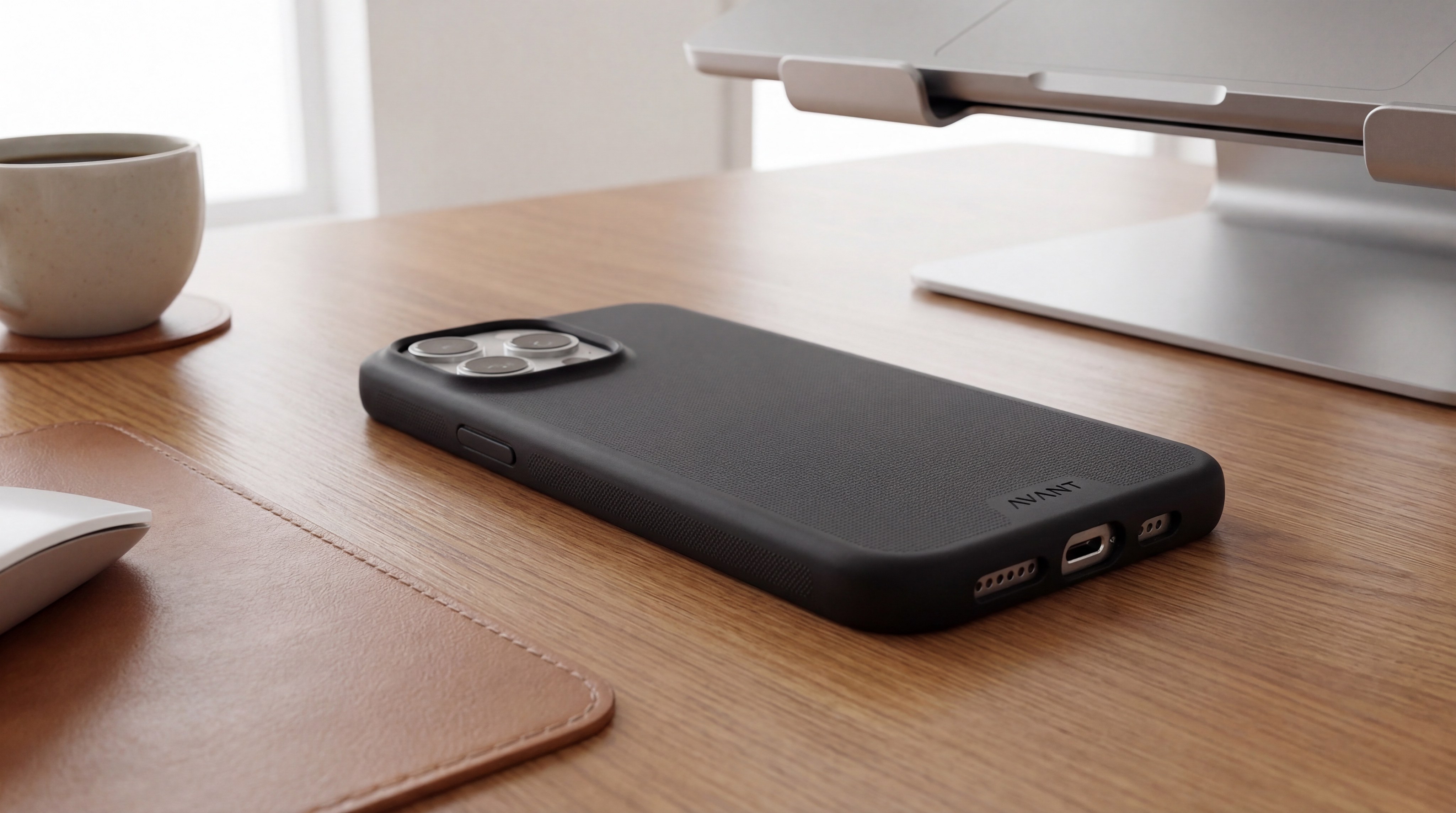
Key Takeaway: A small investment in functional prototypes prevents massive losses and timeline delays that occur when design errors reach the mass production phase.
| Prototype Method | Speed | Accuracy |
|---|---|---|
| 3D Printing (Resin) | Very Fast | Moderate |
| Rapid Silicone Tooling | Fast | High |
| CNC Machining | Moderate | Very High |
Utilizing a tiered prototyping approach allows you to iterate quickly on aesthetics before finalizing the complex mechanical tolerances.
How does the tooling process impact production quality?
High-quality tooling is the physical foundation of a stable manufacturing process, ensuring that every silicone protective case meets your exact specifications across thousands of cycles. At Hualin Silicone, in-house mold making allows for tighter control over parting lines and dimensional accuracy.
Precision CNC Machining
The mold must match your 3D design within microns to ensure a perfect fit on the final device. High-precision CNC machining creates smooth cavities that result in a premium surface finish without the need for secondary processing.
Surprising as it may seem, even a tiny deviation in the mold can cause the skin to gap or bunch on the device. Investing in hardened steel molds ensures this precision is maintained for the life of the project.
Managing Venting and Gating
Strategic placement of vents and gates is essential to prevent air bubbles and “burn” marks on the silicone surface. Proper flow analysis during the tooling phase ensures the material fills the cavity evenly and completely.
This technical detail is what separates a cheap-looking cover from a professional-grade enclosure. It minimizes “flash”—the excess material that can appear at the seams of the mold.
Key Takeaway: Quality tooling is a one-time investment that pays dividends through lower defect rates and superior product consistency over time.
| Tooling Type | Lifecycle | Best For |
|---|---|---|
| Aluminum Molds | < 5,000 shots | Low Volume / Prototyping |
| P20 Steel | 50,000+ shots | Mid-Range Production |
| S136 Hardened Steel | 500,000+ shots | High-Volume LSR |
Starting with a high-grade tool minimizes the risk of production downtime and ensures your brand reputation remains intact through consistent quality.
What inspection standards ensure case reliability?
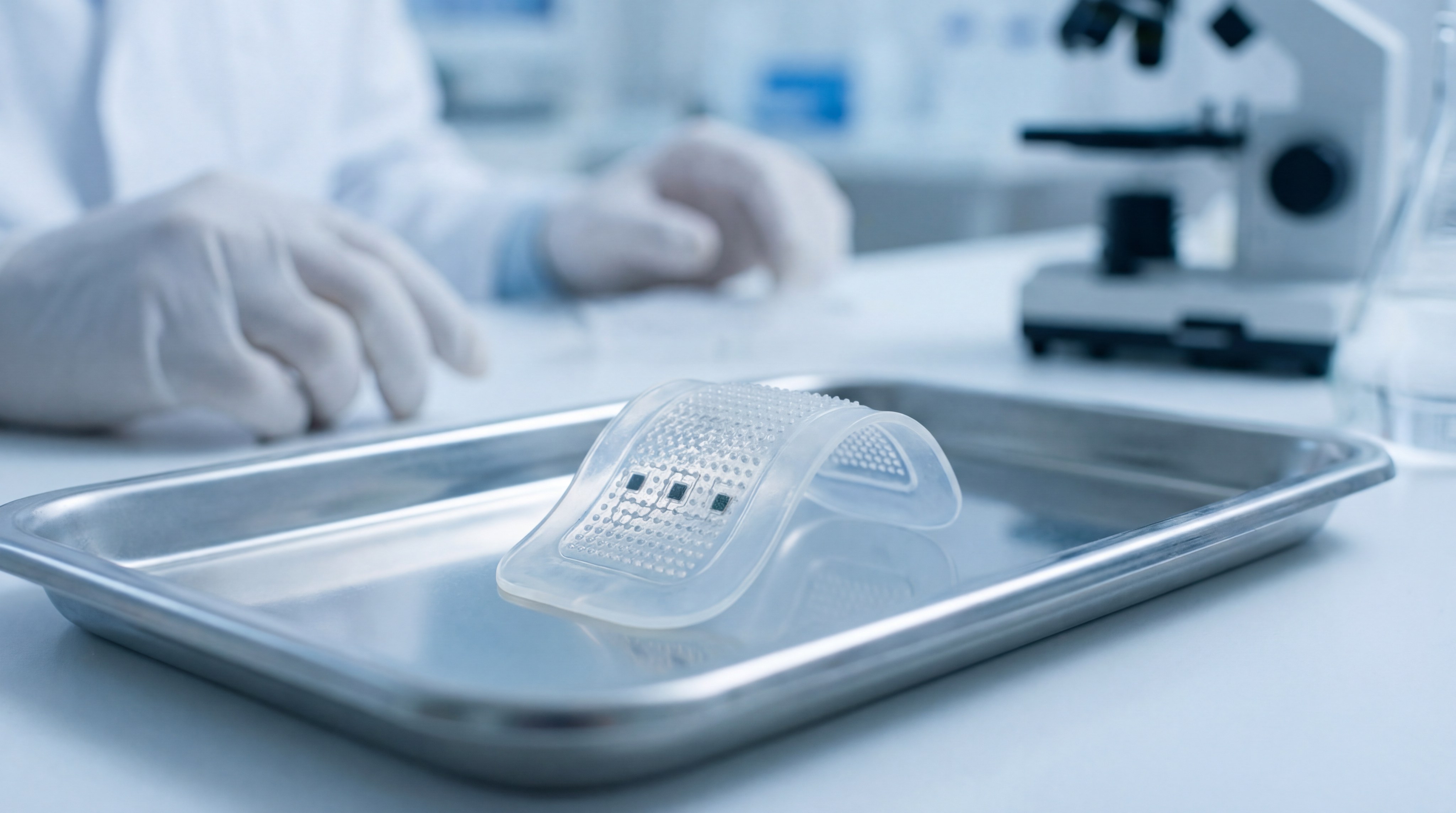
A robust inspection protocol catches defects before they reach your warehouse, ensuring that every silicone protective case provides the level of protection your customers expect. We utilize a comprehensive three-stage quality control system: IQC, IPQC, and FQC.
Dimensional and Functional Verification
Using calipers and CCD visual systems allows us to verify that critical dimensions are within the allowed tolerance range. You need this level of scrutiny to guarantee that the skin will actually fit the device it was designed for.
Functional testing involves checking button responsiveness and the alignment of charging ports. Here is the deal: if the user can’t charge their device while the case is on, the product is a failure.
Testing Physical Properties
We perform tear strength tests and color consistency checks to ensure the batch matches the approved master sample. This ensures that the silicone doesn’t degrade or change color after exposure to cleaning chemicals or sunlight.
Key Takeaway: Rigorous inspection protocols transform manufacturing from a game of chance into a predictable process that delivers high-performance results.
| Inspection Stage | Focus Area | Goal |
|---|---|---|
| IQC (Incoming) | Raw Material Purity | Prevent Contamination |
| IPQC (In-Process) | Molding Parameters | Maintain Consistency |
| FQC (Final) | Aesthetics & Fit | Zero Defects to Customer |
Implementing these standards throughout the production lifecycle ensures that your custom skins perform reliably in even the most demanding environments.
Is LSR molding better for high-volume silicone cases?
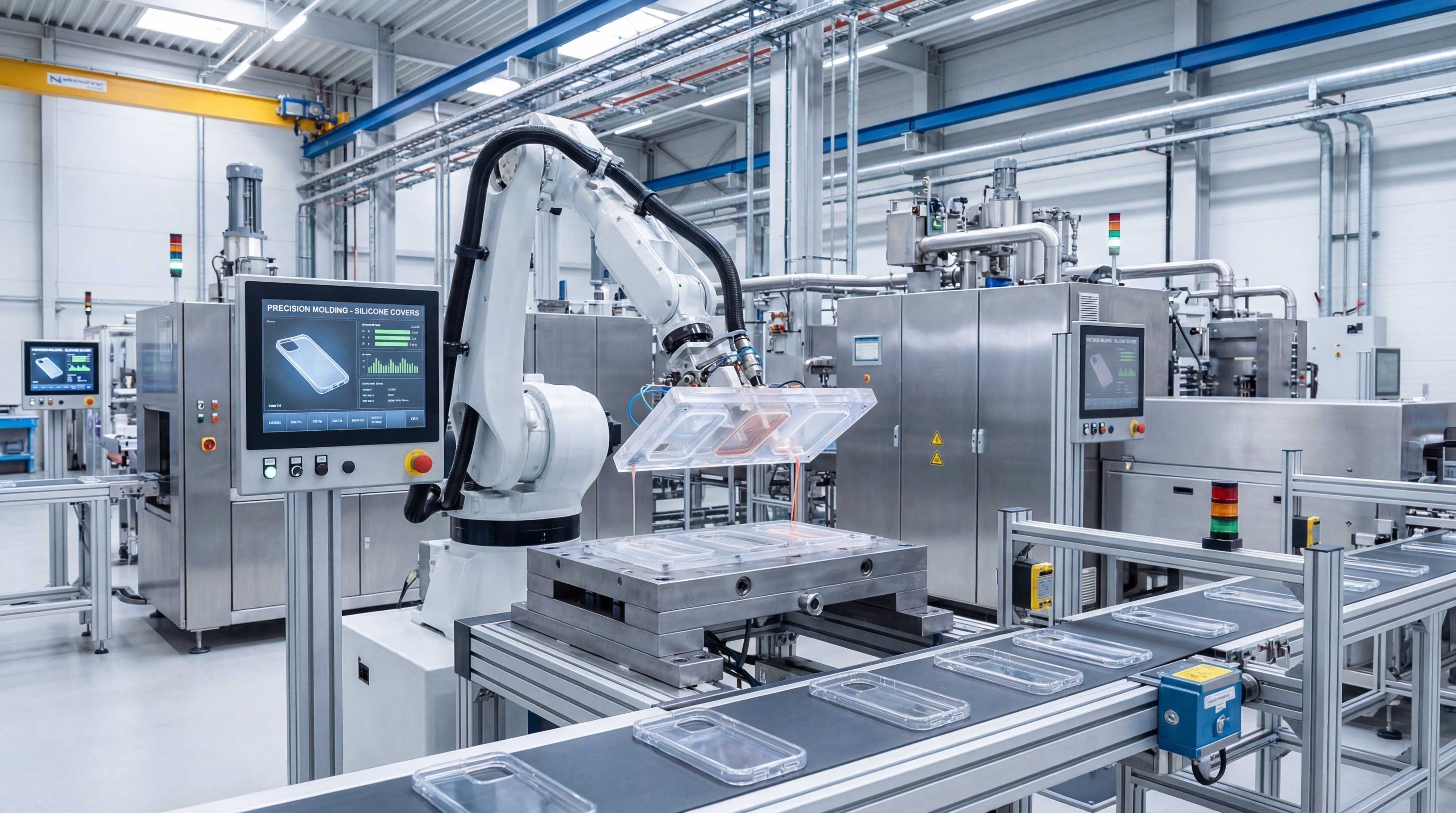
Liquid Silicone Rubber (LSR) injection molding is widely considered the gold standard for producing a high-volume silicone protective case with exceptional precision. While compression molding is cost-effective for simple designs, LSR offers significantly faster cycle times and higher levels of automation.
Speed and Automation Benefits
LSR machines operate with a high degree of automation, which minimizes human error and ensures batch-to-batch consistency. The closed-loop system reduces the risk of contamination, making it ideal for medical and high-end consumer electronics.
Look at it this way: for orders exceeding 10,000 units, the initial higher tooling cost of LSR is quickly offset by the lower per-unit labor and processing costs.
Complex Geometries and Thin Walls
LSR allows for the creation of intricate details and very thin walls that would be impossible to achieve with traditional compression molding. This allows you to design skins that are incredibly lightweight yet still offer high-strength protection.
The material flows more easily into complex mold cavities, ensuring that every detail of your 3D design is captured perfectly. This is critical for modern devices with complex arrays of sensors and buttons.
Key Takeaway: LSR molding is the superior choice for projects where high volume, extreme precision, and complex design features are the primary requirements.
| Feature | Compression Molding | LSR Injection Molding |
|---|---|---|
| Precision | Standard | Exceptional |
| Cycle Time | 3-5 Minutes | 30-90 Seconds |
| Labor Intensity | High | Low |
Evaluating your total volume and complexity early on helps you choose the molding method that offers the best return on investment.
How can you achieve superior waterproofing in silicone skins?
Achieving an IP67 or IP68 rating for your silicone protective case requires more than just a cover; it requires specialized sealing structures and interference management. This is a critical factor for various industry applications where equipment is exposed to liquids or dust.
Integrated Gaskets and Seals
You can design the silicone skin to double as a gasket for the internal components of the device. This creates a dual-purpose part that provides both external impact protection and internal environmental sealing.
More importantly, the geometry of the seal must account for compression sets. You want the silicone to maintain its sealing pressure over years of use, not just for the first week.
Managing Tight Tolerances
Achieving a waterproof seal requires maintaining extremely tight tolerances at all port entries and button interfaces. You must engineer the skin to be slightly smaller than the device to create a permanent tension seal against the hardware body.
Key Takeaway: Waterproofing is an engineering challenge that requires a dedicated DFM review to ensure the material and design can withstand liquid ingress.
| Seal Type | Protection Level | Best Use Case |
|---|---|---|
| Overlapping Flap | Splash-proof | Consumer Port Covers |
| Interference Ribs | IP67 (Dust/Water) | Industrial Handhelds |
| Compression Gasket | IP68 (Submersion) | Underwater Equipment |
By focusing on these structural details, you can ensure your device remains operational in even the most hazardous liquid environments.
What are the benefits of overmolding for protective cases?
Overmolding allows you to bond silicone directly onto plastic or metal inserts, creating a seamless, multi-material silicone protective case that offers both structural rigidity and soft-touch protection. This process eliminates the need for manual assembly and creates a much more durable bond than traditional adhesives.
Simplified Assembly and Logic
When the silicone is molded directly onto the substrate, there is no chance of the skin slipping or peeling off over time. This creates a unified part that feels high-end and is much easier for your team to integrate during final product assembly.
You can also reduce the total number of parts in your bill of materials. This streamlining often leads to lower long-term costs despite the higher initial complexity of the overmolding tool.
Enhanced Aesthetic and Tactile Appeal
Overmolding allows you to combine different colors and textures into a single, sleek component. You can have a hard plastic core for structural strength and a soft silicone exterior for user comfort and impact absorption.
The bottom line is this: overmolded parts represent the pinnacle of modern enclosure design. They offer a level of sophistication and durability that simple slip-on skins cannot match.
Key Takeaway: Overmolding is the ideal solution for premium products that require the structural integrity of hard plastics combined with the protective qualities of silicone.
| Feature | Standard Skin | Overmolded Part |
|---|---|---|
| Bond Strength | Friction-based | Chemical/Mechanical |
| Assembly Cost | Higher (Manual) | Lower (Integrated) |
| Durability | Moderate | Exceptional |
Choosing overmolding during the design phase allows for a more ruggedized and professional-looking final product that stands out in the marketplace.
Which surface finishes enhance silicone case durability?
The surface finish of your silicone protective case defines the final “hand-feel” and determines how well the product resists dust, fingerprints, and daily wear. These secondary treatments are what transform a raw industrial component into a consumer-ready accessory.
PU Coating and Anti-Static Treatments
Oil spraying or PU (Polyurethane) coating provides a silky, anti-static touch that prevents dust and lint from sticking to the silicone. This is especially important for dark-colored cases that tend to show debris more easily.
Keep this in mind: a case that stays clean looks newer for longer, which increases the perceived value of your brand. It also makes the device easier to slide into and out of pockets or equipment holsters.
Laser Engraving and Branding
Laser engraving allows for permanent, high-contrast iconography that won’t wear off with heavy use. You can use this for logos, serial numbers, or functional instructions that need to remain visible for the life of the product.
In other words, your branding becomes a permanent part of the protective enclosure. Unlike traditional printing, laser engraving is resistant to cleaning chemicals and abrasion.
Key Takeaway: Selecting the right surface finish is a low-cost way to significantly improve the user experience and the long-term aesthetic of your product.
| Finish Type | Key Benefit | Ideal For |
|---|---|---|
| PU Coating | Dust Resistance | Consumer Goods |
| Matte Texture | Scratch Hiding | Industrial Tools |
| Laser Marking | High Durability | Branding / Labels |
Adding a premium finish is the final step in creating a custom skin that users will genuinely enjoy interacting with every day.
How can you optimize costs in custom silicone manufacturing?
Optimizing costs in the production of your silicone protective case doesn’t mean sacrificing quality; it means making smarter engineering choices during the Design for Manufacturing (DFM) phase. Early collaboration with your manufacturing partner can save up to 30% in production costs by identifying inefficiencies before tooling begins.
Optimizing Wall Thickness and Volume
Reducing material volume without compromising structural integrity is the fastest way to lower unit costs. You should work with engineers to find the minimum wall thickness that still provides the necessary drop protection for your specific device.
By using FEA (Finite Element Analysis) during design, you can place material only where it is truly needed. This strategic approach minimizes waste and speeds up cycle times during the molding process.
Strategic Scaling and Tooling Choices
Scaling production early reduces the per-unit amortization of tooling costs. If you know your long-term volume will be high, investing in a multi-cavity LSR tool will result in a much lower cost per unit than repeatedly running small batches of compression molding.
You can also use our protective sleeves portfolio as a baseline to see where standard design elements can be used to avoid reinventing the wheel. Reusing proven structural geometries can significantly reduce development time and cost.
Key Takeaway: Smarter design choices and early manufacturing consultation are the most effective ways to reduce your total cost of ownership.
| Cost Lever | Impact | Strategy |
|---|---|---|
| Material Volume | High | Thinner Walls / Ribbing |
| Tool Cavitation | Very High | Multi-cavity Molds |
| DFM Review | High | Early Engineering Input |
Taking the time to optimize your design for the specific molding process will ensure you get the highest quality product at the most competitive price point.
FAQ: Common Questions About Custom Silicone Skins
Can I add my company logo to the custom silicone case?
Yes, logos can be integrated via mold engraving for an embossed or debossed effect, or through laser marking for high-contrast branding.
What’s the best shore hardness for an industrial protective skin?
For most industrial applications, a Shore A hardness of 50 to 60 provides the best balance of flexibility for easy installation and enough rigidity for impact protection.
Can I get a custom color for my silicone protective case?
Absolutely, we can match any Pantone or RAL color code and even offer translucent, metallic, or glow-in-the-dark options.
What’s the fastest way to get a prototype of my case design?
The fastest method is usually 3D printing with flexible resins or rapid silicone tooling, which can deliver functional samples in as little as 3 to 5 days.
Can I use food-grade silicone for non-kitchen products?
Yes, many brands choose FDA-compliant food-grade silicone for wearables and medical devices because it is hypoallergenic and free from harmful fillers.
Conclusion
Building a custom silicone protective case requires a partner who understands the nuances of material science and precision engineering. This article has explored the critical steps of the process, from initial design and material selection to the advanced molding and inspection standards required for a reliable product. By addressing common challenges like waterproofing, cost optimization, and surface finishing, you can create a custom skin that not only protects your hardware but also elevates your brand’s market position. At Hualin Silicone, our vision is to provide precision-engineered solutions that bridge the gap between concept and reality.
Ready to start your project? Contact us today for a free DFM review and a comprehensive quote on your custom silicone skin.