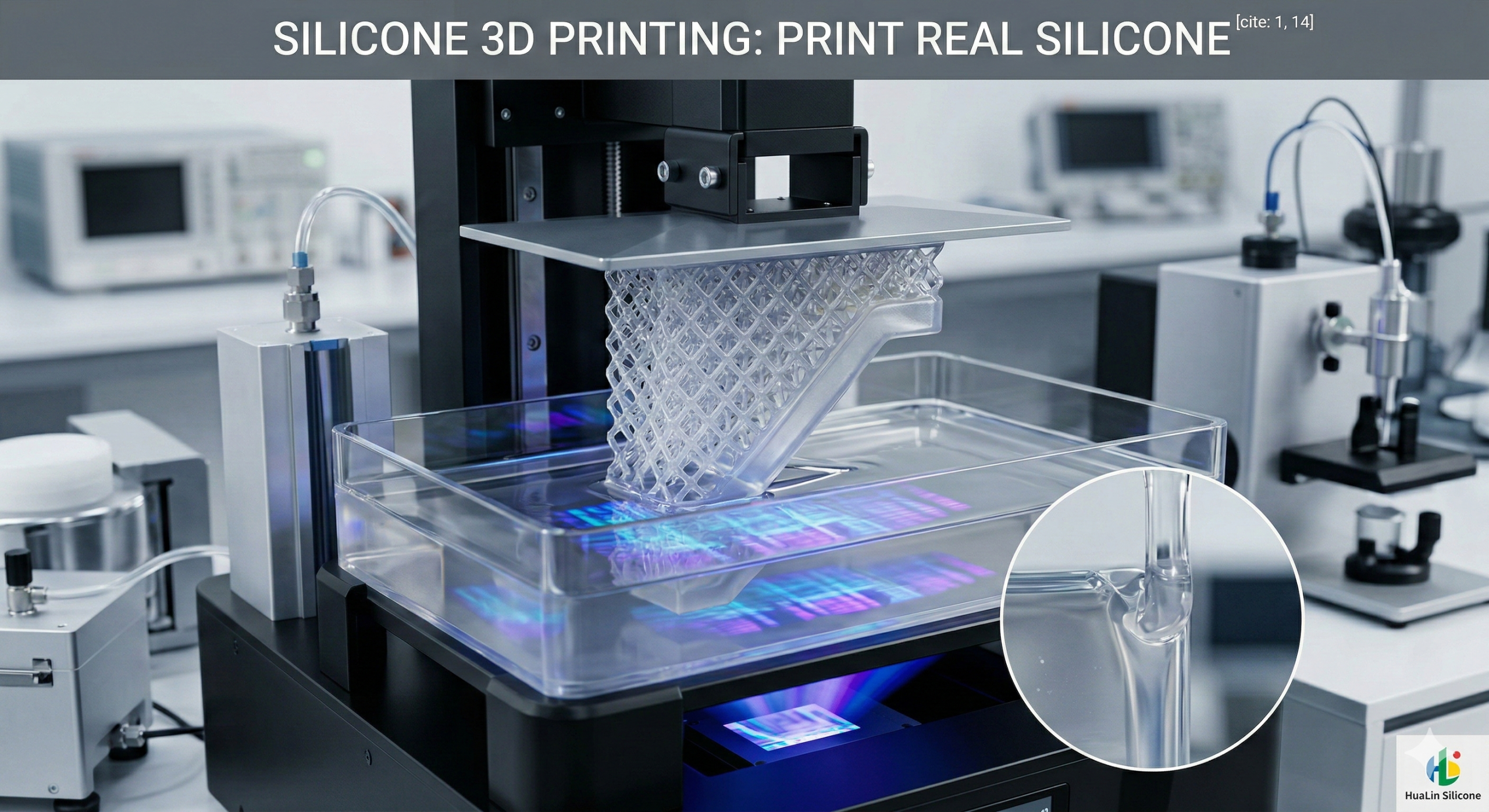
Yes, you can 3D print real silicone using advanced industrial systems that handle high-viscosity materials through specialized curing processes. For engineers, the “silicone bottleneck” has long meant waiting weeks for expensive injection molding tools just to test a single functional seal. Relying on can 3d printers print silicone becomes the ultimate solution to bypass these delays and move directly from CAD to performance-grade hardware.
1. Can 3d printers print silicone accurately?
Yes, professional-grade 3D printers can print silicone with high accuracy by utilizing closed-loop systems that manage high material viscosity. The precision of can 3d printers print silicone depends on light-based curing engines that solidify liquid silicone layer by layer with micron-level control.
The challenge of material viscosity
Real silicone is naturally thick, making it difficult for standard nozzles to extrude without specialized pressure controls.
- High-resolution optics are required for smooth finishes.
- Precise flow management prevents sagging during the build.
- Closed-loop feedback ensures dimensional stability.
Maintaining dimensional precision
Unlike hobbyist machines, industrial units use Digital Light Processing (DLP) to ensure every cross-section matches the digital original. This is vital when the success of your project depends on a perfect mechanical fit.
| Feature | Accuracy Requirement |
|---|---|
| Layer Thickness | High resolution for smooth finishes |
| Flow Control | Precise management of viscous liquids |
| Tolerances | Essential for sealing applications |
Key Takeaway: Specialized industrial hardware enables the production of functional silicone parts that meet the tight tolerances of professional engineering.
2. What makes real silicone different from mimics?
Real silicone features a unique silicon-oxygen backbone that provides permanent flexibility, whereas mimics often rely on carbon chemistry. While many ask can 3d printers print silicone, it is important to distinguish between “silicone-like” photopolymers and true 100% silicone materials.
True chemical backbone vs. polymers
Real silicone maintains its properties because it does not contain the volatile plasticizers found in many flexible 3D resins.
- Genuine silicone resists aging and embrittlement.
- Long-term stability is measured in years, not months.
- Resilience remains high after thousands of compression cycles.
Mechanical properties of real silicone
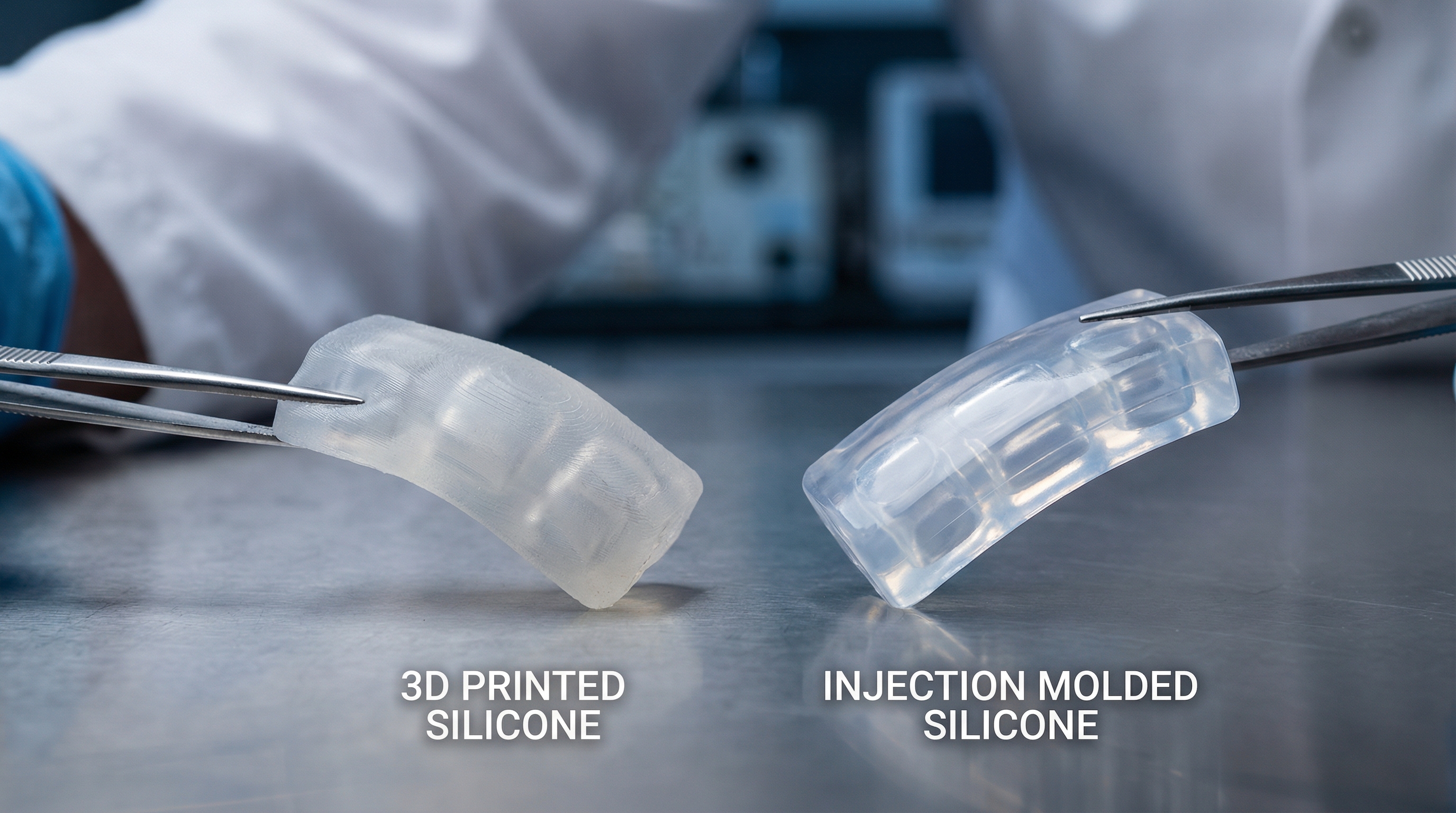
True silicone exhibits excellent elastic recovery and tear strength. If you are looking for a part that returns to its original shape every time, can 3d printers print silicone with real material is the only viable path.
| Property | Real Silicone | Silicone-Like Mimics |
|---|---|---|
| Elastic Recovery | High / Permanent | Low / Temporary |
| Tear Strength | Excellent | Moderate to Poor |
| Long-term Stability | High (Years) | Low (Degrades over time) |
Key Takeaway: Real silicone offers unmatched durability and recovery compared to resin-based alternatives, ensuring parts perform identically to molded stocks.
3. How does liquid silicone printing work?
Liquid silicone printing works through a process called vat photopolymerization where high-intensity light solidifies liquid material. By understanding how can 3d printers print silicone, engineers can design complex geometries like internal lattices that are impossible to create with traditional molding.
The role of vat photopolymerization
In this setup, a digital light projector cures a thin film of silicone at the bottom of a transparent vat.
- Light triggers a chemical reaction that links silicone molecules.
- Successive layers build up to create a 3D object.
- It’s as fast as it is precise.
Managing the curing process
Consistency is achieved through rigorous control of the ultraviolet spectrum and mechanical build platform movement. This level of control is why can 3d printers print silicone has become a staple in modern additive manufacturing.
- Build platform positioning
- Light exposure synchronization
- Final post-cure procedures
| Process Step | Function |
|---|---|
| Light Exposure | Solidifies the liquid silicone |
| Build Platform Move | Positions the part for the next layer |
| Final Post-Cure | Ensures complete mechanical properties |
Key Takeaway: Advanced light-based curing enables “true” silicone production without the design constraints typical of injection molding.
4. Why is thermal stability so important?
Thermal stability is critical because real silicone must operate in environments ranging from -60°C to over 200°C. While many wonder can 3d printers print silicone for extreme conditions, true silicone is one of the few elastomers that handles such thermal swings without failure.
Performance in extreme temperatures
Automotive and aerospace applications demand materials that won’t crack in the cold or melt under the hood.
- High-temp resistance protects sensitive electronics.
- Cryogenic flexibility prevents seals from shattering.
- Consistent performance across a 260-degree range.
Resistance to thermal cycling
The ability to survive repeated heating and cooling is a hallmark of the silicone-oxygen chemical structure. This makes can 3d printers print silicone a preferred choice for gaskets in high-performance engines.
| Temperature Range | Performance Impact |
|---|---|
| -60°C to 0°C | Remains flexible without becoming brittle |
| 100°C to 200°C | Maintains tensile strength and elasticity |
| Thermal Cycling | Resists fatigue and dimensional change |
Key Takeaway: 3D printed real silicone allows components to function in harsh thermal environments where standard plastics would quickly degrade.
5. Can printed parts handle harsh chemicals?
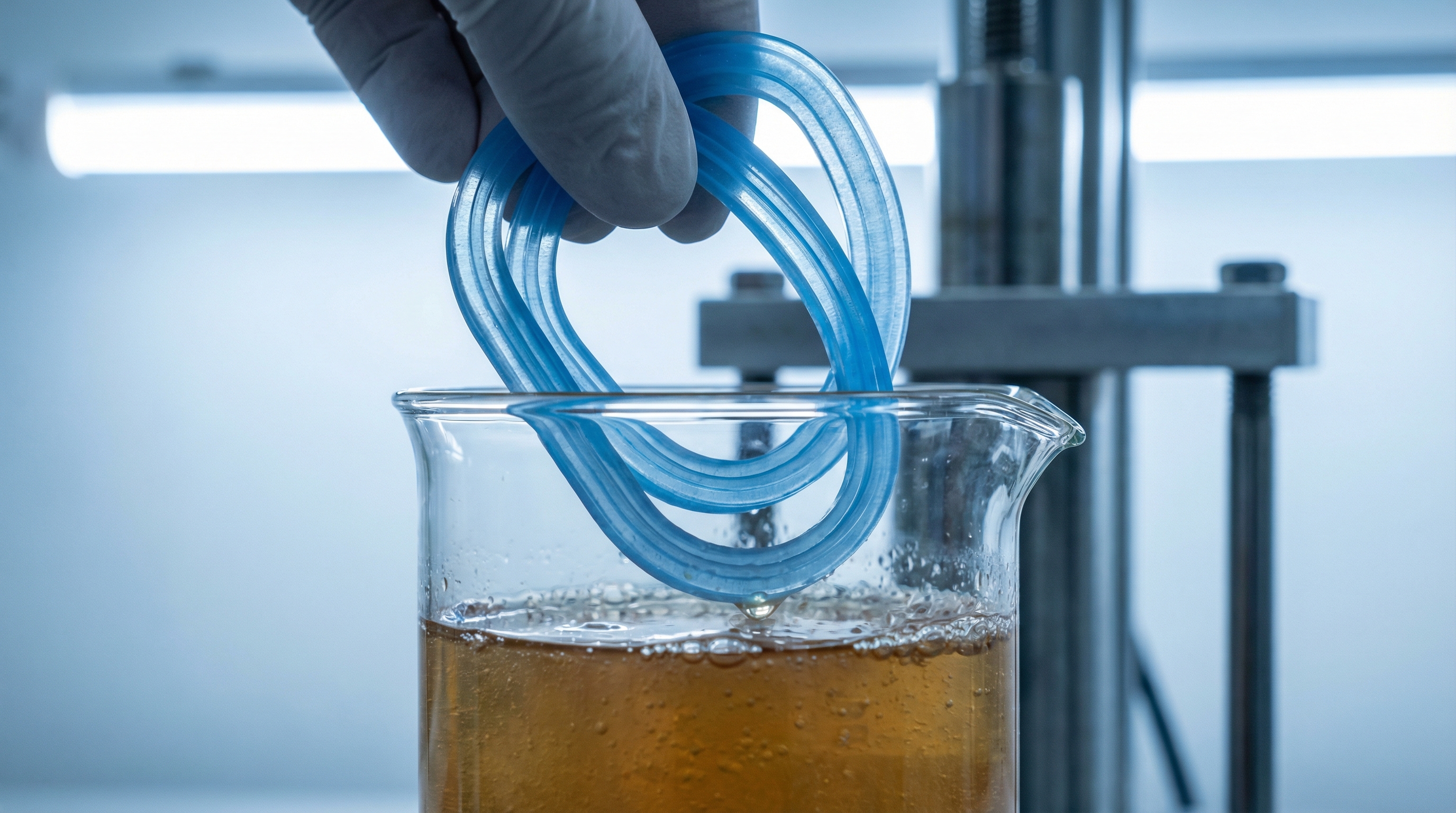
Yes, 3D printed real silicone parts can handle harsh chemicals including industrial oils, solvents, and environmental stressors. When asking can 3d printers print silicone, reliability in chemically aggressive zones is often the top requirement for engineers in the oil and gas sectors.
Resistance to oils and solvents
Real silicone is naturally inert, meaning it doesn’t react with most fuels or hydraulic fluids.
- Excellent resistance to brake fluids and oils.
- Low swelling when exposed to common solvents.
- Ideal for protective covers in machinery.
Long-term environmental durability
Outdoor hardware must resist UV radiation, ozone, and humidity to prevent failure. This is where can 3d printers print silicone shines compared to traditional elastomers that dry out and crack in the sun.
| Chemical Type | Resistance Level |
|---|---|
| Industrial Oils | Excellent |
| UV / Ozone | Exceptional |
| Moisture / Humidity | High |
Key Takeaway: Chemically resistant 3D printed silicone provides a robust solution for field-ready components in the automotive and energy industries.
6. Is 3D printing better than molding?
3D printing is significantly better than molding for low-volume production and prototyping because it eliminates the need for expensive tools. Asking can 3d printers print silicone helps many businesses skip an upfront investment of thousands of dollars in metal molds.
Eliminating expensive tooling costs
Building a mold for a single design iteration is a massive waste of resources when you can print on demand.
- Zero tooling costs for initial validation.
- Low barrier to entry for small startups.
- High ROI on complex, low-volume designs.
Accelerating development timelines
If you need a functional part by tomorrow, can 3d printers print silicone is the only way to meet that deadline. Instead of waiting eight weeks for a tool, you can have a part in eight hours.
| Factor | 3D Printing | Injection Molding |
|---|---|---|
| Upfront Cost | Low (Zero tooling) | High (Tooling required) |
| Lead Time | 1–3 Days | 4–8 Weeks |
| Design Flexibility | Infinite | Limited by mold draft |
Key Takeaway: Additive manufacturing is the superior choice for silicone prototyping and low-volume production where speed is a competitive necessity.
7. Which industries benefit from silicone prints?
Industries such as aerospace, automotive, and electronics benefit most from silicone prints because they require high-performance elastomers. When exploring can 3d printers print silicone, companies find they can produce customized vibration dampeners and complex gaskets with zero lead time.
Automotive and aerospace solutions
These sectors use silicone for heat shielding and acoustic dampening in tight assemblies.
- Customized ducts for air management.
- Lightweight, functional seals.
- On-demand spare parts for vintage or low-run vehicles.
Consumer wearables and electronics
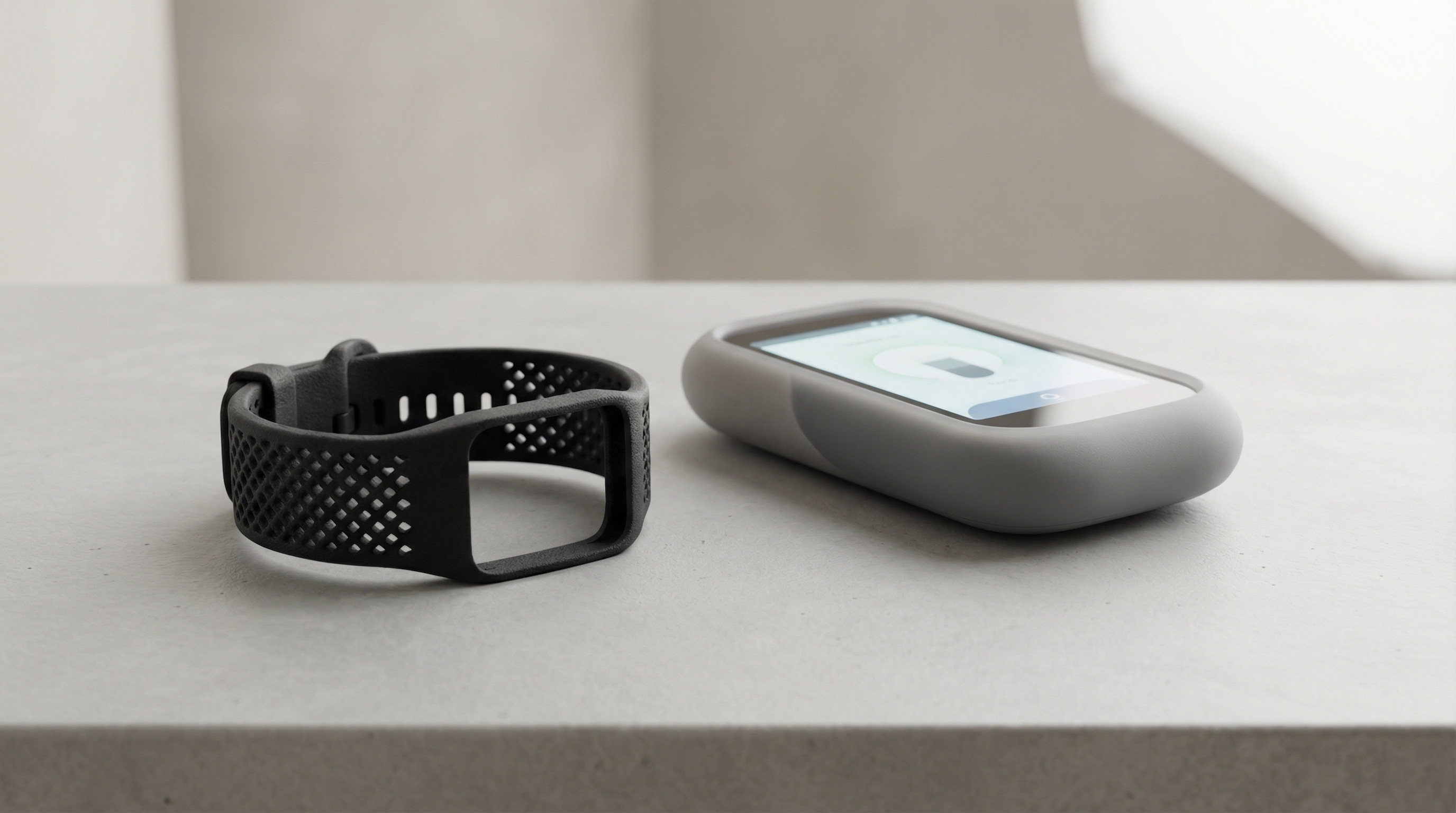
The “soft-touch” feel of silicone is a major selling point for smartwatches and premium audio gear. By using can 3d printers print silicone, designers can test ergonomic fits on actual users before finalizing mass production.
- Smartwatch straps and fitness trackers
- Noise-isolating ear tips for headphones
- Protective sleeves for handheld devices
| Industry | Primary Use Case |
|---|---|
| Automotive | Gaskets, dampeners, and wire protection |
| Electronics | Protective sleeves and ergonomic grips |
| Industrial | Custom seals and vibration isolators |
Key Takeaway: Silicone 3D printing is transforming supply chains by allowing for the on-demand production of high-performance parts across diverse industries.
8. Can silicone prints be biocompatible?
Yes, silicone prints can be biocompatible, making them safe for prolonged skin contact in medical and wearable applications. As you investigate can 3d printers print silicone, the ability to meet medical grade requirements opens new possibilities for patient-specific healthcare.
Safe skin contact for wearables
Real silicone is chemically inert, meaning it won’t cause the irritation often associated with cheaper plastics.
- Hypoallergenic properties for sensitive users.
- Sweat and moisture resistance for athletic gear.
- High comfort levels for all-day wear.
Requirements for medical applications
Medical professionals use can 3d printers print silicone to create anatomical models and soft interfaces for prosthetic devices.
| Requirement | Standard |
|---|---|
| Skin Contact | Non-irritating and hypoallergenic |
| Sterilization | Compatible with autoclave and chemicals |
| Material Purity | Free from toxic additives or fillers |
Key Takeaway: Biocompatible silicone 3D printing enables the creation of personalized medical devices that prioritized both safety and user comfort.
9. How are printing challenges overcome?
Printing challenges are overcome through sophisticated software controls and strict post-processing protocols like humidity-controlled curing. Even though can 3d printers print silicone is technically demanding, modern industrial systems have solved the problem of material “slumping.”
Controlling material flow behavior
The liquid nature of the material requires the printer to cure each layer rapidly before it has a chance to spread.
- Precise light timing during the build.
- Specialized tank coatings to prevent sticking.
- Advanced movement algorithms for delicate parts.
Optimizing post-processing steps
Final Shore hardness is achieved only after the part undergoes a thermal cure. This is the last hurdle in the lifecycle of can 3d printers print silicone to ensure the part doesn’t remain tacky.
- Wash cycles to remove excess liquid
- High-temperature oven curing
- Controlled humidity stabilization
| Challenge | Technical Solution |
|---|---|
| Sagging | Precise light and motion synchronization |
| Surface Finish | High-resolution DLP optics |
| Full Strength | Humidity-controlled oven curing |
Key Takeaway: Mastering silicone printing requires a balance between advanced hardware control and rigorous post-production curing.
10. Is low volume production cost-effective?
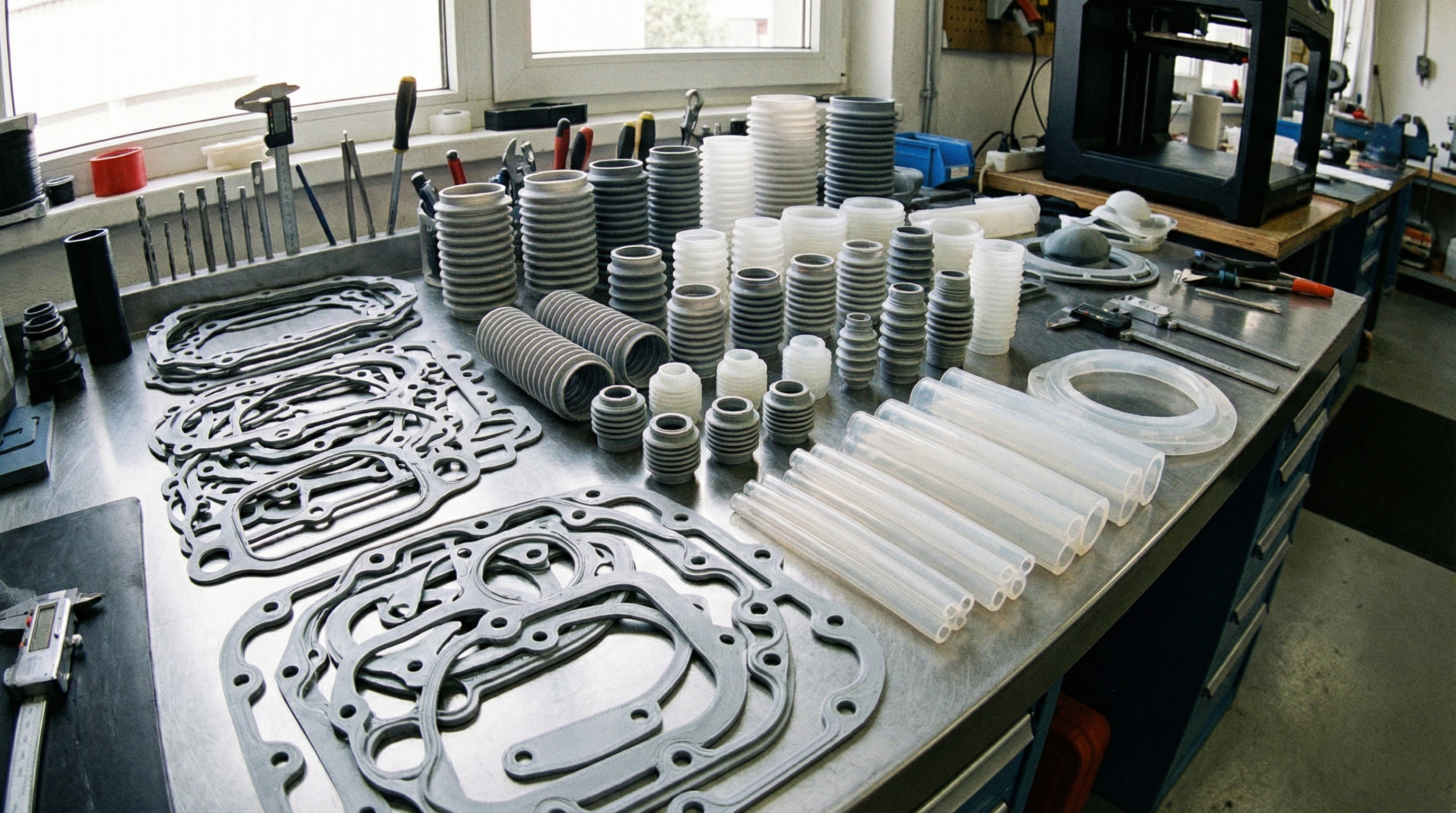
Yes, low volume production is highly cost-effective because it bridges the gap between prototyping and mass manufacturing without capital risk. In the world of can 3d printers print silicone, you can profitably produce batches of 1 to 100 units that would be cost-prohibitive via molding.
Bridging the gap to mass production
Many companies use 3D printing to fulfill early market orders while they wait for high-volume tools to be machined.
- Test the market with real products.
- Iterate based on early customer feedback.
- Maintain production flow without downtime.
Customized part efficiency
For things like hearing aids or specialized baby care items, every single part needs to be different. Can 3d printers print silicone is the only way to achieve this level of customization at a reasonable price point.
| Production Volume | Preferred Method |
|---|---|
| 1–100 Parts | 3D Printing (Most economical) |
| 100–1,000 Parts | 3D Printing or Low-run tooling |
| 10,000+ Parts | High-volume Injection Molding |
Key Takeaway: Silicone 3D printing eliminates financial risk for small production runs, making mass customization a reality for engineers worldwide.
FAQ
Can I 3D print silicone on a standard home machine?
No, standard FDM or hobbyist resin printers lack the light intensity and viscosity management systems required to cure real silicone effectively.
How do I know if my design is suitable for silicone printing?
You should determine if your part requires specific elastomeric traits like high thermal resistance or biocompatibility, as these are the primary strengths of real silicone.
Can I achieve different hardness levels with 3D prints?
Yes, while most systems target a specific Shore A hardness, you can influence the final feel through specialized material blends and post-processing adjustments.
Is 3D printed silicone as strong as molded silicone?
Yes, because the technology uses real silicone chemistry with a silicon-oxygen backbone, the mechanical strength and durability match traditional parts.
Can I get parts made quickly through a service provider?
Yes, specialized factories like HuaLin Silicone can provide rapid prototypes and low-volume production runs using advanced silicone technologies.
Conclusion
This article has explored the technical breakthroughs that make real silicone 3D printing possible, solving the problems of high tooling costs and slow development cycles. We have analyzed how real silicone differs from resin mimics and provided a roadmap for industries looking to leverage this technology for high-performance, functional parts.
At HuaLin Silicone, we simplify the path from digital design to physical reality. With 15+ years of expertise and a focus on precision LSR and silicone manufacturing, we can help you navigate the complexities of material selection and production at any scale. Our vision is to lead the industry through technical excellence, ensuring your mission-critical components never fail in the field. To start your next project with a team of experts, contact us today.