
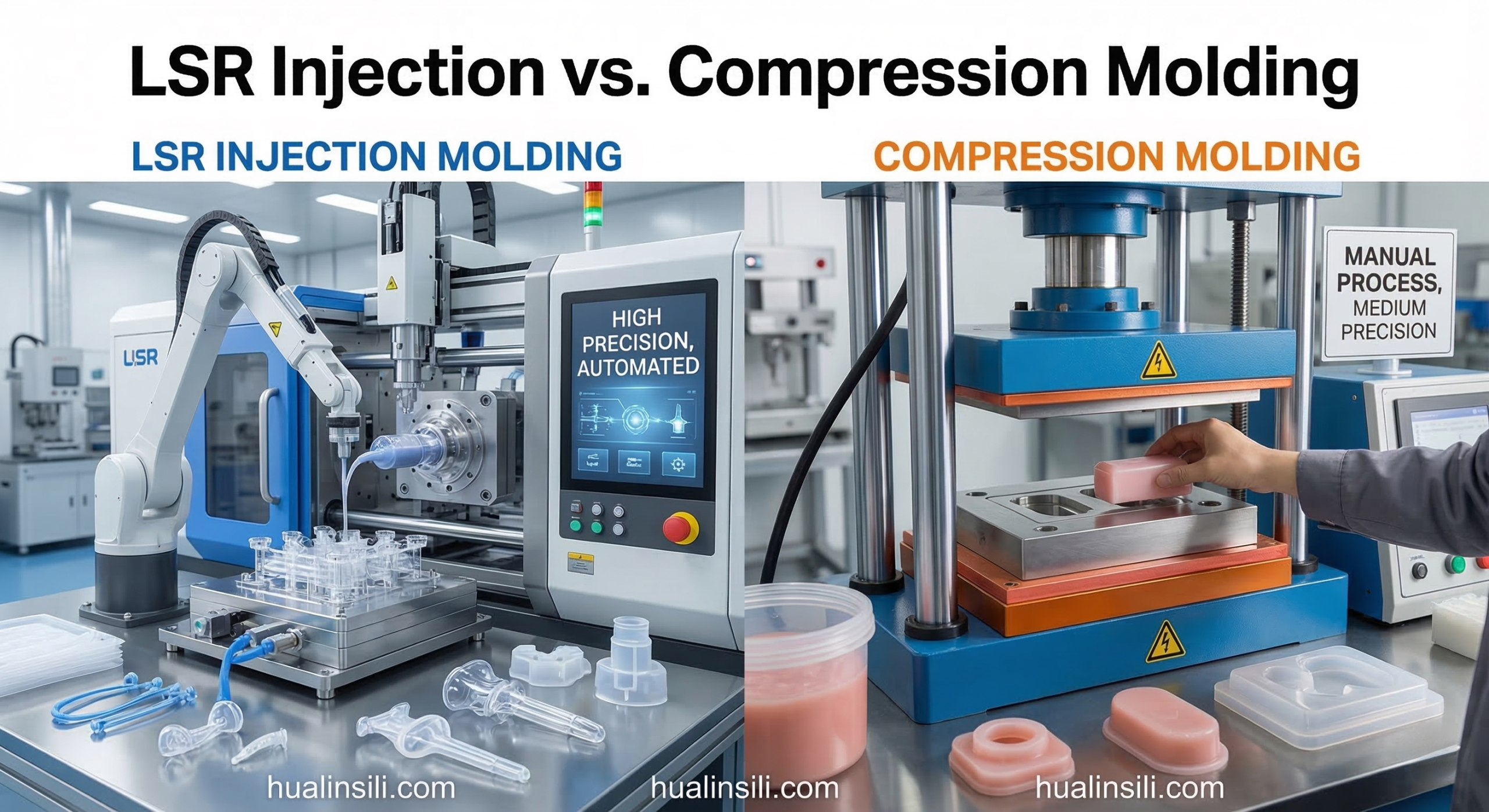
You should choose injection molding when your project requires high precision, rapid cycle times, and automated high-volume production that compression molding cannot efficiently match. Many engineers struggle with inconsistent part dimensions and high scrap rates when using traditional, manual molding methods for complex designs. These quality drifts lead to assembly failures and delayed product launches, which eventually erode your profit margins and market reputation. By upgrading to advanced manufacturing, you can clearly identify what is the difference between LSR injection molding and compression molding? to ensure your components meet the highest industrial standards.
Why choose injection molding over compression molding?
Injection molding is the superior choice for silicone when your application demands extreme dimensional accuracy and a flash-free finish. Understanding what is the difference between LSR injection molding and compression molding? helps engineers determine which process fits their specific tolerance requirements. This method utilizes closed-loop control to ensure every shot is identical to the last.
Is precision the main driver?
Precision is indeed the primary factor because the automated injection of liquid silicone allows for microscopic detail that manual placement cannot achieve. Here is the kicker: even a 0.1mm variance can ruin a waterproof seal in high-end electronics.
- Tighter tolerances (down to +/- 0.05mm)
- Flashless tool design capabilities
- Minimal human intervention
- Automated material dosing
Key Takeaway: Precision-driven projects must prioritize injection molding to avoid the high rejection rates common in manual compression setups.
| Feature | Injection Molding | Compression Molding |
|---|---|---|
| Tolerance | High (+/- 0.05mm) | Medium (+/- 0.2mm) |
| Consistency | Excellent | Variable |
Choosing injection molding ensures that your most critical dimensions are maintained across millions of units.
What is the difference between LSR injection molding and compression?
The primary difference lies in the material state and the level of automation involved in the delivery system. Understanding what is the difference between LSR injection molding and compression molding? reveals that LSR uses a pump-driven liquid system while compression relies on manual pre-forms. This fundamental shift in material handling dictates the speed and quality of the final product.

Are material properties different?
While both use silicone, Liquid Silicone Rubber (LSR) is a high-purity, platinum-cured material that offers better clarity and biocompatibility than standard gum-based silicone. Think about it. If your part needs to be transparent or medical-grade, the raw material choice often forces you toward injection molding.
Key Takeaway: Material purity and curing methods are vastly superior in LSR injection processes compared to traditional gum silicone.
| Property | Liquid Silicone (LSR) | Gum Base Silicone (HCR) |
|---|---|---|
| Cure System | Platinum (Fast/Clean) | Peroxide or Platinum |
| Purity | High | Standard |
The clean nature of LSR makes it the default choice for sensitive industries like healthcare and infant care.
When is high-volume production a deciding factor?
High-volume production becomes a deciding factor when the need for millions of parts makes manual labor in compression molding prohibitively expensive. Evaluating what is the difference between LSR injection molding and compression molding? shows that injection machines can run 24/7 with minimal oversight. This scalability is essential for maintaining a competitive price point in global markets.
Are cycle times significantly faster?
Yes, cycle times in injection molding are often 30% to 50% faster because the material is injected into a pre-heated mold and cures almost instantly. You might be wondering: does this speed sacrifice quality? Absolutely not, as the high-pressure injection ensures the mold cavity is filled perfectly every time.
- Rapid mold heating and cooling
- Automatic part ejection systems
- Multi-cavity tool optimization
- Reduced secondary de-flashing time
Key Takeaway: Speed and automation allow injection molding to deliver lower per-part costs at scale despite higher initial tooling investments.
| Metric | Injection Molding | Compression Molding |
|---|---|---|
| Cycle Time | 30 – 90 seconds | 3 – 10 minutes |
| Labor Level | Low (Automated) | High (Manual) |
Optimizing for volume requires a shift toward processes that maximize machine uptime and minimize human error.
Why do medical devices require injection molding?
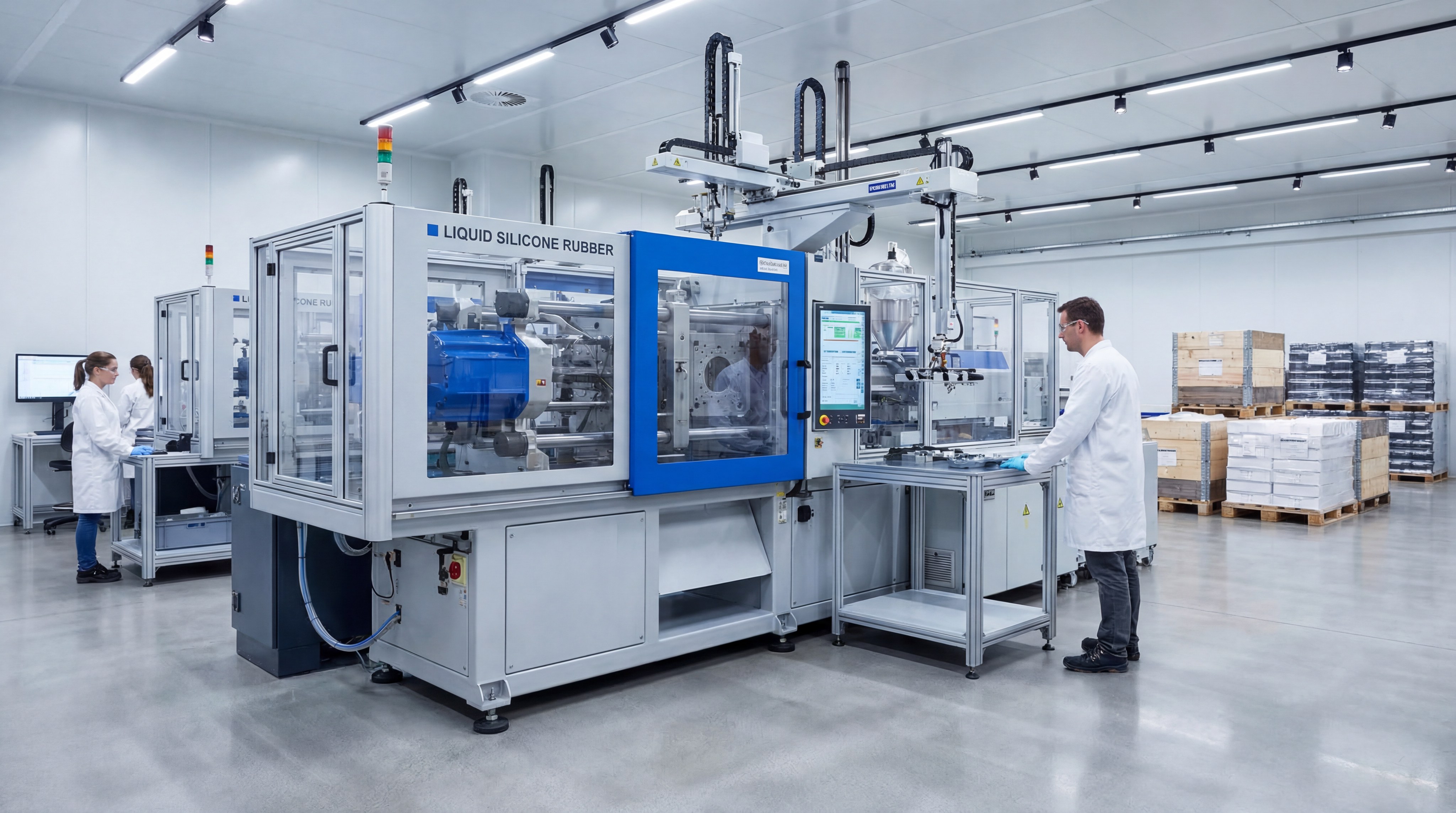
Medical devices require injection molding because the process can be conducted in ISO-certified cleanrooms to prevent contamination. When considering what is the difference between LSR injection molding and compression molding?, the closed system of LSR injection prevents ambient dust from entering the material stream. This is non-negotiable for biocompatible implants or surgical tools.
Is cleanliness a priority?
Cleanliness is the highest priority in medical manufacturing to ensure patient safety and regulatory compliance. The bottom line? Manual handling of silicone pre-forms in compression molding introduces too many variables for strict medical standards.
Key Takeaway: The closed-loop, automated nature of injection molding is the only way to guarantee the sterility required for medical-grade parts.
| Factor | Injection Molding | Compression Molding |
|---|---|---|
| Contamination Risk | Very Low | Moderate to High |
| Cleanroom Suitability | Excellent | Limited |
Strict adherence to quality assurance systems ensures that every medical component is safe for its intended use.
Which method offers better part consistency?
Injection molding offers significantly better part consistency because it eliminates the variability inherent in manual material weighing and placement. Knowing what is the difference between LSR injection molding and compression molding? allows manufacturers to implement statistical process controls that are impossible with manual molding. Every gram of material is precisely measured by the machine’s computer.
Is flash a common issue in compression?
Flash is a very common issue in compression molding because excess material is squeezed out of the parting line during the pressing stage. Here is the kicker: removing that flash manually adds cost and can leave jagged edges on your finished part.
- Precision-milled parting lines
- Vacuum-assisted air removal
- Controlled injection pressure
- Uniform heat distribution
Key Takeaway: Consistency is built into the injection process, whereas it must be managed through intense labor in compression molding.
| Consistency Metric | Injection Molding | Compression Molding |
|---|---|---|
| Weight Variance | < 1% | 3% – 5% |
| Parting Line Quality | Clean / Flashless | Requires Trimming |
Consistency reduces the risk of batch rejections and ensures your assembly line runs without interruption.
What are the cost implications of each process?
The cost implications vary based on volume, as injection molding has higher upfront tooling costs but much lower labor costs per unit. When analyzing what is the difference between LSR injection molding and compression molding?, the total cost of ownership favors injection for any project exceeding a few thousand units. Lower scrap rates also contribute to overall project savings.
Is tooling investment higher for injection?
Tooling is significantly more expensive for injection molding because the molds must withstand high pressures and include complex runner systems. But wait, there’s more. The durability of these steel molds means they can produce millions of parts before needing refurbishment.
Key Takeaway: While injection molding requires more capital upfront, it is the most cost-effective path for long-term production.
| Cost Component | Injection Molding | Compression Molding |
|---|---|---|
| Tooling Cost | High | Low to Medium |
| Unit Labor Cost | Very Low | High |
An experienced manufacturing partner will help you perform a break-even analysis to choose the right financial path.
Does part geometry dictate the molding technique?
Part geometry is a major deciding factor, as injection molding can handle complex internal structures and thin walls that would fail in a compression mold. Understanding what is the difference between LSR injection molding and compression molding? shows that liquid silicone flows more like water, filling intricate cavities effortlessly. Compression molding struggle with “dead spots” where the material cannot reach.
Can thin walls be molded with compression?
Thin walls are extremely difficult to mold with compression because the high viscosity of the gum material can’t flow into narrow gaps without tearing or air entrapment. Think about it. If your design features walls under 0.5mm, injection molding is likely your only viable option.
Key Takeaway: Complex, multi-featured, or thin-walled designs almost always necessitate the use of LSR injection molding.
| Design Feature | Injection Molding | Compression Molding |
|---|---|---|
| Minimum Wall Thickness | 0.2mm – 0.3mm | 0.8mm – 1.0mm |
| Internal Undercuts | Manageable | Difficult |
Leveraging advanced flow simulation helps ensure that even the most complex geometries are filled perfectly during the injection cycle.
How does material waste compare between methods?
Material waste is significantly lower in injection molding, particularly when using cold runner systems that prevent silicone from curing in the delivery channels. When you ask what is the difference between LSR injection molding and compression molding?, the answer often comes down to the “scrap rate” on your invoice. Sustainable manufacturing is becoming a priority for global brands.
Does cold runner technology save money?
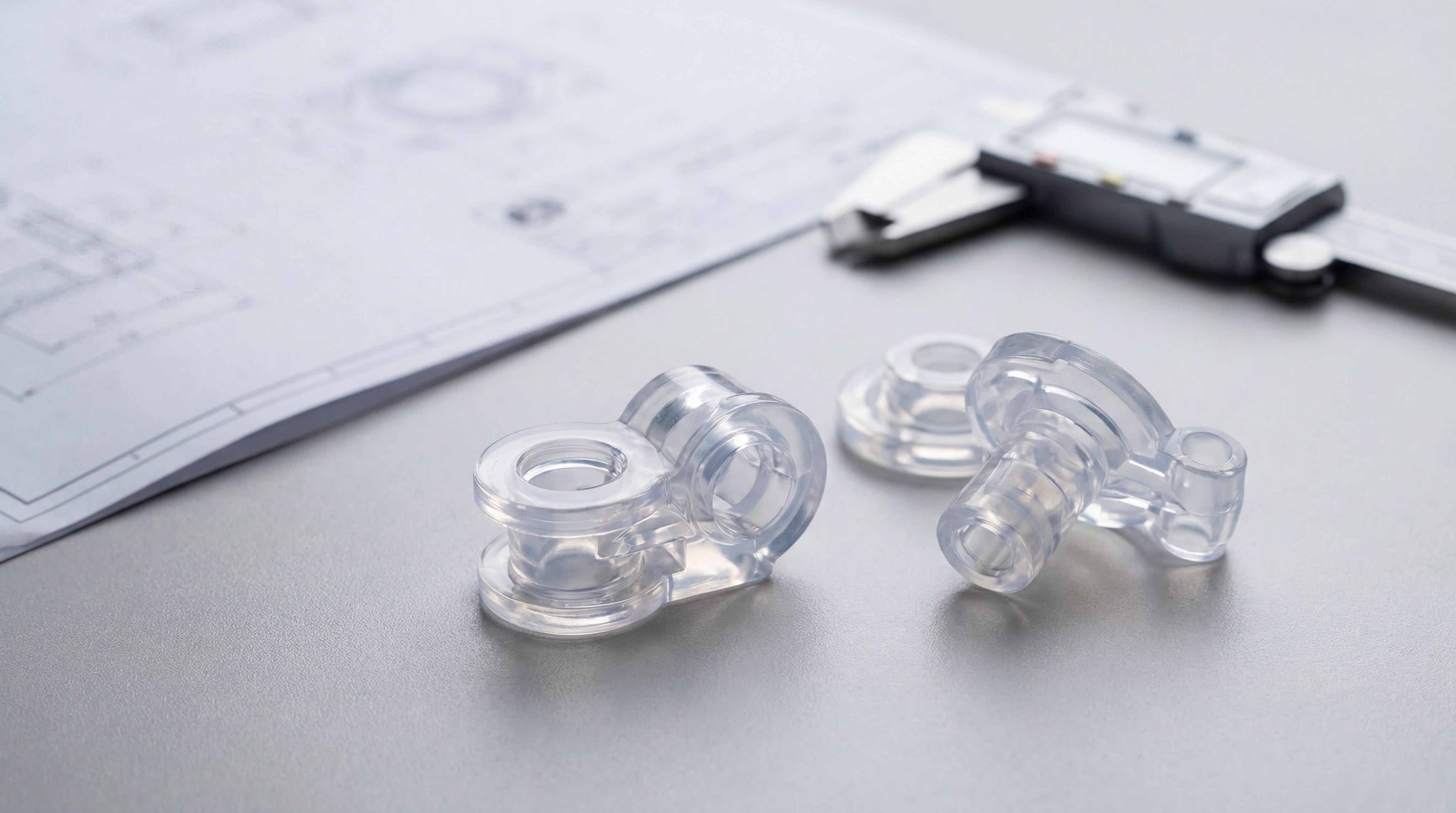
Cold runner technology saves substantial money by keeping the silicone liquid until it enters the heated cavity, eliminating the “sprue” waste typical of older systems. The bottom line? For expensive materials like fluorosilicone, these savings can be the difference between a profitable project and a loss.
- Reduced raw material consumption
- Faster post-processing (no sprue removal)
- Lower environmental footprint
- Higher material utilization rates
Key Takeaway: Injection molding with cold runners is the most environmentally and financially efficient way to process high-cost silicone materials.
| Waste Metric | Cold Runner Injection | Traditional Compression |
|---|---|---|
| Material Yield | 95% – 98% | 75% – 85% |
| Post-Processing | Minimal | Intensive |
Reducing waste not only lowers your costs but also aligns your production with modern environmental standards.
Is overmolding easier with injection processes?
Overmolding is far more reliable with injection processes because the pressure and temperature can be precisely controlled to ensure a perfect bond between the silicone and a substrate. Evaluating what is the difference between LSR injection molding and compression molding? highlights that injection allows for “two-shot” molding, where two materials are bonded in the same machine cycle.
Can you bond silicone to metal inserts?
Yes, bonding silicone to metal or plastic inserts is a standard capability of injection molding, creating rugged, multi-component parts with superior structural integrity. Here is the kicker: trying to hold a tiny metal insert in place during a manual compression cycle is a recipe for high defect rates.
Key Takeaway: For hybrid parts that combine silicone with other materials, injection overmolding is the industry gold standard for durability.
| Overmolding Feature | Injection Method | Compression Method |
|---|---|---|
| Bonding Strength | High / Chemical | Medium / Mechanical |
| Insert Positioning | Robotic / Precise | Manual / Variable |
Precision overmolding eliminates the need for messy adhesives and secondary assembly steps in your production line.
How do you choose the right partner for your project?
Choosing the right partner requires verifying their in-house tooling capabilities and their experience with both LSR and compression processes to provide an unbiased recommendation. When you understand what is the difference between LSR injection molding and compression molding?, you can ask deeper questions about their inspection protocols and certification levels.

Should you look for ISO certifications?
You should absolutely look for ISO 9001 or IATF 16949 certifications, as these guarantee the manufacturer follows a repeatable, documented quality management system. Think about it. Would you trust your critical project to a facility that doesn’t track its own material batches or tool maintenance?
Key Takeaway: The best manufacturing partners offer full-service support from DFM reports to final export logistics under a single roof.
| Partner Criteria | Must Have | Nice to Have |
|---|---|---|
| Quality Control | 100% Inspection | Automated CCD |
| Engineering | In-house DFM | Prototyping |
A partner that controls the entire workflow—from material compounding to final shipment—minimizes your supply chain risks.
Choosing between LSR injection molding and compression molding is a strategic decision that impacts your product’s performance, cost, and time-to-market. While compression molding serves its purpose for low-volume, simple gaskets, the future of high-performance silicone components lies in the precision and automation of injection technology. By selecting the right process and a dedicated manufacturing partner, you ensure that your silicone parts meet the rigorous demands of modern industry. If you are ready to optimize your silicone production or need expert guidance on your next design, contact us today for a comprehensive DFM review.
FAQ
Can I use the same mold for both injection and compression molding?
No. Injection molds require specialized gates, runners, and high-pressure seals that are not present in compression tools, meaning you must design the mold for the specific process from the start.
What’s the best way to reduce my initial tooling cost?
The best way is to simplify your part geometry and work with an engineering team during the DFM phase to optimize cavity counts and runner systems without compromising quality.
How do I know if my part is too complex for compression molding?
You can usually tell if your part features wall thicknesses below 0.8mm, internal undercuts, or multiple critical-to-quality dimensions that require sub-0.1mm tolerances.
Can I achieve food-grade certification with both methods?
Yes, both methods can use food-grade silicone, but injection molding is often preferred for kitchenware because it produces a smoother, more hygienic surface finish with no flash.
How do I know if I should switch from compression to injection?
You should consider switching if your monthly volume exceeds 2,000 units or if your current scrap rates and secondary labor costs are making the project unprofitable.