
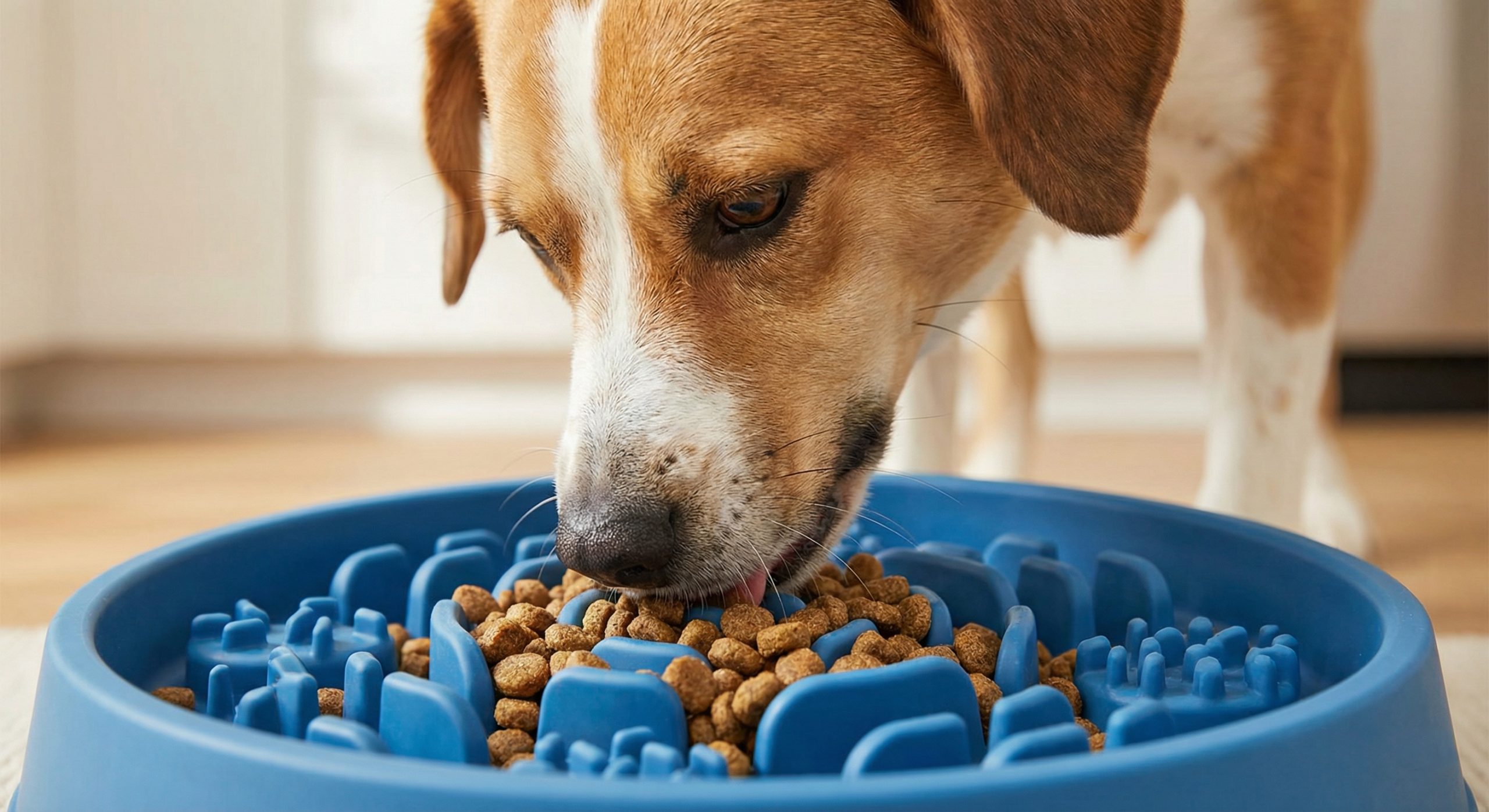
Food-grade silicone is the premier material for a slow dog feeder because it offers a unique combination of non-toxic safety, dishwasher-safe hygiene, and the flexible durability required for complex maze designs. You likely face the challenge of pet owners dealing with “scarf and barf” syndrome, where rapid ingestion leads to digestive distress or dangerous bloating. Relying on rigid plastic or fragile ceramic only increases the risk of bacterial growth or physical injury from sharp shards. To provide a truly safe and effective solution, sourcing from a professional Pet Product Manufacturer allows you to deliver high-quality, BPA-free feeders that protect canine health while standing up to daily use.
Why Is Silicone Superior to Other Materials?
Silicone outperforms other materials because it is chemically inert, resistant to extreme temperatures, and virtually unbreakable. When you partner with a Pet Product Manufacturer, you ensure your products are made from LFGB or FDA-compliant silicone that won’t leach toxins into a pet’s food.
Is Silicone Safe for Daily Feeding?
Safety should always be your number one priority when selecting pet hardware. Food-grade silicone is hypoallergenic and lacks the harsh phthalates or bisphenols often found in low-cost plastic alternatives.
Think about it:
If the material is trusted for infant pacifiers, it is more than safe enough for a dog’s daily meal.
- Free from BPA, PVC, and lead.
- Non-porous surface resists mold.
- Hypoallergenic properties prevent chin acne.
How Does Flexibility Prevent Damage?
Unlike rigid materials that shatter upon impact, silicone’s rubbery nature allows it to absorb shocks and return to its original shape. This makes it an ideal choice for high-energy dogs that may paw at or flip their feeders.
Here is the kicker:
A flexible feeder eliminates the risk of sharp edges that could cut a dog’s tongue.
- Shatter-proof even when dropped on tile.
- Resistant to cracking over time.
- Maintainable in both freezers and dishwashers.
| Material Property | Silicone Performance | Competitive Advantage |
|---|---|---|
| Toxicity | Zero (Food Grade) | Highest safety rating |
| Durability | High (Flexible) | No breakage returns |
| Temperature | -60°C to 230°C | Multi-use versatility |
Silicone’s resilience ensures that the product remains functional and safe throughout the dog’s entire life cycle.
Key Takeaway
Choosing silicone provides your customers with peace of mind through a material that is both chemically safe and physically indestructible.
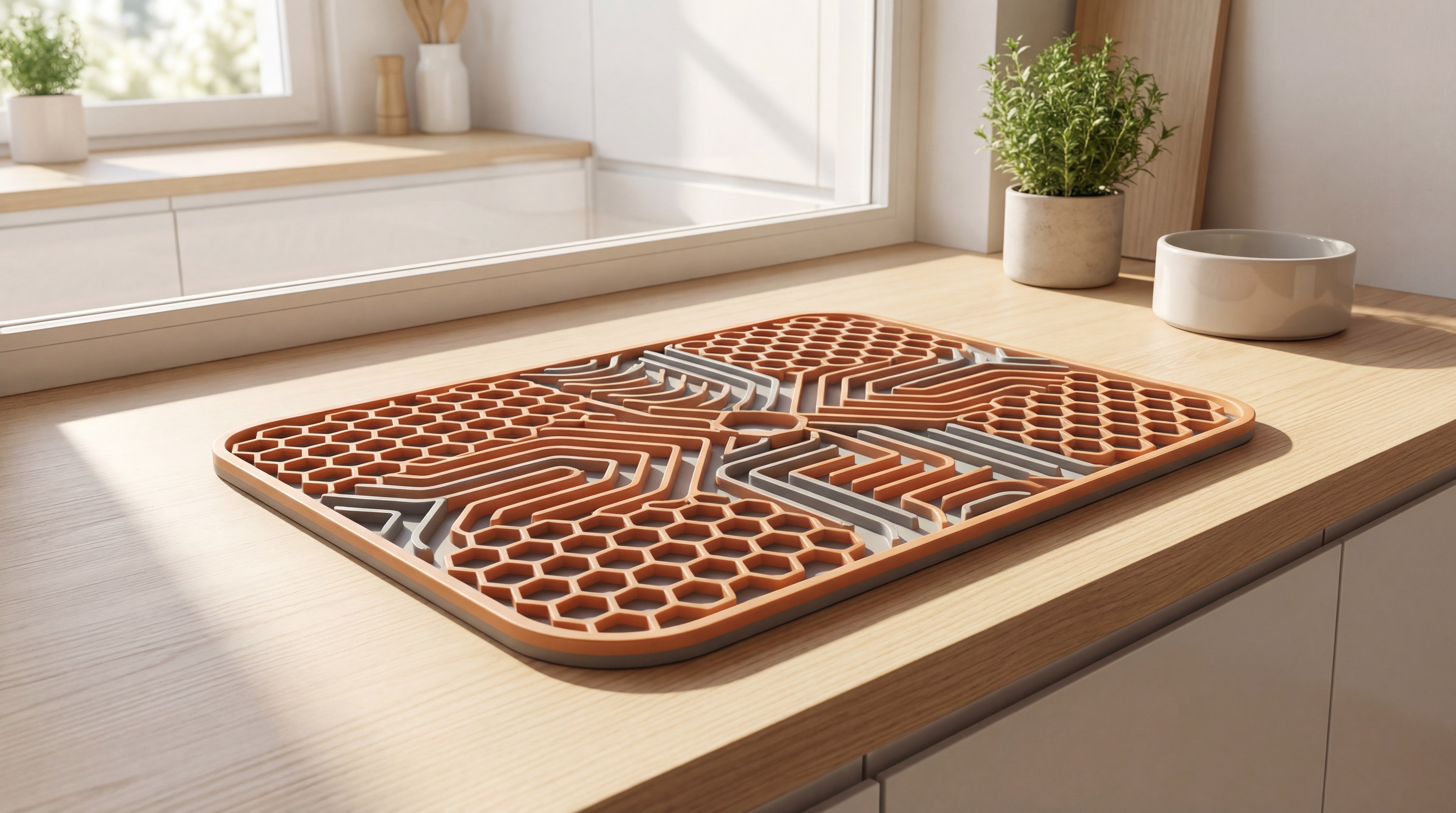
What Are the Health Risks of Plastic Feeders?
Plastic slow feeders pose significant health risks due to their high porosity and tendency to harbor dangerous bacteria in microscopic scratches. Any reputable Pet Product Manufacturer will caution you that while plastic is inexpensive to produce, its long-term degradation can lead to chronic skin conditions for pets.
Why Does Plastic Surface Degradation Matter?
Over time, forks, spoons, and even a dog’s teeth create tiny fissures in plastic surfaces. These scratches become breeding grounds for bacteria that cannot be removed by standard washing, leading to persistent odors and infections.
Believe it or not:
Poorly maintained plastic feeders are a primary cause of canine “acne” and muzzle irritation.
- Micro-scratches trap food particles.
- Chemical leaching increases with heat.
- Fragility leads to sharp plastic splinters.
Are Phthalates a Concern in Pet Plastics?
Many mass-produced plastic feeders contain phthalates used as softeners, which can interfere with a dog’s endocrine system. You must be vigilant about the specific chemical makeup of the resins used in your supply chain to avoid these hidden hazards.
The bottom line?
Saving on material costs with plastic often leads to higher long-term risks for the end-user.
- Potential endocrine disruptors.
- Strong chemical odors that deter pets.
- Low resistance to UV and heat warping.
| Risk Factor | Plastic Status | Long-term Impact |
|---|---|---|
| Hygiene | Low (Porous) | Bacterial buildup |
| Chemicals | High Risk | Hormone disruption |
| Life Span | Short | Frequent replacement |
Plastic feeders frequently require replacement every few months to maintain basic hygiene standards.
Key Takeaway
While plastic offers a low entry price, its hidden hygiene costs and chemical risks make it a liability for premium pet brands.
Is Stainless Steel Effective for Slow Feeding?
Stainless steel is a highly hygienic material, but it is severely limited by the simple shapes it can take during the manufacturing process. Working with a Pet Product Manufacturer reveals that while steel is great for standard bowls, it cannot easily achieve the complex mazes required for true slow feeding.
Why Is Metal Limited in Complexity?
Metal stamping processes struggle to create the deep, intricate ridges that make slow feeders effective. Most “slow” metal bowls only feature a single center post, which clever dogs can bypass in seconds.
But wait, there’s more:
Metal feeders are also notoriously noisy, which can frighten anxious or sound-sensitive dogs during mealtime.
- Limited to simple geometric designs.
- Lacks the grip needed for wet food.
- High-frequency noise from tags and kibble.
Does Metal Support Wet Food Application?
Metal surfaces are very smooth and lack the “texture” required to hold soft foods or pastes in place. This makes them less effective for “lick-style” slow feeding, which is essential for mental stimulation and anxiety reduction.
You might be wondering:
How can you slow down a dog that just licks the bowl clean?
Without intricate textures, the slowing effect is almost non-existent for soft diets.
- Food slides too easily across the surface.
- No “valleys” to trap pastes.
- Cold surface can be unappealing in winter.
| Functional Aspect | Stainless Steel | Slow Feeding Efficacy |
|---|---|---|
| Maze Depth | Shallow | Low (Easy for dogs) |
| Hygiene | Excellent | High (Bacteria resistant) |
| Pet Comfort | Low | Low (Noisy and rigid) |
Stainless steel is best reserved for standard water bowls rather than functional slow-feeding puzzles.
Key Takeaway
Stainless steel’s hygienic benefits are negated by its inability to provide a challenging maze that actually slows down a dog’s eating speed.
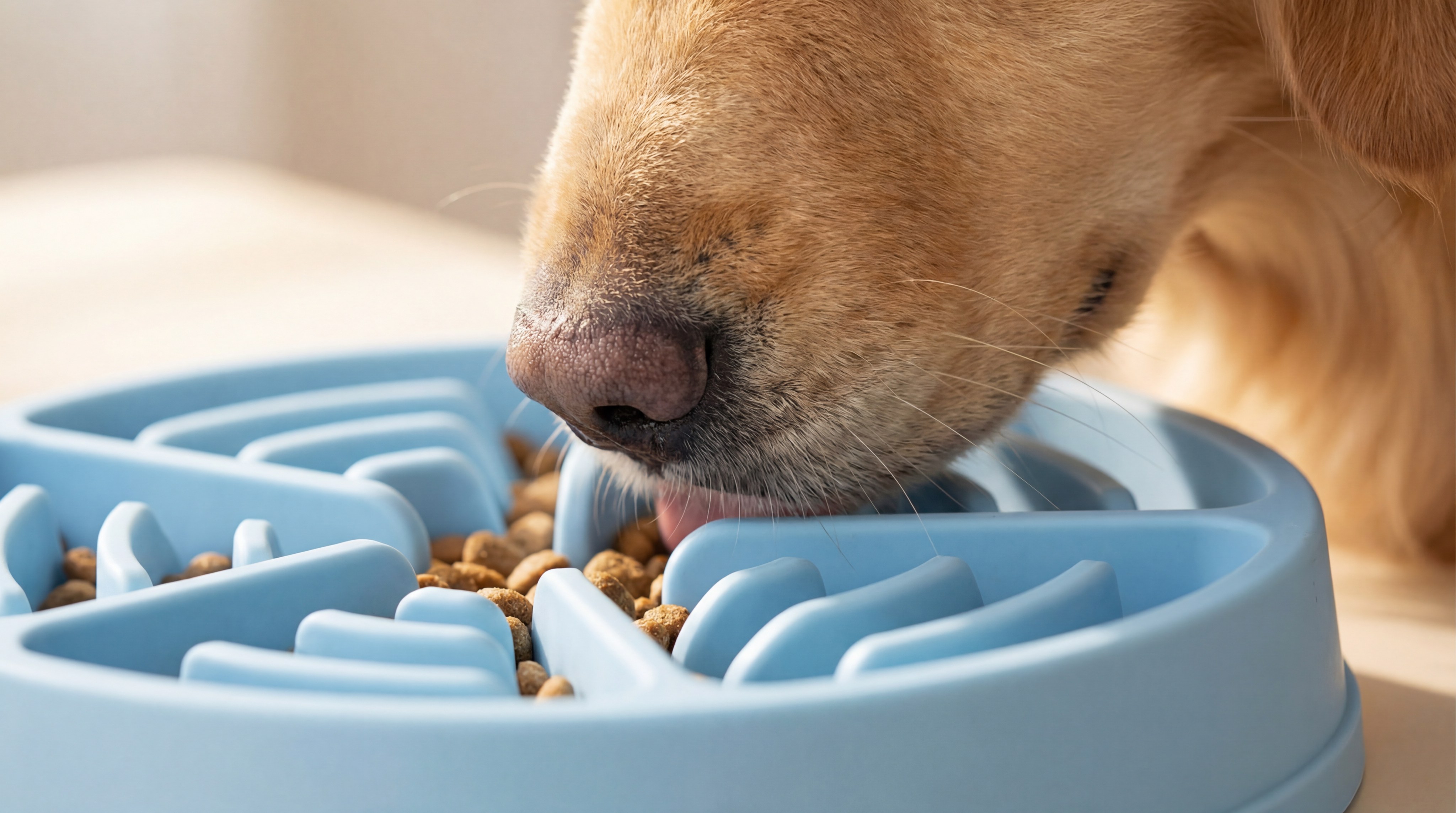
Why Should You Avoid Ceramic Slow Feeders?
Ceramic feeders are aesthetically pleasing but are far too brittle and heavy for a safe slow-feeding environment. A Pet Product Manufacturer must warn you that a single drop can turn a ceramic bowl into a collection of dangerous, razor-sharp shards.
What Is the Danger of Chipped Glaze?
Ceramic depends on a glass-like glaze for its hygiene, but once this layer chips, the underlying porous clay is exposed. This exposure allows moisture and bacteria to seep into the core of the bowl, making it impossible to fully sanitize.
Make no mistake:
A chipped ceramic feeder is a ticking time bomb for both bacterial infection and physical cuts.
- Sharp edges from minor chips.
- Lead or cadmium risk in cheap glazes.
- Heavy weight makes travel impossible.
How Does Weight Impact Daily Use?
While heavy bowls are stable, they are also difficult to handle and prone to slipping out of soapy hands during cleaning. When a heavy ceramic bowl hits a hard floor, it doesn’t just crack; it shatters into hundreds of tiny pieces.
As it turns out:
The stability of weight is often outweighed by the extreme fragility of the material itself.
- High shipping costs due to weight.
- Prone to “thermal shock” in dishwashers.
- Dangerous to handle if cracked.
| Feature | Ceramic Status | Safety Concern |
|---|---|---|
| Brittleness | Very High | Laceration risk |
| Maintenance | Difficult | Bacterial seepage |
| Mobility | Low | High breakage risk |
Ceramic’s lack of impact resistance makes it the most hazardous material for high-energy pet feeding.
Key Takeaway
The aesthetic appeal of ceramic does not justify the safety risks of shattering and bacterial growth within the porous clay.
How Does Silicone Improve Cleaning and Hygiene?
Silicone’s non-porous surface and high heat resistance make it the most hygienic material available for pet feeding products. When you source from a Pet Product Manufacturer, you get products that can be sterilized at temperatures that would melt plastic or crack ceramic.
Can Silicone Handle High-Temperature Sanitization?
Unlike other polymers, silicone is stable up to 230°C, meaning it can handle the hottest dishwasher cycles without warping. This allows for deep cleaning that removes even the most stubborn oils and fats from wet dog food.
It gets better:
You can even boil silicone feeders for a few minutes to ensure total sterilization after an illness.
- Safe for industrial dishwasher heat.
- Resistant to chemical cleaners.
- Will not warp or lose shape.
Does Silicone Retain Food Odors?
Because silicone is non-porous, it does not absorb the strong odors associated with fish-based or fermented dog foods. This ensures the feeder remains fresh and inviting for the pet, rather than becoming a source of household smells.
The best part?
A quick rinse is often all that’s needed to return the feeder to its original state.
- Stain-resistant to colorful foods.
- Odor-neutralizing properties.
- Quick-drying surface prevents mold.
| Cleaning Metric | Silicone | Plastic |
|---|---|---|
| Max Temperature | 230°C | 70°C – 90°C |
| Porosity | Non-Porous | Semi-Porous |
| Stain Resistance | High | Low |
The ability to withstand extreme heat ensures a level of cleanliness that other materials simply cannot match.
Key Takeaway
Silicone’s non-porous nature and high heat tolerance make it the only material that guarantees medical-grade hygiene for every meal.
Does Material Impact the Dog’s Feeding Comfort?
The texture and temperature of the feeding material directly influence how much a dog enjoys their meal. A Pet Product Manufacturer focusing on ergonomic design will tell you that soft silicone “fingers” are much gentler on a dog’s gums than hard plastic or cold metal.
Is the Material Gentle on Sensitive Snouts?
Dogs with short muzzles or sensitive gums can find rigid slow feeders painful to use as they navigate the maze. Silicone’s natural softness provides a cushioned experience that slows the meal without causing physical discomfort or abrasion.
Think about it:
If the feeding process is painful, the dog will become frustrated and may eventually refuse to eat.
- Soft ridges prevent gum bruising.
- Flexible walls adapt to snout shape.
- Warm-touch material is inviting.
Can Texture Reduce Pet Anxiety?
Textured silicone mats are often used as “lick mats” to soothe anxious dogs because the act of licking releases calming endorphins. This sensory engagement is only possible with a material that can be molded into thousands of tiny, soft bristles.
Here is the kicker:
A soft, textured feeder acts as a tool for both nutrition and mental health.
- Engages the tongue’s sensory receptors.
- Promotes longer, more focused feeding.
- Reduces barking and destructive behavior.
| Comfort Factor | Silicone | Plastic/Metal |
|---|---|---|
| Tactile Feel | Soft/Cushioned | Hard/Abrasive |
| Acoustics | Silent | Loud/Clanging |
| Thermal Comfort | Neutral | Often Cold |
Soft materials transform mealtime from a struggle into a rewarding, sensory-rich puzzle for the dog.
Key Takeaway
Silicone provides the only “soft-touch” feeding experience that protects the dog’s physical comfort while offering emotional soothing.
Can You Customize Complex Maze Designs Easily?
Silicone molding allows for a level of design complexity that is physically impossible with metal or ceramic. By collaborating with a Pet Product Manufacturer, you can create intricate, multi-level mazes that provide the maximum slowing effect for different breeds.
Why Is Injection Molding Superior?
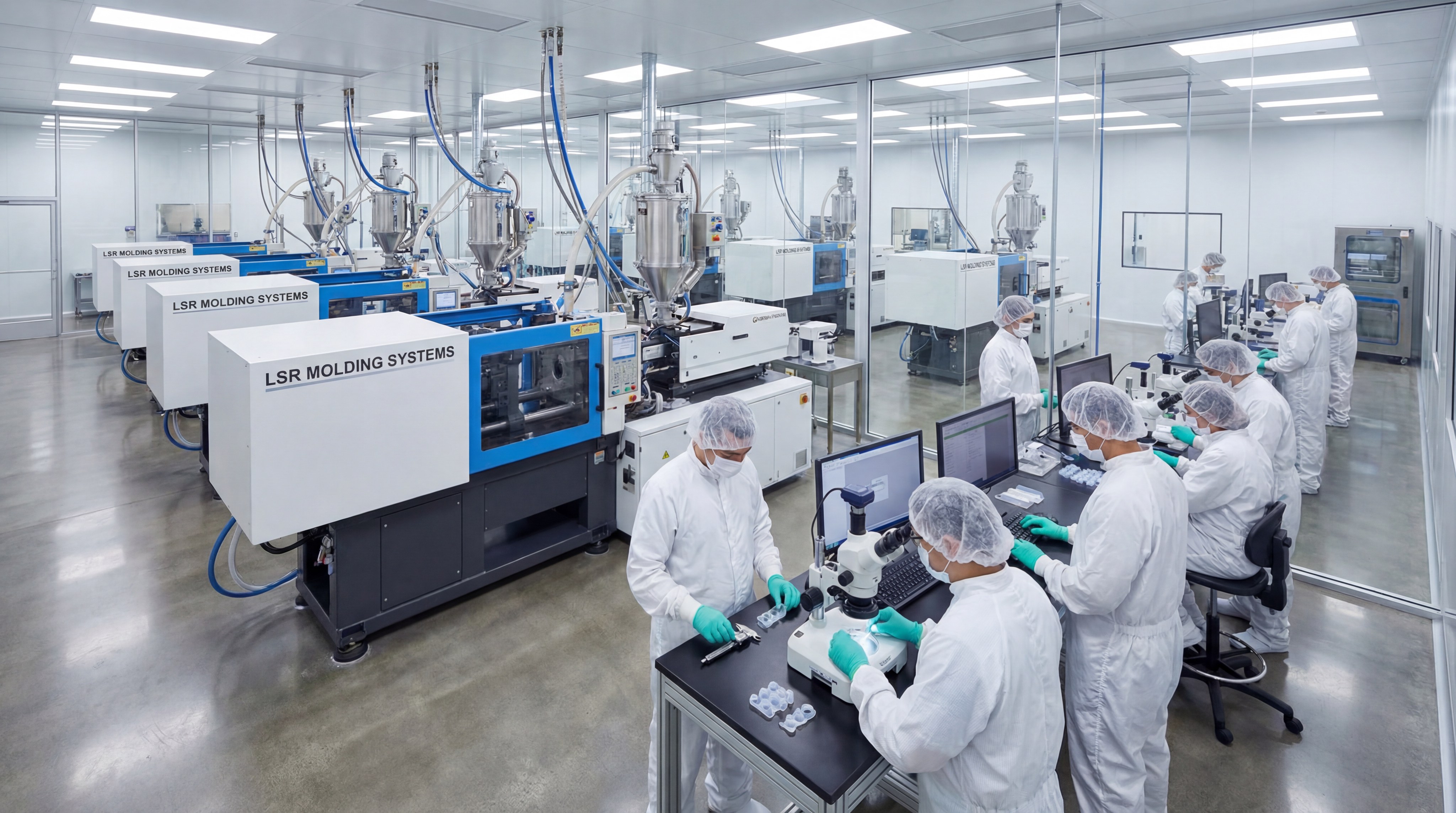
Liquid Silicone Rubber (LSR) injection molding can produce undercuts, thin walls, and varying heights that stamping or casting cannot achieve. This means you can design feeders specifically for “power eaters” or smaller breeds with different tongue lengths.
Believe it or not:
You can incorporate your brand logo directly into the feeding maze without losing any functionality.
- Supports intricate 3D geometries.
- Variable ridge heights for difficulty.
- Built-in suction cups for stability.
Does Material Limit Color Customization?
Silicone can be colored to any Pantone shade, allowing you to match your feeders to your brand’s aesthetic perfectly. Unlike metal, which is usually silver, or plastic, which can look “cheap,” silicone has a premium, matte finish that feels high-end.
The bottom line?
Visual appeal is just as important as functionality for modern pet parents.
- Unlimited color matching options.
- Multi-color overmolding capabilities.
- Stable pigments that won’t fade.
| Design Capability | Silicone | Stainless Steel |
|---|---|---|
| Maze Complexity | Infinite | Very Limited |
| Color Choice | Unlimited | None (Metallic) |
| Brand Integration | High (Molded) | Low (Etched) |
The versatility of silicone molding ensures you can stay ahead of market trends with unique and effective designs.
Key Takeaway
Silicone offers the highest level of design freedom, enabling the creation of truly effective puzzles that other materials simply cannot replicate.
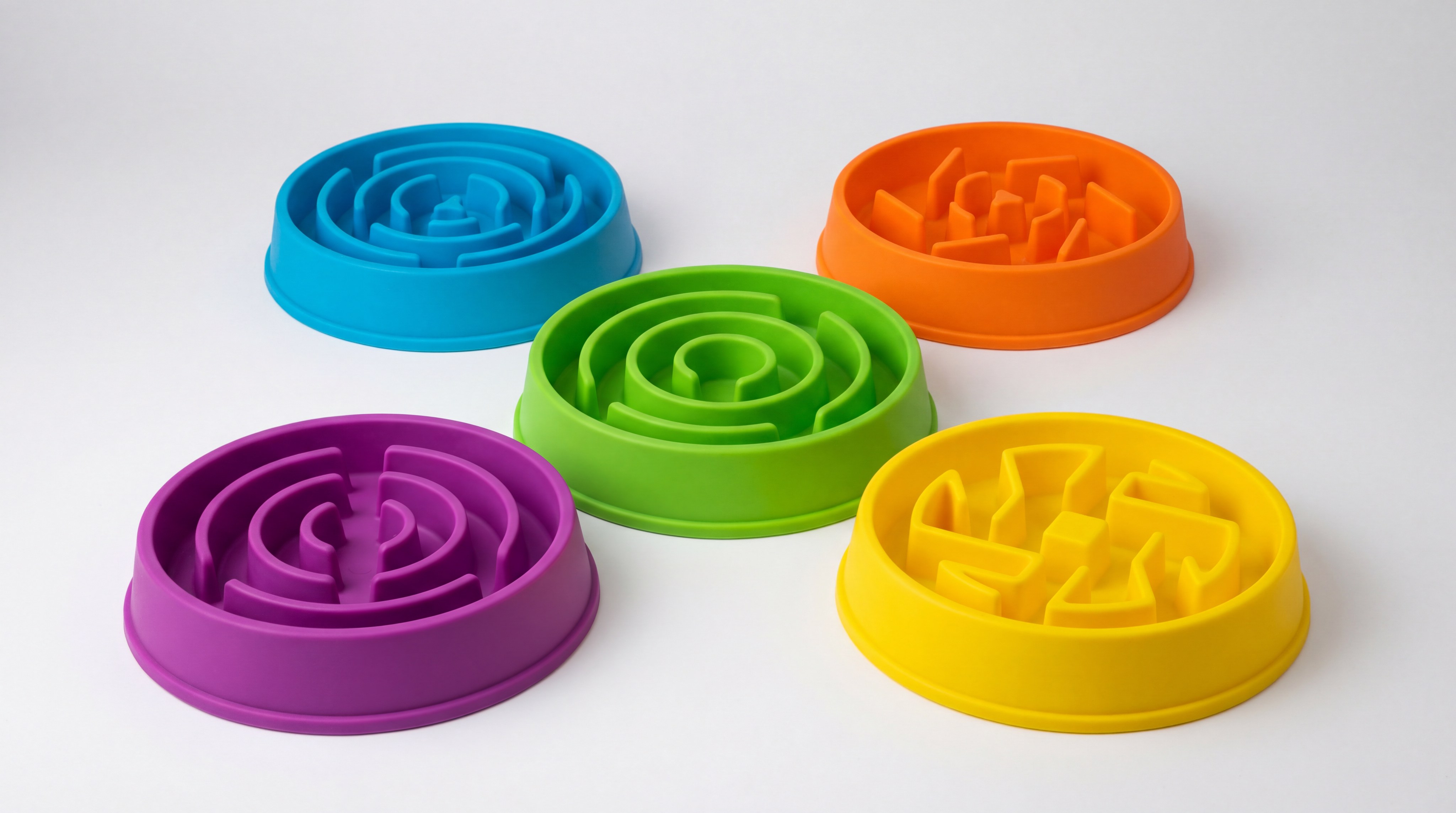
What Makes a Feeder Truly Indestructible?
An indestructible feeder must be able to withstand chewing, dropping, and environmental stress without failing. A Pet Product Manufacturer using high-grade silicone produces items that are naturally resistant to the mechanical stresses of a dog’s daily life.
Can Silicone Resist Aggressive Chewing?
While no material is 100% chew-proof, high-durometer silicone is exceptionally difficult for dogs to tear or puncture. Because it is flexible, it “gives” under the pressure of teeth rather than snapping or splintering like plastic.
But wait, there’s more:
Even if a dog managed to bite off a piece, silicone is non-toxic and less likely to cause internal damage than sharp plastic.
- High tear strength ratings.
- Elasticity prevents stress cracks.
- Maintains integrity in UV light.
Why Is Impact Resistance Critical?
Feeder bowls are frequently kicked, dropped, or pushed down stairs by active dogs. A material with high impact resistance ensures the product won’t need to be replaced after a single clumsy moment.
You might be wondering:
Is it worth the extra cost for “unbreakable” materials?
Reducing return rates and increasing customer loyalty makes the initial investment highly profitable.
- Absorbs energy from hard falls.
- Zero risk of shattering on concrete.
- Long-term structural stability.
| Durability Test | Silicone Result | Plastic/Ceramic Result |
|---|---|---|
| 1.5m Drop Test | Pass (No damage) | Fail (Crack/Shatter) |
| Thermal Cycle | Pass (Stable) | Fail (Warp/Crack) |
| Chew Resistance | High (Flexible) | Low (Splintering) |
Silicone’s physical properties make it the most cost-effective material over the long term due to its extreme lifespan.
Key Takeaway
Investing in silicone durability reduces product returns and builds a brand reputation for quality and longevity.
How Do You Ensure Material Safety Compliance?
Ensuring that your material is genuinely food-grade requires strict adherence to international safety standards. A Pet Product Manufacturer should provide full traceability and certification for all raw materials used in the production process.
What Certifications Are Necessary?
You should always look for FDA (U.S.) or LFGB (European) food-grade certifications. LFGB is often considered the “gold standard” because it involves more rigorous testing for sensory and chemical migration.
Make no mistake:
Using uncertified materials is a massive legal and reputational risk for your business.
- FDA Food-Contact compliance.
- LFGB (Europe) strict testing.
- ISO 9001 quality management.
Is Material Traceability Important?
Knowing exactly where your silicone comes from ensures that no recycled or contaminated industrial-grade silicone enters your pet product line. A professional factory will maintain records for every batch of material used.
As it turns out:
Consistent quality starts with the raw material supplier, not just the molding process.
- Batch-specific safety reports.
- Verified supply chain partners.
- Regular 3rd-party lab testing.
| Standard | Rigor Level | Market Requirement |
|---|---|---|
| FDA | Standard | Required for U.S. |
| LFGB | High | Required for EU |
| ISO 9001 | Process-Based | Global standard |
Rigorous compliance ensures that your products are safe for the global market and free from hazardous contaminants.
Key Takeaway
Verified safety certifications are the only way to prove to your customers that your feeders are truly non-toxic and pet-safe.
Why Is Durability Key to Your Brand Reputation?
In the competitive pet market, product longevity is the most direct way to build customer trust and recurring revenue. A Pet Product Manufacturer that prioritizes durability helps you move away from “throwaway” culture and toward high-value, sustainable products.
Does Longevity Drive Customer Loyalty?
When a customer buys a feeder that still looks and functions perfectly after three years, they are far more likely to return to your brand for other accessories. Silicone’s ability to resist aging and stains ensures the product remains a positive reflection of your brand.
It gets better:
Satisfied customers become brand advocates, providing the organic growth that drives market leaders.
- High perceived value over time.
- Positive online reviews and ratings.
- Lower lifetime cost for the user.
How Does Material Choice Affect Sustainability?
A single silicone feeder that lasts ten years replaces dozens of cheap plastic ones that would end up in a landfill. Positioning your brand as a provider of durable, long-lasting solutions appeals to the growing demographic of eco-conscious pet owners.
The best part?
Silicone is more environmentally friendly to produce and discard than most petroleum-based plastics.
- Reduces global plastic waste.
- Sustainable “buy once” philosophy.
- Recyclable at specialized facilities.
| Business Metric | Silicone Impact | Brand Benefit |
|---|---|---|
| Return Rate | Very Low | Higher profitability |
| Customer LTV | High | Stable revenue growth |
| Brand Image | Premium | Competitive edge |
Choosing high-durability materials is a strategic business decision that protects your margins and your market share.
Key Takeaway
Brand excellence is built on products that last; silicone provides the durability necessary to turn first-time buyers into lifetime fans.
Partner for Pet Safety
Selecting the right material for your slow dog feeder is the most critical decision in your product development cycle. As we have demonstrated, food-grade silicone stands alone as the safest, most durable, and most versatile option for modern pet brands. By prioritizing hygiene, pet comfort, and design flexibility, you can create products that truly improve the lives of animals and their owners.
If you are looking to launch a high-quality line of pet accessories, we invite you to contact us today. At HuaLin Silicone, we specialize in precision LSR and silicone manufacturing, providing the engineering expertise and certified quality control you need to succeed in the global market. Let us help you turn your innovative designs into durable, safe, and market-leading products that set your brand apart.
Frequently Asked Questions
Can I wash a silicone slow feeder in the dishwasher?
Yes, silicone is completely dishwasher-safe. It can withstand the high heat of sanitizing cycles without warping or leaching harmful chemicals.
What’s the best material for a dog that chews its bowl?
Food-grade silicone is the best choice because it is flexible and tear-resistant. Unlike plastic, it won’t splinter into sharp, dangerous pieces if bitten.
How do I know if the silicone is actually food-grade?
Always check for FDA or LFGB certifications. A reputable manufacturer will provide documentation proving the material has passed strict non-toxicity tests.
Can I freeze food inside the feeder for a longer challenge?
Absolutely. Silicone remains flexible and stable at sub-zero temperatures, making it perfect for frozen treats that provide even more mental stimulation.
How do I know if my dog needs a slow feeder?
If your dog finishes their meal in under two minutes or frequently chokes, gags, or vomits after eating, they are a prime candidate for a slow-feeding solution.