
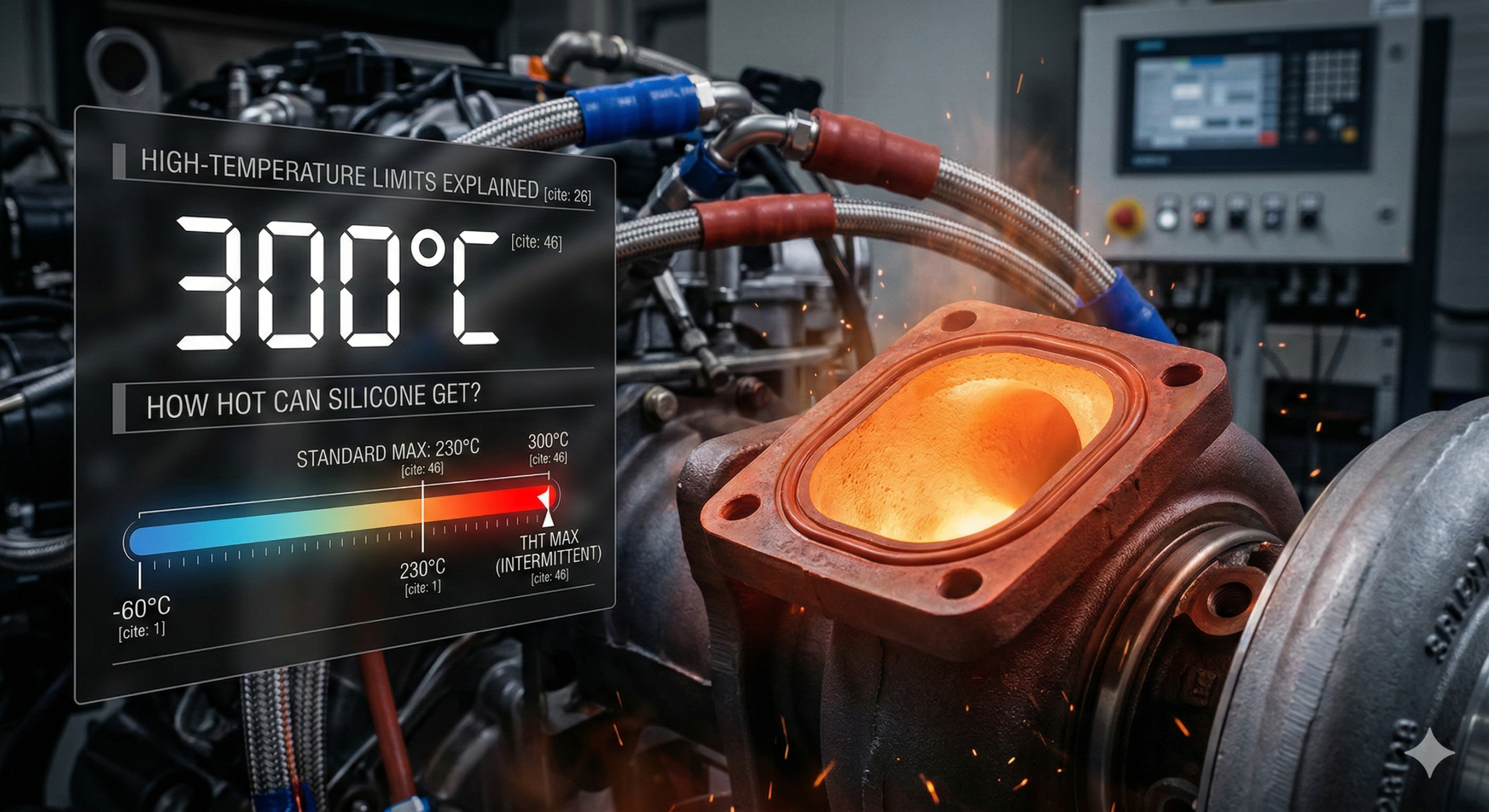
Standard silicone rubber can typically withstand continuous temperatures ranging from -60°C to +230°C while maintaining its structural integrity. For B2B engineers and procurement teams, selecting an elastomer that fails prematurely leads to catastrophic assembly leaks and significant financial losses. These technical failures agitate production schedules and can damage your brand’s reputation for reliability. HuaLin Silicone provides precision-engineered components that resolve the mystery of how hot can silicone get so you can optimize your product’s lifespan.
What is the General Temperature Range of Silicone?
General-purpose silicone rubber operates reliably in environments ranging from -60°C to +230°C without significant loss of physical properties. When evaluating a new design, understanding how hot can silicone get helps you determine if standard grades are sufficient for your thermal load. This broad range makes it a superior choice compared to organic elastomers that harden in the cold or melt in the heat.
How does it perform in sub-zero cold?
Think about it: most rubber materials become as brittle as glass when exposed to extreme arctic temperatures. Silicone, however, retains its elastic memory and flexibility even at -60°C, ensuring that seals do not crack or fail during cold starts.
- Maintains Shore A hardness in freezing conditions.
- Resists crystallization under prolonged low-heat exposure.
- Ideal for high-altitude aerospace applications.
Key Takeaway: Utilizing silicone ensures your product remains functional in extreme climates, reducing the risk of brittle failure in cold-chain or outdoor environments.
| Performance Metric | Temperature Value | Industry Standard |
|---|---|---|
| Glass Transition Temp | -120°C | Theoretical Limit |
| Safe Working Cold | -60°C | Practical Limit |
| Flex Life at Low Temp | Excellent | Comparative Rating |
The versatility of silicone in extreme cold prevents the hardening and cracking common in low-cost elastomer alternatives.
How Hot Can Silicone Get Before It Degrades?
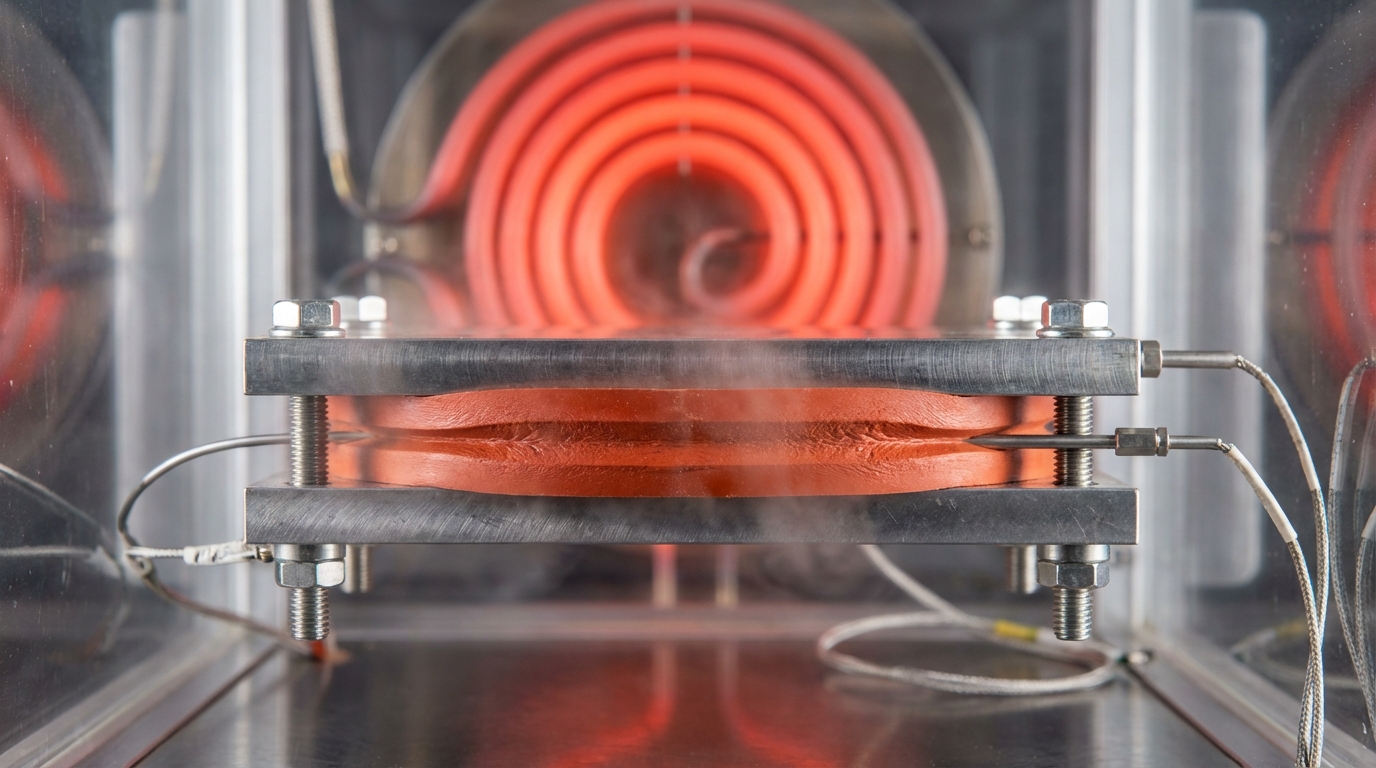
Silicone starts to undergo measurable physical changes once it consistently exceeds the 200°C threshold. You need to identify how hot can silicone get in your specific application because prolonged exposure to peak heat eventually causes the polymer chains to cross-link further. This process results in a material that is harder and less capable of stretching over time.
What happens at the 200°C threshold?
Here is the deal: while the material doesn’t disappear, its elasticity begins a slow, predictable decline. As the material ages at high heat, you will notice an increase in durometer and a decrease in ultimate elongation.
- Hardening of the rubber matrix.
- Reduced compression set resistance.
- Potential surface micro-cracking.
Key Takeaway: Monitoring the operational ceiling allows you to predict replacement cycles accurately, ensuring your high-heat seals never reach the point of failure.
| Temperature Exposure | Effect on Silicone | Duration |
|---|---|---|
| 150°C | Negligible change | Indefinite |
| 200°C | Gradual hardening | Thousands of hours |
| 250°C | Rapid hardening | Hundreds of hours |
Predictive maintenance is simplified when you understand the linear relationship between heat levels and material hardness.
Does Silicone Rubber Actually Melt at High Heat?
Silicone rubber does not melt in the traditional sense like plastic; instead, it gradually turns into a brittle solid or ignites at extreme thresholds. If you are questioning how hot can silicone get before a phase change occurs, the answer lies in its chemical backbone of silicon and oxygen. Unlike carbon-based rubbers that liquefy, silicone maintains its shape until it essentially chemically decomposes.
What is the auto-ignition temperature?
But wait: just because it doesn’t melt doesn’t mean it is fireproof. Silicone has an auto-ignition temperature of approximately 450°C, at which point the material will burn and leave behind a non-conductive silica ash.
- Does not produce toxic gas when burning.
- Leaves a protective ash layer.
- Maintains shape during thermal decomposition.
Key Takeaway: The non-melting nature of silicone prevents dangerous “dripping” in fire-sensitive environments, providing an extra layer of safety for electronics and machinery.
| Material State | Temperature Range | Visual Indicators |
|---|---|---|
| Flexible | Up to 230°C | No visible change |
| Brittle | 300°C – 400°C | Surface chalking |
| Decomposition | Above 450°C | White silica ash |
Choosing a non-melting elastomer is critical for safety applications where dripping molten material could ignite secondary fires.
Can Special Grades Increase Thermal Resistance?
Specialized High-Temperature (THT) grades can be formulated to withstand intermittent exposure to temperatures as high as 300°C. When standard materials fail, you must ask how hot can silicone get with the right chemical stabilizers. These formulations include specific additives like iron oxide to prevent the oxidation of the polymer chains at extreme heat.
What are high-temperature THT grades?
The bottom line is that THT grades are engineered for the most demanding thermal cycles found in industrial ovens and engines. These materials are often recognized by their distinctive rusty-red color, which comes from the heat-stabilizing pigments.
- Withstands 300°C for short bursts.
- Maintains flexibility in high-heat fluid paths.
- Resists oxidation better than standard clear silicone.
Key Takeaway: High-temperature grades allow you to push the limits of your hardware design without risking immediate seal degradation during peak loads.
| Silicone Grade | Max Constant Temp | Max Intermittent Temp |
|---|---|---|
| General Purpose | 200°C | 230°C |
| High Temp (THT) | 250°C | 300°C |
| Medical Grade | 200°C | 220°C (Autoclave) |
Custom formulations provide the necessary safety margin for applications that fluctuate between standard and extreme temperatures.
Why is Time the Most Critical Factor for Heat?
The lifespan of a silicone component is directly determined by the duration of its exposure to high temperatures rather than just the peak degree. You should investigate how hot can silicone get for your specific duty cycle to avoid over-engineering or under-specifying. A seal might survive 300°C for ten minutes but fail at 250°C if held there for three weeks.
Continuous vs. intermittent exposure?
The best part? Silicone is incredibly resilient during intermittent thermal spikes. If your application only hits peak heat for a few minutes a day, you can often use a more cost-effective grade of silicone.
- Total heat hours dictate degradation.
- Thermal cycling affects bond integrity.
- Peak loads are safer than constant loads.
Key Takeaway: Understanding your product’s “thermal budget” helps you select the most economical material that still meets your longevity requirements.
| Exposure Type | Temperature | Expected Lifespan |
|---|---|---|
| Continuous | 200°C | 2 – 5 Years |
| Intermittent | 250°C | 1,000+ Hours |
| Extreme Burst | 300°C | < 100 Hours |
Time-at-temperature data is the most reliable metric for predicting the actual field performance of any silicone component.
What Industries Require High-Heat Silicone?
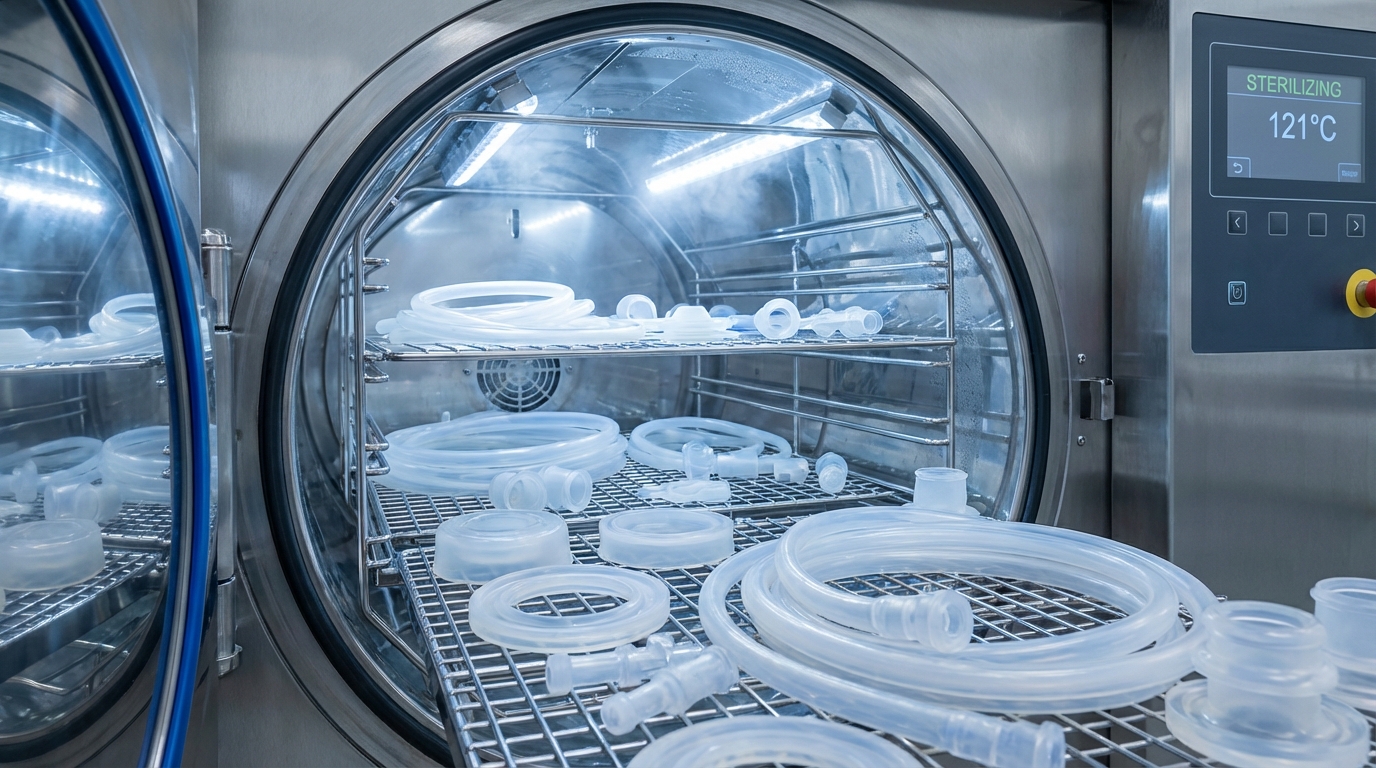
Industries ranging from automotive to medical sterilization rely on silicone’s ability to remain stable under intense heat. When these sectors ask how hot can silicone get, they are usually looking for a material that can survive the harsh environment of an engine bay or an autoclave. HuaLin Silicone specializes in creating parts that meet these strict industrial thermal standards.
How is it used in automotive engines?
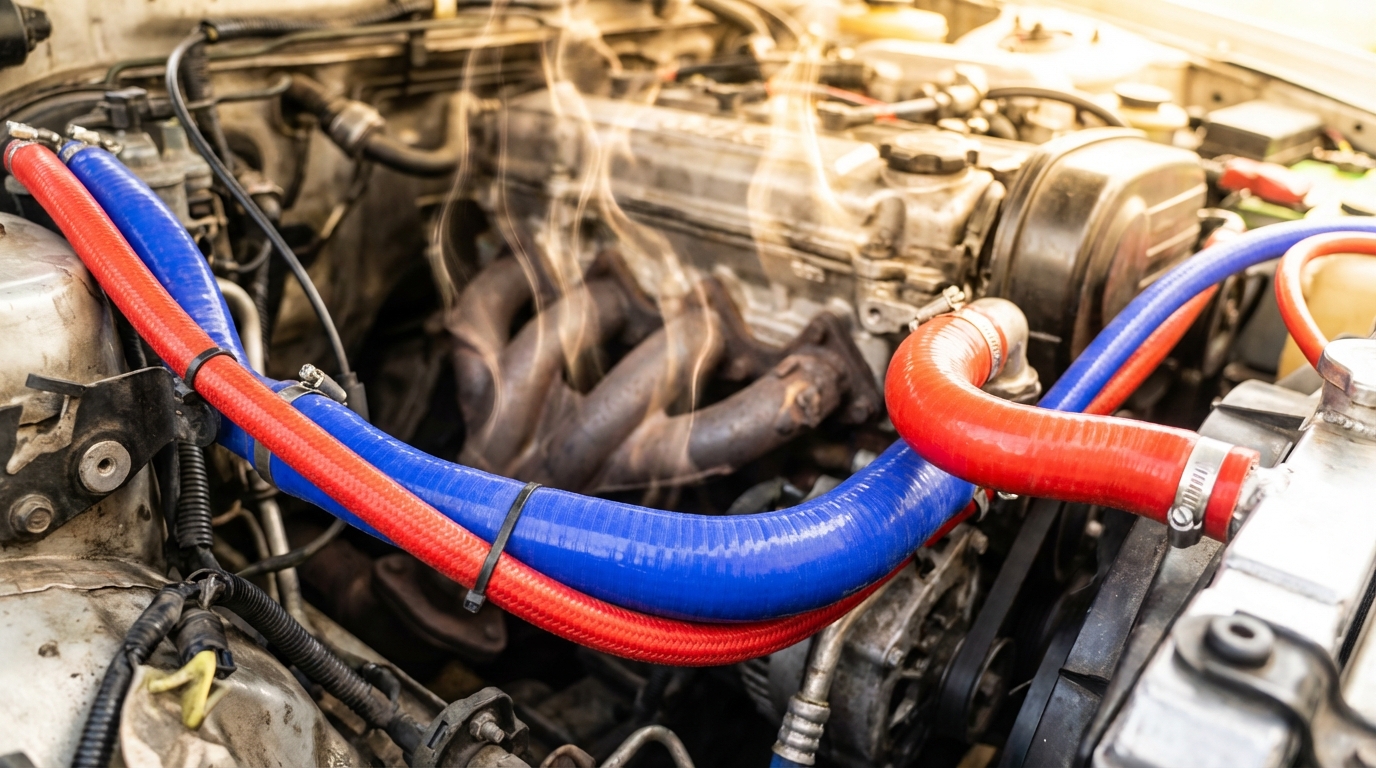
Think about it: the modern engine bay is a cramped, high-heat environment where fluid hoses must remain flexible. Silicone hoses carry coolant and air without softening, even when positioned near turbochargers or exhaust manifolds.
- Resists high-pressure steam.
- Withstands oil mist at 150°C.
- Reduces noise through vibration damping.
Key Takeaway: Silicone’s thermal endurance ensures that critical vehicle systems remain leak-free, preventing expensive warranty claims and safety recalls.
| Industry | Primary Heat Source | Common Component |
|---|---|---|
| Automotive | Turbo/Exhaust | Turbocharger Hoses |
| Medical | Autoclave Steam | Sterilization Mats |
| Food & Bev | Industrial Ovens | Baking Gaskets |
The widespread adoption of silicone across diverse industries proves its status as the premier high-heat elastomer for B2B applications.
How Do Manufacturing Processes Affect Resistance?
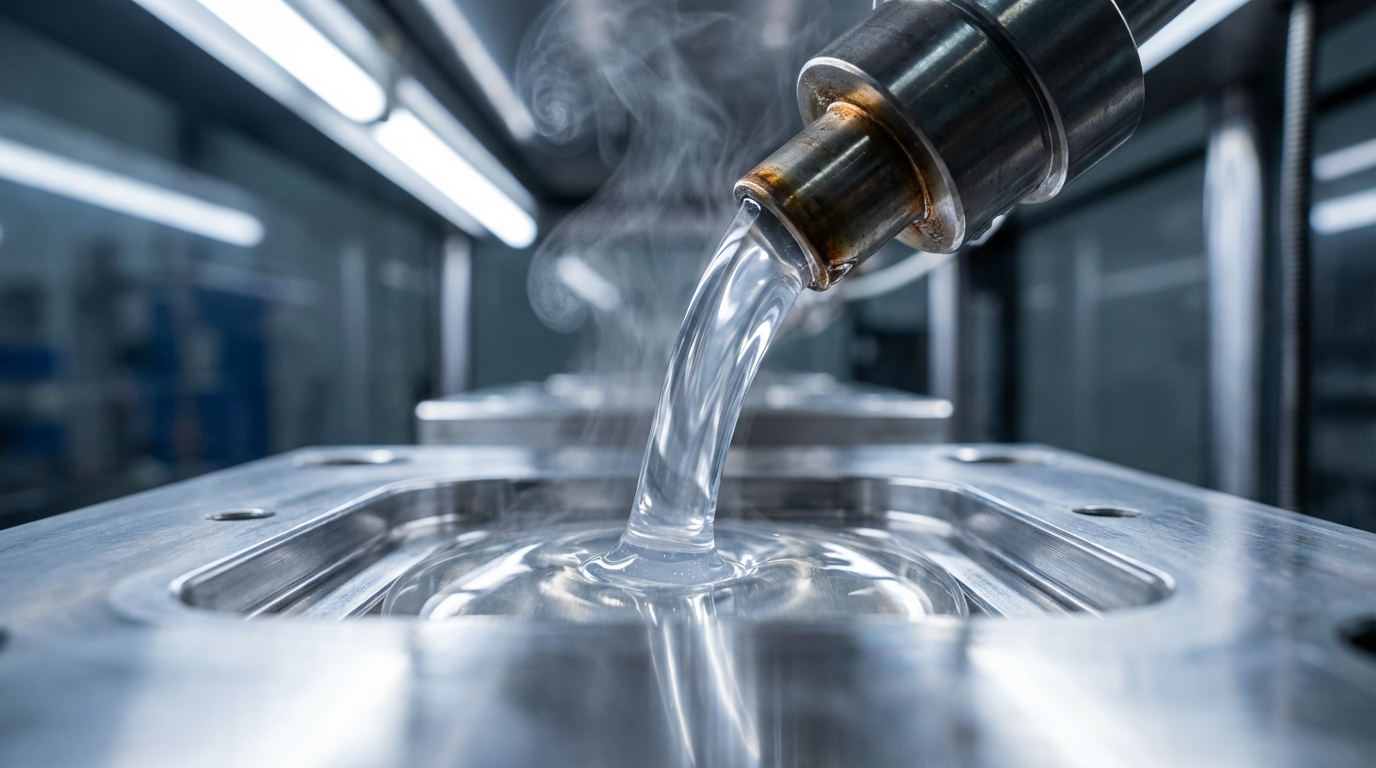
The method used to shape your silicone, such as Liquid Silicone Rubber (LSR) injection molding, significantly impacts its thermal stability and consistency. You should consider how hot can silicone get based on the precision of the manufacturing route chosen. LSR molding generally provides a more uniform cross-linking density compared to traditional compression molding, leading to better heat response.
Does liquid silicone rubber offer better stability?
Here is the deal: the closed-loop system of LSR molding prevents contamination that could act as a catalyst for heat-induced degradation. This precision ensures that every part in a high-volume run has the exact same thermal ceiling.
- Superior dimensional stability.
- Uniform material distribution.
- Enhanced flash-free quality control.
Key Takeaway: Choosing LSR manufacturing ensures your high-precision seals maintain their tolerances even when thermal expansion occurs during operation.
| Process Route | Thermal Consistency | Volume Suitability |
|---|---|---|
| LSR Molding | High | High Volume |
| Compression | Moderate | Low/Medium Volume |
| Overmolding | Process Dependent | Complex Assemblies |
Matching the manufacturing process to your thermal requirements eliminates “weak spots” that could lead to premature batch failures.
Can Material Additives Improve Heat Stability?
Chemical additives and specific fillers are often used to boost the natural thermal resistance of silicone rubber. When engineers wonder how hot can silicone get, they are often unaware that the base polymer can be significantly enhanced through smart compounding. At HuaLin, we utilize advanced material science to prevent the hardening and cracking that heat usually causes.
What role do stabilizers play?
But wait: the addition of heat stabilizers doesn’t just increase the temperature limit; it also extends the material’s service life at lower temperatures. These additives act as oxygen scavengers, protecting the silicone’s backbone from oxidative stress.
- Iron oxide for extreme heat.
- Carbon black for UV and heat.
- Specialized fillers for thermal conductivity.
Key Takeaway: Custom compounding allows you to specify a material that is perfectly balanced for both heat resistance and mechanical strength.
| Additive Type | Primary Benefit | Typical Application |
|---|---|---|
| Heat Stabilizer | Prevents Oxidation | Engine Gaskets |
| Thermal Filler | Heat Dissipation | LED Heat Sinks |
| Hardness Adjuster | Tailored Flexibility | Wearable Straps |
Leveraging material additives is the most effective way to bridge the gap between standard performance and extreme environment requirements.
How Do You Test Silicone for High Temperatures?
Validation through environmental aging and compression set testing is the only way to prove a component can withstand its rated heat. You should ask how hot can silicone get during the prototyping phase to ensure your testing parameters reflect real-world stresses. High-quality manufacturers use calibrated ovens to simulate years of thermal wear in just a few weeks.
What is environmental aging testing?
Think about it: laboratory testing removes the guesswork from your supply chain. By exposing parts to constant heat and then measuring their physical properties, we can provide a data-backed lifespan estimate.
- Measures change in hardness.
- Validates elongation retention.
- Checks for surface discoloration.
Key Takeaway: Rigorous thermal testing provides the empirical evidence your quality department needs to sign off on a new material or design.
| Test Category | Methodology | Success Metric |
|---|---|---|
| Accelerated Aging | Oven at 200°C+ | <15% Property Loss |
| Compression Set | Constant Deflection | Recovery > 80% |
| Tensile Strength | Pull-to-break | Minimal change |
Comprehensive testing protocols are the foundation of a reliable B2B partnership and ensure long-term product success.
Why Should You Consult an Expert for Your Project?
Partnering with a specialized manufacturer like HuaLin Silicone allows you to leverage expert Design for Manufacturing (DFM) support to mitigate thermal risks. You need to know how hot can silicone get, but you also need to know how part geometry affects heat dissipation. Our engineering team helps you navigate material selection and tooling design to ensure your parts survive the most grueling conditions.
How does DFM reduce thermal failure risks?
The bottom line is that a small design tweak can drastically improve the thermal performance of a gasket or seal. For instance, optimizing wall thickness can prevent localized overheating and uneven material aging.
- Expert material recommendations.
- Optimized geometry for cooling.
- ISO 9001 certified quality control.
Key Takeaway: Professional consultation early in the design phase prevents expensive “trial and error” and accelerates your time-to-market.
| Support Service | Benefit to Buyer | Outcome |
|---|---|---|
| DFM Review | Catch design flaws | Lower tooling costs |
| Material Sourcing | Traceable quality | Reliable performance |
| Scale Production | Stable supply chain | Consistent lead times |
Expert guidance ensures that your silicone components are not just heat-resistant, but also optimized for cost and manufacturability.
*
Selecting the right silicone grade is the difference between a high-performing product and a costly field failure. At HuaLin Silicone, we solve the complex problems of thermal degradation and material mismatch by providing ISO-certified LSR molding, compression molding, and overmolding solutions. Whether you are developing automotive engine components or medical-grade seals, we can help you specify, test, and manufacture parts that withstand the most extreme temperatures. We are committed to precision engineering and stable mass production that protects your project from concept to delivery. Our vision is to empower global innovators with reliable, high-performance silicone technology that sets new standards for durability. To see how our 15+ years of expertise can optimize your thermal applications, contact us today for a free DFM review and custom quotation.
*
FAQ Section
Can I use standard silicone for 300°C applications?
Standard silicone is not suitable for 300°C and will degrade rapidly at that heat level. You must utilize specialized high-temperature (THT) grades for such environments, and even then, these are typically rated for intermittent rather than continuous exposure.
What is the best way to extend my seal’s lifespan?
The most effective way to extend lifespan is to choose a manufacturing process like LSR molding that ensures structural uniformity. Additionally, reducing the continuous thermal load and using heat-stabilizing additives can significantly increase the number of operational hours.
How do I know if my silicone is degrading?
You can identify degradation by checking for a loss of elasticity, increased hardness, or surface cracking. If the material feels “crunchy” or brittle when flexed, it has reached the end of its functional life due to excessive heat exposure.
Can I customize the color of heat-resistant parts?
Yes, silicone can be color-matched to Pantone or RAL standards while maintaining its thermal properties. However, you should consult with your manufacturer, as certain high-temperature pigments may slightly alter the mechanical behavior of the rubber.
How do I know if my design needs a THT grade?
If your application consistently operates above 200°C or experiences frequent spikes to 250°C, a THT grade is highly recommended. For anything below 150°C, general-purpose silicone is usually more than sufficient and more cost-effective.