
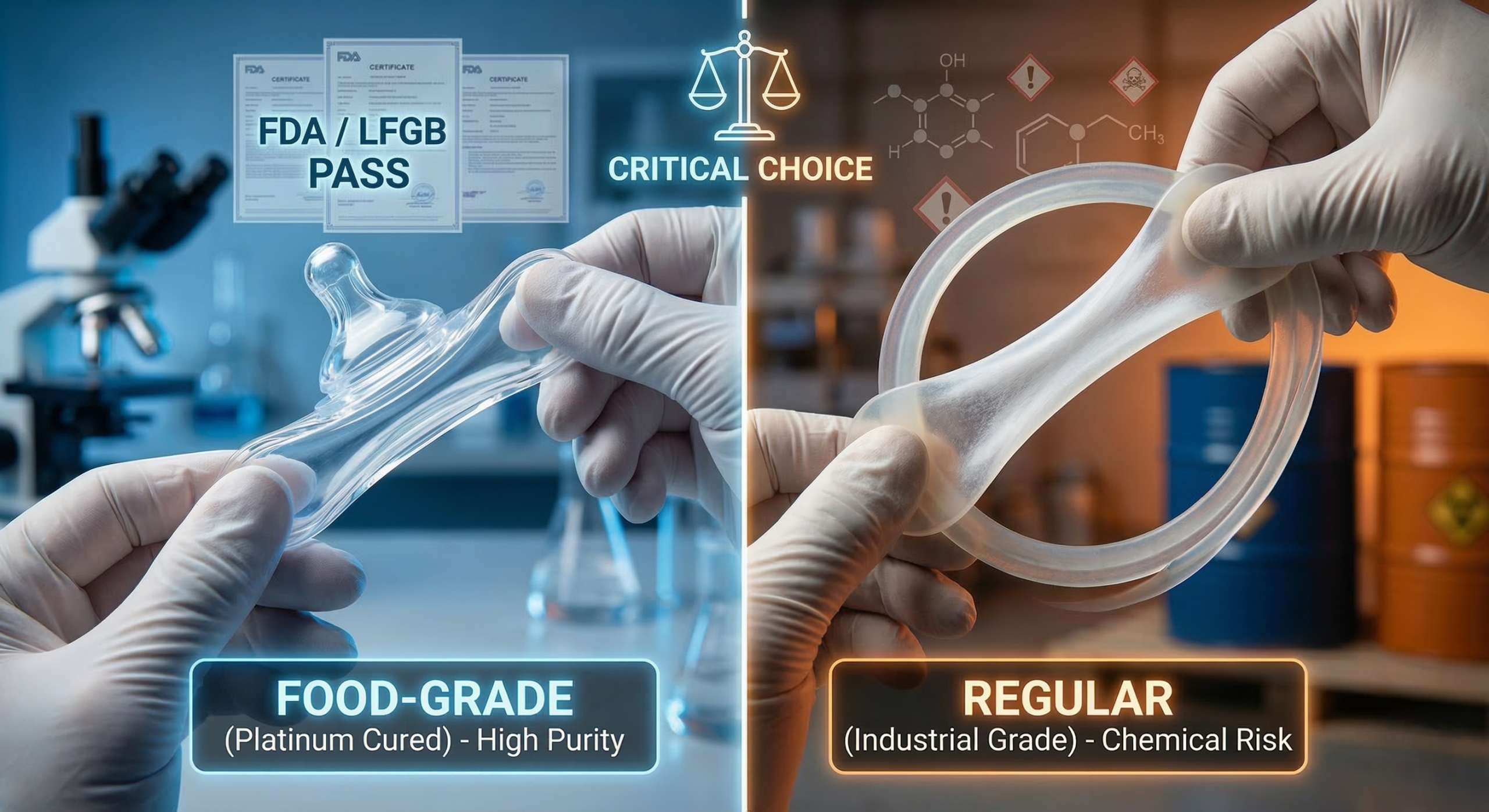
The fundamental difference between food-grade and regular silicone lies in the purity of the raw materials and the specific curing systems used to prevent chemical migration. You are likely facing a critical choice in material procurement where choosing the wrong elastomer could lead to regulatory failure or product contamination. This uncertainty agitates production timelines and creates unnecessary risk for your brand’s reputation in the marketplace. Our guide provides the technical clarity you need to distinguish these materials and ensure your application meets the highest safety standards. Is medical grade silicone the same as food grade silicone? understanding this distinction is the first step toward superior product integrity.
What sets food-grade silicone apart?
Food-grade silicone is distinguished by its high-purity fumed silica content and the absence of toxic fillers found in industrial grades. This material is specifically engineered to be odorless and tasteless, ensuring that it does not alter the sensory properties of products it contacts. Many procurement officers wonder, is medical grade silicone the same as food grade silicone? so it is vital to understand that food-grade focuses on chemical stability in culinary environments. It provides a non-porous surface that resists bacterial growth and withstands extreme temperature fluctuations without degrading.
Why use fumed silica?
High-quality fumed silica increases the tensile strength and transparency of the final product. Here is the truth: regular silicone often uses precipitated silica which may contain impurities that cause whitening when stretched.
- Higher purity levels in fumed silica.
- Enhanced structural durability during stretching.
- Superior optical clarity for high-end products.
Does surface porosity matter?
The non-porous nature of food-grade silicone prevents the absorption of food particles and odors. Think about it: a porous material would quickly become a breeding ground for bacteria in a commercial kitchen setting.
Key Takeaway: Identifying food-grade silicone involves checking for fumed silica markers and a lack of “whitening” when the material is pulled or twisted.
| Feature | Food-Grade Silicone | Regular Silicone |
|---|---|---|
| Primary Filler | Fumed Silica (High Purity) | Precipitated Silica (Standard) |
| Odor/Taste | Completely Neutral | May have slight chemical odor |
| Stretch Test | Maintains color (no whitening) | Often turns white when stretched |
This comparison highlights why the initial material selection dictates the safety profile of the finished industrial component.
How does chemical composition vary?
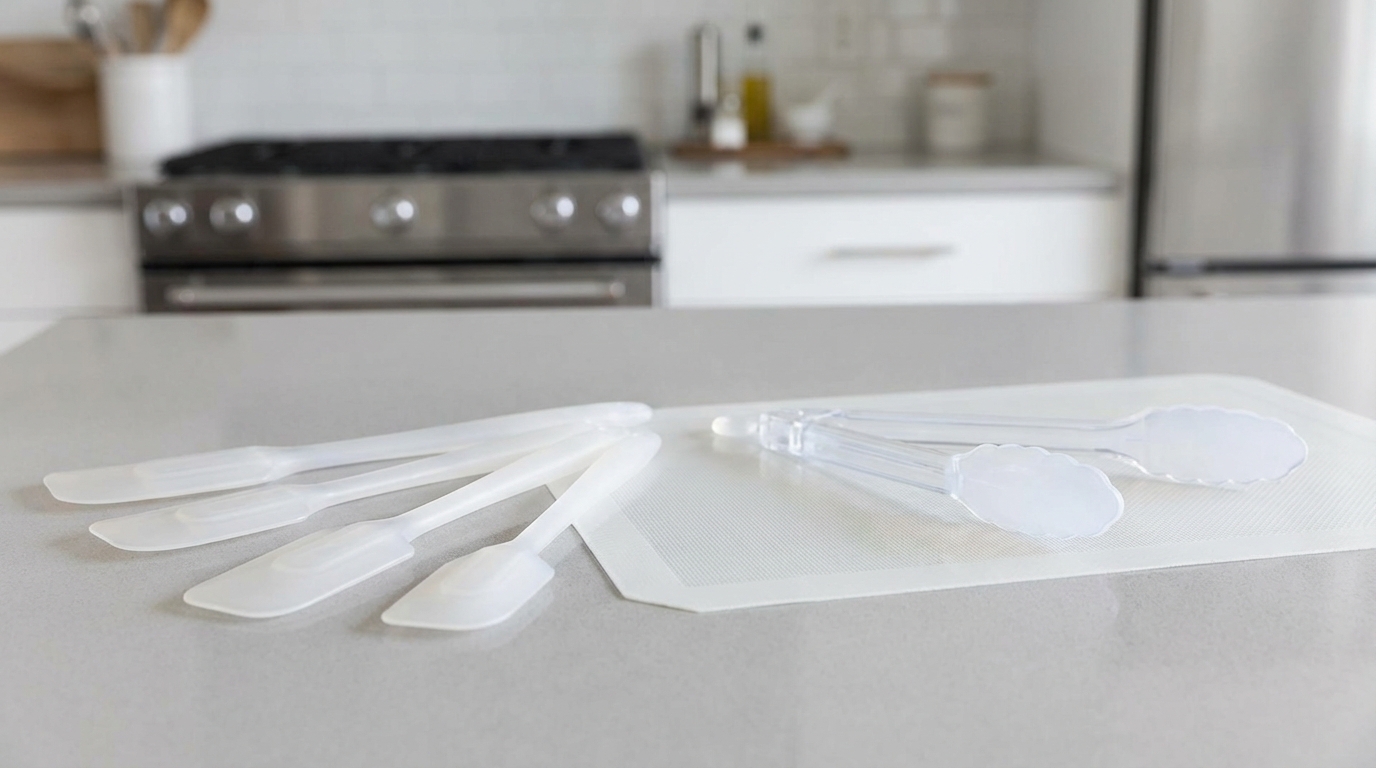
The chemical composition of food-grade silicone involves a highly controlled polymer chain with minimal volatile organic compounds. Standard silicone may include plasticizers and heavy metal stabilizers that are unsuitable for contact with consumable products. Determining whether is medical grade silicone the same as food grade silicone? involves analyzing these specific polymer chain structures and the additives used in the mix. You must prioritize formulations that utilize inorganic polymer colloidal materials made by condensing silicic acid.
What are common fillers?
Industrial silicones often contain chalk or other inexpensive fillers to reduce manufacturing costs. Let’s dive deeper: these fillers can leach into liquids or foods, compromising the safety of the entire production line.
- Use of high-purity siloxane.
- Exclusion of phthalates and BPA.
- Minimal inorganic impurities.
How do catalysts affect the mix?
The choice of catalyst significantly impacts the residual chemicals left in the silicone after the curing process is complete. The reality is simple: food-grade versions use catalysts that do not leave behind toxic byproducts like PCBs.
Key Takeaway: Understanding the chemical makeup allows you to audit your supplier’s material safety data sheets (MSDS) with much higher precision.
| Composition Element | Food-Grade Standard | Regular/Industrial Grade |
|---|---|---|
| Volatile Content | Extremely Low | Variable/Unmonitored |
| Heavy Metals | None detected | May contain traces |
| Polymer Base | High-purity polydimethylsiloxane | Standard siloxane polymers |
Analyzing the molecular structure reveals why food-safe grades maintain their integrity under harsh chemical cleaning protocols.
Why does the curing process matter?
The curing process determines the final stability of the silicone and whether it will release “blooming” residues over time. Food-grade silicone typically employs platinum-curing, which is an addition-cure system that produces no corrosive or odorous byproducts. Many engineers ask, is medical grade silicone the same as food grade silicone? because both often utilize this superior platinum-based method for maximum purity. In contrast, regular silicone often relies on peroxide curing, which can leave behind acid residues and a distinct chemical scent.
What is platinum curing?
Platinum curing involves a cross-linking process that occurs at lower temperatures and results in a more stable elastomer. Consider the impact: using a cleaner curing method means your parts require less post-cure processing to reach safety standards.
- Zero byproduct formation.
- Better dimensional stability.
- Improved tear resistance.
Is peroxide curing safe?
While peroxide curing is efficient for industrial gaskets, it is generally avoided for direct food contact due to the risk of leaching. Look at the data: peroxide-cured silicone often requires extensive post-baking to remove volatile acids.
Key Takeaway: Specifying platinum-cured silicone is the most reliable way to ensure your B2B components meet global food safety directives.
| Curing Type | Platinum (Food-Grade) | Peroxide (Regular) |
|---|---|---|
| Byproducts | None | Organic acids/formates |
| Odor Profile | Odorless | Potential “chemical” smell |
| Tear Strength | Excellent | Moderate |
The curing mechanism serves as the technological backbone for creating non-reactive surfaces suitable for long-term food contact.
What standards define food safety?
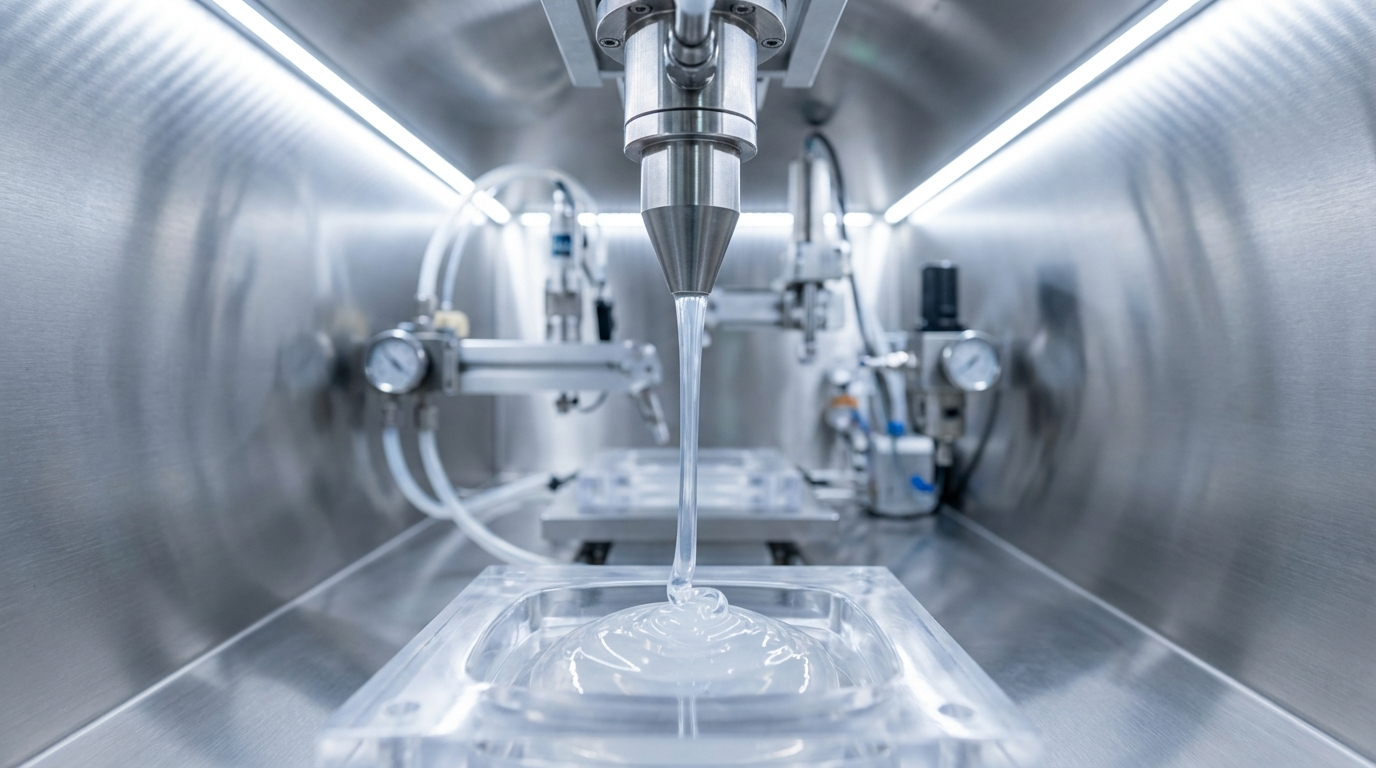
Food-grade silicone is governed by strict international regulations like the FDA 21 CFR 177.2600 in the United States and LFGB in Germany. These standards dictate the maximum allowable levels of extractable substances when the material is exposed to different food simulants. Even when investigating if is medical grade silicone the same as food grade silicone? you will find that the testing protocols for food safety are uniquely rigorous regarding ingestion risks. Compliance ensures that your products can be legally sold and safely used in professional kitchens and food processing plants.
What does the FDA require?
The FDA focuses on the total extractables in distilled water and n-hexane over a specific time period. Ask yourself this: can your current supplier provide certified lab results showing compliance with these specific extraction limits?
- CFR 177.2600 certification.
- Migration testing for fats and oils.
- Verification of non-toxic additives.
Is LFGB more stringent?
European LFGB standards are often considered more rigorous than FDA requirements because they include sensory testing for odor and taste. The bottom line is: products passing LFGB are generally accepted as the highest quality food-grade silicone worldwide.
Key Takeaway: Always request specific testing documentation (FDA or LFGB) rather than accepting a generic “food-grade” label from a supplier.
| Standard | Region | Key Focus Area |
|---|---|---|
| FDA 21 CFR 177.2600 | USA | Chemical extraction limits |
| LFGB | Germany/EU | Sensory and chemical purity |
| REACH | EU | Overall chemical safety |
These regulatory frameworks provide a clear roadmap for quality assurance in the global B2B silicone marketplace.
Is medical grade silicone the same as food grade silicone?
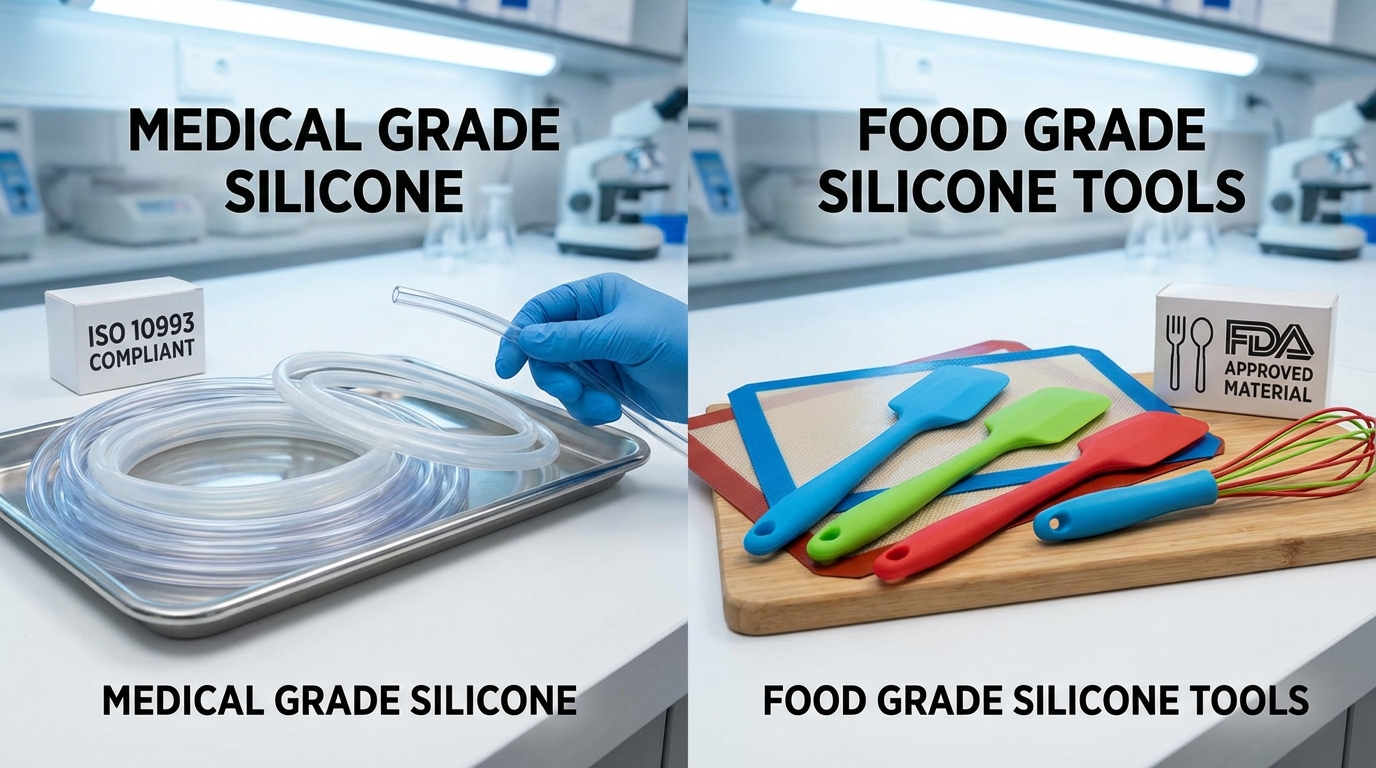
No, is medical grade silicone the same as food grade silicone? is a common question, but medical grade involves much more stringent biocompatibility testing. While food-grade silicone focuses on chemical migration into food, medical-grade silicone must prove it does not cause adverse reactions when in contact with human tissue or blood. Medical grades are often classified as Class V or Class VI, indicating they have passed systemic toxicity and implantation tests. Therefore, while medical grade is usually food-safe, food-grade silicone is not always suitable for medical or surgical applications.
What is Class VI testing?
USP Class VI is the most comprehensive testing protocol for medical silicones, involving several days of monitoring for biological responses. Check the facts: food-grade materials do not undergo these expensive and time-consuming biological assays.
- Acute systemic toxicity tests.
- Intracutaneous reactivity tests.
- Short-term muscle implantation.
Can they be swapped?
Using food-grade silicone for a medical device can lead to legal liability and patient harm if the material is not biocompatible. Focus on this: always use the grade specifically certified for your end-use environment to manage corporate risk.
Key Takeaway: Understanding that medical-grade requires biological validation prevents costly mistakes in product development for healthcare sectors.
| Requirement | Food-Grade | Medical-Grade |
|---|---|---|
| Biocompatibility | Not required | Mandatory (USP Class VI) |
| FDA Compliance | 21 CFR 177.2600 | 21 CFR 177.2600 + ISO 10993 |
| Traceability | Batch level | Strict individual component tracking |
The separation between these two grades is defined by the level of biological interaction the material is expected to handle.
Does it offer better heat resistance?
Food-grade silicone provides exceptional thermal stability, typically maintaining its properties from -60°C up to 230°C. Regular industrial silicone can also handle heat, but it may release smoke or unpleasant odors when it reaches its upper thermal limits. In the context of is medical grade silicone the same as food grade silicone? both grades excel in heat resistance, which is why they are often used in sterilization environments. For B2B applications, food-grade options ensure that heat-sealing components do not degrade or contaminate the product line during high-temperature cycles.
What is the upper limit?
Specially formulated food-grade silicones can withstand intermittent exposure to temperatures as high as 300°C. Here is the truth: standard industrial rubber would melt or become brittle long before reaching these culinary temperatures.
- Resistance to thermal cycling.
- No deformation at boiling points.
- Stable under microwave radiation.
Does cold affect it?
Unlike plastic, food-grade silicone remains flexible in industrial freezers without cracking or becoming fragile. Think about it: this makes it the ideal material for components that must transition from blast chillers to ovens.
Key Takeaway: The superior heat resistance of food-grade silicone translates to a longer service life and fewer replacements in high-heat industrial environments.
| Temperature Range | Food-Grade Performance | Regular Silicone Performance |
|---|---|---|
| High Temp (Continuous) | 230°C (446°F) | 200°C (392°F) |
| Low Temp | -60°C (-76°F) | -40°C (-40°F) |
| Thermal Stability | Extremely High | Moderate to High |
Consistent thermal performance is a hallmark of high-purity silicone formulations used in professional settings.
Can regular silicone leach chemicals?
Regular industrial silicone can leach harmful chemicals like phthalates, VOCs, and siloxanes when exposed to heat or acidic foods. These substances can migrate into the food chain, potentially causing long-term health issues and altering the flavor profile of the end product. When questioning, is medical grade silicone the same as food grade silicone? you must realize that both are designed specifically to prevent this type of migration. Regular silicone lacks the refined manufacturing process required to lock these molecules within the polymer matrix, making it a liability for food contact.
What are VOCs?
Volatile Organic Compounds (VOCs) are gases emitted from certain solids or liquids that can be hazardous if ingested. Let’s dive deeper: industrial silicones often contain “unbound” VOCs that are released the first few times the material is heated.
- Risk of chemical migration.
- Alteration of food flavor.
- Potential endocrine disruptors.
Why is testing critical?
Migration testing simulates real-world conditions to see how much of the material’s weight is lost to the food. The reality is simple: if a material loses weight during a migration test, those chemicals have entered your product.
Key Takeaway: Eliminating the risk of chemical leaching is the primary reason why food-grade certification is non-negotiable for B2B kitchenware.
| Migration Factor | Food-Grade Silicone | Regular Silicone |
|---|---|---|
| Leaching Risk | Minimal/Controlled | High in acidic/fatty foods |
| Sensory Impact | None | Significant “rubbery” taste |
| Long-term Safety | Documented/Proven | High levels of uncertainty |
Prevention of chemical migration is the most significant safety advantage of choosing a certified food-grade elastomer.
Where is it required in B2B?
Food-grade silicone is a requirement in any B2B application involving food processing, pharmaceutical manufacturing, or infant care products. It is found in everything from industrial conveyor belts and gaskets to tubing for beverage dispensing systems. While researching if is medical grade silicone the same as food grade silicone? you will notice that food-grade is the standard for mass-market kitchenware and packaging. Its versatility and safety make it the go-to material for companies looking to comply with health department regulations and international trade laws.
How is it used in pharma?
In pharmaceutical lines, silicone is used for transfer tubing and seals where purity is essential to prevent batch contamination. Consider the impact: a single contaminated batch due to poor material choice can cost a company millions in lost revenue.
- Dairy and beverage hoses.
- Oven gaskets and seals.
- Pharmaceutical stoppers.
What about infant care?
Baby bottle nipples and pacifiers are almost exclusively made from high-transparency food-grade LSR (Liquid Silicone Rubber). Look at the data: silicone’s hypoallergenic properties make it the safest choice for newborns and sensitive users.
Key Takeaway: Identifying the specific high-contact points in your production line allows you to prioritize where food-grade silicone is most essential.
| Industry Sector | Primary Application | Required Certification |
|---|---|---|
| Food Processing | Conveyor belts & gaskets | FDA / LFGB |
| Pharmaceutical | Fluid transfer tubing | FDA / USP Class VI |
| Hospitality | Professional kitchenware | NSF / LFGB |
Industrial reliance on food-grade materials ensures a secure supply chain from raw material to the final consumer.
Is the investment worth the cost?
The higher upfront cost of food-grade silicone is easily justified by the reduction in regulatory risk and the increased durability of the material. Using cheaper industrial silicone in a food environment can lead to massive recalls, legal fines, and a total loss of consumer trust. Many businesses find that asking, is medical grade silicone the same as food grade silicone? helps them understand the value of paying for specialized certifications. Furthermore, food-grade silicone often lasts longer due to its superior fumed silica base, reducing the frequency of maintenance and replacement parts.
What are the recall risks?
Recalling a product because of chemical contamination is a logistical nightmare that can bankrupt a small-to-mid-sized firm. Ask yourself this: is saving a few cents per unit worth risking the entire future of your brand?
- Legal defense costs.
- Loss of retail partnerships.
- Permanent brand damage.
Does quality impact life?
Higher purity materials resist tearing and oxidative stress much better than low-grade alternatives. The bottom line is: a food-grade gasket might last twice as long as an industrial one, balancing out the price difference over time.
Key Takeaway: View food-grade silicone as an insurance policy that protects your business from the catastrophic costs of non-compliance.
| Cost Variable | High-Grade Silicone | Low-Grade Alternative |
|---|---|---|
| Unit Price | Higher | Lower |
| Replacement Frequency | Low | High |
| Compliance Risk | Zero | Substantial |
Long-term financial analysis consistently shows that high-quality materials provide a better return on investment for B2B manufacturers.
How do you verify supplier quality?
Verifying a supplier involves requesting up-to-date FDA/LFGB certification and performing batch-level quality checks on transparency and odor. A reputable supplier should be able to provide a Material Property Table and a clear chain of custody for their raw siloxane. Knowing is medical grade silicone the same as food grade silicone? is just the beginning; you must also ensure the supplier follows Good Manufacturing Practices (GMP). Without these checks, you risk receiving “counterfeit” food-grade silicone that is actually a blended industrial product.
What certifications matter?
Look for ISO 9001 for quality management and specific lab reports from third-party testers like SGS or Intertek. Check the facts: a photocopied certificate from five years ago is not sufficient proof of current batch quality.
- Current lab test reports.
- ISO quality certifications.
- Material traceability documents.
Can you test it yourself?
A simple “twist test” can reveal if a product contains cheap fillers, as it will turn white at the point of stress. Focus on this: performing your own internal QC on incoming shipments is the last line of defense for your production quality.
Key Takeaway: Establishing a rigorous vetting process for your silicone suppliers is the only way to guarantee the safety of your end products.
| Verification Step | Purpose | Expected Outcome |
|---|---|---|
| Document Audit | Confirm legal compliance | Valid FDA/LFGB certs |
| Sensory Test | Detect VOCs/fillers | No odor / No whitening |
| Traceability Check | Ensure batch consistency | Full raw material history |
Strict supplier oversight is the final step in securing a high-performance, food-safe manufacturing environment.
Conclusion
Distinguishing between food-grade and regular silicone is a technical necessity for any B2B organization operating in safety-critical sectors. We have solved the confusion surrounding chemical compositions, curing methods, and regulatory standards to help you make informed procurement decisions. Whether you are developing kitchenware or industrial processing lines, our insights ensure you avoid the pitfalls of chemical migration and regulatory non-compliance.
At HuaLin, we are committed to advancing the standards of silicone technology through high-purity formulations and rigorous quality control. We believe that material integrity is the foundation of consumer safety and industrial excellence. If you are ready to upgrade your supply chain or need custom-engineered silicone solutions, please contact us today to speak with our technical experts.
FAQ
Can I use industrial silicone for a temporary food-contact fix?
No, it is not recommended. Regular silicone can immediately begin leaching volatile compounds or odors into food, especially when heated, which poses a safety risk.
What’s the best way to clean food-grade silicone?
Yes, absolutely. You should use warm soapy water or a dishwasher, as food-grade silicone is highly resistant to heat and common detergents without degrading.
How do I know if my silicone is truly food-grade?
No, a label isn’t enough. Perform a stretch test to look for whitening and always request a current FDA or LFGB testing report from the manufacturer.
Can I bake with any type of silicone?
No, you cannot. Only silicone specifically labeled as food-grade or platinum-cured should be used for baking to ensure it doesn’t release toxic fumes or chemicals at high temperatures.
How do I know if a supplier is reliable?
Yes, by checking their certifications. A reliable supplier will proactively provide ISO documentation and recent third-party lab results for their specific silicone batches.