
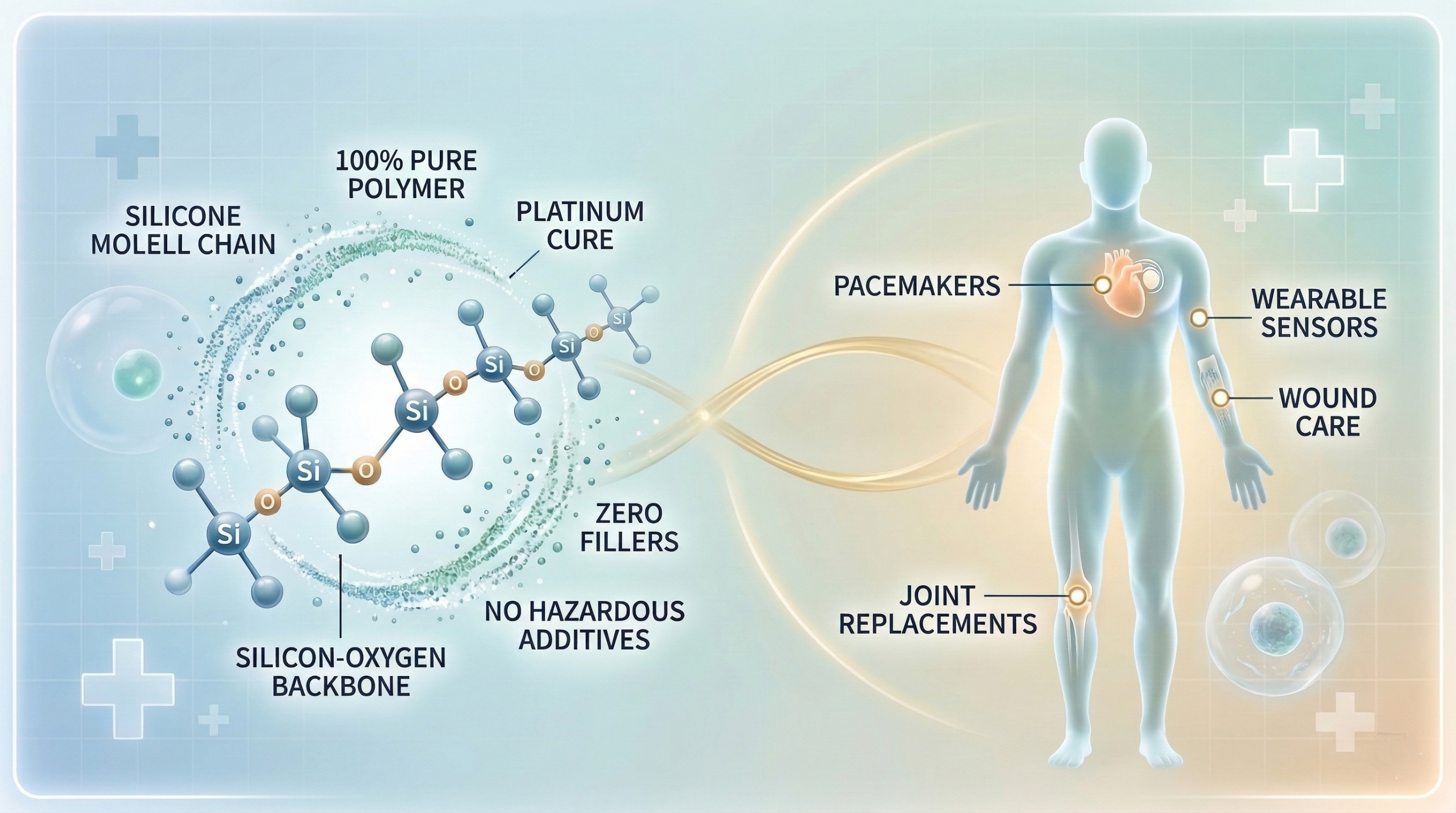
Yes, 100 percent medical grade silicone is exceptionally safe because it is specifically engineered for biocompatibility and long-term interaction with human tissue without causing toxicity. You may find it difficult to distinguish between high-quality polymers and those containing toxic fillers in a market flooded with synthetic materials. Using the wrong material in personal care or medical applications can lead to chemical leaching and long-term health complications that are not immediately visible. Choosing medical grade silicone provides the gold standard for safety in sensitive environments.
What defines 100 percent medical grade silicone?
This material is defined as an ultra-pure polymer that has been rigorously tested to ensure it contains zero hazardous fillers, plasticizers, or industrial additives. This high level of medical grade silicone is specifically synthesized to maintain its chemical integrity when in contact with biological systems. Manufacturers achieve this purity through specialized distillation and platinum-curing processes that eliminate toxic byproducts. It represents the highest tier of elastomer safety available for modern medical manufacturing.
What are the core components?
The core structure consists of a silicon-oxygen backbone with organic side groups that provide flexibility and stability. Unlike industrial grades, it lacks the phthalates and BPA that can compromise safety.
Here is the deal:
- High-purity silica
- Oxygen-rich polymer chains
- Platinum curing catalysts
- Zero heavy metal fillers
How is the designation achieved?
Designation is achieved through a series of stringent laboratory tests that evaluate how the material reacts to living cells. You might be wondering: does “100 percent” mean literally nothing else is inside? While curing agents are used, they are completely neutralized during the manufacturing process.
Key Takeaway: Purity is the fundamental requirement for biocompatibility in silicone polymers.
| Feature | Requirement | Benefit |
|---|---|---|
| Additives | 0% Fillers | No chemical leaching |
| Curing | Platinum-cured | High purity, no odor |
| Testing | Biocompatibility | Safe for tissue contact |
Structural purity determines how the polymer behaves under environmental and physiological stress.
Is medical grade silicone safe for skin contact?
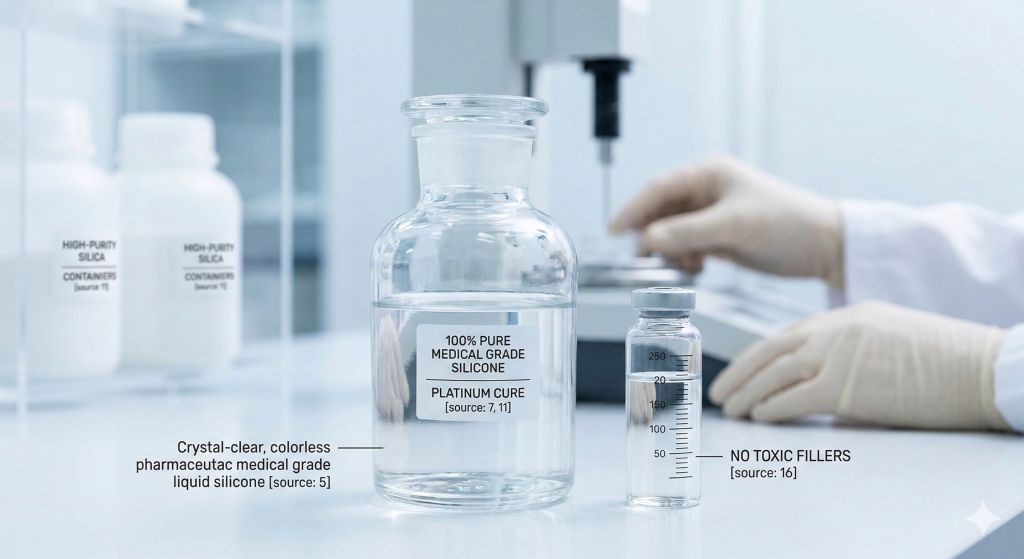
Yes, medical grade silicone is highly safe for skin contact because it is non-irritating, hypoallergenic, and does not support the growth of bacteria or fungi. This material provides a soft, flexible barrier that is ideal for wearable health monitors and advanced wound care systems. You can wear devices made from this polymer for extended periods without experiencing the redness or itching common with lower-grade elastomers. Medical grade silicone remains the preferred choice for those with sensitive skin or dermatological conditions.
Is the material hypoallergenic?
The material is entirely free from the proteins and latex often found in natural rubbers, making it safe for those with severe allergies. It maintains a neutral pH that does not disrupt your skin’s natural moisture barrier.
Look:
- Latex-free composition
- Non-porous surface
- Odorless and tasteless
- Low surface tension
Can it cause irritation?
Irritation is extremely rare and usually stems from external contaminants trapped between the silicone and the skin rather than the silicone itself. Think about it: if the material were reactive, it could not be used for long-term surgical dressings.
Key Takeaway: Hypoallergenic properties make this material the safest option for prolonged skin exposure.
| Contact Type | Safety Level | Primary Use Case |
|---|---|---|
| Short-term | Excellent | Blood pressure cuffs |
| Prolonged | High | Wearable sensors |
| Sensitive Skin | Superior | Pediatric wound care |
Surface energy and chemical inertness prevent the polymer from reacting with human sweat or oils.
How does it differ from food grade silicone?
Medical grade silicone differs from food grade variants by adhering to much stricter purity standards and undergoing more rigorous biocompatibility testing. While food grade versions are safe for ingestion contact, medical grade silicone must pass cytotoxicity and systemic toxicity evaluations for internal use. The manufacturing environments for medical grades are also more controlled to prevent any environmental contamination. You are essentially paying for a higher level of documented safety and material consistency.
Are the manufacturing standards more rigorous?
Manufacturing occurs in cleanroom environments where air quality and temperature are strictly monitored to prevent microscopic debris from entering the mix. This ensures that every batch meets the exact specifications required for healthcare applications.
To make matters worse:
- Industrial grade uses peroxide catalysts
- Food grade may contain minor fillers
- Medical grade uses platinum-curing exclusively
- Trace impurities are strictly prohibited
What specific purity tests differentiate the two?
Purity tests for medical grades include long-term implantation studies and complex chemical analysis for extractable substances. The bottom line is this: medical grade is safe for your body’s interior, while food grade is only for your kitchen.
Key Takeaway: Medical grade standards exceed food grade requirements in both purity and testing documentation.
| Criteria | Food Grade | Medical Grade |
|---|---|---|
| Testing | FDA 21 CFR 177.2600 | USP Class VI / ISO 10993 |
| Curing | Peroxide or Platinum | Platinum Only |
| Application | Kitchenware/Storage | Implants/Tubing |
Higher regulatory hurdles ensure that medical-grade polymers can withstand internal physiological environments.
Is it safe for long-term internal medical use?
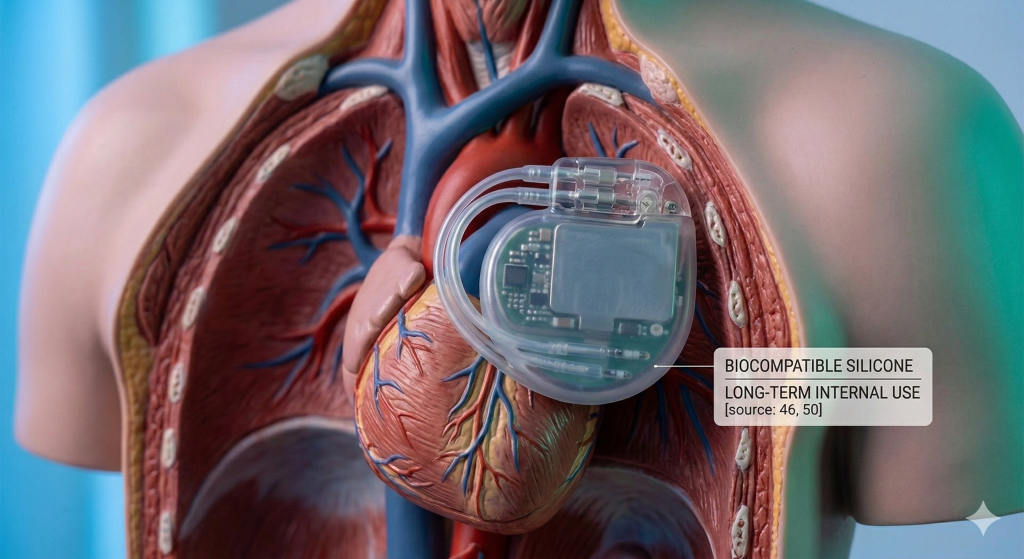
Yes, medical grade silicone is safe for long-term internal use because it is chemically inert and does not degrade when exposed to bodily fluids. This stability makes it the material of choice for pacemakers, joint replacements, and various catheters. You can trust that the material will not trigger a chronic inflammatory response or break down into harmful components inside the body. Its physical properties remain consistent even after years of internal placement.
How does the body react?
The human body generally recognizes this silicone as a neutral substance, resulting in minimal fibrous encapsulation or immune system rejection. It is designed to be “biologically invisible” once implanted.
In simple terms:
- No toxic leaching
- Resists protein absorption
- Does not trigger immune attacks
- Flexible to match tissue density
What is the risk of degradation?
The risk of degradation is virtually zero under normal physiological conditions because the silicon-oxygen bond is incredibly strong. It gets better: the material resists the enzymatic breakdown that destroys many other synthetic polymers.
Key Takeaway: Long-term internal safety is guaranteed by the material’s chemical stability and biocompatibility.
| Duration | Safety Profile | Example Application |
|---|---|---|
| Short-term | Certified | Drainage tubes |
| Mid-term | Certified | Peritoneal dialysis |
| Long-term | Certified | Breast/Joint implants |
Molecular stability prevents the breakdown of polymer chains during exposure to complex biological enzymes.
What makes 100 percent purity critical for safety?
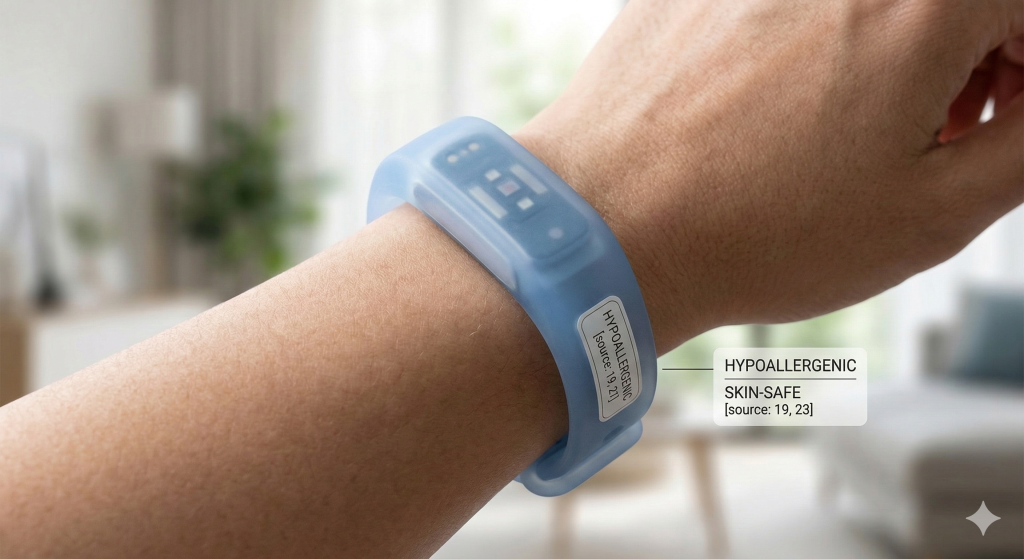
Purity is critical because any additives or fillers in the polymer can leach out and cause systemic toxicity or local tissue damage. Using 100 percent medical grade silicone ensures that there are no “unknowns” that could react with medication or biological tissue. Impure silicones often use clay or calcium fillers that can harbor bacteria or cause the material to become brittle over time. You want a material that performs exactly the same way in every single application.
How do fillers impact safety?
Fillers can act as reservoirs for contaminants and may migrate to the surface of the material, causing a chemical reaction with your body. But why does this matter? Because even trace amounts of heavy metals can lead to chronic health issues.
Let’s dive deeper:
- Fillers reduce material strength
- Additives increase leaching risks
- Purity ensures predictable aging
- Zero risk of chemical migration
Can impure silicone lead to leaching?
Impure silicone is far more likely to leach volatile organic compounds (VOCs) when exposed to heat or acidic environments. Think about it: you wouldn’t want industrial chemicals seeping into an open wound or an internal organ.
Key Takeaway: 100 percent purity eliminates the risks associated with chemical migration and material failure.
| Component | Pure Silicone | Impure Silicone |
|---|---|---|
| Fillers | None | Clay, Chalk, Silica |
| Leaching Risk | Extremely Low | Moderate to High |
| Durability | High Stability | Prone to Cracking |
Maintaining 100 percent purity ensures the material remains non-reactive across its entire lifecycle.
Can medical grade silicone cause allergic reactions?
No, medical grade silicone does not contain the reactive proteins found in natural rubber, making it an inherently non-allergenic material for the vast majority of people. While it is possible to have a sensitivity to almost any substance, true silicone allergies are documented as being extremely rare in clinical literature. You are much more likely to react to the soaps or lotions trapped under a silicone seal than to the silicone itself. It remains the gold standard for patients who have developed life-threatening latex sensitivities.
Is it protein-free?
The synthetic nature of the polymer means it contains zero plant or animal proteins, which are the primary triggers for common elastomer allergies. This makes it a “safe harbor” material for medical device manufacturers.
Look:
- 100% Synthetic
- Zero Latex Proteins
- No Vulcanization Accelerators
- No Residual Solvents
What are the rare triggers?
In the few cases where sensitivity occurs, it is usually a reaction to residual curing agents in lower-quality products rather than the medical grade polymer. You might be wondering: how can I be sure? Choosing certified medical grades ensures those agents are fully removed.
Key Takeaway: Medical grade silicone is the industry-leading alternative for latex-allergic individuals.
| Material | Protein Content | Allergy Risk |
|---|---|---|
| Latex | High | Moderate to High |
| Nitrile | None | Low (Accelerators) |
| Medical Silicone | None | Extremely Rare |
The absence of organic proteins effectively eliminates the pathway for immunoglobulin-E mediated allergic responses.
Is it safe to use in high-temperature environments?
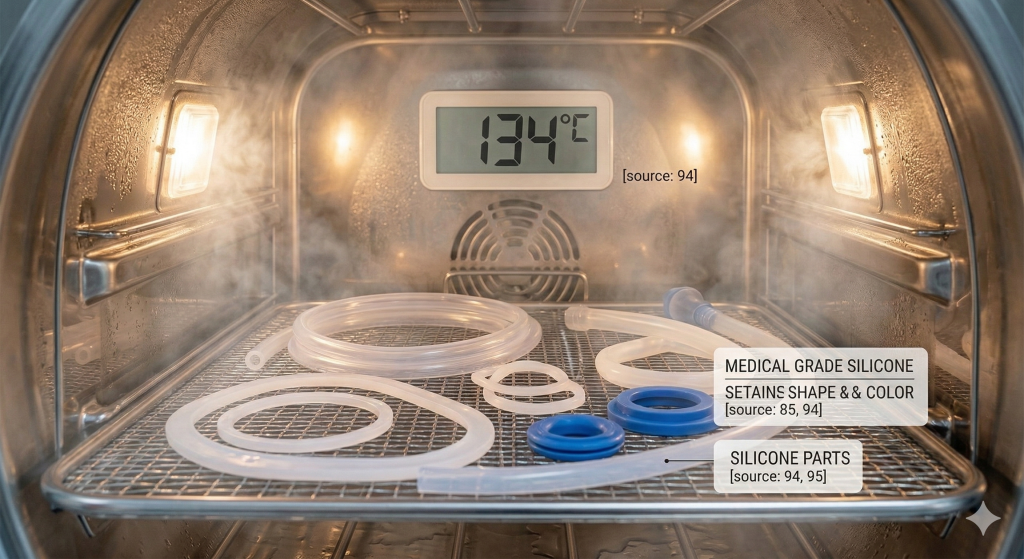
Yes, medical grade silicone is safe for high-temperature environments because it maintains its mechanical properties and chemical stability up to 200°C (392°F) and beyond. This thermal resistance allows medical grade silicone to be repeatedly sterilized in autoclaves without melting, warping, or off-gassing toxic fumes. You can rely on this material to maintain a tight seal and remain flexible even after hundreds of sterilization cycles. It is one of the few flexible materials that can handle the extreme heat required for modern medical hygiene.
Does heat trigger toxic fumes?
Unlike PVC or other plastics, this polymer does not release chlorine gas or dioxins when heated to standard sterilization temperatures. The bottom line is this: it is as thermally stable as many high-tech ceramics.
Think about it:
- Resists thermal oxidation
- Low thermal conductivity
- Maintains seal integrity
- No toxic off-gassing
At what temperature does it stay stable?
The material remains stable from -60°C to over 200°C, making it versatile for both cryogenic storage and high-heat processing. You can freeze it or boil it without changing its molecular structure.
Key Takeaway: Thermal stability ensures the material remains safe and functional during rigorous sterilization.
| Process | Temperature | Silicone Status |
|---|---|---|
| Autoclave | 121°C – 134°C | Fully Stable |
| Dry Heat | Up to 200°C | Fully Stable |
| Boiling Water | 100°C | Fully Stable |
High bond energy between silicon and oxygen atoms prevents thermal degradation in extreme environments.
How is the safety of medical silicone tested?
Safety is tested through a battery of standardized protocols including USP Class VI and ISO 10993, which evaluate cytotoxicity, sensitization, and systemic toxicity. These tests involve exposing the medical grade silicone to living cell cultures and biological systems to ensure no adverse reactions occur. You can verify the safety of a product by requesting the manufacturer’s compliance certificates and laboratory test reports. This rigorous vetting process ensures that only the most reliable materials reach the patient.
What is USP Class VI?
USP Class VI is the most stringent of the six plastic classes, requiring the material to pass systemic injection and intracutaneous tests. Here is the deal: it is the benchmark for any material intended for medical use.
In simple terms:
- Acute systemic toxicity test
- Intracutaneous reactivity test
- Muscle implantation test
- Cell growth inhibition test
How is cytotoxicity measured?
Cytotoxicity testing involves placing the material in a dish with living cells to see if it kills or inhibits their growth. You might be wondering: what happens if a cell dies? The material fails immediately and cannot be labeled as medical grade.
Key Takeaway: Standardized testing provides a documented guarantee of material safety for human use.
| Test Standard | Focus Area | Outcome |
|---|---|---|
| ISO 10993 | Biocompatibility | Non-toxic to cells |
| USP Class VI | In-vivo reaction | No tissue irritation |
| REACH/RoHS | Chemical content | No hazardous substances |
Multistage testing protocols eliminate the risk of introducing reactive materials into the medical supply chain.
Does medical grade silicone leach chemicals?
No, medical grade silicone does not leach chemicals because the polymer chains are cross-linked into a stable matrix that prevents the migration of internal components. High-quality medical grade silicone is specifically processed to remove “extractables,” which are small molecules that could otherwise escape into fluids. You can use this tubing for blood transfer or pharmaceutical processing without worrying about contaminating the sensitive liquids. It is widely considered one of the most leach-resistant flexible materials in existence.
Is it resistant to solvents?
The material is highly resistant to many common alcohols and mild acids used in medical settings, preventing chemical breakdown during use. Think about it: if it leached, it would change the color or chemistry of the fluids passing through it.
Look:
- Low extractable profile
- High chemical resistance
- Cross-linked stability
- Non-reactive surface
How does the curing process help?
Platinum curing creates a more stable molecular bond than older peroxide methods, leaving no acidic residues behind that could leach. The bottom line is this: the cleaner the cure, the safer the product.
Key Takeaway: Cross-linked molecular structures prevent the leaching of chemicals into sensitive fluids.
| Solvent | Resistance Level | Leaching Risk |
|---|---|---|
| Water / Saline | Excellent | None |
| Isopropyl Alcohol | High | Negligible |
| Bodily Fluids | Superior | None |
Molecular entanglement and strong covalent bonding prevent the migration of low-molecular-weight species.
Why is medical grade silicone preferred in healthcare?
Healthcare providers prefer this material because it combines extreme safety with high durability and the ability to be shaped into complex, life-saving components. Medical grade silicone offers a unique balance of flexibility and strength that plastics and natural rubbers simply cannot match. You see it used in everything from heart valves to simple gaskets because it performs reliably under pressure. Ultimately, its long history of safety and performance makes it the trusted choice for clinicians worldwide.
How does durability benefit practitioners?
The material does not become brittle or sticky over time, meaning medical devices remain functional and safe throughout their intended shelf life. You don’t have to worry about a seal failing during a critical procedure.
Think about it:
- Long-term shelf stability
- Resists compression set
- Easy to sterilize/reuse
- Consistent performance
Is it easy to sterilize?
Its ability to withstand steam, gamma radiation, and ethylene oxide sterilization makes it incredibly versatile for hospital workflows. The bottom line is this: it saves lives by ensuring devices stay sterile and intact.
Key Takeaway: The combination of safety, durability, and versatility makes silicone the healthcare industry standard.
| Benefit | Impact on Patient | Impact on Provider |
|---|---|---|
| Biocompatibility | No adverse reactions | Lower liability risk |
| Sterilizability | Lower infection risk | Easier maintenance |
| Durability | Fewer replacements | Cost-effective |
The synergy of physical resilience and biological inertness drives the widespread adoption of medical silicone.
Conclusion
In summary, 100 percent medical grade silicone is one of the safest materials ever developed for human health applications. Its purity, thermal stability, and lack of toxic fillers solve the common problems of chemical leaching and skin irritation associated with industrial polymers. You can integrate this material into your medical designs or personal care routines with total confidence in its biocompatibility. For certified, high-performance solutions tailored to your specific needs, please contact us to discuss your requirements. We are committed to maintaining the highest standards of safety for the healthcare industry.
FAQ
Can I boil medical grade silicone to clean it?
Yes, boiling is a safe and effective way to sterilize this material because it can withstand temperatures far above 100°C without degrading.
What is the best way to verify if silicone is truly medical grade?
Check for certifications such as USP Class VI or ISO 10993, as these documents prove the material has passed rigorous biocompatibility testing.
Can I use medical grade silicone if I have a latex allergy?
Yes, it is 100 percent latex-free and protein-free, making it the safest alternative for individuals with severe rubber allergies.
Does medical grade silicone contain BPA?
No, it is a completely different polymer structure that does not require BPA or phthalates for flexibility or strength.
How long does medical grade silicone last?
Years, as the material is highly resistant to environmental aging, UV light, and moisture, ensuring it remains safe throughout its lifecycle.