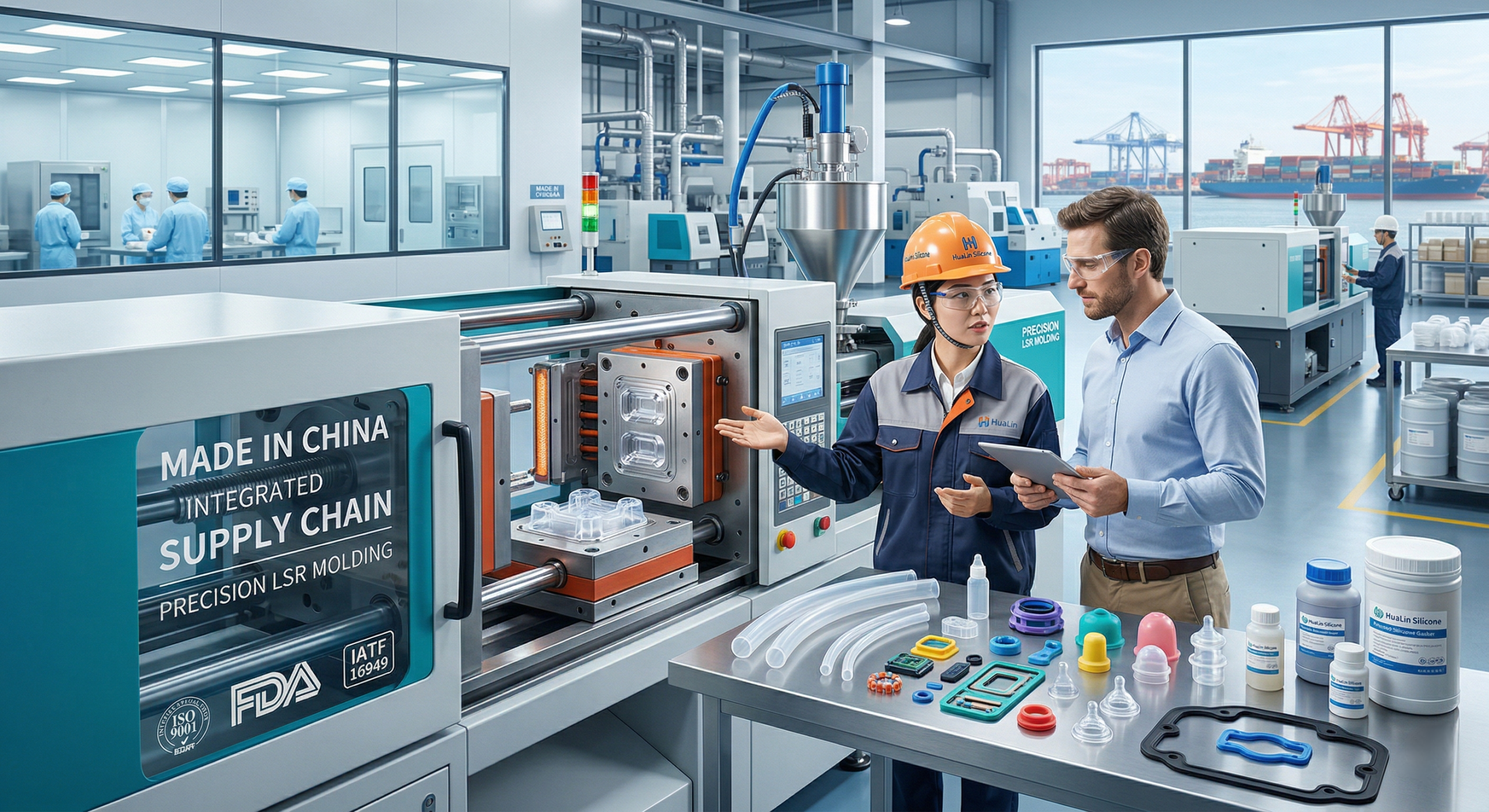
The top 10 silicone manufacturers in China include industry leaders like Hesheng Silicone, Bluestar, and specialized precision partners such as HuaLin Silicone. Finding a reliable supplier in a crowded market can be a daunting task that risks your production timeline and product quality. If you choose the wrong partner, you face inconsistent dimensions and material failures that hurt your brand reputation. This guide provides the ultimate solution by highlighting the best factories and teaching you how to source silicone products from China with total confidence.
Why is China the leader in global silicone production?
China dominates the global market because it possesses a fully integrated supply chain that ranges from raw silica mining to advanced liquid silicone injection. When you look at the sheer scale of production, it is clear that no other region can match the cost-effectiveness and speed of Chinese hubs. Learning how to source silicone products from China allows your business to leverage these massive manufacturing advantages.
How does the integrated supply chain benefit you?
The integration of raw material processing and finished goods manufacturing reduces logistics costs and lead times significantly. By having everything in one ecosystem, factories can react faster to design changes or volume spikes.
Think about this:
- Reduced transit time for raw materials.
- Lower overhead costs passed to the buyer.
- Faster prototyping cycles.
- Immediate access to specialized silicone grades.
The bottom line? You get a more responsive supply chain that keeps your inventory lean and your product launches on schedule.
Why is technological innovation accelerating?
Chinese manufacturers are no longer just followers; they are now pioneering high-performance elastomers for the electronics and medical sectors. Heavy investment in R&D means you can access custom formulations that meet the most stringent engineering requirements.
Here is the thing:
- Adoption of automated LSR injection systems.
- Development of eco-friendly, halogen-free materials.
- Enhanced precision in micro-molding.
- Advanced overmolding techniques for hybrid parts.
Key Takeaway
China’s silicone dominance is built on a foundation of logistical efficiency and a rapid shift toward high-tech, specialized manufacturing.
| Advantage | Business Impact |
|---|---|
| Integrated Chain | Lower unit costs |
| R&D Investment | Access to advanced materials |
| Scalability | Support for high-volume orders |
This industrial ecosystem ensures that your sourcing strategy remains competitive in an increasingly demanding global market.
Who are the top 10 silicone manufacturers in China?
The top 10 manufacturers consist of diversified chemical giants and precision-focused custom factories like Hesheng Silicone, Hubei Xingfa, and HuaLin Silicone. These companies set the standard for quality and reliability in the international market. Understanding the landscape is the first step in how to source silicone products from China effectively.
Which giants lead the raw material sector?
Companies like Hesheng Silicone and Hubei Xingfa focus on large-scale production of silicone rubber, oils, and resins. They provide the high-quality base materials that the rest of the industry relies on for manufacturing.
Check this out:
- Hesheng Silicone: Expert in high-purity resins.
- Hubei Xingfa: Large-scale material throughput.
- Bluestar Silicones: Global standards with local efficiency.
- Sanyou Chemical: Leader in adhesives and sealants.
But wait, there’s more: these giants ensure a stable global supply of the chemical building blocks needed for every silicone part you design.
Who are the specialized custom manufacturing experts?
For B2B buyers needing specific parts, factories like HuaLin Silicone and Dongguan New Orient offer tailored OEM/ODM services. They bridge the gap between raw chemicals and the finished, high-precision components your project requires.
The best part?
- HuaLin Silicone: 15+ years of custom LSR expertise.
- Jiangsu Hongda: Specialist in fluids and emulsions.
- Shenzhen Kanglibang: Focus on adhesives and thermal conductivity.
- Shandong Dayi: Innovation in healthcare sectors.
- Guangzhou Jointas: Environmentally friendly industrial solutions.
- Betterly New Material: High-performance electronics elastomers.
Key Takeaway
Choosing between a material giant and a custom manufacturer depends on whether you need raw bulk silicone or finished precision parts.
| Manufacturer Category | Best For |
|---|---|
| Chemical Giants | Bulk raw materials & resins |
| Custom OEM Factories | Precision parts & assembly |
| Technical Specialists | Adhesives & thermal solutions |
Partnering with the right tier of supplier ensures that your technical requirements and volume needs are perfectly aligned.
How do you select the right manufacturing process?
Selecting the right process involves evaluating your part’s complexity, desired tolerances, and total production volume to choose between LSR or compression molding. The choice you make directly impacts the durability and function of your final component.
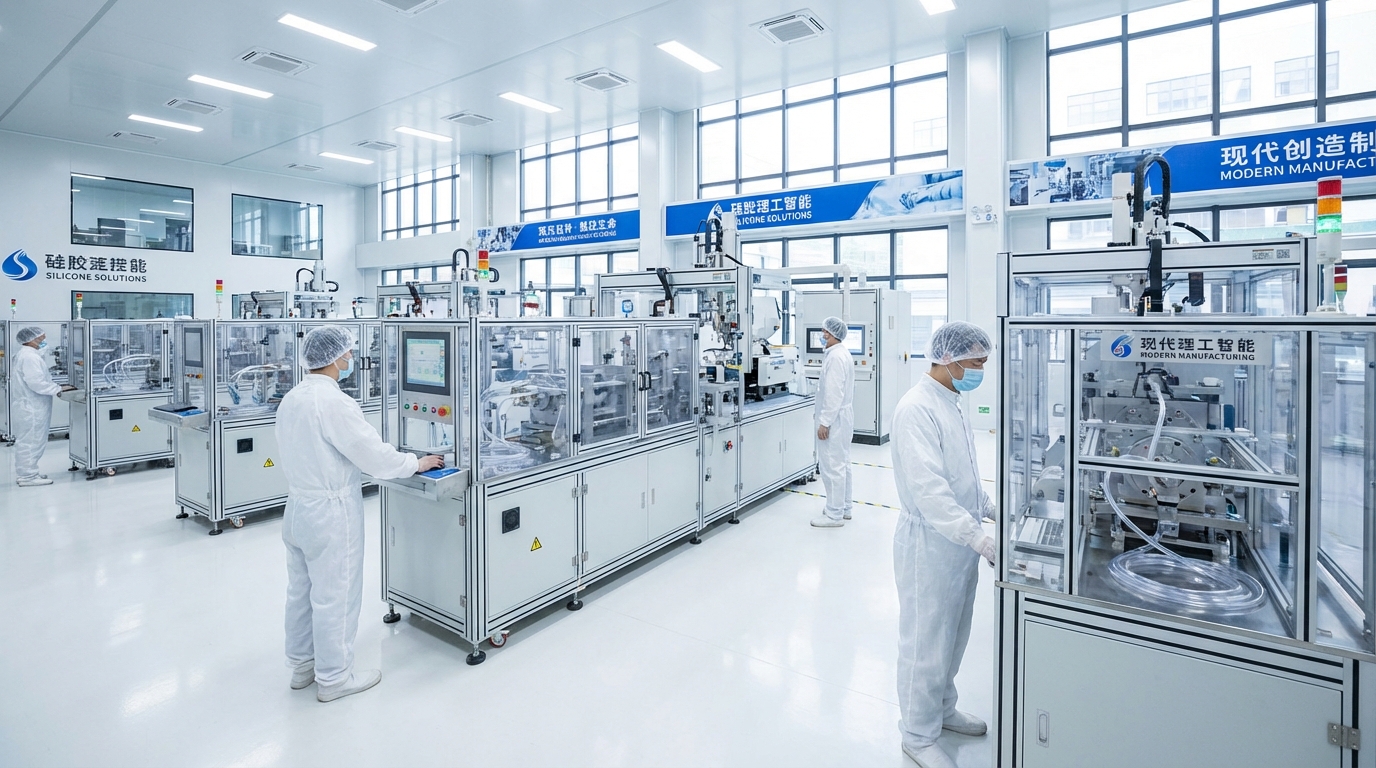
When is Liquid Silicone Rubber (LSR) the best choice?
LSR injection molding is the gold standard for high-precision, high-volume parts that require tight tolerances and excellent biological inertness. This automated process ensures that every single piece is identical, which is critical for safety-first industries.
Listen closely:
- Ideal for complex geometries.
- Best for medical and food-grade applications.
- Offers the fastest cycle times for mass production.
- Minimal flash and waste material.
The reality is this: while the initial tooling cost is higher, the per-unit price and quality consistency make it unbeatable for scale.
Why consider silicone overmolding for your design?
Overmolding allows you to bond silicone directly to metal or plastic substrates, creating a single, seamless part with multiple functional properties. This eliminates the need for manual assembly and significantly improves the waterproof seal of your device.
Why does this matter?
- Enhances grip and ergonomics.
- Creates permanent waterproof barriers.
- Reduces assembly labor costs.
- Protects internal electronics from shock.
Key Takeaway
LSR is best for precision and volume, while overmolding is the superior choice for multi-material parts requiring high durability.
| Process | Precision | Tooling Cost | Ideal Volume |
|---|---|---|---|
| LSR Injection | Very High | High | High |
| Compression | Moderate | Low | Low to Mid |
| Overmolding | High | Moderate | Mid to High |
Aligning your design with the appropriate manufacturing route prevents over-engineering and keeps your project within budget.
What certifications should you look for in a supplier?
You must verify that your supplier holds ISO 9001 for quality management and industry-specific certifications like IATF 16949 for automotive or FDA for food safety. Knowing how to source silicone products from China requires a “compliance-first” mindset to avoid legal and quality risks.
What do ISO and IATF standards actually prove?
These certifications are not just pieces of paper; they prove that the factory has a repeatable, documented system for controlling quality. IATF 16949, in particular, shows a commitment to the rigorous defect-prevention standards required by the automotive industry.
Make no mistake:
- Ensures traceability of every batch.
- Guarantees a standardized QC workflow.
- Proves the factory can handle complex audits.
- Minimizes the risk of receiving “off-spec” parts.
It gets better: working with certified factories simplifies your own internal quality audits and strengthens your supply chain’s reliability.
Is food-grade or medical compliance necessary?
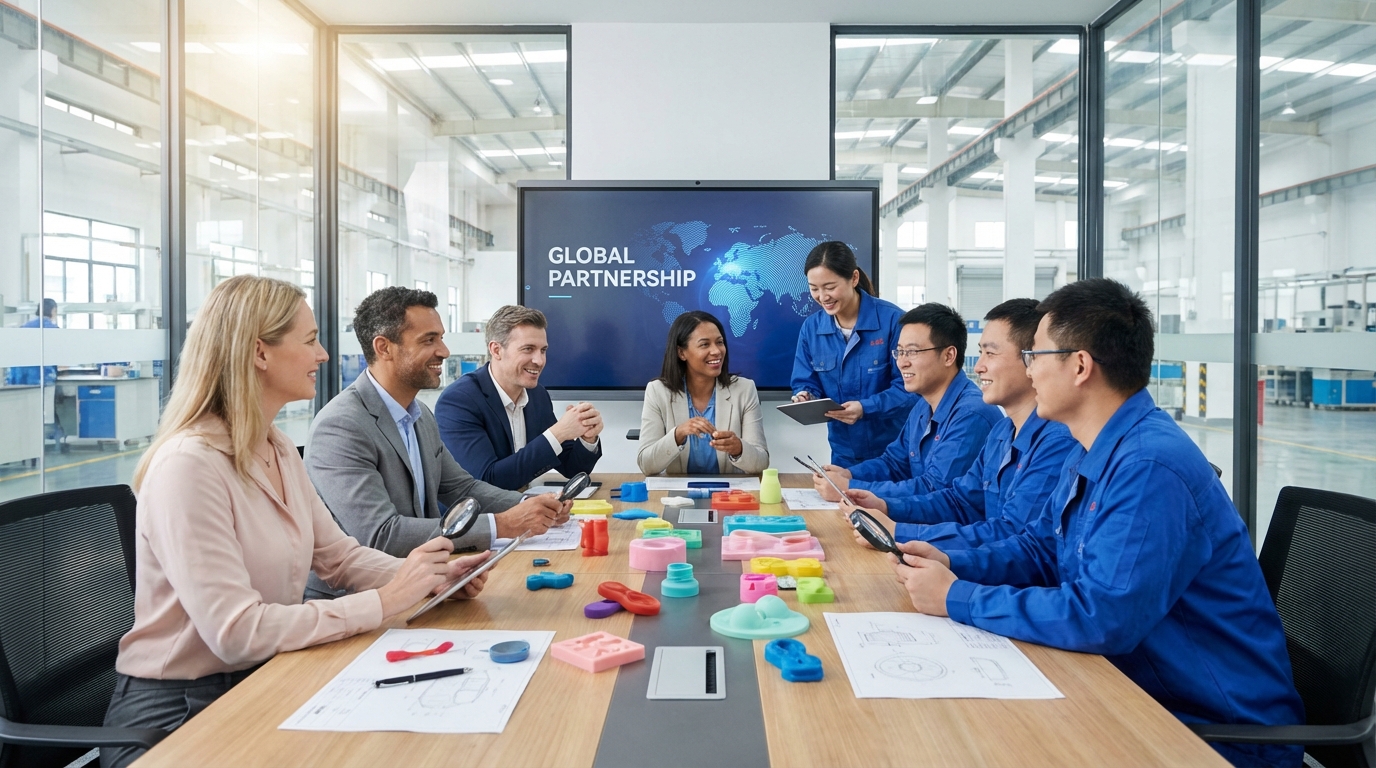
If your product touches food or skin, you must demand FDA or LFGB compliance to ensure the silicone is free from harmful leachables. Medical-grade parts often require additional ISO 13485 certification and manufacturing in controlled cleanroom environments.
Here is the kicker:
- Non-toxic and hypoallergenic materials.
- Biocompatibility testing reports.
- Cleanroom production to prevent contamination.
- Resistance to sterilization processes.
Key Takeaway
Certifications are the only objective way to verify that a factory’s quality claims are backed by rigorous international standards.
| Certification | Industry | Main Focus |
|---|---|---|
| ISO 9001 | General | Quality Management |
| IATF 16949 | Automotive | Defect Prevention |
| FDA/LFGB | Food/Medical | Material Safety |
Verifying these documents early in the sourcing process protects you from future recalls and high-liability failures.
Why is HuaLin Silicone a top choice for custom orders?
HuaLin Silicone is a top choice because we integrate in-house mold making with 15+ years of expertise to deliver precision LSR and overmolded parts. We understand the nuances of the global market and provide the engineering support needed to turn complex drawings into mass-produced reality.
How does in-house tooling benefit your project?
By making our own molds, we eliminate the communication gaps and delays that occur when a factory outsources tooling to a third party. This allows for faster iterations and ensures that the mold is perfectly optimized for our specific injection machines.
The best part?
- Faster prototyping and sampling.
- Lower overall tooling investment.
- Immediate adjustments during DFM.
- Long-term mold maintenance included.
You might wonder: why wait weeks for a third-party shop when our in-house team can start your project the moment the design is finalized?
What makes our export experience valuable?
With over 15 years serving European and American markets, we have mastered the logistics, documentation, and quality expectations of international B2B buyers. We don’t just manufacture parts; we manage the entire supply chain from our factory to your warehouse.
Think about this:
- Seamless English-speaking engineering support.
- Full compliance with Western quality standards.
- Expert handling of international shipping.
- Transparent lead times and project tracking.
Key Takeaway
HuaLin Silicone combines technical precision with a deep understanding of international business needs to offer a low-risk sourcing solution.
| Service Feature | Buyer Benefit |
|---|---|
| In-House Tooling | Faster time-to-market |
| 15+ Years Export | Reliable communication |
| End-to-End Support | Reduced supply chain stress |
Our focus on stability and precision ensures that your custom silicone parts perform perfectly in even the harshest operating environments.
How do you source high-quality medical silicone parts?
Sourcing medical silicone requires selecting a partner with cleanroom facilities and a robust traceability system for raw materials. Understanding how to source silicone products from China in the medical sector means prioritizing biocompatibility and strict regulatory adherence above all else.
Why is cleanroom manufacturing essential for health?
Medical parts must be free from dust, oils, and microbes that could cause infections or device failure. Cleanrooms provide a controlled environment where air filtration and strict entry protocols keep the manufacturing process sterile.

Listen closely:
- Prevents particulate contamination.
- Maintains material purity.
- Required for FDA-regulated devices.
- Ensures consistent part performance.
The bottom line? If a supplier cannot show you their cleanroom, they are not a true medical-grade manufacturer.
How do you verify material biocompatibility?
You must request detailed material data sheets and third-party lab reports that prove the silicone has passed USP Class VI or ISO 10993 testing. This documentation is vital for your own regulatory filings and for ensuring patient safety.
Here is the thing:
- Verifies skin and tissue compatibility.
- Ensures the part won’t degrade in the body.
- Proves resistance to common medical fluids.
- Supports your 510(k) or CE mark applications.
Key Takeaway
Medical silicone sourcing is a specialized field that demands cleanroom production and verified biocompatibility documentation.
| Medical Requirement | Why it Matters |
|---|---|
| Cleanroom Class 100k | Prevent contamination |
| USP Class VI | Ensure safety for contact |
| ISO 13485 | Medical Quality System |
By focusing on these high standards, you eliminate the risks associated with critical healthcare and surgical components.
What are the biggest risks when sourcing from China?
The biggest risks include dimensional inconsistencies, material “substitution” with lower-grade fillers, and communication barriers that lead to design errors. While China offers immense value, you must have a plan to mitigate these common pitfalls through rigorous auditing.
How can you prevent dimensional inconsistencies?
Inconsistent parts often stem from poor mold design or unstable curing temperatures during the production run. The solution is to work with a factory that uses automated process control and performs regular “first-article” inspections.
Make no mistake:
- Request a detailed DFM report.
- Verify the factory’s tolerance capabilities.
- Ask for CPK (Process Capability) data.
- Ensure they use high-precision CNC for tooling.
The reality is this: a slight error in a gasket’s thickness can lead to a catastrophic leak in your final product.
What is the best way to handle communication gaps?
Communication failures often happen when technical requirements get “lost in translation” between the sales team and the shop floor. You should prioritize suppliers who provide a dedicated project manager with strong technical English skills.
It gets better:
- Use 3D models (STP/IGS) to avoid confusion.
- Document every change in writing.
- Schedule video calls for complex reviews.
- Ask for a “Golden Sample” for final approval.
Key Takeaway
Managing sourcing risks requires a combination of technical verification (DFM) and clear, documented communication channels.
| Risk Factor | Mitigation Strategy |
|---|---|
| Part Tolerance | Request CPK & DFM reports |
| Material Grade | Ask for batch material certs |
| Lead Time | Weekly production updates |
Taking these proactive steps ensures that the final shipment matches your original engineering specifications exactly.
How does the production workflow ensure consistency?
A professional workflow ensures consistency by applying a “DFM-first” engineering review followed by automated production and multi-stage quality checks. When learning how to source silicone products from China, you should look for factories that integrate these steps into one controlled system.
Why is the DFM-first approach critical?
Design for Manufacturing (DFM) identifies potential issues like trapped air, thin walls, or difficult de-molding before the mold is even cut. This saves you thousands of dollars in tooling modifications and prevents delays.
Check this out:
- Optimizes part geometry for flow.
- Identifies the best gate locations.
- Suggests cost-saving modifications.
- Ensures the part is “moldable” at scale.
But wait, there’s more: a good DFM review can often reduce your cycle time, which lowers your per-part price significantly.
How do IQC and FQC protect your brand?
Incoming Quality Control (IQC) verifies the raw material, while Final Quality Control (FQC) ensures the finished parts meet your appearance and functional standards. This double-layered approach catches defects early and prevents faulty parts from reaching your warehouse.
Why does this matter?
- No “bad” batches reach your customers.
- Reduces the cost of returns and scrap.
- Maintains your reputation for quality.
- Ensures all parts are within tolerance.
Key Takeaway
Consistency is the result of a disciplined workflow that prioritizes engineering review and rigorous inspection at every stage.
| Workflow Stage | Primary Goal |
|---|---|
| DFM Review | Design optimization |
| Tooling | Precision geometry |
| IQC / IPQC | In-process stability |
| FQC / OQC | Final shipment quality |
A controlled workflow is the only way to guarantee that the 100,000th part is just as perfect as the first prototype.
What specific silicone products can you source?
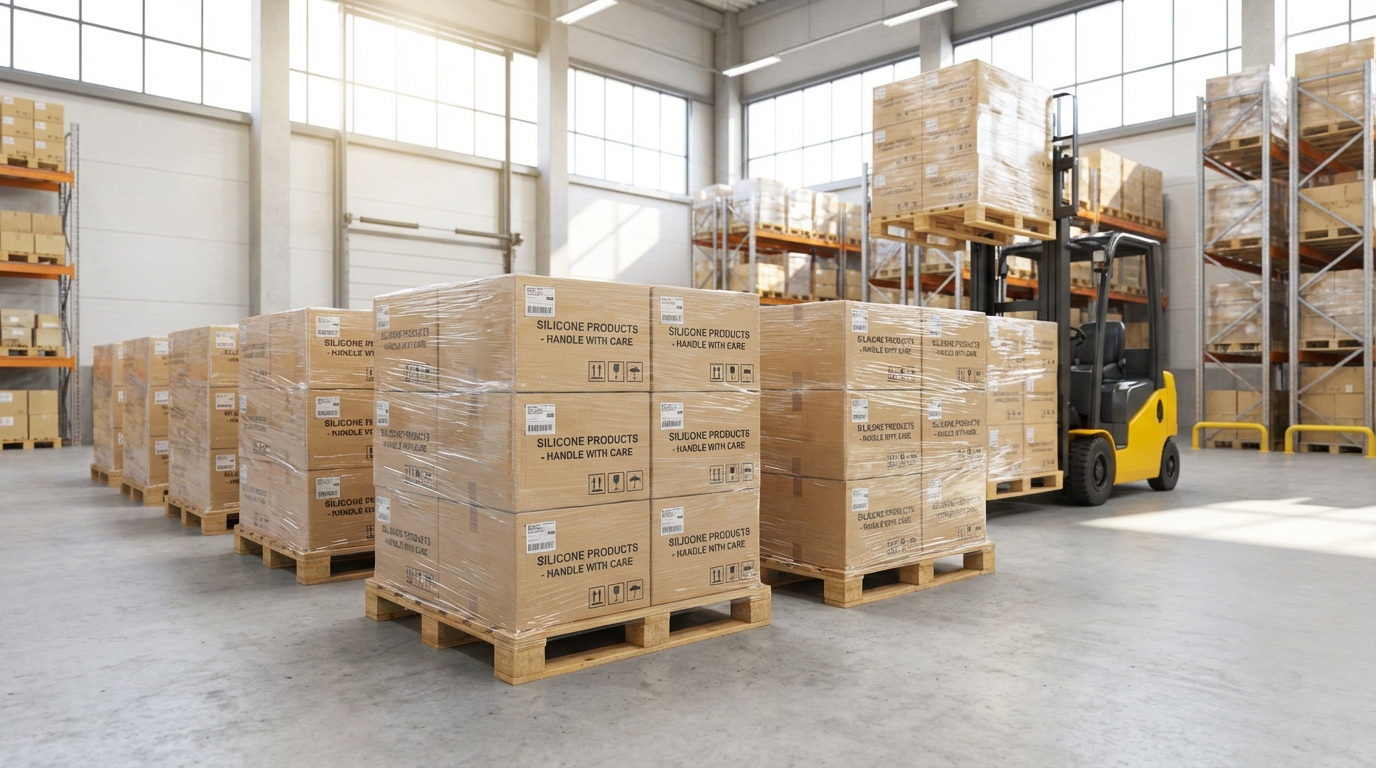
You can source a wide variety of products including precision electronics components, durable baby care items, and high-performance automotive seals. China’s factories are equipped to handle diverse material requirements ranging from soft, skin-safe grades to rigid, high-temperature industrial versions.
What are the top options for consumer electronics?
In the electronics sector, silicone is used for waterproof seals, protective sleeves, and acoustic components that isolate sound. The material’s ability to be overmolded onto plastic makes it ideal for ruggedized devices and smart wearables.
Think about this:
- Waterproof gaskets (IP67/IP68).
- Soft-touch protective cases.
- Precision ear tips for audio.
- Tactile keypads and buttons.
The best part? Silicone’s natural durability protects sensitive internal components from environmental damage and physical shock.
Why source maternal and baby care products?
Silicone is the preferred material for baby products because it is BPA-free, heat-resistant, and incredibly easy to clean. From pacifiers to feeding spoons, the material offers a safe and hygienic solution that parents trust.
Listen closely:
- 100% food-grade compliance.
- Soft textures for sensitive gums.
- Dishwasher and microwave safe.
- Long-lasting and chew-resistant.
Key Takeaway
Silicone’s versatility allows you to source high-performance parts across almost every consumer and industrial category.
| Industry Sector | Common Products |
|---|---|
| Electronics | Seals, Sleeves, Keypads |
| Baby Care | Pacifiers, Teethers, Spoons |
| Automotive | Gaskets, Hoses, O-rings |
Whether you need soft ergonomics or industrial-strength sealing, there is a specialized silicone grade and factory ready for your project.
How do you start your sourcing journey today?
To start your journey, you must prepare a comprehensive RFQ (Request for Quote) that includes 3D drawings, material specs, and estimated annual volumes. Success in China sourcing relies on providing clear data and evaluating potential partners through sample testing and factory audits.
What details are essential for a professional RFQ?
A vague RFQ leads to vague pricing; the more detail you provide, the more accurate and competitive your quote will be. You should always include critical tolerances and any secondary operations like printing or coating.
You might wonder:
- Part 2D/3D drawings (PDF & STP).
- Material type and hardness (Shore A).
- Specific color (Pantone/RAL).
- Certification requirements (FDA/ISO).
The reality is this: providing these details upfront shows the factory you are a serious B2B buyer and helps you get to the top of their priority list.
How should you evaluate initial samples?
Never move to mass production without thoroughly testing a “first article” sample in your final application. Use this stage to verify dimensional accuracy, color matching, and the strength of any multi-material bonds (overmolding).
Here is the kicker:
- Test functionality in real-world conditions.
- Verify the “hand feel” and aesthetics.
- Confirm the material certs match the sample.
- Use samples to set the “Limit Standard” for QC.
Key Takeaway
Starting right means providing high-quality data and using prototypes to validate the factory’s technical capabilities.
| Sourcing Step | Key Focus |
|---|---|
| RFQ Phase | Clear specs & volume |
| Sampling | Functional validation |
| Pilot Run | Scaling the process |
By following this structured approach, you minimize surprises and build a profitable, long-term relationship with your Chinese manufacturer.
FAQs
- Can I get a free DFM review for my silicone part drawing?
Yes, professional manufacturers like HuaLin Silicone typically provide a complimentary DFM review as part of the quoting process. We do this to ensure your design is optimized for manufacturing, which reduces risks for both parties. - Can I request custom Pantone color matching for my brand?
Absolutely. Most top-tier factories can match any Pantone or RAL color code, though you should verify this with a physical sample before mass production. Color consistency is a key metric in our quality control process. - Can I order medical-grade silicone with biocompatibility reports?
Yes, you can and you should always demand these reports. We provide full documentation for medical projects, ensuring the material meets USP Class VI or ISO 10993 standards for safety and compliance. - Can I visit your factory in Dongguan for a quality audit?
Definitely. We encourage B2B buyers to visit our facility to see our cleanrooms and automated injection machines firsthand. Transparency is a core value, and we are happy to support your internal audit requirements. - Can I get support for international shipping and door-to-door delivery?
Yes, we offer comprehensive logistics support including DDP, CIF, and FOB shipping terms. Our team handles the export documentation and coordinates with trusted carriers to ensure your parts arrive safely and on time.
Conclusion
Finding the right partner among the top 10 silicone manufacturers in China is the most critical decision for your project’s success. Whether you need the massive output of a material giant like Hesheng or the precision-engineered custom solutions offered by HuaLin Silicone, the key is prioritizing quality certifications and technical transparency.
We have explored the advantages of China’s integrated supply chain, the necessity of DFM-first workflows, and the rigorous standards required for medical and electronic components. By following the steps outlined in this guide, you now have a clear roadmap for how to source silicone products from China with minimal risk and maximum value.
At HuaLin Silicone, our vision is to empower global innovation through precision manufacturing and stable, repeatable processes. We are dedicated to helping European and American businesses launch faster by providing factory-direct engineering expertise and ISO-certified quality.
Ready to turn your design into a high-performance silicone reality? Contact us today to receive a professional DFM review and a detailed quotation for your custom project.