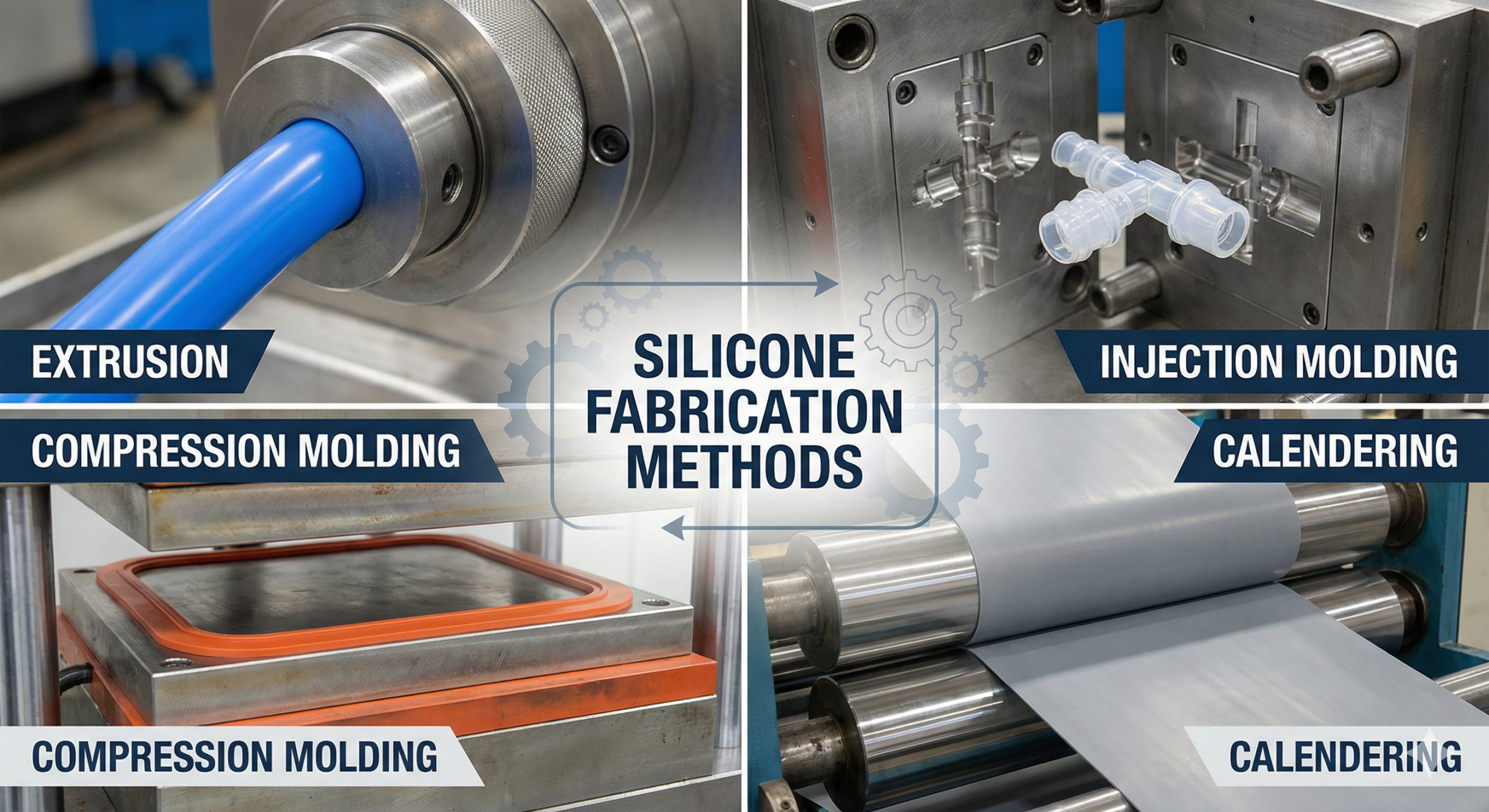
Fabricating silicone rubber requires matching the specific chemical properties of the elastomer with a mechanical process that ensures structural integrity and precision. If you struggle with inconsistent part quality or high material waste, you are likely using an outdated or mismatched production workflow that eats into your margins. By understanding how to manufacture silicone products, you can optimize your assembly lines for maximum durability and cost-efficiency.
How do you choose the right silicone fabrication method?
Choosing the right method depends on your part’s geometry, production volume, and the specific viscosity of the raw silicone material. Deciding how to manufacture silicone products effectively involves a deep dive into the trade-offs between speed and precision. You must evaluate whether your design requires the high flow of liquid systems or the density of high-consistency rubber.
What factors influence the selection process?
Selecting the optimal process requires balancing the upfront tooling costs against the long-term per-unit price. High-volume consumer goods often justify expensive automated tooling, while industrial prototypes may benefit from simpler, manual techniques.
Here is the kicker:
- Geometry Complexity: Intricate designs need liquid injection.
- Production Scale: High volume favors automated injection molding.
- Material Grade: HCR and LSR require different processing equipment.
Key Takeaway: The best fabrication method is a compromise between the mechanical requirements of the design and the economic reality of the production run.
| Selection Pillar | Description | Impact |
|---|---|---|
| Part Geometry | Internal cavities and thin walls | Dictates molding type |
| Volume | Total units needed (100 vs. 1M) | Determines automation level |
| Material | HCR vs. LSR | Defines machine requirements |
The table above illustrates the foundational elements that drive every successful manufacturing decision in the silicone industry.
What makes extrusion ideal for continuous silicone profiles?
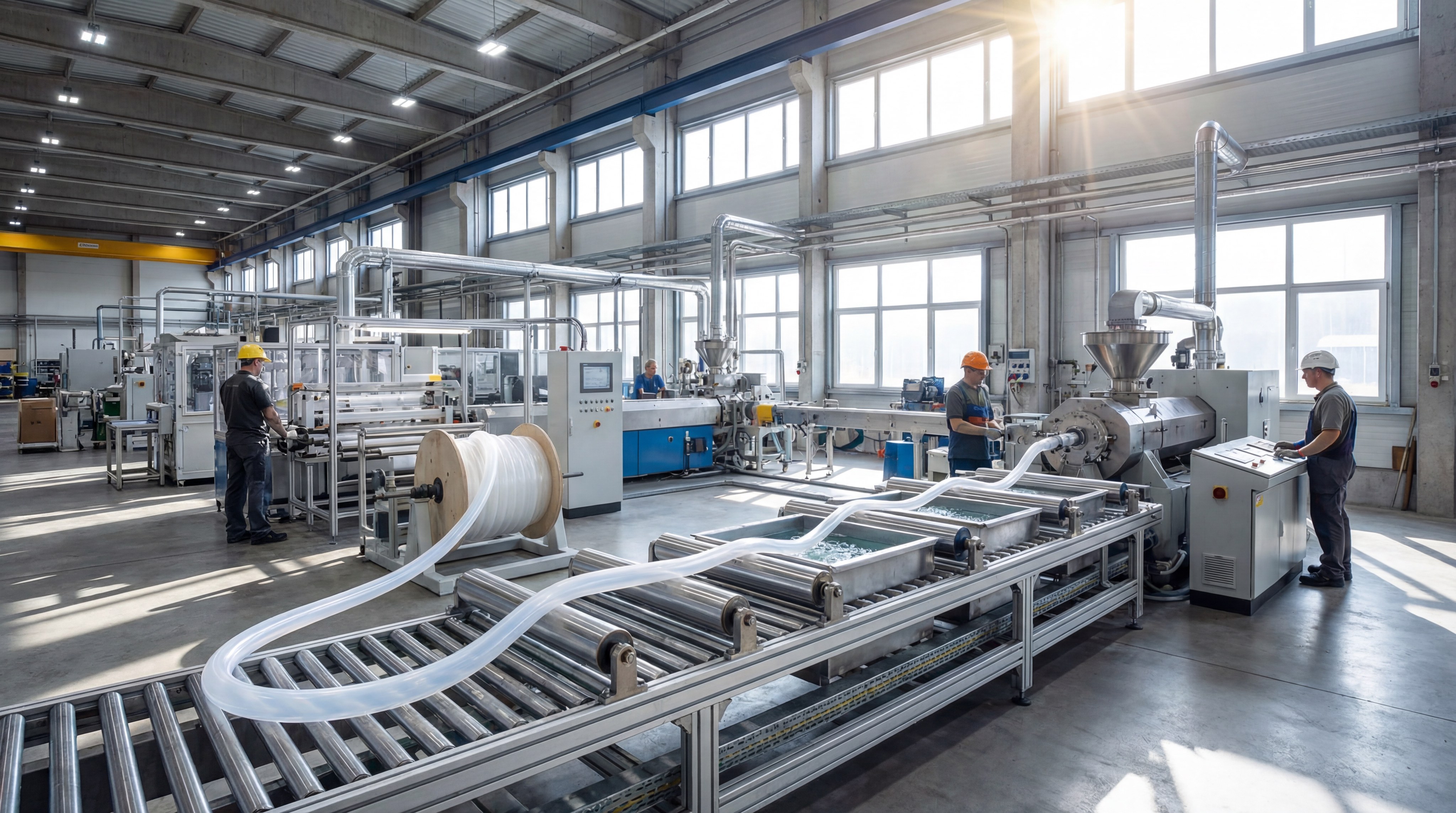
Extrusion is the primary choice for creating continuous lengths of uniform cross-sections like tubing and seals. When you analyze how to manufacture silicone products that require long-run profiles, extrusion stands out as the most efficient mechanical path. It forces silicone through a shaped die before passing it through a vulcanizing tunnel for curing.
Which products are best suited for extrusion?
Extrusion is incredibly versatile for industrial, medical, and architectural applications. Because the process is continuous, it allows for high-speed production of items that must be sold by the meter or foot.
But wait, there’s more:
- Medical Tubing: High-purity silicone for fluid transfer.
- Door Seals: Weather-resistant gaskets for the automotive sector.
- Wire Insulation: Protective silicone sleeves for high-temp cables.
Key Takeaway: Extrusion is the most economical way to produce infinite lengths of silicone with a consistent profile and internal diameter.
| Component | Function | Advantage |
|---|---|---|
| Extruder Screw | Pushes HCR through the die | Consistent material flow |
| Shaping Die | Determines the part’s profile | High dimensional accuracy |
| HAV Tunnel | Cures the rubber with heat | Rapid vulcanization |
This setup ensures that continuous profiles remain stable and functional across their entire length without material defects.
Why is injection molding preferred for high-volume parts?
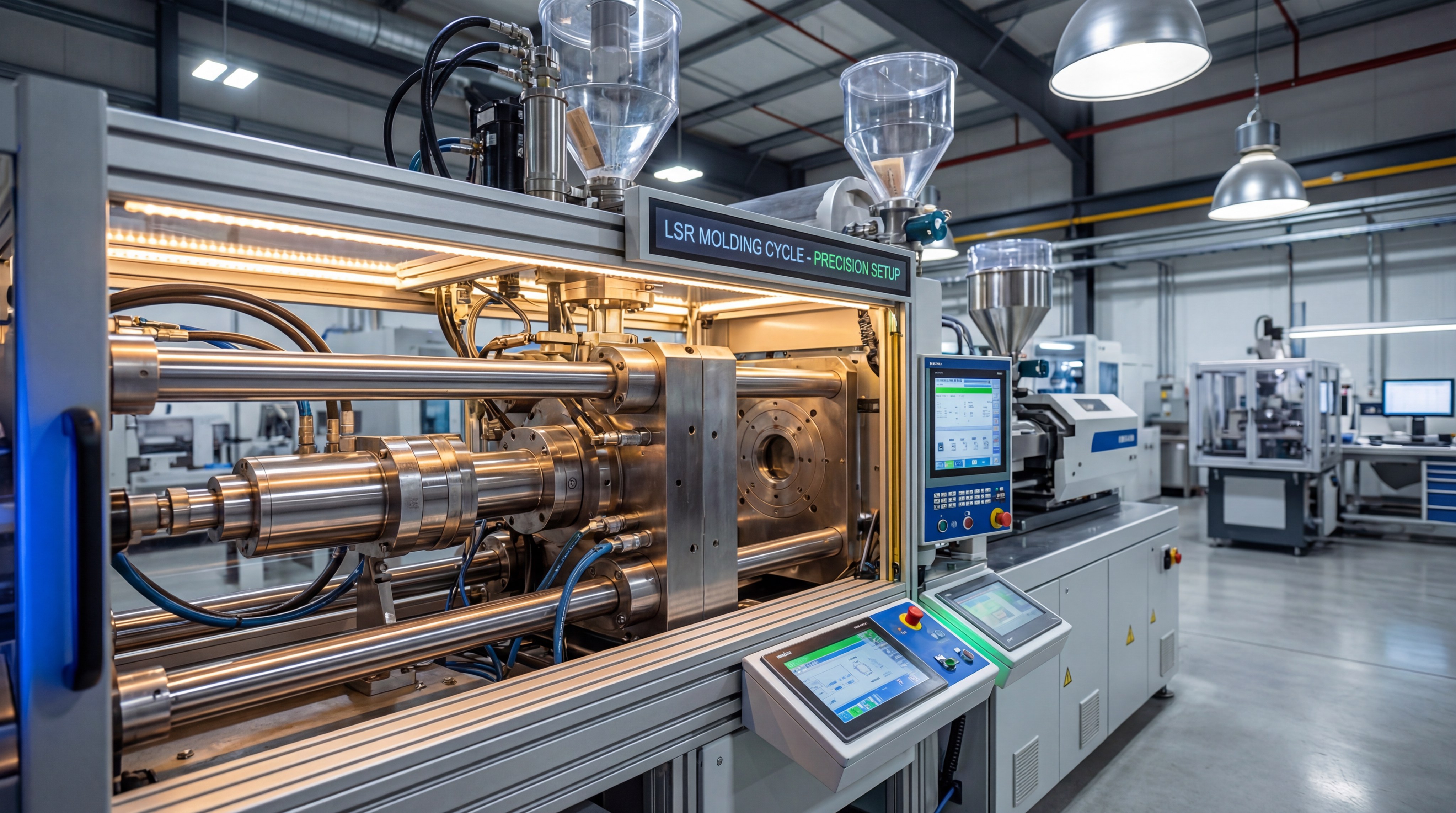
Injection molding is preferred for high-volume parts because it offers rapid cycle times and excellent repeatability for complex shapes. Scaling up how to manufacture silicone products usually requires the automation and high-pressure capabilities found in injection systems. This process minimizes manual labor while maintaining tight tolerances across millions of units.
Can you achieve complex geometries with this method?
Injection molding allows for the creation of intricate internal structures that would be impossible with other fabrication techniques. The high pressure ensures that the material reaches every corner of the mold, even in very thin-walled sections.
Think about it:
- Thin Walls: Possible down to 0.5mm in some designs.
- Internal Threads: Molded directly into the component.
- Overmolding: Bonding silicone to plastic or metal substrates.
Key Takeaway: High-pressure injection is the gold standard for parts that require both high complexity and high production speed.
| Metric | Injection Molding | Comparison |
|---|---|---|
| Cycle Time | 30 – 90 Seconds | Very Fast |
| Precision | High | Superior to Compression |
| Labor Cost | Low | High degree of automation |
Utilizing injection molding effectively reduces the total cost of ownership for mass-market silicone components through increased efficiency.
How does liquid injection molding enhance precision?
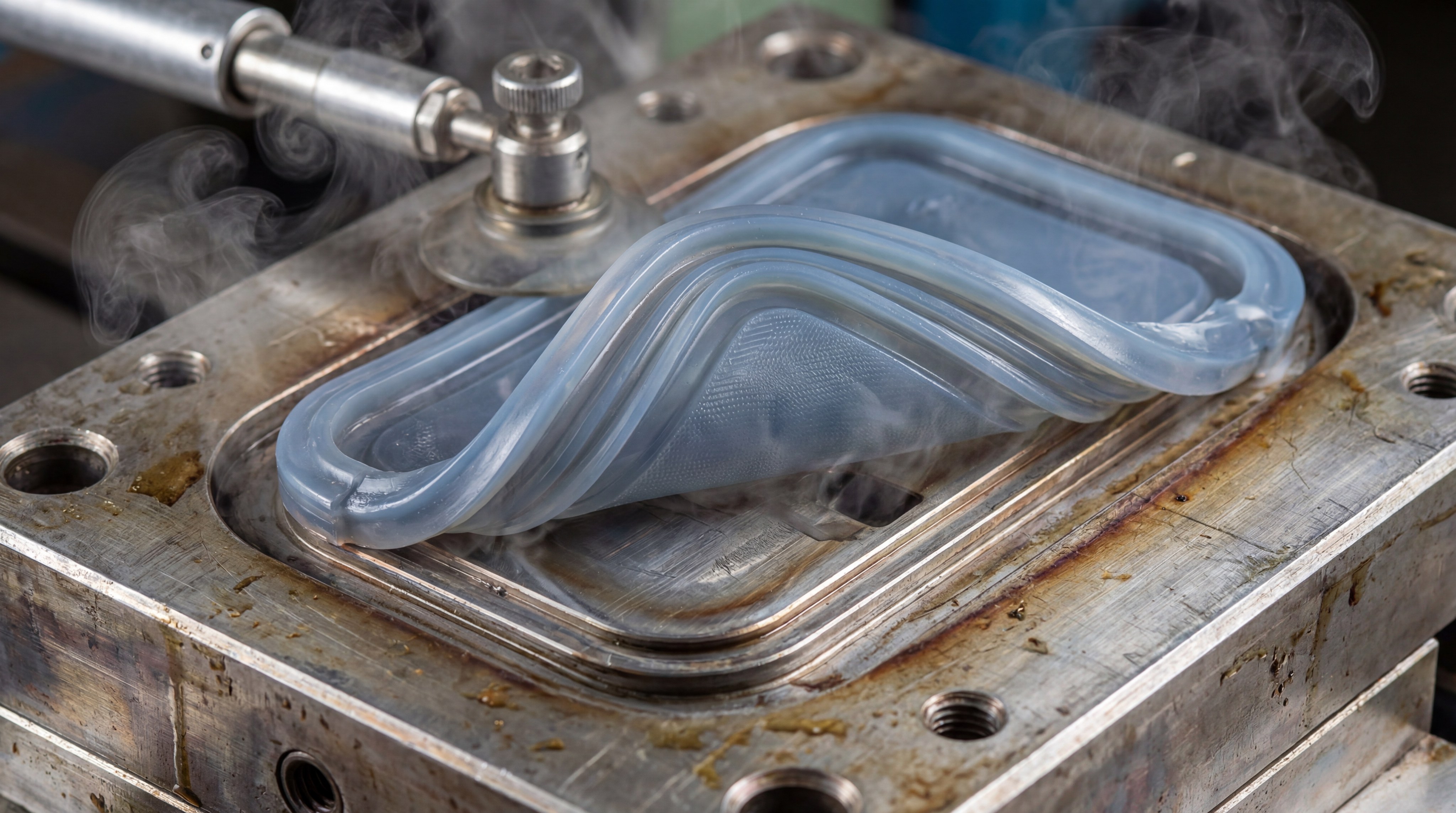
Liquid injection molding (LIM) enhances precision by utilizing low-viscosity Liquid Silicone Rubber (LSR) that flows easily into intricate mold cavities. Knowing how to manufacture silicone products for the medical or electronics industries often means mastering the high-precision LSR molding technique. This method is ideal for micro-parts where even a fraction of a millimeter matters.
Why is automation critical in LSR fabrication?
Automation in the LIM process removes the risk of human error and material contamination. Closed-loop systems ensure that the A and B components are mixed perfectly without exposure to the outside environment.
Let’s be honest:
- Cleanliness: Essential for food-grade and medical items.
- Repeatability: Thousands of parts remain identical.
- Flash Control: Automated systems minimize excess material waste.
Key Takeaway: LIM/LSR is the premier choice for technical components that demand the highest levels of purity and dimensional accuracy.
| Feature | LSR Advantage | Industry Use |
|---|---|---|
| Viscosity | Low (Pumpable) | Intricate medical valves |
| Curing | Fast (Platinum catalyst) | High-speed wearables |
| Tolerances | ±0.05 mm | Precision electronics |
The low viscosity of LSR enables it to fill complex cavities that traditional high-consistency rubber simply cannot reach.
Is compression molding the most cost-effective solution?
Compression molding remains the most cost-effective solution for large, simple parts or low-volume prototyping runs. If you are looking for a budget-friendly way regarding how to manufacture silicone products without heavy upfront tooling costs, this traditional method is the answer. It involves placing a pre-measured “perform” directly into a heated mold cavity.
When should you use compression over injection?
You should choose compression molding when your design is relatively flat or simple and your budget does not allow for expensive injection machinery. It is particularly useful for manufacturing large industrial gaskets or simple kitchenware where extreme precision is secondary to cost.
The truth is:
- Low Entry Cost: Tooling is significantly cheaper than injection molds.
- Large Parts: Ideal for oversized mats or heavy industrial seals.
- Material Flexibility: Works exceptionally well with high-consistency rubber.
Key Takeaway: Compression molding provides an accessible entry point for silicone production when speed is less critical than initial investment.
| Factor | Compression Molding | Business Impact |
|---|---|---|
| Tooling Cost | Low to Moderate | Faster ROI for startups |
| Lead Time | Short | Quicker market entry |
| Complexity | Low | Best for simple geometries |
While slower, compression molding offers a strategic advantage for companies testing new silicone designs with limited capital.
When should you use calendering for silicone sheets?
Calendering is used specifically for producing high-quality silicone sheets and coating fabrics for industrial applications. Understanding how to manufacture silicone products in sheet form requires a series of high-pressure rollers that flatten the material to a precise thickness. This is essential for creating custom silicone cases or industrial diaphragms.
How does calendering support fabric coating?
The calendering process is the most efficient way to bond silicone rubber to substrates like fiberglass or polyester. By pressing the silicone into the textile, manufacturers create durable heat shields and conveyor belts.
Essentially:
- Uniformity: Guaranteed thickness across the entire roll.
- Durability: Excellent bond between silicone and fabric.
- Scalability: Can produce thousands of meters in a single run.
Key Takeaway: Calendering is the only viable method for large-scale production of uniform silicone sheeting and protective coated textiles.
| Process Type | Output | Main Application |
|---|---|---|
| Sheet Calendering | Pure Silicone Rolls | Gaskets and Membranes |
| Fabric Coating | Silicone-Textile Laminate | Heat Shields |
| Thin Film | 0.1mm – 0.5mm Sheets | Electronic protectors |
Consistent thickness and smooth surface finish make calendered silicone a staple in high-performance industrial environments.
What are the unique advantages of transfer molding?
Transfer molding offers unique advantages by combining the material types of compression molding with the precision of injection systems. When researching how to manufacture silicone products with intricate metal inserts, transfer molding provides a cleaner finish with less flash. The material is forced from a “pot” into a closed mold for better dimensional control.
Is transfer molding better for intricate inserts?
Transfer molding is superior for overmolding applications because the mold is already closed when the material enters the cavity. This prevents the silicone from displacing or damaging delicate metal or plastic inserts during the pressing phase.
It gets better:
- Lower Flash: Cleaner parts require less trimming.
- Insert Integrity: Better protection for fragile components.
- Material Variety: Compatible with high-consistency rubber grades.
Key Takeaway: Transfer molding bridges the gap between cost and precision, making it ideal for high-spec industrial insert molding.
| Characteristic | Transfer Molding | Benefit |
|---|---|---|
| Flash Level | Low | Reduced post-processing |
| Precision | Moderate to High | Reliable part dimensions |
| Tooling Cost | Moderate | Balanced investment |
This method provides the structural reliability of HCR with the dimensional accuracy typically associated with more expensive injection setups.
How can you ensure quality control in silicone production?
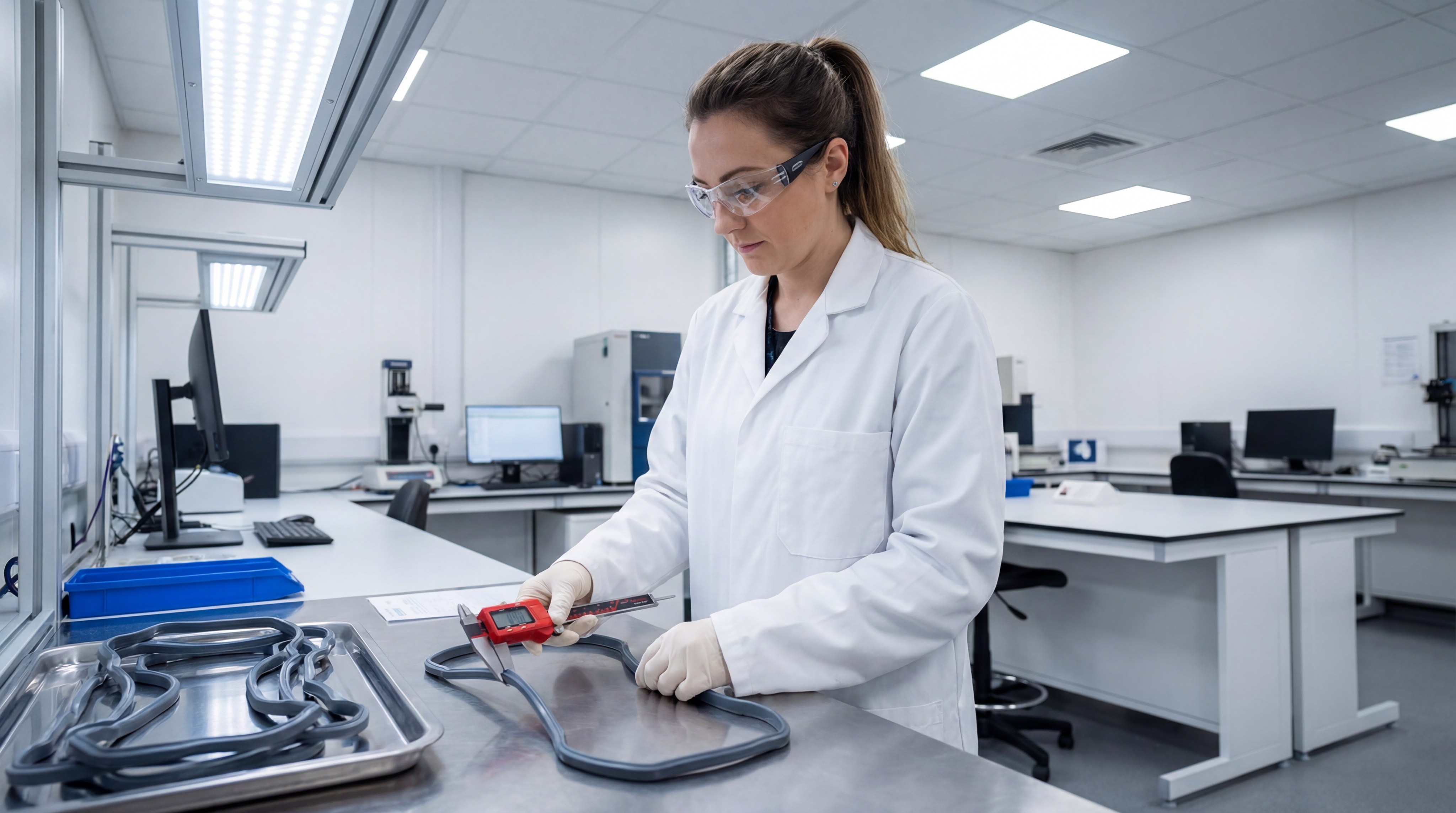
Ensuring quality control involves rigorous testing of durometer, tensile strength, and curing completeness to meet industry standards. Success in how to manufacture silicone products is not just about the molding, but about verifying that every part performs safely in its intended environment. Manufacturers must adhere to ISO and FDA guidelines to guarantee material purity and mechanical reliability.
What testing methods verify material integrity?
A comprehensive testing regime ensures that the silicone retains its elastomeric properties over time and under stress. Without these checks, parts may fail prematurely due to incomplete cross-linking or air entrapment.
Make no mistake:
- Durometer Testing: Checks Shore A hardness levels.
- Tensile Testing: Measures the force needed to break the material.
- Compression Set: Evaluates how well the part returns to its shape.
Key Takeaway: Rigorous quality management is the only way to ensure safety-critical silicone parts meet global regulatory requirements.
| Test Type | Metric | Failure Indicator |
|---|---|---|
| Hardness | Shore A Scale | Too soft or too brittle |
| Heat Aging | Stability at 200°C | Cracking or melting |
| Purity | Extraction levels | Chemical leaching |
Consistent testing protocols protect your brand reputation by delivering reliable, high-performance silicone components to your end users.
Why is high-quality tooling essential for silicone molds?
High-quality tooling is essential because silicone is a searching material that will leak into any gap, causing excessive waste. To master how to manufacture silicone products at a professional level, you must invest in CNC-machined steel or aluminum molds. Precision tooling reduces the need for expensive post-processing and manual flash removal.
How does DFM reduce waste in tool design?
Applying Design for Manufacturability (DFM) principles early in the tool design phase ensures that the silicone flows evenly. This prevents “short shots” where the material fails to fill the entire cavity, resulting in scrapped parts.
In short:
- Gate Placement: Ensures balanced material distribution.
- Venting: Allows air to escape to prevent bubbles.
- Surface Finish: Dictates the texture of the final product.
Key Takeaway: Precision-engineered tooling is a high upfront cost that significantly lowers your long-term production expenses and waste.
| Tool Material | Durability | Best For |
|---|---|---|
| Aluminum | Moderate | Prototyping |
| Hardened Steel | Very High | Millions of cycles |
| Stainless Steel | Very High | Medical grade parts |
Investing in superior mold design ensures that your silicone production remains efficient and free from frequent downtime.
How do you select the best silicone material for parts?
Selecting the best material requires a balance between the desired Shore A hardness and the specific curing chemistry needed for the application. The final step in learning how to manufacture silicone products is choosing between High-Consistency Rubber (HCR) and Liquid Silicone Rubber (LSR). Your choice dictates the equipment needed and the final performance characteristics of the elastomer.
What hardness levels are required for your project?
The hardness of silicone determines how it feels and how much pressure it can withstand before deforming. Choosing the wrong durometer can lead to a product that is either too rigid to seal or too soft to maintain its shape.
Bottom line:
- Shore A 20: Soft and flexible, like a baby nipple.
- Shore A 50: Standard flexibility for gaskets and cases.
- Shore A 80: Rigid and tough for industrial seals.
Key Takeaway: Material selection is the most critical variable, as it defines the fabrication path and the final product’s utility.
| Silicone Type | Curing System | Primary Benefit |
|---|---|---|
| LSR | Platinum | Pure and high precision |
| HCR | Peroxide | Rugged and cost-effective |
| Fluorosilicone | Specialized | Fuel and chemical resistance |
Correct material pairing ensures that your finished silicone product thrives in its intended industrial or consumer environment.
Conclusion
Choosing the right fabrication method is the difference between a high-performing product and a costly failure. Throughout this guide, we have explored how matching part geometry with processes like LSR injection, extrusion, or compression molding can solve common issues like excessive flash, material waste, and dimensional inaccuracy. At Dongguan Hualin Silicone Rubber Products, we specialize in transforming these complex technical requirements into high-quality, scalable solutions that meet the strictest FDA and ISO standards.
Our vision is to push the boundaries of elastomer precision, ensuring that every seal, gasket, and custom component we produce contributes to the safety and reliability of your final application. We are committed to providing expert DFM guidance and advanced manufacturing capabilities to help you navigate the complexities of the silicone industry. If you are ready to optimize your production workflow and elevate your product quality, contact us today to discuss your next project.
Frequently Asked Questions (FAQ)
Can I use compression molding for high-precision medical parts?
The best approach is to avoid compression molding for high-precision medical parts because it has higher tolerances and a greater risk of contamination than Liquid Injection Molding (LIM). LIM is the industry standard for medical safety and precision.
What’s the best silicone fabrication method for large sheets?
Calendering is the most effective method for producing large silicone sheets because it uses precision rollers to ensure a perfectly uniform thickness across long, continuous rolls.
How do I know if my part requires LSR or HCR material?
The decision is usually based on part complexity and volume, as LSR is ideal for high-precision, automated injection, while HCR is better suited for larger industrial parts and extrusion profiles.
Can I overmold silicone onto plastic parts during fabrication?
Yes, because silicone can be chemically or mechanically bonded to high-temperature plastics like PBT or PA using specialized primers or self-bonding LSR grades.
How many cycles will a steel silicone mold typically last?
A high-quality hardened steel mold will typically last for over 1,000,000 cycles, provided that regular maintenance and proper cleaning protocols are followed.