
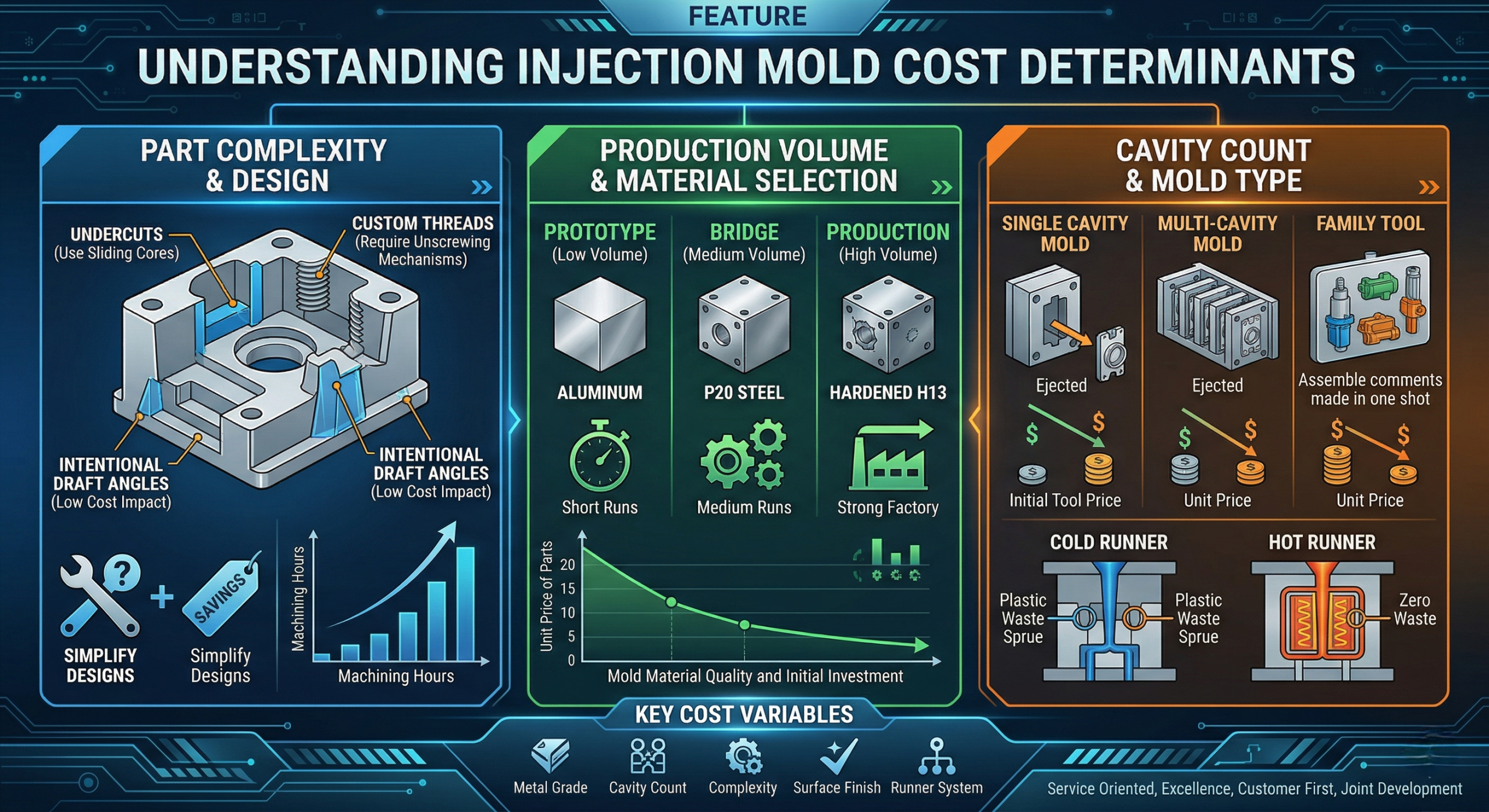
An Injection Mold costs anywhere from $1,000 up past $80,000 depending on complexity. You want accurate pricing for tooling without guessing. Guessing can lead your project straight into severe budget overruns. Getting precise numbers requires understanding exact specifications first. These exact figures depend heavily on your specific manufacturing requirements.
What Exactly Determines Pricing For An Injection Mold?
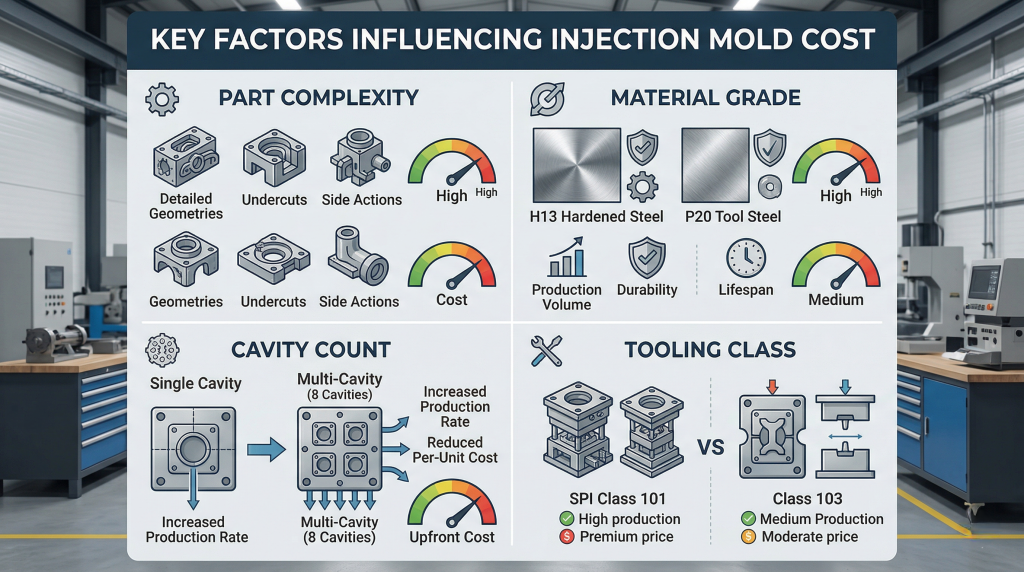
Several distinct factors dictate pricing, including material grade, cavity volume, and structural complexity. An Injection Mold requires careful planning before manufacturing begins. You might be wondering why prices vary so wildly. Different projects demand entirely unique engineering approaches.
Primary Variables For Tooling
Your specific production goals set financial boundaries immediately. High volumes necessitate stronger metals like hardened steel. Here is the deal: complex geometries require more labor. You spend extra cash whenever designs feature intricate details.
- Base metal selection affects durability
- Total cavity count changes output
- Expected part volume determines wear
| Variable Type | Impact Level | Description |
| Metal Grade | High | Dictates durability |
| Cavity Count | High | Affects output rate |
| Complexity | Medium | Changes machining time |
Key Takeaway: Identifying core variables allows you better control over budgets from day one. Tracking these distinct variables reveals which specific design choices drive up your manufacturing expenses.
How Does Part Complexity Impact Your Tooling Expenses?
Complex designs drastically increase machining time and raise total costs. Every intricate feature on an Injection Mold requires specialized engineering attention. What is the real story? Simple geometries save money fast.
Managing Design Features
Unnecessary details push manufacturing budgets higher than expected. Removing complex features keeps financial constraints manageable. Ready for the good part? Simplification speeds up entire production schedules. You receive finished products much faster.
- Side actions increase tool size
- Custom threads require unscrewing mechanisms
- Internal undercuts demand collapsible cores
| Feature Type | Cost Impact | Solution |
| Undercuts | Very High | Use sliding cores |
| Threads | High | Redesign quickly |
| Draft Angles | Low | Implement early |
Key Takeaway: Simplifying product geometry remains a highly effective method for lowering overall expenses. Simplifying complex areas directly reduces those machining hours required for fabrication.
What Role Does Material Choice Play In Pricing?
Choosing harder metals increases upfront expenses but extends operational lifespans. Building an Injection Mold with P20 steel costs less than using H13 steel. This is where it gets interesting… Softer metals degrade much faster under constant pressure.
Evaluating Metal Options
Aluminum works perfectly well for rapid prototyping needs. Massive production runs demand extremely durable hardened steel. But here is the kicker… Investing more initially saves cash on replacements later. Cheap metals break down during critical market launches.
- Aluminum serves low volume needs
- P20 steel handles medium runs
- H13 steel survives high volumes
| Metal Type | Best Use Case | Relative Price |
| Aluminum | Low Volume | Inexpensive |
| P20 Steel | Medium Volume | Moderate |
| H13 Steel | High Volume | Expensive |
Key Takeaway: Matching metal durability with volume expectations prevents premature equipment failure. Selecting appropriate metals balances immediate budget limits against long-term durability requirements.
Why Do Cavity Counts Influence Initial Investments?
Adding more cavities requires larger metal blocks and longer machining times. A single-cavity Injection Mold costs significantly less than a multi-cavity version. You might be wondering how volume affects pricing. Producing more parts simultaneously drops individual unit prices.
Balancing Volume Needs
Small test runs favor cheaper single-cavity setups. Calculate your break-even point before finalizing any designs. Here is the deal: family tools produce different components simultaneously. This configuration saves money when making assembled products.
- Single cavity systems cost less
- Multi-cavity layouts increase output
- Family configurations make mixed parts
| Cavity Count | Initial Price | Unit Price |
| Single | Lowest | Highest |
| Multiple | High | Low |
| Family | Medium | Variable |
Key Takeaway: Higher upfront cavity investments dramatically lower long-term per-unit manufacturing expenses. Optimizing cavity layouts helps you achieve better profitability during mass manufacturing operations.
How Can You Balance Prototype Versus Production Needs?
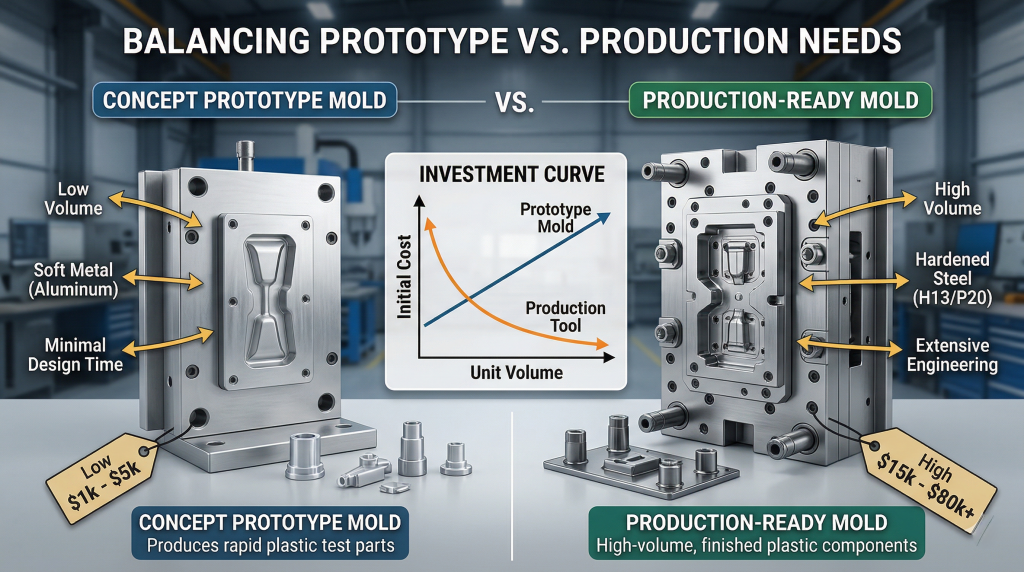
Prototype tools provide cheap testing options before committing massive capital. Creating a production-ready Injection Mold requires precise engineering and premium materials. What is the real story? Prototypes help catch fatal design flaws early.
Testing Before Scaling
You should always validate ideas using cheaper prototype methods. Once designs pass inspection, upgrading into hardened steel becomes safer. Ready for the good part? Bridge tooling offers a reliable middle ground. You get medium volume capacity without paying premium prices.
- Rapid prototyping tests basic concepts
- Soft tooling validates manufacturing methods
- Hard tooling sustains mass production
| Tooling Type | Purpose | Financial Risk |
| Prototype | Concept Testing | Low |
| Bridge | Initial Scaling | Medium |
| Production | Mass Volume | High |
Key Takeaway: Building cheap prototypes prevents catastrophic financial losses during full-scale production. Using bridge tooling allows companies a safe transition from concept towards massive scale.
What Hidden Fees Should You Expect During Manufacturing?
Design modifications and shipping fees often surprise buyers during final billing. An Injection Mold rarely ships without incurring some secondary logistical costs. This is where it gets interesting… Revisions during fabrication multiply expenses rapidly.
Budgeting For Extras
Transporting heavy steel blocks across oceans costs thousands of dollars. Always request comprehensive quotes covering every possible logistical scenario. But here is the kicker… Customs duties vary wildly between different countries. Ignoring import taxes destroys profit margins instantly.
- Engineering revisions increase labor hours
- International shipping depends on weight
- Customs duties change by region
| Expense Category | Predictability | Impact |
| Revisions | Low | Variable |
| Shipping | Medium | High |
| Taxes | High | Moderate |
Key Takeaway: Setting aside contingency funds protects your project against unforeseen logistical expenses. Requesting fully itemized quotes prevents factories from hiding unexpected logistical charges later.
How Does Runner System Design Affect Tooling?
Hot runner systems require expensive internal heating elements and complex wiring. A cold runner Injection Mold stays much cheaper but produces scrap plastic. You might be wondering why anyone buys hot runners.
Choosing Fluid Systems
Cold runners work perfectly for small budgets and basic parts. Hot runners shine when producing massive volumes of zero-waste components. Here is the deal: your material price dictates system choices. Expensive medical plastics justify buying premium heating manifolds.
- Cold runner designs waste plastic
- Hot runner configurations eliminate scrap
- Insulated systems handle specific polymers
| Runner Type | Upfront Price | Material Waste |
| Cold | Low | High |
| Hot | High | Zero |
| Insulated | Medium | Low |
Key Takeaway: Investing in hot runners eliminates plastic waste during massive production runs. Evaluating material waste percentages helps determine if heating elements justify their initial price.
Why Does Surface Finish Matter For Cost Estimation?
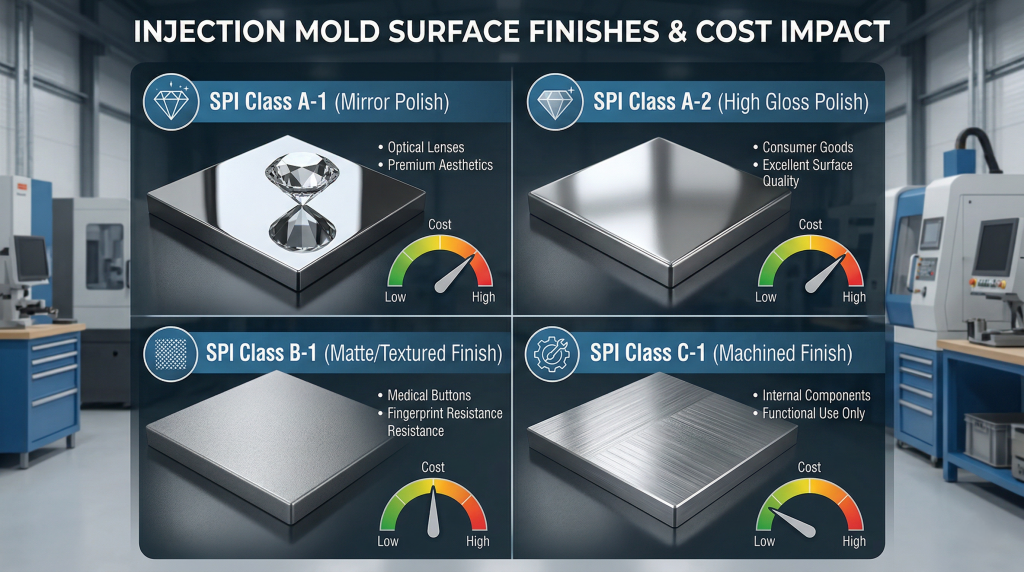
Highly polished surfaces demand intense manual labor and specialized polishing tools. Creating a mirror-like Injection Mold adds days to delivery schedules. What is the real story? Consumer goods require flawless aesthetics that only intense polishing achieves.
Polishing Labor Expenses
You pay directly for every hour someone spends hand-polishing steel. Standard industrial finishes keep labor expenses manageable for internal components. Ready for the good part? Adding texture actually improves grip on handheld products. You gain functionality while spending less money on polishing.
- Standard machining finish saves cash
- Textured matte finish hides scratches
- Optical mirror polish demands perfection
| Finish Type | Labor Required | Cost Impact |
| Machined | Minimal | Low |
| Textured | Moderate | Medium |
| Mirror | Intensive | High |
Key Takeaway: Specifying standard industrial finishes keeps labor expenses manageable for hidden internal components. Keeping hidden internal components unpolished saves significant money without affecting product functionality.
How Can You Optimize Designs For Better Pricing?
Eliminating thick walls and adding draft angles reduces manufacturing complexity significantly. Every optimized Injection Mold requires fewer machining hours and less material. This is where it gets interesting… Smart engineering solves budget problems before they start.
Smart Engineering Practices
Uniform walls prevent warping and reduce cooling times dramatically. Faster cooling means more parts produced per hour. But here is the kicker… Sharp corners concentrate stress and cause plastic failure. Rounding edges improves material flow during high-pressure injection phases.
- Add draft angles for ejection
- Maintain uniform walls everywhere
- Remove sharp corners entirely
| Optimization | Benefit | Difficulty |
| Draft Angles | Easy Ejection | Low |
| Uniform Walls | Stops Warping | Medium |
| Rounded Corners | Better Flow | Low |
Key Takeaway: Collaborating with seasoned engineers guarantees your design remains fully optimized for production. Applying basic engineering principles eliminates costly machining requirements during initial fabrication stages.
What Represents A Good Return On Tooling Investment?
A high-quality tool produces millions of flawless parts without demanding maintenance. A well-built Injection Mold pays for itself through consistent daily output. You might be wondering how longevity impacts profits.
Calculating True Value
You measure success by evaluating the total cost per finished unit. Spending heavily upfront makes each individual product incredibly cheap eventually. Here is the deal: consistent quality output defines true manufacturing success. Focusing on long-term reliability prevents expensive manufacturing shutdowns during peak market seasons.
- Total cycle counts determine lifespan
- Maintenance downtime frequency affects schedules
- Part rejection rates impact profitability
| Tooling Tier | Lifespan | ROI Speed |
| Economy | Short | Fast |
| Standard | Medium | Steady |
| Premium | Long | Slow |
Key Takeaway: Heavy initial investments in premium metals guarantee decades of profitable manufacturing operations. Focusing purely on long-term reliability ensures your factory never misses important delivery deadlines.
You now understand exactly how material choices and cavity counts dictate pricing. We build high-precision silicone components designed specifically for your unique requirements. Service Oriented, Excellence, Customer First, Joint Development defines our daily manufacturing approach. Please contact our team today for a detailed project consultation.
Frequently Asked Questions
Q1: Can I use aluminum tools for mass production runs?
No, aluminum degrades quickly under sustained pressure. Soft metals work best for prototypes, while steel handles massive volume demands.
Q2: What’s the best way to lower my tooling expenses?
Simplifying your product design saves money immediately. Removing undercuts and complex features drastically reduces those machining hours required.
Q3: How do I know if I need a multi-cavity setup?
Calculate your expected annual sales volume first. High volumes justify higher initial prices because unit costs drop significantly.
Q4: Can I change my design after tooling begins?
Yes, but modifications increase your final bill considerably. Cutting new steel takes extra time and demands additional engineering labor.
Q5: What’s the best material for medical device components?
Liquid silicone rubber paired with stainless steel molds works perfectly. This combination offers superior biocompatibility and resists dangerous bacterial growth.