
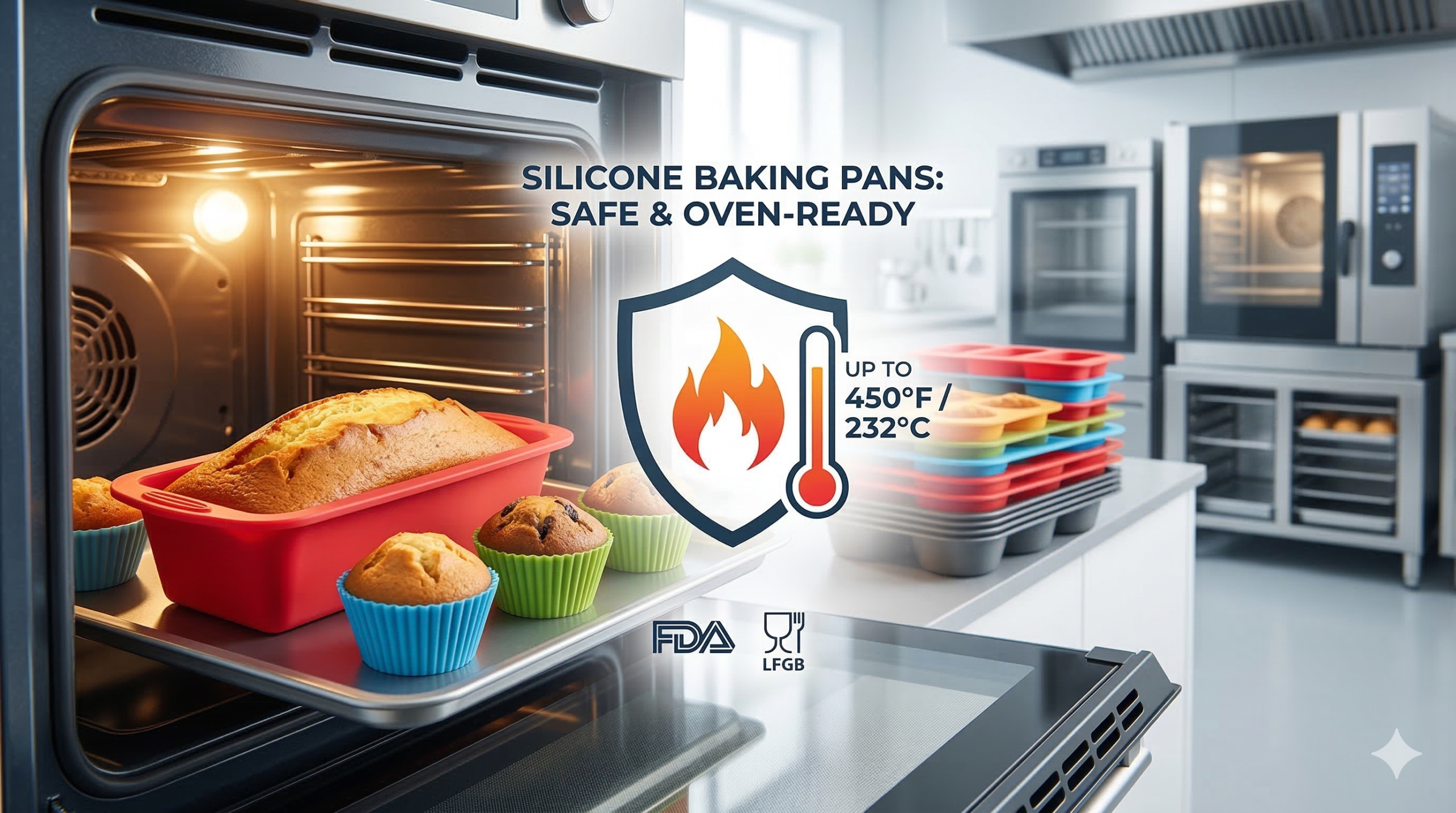
Yes, these versatile baking tools are perfectly secure for your daily kitchen needs. You likely experience ruined meals when traditional metal pans stick severely. Scrubbing burned residue wastes your precious time. We offer a smart alternative that ends this frustrating cycle. Knowing whether can silicone go in the oven transforms your culinary routine entirely.
What Happens When Can Silicone Go in the Oven?
When you heat these modern molds, they maintain structural integrity without melting. Placing them inside hot environments requires you to understand their thermal properties. Many bakers wonder if can silicone go in the oven without degrading. High-quality food-grade products easily withstand standard baking temperatures.
Why do professionals prefer this material?
Commercial kitchens favor these flexible containers because they cool down rapidly. Here’s the deal: you never struggle with releasing delicate pastries again. Removing cakes becomes effortless.
- They resist thermal shock effectively.
- Flexible nature prevents cracking.
- Cleaning takes just moments.
- Storage requires minimal space.
How does high heat affect durability?
Extended exposure barely changes physical composition of premium items. You might be wondering: does constant baking wear them out? Good manufacturing processes guarantee long-lasting performance.
Key Takeaway: Investing in premium food-grade options guarantees your equipment survives countless baking sessions intact.
| Feature | Performance | Benefit |
| Heat Resistance | Up to 450°F | Prevents melting |
| Flexibility | Very High | Easy food release |
| Cooling Rate | Rapid | Safe handling |
These metrics clearly indicate how modern materials outperform traditional metal bakeware.
Is Food Safe During High Heat Baking?
Yes, utilizing these flexible containers remains completely hazard-free for food preparation. Users constantly ask if can silicone go in the oven without releasing toxins. Premium options undergo strict curing processes during manufacturing. This step eliminates harmful volatile compounds entirely.
Are there hidden health risks?
Purchasing verified food-grade products prevents unwanted chemical exposure during cooking. Let’s be clear: cheap alternatives might contain fillers that compromise safety. You must check manufacturer certifications thoroughly.
- Verify FDA compliance marks.
- Perform pinch tests.
- Smell products for strange odors.
What about chemical leaching during heating?
Medical-grade manufacturing standards guarantee your pans remain completely inert under heat. What’s the catch? You must strictly follow manufacturer temperature guidelines. Exceeding these limits degrades material structure.
Key Takeaway: Always verify supplier certifications and avoid cheap fillers for safe cooking.
| Certification | Standard | Focus Area |
| FDA | USA | General food safety |
| LFGB | Europe | Strict chemical limits |
| ISO 22000 | Global | Food safety management |
Following regulatory standards guarantees the selected products pose absolutely zero health risks.
At What Temp Can Silicone Go in the Oven Safely?
Most premium pans handle temperatures reaching 428 degrees Fahrenheit without issue. Knowing exactly how hot can silicone go in the oven prevents accidental melting. can silicone go in the oven safely depends on specific manufacturer ratings. Always read product guidelines before baking.
How do you find accurate temperature limits?
Checking packaging details provides exact thermal boundaries for your specific bakeware. Believe me: guessing thermal limits leads straight toward kitchen disasters. Reputable factories clearly mold maximum ratings onto their items.
- Look at bottom surfaces.
- Retain original packaging.
- Contact suppliers directly.
What happens if you exceed maximum heat?
Pushing materials past specified boundaries causes irreversible structural damage quickly. Truth be told: melted rubber ruins both your meal and appliance. Extreme heat breaks down internal chemical bonds rapidly.
Key Takeaway: Respecting stated thermal limits extends product lifespans while keeping kitchens secure.
| Condition | Action | Result |
| Below limit | Safe baking | Perfect meals |
| At limit | Watch closely | Normal wear |
| Above limit | Stop immediately | Structural failure |
Monitoring appliance settings prevents accidental overheating and preserves product integrity.
Are These Pans Suitable for Every Recipe?
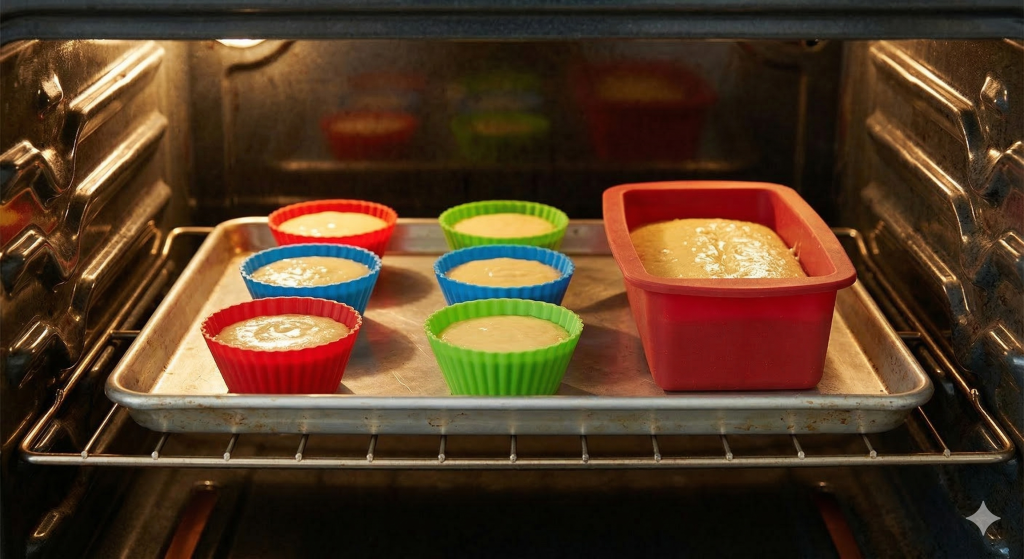
These adaptable containers work beautifully for cakes, muffins, and bread loaves. Many chefs question whether can silicone go in the oven for savory roasting. You can absolutely roast meats or vegetables using these trays. They provide excellent non-stick properties for sticky marinades.
Are certain foods better suited?
Delicate pastries benefit immensely from flexible molds during removal. Here’s a fact: stiff metal pans destroy intricate cake designs easily. Flexible boundaries allow gentle peeling away from outer layers.
- Use them for sticky treats.
- Bake delicate sponge cakes.
- Freeze desserts before popping.
Do baking times change?
Rubber-like materials conduct heat differently than dark metal surfaces do. What does this mean for you? Your recipes might require slight timing adjustments. Foods often take slightly longer baking inside non-metal containers.
Key Takeaway: Adapting baking times slightly guarantees perfectly cooked meals across all recipe types.
| Food Type | Pan Material | Baking Time Adjustment |
| Sponge Cake | Flexible mold | Add 2-3 minutes |
| Roasted Veggies | Metal sheet | Standard time |
| Muffins | Rubber-like cups | Add 1 minute |
Adjusting timers based on material choice prevents undercooked centers inside baked goods.
How Do You Know If Can Silicone Go in the Oven?
Reading physical stamps on your bakeware provides immediate confirmation regarding safety. Verifying if can silicone go in the oven requires checking specific factory markings. Legitimate manufacturers always label their products with clear usage icons. Never assume unmarked items handle extreme heat safely.
What symbols should you look for?
Small oven icons stamped underneath indicate thermal compatibility clearly. Let’s face facts: missing symbols usually mean inferior manufacturing processes. Trusted B2B suppliers always include proper identification.
- Search for small wavy lines.
- Look for temperature ranges.
- Check for FDA approval marks.
How do commercial buyers verify quality?
Procurement managers request detailed compliance documentation directly from factories. Think about this: B2B transactions require proof of ISO certifications. Reliable partners supply material data sheets eagerly.
Key Takeaway: Visual inspections combined with proper documentation guarantee items belong inside hot appliances.
| Verification Method | User | Reliability |
| Visual Symbols | Home Baker | High |
| Data Sheets | B2B Buyer | Very High |
| Pinch Test | Anyone | Moderate |
Requesting formal documentation provides ultimate peace of mind for bulk commercial purchases.
Do You Need a Baking Sheet Underneath?
You technically can, but adding a firm base drastically improves stability. People often wonder if can silicone go in the oven directly on racks. Heavy batters cause flexible bottoms to sag dangerously during transport. Placing them atop metal sheets prevents messy kitchen spills.
Why do flexible pans need support?
Liquid mixtures shift unpredictably when moving unsupported wobbly containers. Look at it this way: dropping a full cake pan ruins your day. A rigid foundation distributes weight evenly across the surface.
- Supports heavy fruit cakes.
- Makes oven insertion smooth.
- Catches accidental batter overflows.
Does a metal sheet affect airflow?
Adding solid bases underneath alters how hot air circulates slightly. What is the solution? You might need adjusting rack positions upward. Darker metal bases absorb heat, browning bottom crusts faster.
Key Takeaway: Always utilize flat metal supports underneath flexible bakeware preventing dangerous batter spills.
| Setup | Stability | Bottom Browning |
| Direct on Rack | Poor | Minimal |
| On Light Metal | Excellent | Moderate |
| On Dark Metal | Excellent | High |
Understanding how supporting structures alter heat distribution helps achieve perfect crusts.
What Should You Avoid When Can Silicone Go in the Oven?
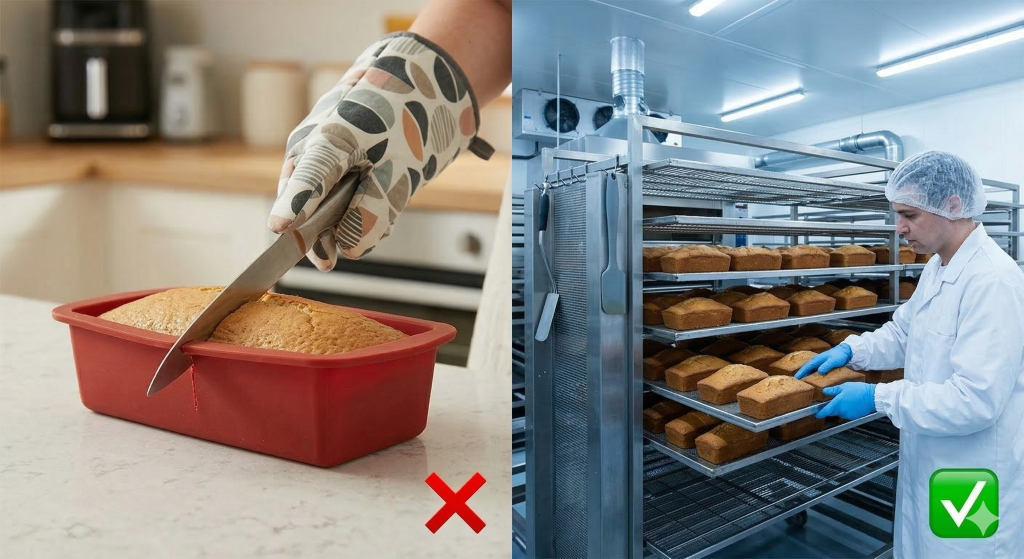
Never expose these molds directly to open flames or broiler elements. Understanding limitations when can silicone go in the oven keeps your kitchen secure. Sharp knives permanently destroy the non-stick surface in seconds. Keep abrasive scouring pads away from these delicate items.
Why are sharp objects forbidden?
Slicing food directly inside flexible molds creates microscopic cuts instantly. Here is the reality: those tiny scratches trap bacteria and ruin non-stick qualities. Always remove baked goods before cutting them into portions.
- Use wooden spatulas.
- Avoid metal serving utensils.
- Never use pizza cutters.
How do broilers damage bakeware?
Direct radiant heat from upper elements exceeds safe operating temperatures rapidly. Truthfully: broilers melt flexible rubber compounds within minutes. Always bake using middle racks away from glowing heating rods.
Key Takeaway: Keeping sharp blades and direct flames away preserves bakeware structural integrity indefinitely.
| Hazard | Consequence | Prevention |
| Sharp Knives | Surface cuts | Use plastic tools |
| Broiler Heat | Melting | Bake on middle rack |
| Steel Wool | Scratched finish | Use soft sponges |
Implementing proper handling techniques safeguards investments against premature degradation.
Are Flexible Molds Good for Commercial Baking?
Professional bakeries utilize these industrial-grade molds daily for mass production. Factory managers constantly evaluate if can silicone go in the oven efficiently. High-volume environments demand equipment that withstands continuous thermal cycling. Top-tier manufacturers provide custom solutions matching rigorous commercial demands.
How do factories guarantee batch consistency?
Automated production lines require exact dimensional stability from every single mold. Consider this: varied thicknesses cause uneven baking across large orders. Precision engineering guarantees every cupcake finishes baking simultaneously.
- Consistent mold thickness prevents hot spots.
- Custom designs fit commercial racks.
- Durable materials survive industrial dishwashers.
Why do procurement managers choose direct factories?
Working directly with integrated manufacturers eliminates middleman markups completely. Here is a secret: direct communication solves production issues much faster. You get custom QC standards tailored specifically for your brand.
Key Takeaway: Sourcing industrial-grade molds from integrated B2B manufacturers ensures long-term operational success.
| Buyer Need | Factory Solution | Result |
| Custom Designs | R&D Support | Unique products |
| Cost Control | Direct Pricing | Better margins |
| Quality Control | 100% Inspection | Zero defects |
Partnering with established OEM manufacturers provides commercial bakeries with unbeatable competitive advantages.
Does Food Taste Different When Can Silicone Go in the Oven?
Properly cured materials never transfer strange flavors into your meals. Bakers worry whether can silicone go in the oven without ruining delicate tastes. Cheap, improperly manufactured items sometimes release plastic-like odors initially. High-quality food-grade products remain completely odorless and tasteless always.
How do you eliminate initial odors?
Some new pans retain mild manufacturing smells out of their packaging. Fortunately: a simple pre-baking process removes residual odors completely. Wash them thoroughly, then heat empty pans briefly before cooking.
- Wash with warm soapy water.
- Bake empty at 350°F.
- Let them cool completely.
Why do some pans smell like soap?
Flexible surfaces occasionally absorb strong dishwashing detergent fragrances over time. What causes this? Using heavily scented soaps leaves oily residues behind. Switch toward unscented, natural cleaning agents for better results.
Key Takeaway: Buying premium products and using mild detergents guarantees food tastes exactly as planned.
| Odor Source | Solution | Effectiveness |
| Factory Residue | Pre-bake empty pan | High |
| Scented Soap | Use unscented soap | Very High |
| Burned Food | Soak in baking soda | Moderate |
Maintaining proper cleaning routines prevents unwanted flavor transfers during culinary projects.
Can These Trays Survive Multiple Daily Uses?
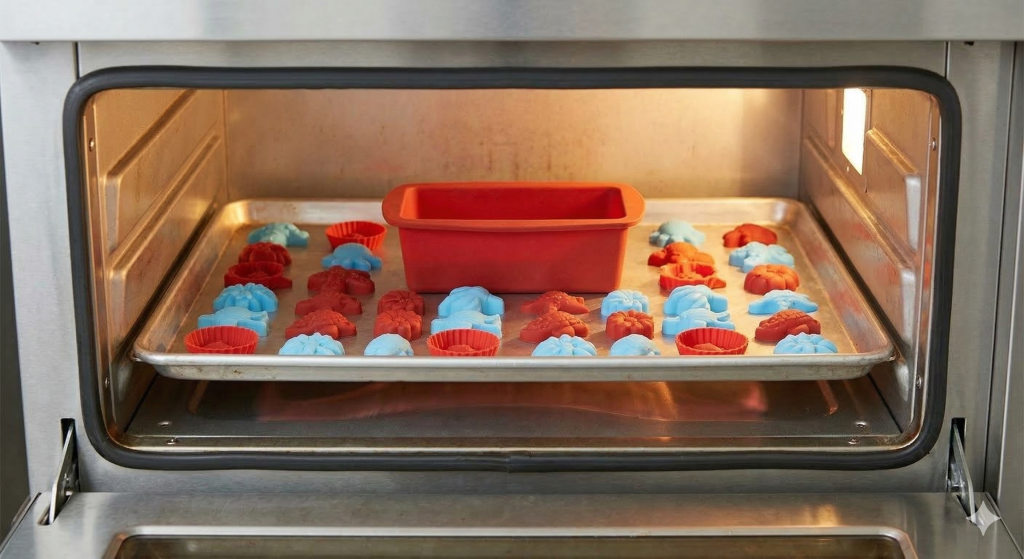
Industrial-grade products easily survive repeated heating cycles without degrading. Busy kitchens demand knowing if can silicone go in the oven continuously. Quality materials withstand rapid shifts from freezers directly into hot environments. This extreme durability makes them perfect for high-volume commercial operations.
How does thermal shock affect lifespan?
Sudden temperature changes destroy glass and warp cheap metal pans instantly. Surprisingly: premium rubber-like compounds absorb thermal shocks effortlessly. You can move frozen batters straight onto hot racks safely.
- Speeds up commercial production lines.
- Reduces equipment replacement costs.
- Allows versatile recipe preparation methods.
Do constant washings wear them out?
Industrial dishwashers use harsh chemicals and extreme heat for sanitization. Rest assured: medical-grade compounds resist chemical degradation exceptionally well. They maintain non-stick properties even after thousands of washes.
Key Takeaway: Selecting heavy-duty B2B manufactured items guarantees your kitchen runs smoothly despite heavy usage.
| Usage Level | Material Type | Expected Lifespan |
| Occasional | Standard Food Grade | 5+ Years |
| Daily Home | Premium Food Grade | 3-5 Years |
| Commercial | Industrial Grade | 1-3 Years |
Matching material specifications against expected usage volume maximizes return on investment.
We resolved your doubts regarding high-heat safety and proper handling techniques. Quality manufacturing makes these flexible tools indispensable for modern kitchens. We offer stable mass production and strict quality control for all your B2B needs. Please contact us today so we can design your perfect custom molds. HuaLin remains your reliable long-term manufacturing partner for compliant solutions.
FAQ
Q1: Can I put my new flexible pan directly on an oven rack?
Yes, you can, but use support. Liquid batters cause sagging, making a metal sheet necessary for stability.
Q2: What’s the best way to clean sticky residue off?
Soak it immediately in warm water. Mild unscented soap and soft sponges remove stubborn food without scratching.
Q3: How do I know if my bakeware has cheap fillers?
Perform a simple pinch test. If the bent area turns white, your product contains low-quality additives.
Q4: Can I use sharp knives inside these molds?
No, absolutely not. Blades slice through the non-stick surface permanently, ruining your equipment instantly.
Q5: What’s the best temperature limit for daily baking?
Stay below 428 degrees Fahrenheit. Reading manufacturer stamps guarantees you never exceed safe thermal boundaries.