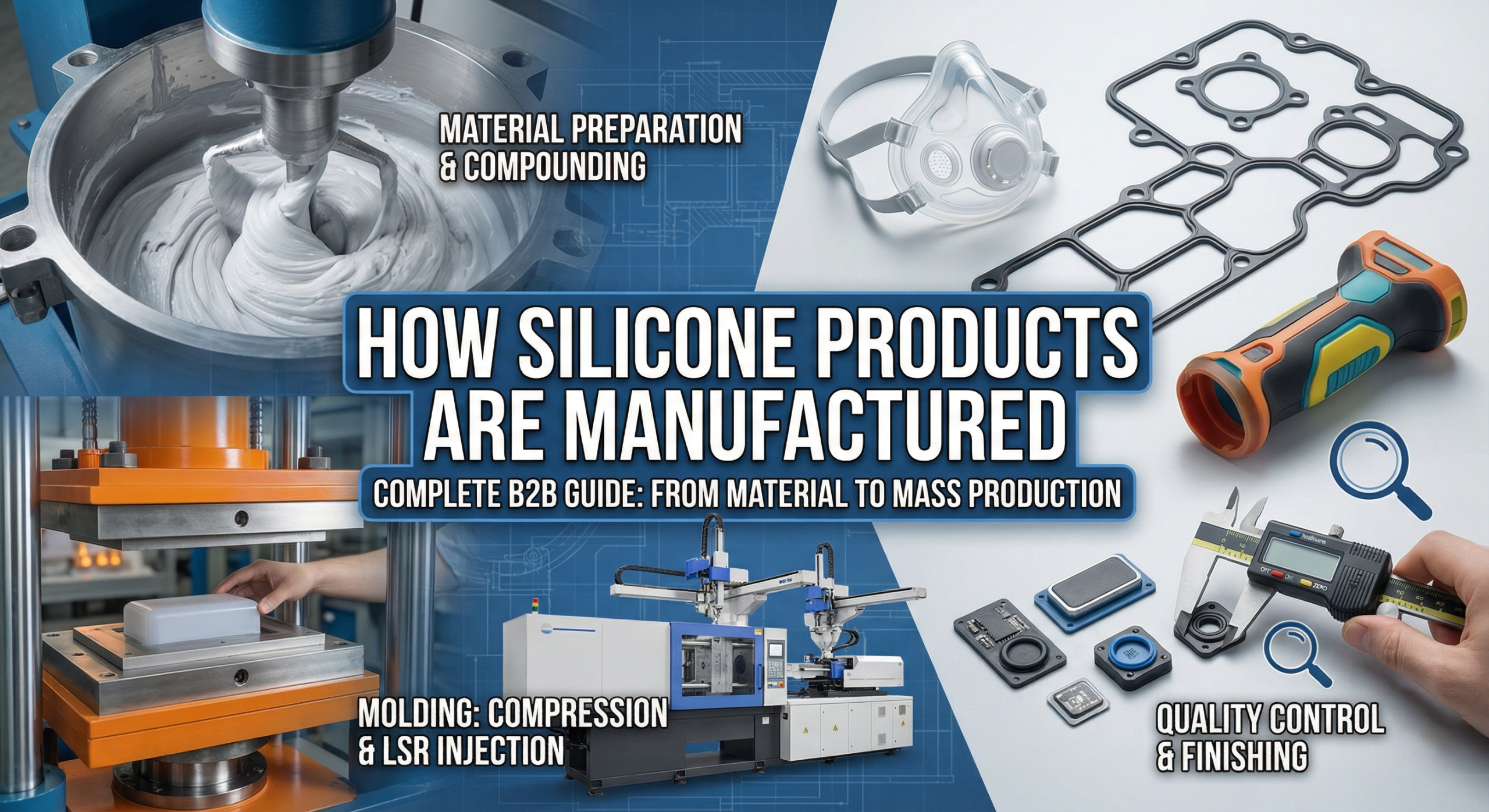
How silicone products are manufactured involves a series of controlled technical steps including material compounding, precision mold engineering, and thermal vulcanization. Many B2B buyers face inconsistent part dimensions and frustratingly slow development cycles that delay critical product launches. If your project suffers from poor waterproof performance or surface defects, you are likely using an unoptimized production route. The ideal solution is a professional integrated approach like LSR injection molding, which ensures your parts remain stable from initial prototype to mass production.
What are the primary steps in silicone production?
The process begins with material preparation and ends with final quality inspection to ensure the parts meet industry specifications. You must understand how silicone products are manufactured through these stages to prevent quality drift during the scaling phase.
What happens during material preparation?
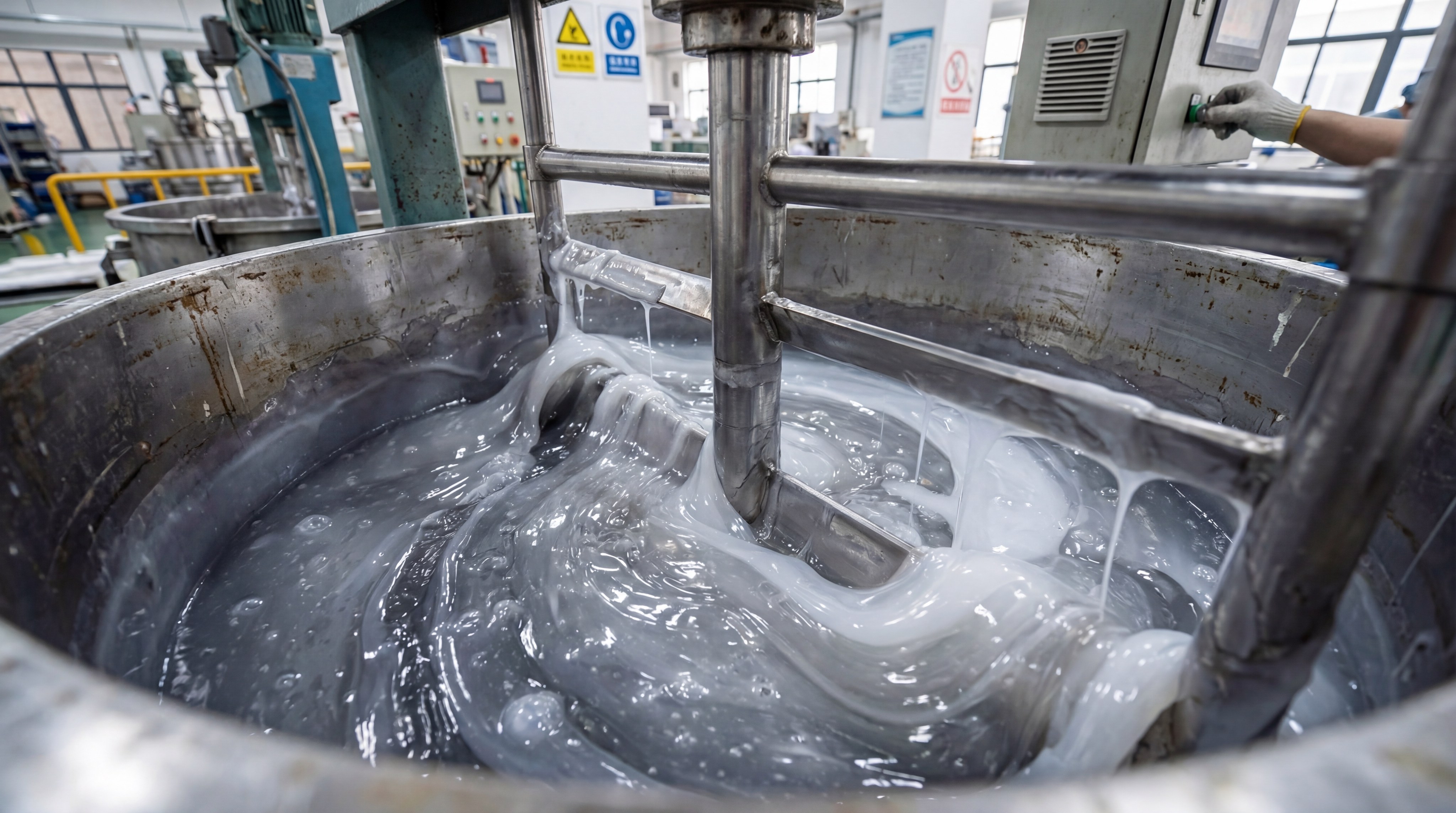
Material preparation involves mixing raw silicone gum with specific curing agents and pigments to achieve the desired physical properties. You need to ensure the compounding is consistent to avoid variations in hardness or color across different batches.
But here is the kicker:
- Mixing silicone gum with cross-linkers.
- Adding heat stabilizers or UV inhibitors.
- Color matching using Pantone standards.
- Pre-forming the material into specific weights.
Why is the curing stage so critical?
Thermal curing, or vulcanization, is where the silicone transforms from a soft compound into a durable elastomer. If the temperature or pressure is not perfectly controlled, you will face issues like under-cured parts or structural weakness.
The result?
- Formation of chemical cross-links.
- Stability across extreme temperatures.
- Achievement of final tensile strength.
- Permanent set of the product shape.
| Production Step | Primary Objective | Key Equipment |
|---|---|---|
| Material Compounding | Uniformity of properties | Kneader/Roll Mill |
| Curing | Molecular cross-linking | Hydraulic Press |
This table highlights the foundational steps that define the success of any silicone manufacturing project.
Key Takeaway: Mastering the early stages of material preparation and curing ensures that your silicone products maintain structural integrity and appearance consistency throughout their service life.
What raw materials are needed for silicone parts?
Selecting the right grade of silicone, whether solid or liquid, is the most fundamental decision in how silicone products are manufactured. You must choose materials that align with your specific environmental resistance and biocompatibility requirements.
Is solid silicone better for your application?
Solid silicone rubber (HCR) is highly effective for parts that require high mechanical strength and lower tooling costs. You will find this material ideal for gaskets, seals, and large protective covers that do not require complex micro-geometries.
Think about it:
- High tear and tensile strength.
- Wide range of Shore A hardness.
- Economical for medium volumes.
- Compatible with compression molding.
Should you use liquid silicone rubber?
Liquid Silicone Rubber (LSR) is a two-component platinum-cured material designed for high-precision injection processes. You should opt for LSR when your project requires medical-grade purity or high-speed automated production.
Simply put:
- Excellent thermal stability.
- High biological compatibility.
- Low viscosity for complex parts.
- Rapid curing cycles for efficiency.
| Material Type | Best For | Typical Grade |
|---|---|---|
| Solid Silicone (HCR) | Industrial seals | General purpose |
| Liquid Silicone (LSR) | Medical devices | Platinum-cured |
Choosing the correct material grade directly impacts both the unit cost and the long-term performance of your component.
Key Takeaway: Always verify that your raw materials carry necessary certifications like FDA or RoHS to ensure safety and compliance in global markets.
How does the silicone mold development process work?
Mold development is the engineering phase where you define the physical dimensions, parting lines, and surface textures of your product. Understanding how silicone products are manufactured requires a deep dive into CNC machining and mold trial adjustments.
How is the mold design optimized?
Optimization involves planning for material shrinkage and ensuring the mold allows for easy part removal without damaging the silicone. You must work with engineers to determine the best gate locations and venting strategies to prevent air entrapment.
The kicker?
- Accounting for 2-4% shrinkage rates.
- Selecting hardened steel for durability.
- Designing precise parting lines.
- Integrating cooling channels for speed.
What occurs during mold trial production?
During the T1 trial, the factory runs the mold to produce initial samples that you must verify against your technical drawings. You should use this phase to fine-tune injection pressure or curing times to reach perfection.
Look:
- Visual inspection of surface finish.
- Dimensional measurement verification.
- Adjustment of machine parameters.
- Correction of any flash or defects.
| Development Phase | Focus Area | Output |
|---|---|---|
| Tooling Design | Mold structure | 3D Mold Model |
| CNC Machining | Cavity precision | Steel Mold Base |
Precision in mold development is the only way to achieve repeatable results across hundreds of thousands of production cycles.
Key Takeaway: Investing in high-quality steel tooling during the development phase reduces long-term maintenance costs and ensures tighter dimensional tolerances for your parts.
What is the process for silicone compression molding?
Compression molding is a traditional yet effective method used in how silicone products are manufactured for solid components. You can leverage this process to achieve high material strength while keeping initial tooling investments relatively low.
How is material loaded into the mold?
The operator places a pre-formed piece of solid silicone directly into the heated mold cavity before the press closes. You need to ensure the weight of the pre-form is precise to prevent excessive flash or unfilled cavities.
But wait:
- Manual or semi-auto loading.
- Pre-heating the silicone compound.
- Ensuring cavity cleanliness.
- Positioning inserts for overmolding.
What happens during the pressing cycle?
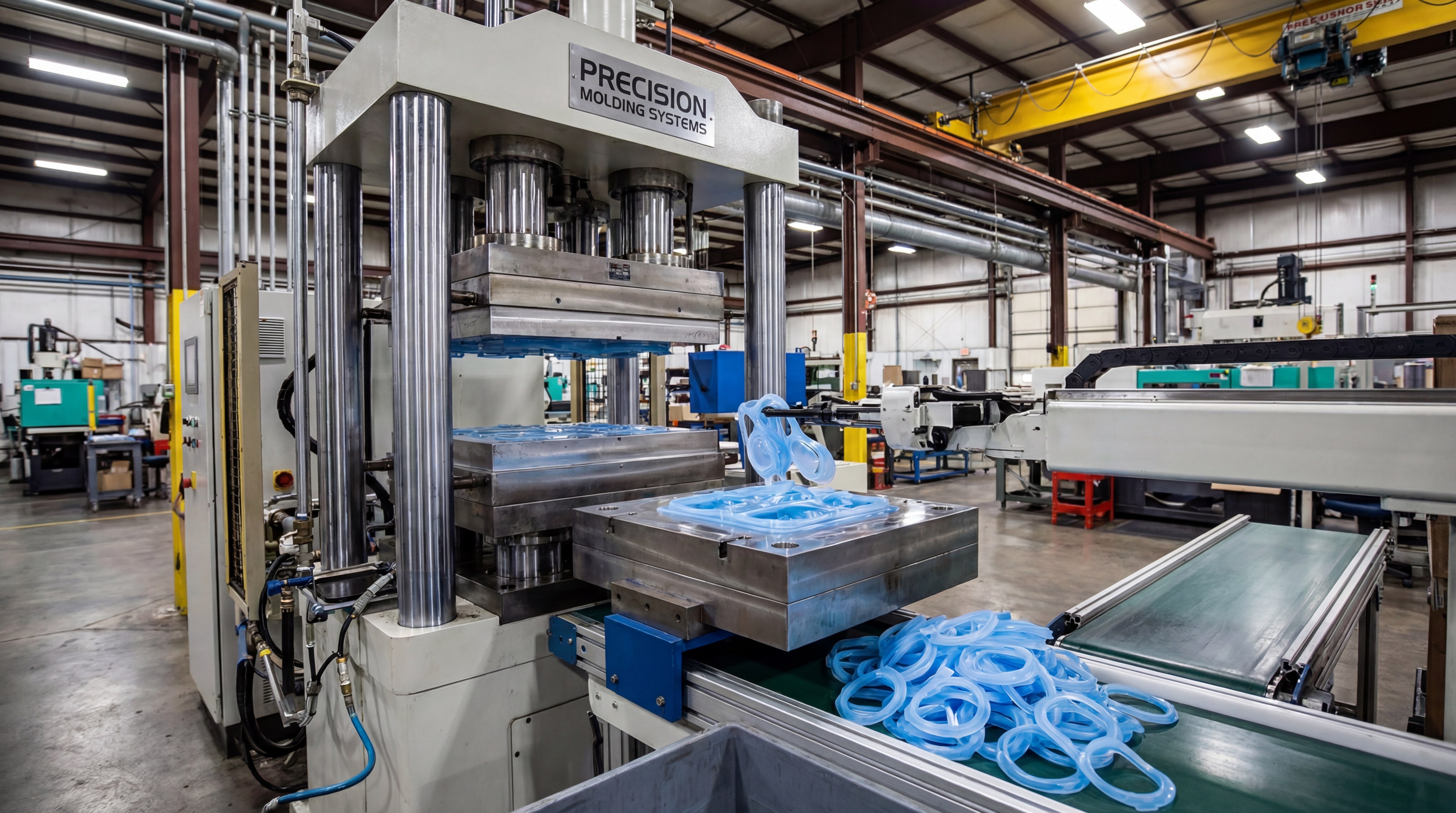
High hydraulic pressure forces the silicone to fill every detail of the mold while heat initiates the chemical curing process. You must monitor the dwell time carefully to ensure the part is fully cured before the mold opens.
Believe it or not:
- Application of 150-500 tons of pressure.
- Controlled heating at 160°C to 180°C.
- Venting of gases to prevent bubbles.
- Automatic or manual part ejection.
| Process Variable | Impact on Quality | Control Method |
|---|---|---|
| Temperature | Curing speed | PID Controller |
| Pressure | Cavity filling | Hydraulic Valve |
This process remains the gold standard for producing durable industrial gaskets and consumer silicone accessories.
Key Takeaway: Compression molding offers the best balance of cost and performance for solid silicone products that do not require high-speed automation.
How is liquid silicone rubber injection performed?
Liquid silicone rubber injection utilizes specialized machines to mix and inject material into a heated mold with extreme precision. This is a highly automated way of how silicone products are manufactured for the medical and electronics sectors.
How are the two components mixed?
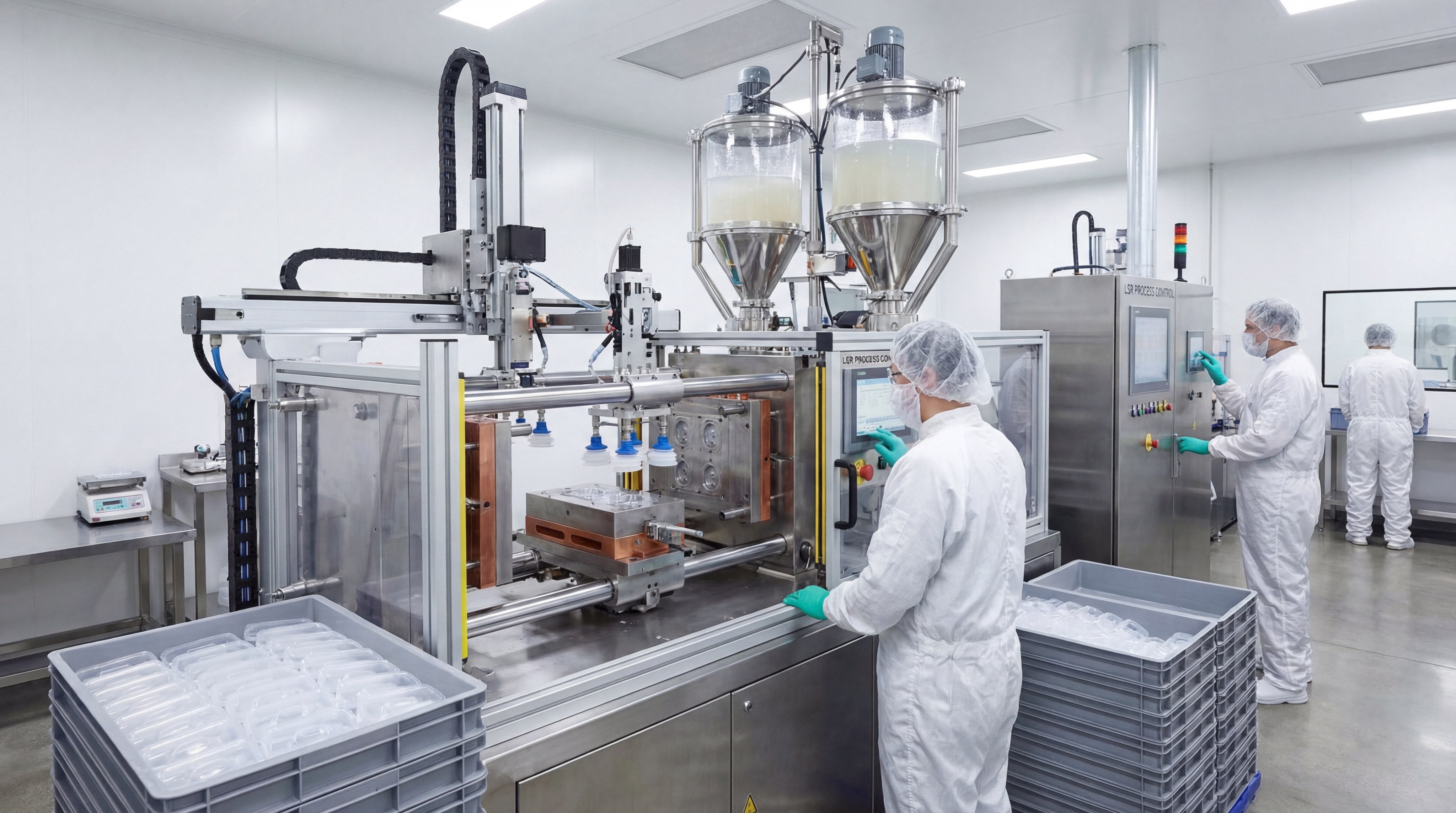
The LSR machine pumps Part A and Part B from separate drums through a static mixer at a precise 1:1 ratio. You benefit from this closed-loop system because it eliminates human error and keeps the material free from environmental contaminants.
Truth is:
- Static mixing of base and catalyst.
- Chilled delivery to prevent early curing.
- Precise dosing for small components.
- Elimination of air bubbles in the line.
Why is the injection speed so important?
The speed and pressure of the injection determine how well the liquid silicone fills complex features like thin walls or micro-seals. You must balance injection velocity with mold venting to achieve a perfect surface finish without burning the material.
Let’s face it:
- Filling thin walls down to 0.2mm.
- Reducing cycle times to seconds.
- Achieving flash-less production.
- Supporting high-volume scalability.
| LSR Advantage | Benefit to You | Application |
|---|---|---|
| Automation | Lower labor costs | Mass Production |
| Precision | Tight tolerances | Micro-electronics |
Automated LSR injection is the most efficient method for projects requiring millions of high-precision components.
Key Takeaway: Choose LSR injection molding when your product design involves intricate details, thin walls, or requires the highest levels of material purity.
What is the silicone overmolding manufacturing method?
Overmolding is a sophisticated technique in how silicone products are manufactured that bonds silicone directly onto plastic or metal substrates. You can use this method to create ergonomic handles, waterproof seals, and multi-material electronic housings.
How is the chemical bond achieved?
The process often requires a primer or a specialized self-bonding silicone grade to ensure the two materials do not delaminate. You must choose a substrate material with a high melting point so it does not warp during the silicone curing cycle.
The kicker?
- Using PA, PC, or metal inserts.
- Application of heat-activated primers.
- Mechanical interlocks in the design.
- Precise temperature control.
What are the benefits of multi-material parts?
Combining materials allows you to utilize the structural strength of plastic while enjoying the soft-touch and sealing properties of silicone. You can eliminate the need for secondary adhesives, which reduces your total assembly time and potential failure points.
Look:
- Enhanced ergonomic grip.
- Integrated waterproof seals.
- Improved shock absorption.
- Reduced assembly costs.
| Substrate | Typical Use Case | Bonding Type |
|---|---|---|
| Stainless Steel | Surgical Tools | Mechanical + Primer |
| Polycarbonate | Wearable Tech | Self-bonding LSR |
Overmolding transforms simple parts into high-performance assemblies by combining the best properties of multiple materials.
Key Takeaway: Overmolding is the premier choice for creating integrated, waterproof, and high-durability products that require both rigidity and flexibility.
Why is design for manufacturing (DFM) essential?
DFM is the proactive analysis of your part design to ensure it is optimized for how silicone products are manufactured. You should rely on DFM to identify potential issues like sink marks or difficult demolding before the tooling process begins.
How do draft angles impact production?
Adding proper draft angles to your design ensures the silicone part can be removed from the mold without tearing or stretching. You will find that even a small 1-2 degree angle significantly reduces scrap rates and speeds up the production cycle.
Think about it:
- Facilitating smooth ejection.
- Reducing stress on the part.
- Preventing mold surface wear.
- Improving visual consistency.
Can wall thickness affect part quality?
Uniform wall thickness is vital for even curing; variations can lead to internal stresses or warped dimensions. You should aim for gradual transitions between different thicknesses to ensure the silicone flows evenly throughout the cavity.
Simply put:
- Preventing air entrapment.
- Ensuring consistent curing times.
- Avoiding surface sink marks.
- Maintaining dimensional stability.
| DFM Element | Ideal Standard | Risk if Ignored |
|---|---|---|
| Draft Angle | 0.5 – 2.0 Degrees | Part Tearing |
| Wall Thickness | Uniform 1.5 – 3.0mm | Warping/Voids |
A thorough DFM review is the most effective way to reduce development costs and guarantee manufacturing feasibility.
Key Takeaway: Early collaboration with a manufacturer on DFM prevents costly mold re-works and ensures your design is perfectly suited for mass production.
What secondary operations refine the finished product?
Secondary operations are the final touches in how silicone products are manufactured that add functional or aesthetic value. You may require these steps to meet specific branding requirements or to improve the surface feel of your components.
How is flash removed efficiently?
Trimming involves removing the thin excess material that forms at the parting lines during molding. You can choose between manual trimming for low volumes or cryogenic deflashing for high-volume efficiency.
Why does this matter?
- Ensuring clean, smooth edges.
- Improving assembly fit.
- Meeting visual quality standards.
- Removing potential leak paths.
What surface treatments are available?
Surface treatments like PU coating or laser engraving can change the texture or add permanent markings to your product. You should consider these options if you need a “silk-touch” finish or need to add serialized data to your parts.
But wait:
- Adding dust-proof coatings.
- Applying silk-screen printing.
- Precision laser marking.
- Assembly with 3M adhesives.
| Post-Process | Functional Goal | Method |
|---|---|---|
| Deflashing | Clean aesthetics | Manual/Cryogenic |
| Coating | Friction reduction | Spray/Dip |
These finishing steps ensure that the silicone part is ready for the end-user and meets all functional performance criteria.
Key Takeaway: Secondary operations are essential for perfecting the final user experience and ensuring that parts meet the rigorous standards of the medical and consumer markets.
How do factories maintain high silicone quality standards?
Quality assurance is a multi-stage system that monitors how silicone products are manufactured from the arrival of raw materials to the final shipment. You must work with factories that utilize ISO-certified processes to guarantee every batch is identical.
What is the IQC and IPQC process?
Incoming Quality Control (IQC) verifies raw materials, while In-Process Quality Control (IPQC) monitors the molding parameters in real-time. You rely on these checks to catch defects early, which prevents a small issue from becoming a massive batch failure.
The kicker?
- Hardness and color verification.
- First-article inspection approvals.
- Regular patrol inspections.
- Real-time pressure monitoring.
How is final reliability tested?
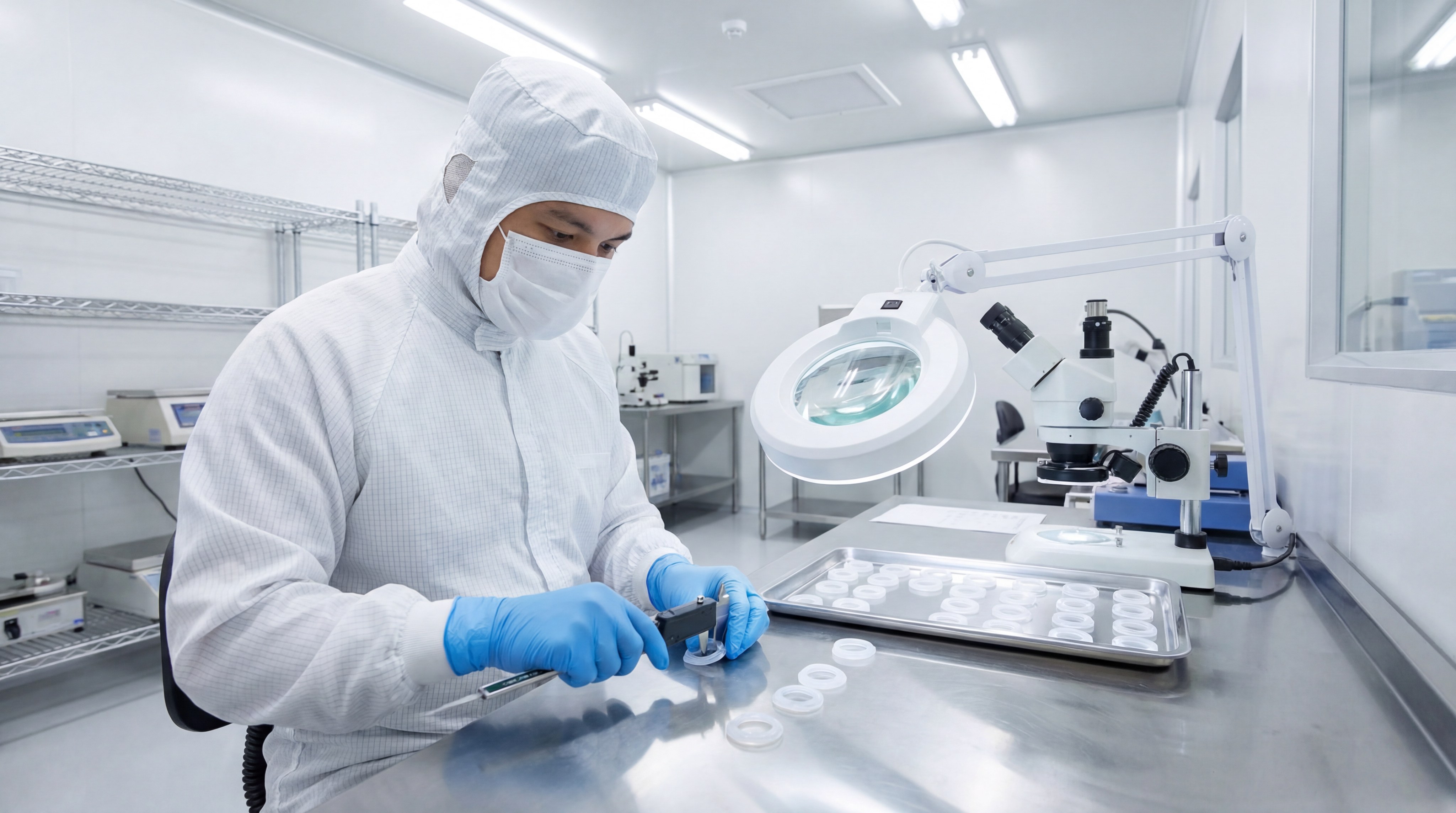
Final inspections (FQC) involve visual standards and functional testing like waterproof or tensile strength trials. You should receive detailed inspection reports that prove the parts meet your specific performance requirements before they leave the factory.
The result?
- CCD visual defect detection.
- IPX waterproof rating tests.
- Tear and elongation testing.
- Full dimensional audit reports.
| Quality Stage | Equipment Used | Focus |
|---|---|---|
| IPQC | Calipers/Projectors | Dimensions |
| FQC | Pull Tester/Water Tank | Performance |
Rigorous quality control is the foundation of trust between a manufacturer and a professional B2B buyer.
Key Takeaway: A comprehensive quality management system is the only way to ensure that high-precision silicone parts perform reliably in demanding environments.
How do you choose the right manufacturing partner?
Choosing a partner requires evaluating their technical capabilities and their understanding of how silicone products are manufactured for your specific industry. You need a factory that offers integrated services from tooling to mass production to reduce supply chain risks.
Does the factory have in-house tooling?
In-house mold making allows for faster iterations and tighter control over the final product quality. You will find that manufacturers with their own CNC centers can resolve design issues much faster than those who outsource their tooling.
But here is the reality:
- Faster DFM feedback cycles.
- Lower total development costs.
- Better mold maintenance.
- Consistent part tolerances.
What certifications should you look for?
Certifications like ISO 9001, IATF 16949, or ISO 13485 indicate that the factory follows globally recognized management standards. You should prioritize partners who can provide documentation for material traceability and environmental compliance.
Simply put:
- Proven automotive standards.
- Cleanroom medical capabilities.
- Traceable raw material logs.
- Stable export experience.
| Evaluation Criteria | High-Quality Partner | Risk Factor Partner |
|---|---|---|
| Tooling | In-house CNC/EDM | Outsourced Tooling |
| QC | Multi-stage ISO System | Final Inspection Only |
Selecting the right partner ensures your project transitions smoothly from a concept drawing to a successful market launch.
Key Takeaway: A partner with integrated manufacturing capabilities and strong industry certifications is the best insurance policy for your custom silicone project.
*
Silicone Manufacturing FAQ
Can I use compression molding for high-precision parts?
Yes, but with limitations. While compression molding is highly reliable, it is generally better suited for parts with standard tolerances; for ultra-high precision or micro-features, LSR injection molding is the superior judgment.
What’s the best way to reduce the unit price of silicone parts?
Optimize your design for multi-cavity molds. Increasing the number of cavities in a single tool allows you to produce more parts per cycle, significantly lowering the labor and machine time cost per unit.
How do I know if my design is ready for production?
Request a professional DFM review from your manufacturer. They will analyze draft angles, wall thickness, and parting lines to confirm if the part can be molded efficiently without high defect rates.
Can I overmold silicone onto any plastic?
No, the plastic must have a high thermal resistance. You must select engineering plastics like Polycarbonate (PC) or Glass-Fiber Nylon (PA+GF) because standard plastics will melt at the high temperatures required to cure silicone.
What’s the best material for medical-grade silicone components?
Platinum-cured liquid silicone rubber (LSR) is the primary choice. It offers the highest level of purity, does not produce peroxide by-products, and is widely certified for long-term skin contact and surgical use.
*
Conclusion
Successfully navigating how silicone products are manufactured requires a balance of material science, precision engineering, and rigorous quality control. By understanding the differences between compression and LSR molding, and the importance of DFM, you can eliminate common pitfalls like dimensional instability and waterproof failure. Our vision is to provide a repeatable, controlled manufacturing process that eliminates supplier gaps and speeds up your path to market. Whether you need medical-grade keypads, wearable straps, or industrial seals, we build the stability you need to scale with confidence. To start your next high-performance silicone project with expert DFM support, contact us today for a comprehensive custom quotation.