
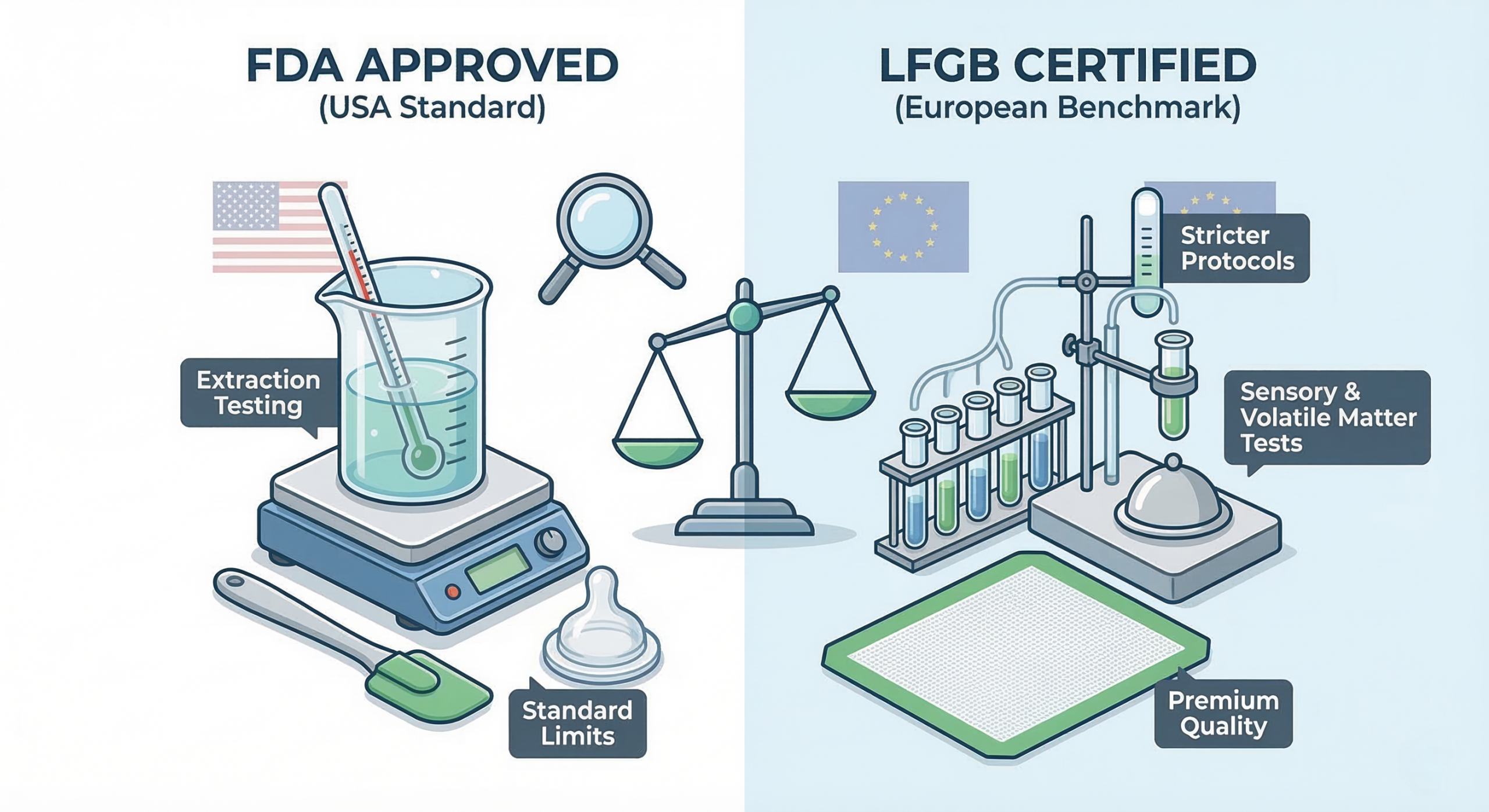
What is FDA approved silicone and how is it tested?
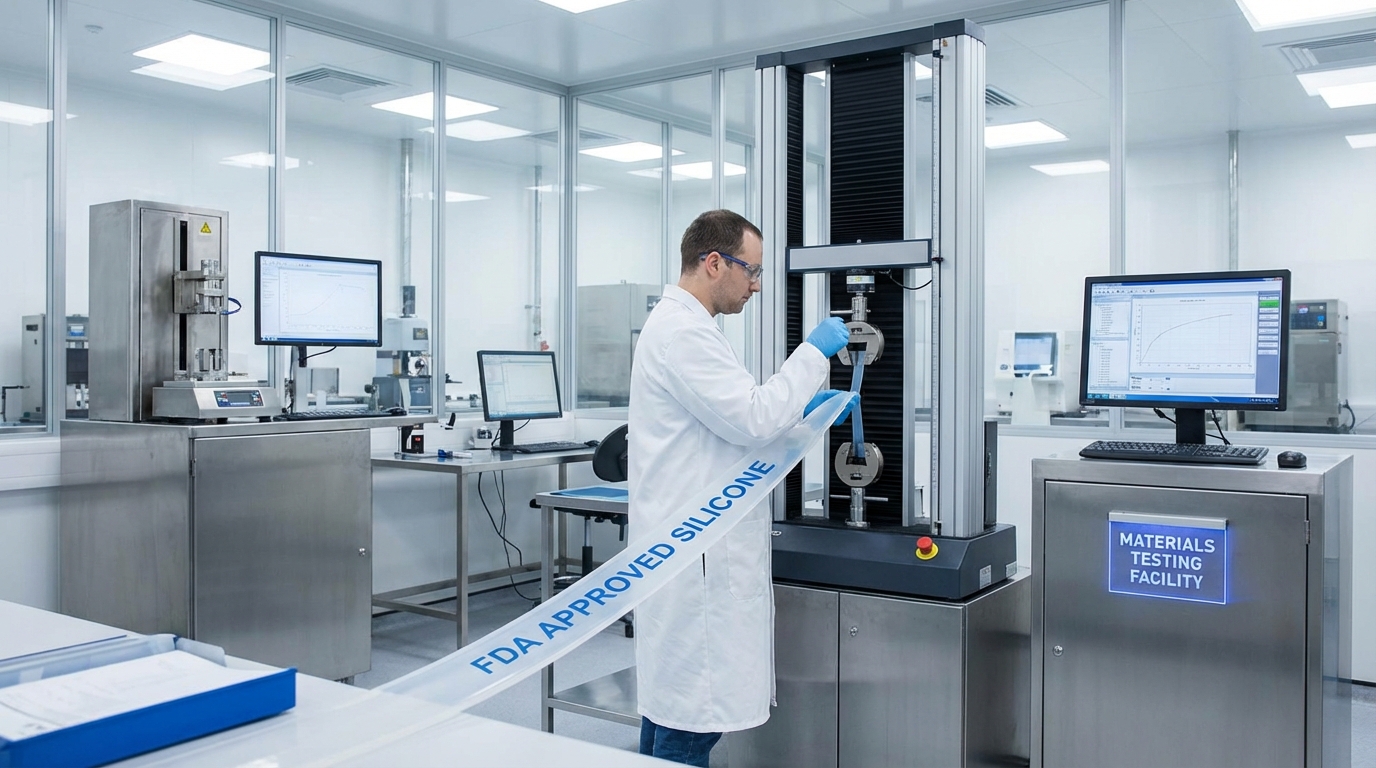
FDA approved silicone refers to materials that comply with the 21 CFR 177.2600 regulation, ensuring the rubber is safe for repeated food contact. To understand What is FDA approved silicone and how is it tested?, you must look at the extraction testing performed with various solvents. This process involves submerging the silicone in distilled water and n-hexane to measure the total extractable matter.
What are the core components of FDA compliance?
The core components include specific material formulations that use only ingredients listed on the FDA’s positive list. These materials must be manufactured under good manufacturing practices to avoid contamination.
How does the FDA define extraction limits?
Extraction limits are defined by the amount of residue left behind after a specified contact time with food simulants.
- Distilled water extraction must not exceed 20 mg/sq in.
- N-hexane extraction has a limit of 175 mg/sq in.
- Successive extractions must show decreasing migration levels.
Think about this: without these limits, chemical leaching would be inevitable.
| Parameter | FDA Extraction Limit | Solvent Used |
|---|---|---|
| Water Extractives | Max 20 mg/sq inch | Distilled Water |
| Hexane Extractives | Max 175 mg/sq inch | n-Hexane |
The table highlights the specific numerical thresholds that define whether a silicone product is legally compliant for the American market.
Key Takeaway: Using FDA-compliant materials ensures your product meets the baseline safety requirements for the United States, providing a cost-effective path for high-volume consumer goods.
Is silicone safe for global food contact applications?
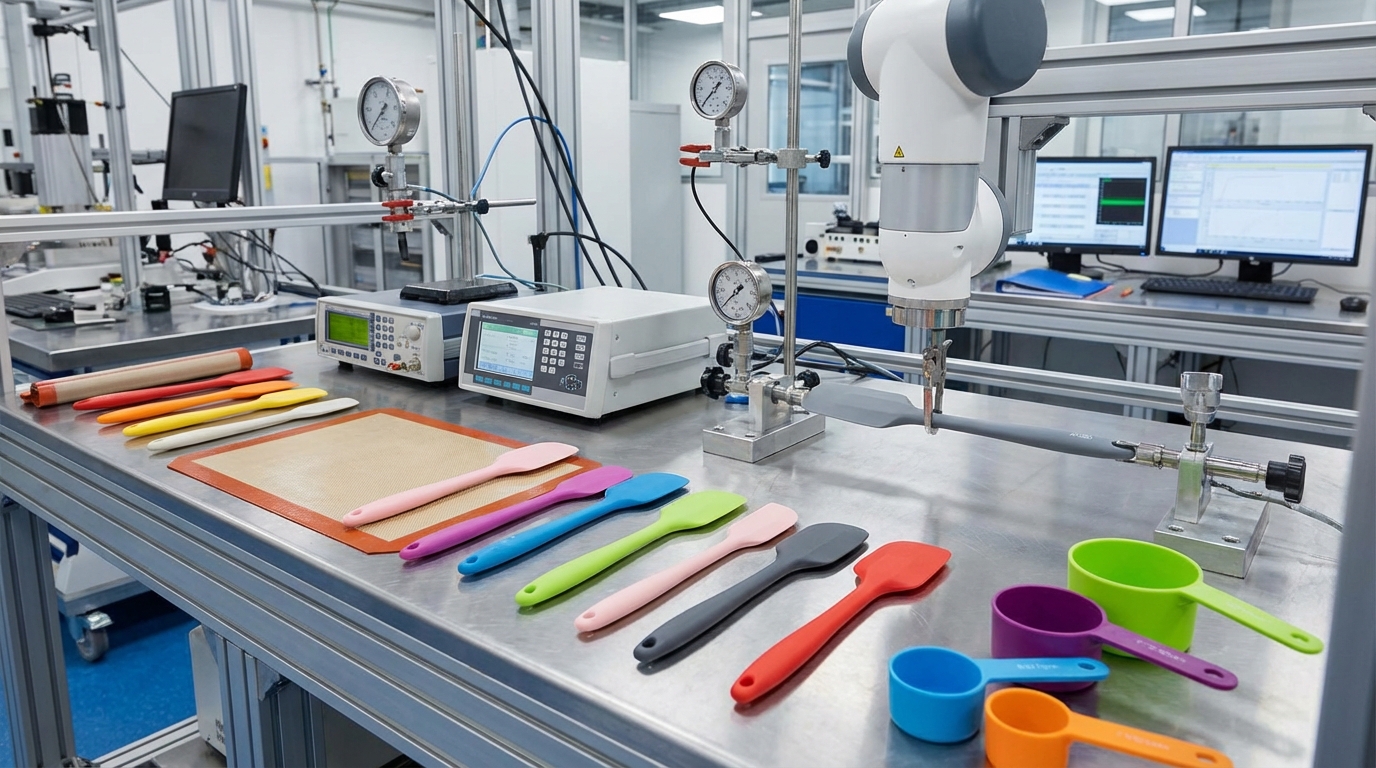
Silicone is widely considered safe for food contact because it is chemically inert and does not react with food or beverages. When investigating what is FDA approved silicone and how is it tested?, experts emphasize its ability to withstand extreme temperatures without releasing hazardous fumes. This stability makes it a preferred choice for everything from baby bottle nipples to industrial baking mats.
Why do authorities consider silicone nontoxic?
Authorities like Health Canada and the FDA view silicone as nontoxic because its molecular structure—alternating silicon and oxygen atoms—is exceptionally stable. Unlike some plastics, it does not contain BPA, phthalates, or lead.
What are the chemical resistance benefits of silicone?
Silicone’s chemical resistance prevents it from degrading when exposed to acidic foods or harsh cleaning agents.
- It resists oxidation and UV light.
- It remains flexible from -40°C to 230°C.
- It does not support microbiological growth.
Let’s dive in: silicone’s durability is its greatest safety asset.
| Safety Factor | Silicone Performance | Benefit |
|---|---|---|
| Toxicity | Nontoxic/BPA-Free | Safe for infants |
| Heat Stability | Up to 230°C | No melting or fumes |
This data confirms that silicone’s physical properties contribute directly to its status as a safe material for human use.
Key Takeaway: Silicone’s inherent stability provides a “safety-first” foundation for your products, reducing the risk of chemical migration even under stress.
How does FDA testing compare to the LFGB standard?
FDA testing is generally less intensive than the LFGB standard, which is required for the German and broader European markets. When comparing these, knowing What is FDA approved silicone and how is it tested? reveals that FDA focuses on total extraction, while LFGB includes more rigorous sensory and volatile matter tests. Consequently, a product that passes FDA might still fail the more demanding LFGB protocols.
Which testing method is more intensive?
LFGB is significantly more intensive because it tests for “total volatile organic matter” and includes a “smell and taste” test. These ensure that the silicone does not alter the organoleptic properties of the food it touches.
Why is the German LFGB standard preferred in Europe?
The German LFGB is preferred because it represents the highest safety tier in the European Union.
- It includes more solvent simulants (like 3% acetic acid).
- It requires lower migration thresholds than the FDA.
- It is accepted across all EU member states.
Here is the truth: LFGB is the “gold standard” for premium silicone.
| Feature | FDA Standard | LFGB Standard |
|---|---|---|
| Primary Region | USA | Europe/Germany |
| Strictness | Moderate | Very High |
| Sensory Testing | Not Required | Mandatory |
This comparison illustrates why European buyers often demand LFGB certification to ensure the highest level of consumer protection.
Key Takeaway: If you are targeting the European market, investing in LFGB testing is non-negotiable for high-end food-grade silicone products.
What are the specific extraction tests for FDA compliance?
The specific extraction tests for FDA compliance involve measuring the weight of residues left after silicone samples are exposed to heat and solvents. Understanding what is FDA approved silicone and how is it tested? requires a focus on 21 CFR 177.2600, which mandates testing at reflux temperatures. These tests simulate the worst-case scenarios for food contact to ensure consumer safety.
How is distilled water used in extraction testing?
Distilled water simulates aqueous foods and is used to measure the total amount of water-soluble substances that might migrate. The silicone is typically boiled for several hours to accelerate any potential leaching.
What is the role of n-hexane in FDA protocols?
N-hexane is used as a simulant for fatty or oily foods because of its non-polar nature.
- Samples are tested at reflux for 7 hours.
- A second 2-hour extraction is then performed.
- The total weight of extractives is calculated per square inch.
The bottom line is: the solvent must match the food type the product will encounter.
| Solvent | Test Condition | Migration Limit |
|---|---|---|
| Distilled Water | Reflux (7 hours) | 20 mg/sq in |
| N-Hexane | Reflux (7 hours) | 175 mg/sq in |
The table provides the exact technical parameters required to achieve a passing grade under US federal law.
Key Takeaway: Technical compliance with FDA extraction tests is the barrier to entry for any silicone product sold in the United States.
Why is LFGB certification considered more comprehensive?
LFGB certification is considered more comprehensive because it employs more diverse simulants and stricter migration limits than the FDA. To exceed the basics of What is FDA approved silicone and how is it tested?, LFGB adds testing for peroxides and organotin compounds. This holistic approach ensures that no harmful chemicals, even in trace amounts, reach the consumer.
What extra sensory tests does LFGB require?
LFGB requires an “Odour and Flavour” test, where the silicone is placed in contact with a test medium to see if it transfers any scent or taste. This is vital for kitchenware to ensure it doesn’t ruin the quality of a meal.
How does LFGB handle organic volatile matter?
LFGB measures the total volatile organic matter (VOM) which must stay below 0.5%.
- This requires higher quality raw materials.
- It often necessitates longer oven-baking times.
- It eliminates the “rubbery” smell common in lower-grade silicone.
The fact is: sensory quality is a hallmark of LFGB compliance.
| Test Type | LFGB Requirement | FDA Requirement |
|---|---|---|
| Volatile Matter | Max 0.5% | No specific limit |
| Sensory Test | Pass/Fail (Grade 0-4) | Not required |
This table clarifies the qualitative and quantitative differences that make LFGB a superior certification for high-end brands.
Key Takeaway: Choosing LFGB certification signals to your customers that you prioritize not just safety, but also the sensory quality of their experience.
Which material properties affect your testing results?
Material properties such as the type of silicone rubber and the catalyst used directly affect whether a product passes migration tests. When asking what is FDA approved silicone and how is it tested?, you must consider the difference between fumed and precipitated silicone. Fumed silicone generally has higher purity, making it easier to meet the strict limits of global safety standards.
Does the silicone type impact migration levels?
Yes, the choice between peroxide-cured and platinum-cured silicone is critical for testing outcomes. Platinum-cured silicone is cleaner and produces fewer by-products, which significantly reduces the risk of migration failure.
How do additives change the safety profile?
Additives like pigments and fillers must also be food-grade to maintain compliance.
- Low-quality fillers can increase extractable matter.
- Certain pigments may contain heavy metals.
- Heat stabilizers must be chosen from the approved FDA list.
Believe it or not: the smallest additive can cause a testing failure.
| Material Component | Impact on Testing | Recommendation |
|---|---|---|
| Catalyst | Affects by-products | Use Platinum-curing |
| Pigment | Heavy metal risk | Use certified food-grade |
This summary illustrates how material selection is the most influential factor in achieving regulatory compliance.
Key Takeaway: Successful testing starts with high-purity raw materials; cutting corners on material costs often leads to expensive compliance failures later.
Can secondary curing ensure your products pass inspection?
Secondary curing, or post-curing, is a critical step that helps silicone products pass inspection by removing residual chemicals. When reviewing What is FDA approved silicone and how is it tested?, secondary curing stands out as the best way to reduce volatile organic matter. By baking the molded parts in a high-temperature oven, manufacturers can “burn off” the unwanted by-products of the vulcanization process.
What is the purpose of post-curing in manufacturing?
Post-curing stabilizes the physical properties of the silicone and ensures that any remaining volatile compounds are evaporated. This is especially important for LFGB compliance, where volatile matter limits are extremely tight.
How are residual substances eliminated?
Residual substances are eliminated through a combination of heat and time in a circulating air oven.
- Parts are baked at 200°C for 2 to 4 hours.
- Airflow removes the evaporated siloxanes.
- This process hardens the silicone slightly and improves its compression set.
The results speak for themselves: post-cured silicone is safer and more durable.
| Process Step | Temperature | Duration |
|---|---|---|
| Primary Molding | 160°C – 180°C | 2 – 5 Minutes |
| Secondary Curing | 200°C | 4 Hours |
The table defines the standard secondary curing protocol used to meet international safety benchmarks.
Key Takeaway: Never skip secondary curing if your goal is LFGB or FDA compliance; it is the most effective process for ensuring a “clean” final product.
What are the cost implications of LFGB vs FDA silicone?
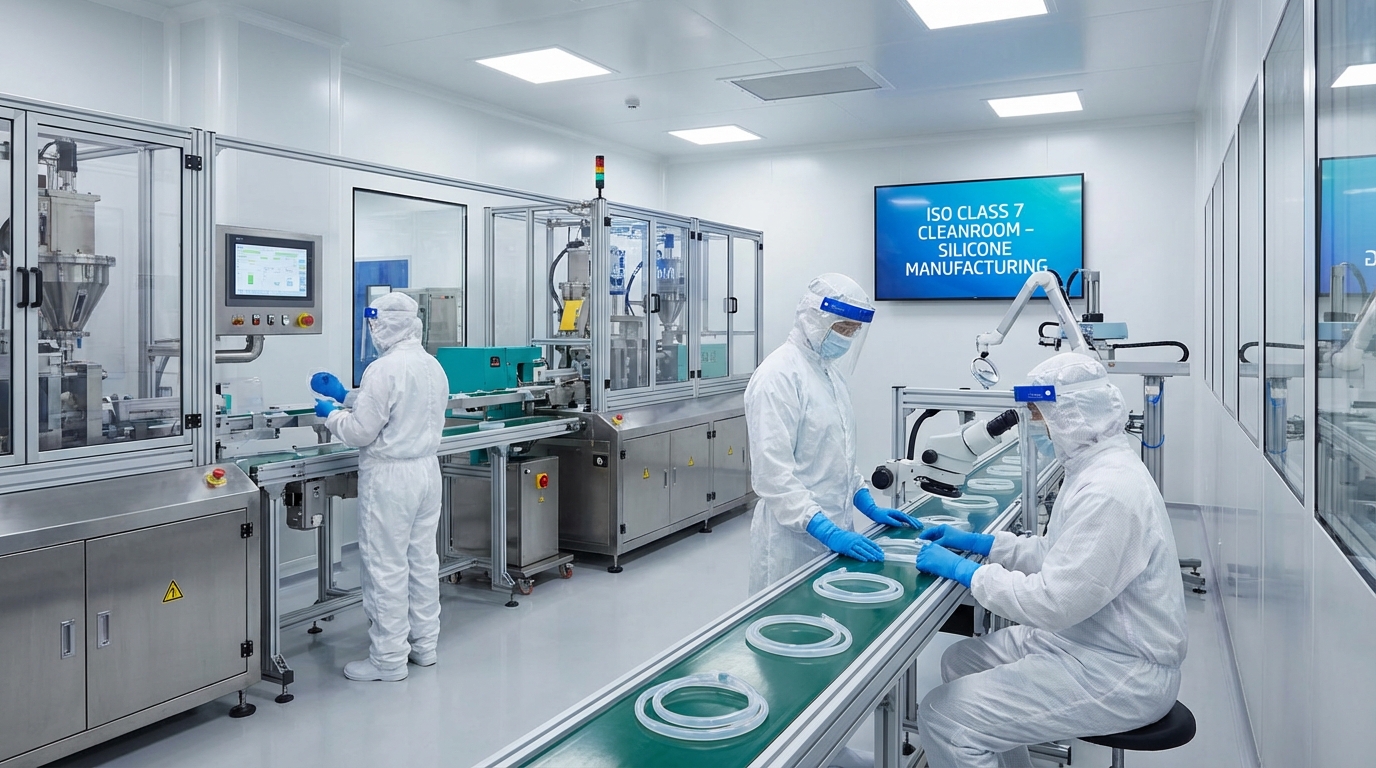
The cost of LFGB silicone is higher than FDA silicone due to the need for higher-grade raw materials and longer processing times. When you look at what is FDA approved silicone and how is it tested?, the FDA standard allows for more cost-effective production for the mass market. However, if your brand targets the premium European sector, the higher cost of LFGB is a necessary investment for market acceptance.
Why is LFGB silicone more expensive to produce?
LFGB silicone requires the use of platinum catalysts and fumed silicone bases, which are more expensive than peroxide catalysts and precipitated bases. Additionally, the mandatory post-curing adds significant energy costs to the production line.
Is the FDA standard more cost-effective for US markets?
The FDA standard is more cost-effective because the testing is simpler and the material requirements are slightly less rigid.
- It allows for faster production cycles.
- Peroxide-cured materials are often acceptable for FDA.
- Test reports are generally less expensive to obtain.
Consider this: you pay for the level of safety and prestige your market demands.
| Cost Factor | FDA Standard | LFGB Standard |
|---|---|---|
| Raw Material | Standard Grade | High Purity/Fumed |
| Processing | Standard Cycle | Extended Post-Curing |
| Testing Fee | Lower | Higher |
This comparison highlights the financial trade-offs between meeting the US baseline versus the European premium standard.
Key Takeaway: Align your certification choice with your target market’s price sensitivity and regulatory requirements to maximize your ROI.
How is total migration measured in silicone testing?
Total migration is measured by weighing the amount of non-volatile substances that transfer from the silicone to a food simulant. To fully answer What is FDA approved silicone and how is it tested?, testing laboratories use high-precision scales to detect even milligram-level changes. If the weight of the residue exceeds the legal limit, the product is deemed non-compliant and cannot be sold for food contact.
What are the acceptable migration limits?
Acceptable migration limits vary, but for FDA, the threshold is generally ≤0.01mg/sq in for specific extractions. LFGB migration limits are often stricter, requiring even lower levels of transfer to ensure absolute food purity.
How do temperature and time affect testing outcomes?
Temperature and time are critical variables; higher temperatures typically increase the rate of migration.
- Tests are conducted at temperatures exceeding normal use.
- Contact times often span 24 to 240 hours.
- These extreme conditions guarantee safety for long-term food storage.
Here is the key: labs test for the “worst-case” scenario.
| Variable | Influence on Migration | Testing Logic |
|---|---|---|
| Higher Temp | Increases leaching | Simulates hot food contact |
| Longer Time | Increases leaching | Simulates long-term storage |
The table shows how testing protocols are designed to push the material to its limits.
Key Takeaway: Understanding migration variables allows you to design products that remain safe even under the most demanding kitchen or medical conditions.
How do you choose the right standard for your market?
Choosing the right standard depends on where you intend to sell your products and the price point of your brand. While what is FDA approved silicone and how is it tested? is the core question for the American market, LFGB is essential for the European Union. Global brands often choose to meet LFGB standards for all their products to simplify their supply chain and ensure the highest safety across all regions.
When should you opt for LFGB certification?
You should opt for LFGB certification if you are exporting to Germany, France, or other EU nations. It is also the better choice for high-end “premium” kitchenware brands that want to market their superior purity and lack of odors.
Is FDA compliance sufficient for international trade?
FDA compliance is sufficient for the US and many Asian markets, but it may not satisfy discerning buyers in Europe.
- FDA is widely recognized but viewed as a “minimum.”
- Some retailers in the US now request LFGB for baby products.
- LFGB compliance inherently covers FDA requirements.
Let’s dive in: exceeding the standard is often the best marketing strategy.
| Market | Recommended Standard | Reason |
|---|---|---|
| United States | FDA | Legal Requirement |
| Europe | LFGB | Market Necessity |
| Global Premium | LFGB | Maximum Trust |
The table provides a clear roadmap for selecting a certification strategy based on geographical and brand goals.
Key Takeaway: When in doubt, aim for LFGB; it guarantees compliance in nearly every global market and positions your brand as a leader in safety.
*
At HuaLin, we understand that navigating the complexities of FDA and LFGB compliance can be the difference between a successful launch and a regulatory failure. Our team of experts is dedicated to solving your manufacturing hurdles, from material selection to the final quality inspection. We provide the technical support and high-precision molding necessary to ensure your products meet the world’s most stringent safety standards. We believe that silicone technology is the key to a safer, more sustainable future, and we are committed to helping you lead that charge. contact us today to start your journey toward high-performance, compliant silicone solutions.
*
FAQ
Can I use FDA silicone in Europe?
No, because many European countries, particularly Germany and France, require the stricter LFGB certification for food-contact products.
What’s the best way to tell the difference between LFGB and FDA silicone?
Check the test report for the “smell and taste” test results, as only LFGB silicone undergoes this sensory evaluation.
How do I know if my silicone is truly food grade?
Request a valid test report from an accredited third-party lab like SGS or TUV that specifically cites FDA 21 CFR 177.2600 or LFGB standards.
Can I skip secondary curing for FDA products?
Yes, technically you can if the material already passes migration limits, but it is not recommended as it leaves odors and residues that can affect quality.
How do I know if my supplier is using high-quality raw materials?
Inquire about the source of the silicone base and request a material safety data sheet (MSDS) to verify the ingredients are on the approved lists.