
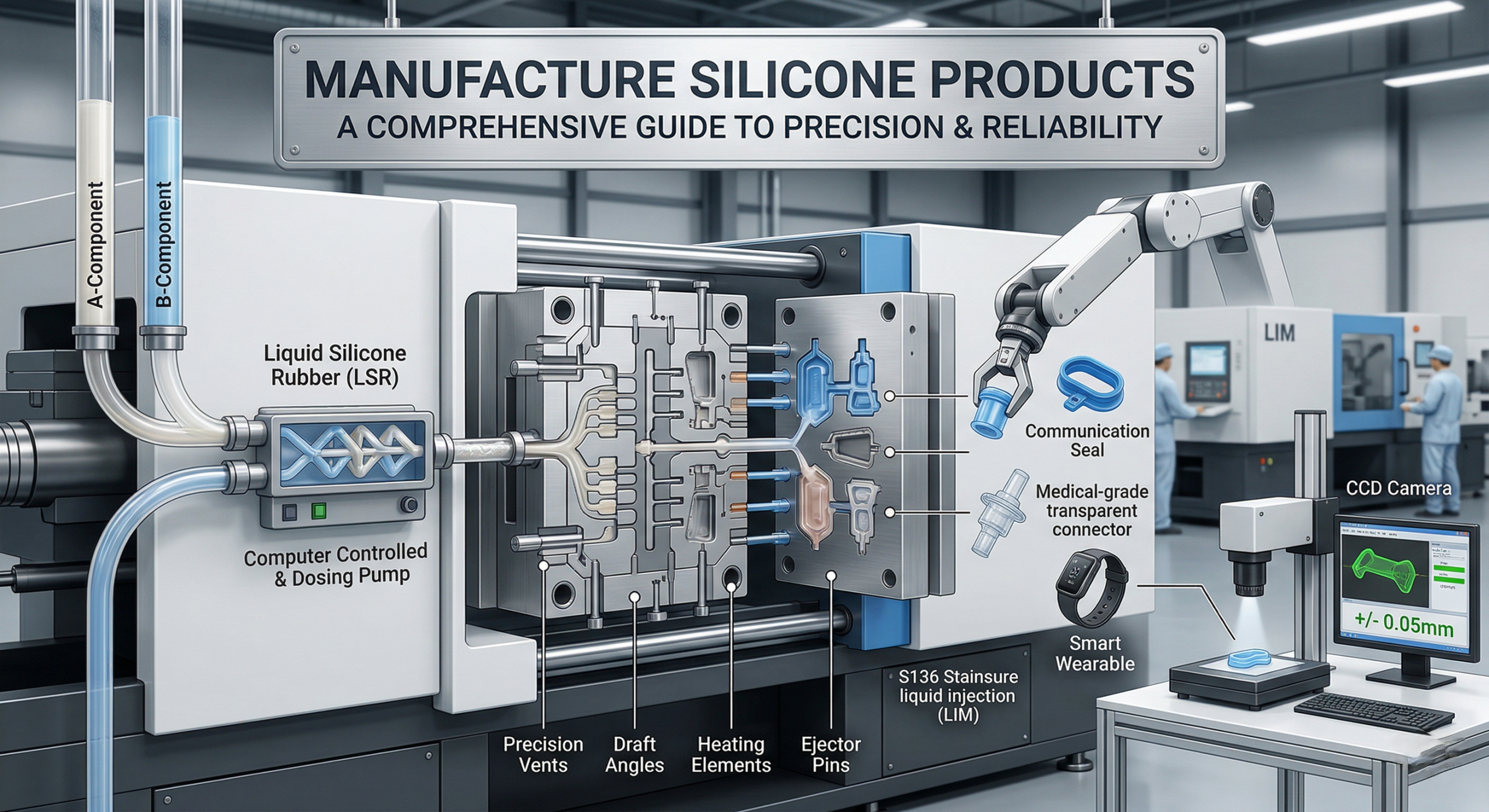
You manufacture silicone products by selecting a raw elastomer grade, designing a precision steel mold, and using high-pressure injection or compression equipment to cure the material into its final shape. Many engineering teams struggle with inconsistent part dimensions or surface defects that lead to expensive delays and wasted materials. This uncertainty can stall your product launch and inflate your manufacturing budget unnecessarily. By following a proven technical roadmap to Manufacture Silicone Products, you can ensure every batch meets rigorous industrial standards while maintaining cost efficiency.
1. Which Silicone Material Should You Choose?
Selecting the right material involves evaluating the shore hardness, temperature resistance, and tensile strength required for your specific application. To successfully Manufacture Silicone Products, you must decide between Liquid Silicone Rubber (LSR) for high precision or High Consistency Rubber (HCR) for more rugged, industrial-grade components.
Understanding Liquid Silicone Rubber
Think about this: LSR is the gold standard for intricate designs.
- Excellent biocompatibility for skin-contact items.
- Rapid cycle times for high-volume efficiency.
- Superior thermal stability in extreme environments.
You will find that this material flows easily into complex mold cavities, ensuring that every detail of your drawing is captured perfectly.
Evaluating Solid Gum Silicone
But what if you need maximum durability?
- High mechanical strength for gaskets and seals.
- Lower material costs for simple geometries.
- Wide range of available additives and fillers.
You should consider HCR when your project demands a “stiffer” feel or when you are producing large-scale industrial parts that don’t require microscopic tolerances.
Key Takeaway: The choice between LSR and HCR dictates your entire tooling strategy and final unit cost.
| Feature | LSR (Liquid) | HCR (Solid) |
|---|---|---|
| Viscosity | Low (Pumpable) | High (Clay-like) |
| Precision | Excellent | Good |
| Lead Time | Faster | Moderate |
The following data compares the primary performance metrics for these two essential manufacturing materials.
2. Why Is Mold Design Crucial for Success?
Precision mold design is the foundation of quality because it determines how the material flows and where the air escapes during the vulcanization process. When you Manufacture Silicone Products using high-grade S136 stainless steel tools, you minimize flash and ensure that the finished parts require little to no manual trimming.
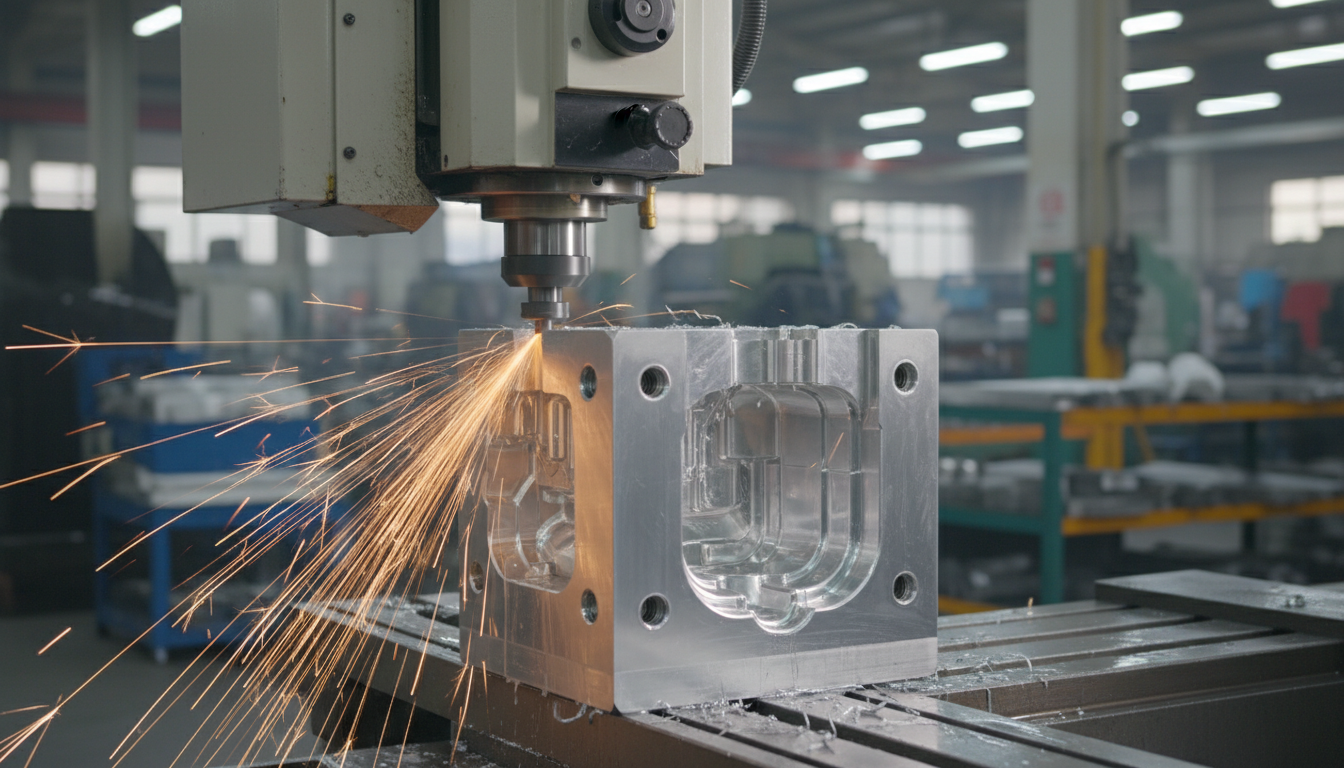
Optimizing Part Ejection
Here is the deal: sticky silicone can ruin your yield if the mold isn’t designed for release.
- Strategic placement of ejection pins and air poppets.
- Specific draft angles to prevent part tearing.
- Application of permanent non-stick surface coatings.
You need to verify that your toolmaker understands the “shrinkage” rate of your specific silicone grade to avoid undersized parts.
Managing Air Venting and Overflow
Do you want to avoid bubbles?
- Precision-milled vents allow trapped gases to escape.
- Overflow grooves catch excess material to prevent flash.
- Vacuum-assisted molding options for zero-defect production.
You will see a significant reduction in scrap rates when your mold design accounts for the high-pressure dynamics of the injection cycle.
Key Takeaway: Investing in professional DFM (Design for Manufacturing) and high-quality tooling prevents 90% of common production failures.
| Tooling Element | Purpose | Impact |
|---|---|---|
| Draft Angle | Easy part removal | Lower scrap rate |
| Steel Grade | Tool longevity | Consistent dimensions |
| Venting | Gas removal | Prevents surface voids |
A well-engineered mold provides the consistency needed for high-speed automated production environments.
3. How Does the LSR Injection Process Work?
Liquid Injection Molding (LIM) is a fully automated system where two components are pumped through a static mixer into a heated mold cavity. This is the most efficient way to Manufacture Silicone Products at scale, offering the lowest labor cost per unit for complex components.
Mastering the Injection Cycle
Look at it this way: automation is your best friend for consistency.
- Closed-loop control over injection pressure and speed.
- Precise temperature management across the entire mold.
- Synchronized clamping force to keep the tool sealed.
You can achieve cycle times as fast as 30 seconds for small, thin-walled parts, making this ideal for consumer electronics.
Comparing Overmolding Techniques
Wait, there’s more.
- Chemical bonding between silicone and plastic substrates.
- Mechanical interlocking for multi-material assemblies.
- Elimination of secondary assembly labor through automation.
You will find that overmolding allows you to create soft-touch grips or waterproof seals directly onto rigid frames in a single process.
Key Takeaway: LSR injection molding offers the best ROI for high-volume projects requiring tight tolerances and automated handling.
| Process Metric | Specification | Benefit |
|---|---|---|
| Cycle Time | 30 – 120 Seconds | High throughput |
| Tolerance | +/- 0.05mm | Superior precision |
| Labor | Low (Automated) | Cost efficiency |
This table highlights why injection molding is the preferred route for high-performance silicone components.
4. What Happens During the Mixing Phase?
The mixing phase ensures that the catalyst and base material are perfectly homogenized to facilitate a uniform chemical reaction. When you Manufacture Silicone Products like communication seals, any imbalance in the 1:1 ratio will result in “soft spots” or incomplete curing.
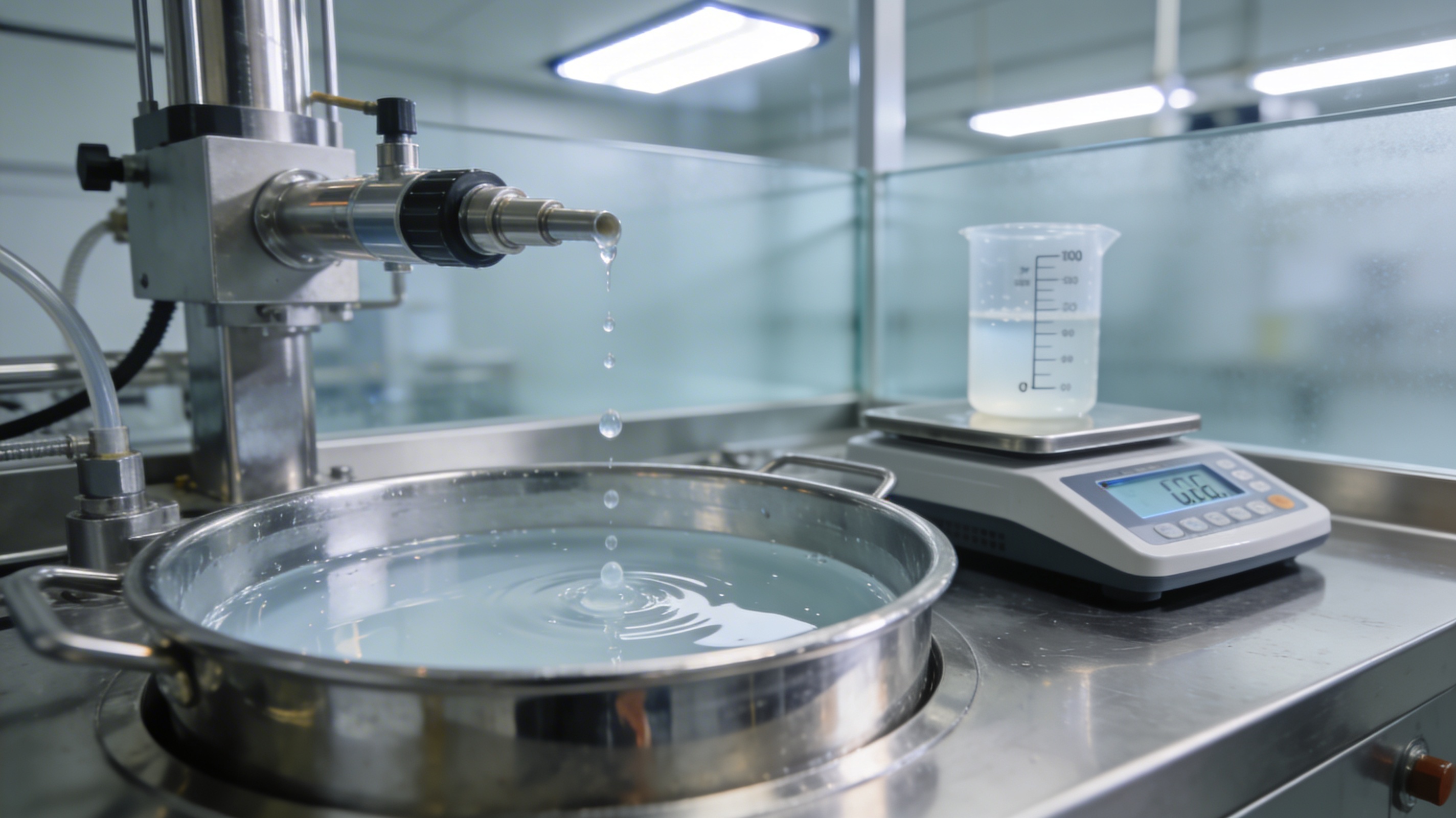
Dosing and Pigmentation
Here is the secret: accuracy at the pump saves the batch.
- Computer-controlled dosing pumps for a perfect 1:1 mix.
- In-line pigment injection for vibrant, consistent colors.
- Static mixers to ensure no air is introduced during prep.
You should always verify that your supplier uses closed-system dosing to prevent environmental contamination from dust or oils.
Managing Material Pot Life
Don’t forget the clock.
- Chilled delivery lines prevent premature curing.
- Proper storage temperatures for raw silicone drums.
- First-in, first-out (FIFO) inventory management.
You need to ensure the mixed material is injected immediately, as the platinum-catalyzed reaction begins the moment components A and B meet.
Key Takeaway: Precise material preparation is the only way to guarantee the mechanical properties of your finished parts.
| Mixing Factor | Control Method | Result |
|---|---|---|
| Ratio Control | Metering Pumps | Uniform hardness |
| Colorant | Weight-based Dosing | Visual consistency |
| Contamination | Sealed Systems | High purity parts |
Strict control over the mixing phase eliminates the risk of structural failure in your final product.
5. How Is Thermal Curing Controlled?
Curing, or vulcanization, is the heat-activated process that transforms the liquid or gum-like silicone into a durable solid. To Manufacture Silicone Products effectively, you must balance the mold temperature with the curing time to prevent scorching or under-cured cores.
Optimizing Vulcanization Temp
Think about this: heat is the catalyst for speed.
- Standard cure temperatures range from 150°C to 200°C.
- Electric heater cartridges provide localized thermal control.
- Thermal sensors monitor real-time fluctuations during the shot.
You will notice that thinner parts cure faster, allowing you to maximize the output of your production line.
Preventing Thermal Defects
Are you seeing bubbles?
- Backpressure adjustments to compress trapped air.
- Step-curing profiles for thick-walled components.
- Uniform heating to prevent internal stresses or warping.
You should work with your engineer to define the “sweet spot” where the material cures fully without degrading the surface finish.
Key Takeaway: Thermal management is a balancing act between production speed and material integrity.
| Curing Variable | Range | Impact |
|---|---|---|
| Temperature | 160°C – 190°C | Cure speed |
| Dwell Time | 20 – 180 Seconds | Full cross-linking |
| Clamping Pressure | 50 – 300 Tons | Flash prevention |
The relationship between time and temperature determines the physical performance of every silicone part.
6. How Is High Precision Guaranteed?
High precision is achieved through a combination of precision-cut steel tools and real-time process monitoring. When you Manufacture Silicone Products for the medical industry, tolerances of +/- 0.05mm are often the standard requirement for life-critical devices.
Utilizing Automated Inspection
Best of all: cameras don’t get tired.
- CCD visual systems check for flash and voids.
- Laser micrometers verify critical dimensions in seconds.
- Automated rejection gates remove non-conforming parts.
You can trust that every part shipped meets your drawing’s specifications when automated inspection is integrated into the line.
Implementing In-Process Quality
Do you want peace of mind?
- First-article inspection for every shift change.
- Hourly “patrol” checks by senior QC technicians.
- Digital records for full batch traceability.
You will see that keeping the process “under control” is much cheaper than sorting through thousands of defective parts later.
Key Takeaway: Combining high-end tooling with automated inspection is the only way to achieve zero-defect manufacturing.
| Accuracy Tool | Accuracy Level | Application |
|---|---|---|
| Steel Tooling | +/- 0.01mm | Foundation of part size |
| CCD Cameras | 100% Surface Scan | Aesthetic verification |
| Digital Calipers | +/- 0.02mm | Dimensional spot-checks |
The data above shows how different layers of technology contribute to the final precision of the product.
7. What Finishing Steps Are Required?
Finishing operations like deflashing, post-curing, and surface coating add the final functional and aesthetic touches. To Manufacture Silicone Products that look as good as they perform, you must select the most efficient trimming method for your specific geometry.
Post-Curing for Purity
But wait, there’s more.
- Oven-baking parts at 200°C for several hours.
- Removal of volatile organic compounds (VOCs).
- Enhancement of compression set and tensile strength.
You will find that post-curing is mandatory for medical and food-grade applications to ensure the material is completely inert.
Surface Coatings and Treatments
Want a better feel?
- PU coatings for a silky, non-dust-attractive finish.
- Laser etching for permanent UI markings and logos.
- Anti-friction coatings for dynamic seals and valves.
You should consider these treatments if your product will be used in consumer-facing environments where “touch” and “feel” are critical.
Key Takeaway: Finishing steps are where your part transitions from a raw molding to a consumer-ready product.
| Finishing Step | Purpose | Common Method |
|---|---|---|
| Post-Cure | Stability/Odor | Hot air oven |
| Deflashing | Remove excess | Cryogenic / Manual |
| Coating | Tactile feel | Spray / Dip |
Choosing the right finishing operations can significantly enhance the perceived value of your silicone components.
8. How to Scale Mass Production Runs?
Scaling production requires a multi-cavity tooling strategy and a robust supply chain for raw materials. When you Manufacture Silicone Products for smart wearables, you need the capacity to jump from 1,000 units to 100,000 units without a drop in quality.
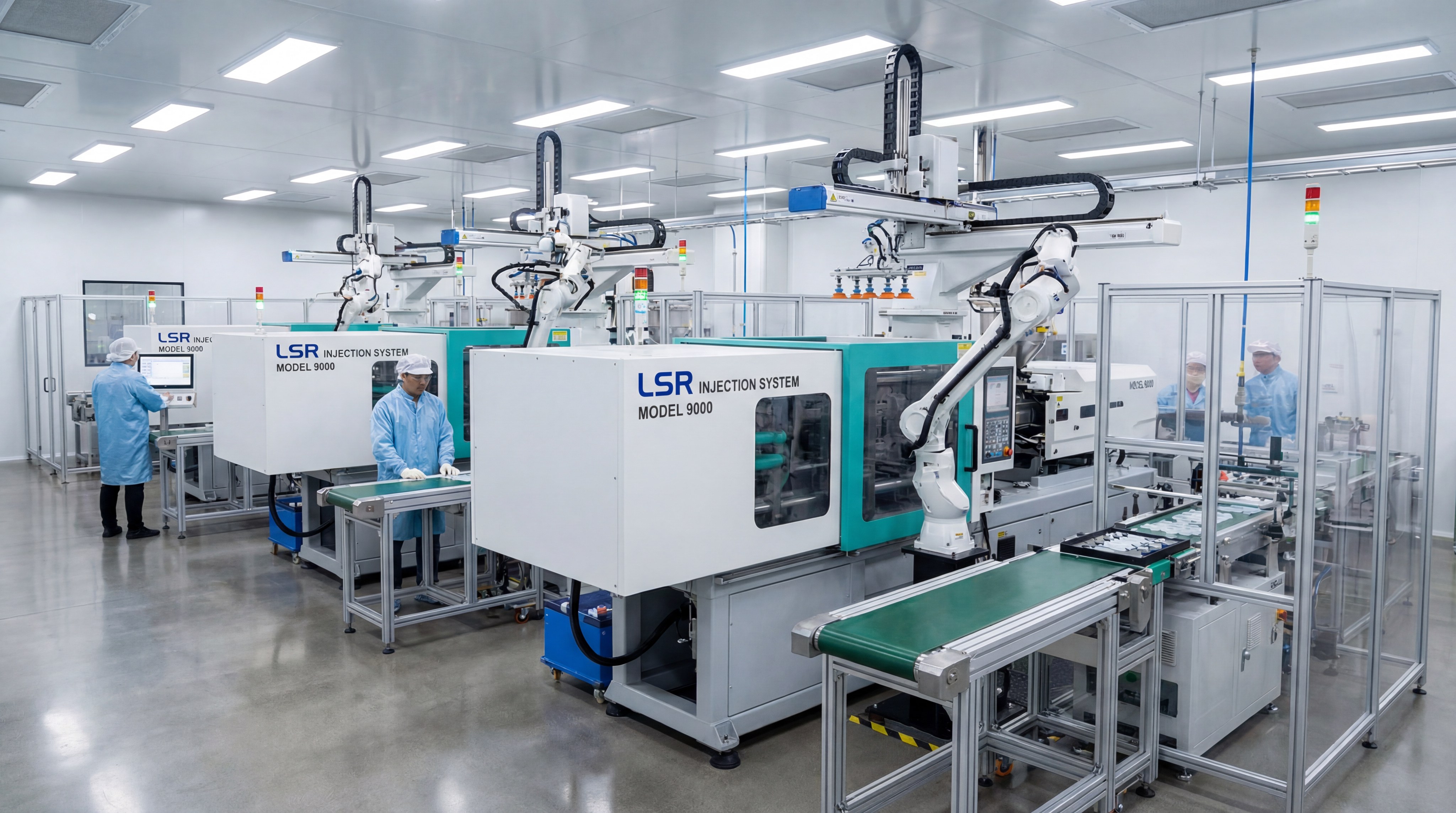
Multi-Cavity Tooling Strategy
Here is the deal: more cavities mean lower unit costs.
- Transitioning from 2-cavity to 16-cavity molds.
- Balancing the cold runner system for even flow.
- Using modular inserts for easy maintenance and repair.
You will see your price-per-part drop drastically as you optimize the number of parts produced in every single “shot.”
Automated Demolding Systems
Do you want to speed things up?
- Robotic arms to pick and place finished parts.
- Automated gate cutting to remove runners instantly.
- Integrated conveyors for scratch-free transport.
You can run your production 24/7 with minimal supervision when you invest in a fully automated “lights-out” cell.
Key Takeaway: Scale is achieved through smarter tooling and automation, not just by adding more workers.
| Scale Metric | Low Volume | High Volume |
|---|---|---|
| Tooling | Single Cavity | Multi-Cavity |
| Labor | Manual | Robotic |
| Unit Cost | Higher | Significantly Lower |
Efficiency in mass production is directly tied to the level of automation integrated into the factory floor.
9. Which Quality Tests Are Essential?
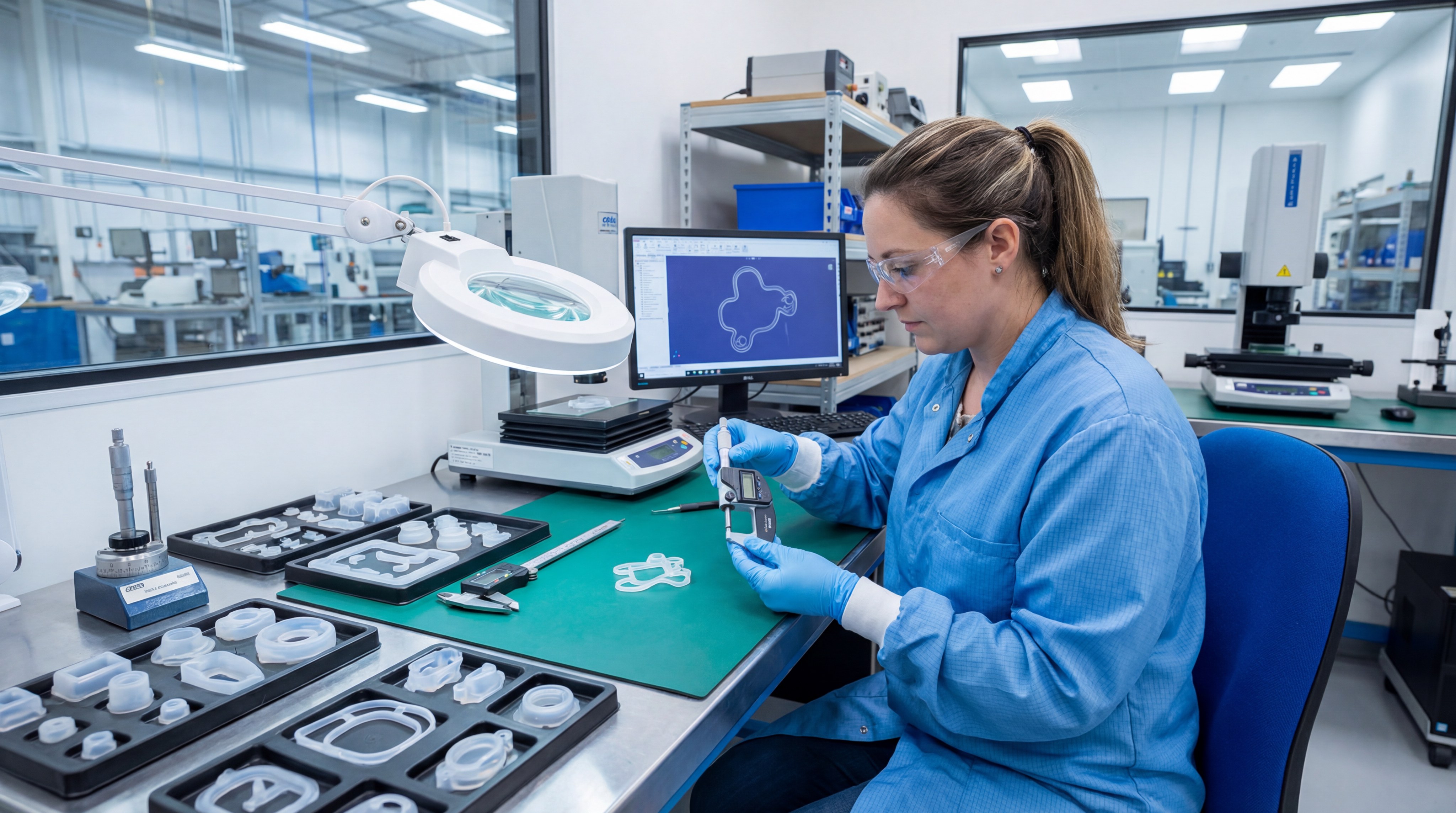
Comprehensive testing ensures that the material properties meet the environmental demands of the final application. You must Manufacture Silicone Products that are tested for hardness, tear strength, and elongation to ensure long-term reliability in the field.
Testing for Physical Durability
Think about this: real-world use is harsh.
- Durometer testing to verify Shore hardness levels.
- Tear resistance tests for flexible components.
- Compression set testing for long-term sealing parts.
You will gain confidence in your product’s lifespan once you see the lab results from these standardized stress tests.
Environmental Reliability Testing
Are you ready for the elements?
- Salt spray testing for marine-grade components.
- Thermal aging to simulate years of UV exposure.
- IPX7/IPX8 waterproof testing for sealed enclosures.
You should request these test reports if your product is destined for outdoor or high-moisture environments.
Key Takeaway: Rigorous lab testing prevents field failures and protects your brand reputation.
| Test Name | Metric Measured | Industry Need |
|---|---|---|
| Hardness | Shore A/OO | Tactile Feel |
| Elongation | % Stretch | Flex life |
| IP Rating | Water Ingress | Electronics |
Standardized testing protocols provide the evidence-based proof of quality your customers demand.
10. How Do You Select the Right Partner?
Finding the right factory is about more than just the lowest price; it is about engineering depth and communication. When you Manufacture Silicone Products for acoustic devices, you need a partner who understands both the chemistry of silicone and the physics of sound.
Auditing Factory Certifications
Here is what to look for: certifications are a mark of discipline.
- ISO 9001:2015 for general quality management.
- ISO 13485 for medical device production readiness.
- IATF 16949 for automotive-grade reliability.
You should ask for copies of these certificates before signing a long-term supply agreement.
Evaluating Engineering Support
Do they speak your language?
- In-house mold making for faster iterations.
- Direct access to DFM engineers during design.
- Transparent reporting on production and yield.
You will find that a partner who takes initiative on your design will save you more money than a “build-to-print” shop ever could.
Key Takeaway: The best partner acts as an extension of your own engineering team.
| Partner Feature | Why It Matters | Your Benefit |
|---|---|---|
| ISO Certified | Systemized Quality | Traceable output |
| In-House Tools | Fast Revisions | Speed to market |
| Direct DFM | Risk Mitigation | Lower costs |
Selecting a qualified manufacturer ensures your project moves from prototype to profit without unnecessary friction.
Conclusion
Mastering the complexities of silicone manufacturing requires a blend of high-end material science, precision engineering, and automated production. By following this guide, you now have the blueprint to navigate material selection, mold design, and quality control with professional confidence. We are dedicated to providing world-class LSR and custom silicone solutions that empower innovators to bring their visions to life. If you are ready to take the next step in your project, feel free to contact us today to discuss your unique requirements. Let’s build something extraordinary together with precision and reliability at every step.
Frequently Asked Questions
Can I manufacture silicone products in different colors?
Yes, you can specify any Pantone or RAL color, which is achieved by injecting liquid pigments directly into the material stream during the mixing phase.
What is the best way to reduce the cost of my silicone part?
The best way is to optimize your design for multi-cavity tooling and minimize manual secondary operations like hand-trimming through precision mold design.
Can I overmold silicone onto metal or plastic parts?
Absolutely, silicone overmolding is a common practice for creating durable seals, soft-touch handles, and complex multi-material assemblies.
What is the difference between food-grade and medical-grade silicone?
Medical-grade silicone undergoes stricter biocompatibility testing and is often manufactured in cleanroom environments to meet ISO 13485 standards.
How long does a typical silicone mold last?
A high-quality S136 stainless steel mold used for LSR injection can typically last for over 500,000 shots if maintained correctly by the factory.