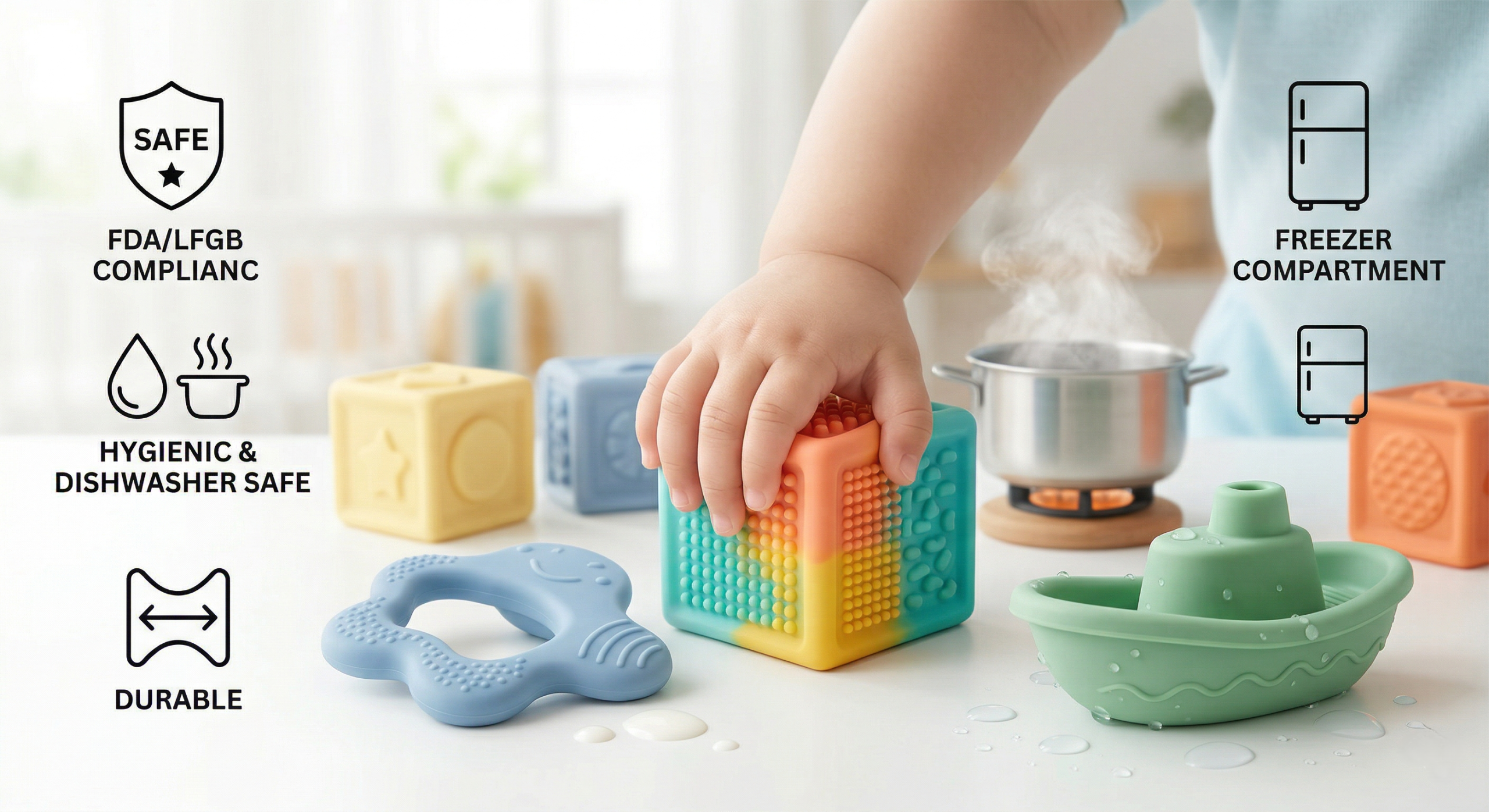
Using silicone rubber in toys offers unparalleled safety, durability, and hygiene compared to traditional plastic alternatives. In today’s competitive market, many retailers struggle with the increasing prevalence of cheap, brittle plastics that often contain hidden toxins. These materials can easily crack, creating sharp edges that pose a physical risk to infants and toddlers during play. Even more concerning is the risk of chemical leaching, where substances like BPA or phthalates enter a child’s system through oral contact. Fortunately, high-quality Silicone Products provide the perfect solution for modern manufacturers. By switching to medical or food-grade silicone, you can deliver products that are soft, chemically inert, and virtually indestructible, ensuring peace of mind for parents and a stronger brand reputation for your business.
Why is safety the top priority for silicone toys?
Safety is paramount because high-grade Silicone Products are chemically inert and free from toxic additives like BPA and phthalates. When manufacturing for the Mother & Baby Care sector, ensuring material purity is the first step toward regulatory compliance.
Is the material FDA or LFGB compliant?
You might be wondering about international standards. Professional silicone toy manufacturing relies on FDA and LFGB certifications to prove that no harmful fillers are present in the rubber.
- Free from heavy metals and lead.
- No volatile organic compounds (VOCs).
- Certified food-safe for oral contact.
Does silicone prevent bacterial growth?
The truth is, hygiene starts with the material itself. Silicone is naturally inorganic and non-porous, meaning it does not support the growth of mold, fungi, or bacteria.
- Hypoallergenic properties for sensitive skin.
- Resistance to moisture absorption.
- Stable chemical structure that doesn’t degrade.
Key Takeaway: The inherent non-toxic and hypoallergenic nature of silicone makes it the safest choice for toys that children frequently put in their mouths.
| Safety Feature | Benefit for Children |
|---|---|
| BPA-Free | Eliminates endocrine-disrupting chemicals |
| Hypoallergenic | Safe for children with skin sensitivities |
| Non-Porous | Prevents the accumulation of hidden bacteria |
The table above illustrates how silicone’s material properties directly translate into health advantages for young users.
How does silicone rubber feel for children’s hands?
The soft-touch surface of Silicone Products provides a comfortable and slip-resistant grip that is essential for helping infants develop their fine motor skills. As a leading custom silicone manufacturer, we understand that tactile feedback is a key driver in sensory toy design.
Does the texture aid sensory development?
Here is the best part. The unique “grippy” yet smooth finish of silicone provides a stimulating sensory experience that hard plastics simply cannot replicate.
- Promotes tactile exploration and curiosity.
- Easy for small hands to hold securely.
- Available in various textures (bumps, ridges, matte).
Can the hardness be customized for comfort?
Think about it this way. Silicone can be formulated in a wide range of Shore hardness levels, allowing you to create anything from a squishy plush-like toy to a firm building block.
- Softness prevents bruising during accidental drops.
- Flexibility allows for “squeezable” play patterns.
- Smooth edges eliminate the risk of cuts.
Key Takeaway: Silicone’s versatility in texture and hardness allows for ergonomic designs that are both fun to touch and safe to handle.
| Tactile Property | Impact on User Experience |
|---|---|
| Shore Hardness | Customizable from very soft to rigid |
| Anti-Slip Grip | Reduces frustration during early play |
| Soft Edges | Minimizes physical injury risks |
These properties ensure that every interaction a child has with the toy is both physically safe and developmentally beneficial.
Is silicone rubber durable enough for rough play?
Durability is a core strength of Silicone Products, which are engineered to withstand the rigorous and often destructive play habits of children. Our manufacturing capabilities ensure that parts resist tearing and deformation over years of heavy use.
Will the toys crack or shatter?
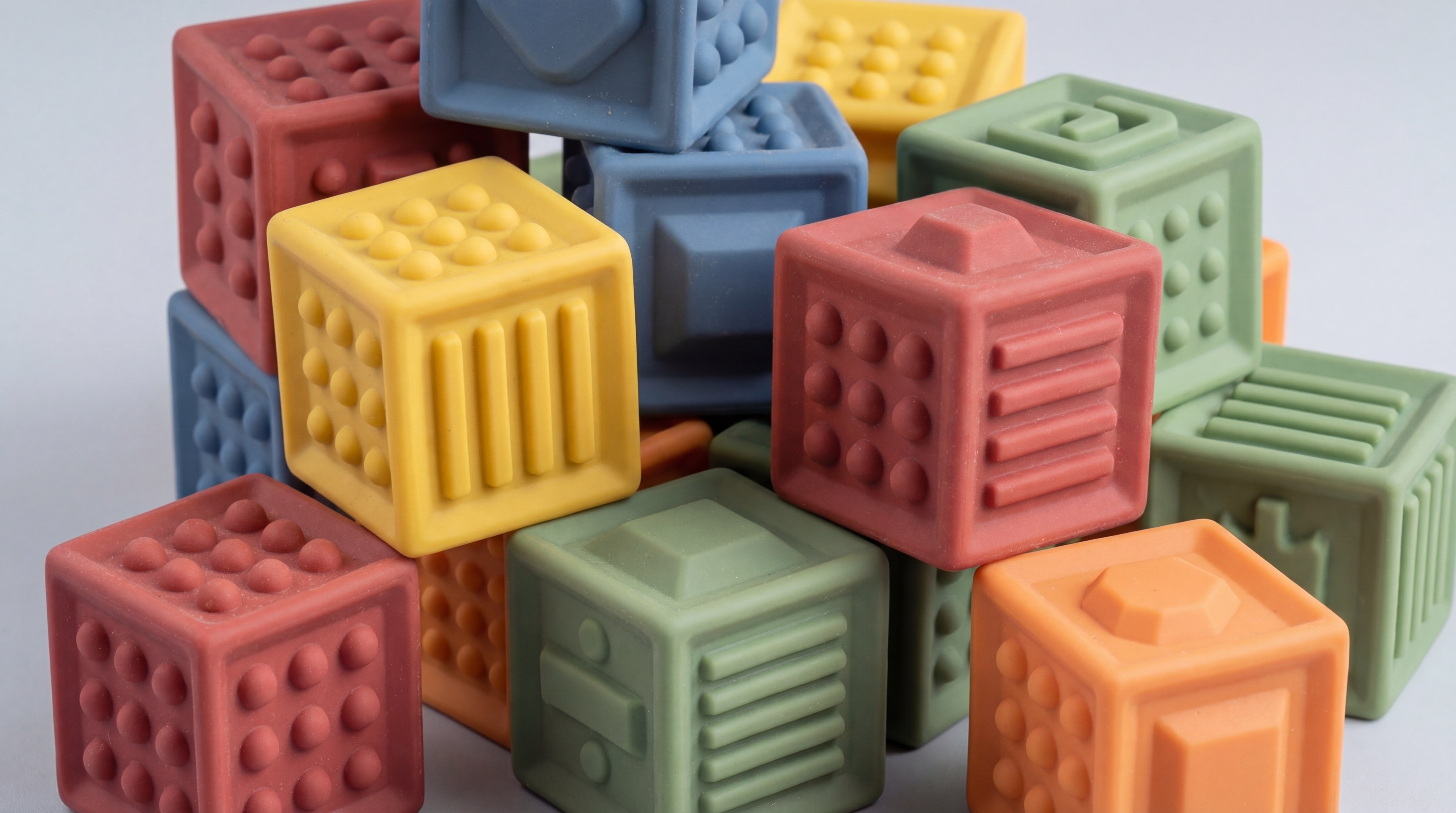
Believe it or not, silicone is nearly impossible to break through impact. Unlike plastic, which becomes brittle over time, silicone retains its elasticity and structural integrity even after repeated drops.
- High impact resistance for outdoor use.
- Does not develop sharp or jagged shards.
- Maintains shape after being compressed or bent.
Does it resist biting and tearing?
But wait, there’s more. High-tensile silicone is specifically designed to resist the sharp teeth of teething infants, preventing small pieces from being swallowed.
- Exceptional tear strength under tension.
- Resistant to puncture and abrasive wear.
- Long-lasting elastic memory.
Key Takeaway: The mechanical resilience of silicone ensures that toys remain intact and safe, reducing the need for frequent replacements.
| Durability Metric | Silicone Performance |
|---|---|
| Impact Strength | Excellent (Will not shatter) |
| Tear Resistance | High (Resists biting and stretching) |
| Life Span | Decades without material degradation |
This level of durability makes silicone a cost-effective material choice for premium toy brands focusing on longevity.
Why are silicone toys so easy to clean and sanitize?
Hygiene is a major selling point for Silicone Products, as the material’s surface properties make it exceptionally easy to maintain in various industry applications. Parents value products that can be quickly sanitized without specialized chemicals.
Is the material dishwasher safe?
The result? You can simply toss silicone toys into a standard dishwasher for a deep clean without worrying about warping or melting.
- Compatible with high-heat drying cycles.
- Resistant to standard dishwashing detergents.
- No risk of chemical breakdown during washing.
Can parents use steam sterilizers?
The best part is that silicone can handle the intense heat of boiling water or steam sterilization. This makes it the preferred material for toys used by newborns and infants with developing immune systems.
- Withstands temperatures up to 200°C.
- Quick-drying surface prevents water spots.
- Simple wipe-down cleaning for daily use.
Key Takeaway: The ability to withstand extreme cleaning methods ensures that silicone toys remain the most hygienic option on the market.
| Cleaning Method | Compatibility Level |
|---|---|
| Boiling Water | Fully compatible for sanitization |
| Steam Sterilizer | Safe for infant-grade products |
| UV Sterilizer | Resists UV degradation |
Easy maintenance is a significant driver for consumer satisfaction and long-term brand loyalty.
Can silicone toys withstand extreme temperatures?
One of the most impressive traits of Silicone Products is their extreme thermal stability, allowing them to remain functional in environments where other materials fail. We often showcase this versatility in our success stories.
Is it safe for freezer use?
You might be wondering if cold affects the material. Silicone remains flexible even at -60°C, making it perfect for cold-therapy teethers that soothe inflamed gums.
- Does not become brittle in the freezer.
- Retains soft-touch feel at low temperatures.
- No risk of “freezer burn” to the touch.
Can it be used in the bathtub or beach?
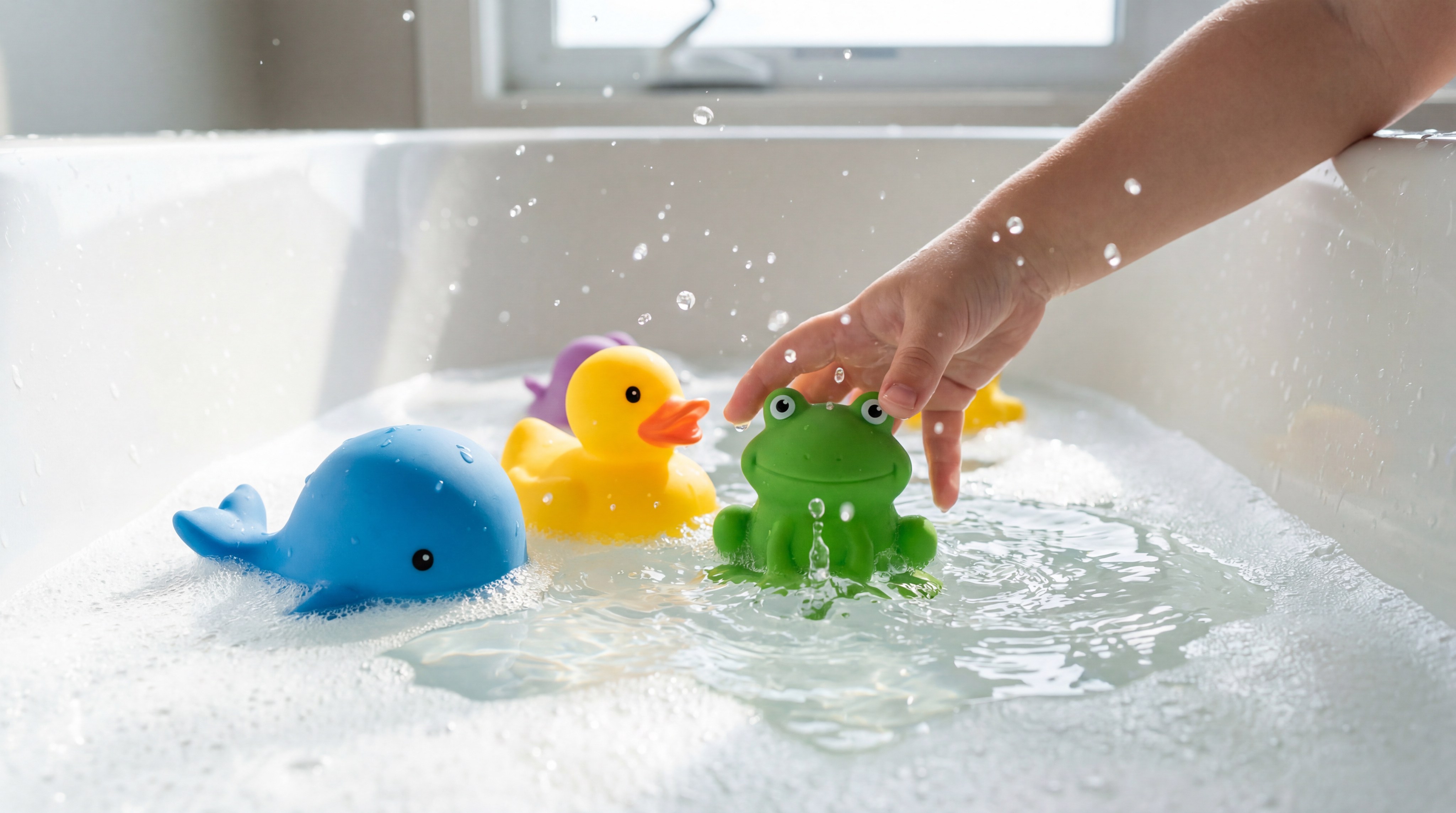
Think about this. Silicone is completely waterproof and resistant to UV rays, meaning it won’t fade or rot when used in the sun or submerged in water.
- Resists salt water and chlorine.
- Colorfast even under direct sunlight.
- Drains quickly to prevent internal mold.
Key Takeaway: Thermal resistance expands the play environment of silicone toys from the nursery to the bathtub and the outdoors.
| Temperature Condition | Silicone Behavior |
|---|---|
| High Heat (+200°C) | No melting or toxic off-gassing |
| Extreme Cold (-60°C) | Remains flexible and soft |
| Thermal Shock | No cracking during rapid temp changes |
The data proves that silicone toys are versatile enough for any climate or play scenario.
How does silicone enable vibrant and creative designs?
Aesthetic appeal is critical for market success, and Silicone Products offer a level of design freedom that is difficult to achieve with traditional plastics. We provide custom baby solutions that leverage these aesthetic advantages.
Can we match specific brand colors?
It turns out that silicone is incredibly easy to pigment. You can achieve any color from the Pantone range, including translucent, neon, and pastel shades that remain vibrant for years.
- Deep color saturation that won’t peel.
- Ability to create multi-color “marble” effects.
- Stable pigments that don’t fade in light.
Is high-detail molding possible?
You might be surprised by the precision. Because silicone flows easily into molds, manufacturers can create intricate shapes, patterns, and characters with high-resolution details.
- Detailed 3D textures for sensory play.
- Smooth, seamless finishes on complex parts.
- Support for overmolding with plastic or metal.
Key Takeaway: The combination of color flexibility and molding precision allows brands to create visually stunning and unique toy lines.
| Design Option | Manufacturing Capability |
|---|---|
| Coloring | Full Pantone matching; Glow-in-the-dark |
| Surface Finish | Matte, High-gloss, or Leather-grain |
| Complex Shapes | Precision molding for intricate figures |
The flexibility of silicone design empowers creators to push the boundaries of traditional toy aesthetics.
Is silicone rubber an eco-friendly choice for toys?
As environmental awareness grows, Silicone Products are increasingly preferred as a sustainable alternative to single-use or short-lived plastics. At our factory, we emphasize product longevity as the ultimate form of waste reduction.
Does it reduce plastic pollution?
Look at it this way. Because silicone toys last for years—or even generations—they significantly reduce the volume of broken plastic toys that end up in landfills.
- Reduces the “throw-away” consumer cycle.
- Does not break down into microplastics.
- Chemically stable and non-leaching in soil.
Is the material recyclable?
You may find this interesting. While not as common as plastic recycling, silicone can be ground down and repurposed into playground surfaces or recycled into lower-grade industrial oils.
- Long-term durability minimizes waste.
- Repurposing options for end-of-life products.
- Lower carbon footprint over a long product life.
Key Takeaway: Choosing silicone is a commitment to sustainability through high product quality and the elimination of hazardous plastic waste.
| Eco-Factor | Silicone Advantage |
|---|---|
| Longevity | Prevents frequent landfill waste |
| Toxicity | No leaching of microplastics into water |
| Durability | Inheritable quality for multi-child use |
By investing in silicone, your brand supports a more circular and responsible manufacturing economy.
What makes silicone ideal for teether toy production?
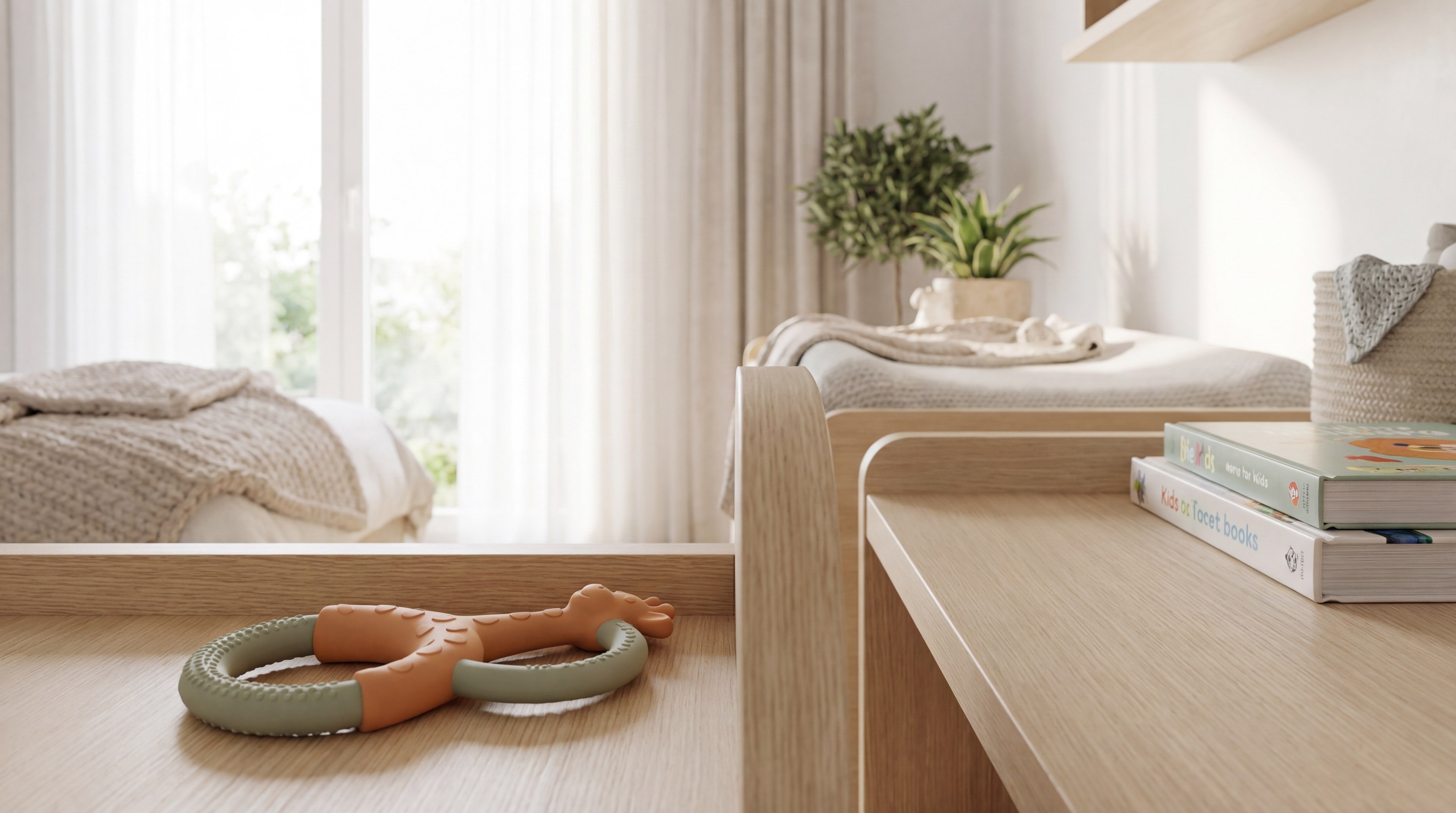
Teething is a sensitive phase for both infants and parents, and Silicone Products provide the exact balance of firmness and flexibility needed for relief. Our factory-direct services allow for exact control over these critical material properties.
Is it gentle on inflamed gums?
The truth is, the “give” of silicone mimics the feel of natural skin. This provides a soothing pressure on sore gums without the risk of scratching or hurting the mouth.
- Soft enough for sensitive newborn gums.
- Firm enough to provide effective massage.
- Non-irritating to the oral mucosa.
Can different textures be added?
The result? Manufacturers can mold specific ridges, bumps, and “massaging” points into the teether design to target specific areas of the mouth.
- Varied textures for different teething stages.
- Ergonomic shapes for easy grasping.
- One-piece designs for maximum safety.
Key Takeaway: Silicone’s ability to be customized for hardness and texture makes it the undisputed gold standard for infant teething products.
| Teether Grade | Shore Hardness Range |
|---|---|
| Soft Grade | 30A – 40A (For early teething) |
| Medium Grade | 50A – 60A (Standard use) |
| Firm Grade | 70A (For back molars) |
Adjusting these parameters ensures that your teething products meet the specific needs of developing infants.
How does Liquid Silicone Rubber improve toy quality?
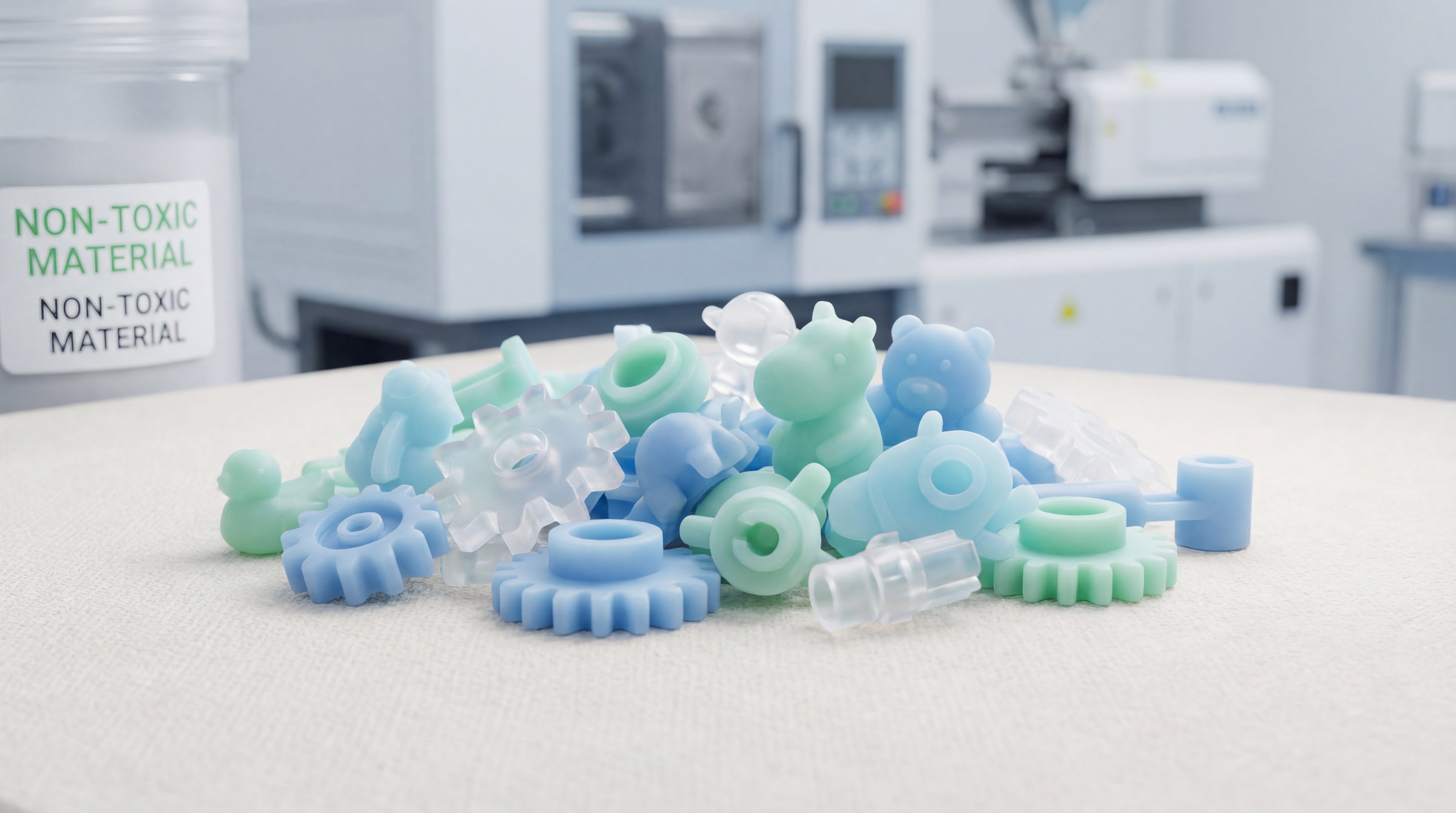
For high-precision toy manufacturing, using Silicone Products produced via LSR (Liquid Silicone Rubber) injection molding is the most effective way to ensure quality. This advanced industrial solution is ideal for complex, high-volume production.
What is the advantage of LSR injection?
Here is the secret. LSR molding allows for incredibly tight tolerances and minimal “flash” (excess material), resulting in toys with perfectly smooth seams.
- High precision for interlocking parts.
- Automated production for consistent quality.
- Zero-contamination, closed-loop system.
Does it support overmolding?
The best part is that LSR is ideal for overmolding, where silicone is permanently bonded to a rigid plastic core to create hybrid toys.
- Creates unbreakable bonds between materials.
- Allows for “hard-soft” ergonomic designs.
- Enables complex, multi-component toy systems.
Key Takeaway: LSR technology ensures a premium finish and technical precision that enhances both the safety and aesthetic value of the toy.
| Manufacturing Metric | LSR Injection Advantage |
|---|---|
| Precision | +/- 0.05mm tolerances |
| Surface Quality | Flash-free, seamless edges |
| Efficiency | Faster cycle times for mass production |
Utilizing LSR manufacturing allows your brand to compete at the highest tier of product quality and safety.
Why choose custom silicone toy manufacturing?
Partnering with a dedicated factory for Silicone Products allows you to navigate the complexities of design and safety with expert guidance. Our project portfolio highlights how custom engineering can turn a conceptual sketch into a market-ready product.
Do we offer DFM support?
You might be wondering about the technical hurdles. Professional manufacturers provide “Design for Manufacturing” reviews to ensure your toy is optimized for cost and quality.
- Early identification of molding risks.
- Material selection based on toy use-case.
- Optimized tooling for high-volume output.
Is quality control a priority?
The fact is, a specialized factory implements multi-stage inspections to ensure every batch meets your exact specifications.
- ISO 9001:2015 certified production lines.
- 100% visual and dimensional inspection.
- Material traceability and certification.
Conclusion
Transitioning to silicone rubber for your toy production solves the most critical challenges facing the industry today: safety, durability, and hygiene. By eliminating toxic plastics and embracing the versatility of silicone, your brand can provide safer, longer-lasting, and more engaging play experiences for children worldwide. Whether you are looking to create infant teethers, sensory blocks, or high-precision bath toys, silicone provides the flexible foundation your products need to succeed. If you are ready to elevate your product quality and ensure the highest safety standards for your customers, please contact us today to discuss your next custom project.
FAQ
Can I use regular dish soap to clean silicone toys?
Yes, silicone is highly resistant to standard household detergents and will not degrade or absorb soapy scents. Simply rinse with warm water and a mild soap to remove surface dirt and oils effectively.
What’s the best way to ensure my silicone toy is 100% safe?
The most effective method is to verify that the manufacturer uses FDA or LFGB certified food-grade silicone and performs secondary curing to remove volatile compounds. You should always request material safety data sheets (MSDS) before starting production.
How do I know if a toy is made of real silicone or TPE/plastic?
The “pinch and twist” test is a simple way to judge, as real high-quality silicone will not turn white when stretched or pinched. If the material changes color or shows white stress marks, it likely contains cheap fillers or is a thermoplastic elastomer.
Can I customize the color of my silicone toys without high costs?
Certainly, silicone takes pigments very well and color matching is a standard part of the manufacturing process that does not significantly increase unit costs. Most factories can match any Pantone color to ensure your toys perfectly reflect your brand identity.
How do I know if silicone is right for my specific toy design?
The judgment depends on the complexity and safety requirements of your toy, but silicone is almost always the right choice for products intended for oral contact or rough play. Consulting with an engineer for a DFM review can help determine if silicone or LSR is the most efficient choice for your specific geometry.