
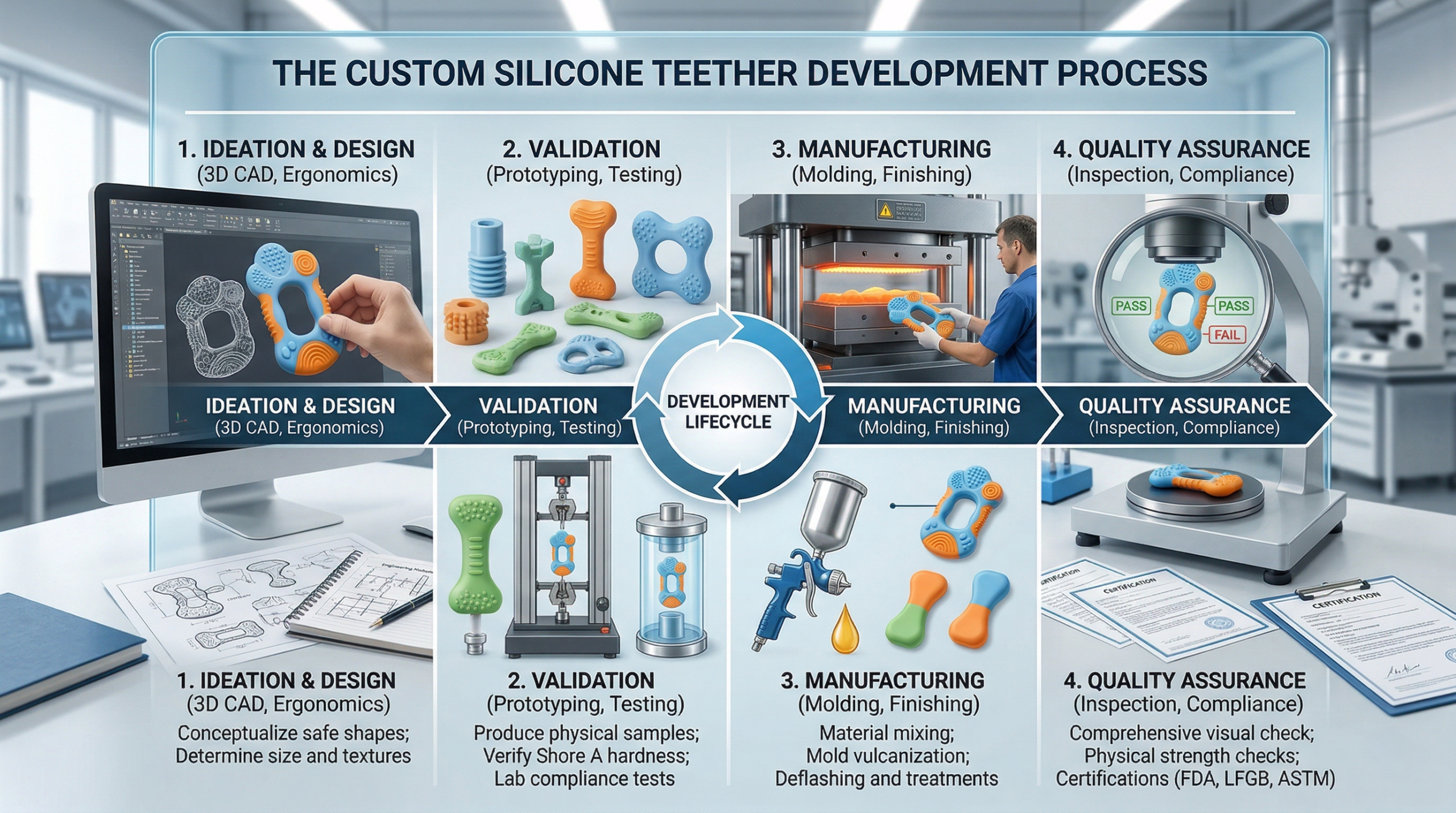
Developing a winning product requires strict safety checks, proper material selection, and precise manufacturing processes. Parents often worry about finding safe, soothing items for teething babies. Poorly made toys break easily or harbor dangerous bacteria, causing severe anxiety. Fortunately, producing a reliable Custom Silicone Teether solves this issue beautifully. Reputable factories use medical-grade materials, making high-quality infant goods accessible.
Why Is Safety the Absolute First Step in Manufacturing?
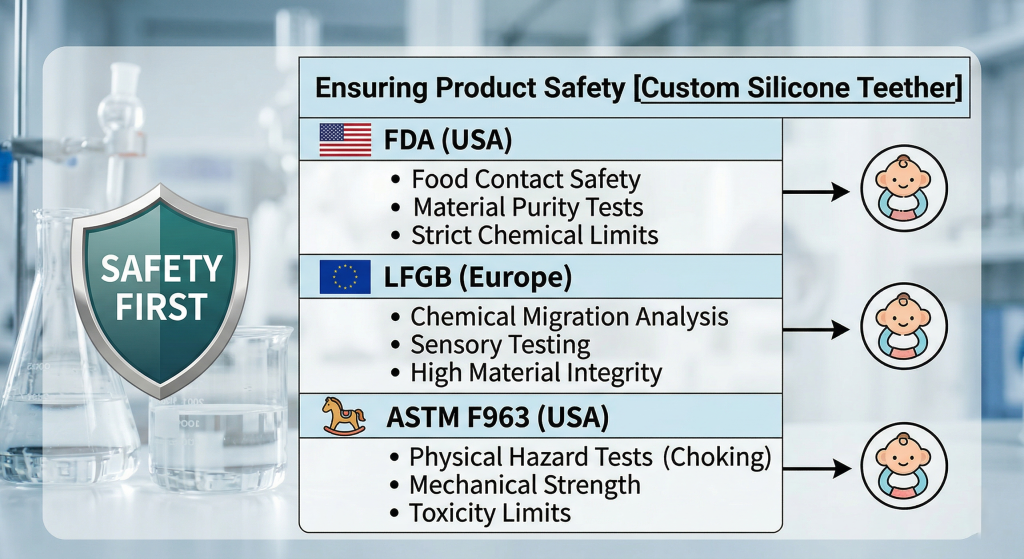
Prioritizing safety prevents severe health hazards while building lasting consumer trust. Creating a Custom Silicone Teether means working with products meant for infant mouths. You must follow strict guidelines, avoiding toxic chemicals entirely. Medical-grade materials offer superior biocompatibility without harboring harmful bacteria. Parents demand absolute peace of mind when buying baby accessories.
What standards apply globally?
Following regional laws protects your brand from costly recalls. Knowing which regulations apply helps streamline your launch timeline.
- FDA guidelines regulate food-contact materials strictly.
- LFGB standards demand rigorous testing in European markets.
- ASTM F963 covers physical requirements for toys.Compliance helps you avoid legal trouble easily.
Material certifications that matter
But here’s the kicker… passing these tests requires premium raw materials from reliable suppliers. Certificates like RoHS prove your parts lack heavy metals. Verified factories maintain clean rooms, keeping impurities away from production lines. Clean manufacturing environments prevent contamination during molding stages.
Lab testing for true compliance
Using third-party laboratories adds an extra layer of credibility. Independent facilities check for choking risks using specialized cylinders. Experts recommend regular audits, keeping quality levels high consistently.
Key Takeaway: Always demand verifiable testing reports before starting mass production runs.
| Certification | Region | Focus Area |
| FDA | USA | Food contact safety |
| LFGB | Europe | Chemical migration |
| ASTM F963 | USA | Physical toy safety |
Meeting these diverse certifications gives your brand global market access.
What Material Hardness Works Best for Soothing Gums?
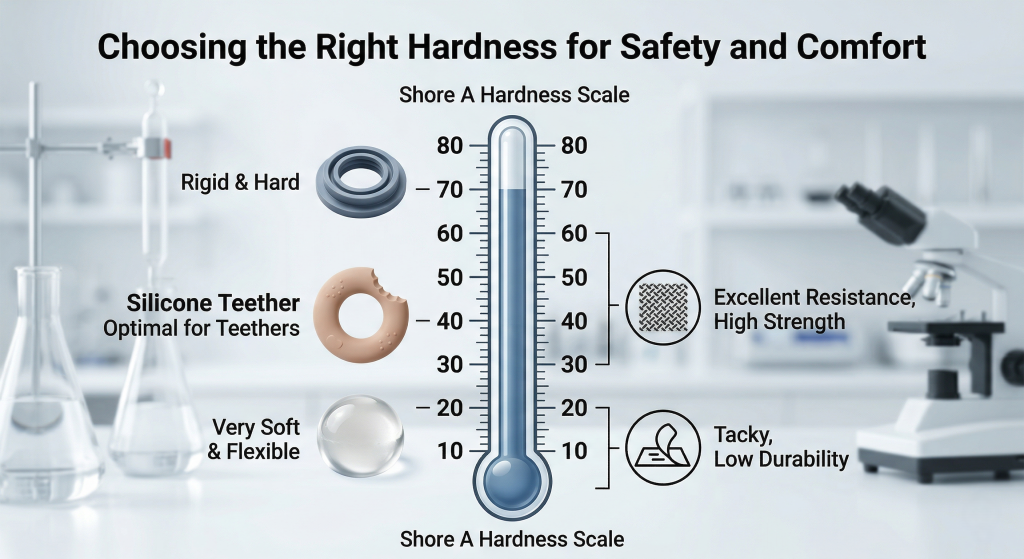
Selecting an optimal durometer provides comfort without causing gum bruising. A Custom Silicone Teether needs enough resistance, soothing sore mouths effectively. You should target a specific softness range, preventing rapid degradation. Overly rigid products frustrate infants, making them reject toys quickly.
Understanding Shore A scales
Engineers measure rubber hardness using a specific metric called Shore A. Lower numbers indicate extreme flexibility, while higher numbers denote rigidity. Most infant products fall between thirty and fifty Shore A. This specific range mimics natural textures beautifully.
- 10-20 Shore A feels very sticky, lacking durability.
- 30-50 Shore A provides excellent chewable resistance.
- 70-80 Shore A feels incredibly stiff, risking injury.
Why too hard fails
What’s the real story? Harder plastics might last longer, but they fail ergonomically. Babies possess delicate gums that bruise easily under firm pressure. Frustrated infants will simply drop uncomfortable toys instantly. You lose customer loyalty when your product hurts young users.
Finding the perfect balance
Collaborating with experienced engineers helps identify ideal material specifications. They test different batches, finding what feels completely natural.
Key Takeaway: Choose mid-range durometers, balancing gentle comfort against tearing resistance.
| Durometer | Flexibility | Best Application |
| 20 Shore A | Very High | Sticky mats |
| 40 Shore A | Medium | Baby toys |
| 70 Shore A | Very Low | Industrial seals |
Matching hardness levels accurately prevents negative user feedback completely.
How Does 3D CAD Drawing Influence the Final Shape?
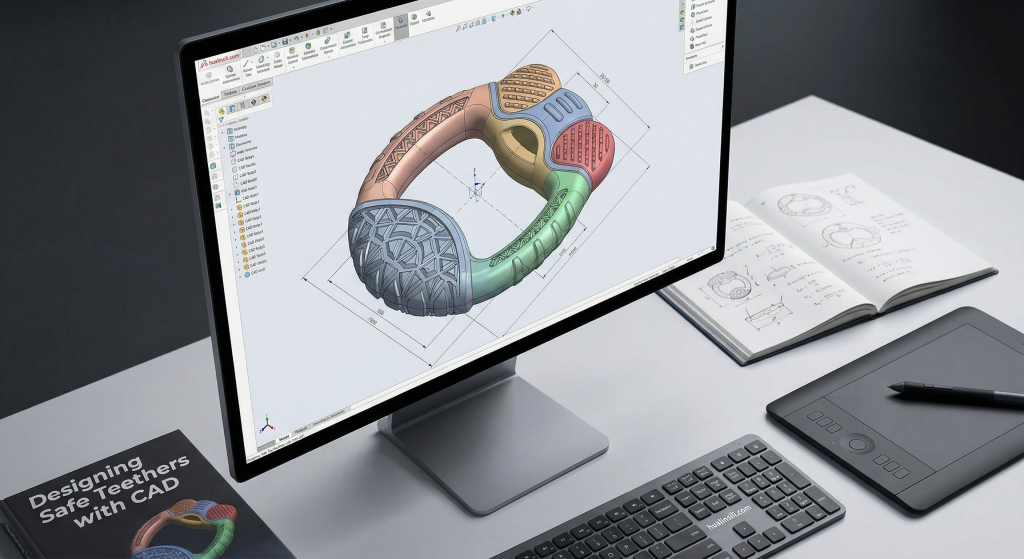
Digital modeling allows precise visualization, preventing costly manufacturing mistakes later. Any good Custom Silicone Teether begins life as a computer file. Designers rotate virtual models, examining every single contour thoroughly. You can spot ergonomic issues before cutting expensive steel molds.
Visualizing parts before tooling
Modern software creates highly realistic renders, showing exactly what buyers get. Teams collaborate easily, sharing digital files across different time zones.
- CAD files determine exact dimensions accurately.
- 3D models calculate volume, helping estimate material costs.
- Digital renders show color applications beautifully.
Are internal structures necessary?
This is where it gets interesting… some designs require hollow centers for easy squeezing. Engineers use digital tools, planning intricate internal geometry perfectly. A well-designed cavity makes biting much more satisfying for infants.
Refining designs for manufacturing
Experts analyze digital files, looking for potential molding problems early. They adjust draft angles, helping parts release from molds smoothly.
Key Takeaway: Invest time refining digital models, avoiding expensive tooling modifications entirely.
| Design Stage | Purpose | Output Type |
| Conceptualization | Idea generation | Hand sketches |
| CAD Modeling | Precise dimensioning | 3D files |
| DFM Analysis | Production feasibility | Adjustment reports |
Catching design flaws digitally saves thousands in wasted tooling budgets.
Why Is Prototyping Necessary Before Mass Production?
Creating physical samples validates digital concepts, proving your idea works practically. Testing a Custom Silicone Teether prototype reveals hidden structural weaknesses immediately. You cannot truly judge ergonomics purely through computer screens. Holding an actual physical item changes your perspective completely.
Catching costly design flaws
Molding a small batch first prevents massive failures during full production. You can distribute samples, gathering real feedback from parent testers.
- Prototypes highlight aesthetic issues quickly.
- Sample runs verify material durometer choices.
- Physical testing confirms mechanical durability perfectly.
Testing physical functionality
Ready for the good part? Physical models allow rigorous laboratory testing safely. You can send these early units away for compliance checks. Passing tests early gives investors immense confidence in your project.
Can prototypes attract investors?
Having a tangible item makes pitching ideas incredibly persuasive. Buyers love touching actual items, seeing your vision become reality.
Key Takeaway: Never skip prototyping, as physical verification prevents disastrous market launches.
| Prototype Type | Material | Main Use |
| 3D Printed | Plastic resin | Visual check |
| Cast Urethane | Soft rubber | Feel testing |
| Pilot Mold | Actual rubber | Final validation |
Testing real materials early validates your entire manufacturing strategy successfully.
How Can We Avoid Small Parts Hazards During Design?
Eliminating breakable components prevents terrifying choking incidents completely. Designing your Custom Silicone Teether as one solid piece removes weak joints. Multi-part designs often separate under intense chewing pressure, risking lives. You must integrate safety features deeply into fundamental product architecture.
Understanding choke tube tests
Testing facilities use specific cylinders, mimicking a small child’s throat. Any object fitting completely inside fails safety regulations instantly.
- Design dimensions must exceed strict minimums.
- Protruding shapes need adequate thickness, preventing breakage.
- Avoid adding small decorative attachments entirely.
Designing seamless single pieces
Here’s the deal: seamless manufacturing eliminates dangerous glue joints completely. One-piece construction resists tearing, surviving aggressive biting safely. Engineers focus on reinforcing thin sections, adding extra material where needed.
Do age ratings matter?
Different developmental stages require different safety considerations fundamentally. Products meant for younger babies face much stricter testing protocols.
Key Takeaway: Design robust single-piece products, surpassing minimum size requirements easily.
| Design Feature | Risk Level | Recommendation |
| Glued beads | High hazard | Avoid completely |
| Thin edges | Medium risk | Thicken profiles |
| Solid molding | Low hazard | Standard practice |
Prioritizing robust single-piece architecture virtually eliminates severe choking liabilities.
What Are the Best Surface Treatments for Easy Cleaning?
Applying specialized coatings prevents annoying dust from sticking stubbornly. A premium Custom Silicone Teether needs smooth finishes, resisting daily grime. Unprocessed rubber often feels tacky, attracting pet hair instantly. You want products that rinse clean effortlessly under running water.
Why sticky surfaces fail
Parents hate constantly washing toys dropped onto dirty floors. Tacky textures frustrate users, creating negative brand reviews online.
- Dusty toys introduce unwanted germs into mouths.
- Sticky finishes feel cheap, ruining brand perception.
- Hard-to-clean items get thrown away quickly.
Does oil spraying help?
You might be wondering… how factories eliminate this annoying tackiness. Manufacturers apply food-safe oil coatings, baking them permanently onto surfaces. This simple process creates a wonderfully silky tactile experience.
Maintaining hygienic daily usage
Smooth finishes allow quick sanitization using standard baby wipes. Parents appreciate items surviving dishwasher cycles without degrading visibly.
Key Takeaway: Always specify anti-static surface treatments, boosting user satisfaction immensely.
| Treatment Type | Benefit | Drawback |
| None (Raw) | Lowest cost | Attracts dust |
| Oil Spraying | Silky feel | Adds production time |
| UV Coating | High durability | Higher expense |
Investing in proper surface treatments drastically improves daily usability.
How Does Compression Molding Form the Final Product?
Applying extreme heat alongside pressure forces raw rubber into desired shapes. Producing a Custom Silicone Teether requires precise temperature control constantly. Workers place measured material blocks directly into heated metal cavities. Huge machines clamp down, curing the rubber into permanent forms.
Preparing raw materials correctly
Factories mix colored pigments into raw gum, milling everything thoroughly. Proper mixing prevents ugly streaks, creating beautifully uniform colors.
- Accurate weighing minimizes expensive material waste.
- Vacuum environments remove trapped air bubbles effectively.
- Pre-cutting shapes speeds up molding cycles.
Applying heat and pressure
Listen to this: proper vulcanization transforms soft putty into durable rubber. Temperature sensors monitor molds, keeping heat levels absolutely consistent. If temperatures drop, parts remain sticky, failing quality checks entirely.
What happens after demolding?
Workers manually remove finished pieces, stripping away excess flash edges. They inspect each piece quickly, discarding obvious visual defects immediately.
Key Takeaway: Partner with experienced factories mastering temperature controls for flawless results.
| Process Step | Action | Quality Focus |
| Milling | Mixing pigments | Color consistency |
| Molding | Applying heat | Complete curing |
| Deflashing | Removing edges | Smooth borders |
Understanding manufacturing steps helps you plan realistic delivery schedules accurately.
Why Are Visuals and Multi-Color Designs Highly Appealing?
Bright patterns capture infant attention, keeping them happily occupied longer. A vibrant Custom Silicone Teether stimulates early visual development wonderfully. While single colors cost less, dual tones look much more premium. You can differentiate your brand completely using unique visual aesthetics.
Stimulating early visual development
Contrasting colors help developing eyes focus clearly on specific shapes. Attractive items become instant favorites, soothing cranky babies faster.
- Bright hues engage infant curiosity instantly.
- Multiple colors highlight different chewing textures visually.
- Unique designs stand out nicely on retail shelves.
Can color matching build brands?
Now, consider this… precise Pantone matching aligns products with corporate branding. Factories use specialized spectrophotometers, ensuring exact color reproduction consistently. Consistency across product lines builds strong brand recognition globally.
Executing complex aesthetic visions
Creating multi-color items requires advanced tooling, adding production complexity. However, the resulting premium appearance justifies slightly higher retail prices.
Key Takeaway: Invest in distinctive colorways, helping your products stand out visually.
| Color Option | Visual Impact | Production Cost |
| Single Color | Basic | Very Low |
| Dual Color | Eye-catching | Medium |
| Marbled Effect | Unique | High |
Strategic color choices directly influence retail appeal and sales velocity.
What Quality Inspections Guarantee True Market Readiness?
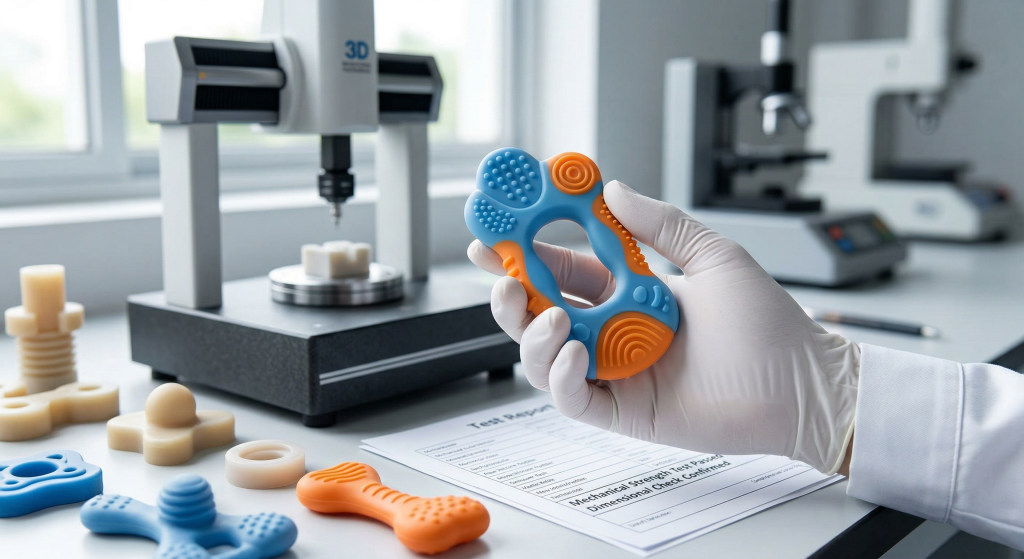
Implementing strict final checks prevents defective units from reaching consumers. Every single Custom Silicone Teether should undergo rigorous visual inspection. Dedicated teams look for tiny tears, protecting children from hazards. You cannot build a reputable brand selling flawed merchandise.
Setting acceptable defect limits
Engineering teams establish clear boundaries regarding minor cosmetic imperfections. They train workers, showing exactly what passes acceptable quality limits.
- Zero tolerance applies regarding any structural tearing.
- Tiny color variations might pass under specific rules.
- Flash remnants must never exceed safe dimensions.
Are visual checks enough?
Truth be told… visual inspections only catch surface-level aesthetic problems. Modern factories use automated machines, measuring critical dimensions precisely. Pull testing verifies mechanical strength, mimicking aggressive chewing forces accurately.
Packing for retail shelves
Approved items move into clean packaging areas immediately after inspection. Proper sealing keeps products hygienic during long shipping journeys.
Key Takeaway: Establish comprehensive inspection protocols, catching defects long before shipping containers leave.
| Inspection Type | Method | Target Defect |
| Visual Check | Human eye | Black spots |
| Dimensional | OGP Machine | Size variations |
| Mechanical | Pull tester | Tearing points |
Rigorous outgoing quality control protects your brand reputation fiercely.
How Should You Choose a Reliable Manufacturing Partner?
Selecting experienced factories reduces production headaches while guaranteeing high quality. Finding a factory producing a flawless Custom Silicone Teether takes diligence. You must audit their certifications, verifying compliance claims thoroughly. A great supplier acts as an extension of your team.
Evaluating facility cleanliness standards
Medical-grade manufacturing requires dust-free environments, preventing contamination completely. Visiting facilities allows you firsthand observation regarding daily hygiene practices.
- Clean rooms indicate serious commitments toward quality.
- Organized floors reflect strong management principles.
- Proper worker attire prevents human contamination.
Assessing engineering support levels
Here is a fact: good factories offer incredible design assistance proactively. Experienced engineers suggest improvements, saving you money during tooling phases. They communicate potential issues clearly, rather than hiding mistakes.
Why communication speeds success
Responsive account managers answer questions quickly, keeping projects moving forward. Language barriers often cause frustrating delays, ruining tight launch schedules.
Key Takeaway: Prioritize transparent communication and robust engineering support when selecting factories.
| Partner Trait | Benefit | Impact Level |
| In-house tooling | Faster changes | High |
| ISO certs | Proven systems | High |
| English support | Clear dialogue | Medium |
Building strong supplier relationships lays solid foundations for long-term business growth.
Successfully developing baby products demands careful planning, verified safety, and excellent manufacturing partners. We utilize medical-grade materials alongside rigorous testing, bringing your designs alive flawlessly. Our team helps brands deliver comfort globally. Please contact us today for expert manufacturing consultation. Building safe, beautiful products remains our core mission entirely.
FAQ
Q1: Can I use multiple colors in one design?
Yes, you certainly can do this. Factories utilize specialized molds, injecting different colored materials sequentially for vibrant results.
Q2: What is the best hardness for infant products?
Hitting a durometer between thirty and fifty Shore A works best. This range provides soothing resistance without bruising delicate gums.
Q3: How do I know if my design is safe?
You should conduct third-party laboratory testing always. Facilities use standardized choke cylinders, proving parts exceed minimum safety dimensions.
Q4: Will oil spraying wear off quickly?
No, the coating bonds permanently. Factories bake protective oil directly into material surfaces, providing lasting anti-static properties.
Q5: Can I request prototypes before buying expensive molds?
You certainly can request physical samples. Manufacturers offer single-cavity test molds, letting you evaluate physical parts affordably.