
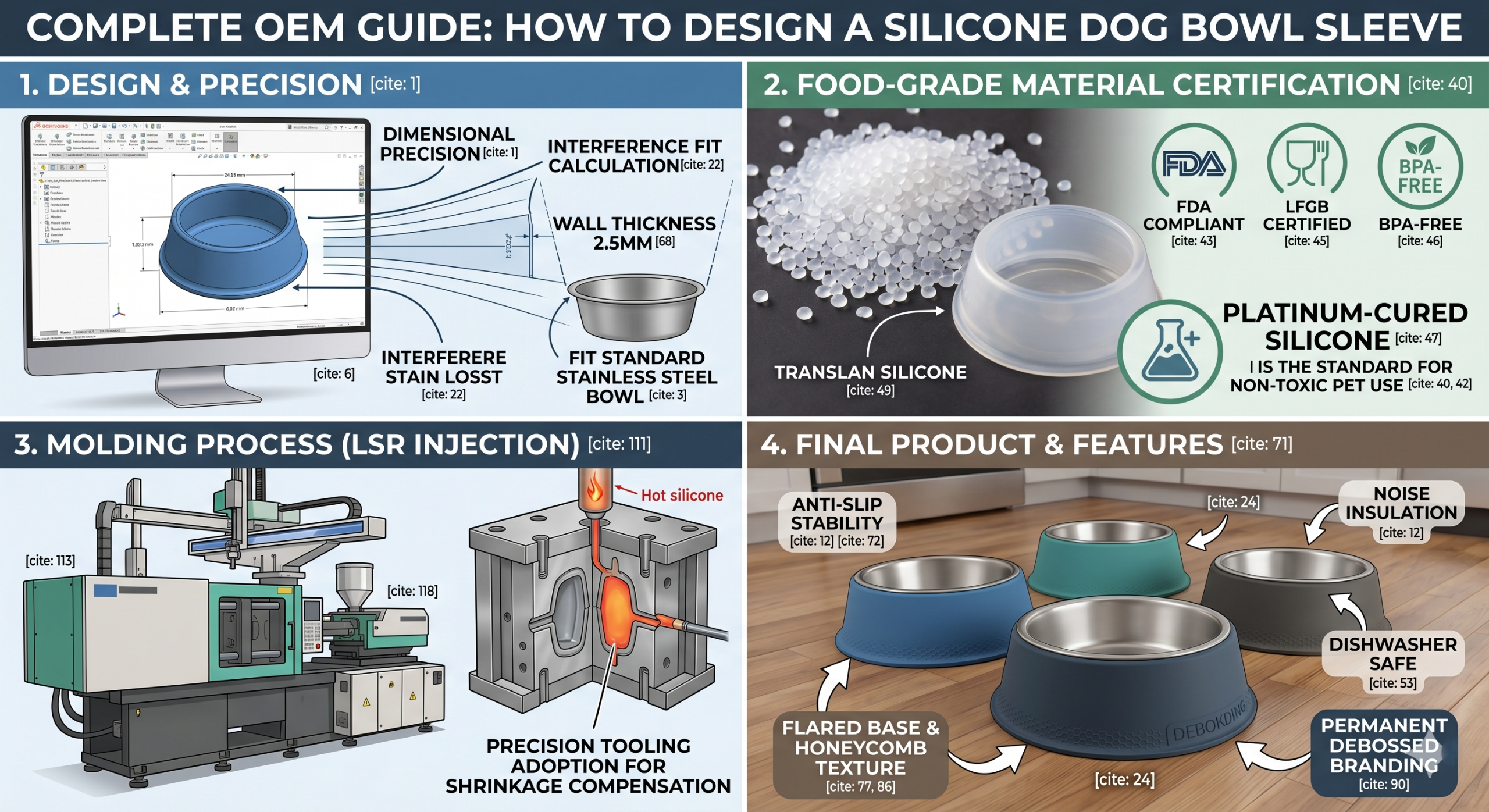
Designing a Silicone Dog Bowl Sleeve requires a strategic focus on dimensional precision, food-grade material certification, and specialized anti-slip geometry to ensure a premium user experience. Visit https://hualinsili.com/ to explore professional engineering support for your next project. Many pet owners struggle with standard stainless steel bowls that slide across the kitchen floor or leave unsightly scratches on hardwood finishes. This constant clatter and mess agitate both the animal and the owner, often resulting in spilled water and unnecessary cleanup time. By developing a custom silicone sleeve, you provide a durable, noise-canceling solution that stabilizes the feeder while creating a distinct market advantage for your brand.
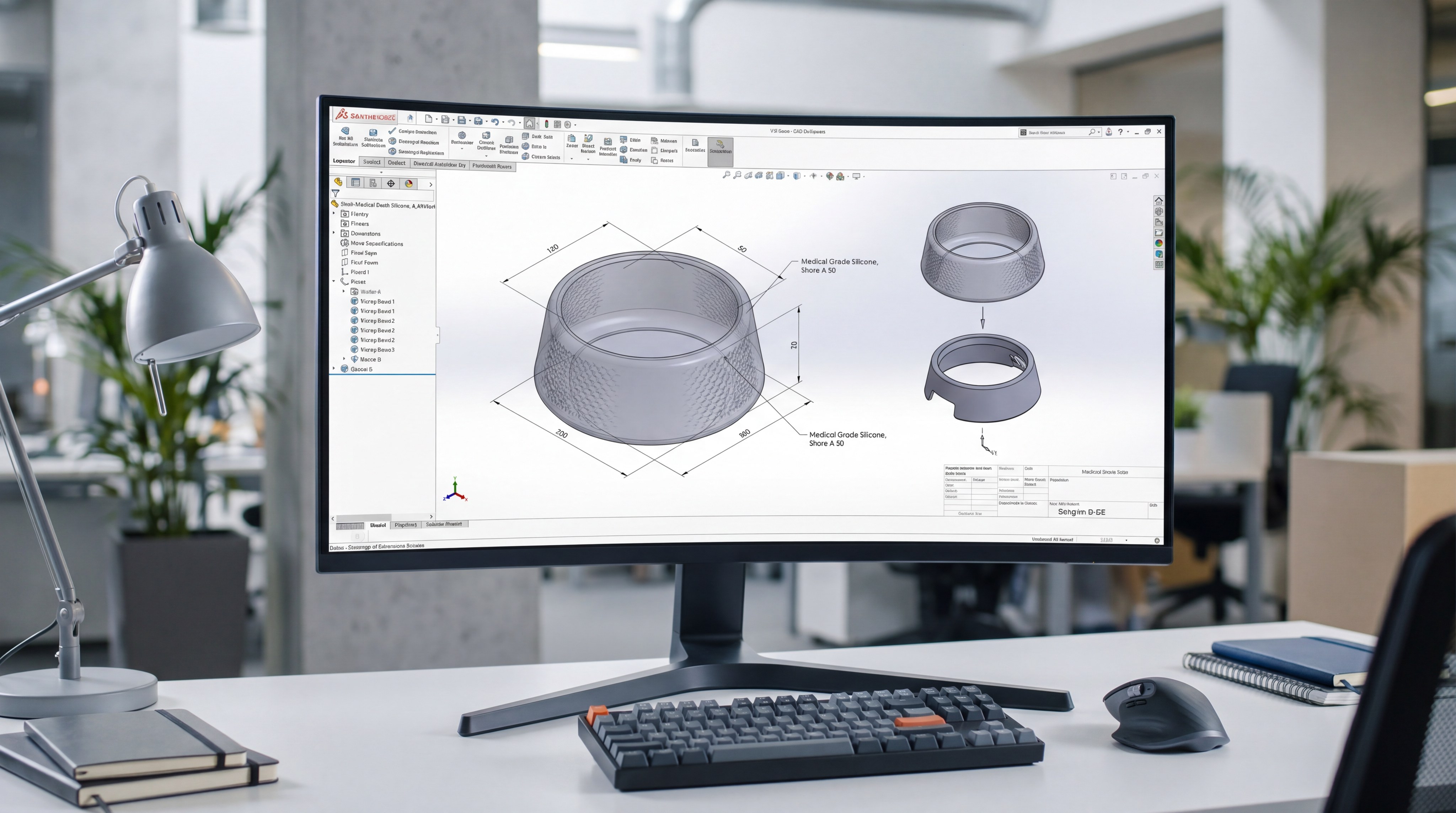
1. Why is defining the core purpose the first step?
Defining the primary function allows you to prioritize engineering features such as impact resistance, noise reduction, or thermal stability during the initial design phase. A Silicone Dog Bowl Sleeve acts as the interface between a rigid bowl and a sensitive floor surface. You must decide if the product is a standalone accessory or part of a modular feeding system.
What are the main functional goals?
You need to identify the environmental stresses the product will face daily. Whether it is aggressive chewing or frequent high-temperature sterilization, the purpose dictates the geometry.
- Anti-slip stability for tiled or wooden floors.
- Noise insulation to prevent metal-on-metal clatter.
- Impact protection for the bottom rim of the bowl.
Should you focus on modularity?
Modular designs allow consumers to swap colors without replacing the core bowl. Think about this: versatility is a major selling point in the premium pet market.
- Compatibility with multiple bowl brands.
- Easy removal for deep cleaning cycles.
- Stackable designs for efficient retail shipping.
Key Takeaway: Clearly established functional goals prevent “feature creep” and ensure the sleeve meets the specific needs of your target pet demographic.
| Function | Design Requirement | Priority |
|---|---|---|
| Grip | High-tack surface finish | Critical |
| Aesthetics | Custom Pantone matching | High |
| Longevity | Tear-resistant wall thickness | Medium |
This functional breakdown serves as the roadmap for your technical specifications and material selection.
2. How can you guarantee a secure fit for any bowl?
Guaranteeing a secure fit involves calculating the precise shrinkage rate of the material to ensure the Silicone Dog Bowl Sleeve stays in place via an interference fit. When you partner for custom silicone molding, you must provide exact bowl measurements to the engineering team. This prevents the sleeve from slipping off during use or trapping debris between the layers.
How do you calculate interference?
You generally want the inner diameter of the sleeve to be slightly smaller than the outer diameter of the bowl. This creates the tension necessary to hold the unit together without using messy adhesives.
- Measure the bowl’s circumference at three height points.
- Apply a 1% to 3% tension factor based on durometer.
- Account for tapering in standard conical bowl shapes.
What about material shrinkage?
Silicone shrinks as it cools in the mold, which can ruin your fit if not managed. Here is the kicker: different grades of silicone have varying shrinkage rates that must be compensated for in the steel tool.
- LSR shrinkage is typically 1.5% to 2.5%.
- HCR compression molding can vary up to 4%.
- Precision tooling adjusts the cavity size accordingly.
Key Takeaway: Precision measurement combined with an interference fit calculation is the only way to ensure the sleeve feels like a seamless part of the bowl.
| Fit Component | Target Value | Impact |
|---|---|---|
| Shrinkage Compensation | 2% Average | Dimensional Accuracy |
| Interference Tension | -0.5mm to -1.0mm | Sleeve Retention |
| Taper Alignment | Exact Match | Zero Gap Integrity |
Engineering for a tight fit minimizes the risk of bacterial growth by preventing water from entering the sleeve.
3. Why is food-grade material selection non-negotiable?
Food-grade material selection is essential because pet products are frequently in contact with saliva and food, necessitating non-toxic, BPA-free compliance. A high-quality Silicone Dog Bowl Sleeve must withstand the rigors of pet use without leaching harmful chemicals. Using certified materials protects your brand from liability and ensures the safety of the end-user’s pet.
What certifications are required?
You must verify that your manufacturer uses FDA or LFGB compliant silicone. Wait, there’s more: LFGB is often considered a stricter standard in Europe, involving more rigorous leaching tests.
- FDA 21 CFR 177.2600 compliance for US markets.
- LFGB certification for premium European distribution.
- BPA-free and Phthalate-free raw material batches.
Why choose platinum-cured silicone?
Platinum-cured silicone is superior because it does not produce the “blooming” effect or chemical odors associated with peroxide-curing. It remains clear and odorless even after hundreds of dishwasher cycles.
- Higher tear strength for aggressive chewers.
- No peroxide by-products or unpleasant smells.
- Superior clarity for translucent color options.
Key Takeaway: Prioritizing platinum-cured, food-grade silicone guarantees a safe, durable product that meets global regulatory requirements for pet feeders.
| Material Spec | Recommended Value | Benefit |
|---|---|---|
| Hardness | 50-60 Shore A | Balance of flexibility and strength |
| Curing Agent | Platinum Catalyst | Odorless and non-toxic |
| Heat Resistance | -40°C to 230°C | Dishwasher and freezer safe |
Selecting the right material is the most significant factor in determining the long-term perceived value of the product.
4. What wall thickness ensures long-term product life?
Ideal wall thickness for durability typically ranges between 2.0mm and 4.0mm to provide the necessary structure while maintaining the flexibility of the Silicone Dog Bowl Sleeve. Choosing the right thickness is a balance between material cost and the “premium feel” of the accessory. When utilizing liquid silicone rubber (LSR) molding, you can achieve high-precision wall consistency across the entire part.
How thin is too thin?
If you design the walls below 1.5mm, the sleeve may tear during installation or lose its shape over time. Best of all, a slightly thicker wall provides better vibration dampening for noisy eaters.
- Minimum 2.0mm for standard domestic use.
- Increase to 3.5mm for heavy-duty or “indestructible” lines.
- Tapered edges for a smooth transition to the bowl rim.
Does thickness affect curing?
Yes, thicker sections take longer to cure in the mold, which can increase your cycle time and unit cost. Look at it this way: optimizing thickness is as much about economics as it is about engineering.
- Maintain uniform wall thickness to prevent warping.
- Use ribs for strength instead of solid mass.
- Optimize for rapid injection and cooling cycles.
Key Takeaway: A uniform wall thickness of 2.5mm is generally the “sweet spot” for combining durability with cost-effective manufacturing.
| Thickness Zone | Measurement | Purpose |
|---|---|---|
| Main Body | 2.5mm | General durability |
| Top Edge | 1.5mm (Tapered) | Ergonomic fit |
| Reinforced Base | 4.0mm | Anti-skid weight |
Consistent wall thickness ensures that the part cures evenly, reducing the likelihood of internal stresses or defects.
5. How do you engineer the base for maximum grip?
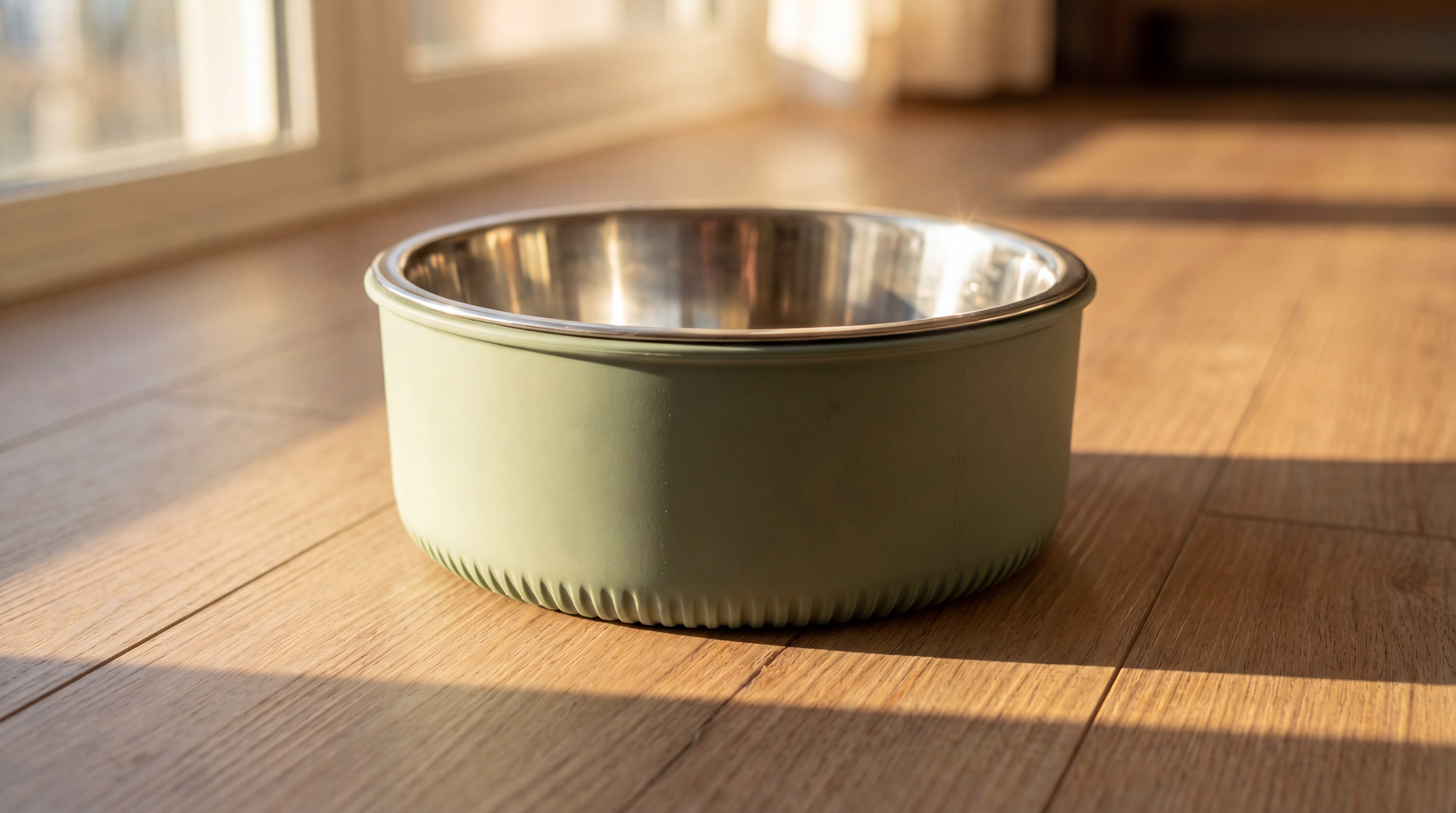
Engineering the base for maximum grip requires a combination of high-friction surface textures and a wide footprint to lower the center of gravity. For any Silicone Dog Bowl Sleeve, the bottom surface is the most functional area. By increasing the surface area in contact with the floor, you reduce the pressure per square inch, which enhances the natural suction effect of the silicone.
What textures work best?
You should consider using micro-textures or a “suction cup” pattern on the underside. Here is the kicker: a polished, smooth finish actually grips better on glass or polished tile, but a textured finish is better for porous surfaces.
- Honeycomb patterns for multi-surface stability.
- Polished “high-tack” zones for maximum suction.
- Raised ridges to channel away spilled water.
Why use a flared base?
A flared or “bell-bottom” design prevents the bowl from tipping when a dog pushes against the rim. You can easily integrate this into the mold design to add stability without adding significant weight.
- Increases the base diameter by 10-15%.
- Provides a “no-tip” safety feature for large breeds.
- Creates a more substantial visual presence on store shelves.
Key Takeaway: Combining a flared base with a high-tack surface finish creates a superior anti-slip performance that consumers can immediately feel.
| Base Feature | Mechanism | Benefit |
|---|---|---|
| Suction Rim | Vacuum seal | Hard-to-budge stability |
| Micro-Texture | Friction increase | Prevents sliding on wood |
| Wide Flare | Leverage control | Tipping prevention |
Testing these base designs on various flooring types during the prototyping stage ensures universal functionality.
6. Which aesthetic features drive higher retail margins?
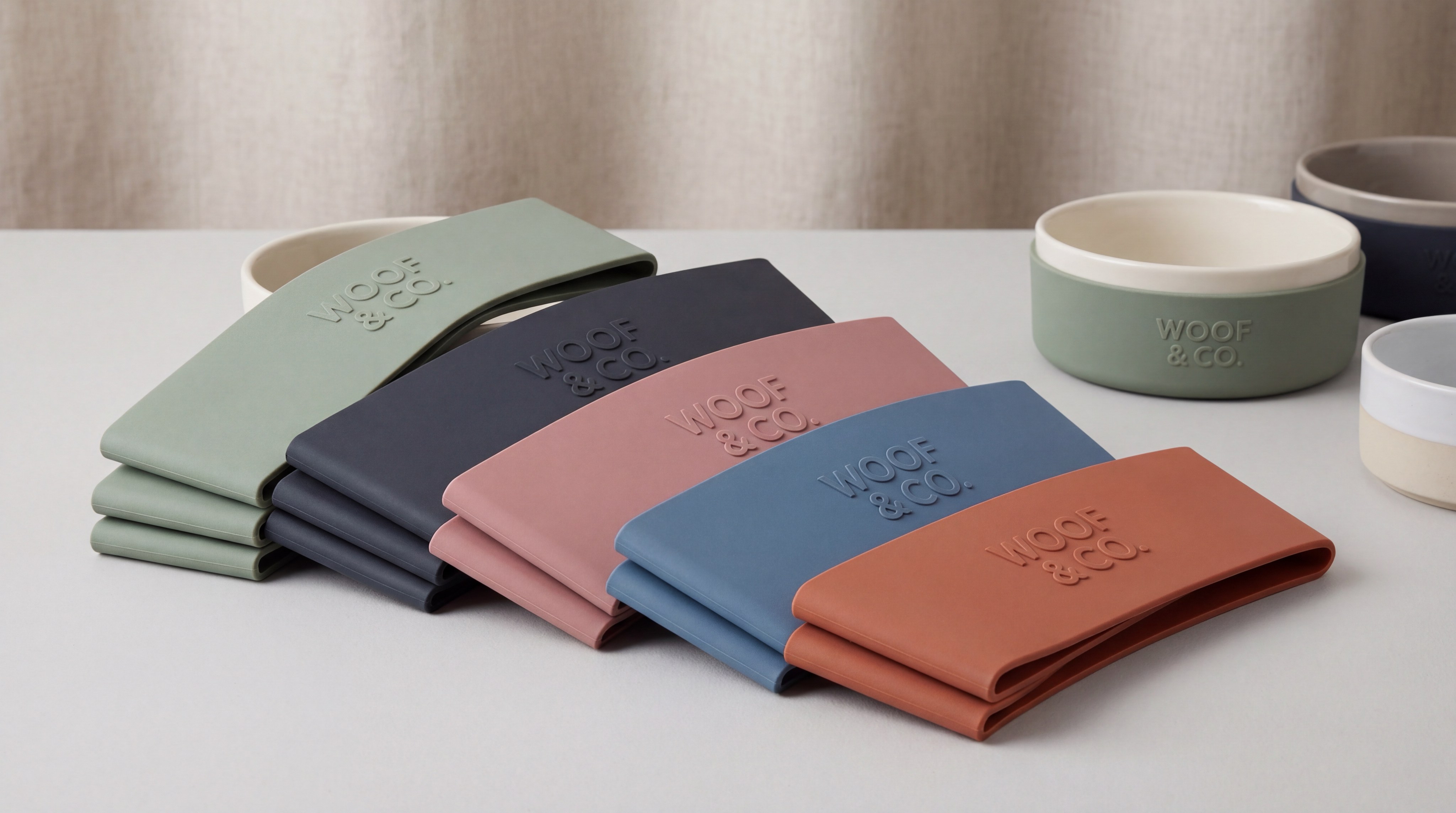
Aesthetic features like custom Pantone matching, debossed branding, and matte finishes allow your Silicone Dog Bowl Sleeve to compete in the luxury pet care market. By offering food-grade silicone products in on-trend colors, you appeal to modern home decor sensibilities. This transition from a “utility” item to a “decor” item is what allows for premium pricing.
Is debossed branding better?
Debossed logos are molded into the silicone, making them permanent and resistant to wear or fading. Think about this: a permanent logo ensures your brand stays visible for the life of the product.
- Elegant, understated look for high-end brands.
- Cannot be scratched off or peeled like screen printing.
- Adds a tactile element that feels expensive.
Should you use a matte finish?
A matte or “soft-touch” finish hides water spots and pet hair much better than a glossy surface. Best of all, it provides a sophisticated look that matches modern kitchen appliances.
- Reduces the “rubbery” look of cheap silicone.
- Resists fingerprints and smudge marks.
- Feels more natural and soft to the human hand.
Key Takeaway: High-end finishes like matte coatings and permanent debossed logos significantly increase the perceived value and retail margin of the product.
| Aesthetic Element | Market Perception | Cost Impact |
|---|---|---|
| Matte Texture | Premium / Modern | Minimal |
| Debossed Logo | Established / Quality | Initial Tooling Only |
| Custom Color | Designer / Trend | Pigment Cost Only |
Using these features allows you to differentiate your product in a saturated market without drastically increasing production costs.
7. How do you select the right molding process?
Selecting the right process depends on your production volume and the complexity of the design, with LSR being ideal for high-volume precision and compression molding for cost-effective runs. The Silicone Dog Bowl Sleeve can be manufactured using either method, but the choice will dictate your initial investment and unit price. You must weigh the speed of injection against the lower tooling costs of compression.
When is compression molding best?
If you are launching a new product with a lower initial volume, compression molding is often the logical choice. Look at it this way: the molds are cheaper and easier to modify if your design needs adjustment.
- Lower initial tooling investment.
- Great for thick-walled, simpler geometries.
- Slower cycle times but lower entry barriers.
Why choose LSR injection?
LSR is the gold standard for high-volume, automated production where consistency is critical. Here is the kicker: the high initial mold cost is quickly offset by the lightning-fast cycle times and zero-waste production.
- Perfect for thin walls and complex textures.
- Fully automated, reducing labor costs.
- Highest dimensional consistency for precision fit.
Key Takeaway: Use compression molding for market testing and LSR injection molding for scaling to major retail distribution.
| Factor | Compression | LSR Injection |
|---|---|---|
| Tooling Cost | Low to Medium | High |
| Cycle Time | 2-5 Minutes | 30-60 Seconds |
| Precision | Moderate | High |
Choosing the wrong process early on can lead to high scrap rates or unnecessary capital expenditure.
8. What testing phases prevent market recalls?
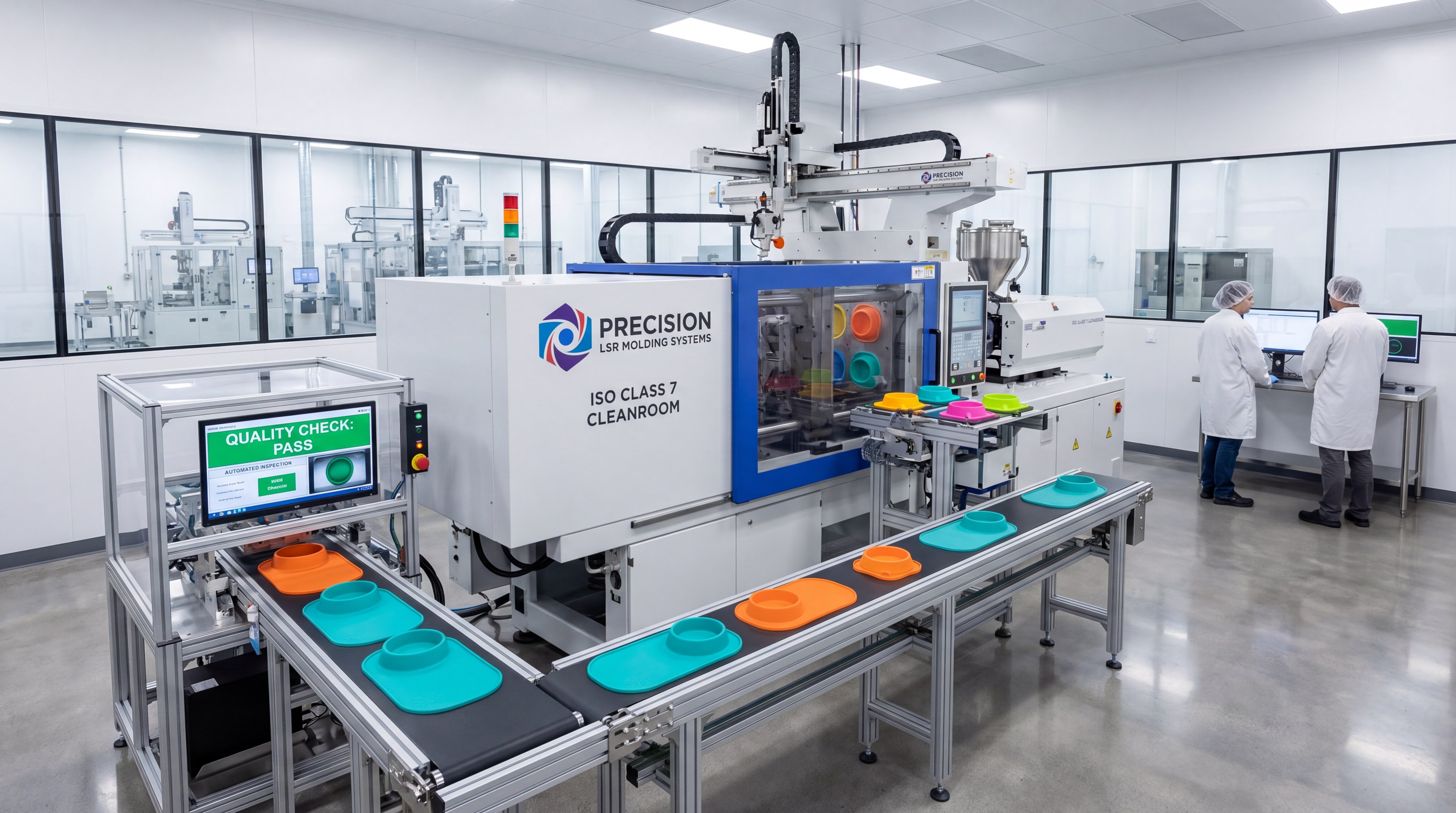
Testing phases should include dishwasher durability cycles, tear-resistance trials, and bite-force simulations to ensure the Silicone Dog Bowl Sleeve is safe for long-term pet interaction. Professional silicone compression molding services should include quality control reports for every batch. Skipping these steps can lead to product failure and damage to your brand reputation.
How do you test for “dog-proofing”?
You need to simulate the environment of a pet who might chew on the edges of the sleeve. Think about this: silicone is tough, but a determined dog can tear through thin sections if the tear strength isn’t optimized.
- ASTM D624 tear strength testing.
- High-load bite simulations on the rims.
- Environmental stress cracking resistance.
Is dishwasher safety critical?
Most consumers expect pet accessories to be dishwasher safe for hygiene. Wait, there’s more: frequent exposure to high heat and detergents can degrade lower-quality silicone, leading to hardening or discoloration.
- 100+ cycle heat aging tests.
- Chemical resistance to common dish soaps.
- No shrinkage or warping after thermal cycles.
Key Takeaway: Rigorous physical and thermal testing ensures that your product remains functional and safe throughout its intended lifecycle.
| Test Type | Objective | Pass Criteria |
|---|---|---|
| Tear Test | Durability | No propagation under 10N |
| Thermal Cycle | Safety | < 0.5% deformation |
| Saliva Resistance | Hygiene | No surface degradation |
Documentation of these tests is vital for B2B retailers who require proof of safety and durability.
9. How do you identify a top-tier manufacturing partner?
Identifying a top-tier partner involves looking for ISO 9001:2015 certification, in-house tooling capabilities, and a dedicated cleanroom for medical or food-grade production. Your Silicone Dog Bowl Sleeve is only as good as the factory that produces it. A partner who understands the pet industry will offer proactive advice on Design for Manufacturability (DFM) to help you save money.
Why is in-house tooling a must?
Factories with in-house mold shops can iterate on designs much faster and protect your intellectual property more effectively. Best of all, they can fix mold issues on the fly without shipping tools to a third party.
- Reduced lead times for prototypes.
- Better control over mold maintenance.
- Direct communication between designers and toolmakers.
Should they offer DFM support?
A great manufacturer won’t just take your drawing and run it; they will suggest changes to wall thickness or radii to improve quality. Look at it this way: their expertise can prevent expensive mistakes before the steel is cut.
- Suggestions for draft angles to ease ejection.
- Optimizing gate placement to reduce visual scars.
- Material recommendations based on performance data.
Key Takeaway: Choose a manufacturer that offers end-to-end service, from DFM engineering to final quality inspection and packaging.
| Manufacturer Attribute | Business Value |
|---|---|
| ISO Certified | Consistent quality standards |
| DFM Support | Reduced defects and costs |
| Cleanroom Facility | Pure, non-contaminated parts |
A strong partnership allows you to focus on marketing while the technical details are handled by experts.
10. Why is DFM essential for reducing production costs?
DFM is essential because it optimizes the part geometry to reduce material waste, shorten cycle times, and minimize manual labor during the assembly of the Silicone Dog Bowl Sleeve. By simplifying the design for the molding machine, you lower the unit price without sacrificing quality. Visit https://hualinsili.com/ to see how expert engineering can streamline your production.
How do draft angles save money?
Adding slight angles (1-3 degrees) to vertical walls allows the part to pop out of the mold more easily. Here is the kicker: faster ejection means shorter cycle times, which directly lowers your labor and machine costs.
- Reduces the need for manual mold scraping.
- Decreases the risk of part tearing during ejection.
- Ensures a smooth, automated production flow.
Can you reduce material waste?
Optimizing the volume of the part ensures you aren’t paying for “over-engineered” mass that doesn’t add value. Think about this: even a 5-gram reduction in weight can save thousands of dollars over a large production run.
- Core out thick sections where possible.
- Optimize runner and gate design to minimize scrap.
- Use high-precision dosing pumps to avoid overfilling.
Key Takeaway: Design for Manufacturability is the most effective way to lower your COGS (Cost of Goods Sold) while maintaining high performance.
| DFM Action | Financial Impact | Performance Impact |
|---|---|---|
| Optimize Draft | Lower Labor Cost | Faster Cycle Times |
| Minimize Flash | Lower Scrap Rate | Cleaner Visuals |
| Uniform Walls | Fewer Defects | Better Durability |
Investing time in DFM during the CAD phase pays dividends throughout the entire product lifecycle.
Frequently Asked Questions
Can I use multiple colors in a single sleeve design?
Yes, but multi-color or “marble” effects typically require a specialized overmolding or hand-mixing process. While this increases the visual appeal, it can also slightly raise the unit cost due to the manual labor involved in preparing the silicone.
What’s the best way to clean a silicone dog bowl sleeve?
Silicone is naturally non-porous and heat-resistant, making it 100% dishwasher safe. It can also be hand-washed with standard dish soap or boiled for sterilization without losing its shape or anti-slip properties.
How do I know if a manufacturer uses real food-grade silicone?
Always request a material test report (MTR) and a certificate of compliance for every batch. A reputable manufacturer will provide documentation showing that the raw material has passed FDA or LFGB leaching tests.
Can I add a custom logo to a pre-existing design?
Yes, custom logos can be added by laser engraving the mold cavity, which results in a debossed or embossed logo on the part. This is a common OEM practice that allows brands to personalize generic designs with their own identity.
What is the average lead time for a custom silicone sleeve?
Typically, the mold development takes 2 to 4 weeks, with sample approval taking another week. Once the mold is finalized, mass production runs usually take 15 to 30 days depending on the order volume.
Designing a successful Silicone Dog Bowl Sleeve requires an uncompromising commitment to engineering precision and pet safety. By following this guide, you can develop a product that not only protects floors and reduces noise but also strengthens your brand’s presence in the competitive pet market. Our vision is to empower pet brands with high-performance silicone solutions that enhance the daily lives of animals and their owners. Ready to start your manufacturing journey? Contact us today for a professional quotation and engineering review.