
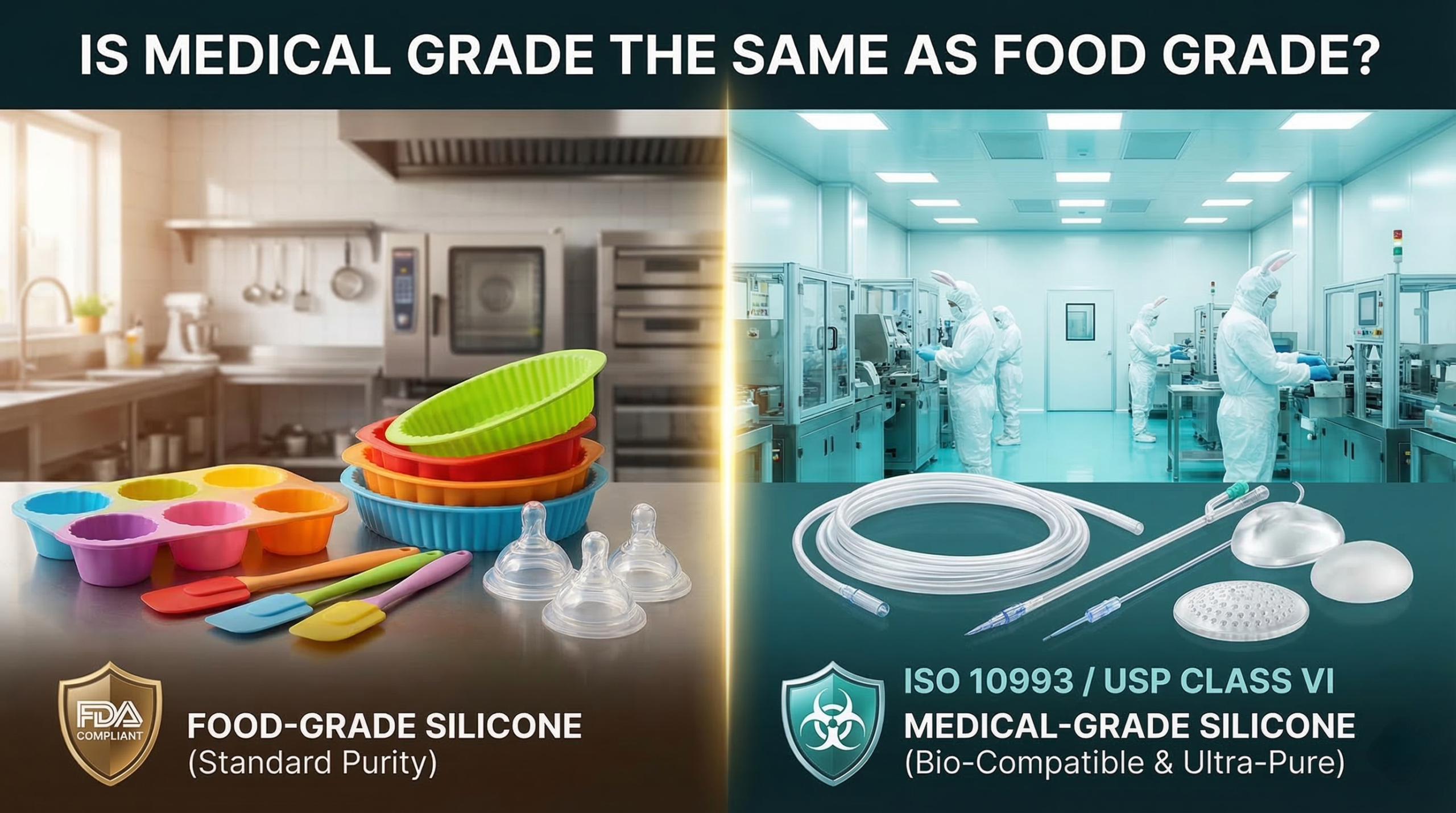
No, medical-grade silicone is not equivalent to food-grade silicone, as it undergoes significantly more rigorous testing and purification processes to ensure biocompatibility. Selecting the wrong material grade for your production run can lead to catastrophic product failures, regulatory rejection, or serious health risks for your end-users. This decision is often the difference between a successful market launch and a costly product recall. Our expert guide provides the technical clarity you need to navigate these complex material standards. You can ensure your components meet the highest safety benchmarks by understanding whether is medical grade silicone the same as food grade silicone? for your specific industry application.
What is food-grade silicone and where is it used?
Food-grade silicone is a non-toxic, heat-resistant material specifically certified for safe, direct contact with food and beverages. It is engineered to remain stable across extreme temperatures without leaching harmful chemicals like BPA or phthalates into consumables. Manufacturers often ask, is medical grade silicone the same as food grade silicone? while sourcing materials for kitchenware. While food-grade is highly durable and safe for the kitchen, it lacks the extreme purity levels required for medical implantation.
Common food industry applications
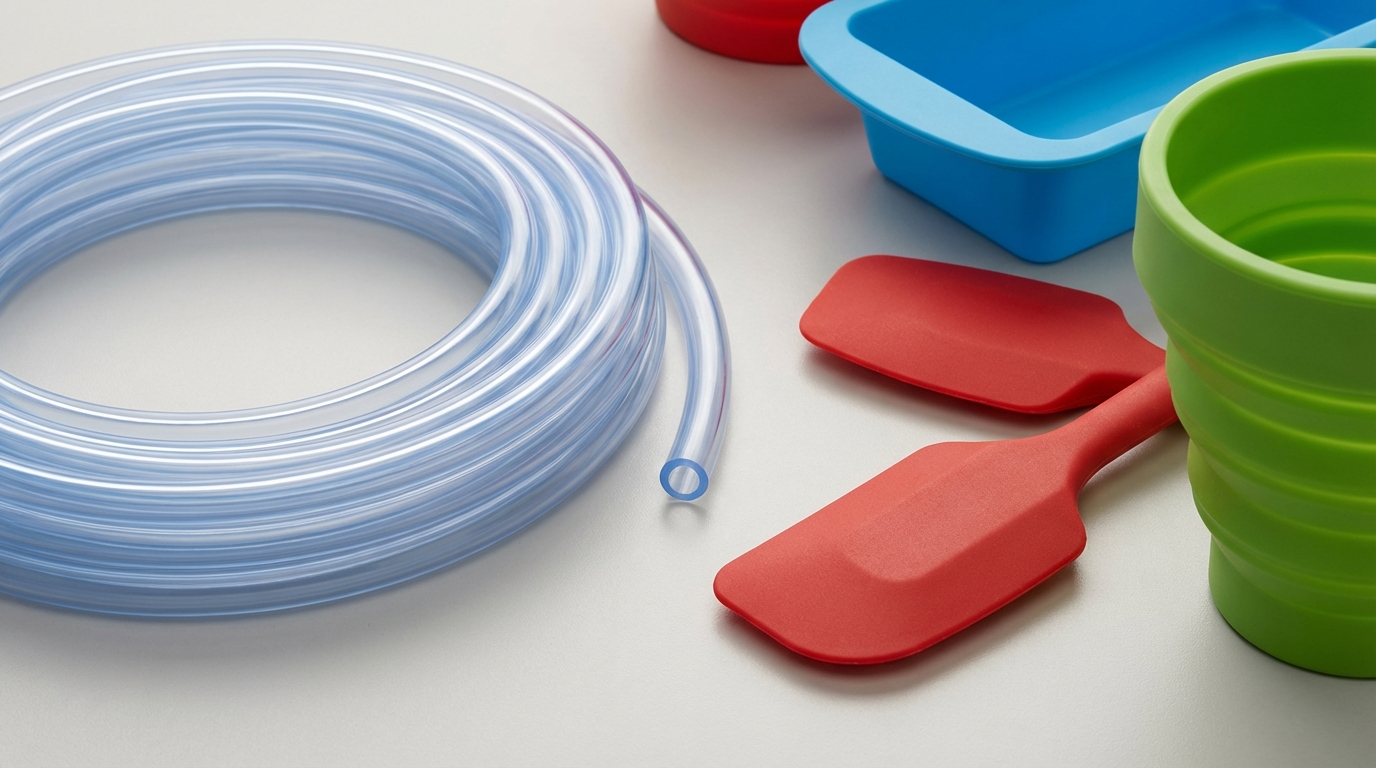
You will find food-grade silicone in everything from industrial baking molds to consumer-facing kitchen gadgets and seals. This material is favored for its flexibility, non-stick properties, and ability to withstand repeated sterilization in dishwashers.
But wait:
- Baking mats and specialized cake molds.
- Gaskets and seals for food processing machinery.
- Reusable food storage bags and container lids.
- Dispensing valves for beverage equipment.
The versatility of this grade makes it the gold standard for modern culinary tools. It ensures that your products remain odor-neutral and highly resistant to degradation over years of heavy use.
Key Takeaway: Food-grade silicone offers a cost-effective and safe solution for any application where the material touches food but does not enter the human body.
| Feature | Food-Grade Silicone |
|---|---|
| Primary Standard | FDA / LFGB Compliance |
| Temperature Range | -60°C to 230°C |
| Common Use | Kitchenware, Food Seals |
| BPA Status | 100% BPA-Free |
This table highlights why food-grade silicone is the preferred choice for commercial and residential kitchen environments.
Is medical grade silicone the same as food grade silicone?
No, medical-grade silicone is not the same as food-grade silicone because it must meet much more stringent biocompatibility and purity requirements. While both are safe, medical-grade materials are refined to eliminate even trace impurities that could cause an immune response in the human body. You must realize that is medical grade silicone the same as food grade silicone? is a question that depends entirely on the level of regulatory risk your product carries. Choosing the medical grade ensures your device is safe for prolonged contact with skin or internal tissues.
Purity and biocompatibility requirements
Medical-grade silicone is tested against standards like USP Class VI to ensure it does not cause toxicity or irritation. This level of scrutiny is never applied to standard food-grade materials.
Here is the truth:
- Tested for systemic toxicity and intracutaneous reactivity.
- Manufactured in controlled cleanroom environments.
- Minimal extractables and leachables during use.
- Compatible with advanced sterilization like autoclaving or gamma radiation.
Using this grade is essential for devices that will be implanted or used in surgical settings. It provides the highest level of assurance for patient safety and product reliability.
Key Takeaway: Medical-grade silicone provides a level of biological safety that is required for healthcare, whereas food-grade is limited to ingestion safety.
| Comparison Factor | Food-Grade | Medical-Grade |
|---|---|---|
| Biocompatibility | Not Required | Mandatory (ISO 10993) |
| Refinement | Standard | High-Purity |
| Testing Scope | Consumable Safety | Human Tissue Safety |
| Traceability | Basic | Full Batch Traceability |
This comparison illustrates the significant jump in quality control required when moving from food to medical applications.
What defines the performance of medical-grade silicone?
Medical-grade silicone is defined by its extreme chemical inertness and its ability to remain stable when exposed to bodily fluids. It is designed to be “biostable,” meaning the material will not break down or change properties while inside the human body. When evaluating performance, you might wonder, is medical grade silicone the same as food grade silicone? in terms of durability. While both are tough, medical grades are often formulated for specific mechanical properties like high tear strength for long-term implants.
Resilience and sterilization capabilities
The ability to withstand harsh sterilization environments is a hallmark of high-performance medical silicone. Whether you use steam, chemicals, or radiation, the material maintains its structural integrity.
Think about it:
- Maintains elasticity after multiple autoclave cycles.
- Resistant to microbial growth and fungal colonization.
- Non-reactive with most medications and bodily fluids.
- High transparency for visual monitoring in tubing applications.
These features make it indispensable for life-saving equipment like catheters and respiratory masks. You can trust that the material will perform consistently under the most demanding clinical conditions.
Key Takeaway: The performance of medical-grade silicone centers on its “install and forget” reliability within sensitive biological environments.
| Performance Metric | Medical-Grade Capability |
|---|---|
| Sterilization | Autoclave, ETO, Gamma Ray |
| Inertness | Highest available in polymers |
| Surface Finish | Ultra-smooth to prevent biofilm |
| Durability | Optimized for long-term implantation |
These metrics demonstrate why medical silicone is the premier choice for high-stakes healthcare engineering projects.
How do safety standards differ between silicone grades?
Safety standards differ primarily in the specific regulatory bodies and testing protocols involved, such as the FDA for food and ISO 10993 for medical. Food-grade testing focuses on migration limits—ensuring nothing “moves” from the silicone into your food. Determining is medical grade silicone the same as food grade silicone? requires you to look at whether the material is tested for cellular-level reactions. Medical standards are far more invasive and detailed to protect patients from long-term side effects.
Global regulatory frameworks
Navigating the landscape of ISO, FDA, and USP standards can be overwhelming for many B2B buyers. Each certification serves as a gatekeeper for different market sectors.
The reality is:
- FDA 21 CFR 177.2600 covers rubber articles for food use.
- ISO 10993 is the international standard for medical device safety.
- USP Class VI is a common requirement for pharmaceutical processing.
- LFGB is the stricter European standard for food contact.
Compliance is not just a checkbox; it is a legal requirement that protects your brand from liability. Understanding these distinctions ensures you select a material that is legally fit for your specific purpose.
Key Takeaway: Safety standards for medical silicone involve biological testing that far exceeds the chemical migration tests used for food-grade materials.
| Standard | Applicable Grade | Focus Area |
|---|---|---|
| FDA 21 CFR | Food-Grade | Chemical Migration |
| ISO 10993 | Medical-Grade | Biocompatibility |
| USP Class VI | Medical/Pharma | Acute Toxicity |
| ISO 13485 | Manufacturing | Quality Management |
This table provides a quick reference for the complex world of silicone material certifications and manufacturing standards.
Which manufacturing methods ensure maximum purity?
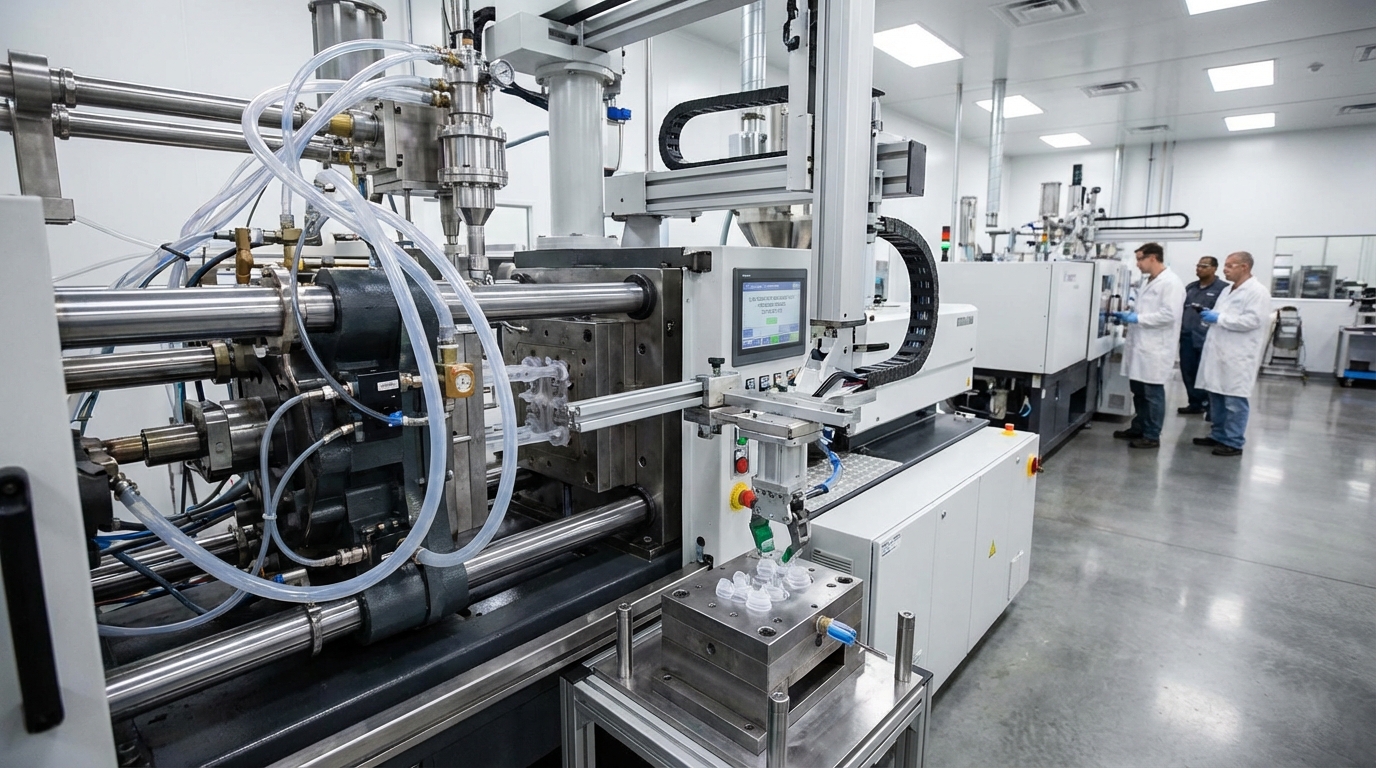
Maximum purity is achieved through Liquid Silicone Rubber (LSR) injection molding within certified cleanroom environments. Unlike standard compression molding, LSR is a closed-system process that prevents environmental contaminants from entering the material. During production, we frequently address whether is medical grade silicone the same as food grade silicone? regarding factory conditions. While food-grade can be made in standard facilities, medical-grade requires HEPA-filtered air and strict gowning protocols for all staff.
Cleanroom and LSR molding excellence
LSR injection molding allows for high-precision parts with zero human contact during the curing process. This automation is vital for maintaining the “clean” status of medical components.

Look at this:
- Automated dosing systems prevent manual mixing errors.
- Cleanroom environments (Class 10,000 or 100,000) minimize dust.
- Closed-loop cooling systems prevent water contamination.
- Flash-less tooling reduces the need for secondary manual trimming.
These advanced methods ensure that every part leaving the factory is as pure as the raw material itself. You gain a competitive edge by offering products that are free from microscopic debris.
Key Takeaway: The manufacturing environment is just as important as the raw material grade in ensuring final product purity.
| Process Element | Food-Grade Standard | Medical-Grade Standard |
|---|---|---|
| Environment | Clean Factory | Certified Cleanroom |
| Molding Type | Compression / LSR | Primarily LSR |
| Handling | Manual / Semi-Auto | Fully Automated |
| Inspection | Visual / Sampling | 100% Optical Inspection |
Adopting these manufacturing standards ensures your products meet the highest possible quality levels in the global market.
Is medical-grade silicone safe for food contact?
Yes, medical-grade silicone is entirely safe for food contact and actually represents the highest tier of safety available. Because it exceeds all food-grade requirements, it is often used in high-end baby care products like pacifiers and bottle nipples. You should know that is medical grade silicone the same as food grade silicone? is a relevant question when safety is your number one marketing priority. Using medical-grade in a food context provides an “over-engineered” safety margin that discerning parents and health-conscious consumers appreciate.
High-purity applications for consumers
In industries like mother and baby care, using medical-grade silicone can be a powerful brand differentiator. It signals to your customers that you refuse to compromise on their family’s health.
But wait:
- Used in premium baby teethers and pacifiers.
- Ideal for high-sensitivity breast pump components.
- Common in pharmaceutical-grade fluid tubing.
- Preferred for professional-grade culinary tools.
While more expensive, the peace of mind offered by medical-grade silicone is often worth the investment. It eliminates any doubt regarding the presence of volatile organic compounds or heavy metals.
Key Takeaway: While not always necessary, using medical-grade silicone for food applications offers the ultimate safety guarantee for your customers.
| Benefit | Medical Grade in Food Use |
|---|---|
| Safety Margin | Maximum possible protection |
| Brand Image | Positions product as “Ultra-Premium” |
| Material Feel | Usually softer and more consistent |
| Compliance | Passes all global food tests easily |
Choosing a higher grade than required can significantly boost your brand’s reputation for quality and safety.
What are the cost implications of each silicone grade?
Medical-grade silicone is generally more expensive than food-grade due to the high costs of raw material refinement and certification. The price difference reflects the specialized equipment, cleanroom overhead, and rigorous batch testing required for medical compliance. Budgeting often leads to the question, is medical grade silicone the same as food grade silicone? when trying to reduce production costs. You must weigh the higher initial material cost against the potential risk of using an inferior grade in a sensitive application.
Evaluating the total cost of quality
When you look beyond the price per kilogram, the “cost of quality” becomes the most important metric. Using the wrong grade can lead to failed audits, lawsuits, and lost market share.
Think about it:
- Higher raw material costs (often 20-50% more).
- Cleanroom production fees and specialized labor.
- Extensive documentation and traceability requirements.
- Cost of regulatory testing and certification maintenance.
Investing in the correct grade from the start prevents expensive redesigns and re-tooling later. It is a strategic financial decision that protects your long-term profitability and brand equity.
Key Takeaway: Higher upfront costs for medical-grade silicone are an insurance policy against product failure and regulatory non-compliance.
| Cost Component | Food-Grade | Medical-Grade |
|---|---|---|
| Raw Material | Moderate | High |
| Certification | Low / One-time | High / Recurring |
| Production | Standard | Cleanroom Premium |
| Risk Cost | Variable | Lowest |
Understanding these cost drivers allows you to build a more accurate and realistic product development budget.
How do you select the best silicone for your project?
You select the best silicone by carefully mapping your product’s intended use against the regulatory requirements of your target market. If your part has prolonged contact with human skin or tissue, medical-grade is usually the only safe choice. Choosing correctly starts by asking, is medical grade silicone the same as food grade silicone? during the Design for Manufacturing (DFM) phase. You must consider the environment the part will live in, the sterilization it will undergo, and the safety expectations of your end-users.
Strategic selection criteria
A structured approach to material selection saves time and prevents technical debt in your engineering process. You should evaluate every material candidate against your core functional requirements.
The reality is:
- Assess the duration of human contact (limited vs. permanent).
- Define the necessary certifications (FDA, ISO, USP).
- Evaluate the mechanical stress and temperature exposure.
- Determine the budget constraints and target price point.
Working with an experienced manufacturer can help you navigate these choices. They can provide material data sheets and case studies to validate your selection before you commit to tooling.
Key Takeaway: The right silicone grade is the one that balances regulatory compliance, mechanical performance, and cost-effectiveness.
| Selection Step | Key Question |
|---|---|
| 1. Application | Does it touch food or human tissue? |
| 2. Compliance | Which certifications are mandatory? |
| 3. Durability | How often will it be sterilized? |
| 4. Budget | Is the premium for medical grade justified? |
Following this logical path ensures that your material choice supports both your engineering goals and your business objectives.
Does biocompatibility impact your product’s reliability?
Yes, biocompatibility is a direct indicator of product reliability, especially for items used in the pet products or wearable electronics markets. A material that is biocompatible is less likely to degrade when exposed to the oils and salts of the skin, leading to a longer product lifespan. Reliability is why many ask, is medical grade silicone the same as food grade silicone? when developing long-wear smartwatches. If a material causes skin irritation, your product is inherently unreliable because it cannot be used as intended.
Testing for human tissue contact
Biocompatibility testing ensures that the silicone does not leach substances that could cause inflammation or allergic reactions. This is the cornerstone of trust for any product that sits against the body.

It gets better:
- Sensitization tests ensure no allergic reactions occur.
- Cytotoxicity tests confirm the material doesn’t kill cells.
- Irritation tests check for redness or swelling on the skin.
- Hemocompatibility ensures the material is safe for blood contact.
These tests provide the data needed to prove your product is safe for its specific application. Without this evidence, you risk your product being removed from the market by health authorities.
Key Takeaway: Biocompatibility is not just a safety feature; it is a fundamental requirement for product usability and consumer trust.
| Reliability Factor | Impact of Biocompatibility |
|---|---|
| Skin Safety | Prevents rashes and irritation |
| Material Aging | Resists breakdown from body oils |
| User Comfort | Ensures long-term wearability |
| Regulatory | Shortens the path to market approval |
Ensuring biocompatibility is a proactive step that enhances the perceived and actual quality of your hardware products.
Why should you partner with a certified manufacturer?
Partnering with a certified manufacturer ensures that your materials are fully traceable and that your production process follows international quality standards like ISO 9001 or ISO 13485. A qualified partner will have the technical expertise to guide your material selection and optimize your part design for the chosen grade. To guarantee quality, ask your supplier is medical grade silicone the same as food grade silicone? and request their certification documents. A transparent supplier like HuaLin provides the documentation trail necessary for passing rigorous industry audits.
HuaLin’s quality assurance system
Our factory-direct approach integrates DFM guidance with precision molding to eliminate the risks associated with multi-vendor supply chains. We specialize in smart wearable silicone parts and medical components.
Even more importantly:
- In-house mold making for faster iterations.
- 100% inspection available for critical dimensions.
- Full material traceability for every production batch.
- Expert support for FDA and ISO compliance.
Choosing the right partner means you spend less time worrying about quality drift and more time focusing on your business growth. We act as an extension of your engineering team, ensuring every part meets your exact specifications.
Key Takeaway: A certified manufacturing partner provides the technical infrastructure and documentation needed to scale your production safely.
| Manufacturer Value | Impact on Your Project |
|---|---|
| In-House Tooling | Reduces lead times and costs |
| Cleanroom Facilities | Guarantees medical-grade purity |
| Engineering Support | Prevents design-related failures |
| Export Experience | Simplifies global logistics |
Selecting a partner with these capabilities ensures your silicone products are built for success in any international market.
*
Choosing between medical-grade and food-grade silicone is a critical decision that impacts your product’s safety, compliance, and market success. We have explored how purity, manufacturing environments, and regulatory standards define these two essential material grades. Whether you are developing life-saving medical devices, high-purity baby products, or durable kitchenware, understanding these distinctions is the first step toward excellence.
At HuaLin, we help you bridge the gap between complex engineering requirements and stable mass production. From initial DFM reviews to ISO-certified manufacturing and global delivery, we ensure your silicone components are reliable from the first prototype to the final shipment. Our mission is to provide the precision and transparency you need to lead your industry. If you are ready to secure your supply chain with high-performance silicone parts, contact us today to start your project.
*
FAQ
Can I use food-grade silicone for medical implants?
No, you should never use food-grade silicone for medical implants. It does not meet the necessary biocompatibility or purity standards required for long-term contact with human tissue and could cause severe adverse reactions.
What’s the best way to verify if my silicone is truly medical grade?
The best way is to request a Certificate of Analysis (COA) and specific testing reports like USP Class VI or ISO 10993 from your manufacturer. These documents provide the legal proof of the material’s grade and testing history.
How do I know if I need medical-grade silicone for a wearable device?
It depends on the duration of skin contact and the sensitivity of the application. For devices worn 24/7, medical-grade silicone is highly recommended to prevent skin irritation and ensure long-term user comfort and safety.
Can I sterilize food-grade silicone the same way as medical-grade?
It depends on the specific formulation, but generally, both can withstand high temperatures. However, medical-grade is specifically designed to maintain its mechanical properties through repeated industrial sterilization cycles better than food-grade.
What’s the best silicone grade for high-end baby feeding products?
The best choice is often medical-grade silicone. While food-grade is legally sufficient, medical-grade provides a higher level of purity that acts as a strong selling point for safety-conscious parents.